The 8 ideas below run from a flowing tunic and trousers to a black-tie floor-length gown with lace bodice, and the one that belongs to you depends on whether you need to cover upper arms, keep a hem out of gravel, or stay cool through a midday ceremony in direct sun.
What separates them is not age but the actual day you are dressing for: start with the invitation’s time and terrain, and the rest follows.
1. Floor-Length Black-Tie Dresses
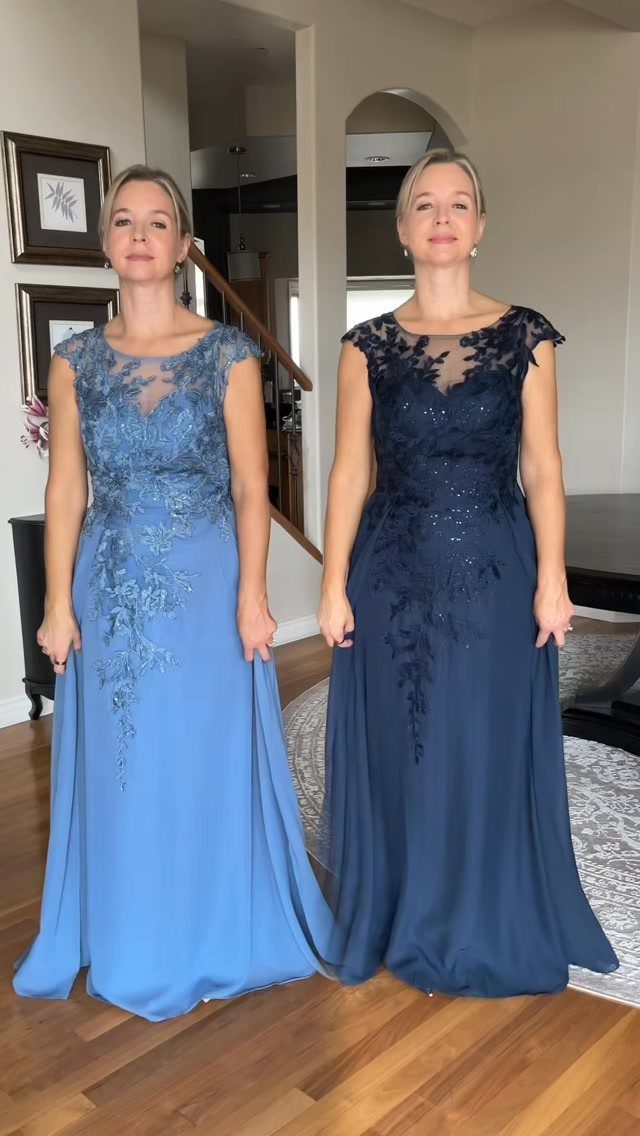
Black-tie still means a floor-length gown, and that rule has not softened with age.
Column, softly flared, or draped shapes give you the formal silhouette without a stiff, heavily boned bodice that becomes uncomfortable by the cocktail hour. Before committing, try the dress on with the exact shoes you will wear.
The hem should clear the floor by about 1/2 inch; anything longer and you will be lifting the skirt with every step, anything shorter looks like a rental that did not fit.
Check the lining and any lace or beadwork against your skin for itch or weight. A gown that feels fine in a fitting room can feel like armor by the end of a reception.
2. Lace Wedding Guest Dresses
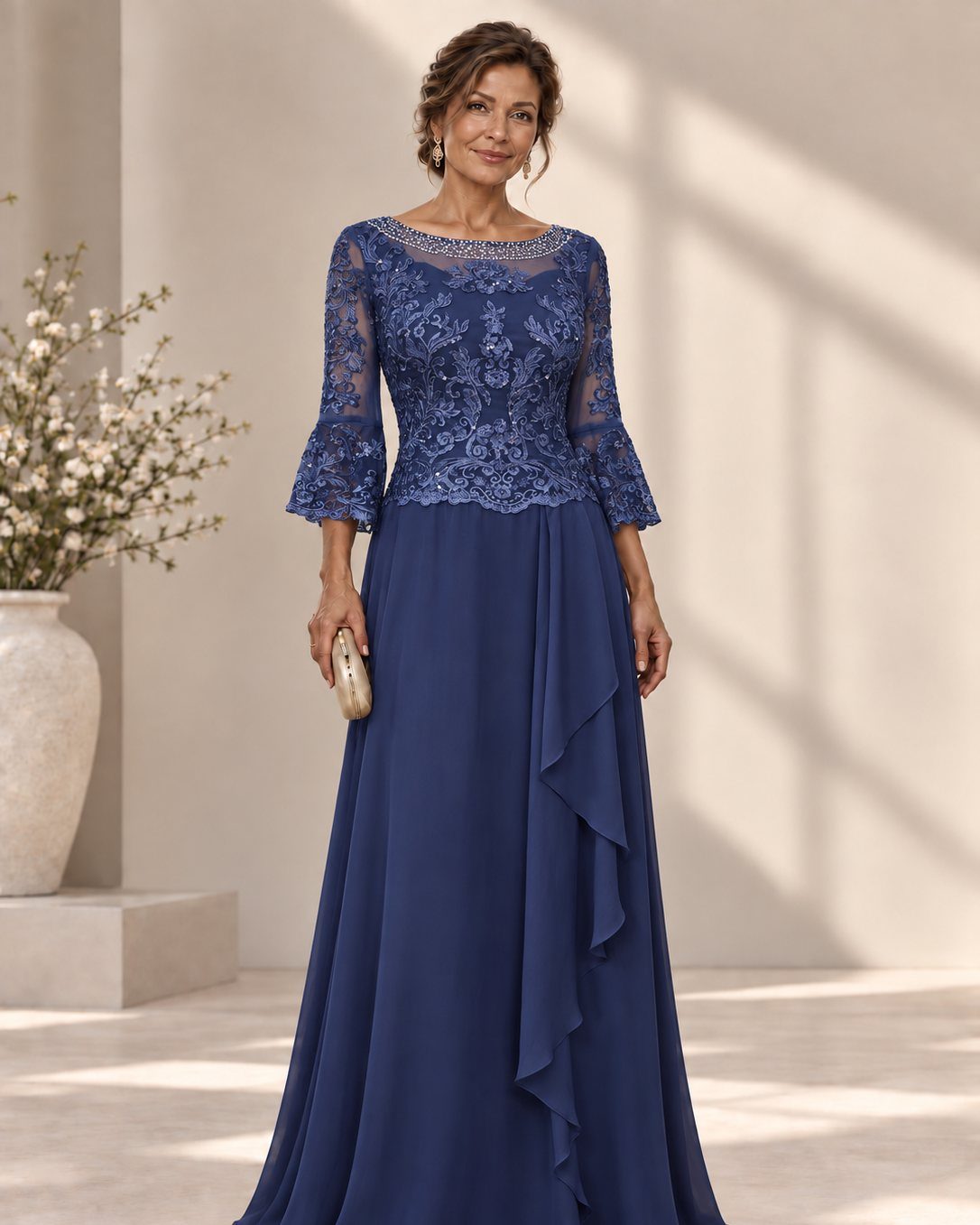
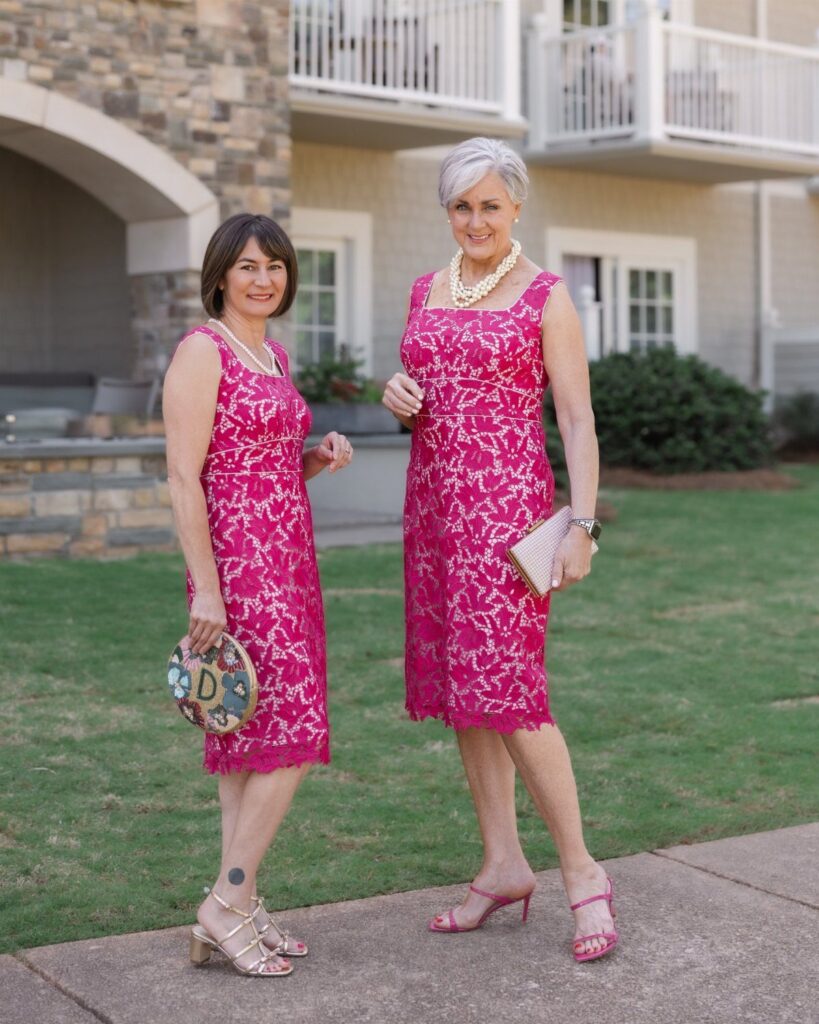
Lace reads as dressy without trying too hard, which is why it works across so many wedding dress codes. For a long day, the practical distinction is between lined and unlined lace.
Unlined lace shifts and snags; lined lace in crepe-backed or heavy satin-backed versions holds its shape from ceremony through last dance and recovers instead of creasing when you sit.
The dress code still governs: cocktail and semi-formal weddings call for knee-length or midi lace in lighter weights, while black-tie asks for floor length.
A bell sleeve or draped skirt in lace adds movement without the risk of a train someone steps on.
3. Pastel Skirt and Blouse Set
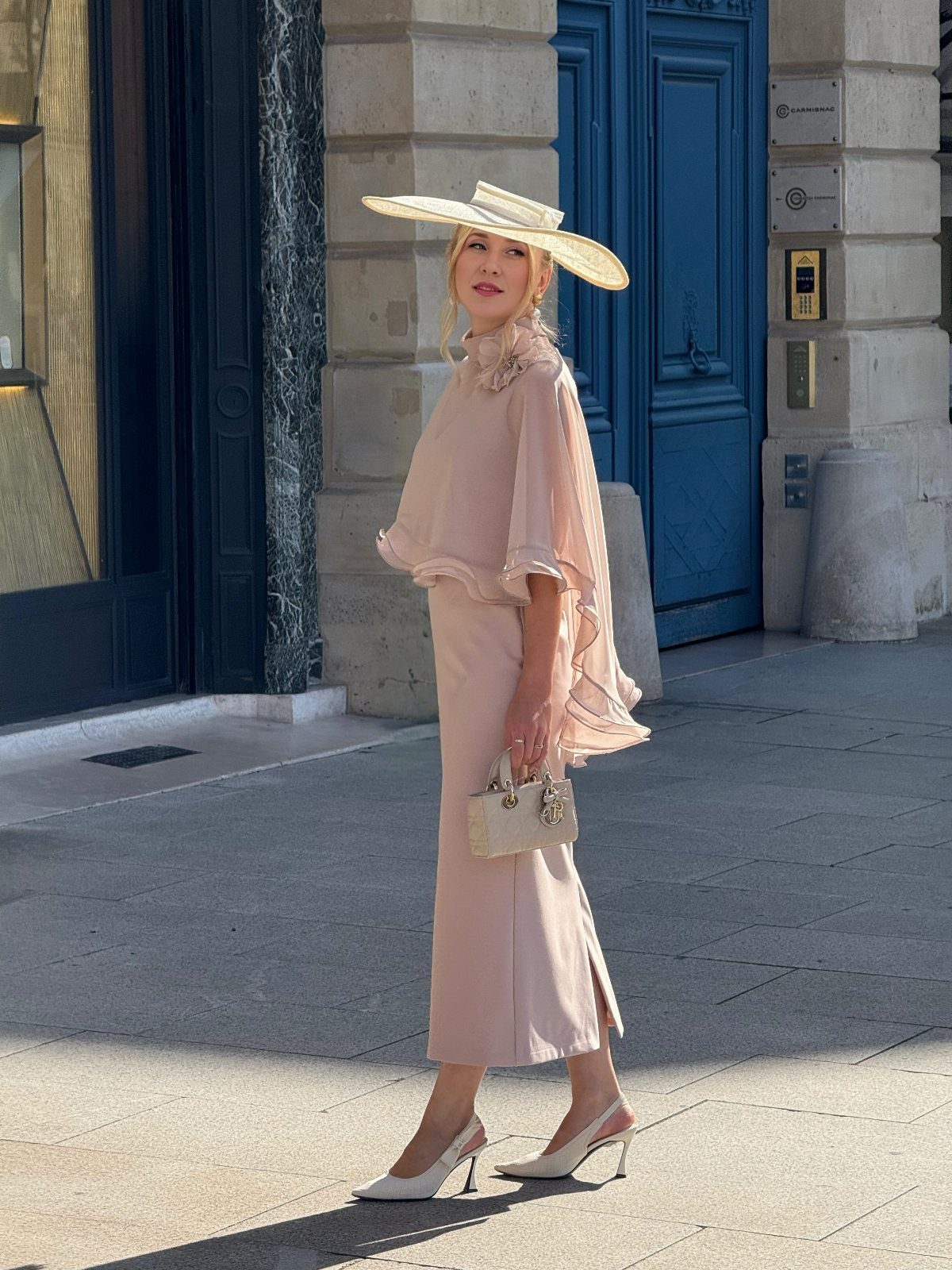
A matching skirt and blouse in pale blush reads as a dress from a distance but gives you 2 pieces to adjust separately.
The capelet ruffle here adds coverage across the shoulders and upper arms without a full sleeve, and the midi pencil skirt keeps the line neat for a city wedding or a more formal garden setting.
Without it, the look is simply a nice pink suit.
Decide whether you want that statement, and whether the wedding setting can handle it. A wide brim blocks sightlines in church pews and can blow away on a windy lawn.
4. Flowing Tunic and Trousers
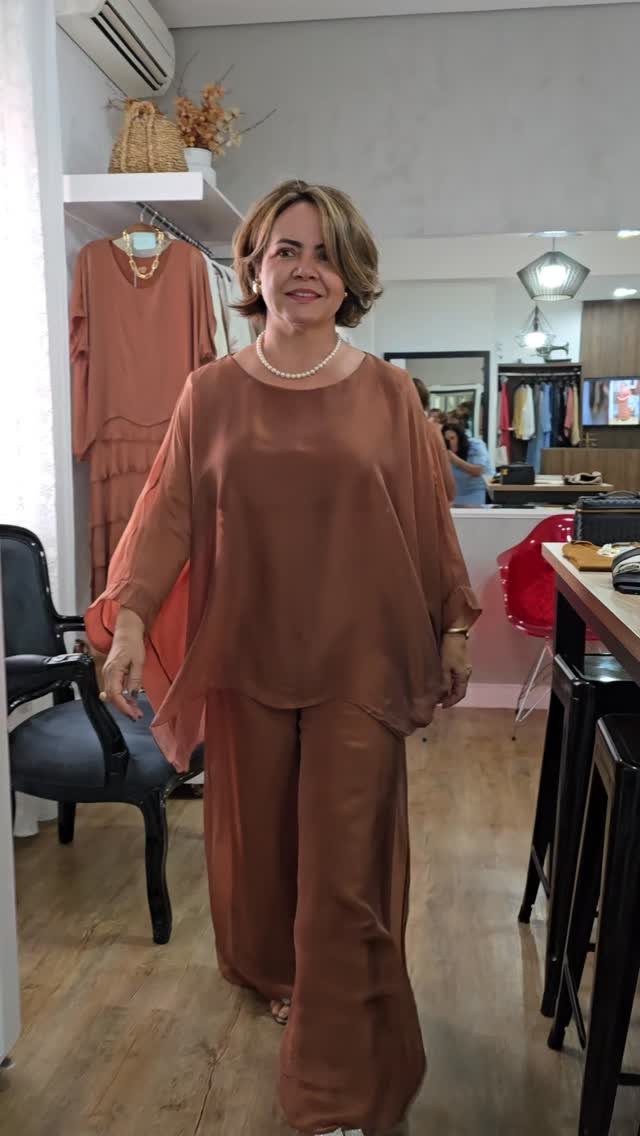
A loose tunic over wide-leg trousers in a single color gives you the ease of a dress with none of the fit issues.
The burnt orange here is warm enough for an autumn wedding and bold enough that you will not look like you came from the office.
The pearl necklace anchors it to occasion dressing; without some jewelry at the neck or wrist, the silhouette can read as resort wear. Check the tunic length against your hip line.
Too short and it truncates the leg; too long and the trousers disappear and you look like you are wearing a sack. The fabric needs enough weight to fall cleanly but not so much that the trousers drag.
5. Floral Maxi Dress
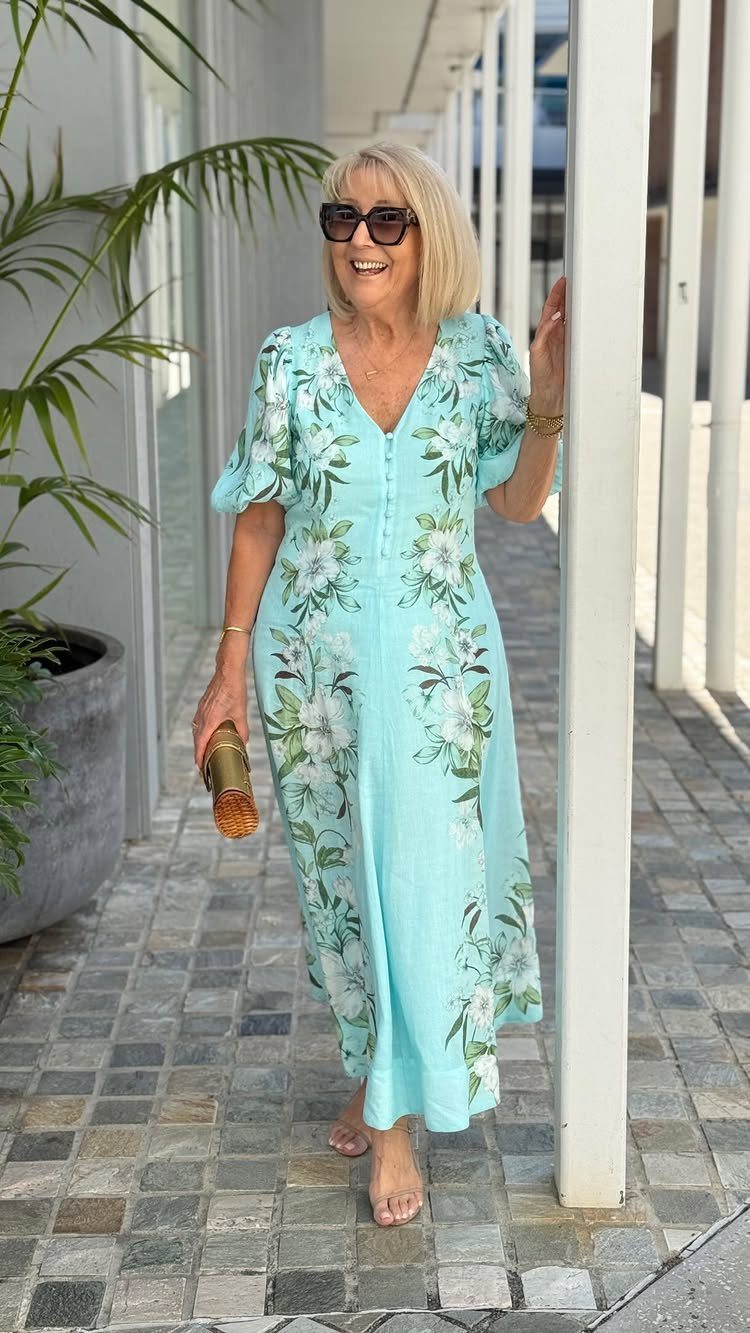
A maxi dress in a light turquoise floral works for outdoor summer weddings where you will be standing on grass or stone and need coverage without heat.
The tiered versions add movement that photographs well and hides any unevenness in the ground underfoot.
For a midday ceremony, test the fabric in natural light before the day; light colors in chiffon or lightweight cotton can turn transparent with sun behind them.
A wrap or shawl matters more than you think, even in July, when the reception moves indoors to aggressive air conditioning. Nude heels keep the leg line long without competing with the print.
6. Tiered Patterned Midi Dress
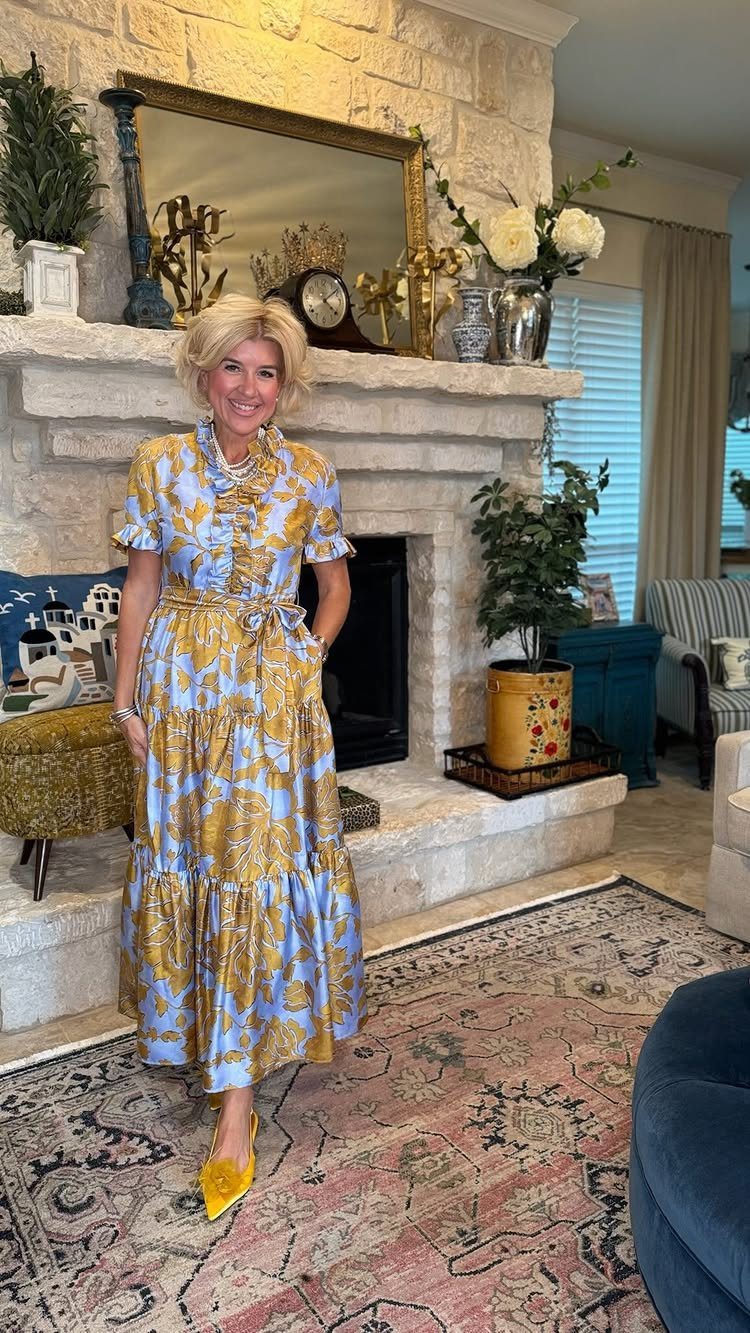
Short sleeves and a tiered skirt in a blue and gold pattern hit a midpoint between garden-party casual and too dressy.
The midi length is the practical choice for a wedding where you do not know the terrain; you can walk on gravel, climb steps, and sit in a folding chair without managing fabric.
The bright yellow heel here is doing the work of an accessory: it picks up the gold in the print and adds a deliberate color choice that says you thought about this.
A neutral shoe would make the dress look like you grabbed it and ran. Tiers add volume; if you carry weight in your hips, the horizontal lines will emphasize it.
7. Sleeveless Lavender Midi Dress
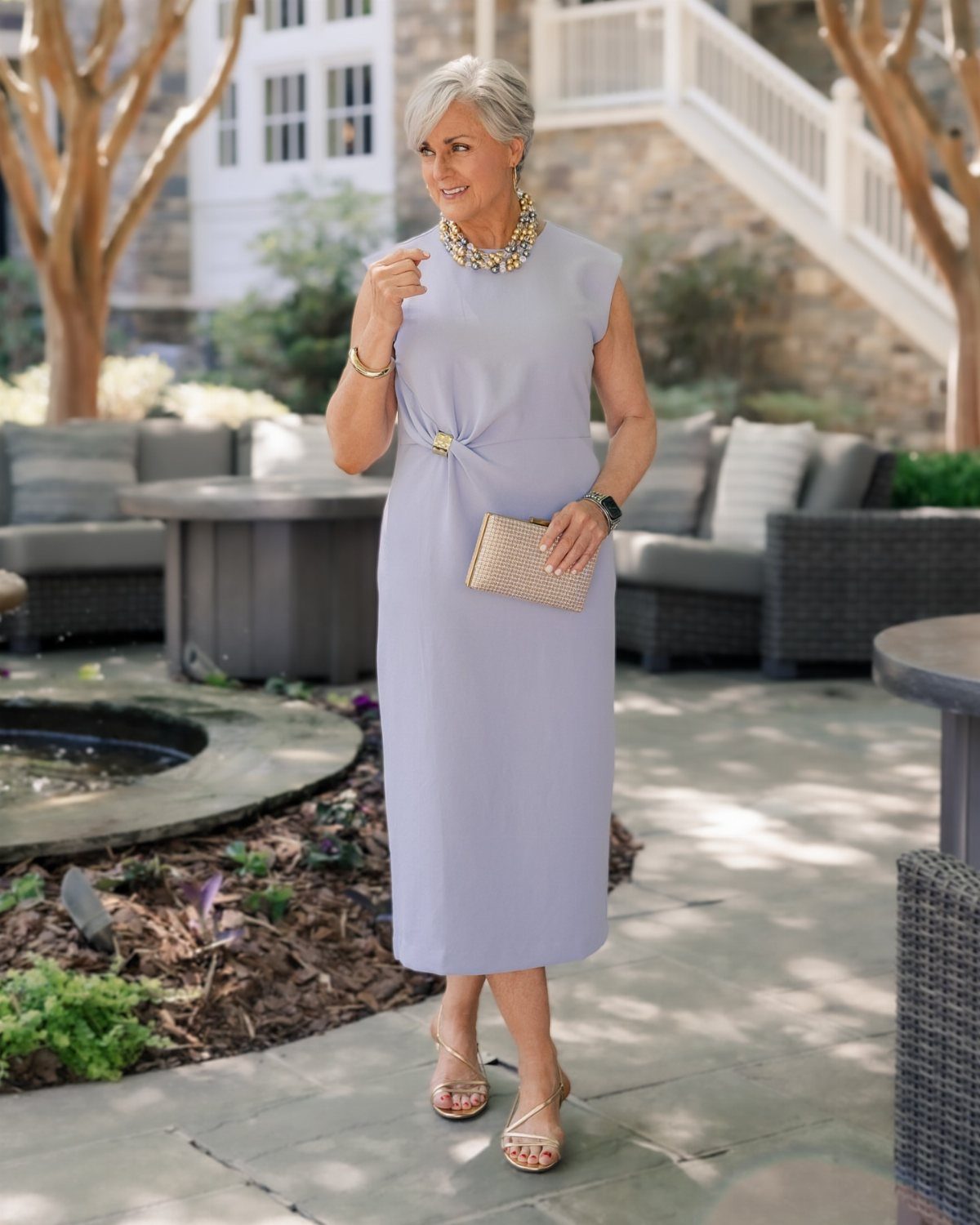
Lavender reads as intentional rather than merely pretty when the cut is spare. A sleeveless midi in this shade works for spring and summer weddings where the dress code sits between garden party and semi-formal.
The neckline and armholes need finishing that lies flat; binding that stands away from the body looks homemade and catches light badly in photographs.
A chunky necklace fills the space but also draws the eye up, which helps if you prefer attention at your face rather than midsection.
The gold strappy sandal is the right formality level; a closed pump would fight the dress’s ease, and a flat would drop the whole look to brunch.
8. Formal Jumpsuit with Overskirt
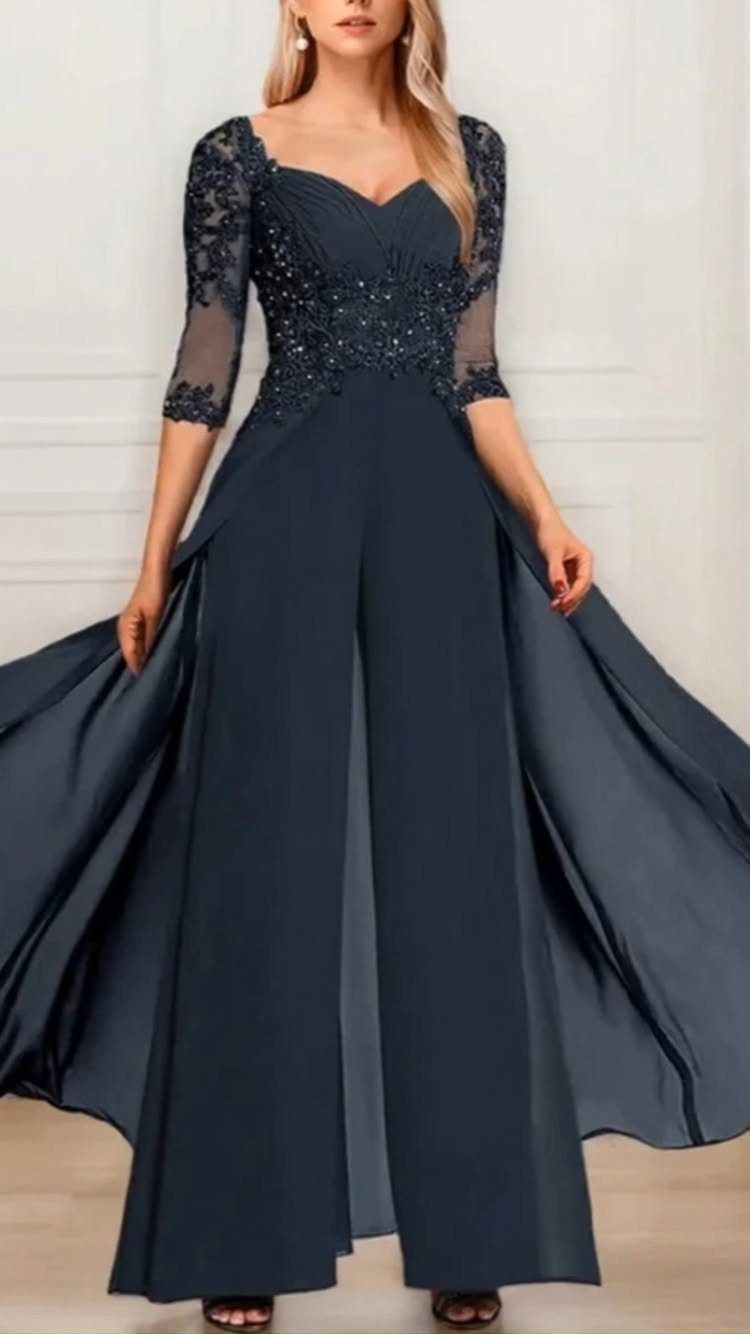
A jumpsuit with an overskirt gives you trousers for the reception dancing and the visual sweep of a gown for the ceremony photos.
The lace bodice here is doing the heavy lifting on formality; a plain crepe top would need bolder jewelry to reach the same level.
Three-quarter sleeves cover what many women prefer covered without the fuss of pushing up full length. Check the break point where overskirt meets pant leg: too high and the proportion looks like a mistake, too low and you trip.
Chiffon overskirt fabric needs enough opacity that undergarment lines do not show in direct sun or flash photography. Navy carries the same weight as black at evening weddings but photographs softer in afternoon light.
Choosing the Right Dress
The invitation tells you more than the couple realizes.
Ceremony time, season, and whether the event moves indoors or outdoors all shape what will actually work for a full day of standing, sitting, and dancing. I check these before I look at a single dress.
Religious or cultural expectations can mean covered shoulders, specific hemlines, or no head covering at all. These are not suggestions, and the time to learn them is before you buy anything.
Your undergarments are part of the outfit, not an afterthought. Try the dress with the exact bra and shapewear you plan to wear, because a different cup height or waistband placement changes the fit entirely.
Sit down, raise your arms, walk across the room. If the bodice shifts or the waistband rolls, that adjustment becomes your whole evening.
Rush jobs cost more and stress more, and neither shows in the result.
Emotional Comfort
After a certain point, the question stops being "does this look current" and starts being "do I feel like myself in this."
That shift is practical, not resigned. A dress that demands constant attention drains the energy you brought for the wedding itself.
Relaxed sophistication reads as more luxurious than visible effort.
The woman who looks comfortable in her own clothes usually is, and that ease translates to how people see her. I have watched this at dozens of events: the memorable presence is rarely the most elaborately dressed.
Emotional ease means not worrying whether a neckline will gap when you lean forward to hug the bride’s mother, or whether a color washes you out in church light.
It means choosing the sleeve length that lets you raise your arm for the bouquet toss without thinking about your arm. Confidence, in this case, is just the absence of distraction.
Avoiding Common Mistakes
I skip these for anything longer than a cocktail party.
The fabric should work with you through sitting, walking, and dancing, not against you. A neckline that stays secure without your hand at your collarbone.
A skirt stride that does not force baby steps across a lawn. These are the details that separate a dress you remember wearing from a dress you remember enduring.
Frequently Asked Questions
Can women over 50 wear bright colors?
Yes. Burnt orange, turquoise, lavender, and bold prints are all available regardless of birthday; the only colors to avoid are white, ivory, and cream for obvious reasons, plus red in traditions where it reads as bridal.
Bright colors work when the dress code and setting can handle them, and when the shoe or jewelry shows deliberate choice rather than a grab-and-run approach.
What fabrics hold up best over a full wedding day?
Crepe, heavy satin, and lined lace keep their shape from the ceremony through the last song, and they spring back instead of creasing when you’ve been sitting for the speeches.
Unlined lace slips and catches; thin jersey and other lightweight unlined fabrics wrinkle early and by the time the photographer circles back to your table you look rumpled.
Hold chiffon and light cotton up to a window before you commit, because backlit they can go see-through in ways the store lighting hid.