The 8 dresses ahead move from a mint modest gown with decorative lace to an emerald lehenga with heavy gold embroidery and its matching dupatta; what separates them is the venue’s formality and season, not how deep the green runs.
A strapless olive tulle gown needs a structured bodice to stay up through hours of dancing, while a sage beaded cape gown with silver detailing suits black-tie winter weddings where the palette already runs to jewel tones.
1. Dark Green Dress
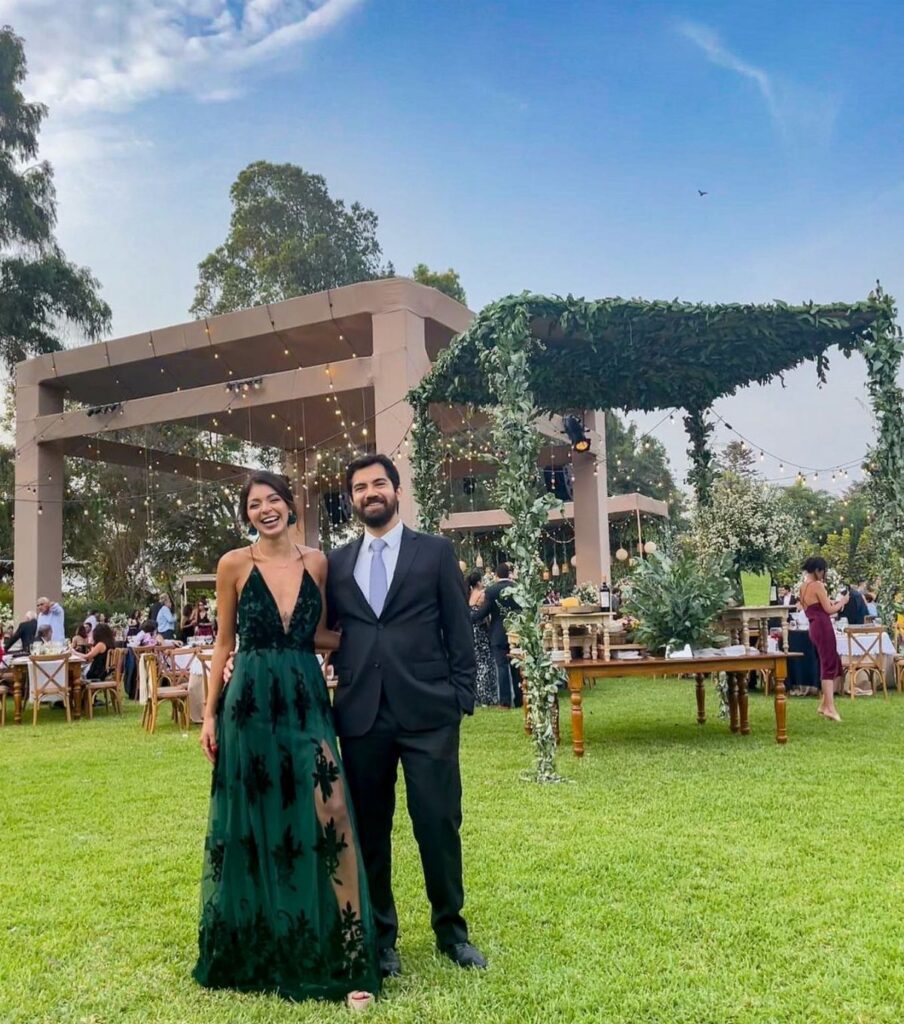
A floor-length dark green dress in satin or velvet reads as formal without the heaviness of black, and the black floral embroidery keeps it from looking like a solid block of color in outdoor photos.
I reach for this shade when the invitation says formal or black-tie optional and the wedding lands in the evening.
Sage works for spring garden ceremonies, olive for autumn vineyard receptions, and emerald for evening ballrooms; dark green sits right in the middle, seasonless and venue-flexible.
The fabric matters more than the exact shade here: a matte crepe reads daytime, while velvet or heavy satin signals evening.
Pair it with gold or crystal jewelry and skip a busy print unless the embroidery is the single statement.
If the wedding is strictly black-tie, check that the dress grazes the floor with heels on; anything shorter shifts the whole look.
2. Maxi Dresses for Formal Events
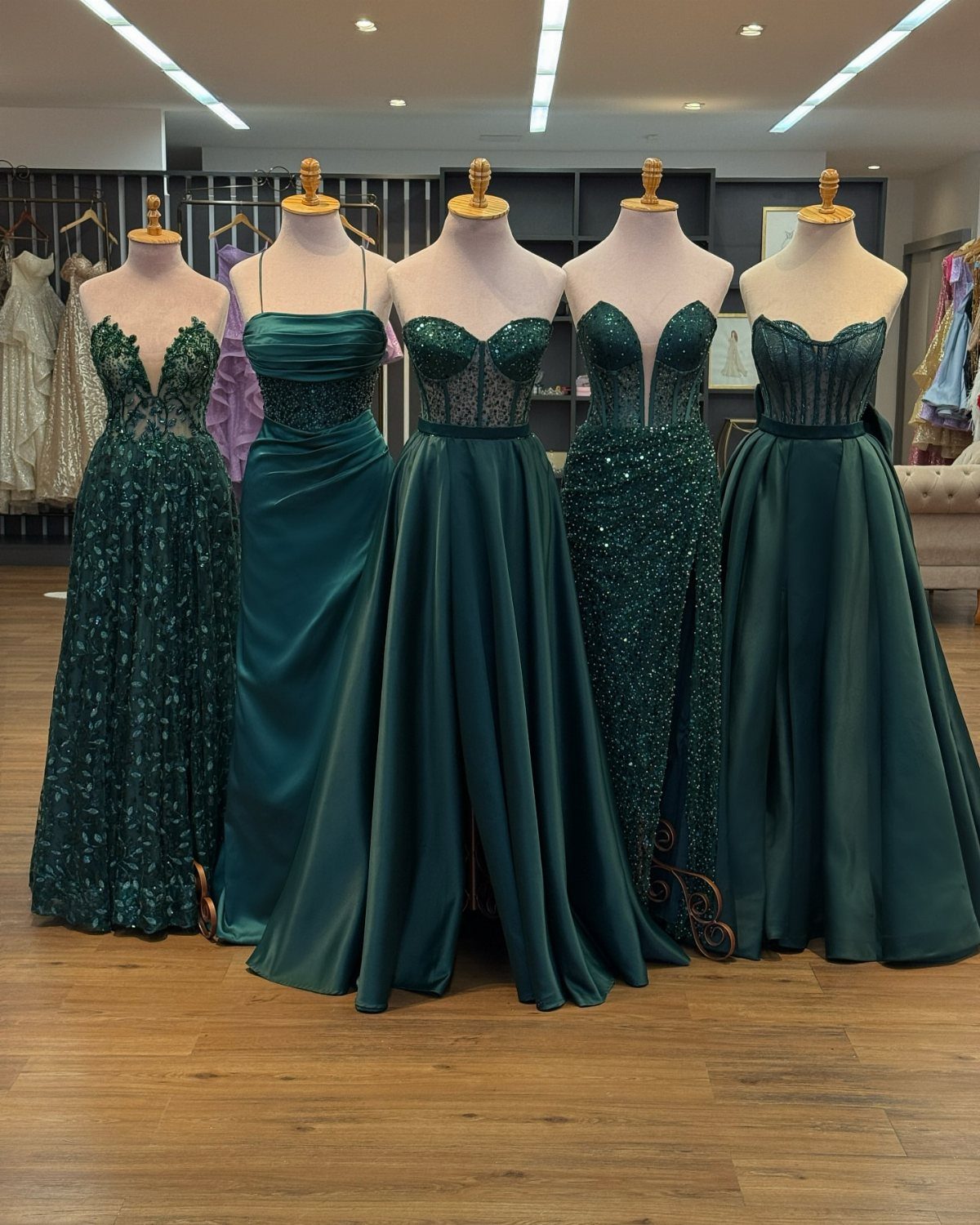
A maxi length carries any green into formal territory, which matters when you want one dress for multiple weddings with different codes.
I look for emerald or forest in heavier fabrics for winter, and sage or mint in chiffon for summer; the silhouette stays the same, but the fabric tells the guest what season you thought you were dressing for.
Chiffon and mesh read romantic and airy, satin reads polished, and velvet reads rich; lace adds texture that photographs well but can look busy in person if the pattern is too small.
For a formal event, the hem should touch the floor with your shoes on, and the neckline should stay put without constant adjustment.
One color family can split across draped, fitted, strapless, sleeved, and halter cuts; your body shape and the temperature of the venue matter more than trend here.
A crepe or jersey maxi travels better than tulle and needs less steaming in the hotel bathroom.
3. Embroidered Emerald Dress
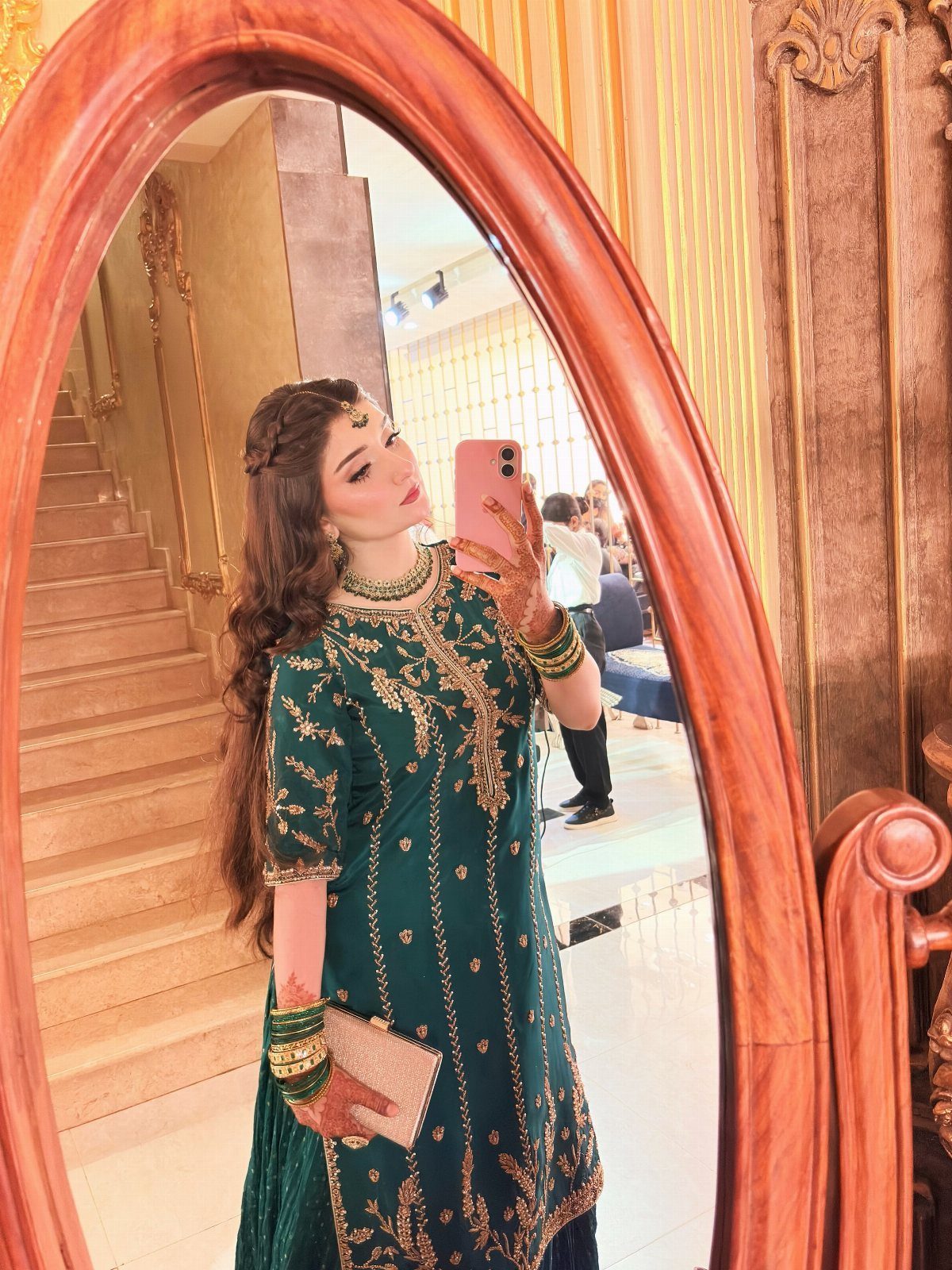
Intricate gold embroidery on emerald green does the jewelry work for you, which I appreciate when I am already packing shoes, a clutch, and a wrap.
Matching green bangles show one way to extend the color without introducing a second metal; gold would also read correctly, but mixing metals with this much embroidery looks accidental.
This much ornament suits evening receptions better than daytime garden ceremonies, where the gold can catch harsh light and photograph too bright.
If the embroidery runs over the whole bodice, keep earrings small or skip them; if it concentrates at the neckline or hem, you have room for one larger piece.
This reads traditional formal, which works for South Asian weddings, black-tie events with cultural dress encouraged, or any reception where you want to signal that you understood the assignment.
I would check the weight of the fabric before committing; heavy embroidery on light silk pulls the whole dress down by midnight.
4. Mint Green Modest Gown
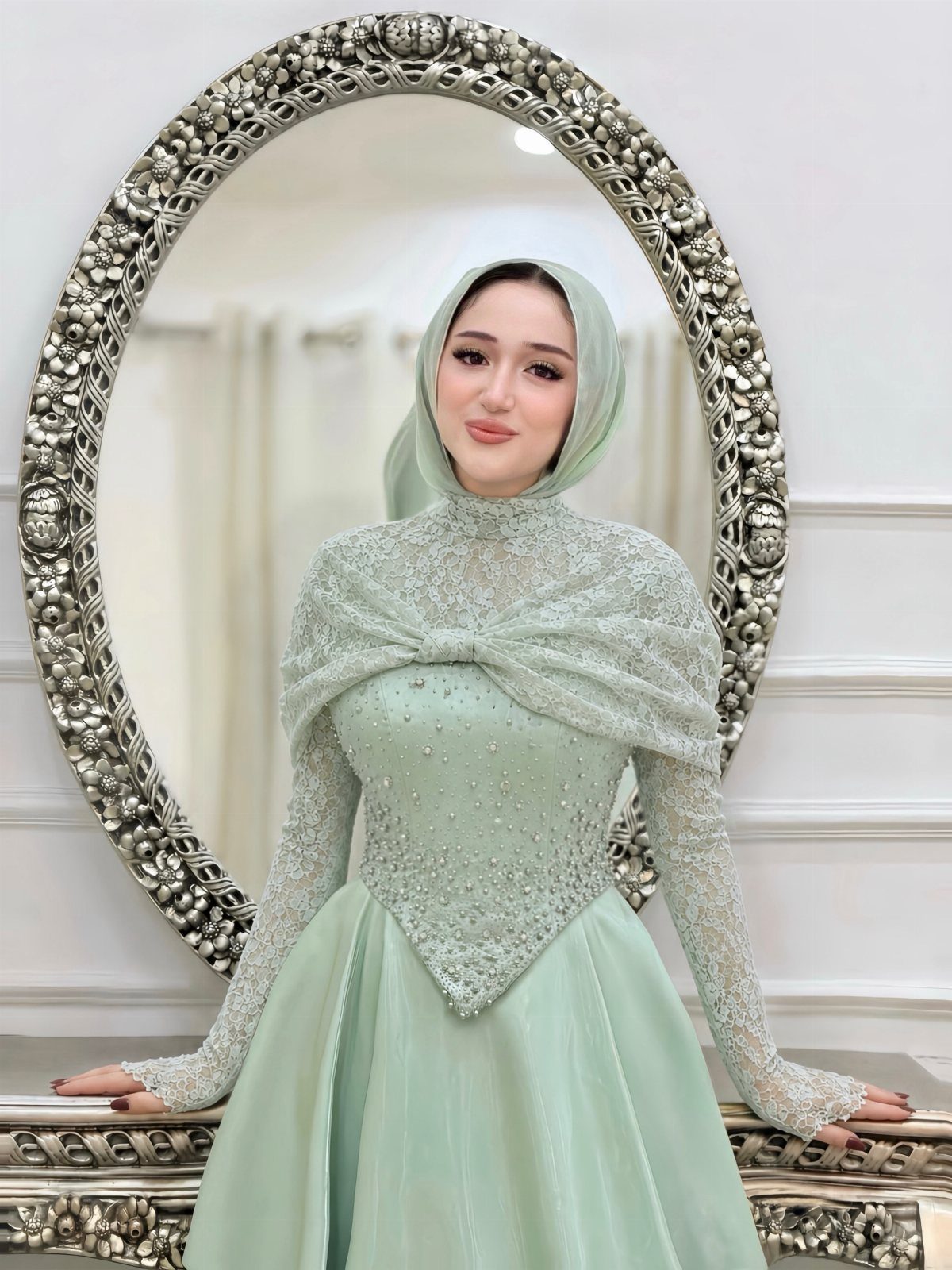
Mint reads daytime and semi-formal, not black-tie; the notes confirm it belongs at garden parties and spring ceremonies rather than evening ballrooms.
If you are dressing for a conservative family or religious venue, this coverage level skips the jacket hunt that usually follows a sleeveless dress purchase.
The lace here is decorative, not sheer, which matters for opacity; before buying, hold the fabric to light or check the product description for lining details.
Beading adds weight, so the skirt needs enough structure to carry it without clinging.
I would also check whether the lace at the wrist allows a watch or whether the sleeve ends where a bracelet would sit; bracelet-length sleeves are their own choice.
5. Olive Green Off-Shoulder Gown
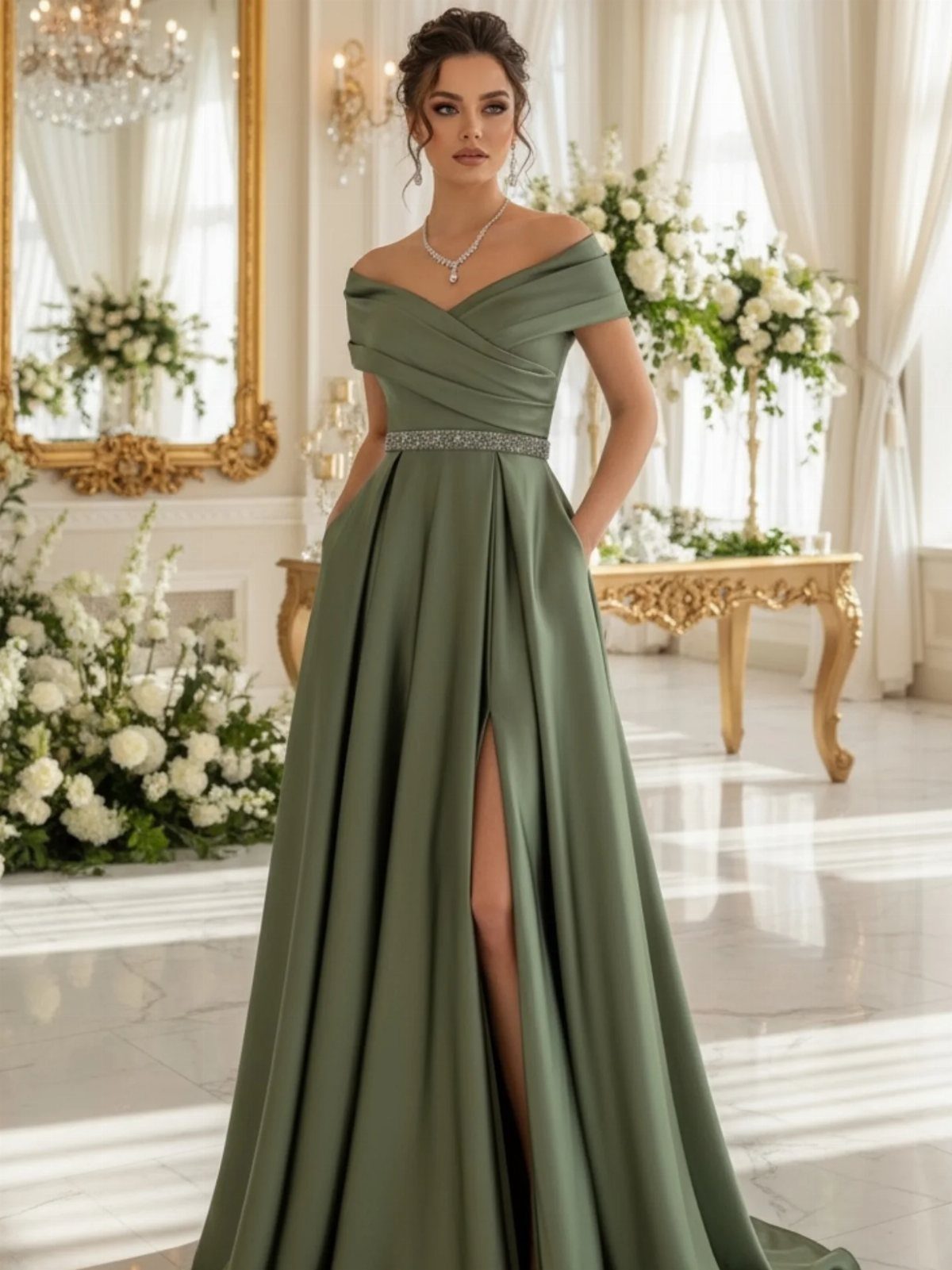
An off-shoulder neckline with a pleated bodice holds its shape through the reception better than one elasticated band, and the high slit in the skirt keeps a floor-length olive gown from reading as too heavy for a room that warms up after dinner.
Olive carries autumn and winter particularly well, though satin in this shade could work for an evening wedding any season.
The neckline demands a strapless bra or structural bodice, and the slit height needs checking against the venue stairs and the photographer’s angles.
I would walk in the actual shoes before the event to see where the slit falls; satin rides up and the amount of leg showing changes with heel height.
This is a statement dress that needs little jewelry; small earrings or none, and hair up or half-up to keep the neckline visible.
A wrap or coat becomes complicated here, so I would plan the entrance from car to venue and skip any outdoor cocktail hour that requires real warmth.
6. Emerald Green Formal Lehenga
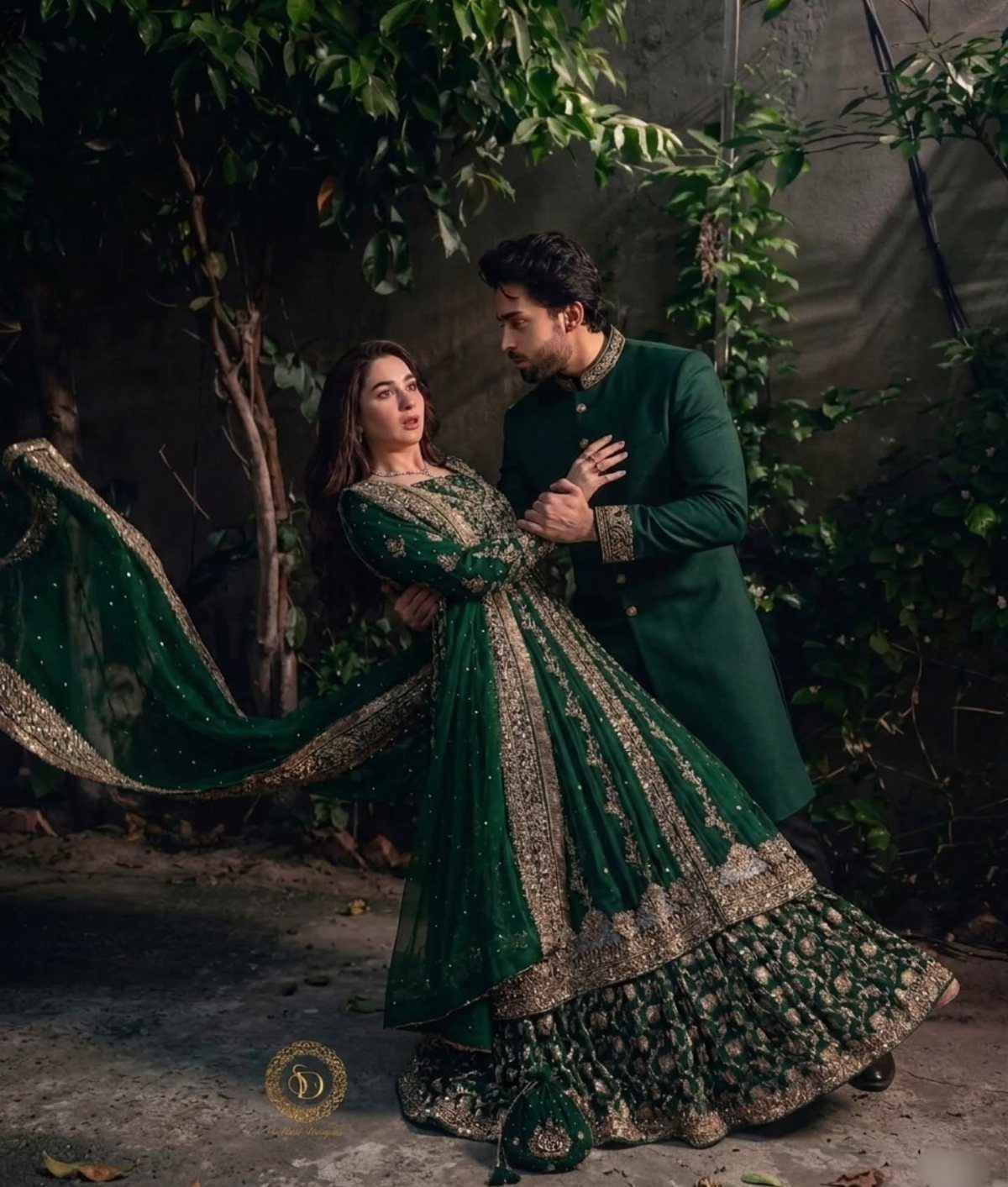
Heavy gold embroidery and a matching dupatta turn emerald into formal wear for South Asian weddings and receptions where cultural dress is appropriate or expected.
The dupatta placement matters: draped over both shoulders it reads ceremonial, over one shoulder it allows movement, and across the arms it frames the embroidery for seated photos.
Gold jewelry is the correct metal here, and one family is enough; I would not add pearls or crystals unless the embroidery itself mixes them in.
Coordinated but not matching color is the right balance for couple photos without looking like a costume.
This construction is heavier than a typical gown, which affects how long you can stand comfortably and how the skirt photographs from seated angles.
I would ask about seating height at the assigned table and whether the venue has space to adjust the dupatta between ceremony and reception; the full look is right for the ceremony, but the dupatta can drape differently for dancing.
7. Strapless Olive Tulle Gown
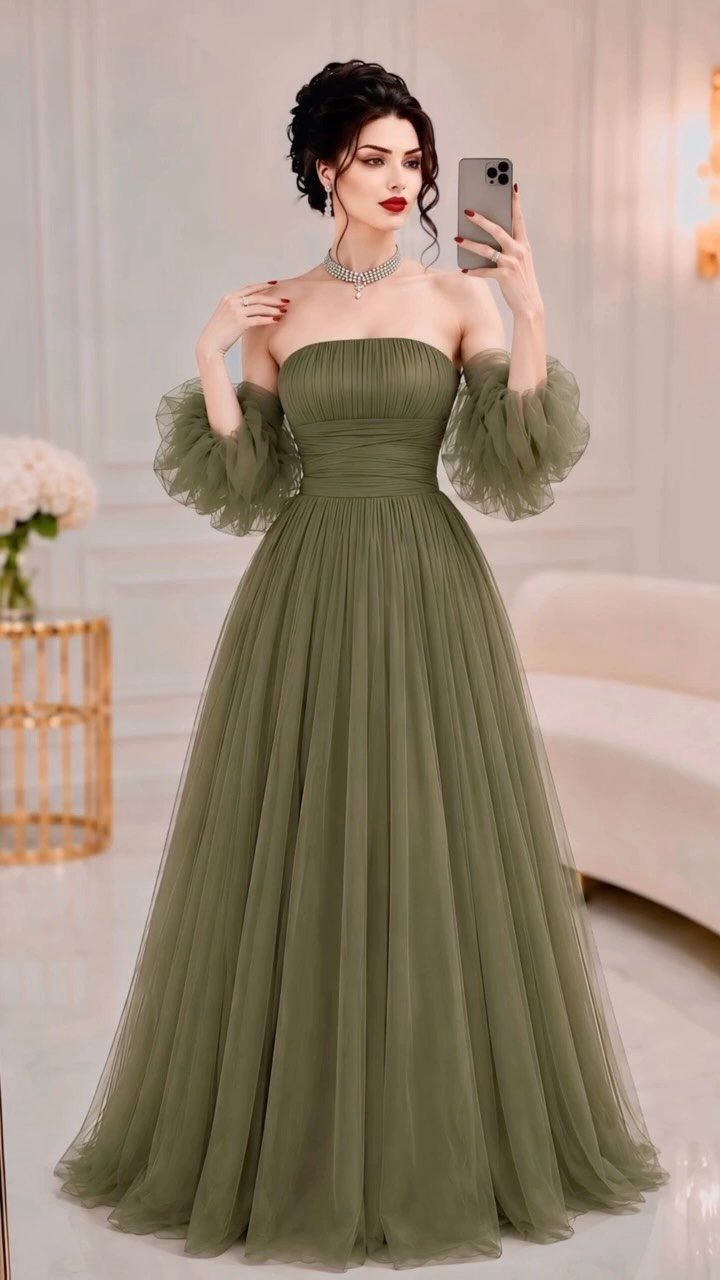
Tulle this full needs a structured bodice to stay up through hours of standing and dancing, and the pleated detail here adds that architecture without extra weight.
Olive keeps the volume from reading too bridal; in blush or ivory this would compete with the wedding party.
The detached puff sleeves are the decision point.
They photograph beautifully but require managing: pinning, adjusting, or losing them entirely by cocktail hour. I would plan for both looks, sleeves on for ceremony photos and off for the reception, and bring safety pins that match the tulle.
This skirt eats space in a crowded room and on a dance floor.
Check the venue layout before committing; a tent with narrow aisles between tables turns this into a navigation project. Hair up or half-up balances the volume below, and small earrings are enough; the neckline and sleeves are doing the work.
8. Sage Green Beaded Cape Gown
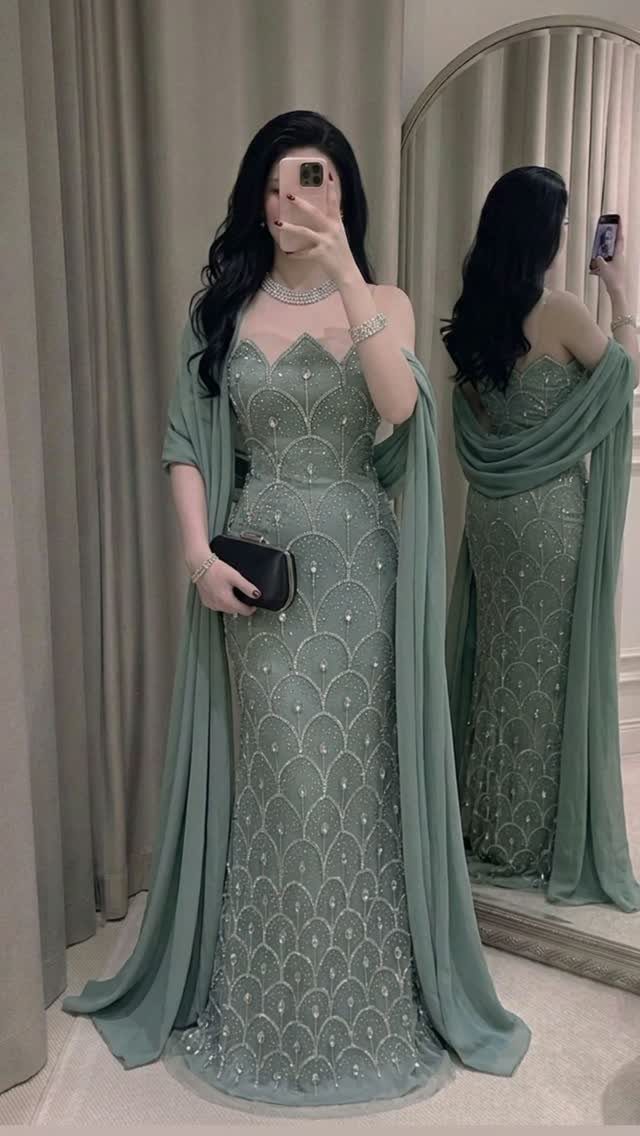
Silver beading on sage reads cooler and more evening than gold would, which suits black-tie and winter weddings where the palette already runs to jewel tones and metallics.
The matching draped chiffon capelet gives you two looks in one, and since it is separate, you can drape it off the shoulders for photos or remove it entirely when the dancing starts.
Heavy beading adds weight that pulls the strapless bodice down over time.
I would test the internal structure before buying: boning, gripper tape, or a built-in corset makes the difference between a gown that stays put and one you are hoisting in the restroom after dinner.
The cape catches air and doorframes alike. For outdoor photos or a grand entrance it moves beautifully; for seated dinner it pools behind the chair and needs arranging when you stand.
Plan the bathroom strategy in advance, since the cape complicates the usual stall maneuver. Small silver earrings and a black clutch finish without competing; the beading and cape are already 2 strong elements.
Formality Considerations
Emerald and forest carry black-tie and formal evening weddings; the depth reads beside classic black and navy without competing. Cocktail codes open the family to knee and midi lengths, where lighter greens work without looking underdressed.
Sage chiffon works beautifully for daytime and semi-formal weddings, though it struggles to hold its own in a grand ballroom where deeper tones do the heavy lifting.
When the dress code reads formal but your taste leans soft, olive in a structured fabric meets both sides halfway.
Seasonal Suitability
Spring calls for sage, mint, and soft pistachio in fabrics that move easily with the warmer air.
Summer stretches toward brighter mid-tones and saves olive for late-August affairs, with breathable weaves handling the heat at outdoor ceremonies. Fall belongs to olive and forest, greens that sit naturally against whatever autumn palette the couple has chosen.
Winter gives emerald its moment in satin and velvet, festive enough for the season without drifting into holiday territory. Botanical prints in warmer months ground more naturally in green than in any other solid.
Photographic Considerations
Garden and vineyard weddings already surround guests with green.
Frequently Asked Questions
Is green appropriate for a wedding guest?
Yes. No bride in American wedding tradition has ever laid claim to green, and the color carries no bad luck at parties; lately couples are building whole palettes around it.
The only extra check is for sage, which appears in many bridesmaid lineups right now; a quick look at the wedding party color keeps you clear of accidental matching.
What jewelry goes with an emerald green dress?
Gold in any finish, from polished to brushed, is the right first choice. Crystal and diamond pieces pair with beaded emerald styles, and pearls fit when the dress itself reads softer.