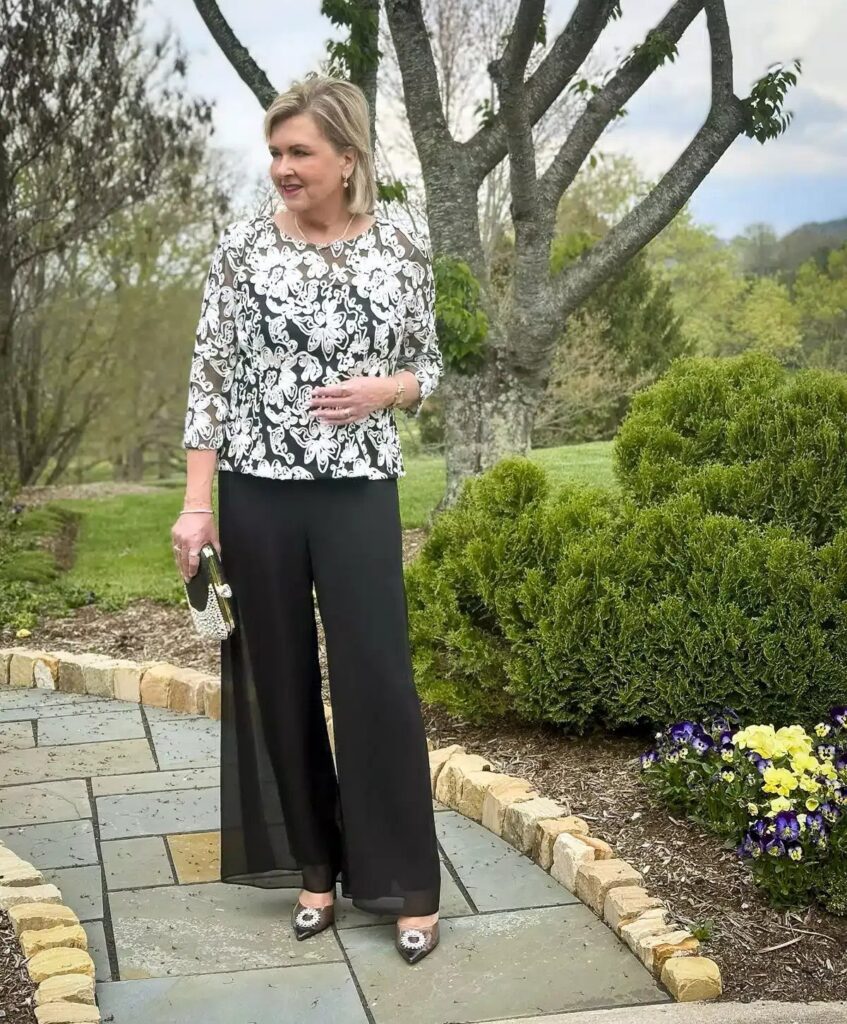
The A-line midi and the wrap dress both handle summer heat without clinging, while the separates option gives you control over fit at the waist and hip independently.
1. A-line Midi Dress
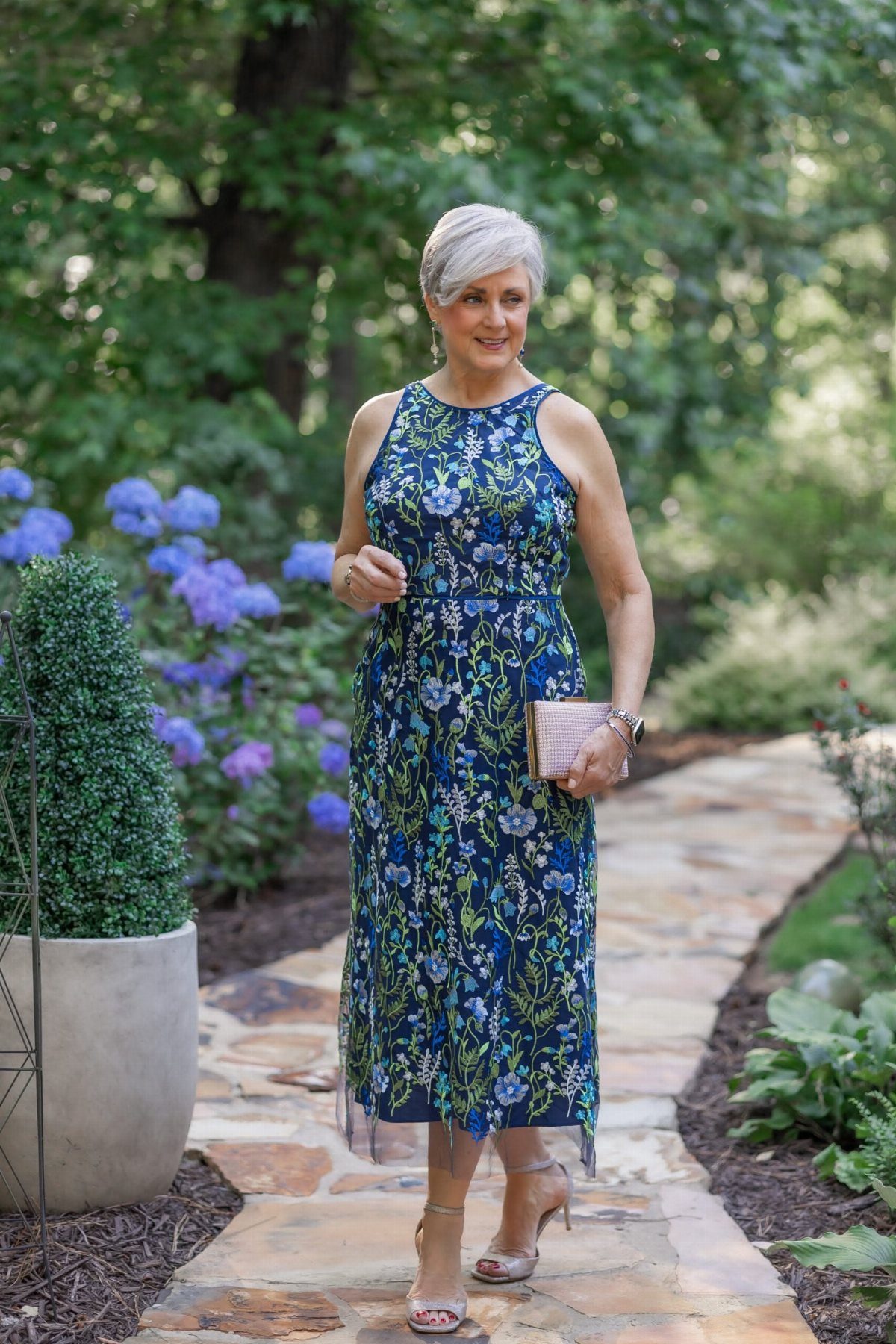
The A-line cut skims away from the waist without clinging, which makes it one of the most comfortable silhouettes for a summer ceremony. That length hits right for a summer ceremony without worrying about hem drag or grass stains.
The floral print in navy or another saturated base color reads more polished than a pastel field, and the silhouette works whether you prefer sleeves or go sleeveless.
Block heels handle lawn better than stilettos, and a clutch in taupe or cream keeps the silhouette clean.
This is the shape I reach for when I want something that works without fussing.
2. Floral Wrap Dress
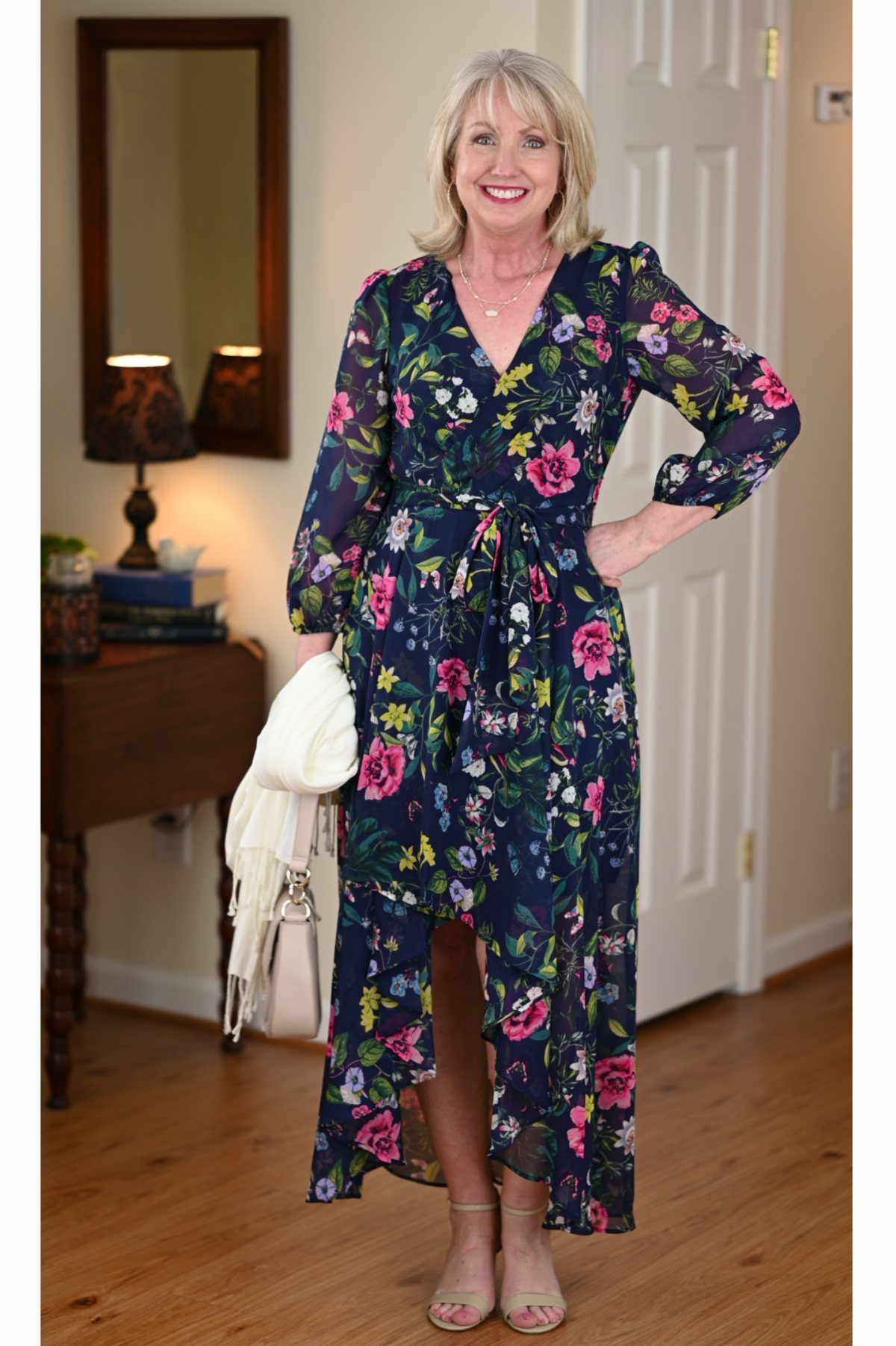
Wrap dresses adjust at the waist, so they work across body types without tailoring. The tie closure also means you control how fitted or relaxed the bodice sits, which matters when you’re dressed for hours.
Navy floral on this scale feels celebratory without reading too young, and the wrap front balances coverage with shape. I like this with a low block heel in tan or nude, since the dress already carries pattern and color.
The wrap style travels well since it doesn’t wrinkle the way a structured bodice does.
3. Elegant Prints
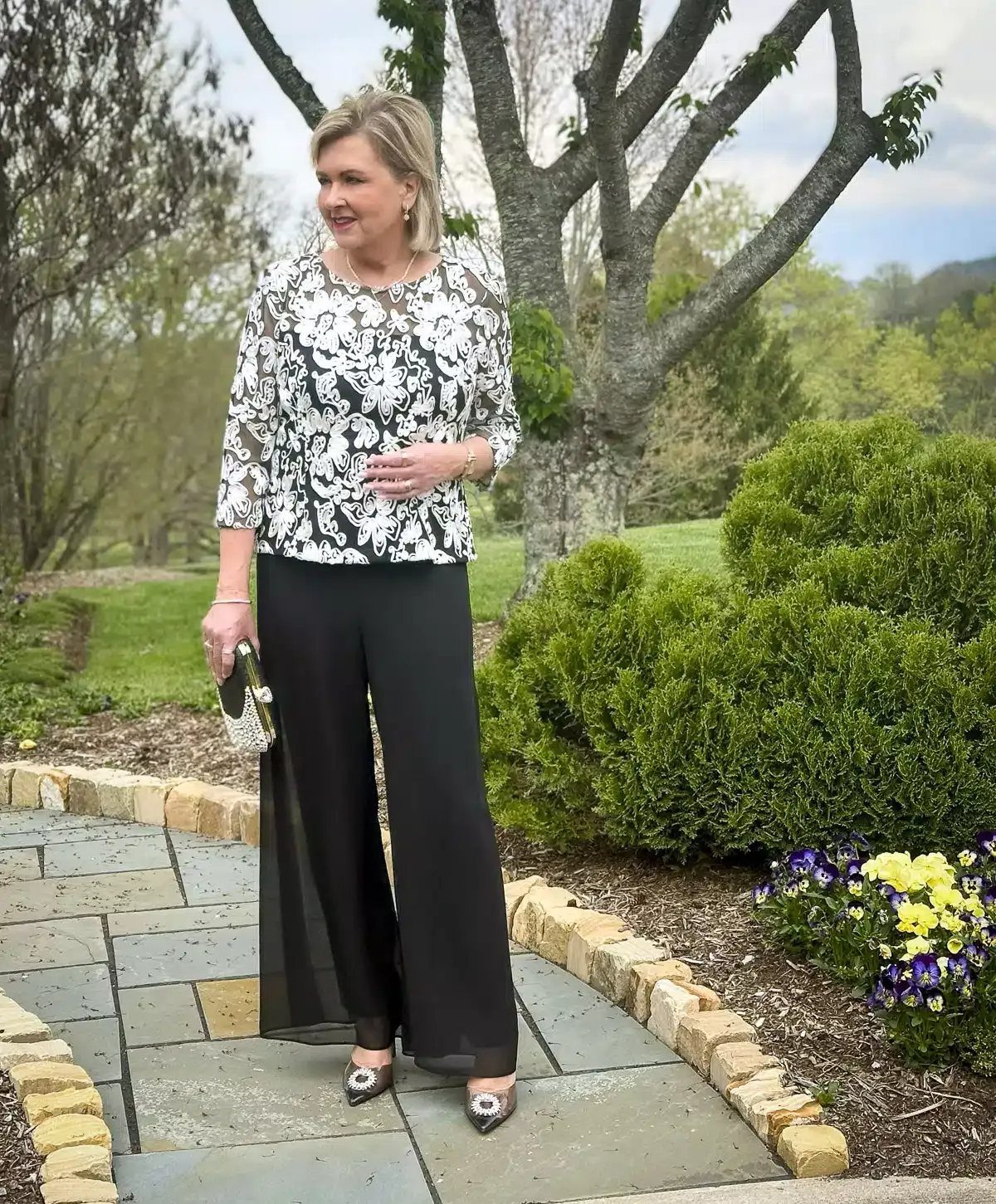
Separates give you control over fit and proportion in a way a single dress sometimes can’t.
Choose prints with structure: graphic florals, abstract shapes, or clean line work rather than soft watercolor washes. The wide leg balances a fitted or tucked blouse, and black keeps the silhouette streamlined even when the top carries pattern.
This works particularly well for daytime or garden weddings where a dress might feel too formal.
Consider the Venue
The venue tells you how formal to go and what materials will hold up.
A garden ceremony means considering grass underfoot, so block heels make more sense than thin stilettos. An evening event typically calls for richer colors and more structured fabrics than a noon ceremony in bright sun.
The invitation usually tells you what to wear.
If it says cocktail or formal, that takes precedence over time of day. If it doesn’t say, check the wedding website or ask other guests or family members to confirm what fits the venue.
Daytime ceremonies tend toward lighter colors and relaxed shapes. Evening events lean more formal, even in summer.
Fit and Comfort
A dress that fits right beats one that just looks good on the hanger. A well-tailored garment sits cleanly at the shoulders and waist without pulling or gaping, which makes a bigger difference than the style you choose.
Look for silhouettes that let you sit, stand, and move without adjusting. Three-quarter sleeves or a wrap detail give you coverage in air conditioning or once the sun sets, and they skip the weight of a full layer.
The right fit also means you’re not thinking about your clothes during the ceremony. If something feels tight or shifts when you walk, it will bother you all day.
Avoiding Common Pitfalls
Skip fabrics that trap heat. Summer weddings run long, and heavy materials make that worse.
Skip anything that needs tugging or pinches when you sit down. If a dress needs smoothing every time you stand, it’s the wrong cut.
Trendy shapes you’ve never worn before carry risk.
A silhouette that feels unfamiliar won’t suddenly work under pressure, and a wedding isn’t the place to test it. Stick with cuts you know fit your body and move the way you expect.