Colorful bridesmaid dresses run from mismatched blush gradients to unified burgundy velvet, and the deciding factor is how much control you want over the final photo.
A bride who assigns each woman a specific green or blue gets a cohesive group; one who lets the party self-select from a blush range gets softness with less effort.
The Kennedy Blue ties and robes that match their dress line are one way to bridge the gap between total control and total freedom, if you want groomsmen in the same color without leaving it to chance.
1. Matching Bridesmaid Dresses with Groomsmen Attire
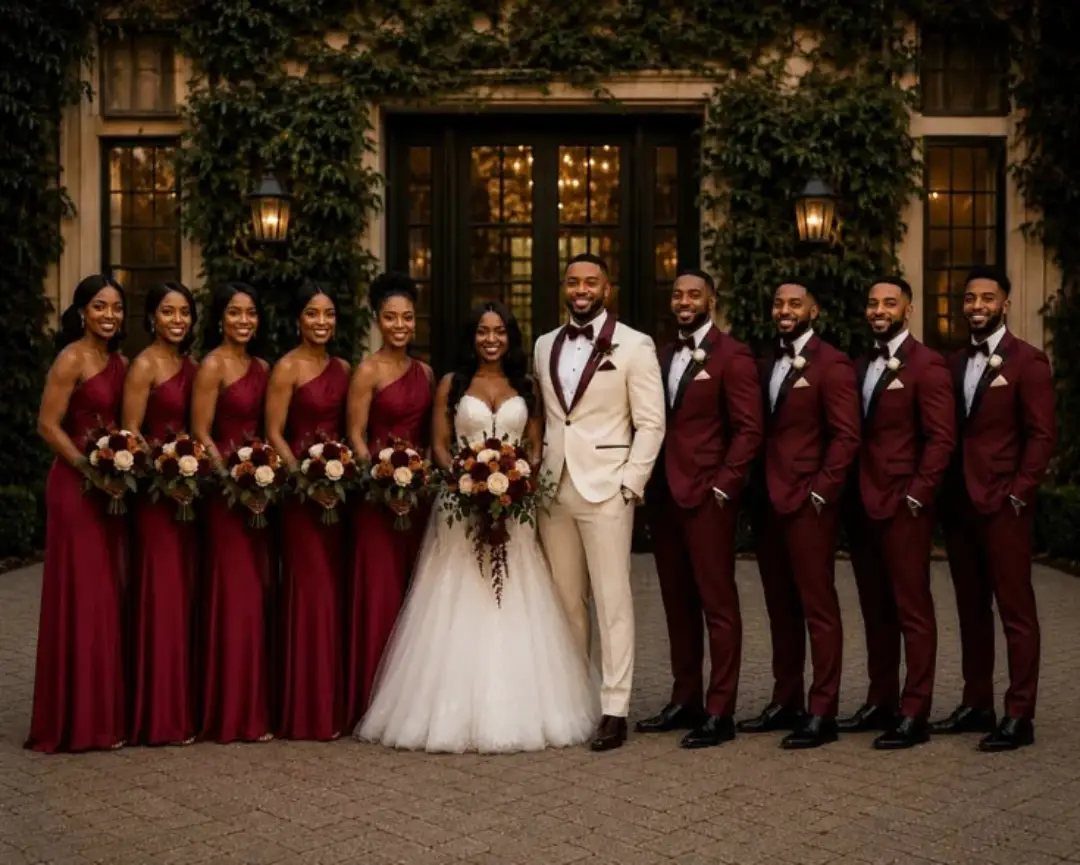
This idea runs the wedding color straight through both sides of the party. The bridesmaids wear burgundy gowns, the groomsmen wear burgundy suits, and the result reads as intentional rather than accidental.
The risk is over-matching. I would check the fabric weights: satin bridesmaid dresses against matte suit cloth can clash even in the same Pantone number.
Ask the suit rental shop for a swatch before you order the gowns, or vice versa. Kennedy Blue stocks ties and robes in colors that match their dress line, which helps if you want to add accessories without guessing.
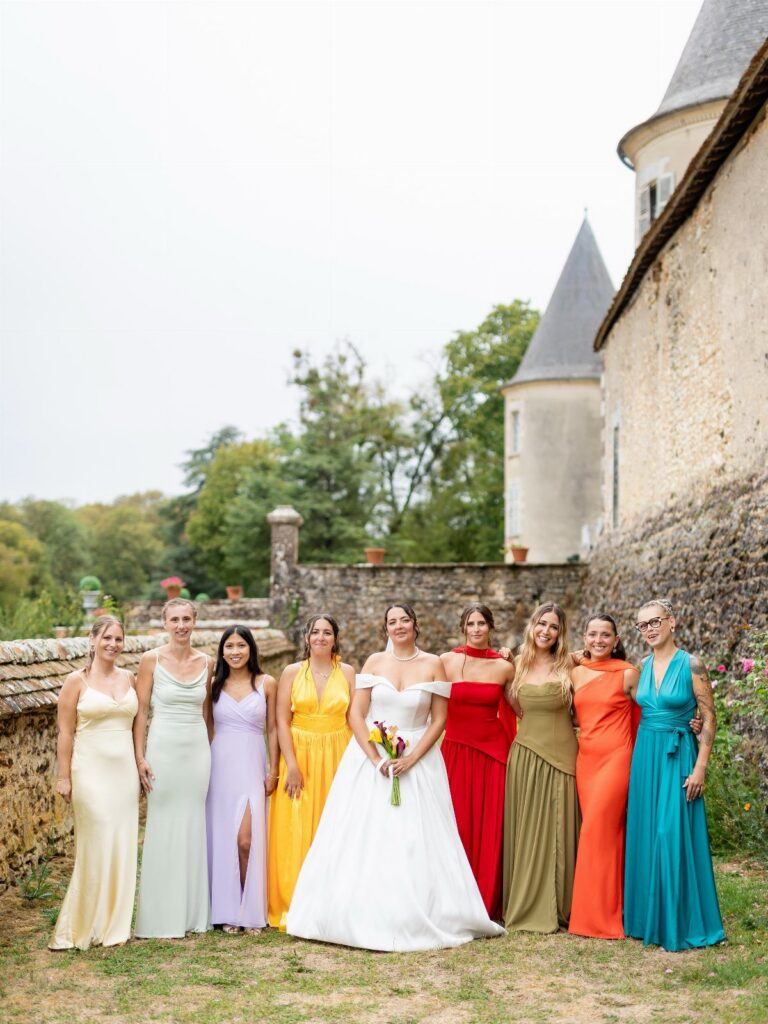
Everyone in the same strong color, bride included, turns the group photo into a single blob of pigment.
2. Mixed Green and Blue Dresses
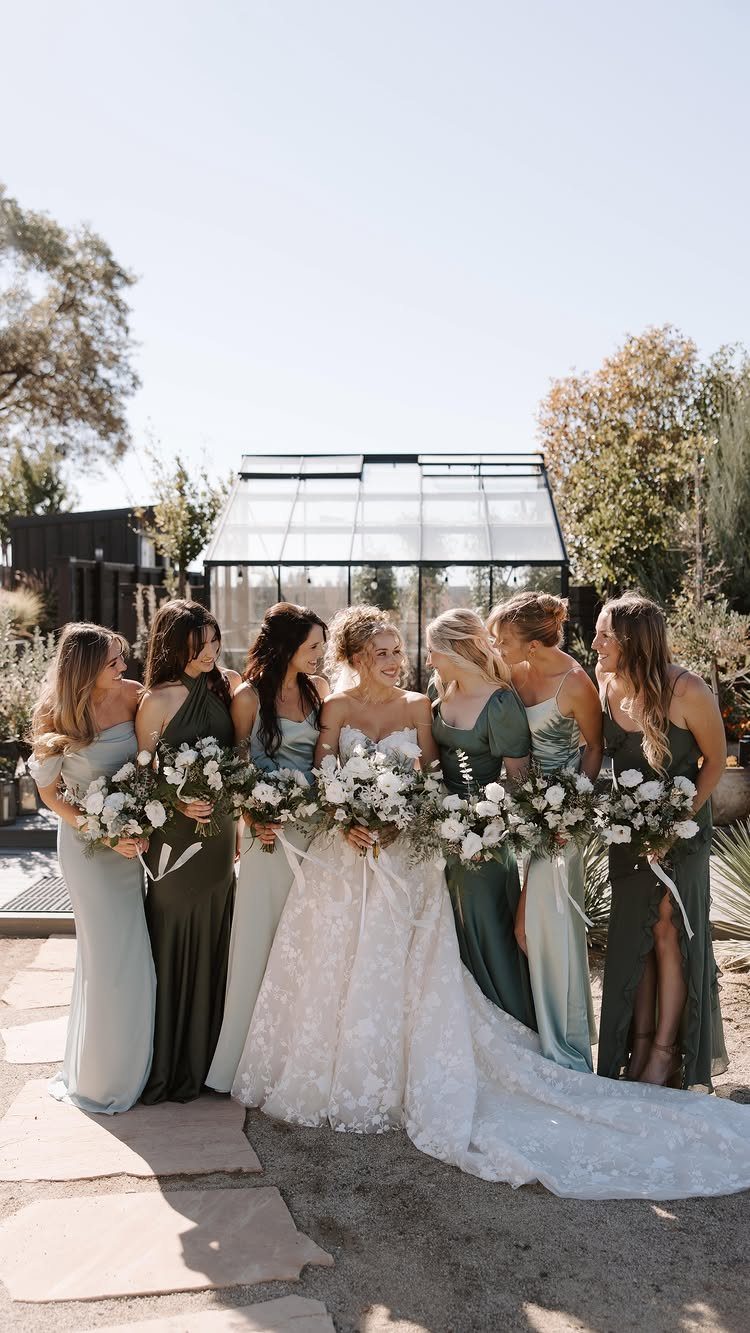
Sage, forest green, and light blue together look like they wandered out of a greenhouse, which in this case is the setting.
The colors share a muted saturation; that is what keeps them related. A jewel green next to a pastel blue would read as 2 different weddings accidentally combined.
Assign colors rather than letting each woman choose.
I would hand out specific shades to specific people, or at least cap the palette at three. David’s Bridal carries dusty blue and sage green in the same fabric family, which solves the texture-matching problem.
This suits spring and summer weddings, outdoor settings, and brides who want color without committing to one.
3. Embellished Peach Dresses with Hijabs
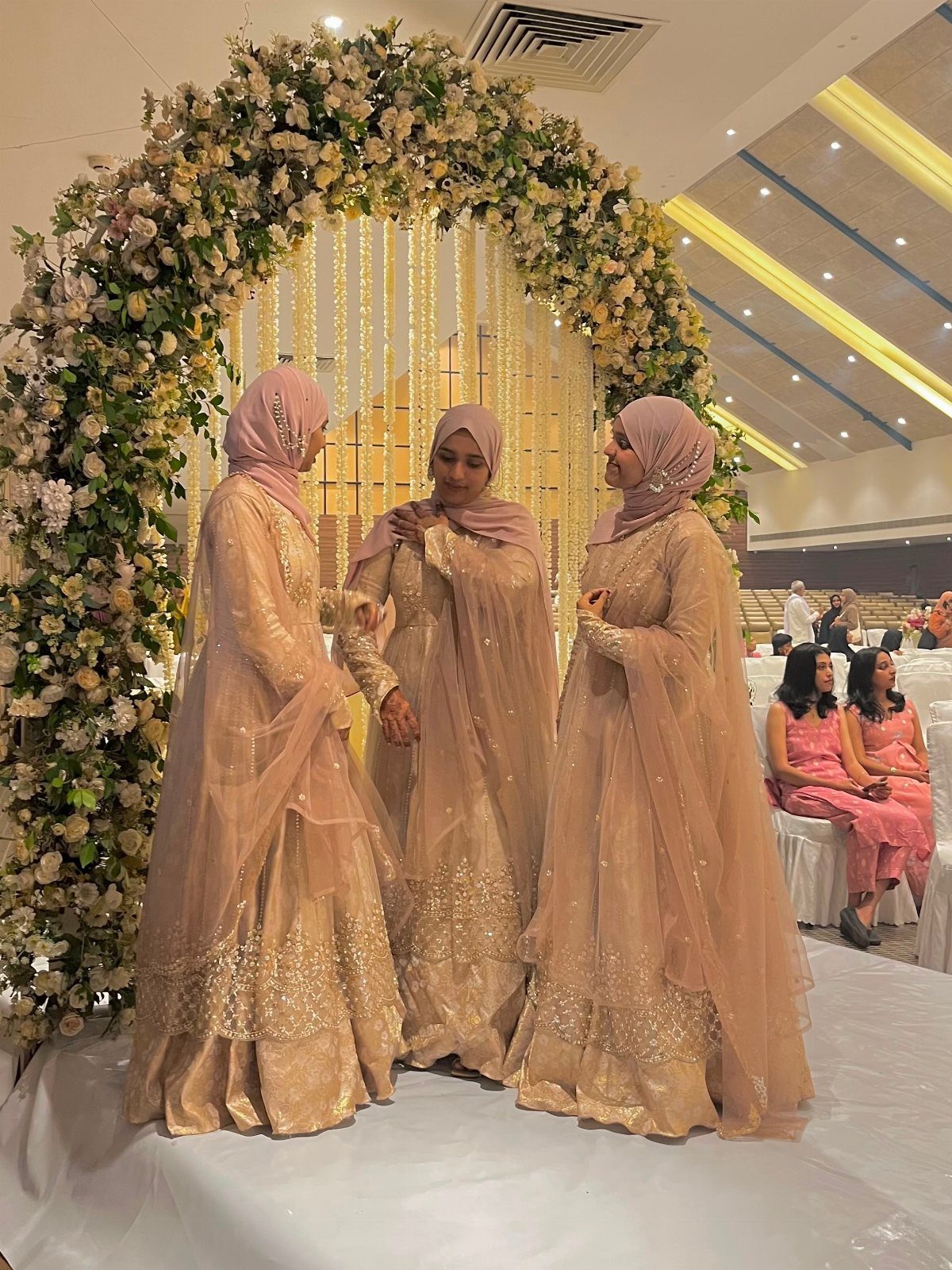
Three matching peach gowns with gold embroidery and matching hijabs make a formal choice that handles coverage and color in one decision. The embroidery does the visual work that jewelry might otherwise do, so the overall look stays clean.
The hijab fabric matching the dress exactly is what makes this work. Peach chiffon and peach satin read as different colors under reception lighting.
Order the hijabs from the same supplier as the dresses, or buy extra dress fabric and have them made. Gold thread in the embroidery picks up warm metal accessories: clutch, shoes, or arch flowers.
This works for religious ceremonies, modest dress requirements, or any wedding where the bride wants her party in something that reads as occasion-wear rather than cocktail dress.
4. Rich Burgundy Velvet Dresses
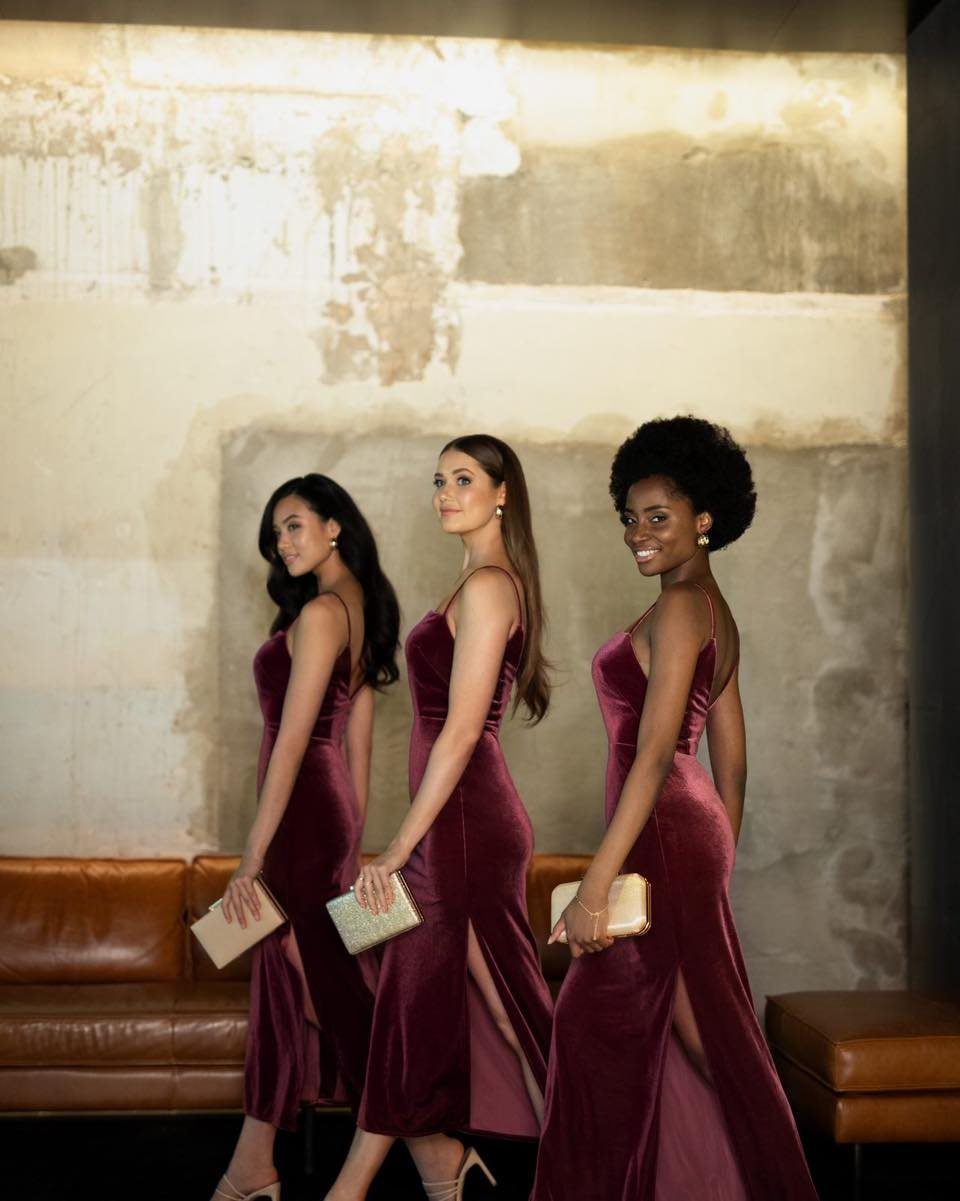
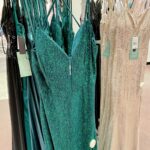
Burgundy velvet in floor-length gowns with side slits is a fall and winter choice that photographs like a solid wall of color. The velvet catches light differently from every angle, so the bridesmaids glow rather than reflect.
Velvet is heavy.
I would check that the venue has heating, or that the ceremony is brief. The side slit in the visible version is high; some bridal parties lower it an inch or two for church ceremonies.
David’s Bridal lists wine as a jewel-toned burgundy that suits romantic themes, and the velvet version amplifies that. Gold accessories, as seen in the clutches, warm the whole look.
This trades some movement for drama. The dresses do not flow like chiffon; they stand and fall like curtains.
5. Mismatched Blush and Pale Pink Dresses
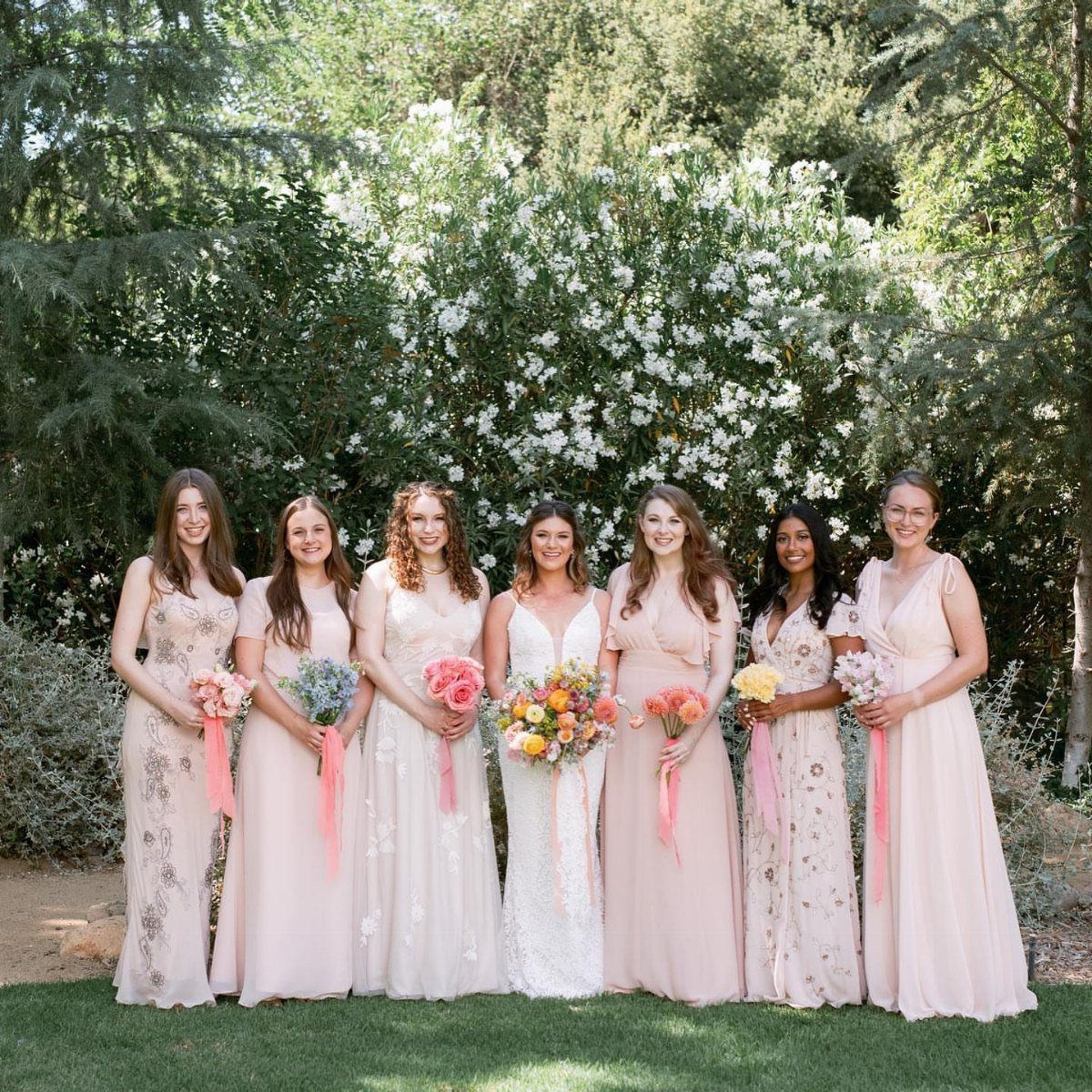
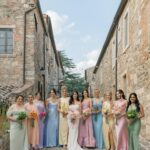
Seven women in blush, pale pink, and cream, each in her own dress cut, make a soft gradient that frames the bride without competing. The visible group ranges from near-white to warm pink, all of it muted.
Keep every tone dusty so nothing reads as bubblegum or neon.
A single saturated pink would pop forward and break the effect. David’s Bridal calls this dusty rose, and stocks it in fabrics from chiffon to satin.
I would stick to one fabric family across the group, or at least avoid mixing matte and shine. Brighter color in the bouquets gives the eye somewhere to rest.
This suits brides who want the mismatched look without the chaos of truly different colors. The decision load is lighter: each woman picks her cut within the range you set.
Frequently Asked Questions
What are the most popular bridesmaid dress colors?
Classic black, wine, navy, and earth tones like sage green and dusty blue lead most bridal party orders.
Burgundy, peach, and blush pink each suit particular seasons or settings, so match the color to your wedding date rather than forcing a favorite year-round.
I would pick based on your venue and time of year rather than what is trending; a color that photographs well in outdoor summer light can look flat in a dim winter hall.
What styles of bridesmaid dresses are available?
Long gowns, short dresses, and mismatched cuts within one color family are the main options. Velvet floor-length with side slits, embellished peach with hijabs, and mixed green-blue palettes where each woman wears a different shade are all options worth considering.
David’s Bridal stocks one-shoulder mesh, criss-cross off-the-shoulder, and spaghetti strap full skirt styles that ship fast if timing is tight.
How do you match bridesmaid dresses with groomsmen attire?
Run the same color through both sides, but check fabric weights against each other first.
What is the best fabric for bridesmaid dresses?
Chiffon, satin, and velvet each suit different seasons and formality levels. Chiffon flows and works for spring or outdoor ceremonies; velvet stands and falls like curtains, heavy and dramatic for fall or winter.
How do you choose bridesmaid dresses for different body types?
Mismatched cuts in one color range let each woman pick what flatters her. I would set the color range and fabric family, then let the bridal party choose their neckline, sleeve, and length within those guardrails.