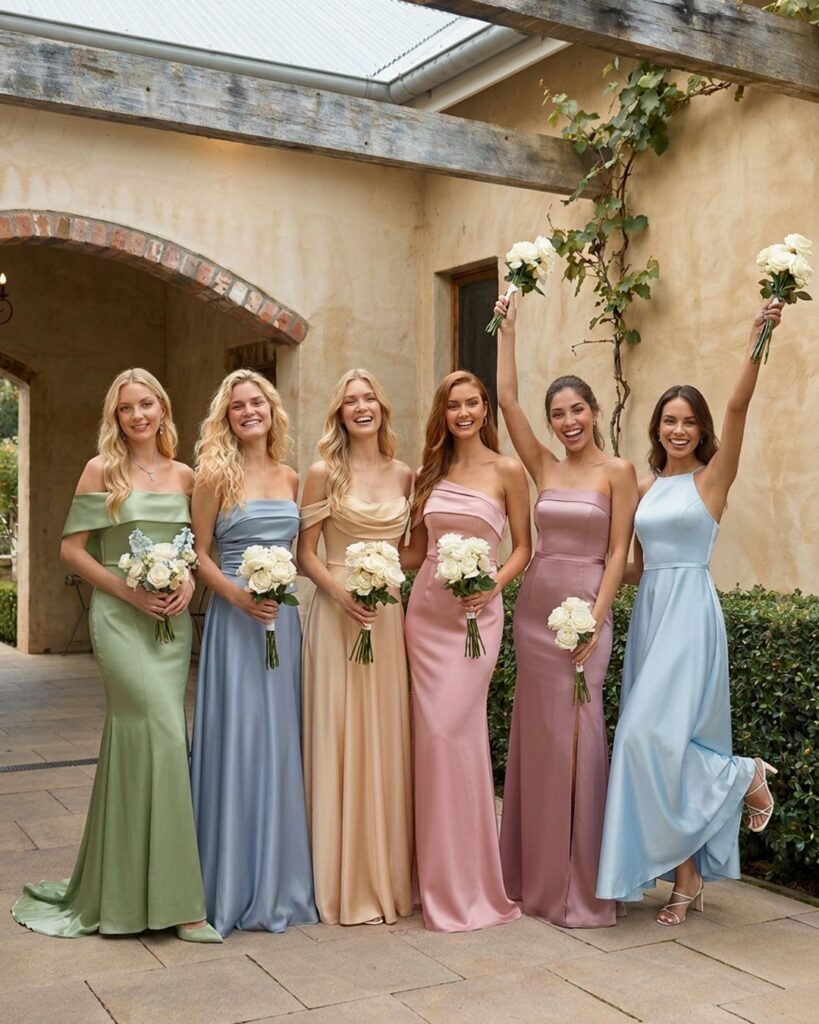
Mismatched bridesmaid dresses can stay subtle with same-color, different-neckline orders or go bold with a full rainbow mix, and the list below shows how to keep either approach from looking accidental.
The deciding factor is how many elements you are willing to hold steady, because mixing more than two at once turns the party into guests, and the sections below cover the cohesion principles that keep it intentional.
The 5-to-7-month timeline with a group try-on at the end is what saves the look when several orders, sizes, and alteration schedules are in play.
1. Same Color, Different Shades
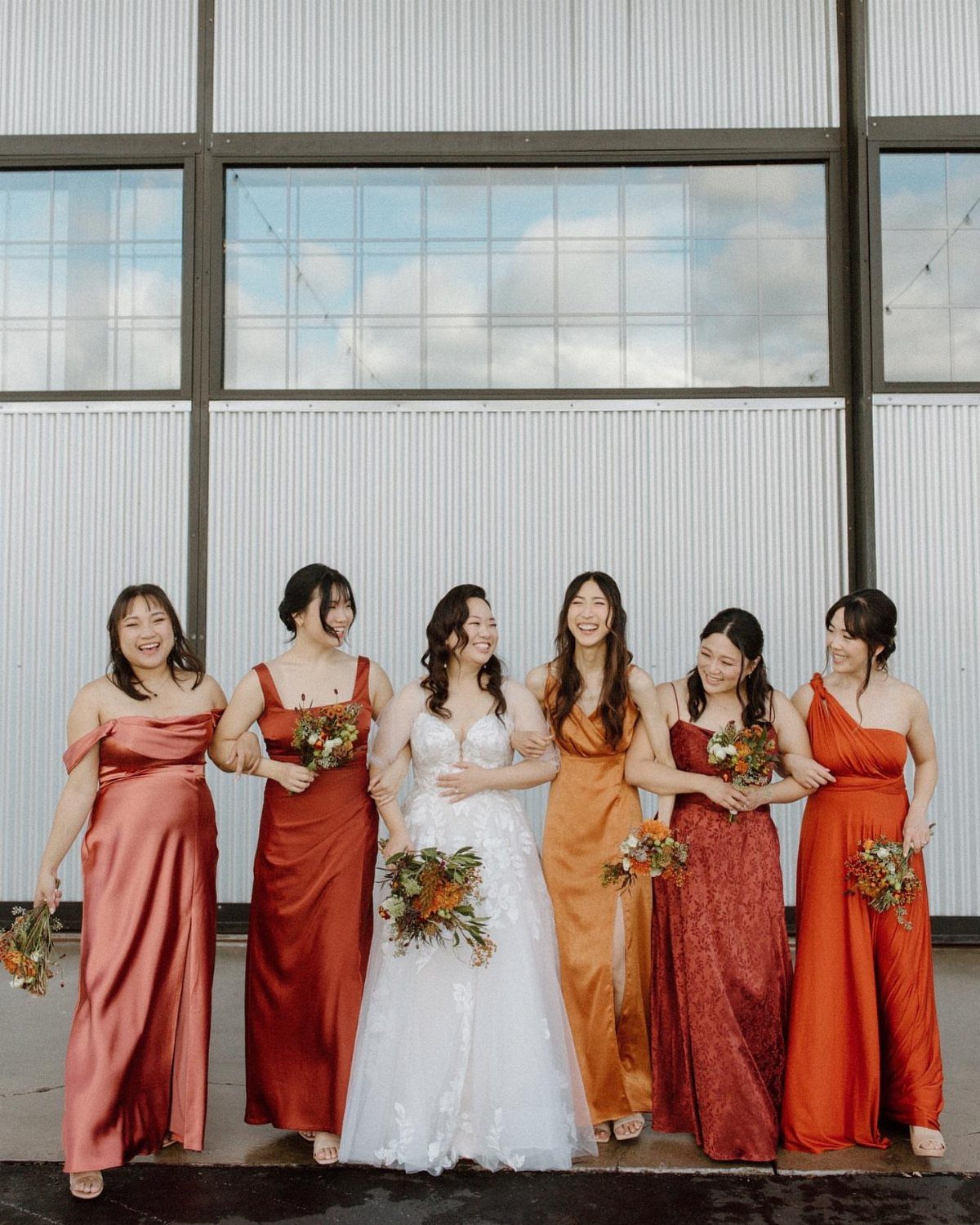
Rust, copper, and terracotta sit on the same warm branch of orange, so the group reads as intentional even when the dresses differ in cut. One color family does the organizing work for you.
I like this approach for brides with larger parties or tight timelines. One decision about color direction keeps the look unified without requiring every dress to come through your inbox.
The shade range can stretch further than people expect. A pale peach and a deep burnt sienna still belong together if both carry enough yellow undertone.
If you want to add silhouette variety too, you still can: dusty rose in A-line, halter, or fit-and-flare all photograph as a coordinated unit from across the lawn.
2. Rainbow Mix of Colors
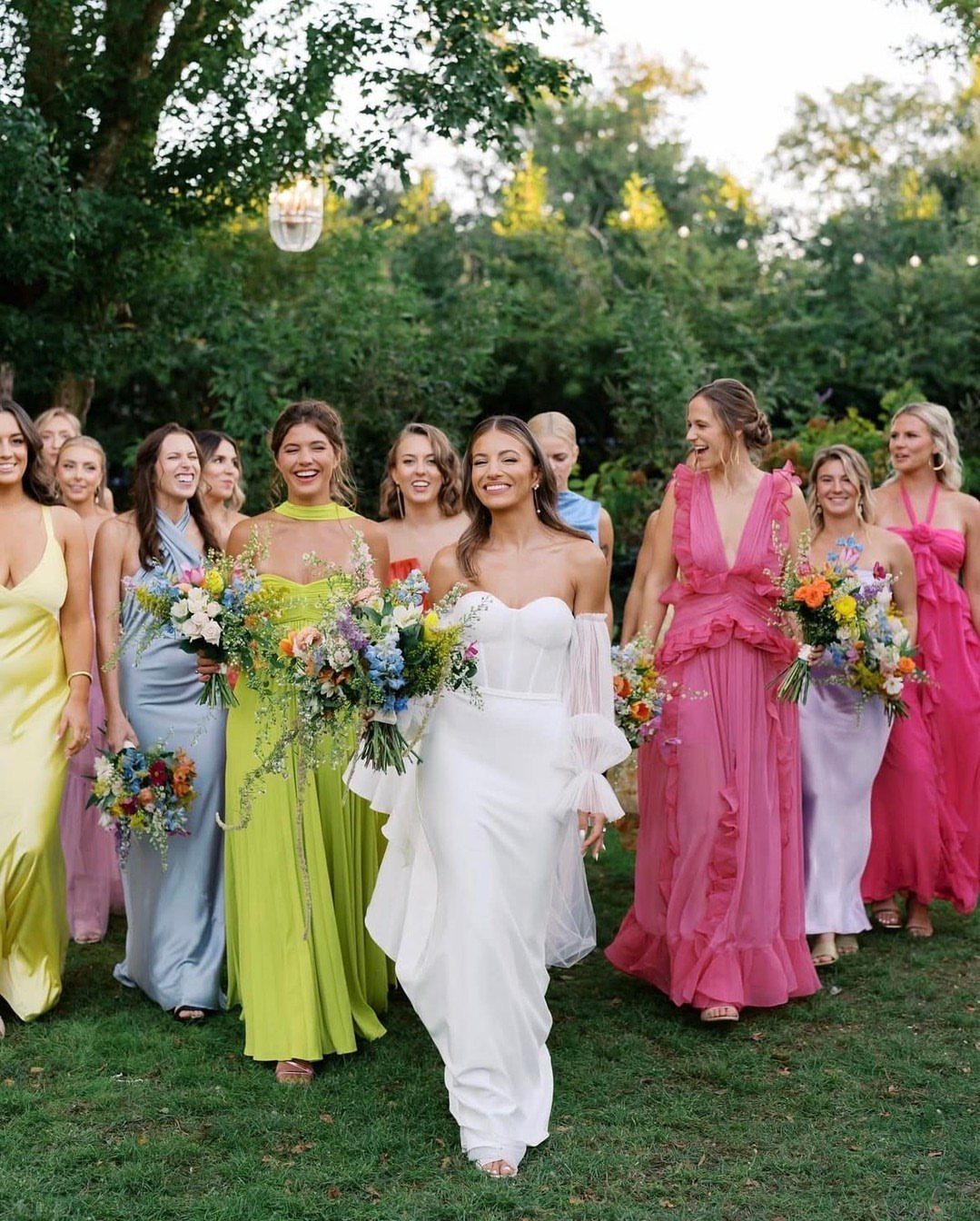
Yellow, lime, pink, and blue together only work when every shade is saturated enough to hold its own. Muted versions of those same colors would muddy into each other and look accidental.
The wildflower effect needs real variety in the mix.
Two bridesmaids in coral and one in rose pink is not a rainbow; it is a disagreement. I would ask each attendant to name her color before anyone shops, then check that no two sit too close on the wheel.
This suits a bride who genuinely does not want to manage details. Photographs read more festive than formal, and some family members will not understand it.
3. Cohesive Color Palette Dresses
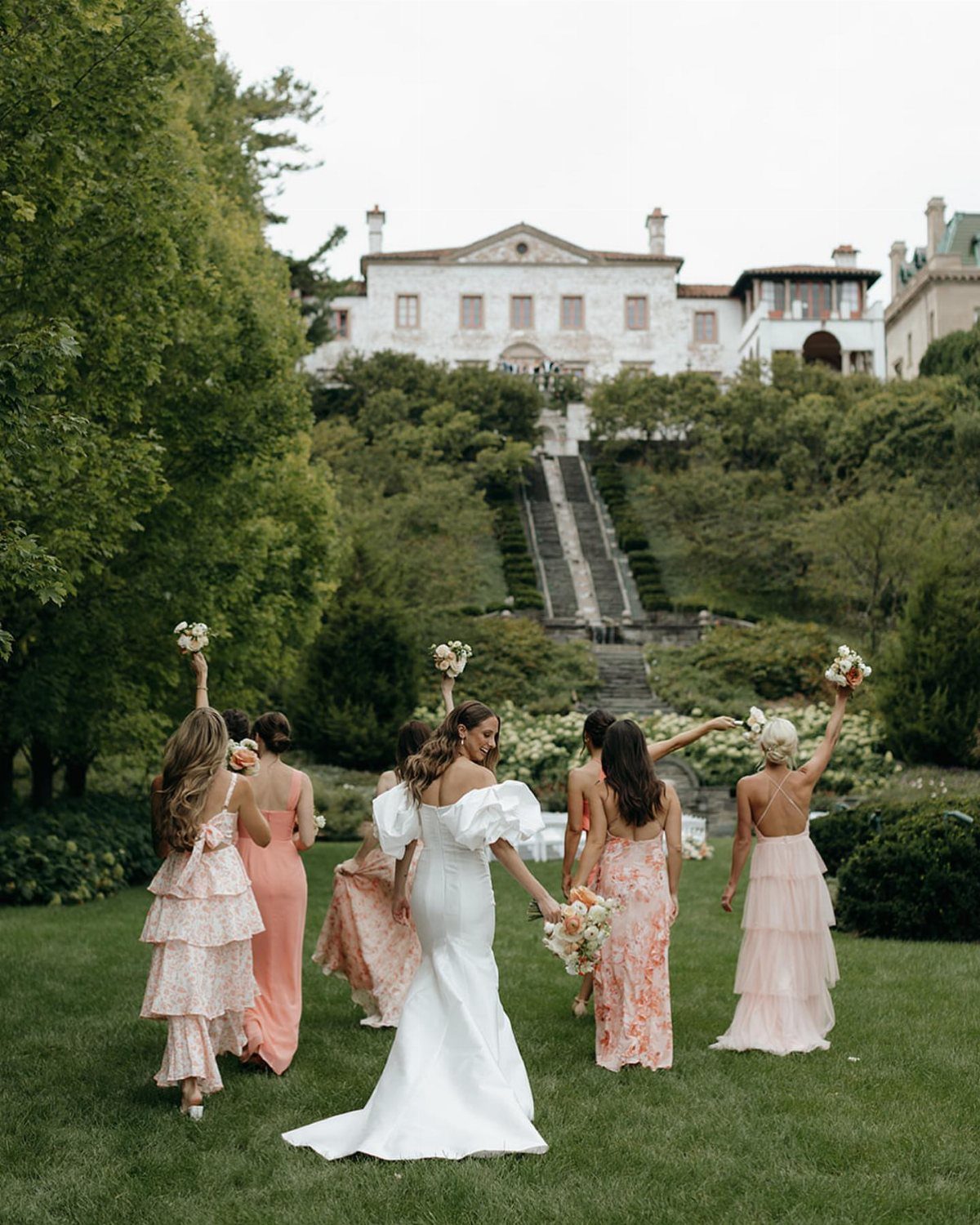
Peach and pink share enough DNA that the group feels planned even when the individual dresses do not match in style or fabric.
What makes this work in practice is one repeated detail across every attendant. Same bouquet palette, same jewelry metal, same shoe color, same hair styling family: pick one anchor and hold it.
I would choose shoe color as the anchor. It is visible in every group shot, easy to communicate, and does not require anyone to change her hair plan.
4. Visual Examples
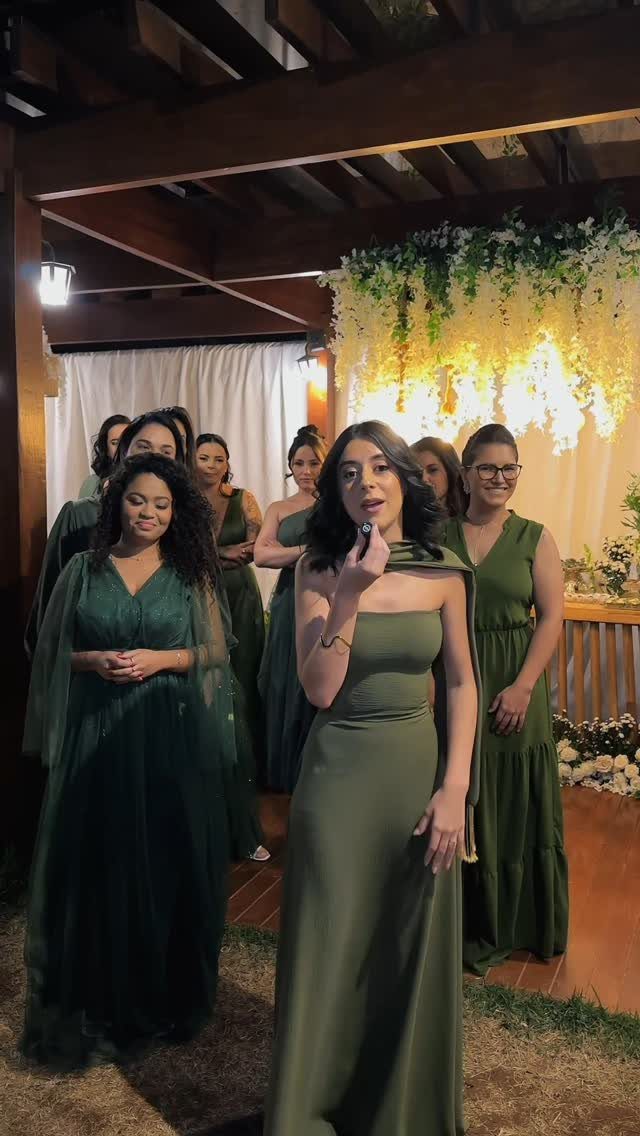
A shared photo board or simple group chat with saved images keeps everyone oriented without requiring a single dress code sentence. Your maid of honor in olive satin sees the same reference as your cousin in forest crepe.
The visual becomes the rule.
No one has to interpret "formal garden wedding" or argue about whether her shade counts as green enough. She sees the photo, she decides if her dress belongs, and she buys or she does not.
This method asks more setup from you at the start and less intervention later. I find that trade usually worth it.
5. Mix of Solids and Floral Prints
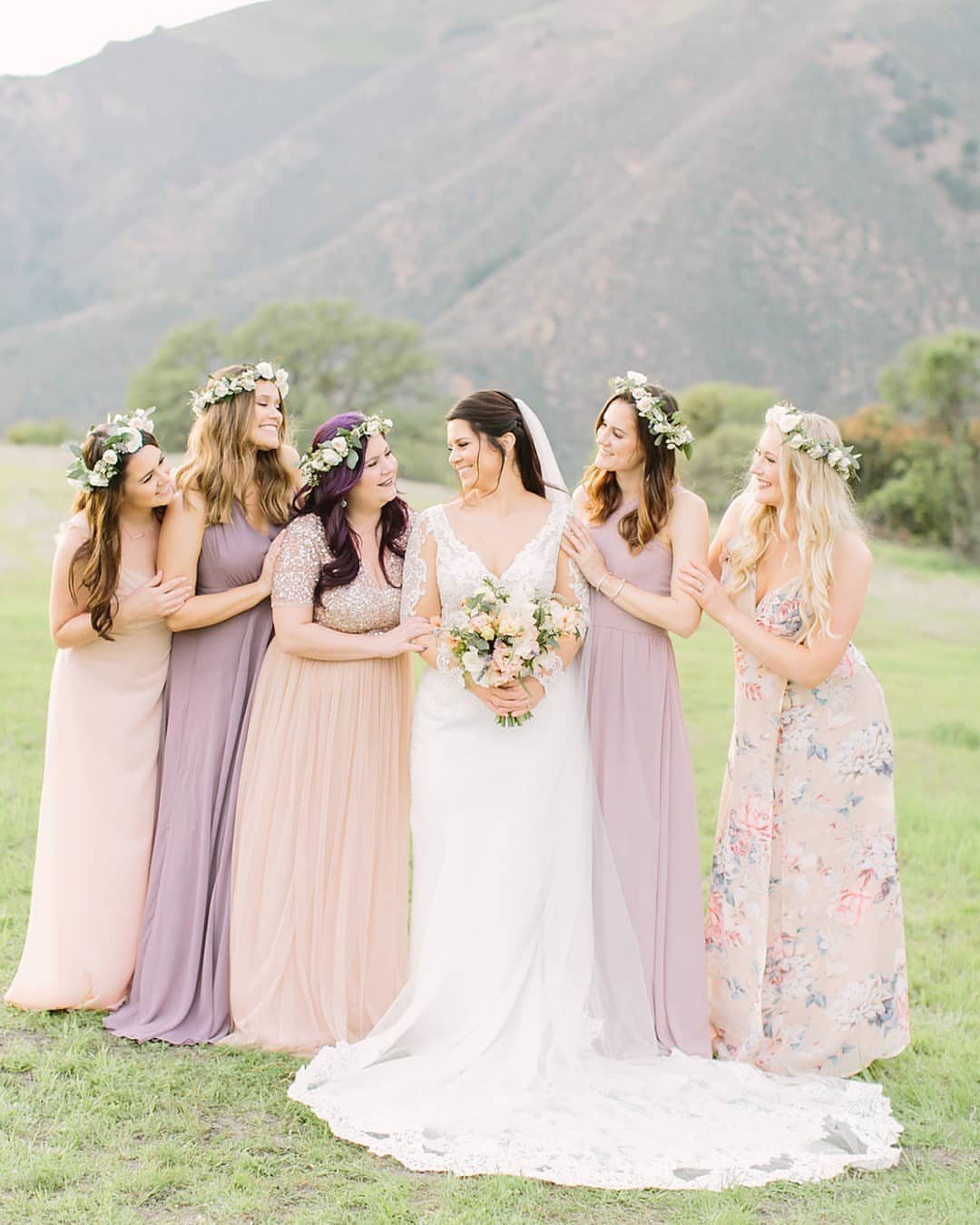
Solid blush and mauve beside a floral print only holds together when the fabrics themselves match in weight and finish.
A sequined solid next to a cotton floral would read as 2 different events, so I look for the same fabric weight across the mix, even when the patterns differ.
Keep fabric and hemline consistent even when color and pattern vary.
I would add that the floral itself should pull from the same pastel family as the solids: no navy ground, no burgundy blooms. The print is the accent, not a departure.
Nude or blush shoes on everyone function as the quiet tie that lets the dresses disagree.
6. Textured and Ruffled Blush Dresses
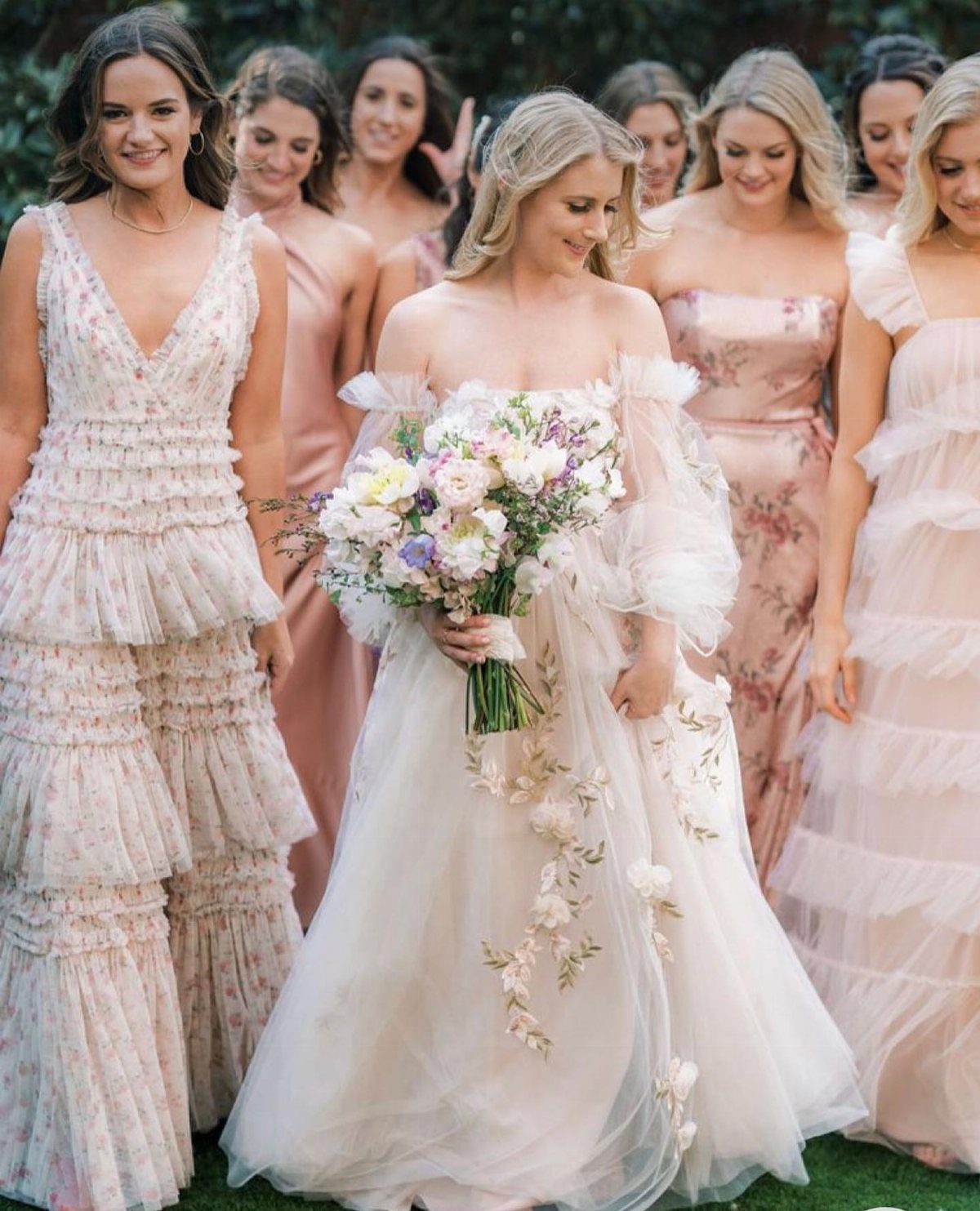
Blush, pink, and cream together create a soft gradient that forgives texture differences. Ruffles, fine pleating, and scattered floral appliqué all read as romantic rather than competing.
This is where I would let each bridesmaid choose her own silhouette. A-line, halter, fit-and-flare in the same dusty rose family all photograph as coordinated from a distance, and the texture variation adds interest up close.
The risk is fussiness.
One ruffled dress is charming; five can look like a bakery display. I would cap the number of heavily textured gowns at half the party, with the rest in simpler blush crepe or satin.
7. Same Color with Different Necklines
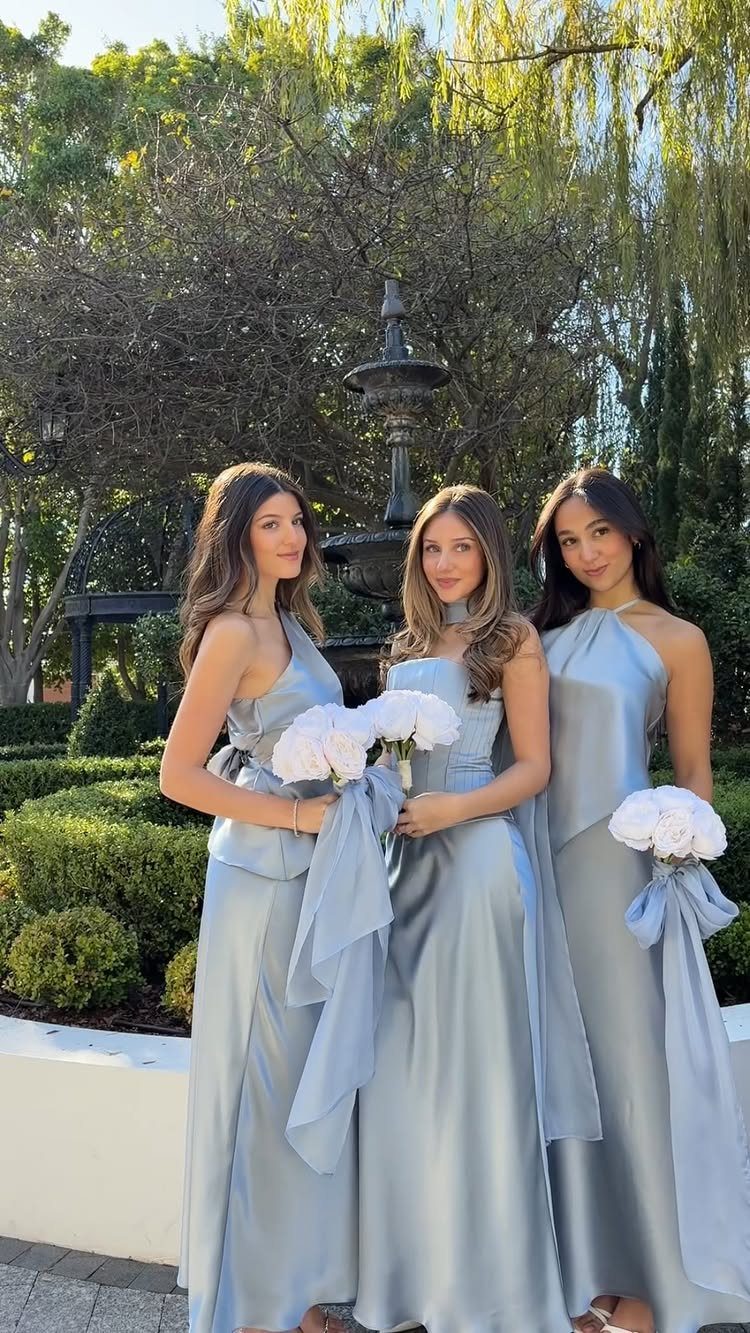
Dusty blue satin in three different necklines reads as one uniform color from the altar and three distinct personalities in the receiving line.
This approach suits a bride who wants visual order without dictating every cut. The identical fabric and dye lot do the heavy lifting; the neckline variation lets each attendant work with her own shoulders and proportions.
I would order all dresses from the same dye lot and fabric run, then let each woman choose her neckline from that single collection.
Satin shows color shifts more brutally than chiffon, so the same material batch matters more here than with mixed textures.
The trade is less flexibility in fabric weight. Everyone wears satin, or the color match falls apart.
8. All-floral Mismatched Prints
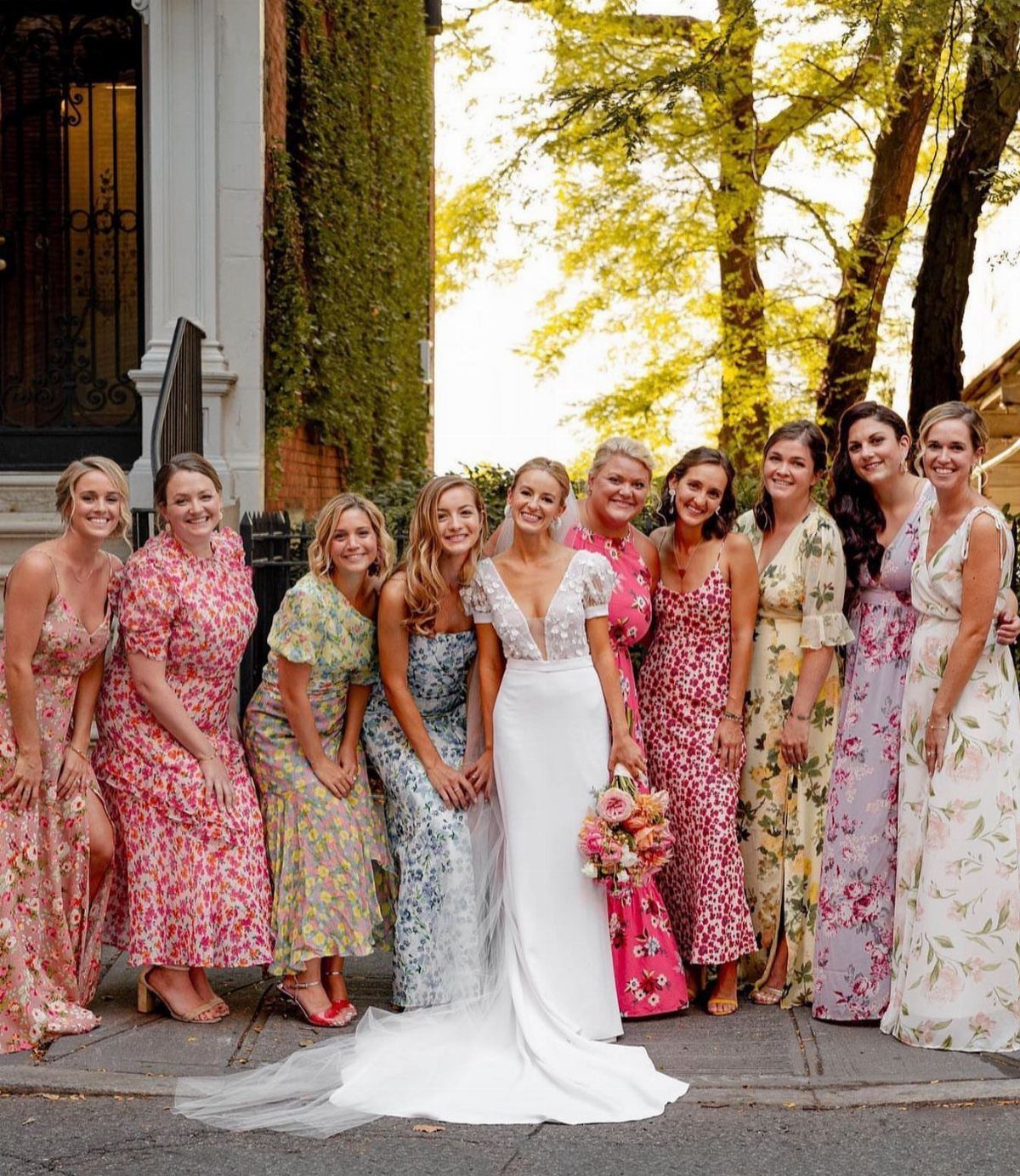
A full floral mix only holds together when every dress hits the same maxi length and carries the same easy, casual weight. That ground rule keeps the group from looking like a garden party that wandered into a wedding.
Each bridesmaid should send a photo before she buys, and I would check that no 2 prints share a dominant color.
Two dresses both reading as red-first would compete; one red-first, one blue-first, one yellow-first, and the rest in green or purple grounds keeps the eye moving across the group.
A woman who picked her own print tends to stand more naturally beside the bride, and that ease reads on camera more than most people expect.
The risk is family confusion about whether these are bridesmaids or guests who happened to cluster.
Benefits of Mismatched Dresses
Mismatched dresses work when one shared element does the unifying work: a single color family, one fabric weight, identical hemline, matching shoes.
The practical payoff is body-type coverage. A maid with broad shoulders can choose a V-neck while her cousin in the same dusty blue opts for a halter, and both look like they belong to the same wedding.
Budget spreads better too: one attendant shops a sale rack in March, another waits for April stock, and neither is locked into a single designer’s price point.
Individual expression only looks intentional when it is bounded. Give your party the freedom to choose within one clear rule, not five loose suggestions.
Planning and Communication
Start with the wedding’s actual formality, not with Pinterest. A black-tie ballroom needs different boundaries than a barn dinner, and your bridesmaids cannot guess which you mean if you only say "elegant."
I would send a single written guideline: one paragraph on the shared element you chose, plus three to five reference images saved to a shared board.
The visual does the work of translating "garden formal" into something a woman can shop against.
The bohemian or quirky bride has more room, but room is not the same as absence of direction.
Even an "anything goes" palette needs the anything to share one ground rule: length, fabric weight, or a repeated accessory. Communicate that rule before anyone opens a shopping tab.
Homemade dresses and evening gowns can both work if they work to the same standard. The standard is your job to set.
Ordering Timeline
First, get your own gown settled and decide what ties the group together: a shared color family, fabric, or length.
Once the palette is set, have the whole party measured and submit every order at once so nothing drifts. When the dresses land, book the first round of alterations for everyone together.
That last group try-on is the step most parties skip and most regret skipping.
A palette that reads balanced on screen can clash in natural light, and time still left on the calendar means you can adjust a shade or swap an anchor accessory.
Frequently Asked Questions
How to have mismatched bridesmaid dresses?
Hold one element steady while you vary another. Same color across different cuts works; same fabric weight across different colors works too.
Mix more than 2 elements and the group starts looking like guests who wandered in from separate events. I would pick your anchor first, tell everyone what it is, and check that each dress sends a photo before anyone buys.
Why are mismatched bridesmaid dresses a popular trend?
They let each woman dress for her actual body and budget instead of squeezing into one cut chosen by the bride. A bridesmaid who needs straps gets straps; one who prefers a wrap silhouette gets that.
The bride stops being the referee of what flatters every figure in her party, and each attendant shows up looking like herself rather than a matching set.
What are some bridesmaid dresses that can be worn in different ways?
A convertible dress gives each bridesmaid the same starting piece, then she ties or wraps it into the neckline that works for her, whether that means straps, halter, or something off the shoulder.
Every attendant wears identical color and fabric, but each version suits her own shoulders and proportions. This is a different approach from mismatched dresses, which vary the actual garment rather than how one garment is tied.