15 wedding dress styles run from a ball gown that fills a grand staircase to a minimalist design stripped to pure line and fabric, and the right one depends on whether you want to emphasize your waist, soften your hips, or feel at home in your own skin.
The same silhouette in duchess satin versus chiffon becomes a different dress entirely, which is why this list treats fabric and shape as a single decision.
Interior boning and gripper tape do the actual work in a strapless bodice, which is why that fitting appointment matters more than with almost any other neckline.
1. Ball Gown
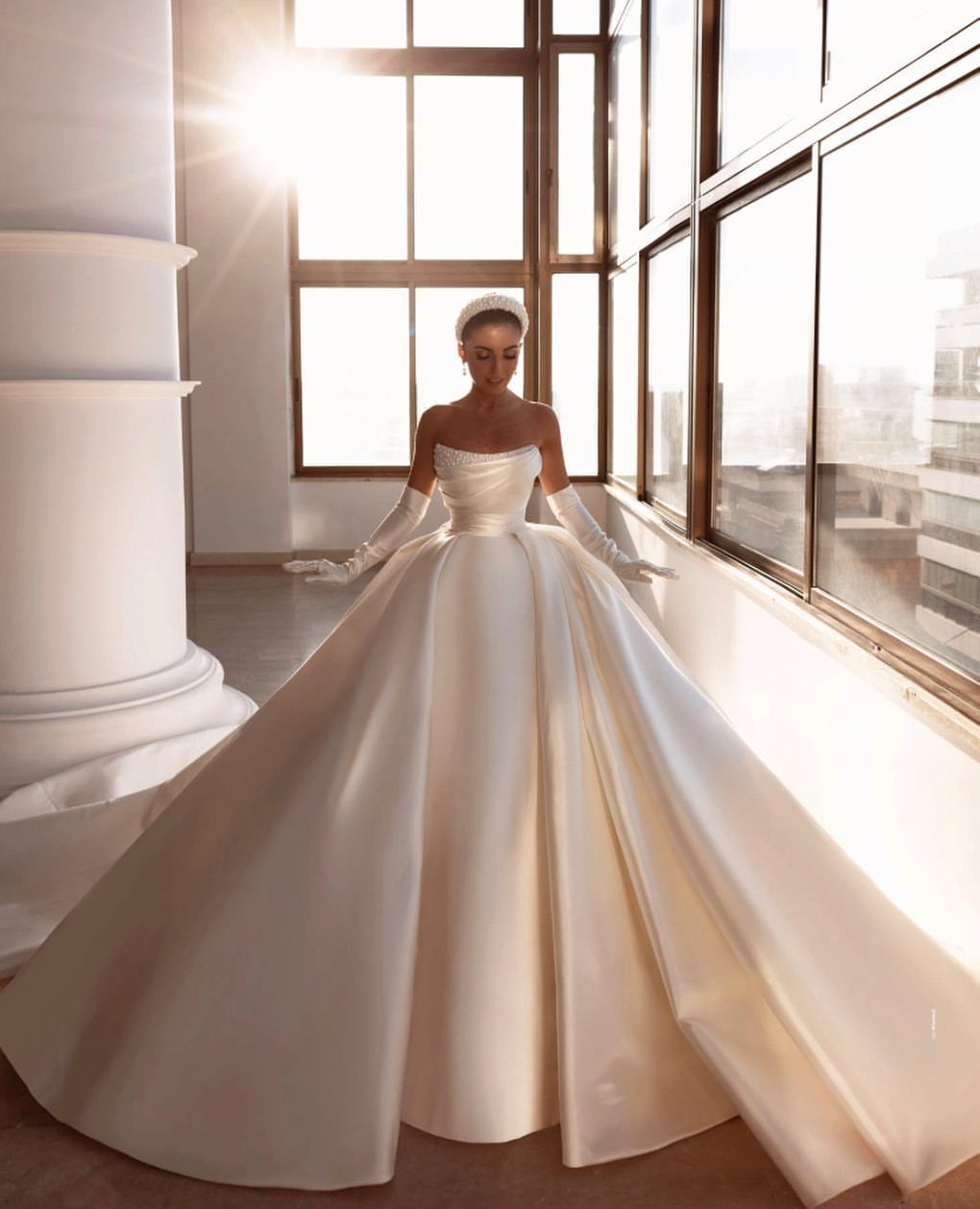
A ball gown starts at the natural waist with a fitted bodice and goes full from there, the skirt bell-shaped and heavy enough to announce itself when you turn.
No other silhouette reads as instantly bridal in photos from every distance and angle.
All that fabric below the waist makes the waist itself look smaller, which is why the shape works so well for anyone who wants to balance wider hips.
If your hips are narrow and your bust fuller, the proportions here finally give you the hourglass the mirror usually denies.
Tulle floats like a storybook, mikado stands up to hours of wear without wilting, and organza in layers builds the most theatrical skirt.
This is a gown that needs space: grand ballrooms, large churches, formal receptions. Wear it anywhere cramped and you will spend the night managing the skirt rather than enjoying it.
2. Mermaid
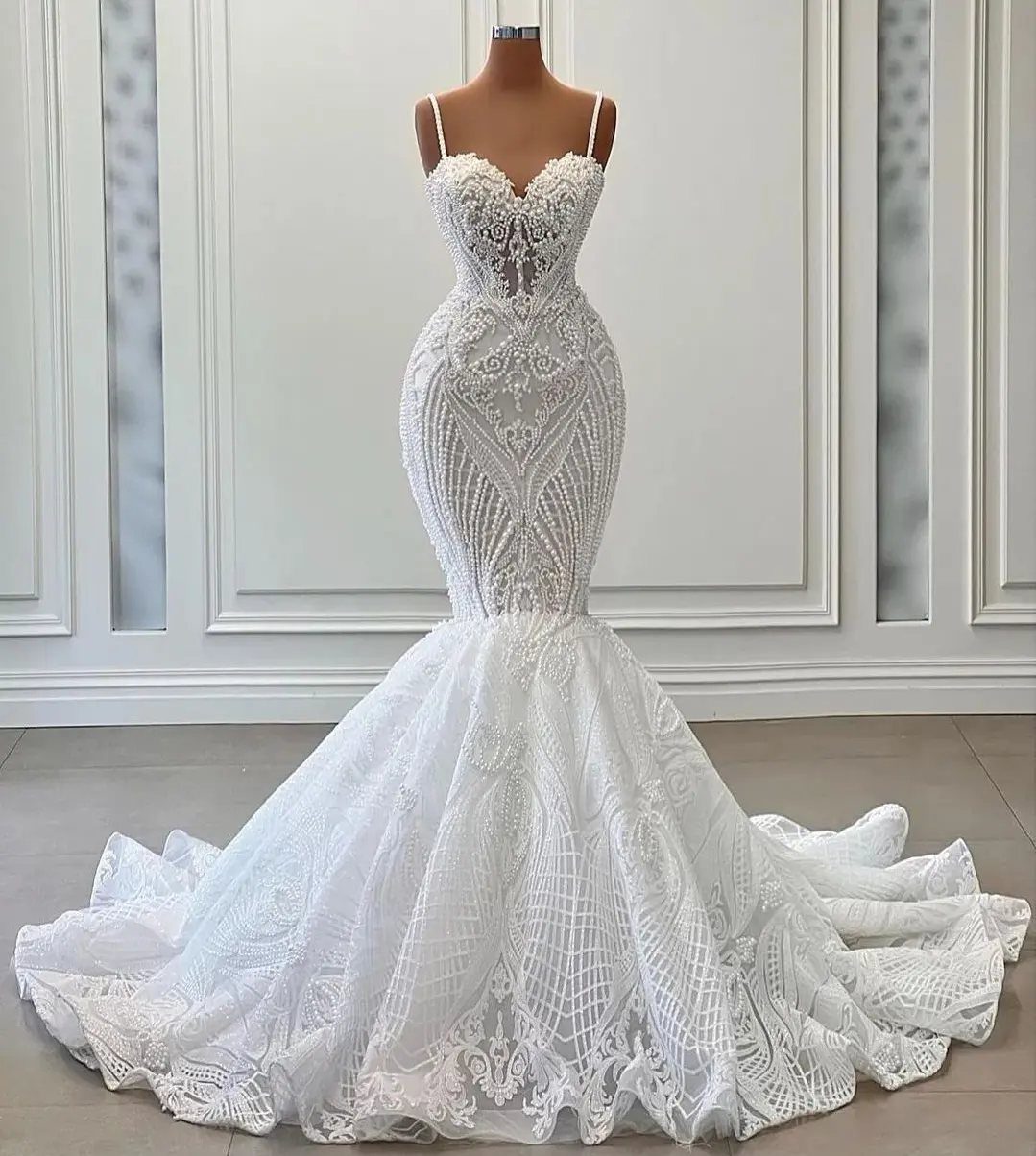
A mermaid fit starts at the bust and stays close through the knee, then breaks into a flare that comes out of nowhere.
This is the most architectural shape in bridal, cut to trace what you have rather than soften it.
Hourglass and pear figures fill it best.
The hip-to-knee squeeze limits your stride, so long aisles and outdoor processions need planning. Stretch lace moves with you, crepe looks expensive in its restraint, and sequin fabric commits fully to glamour.
Indoor ceremonies and receptions where you will not be on your feet for hours are the natural fit; this is the dress for showing your shape without apology.
3. Sheath
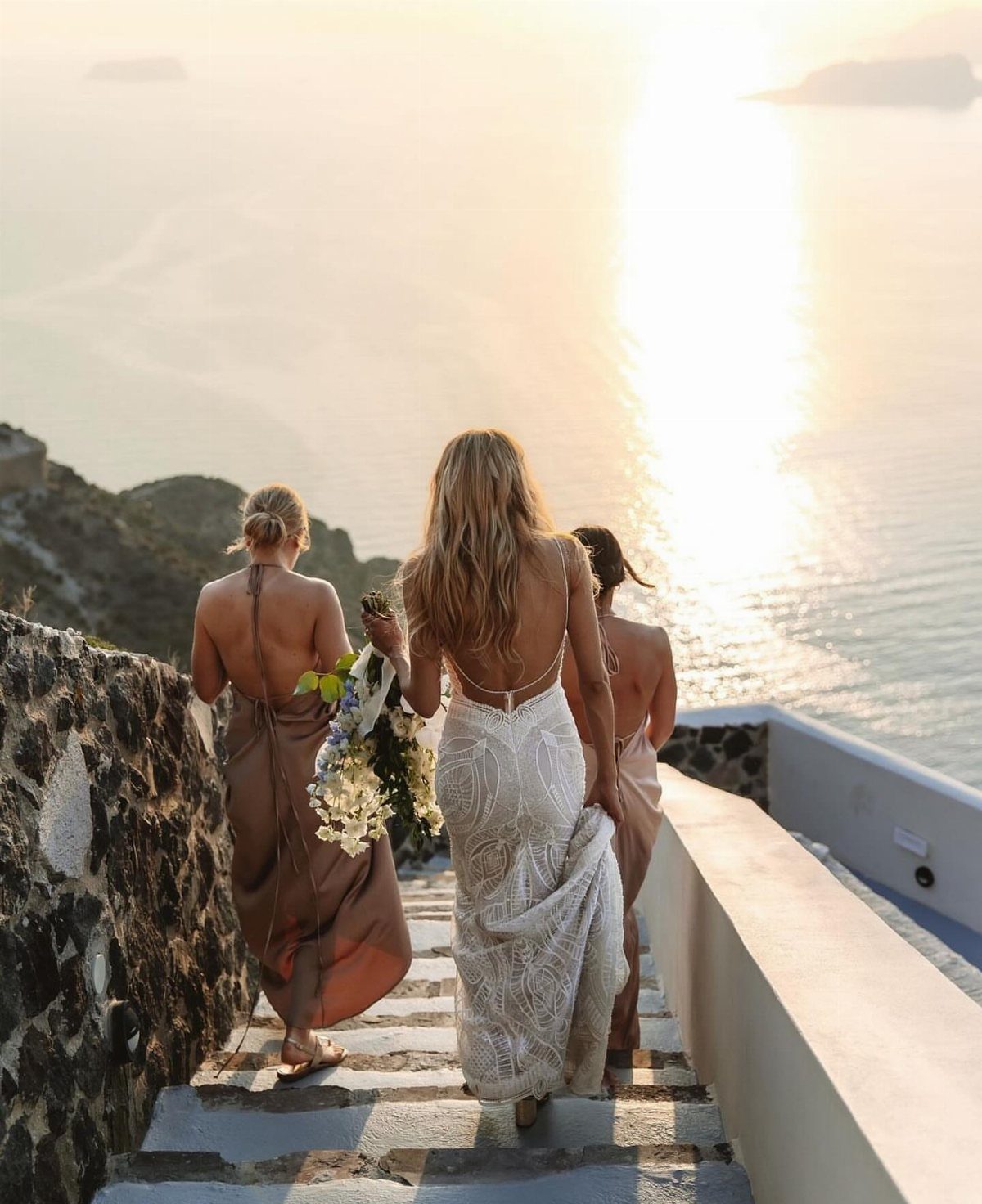
A sheath falls straight from shoulder to hem with no flare, no gathering, no volume at all.
Without boning or petticoats to hide behind, the cut demands good fabric and exact seaming.
Silk satin, silk crêpe, and silk charmeuse hang best from their own weight; heavier lace works too. City halls, museum venues, rooftops, beaches, and intimate dinners are where this dress belongs.
4. A-Line
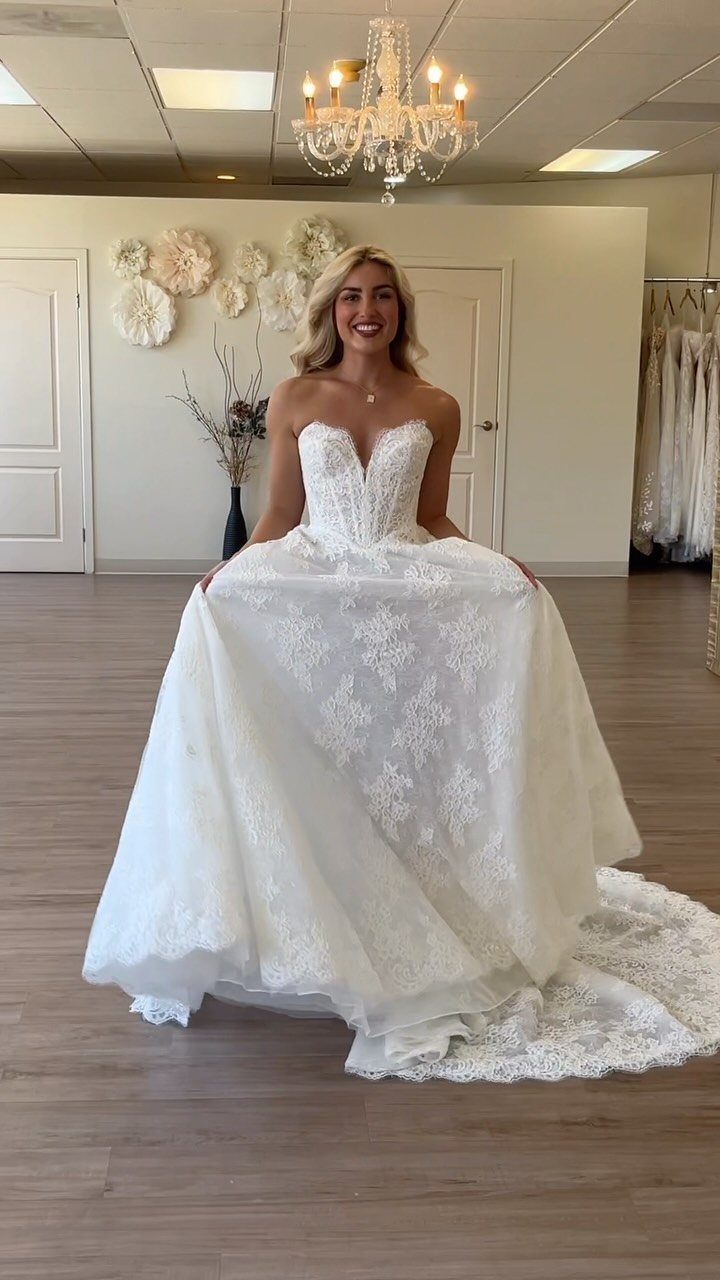
An A-line wedding dress passes over hips and thighs without gripping, and the unbroken fall to the floor stretches the eye upward.
This is the most forgiving silhouette across body types.
Anyone who wants a visible waist without drawing attention to the hip area gets the most use from this shape. Chiffon drifts and moves, crepe keeps its sleek line, and lace overlay turns romantic without getting fussy.
Garden, barn, ballroom, or beach: the A-line takes almost any fabric and almost any setting, which makes it the safe bet when the venue is still TBD.
5. Fit-and-Flare
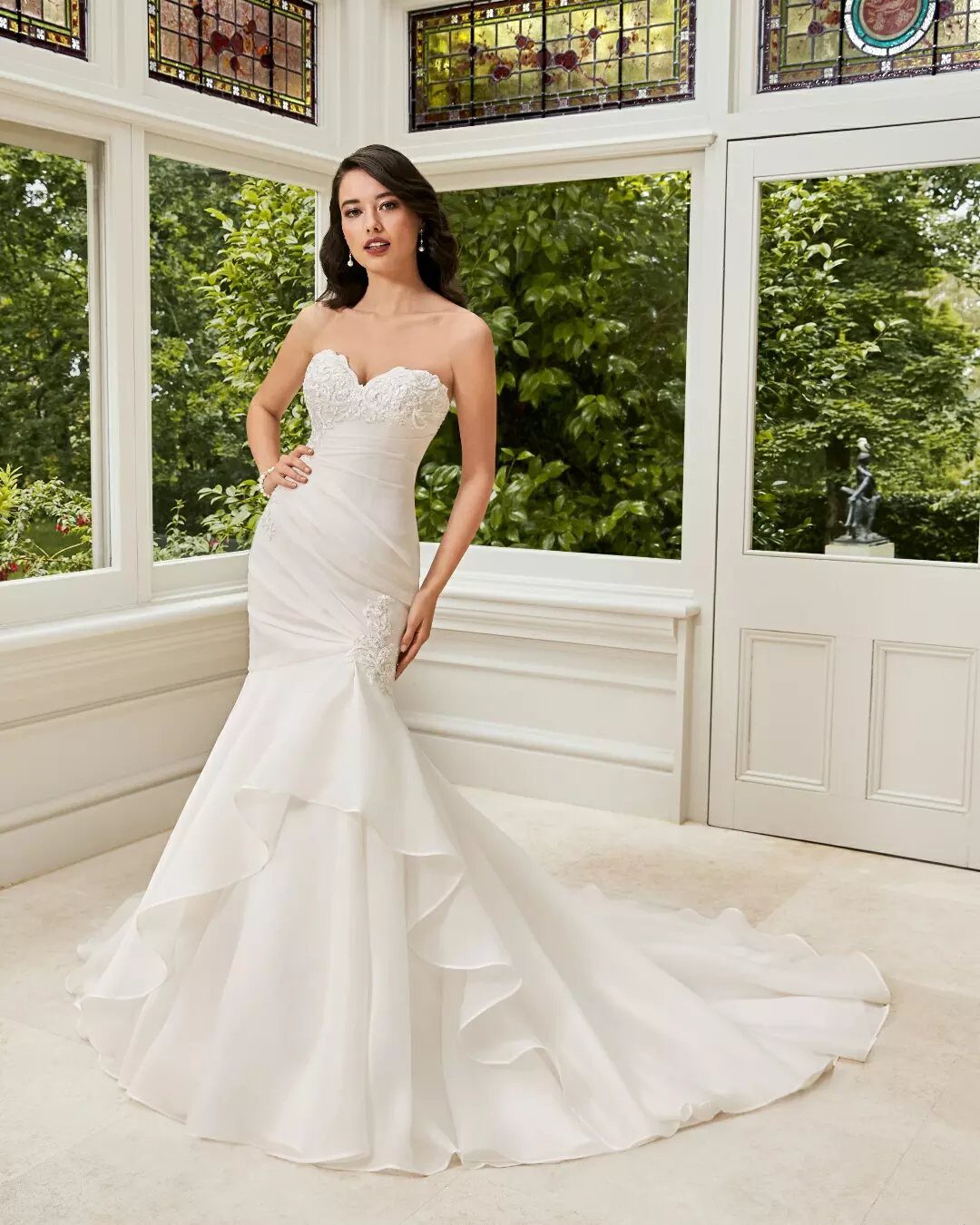
The result is a softer hourglass curve with enough movement to actually enjoy your reception.
The flare picks up light and motion in candid shots without swallowing the frame, which is why photographers tend to love this one.
Petite, curvy, and hourglass figures all find something to work with here. Contemporary venues, garden weddings, and intimate events are the natural fit.
6. Trumpet
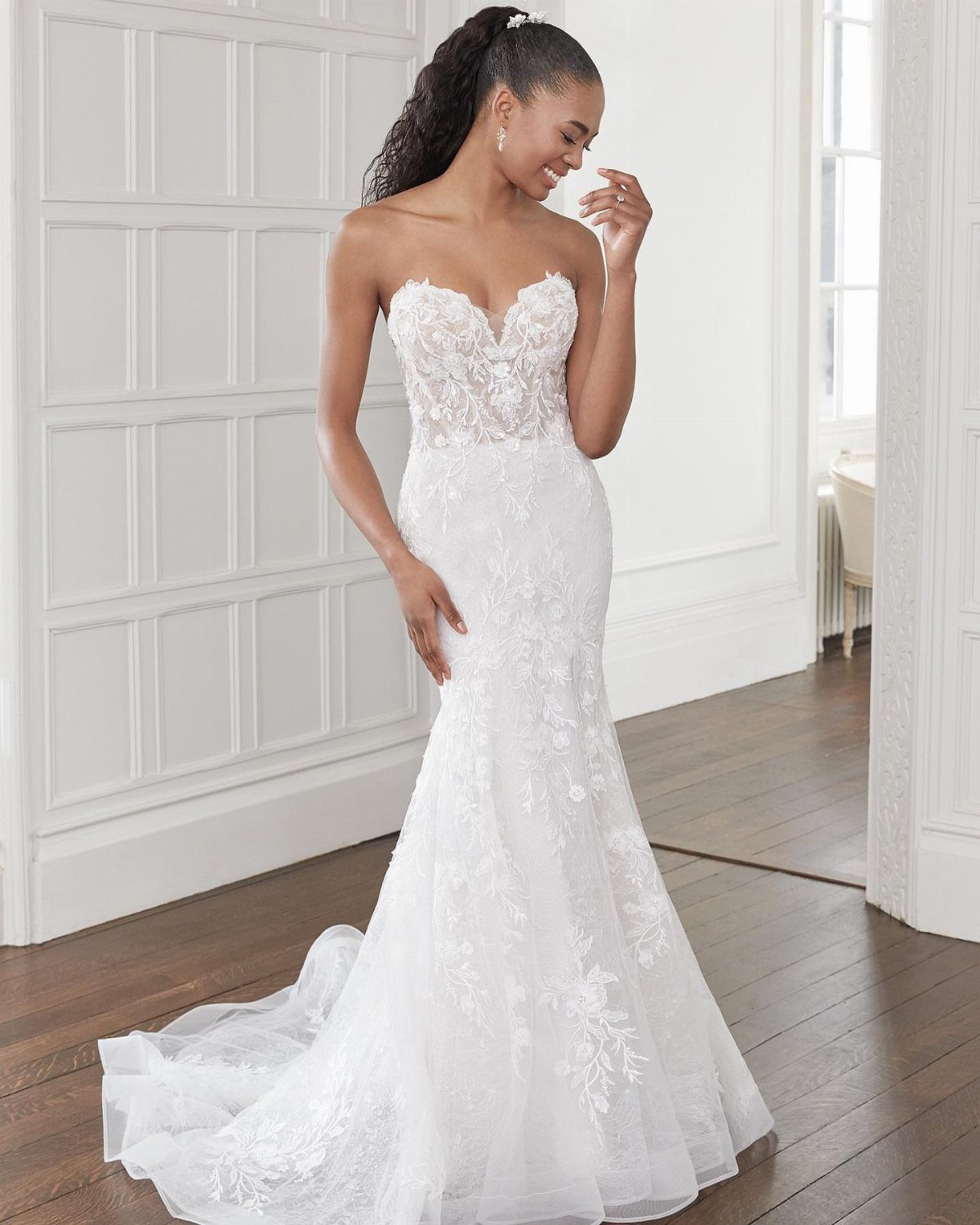
The bell of fabric is gentler, and the difference in walking, sitting, and dancing is real.
Brides who want the mermaid effect for the ceremony but their legs back for the reception often settle on this compromise. Satin polishes the finish, lace keeps it romantic, embroidered tulle adds texture.
The shape holds up across most venues, and the higher flare point means less fabric to manage through a long day. It is the mermaid’s more wearable sister, trading a small measure of drama for a large measure of practicality.
7. Sweetheart Neckline Wedding Dress
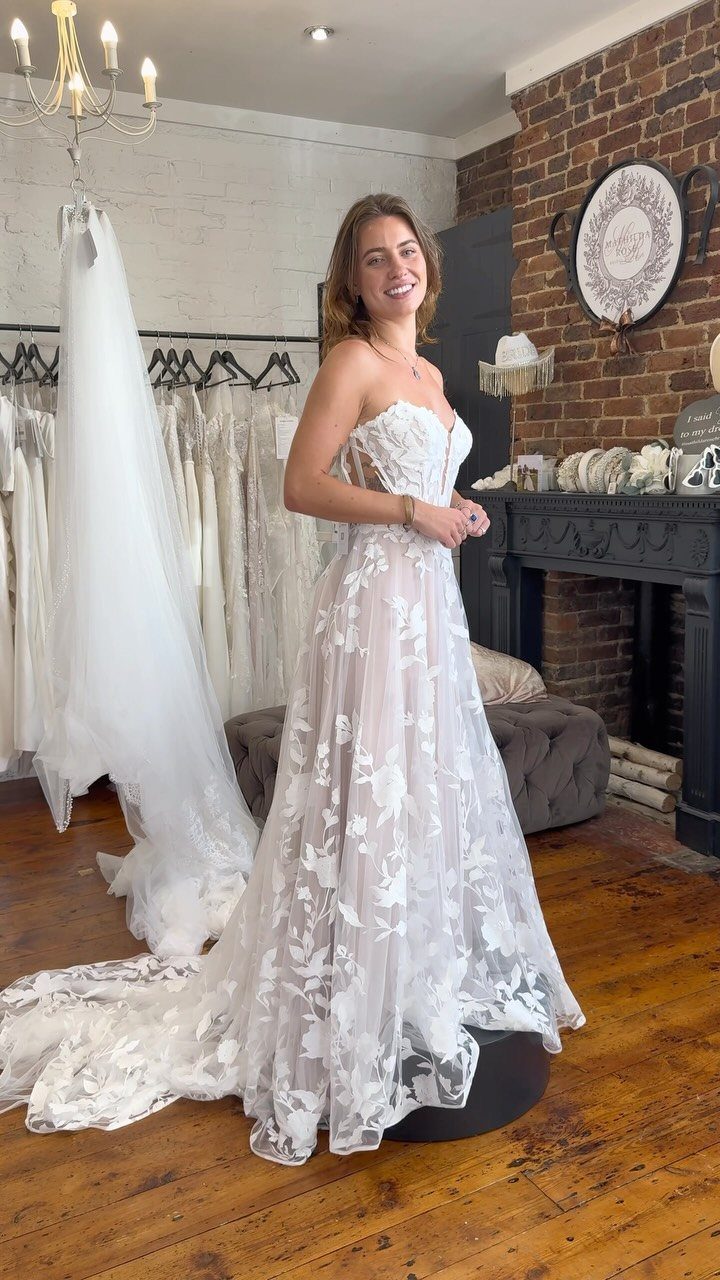
The sweetheart neckline curves like the top of a heart, exposing just enough collarbone to feel open without risking a wardrobe malfunction.
Strapless versions stay up through interior boning and gripper tape, not magic, so budget for alterations that tighten the bodice to your actual ribs.
This neckline draws the eye up and center, which flatters broader shoulders and balances fuller busts.
Lace softens the edge for traditional ceremonies; clean satin reads modern. I would choose it for the way it photographs, the curve catches light differently than a straight edge and reads romantic without trying.
8. Empire Waist
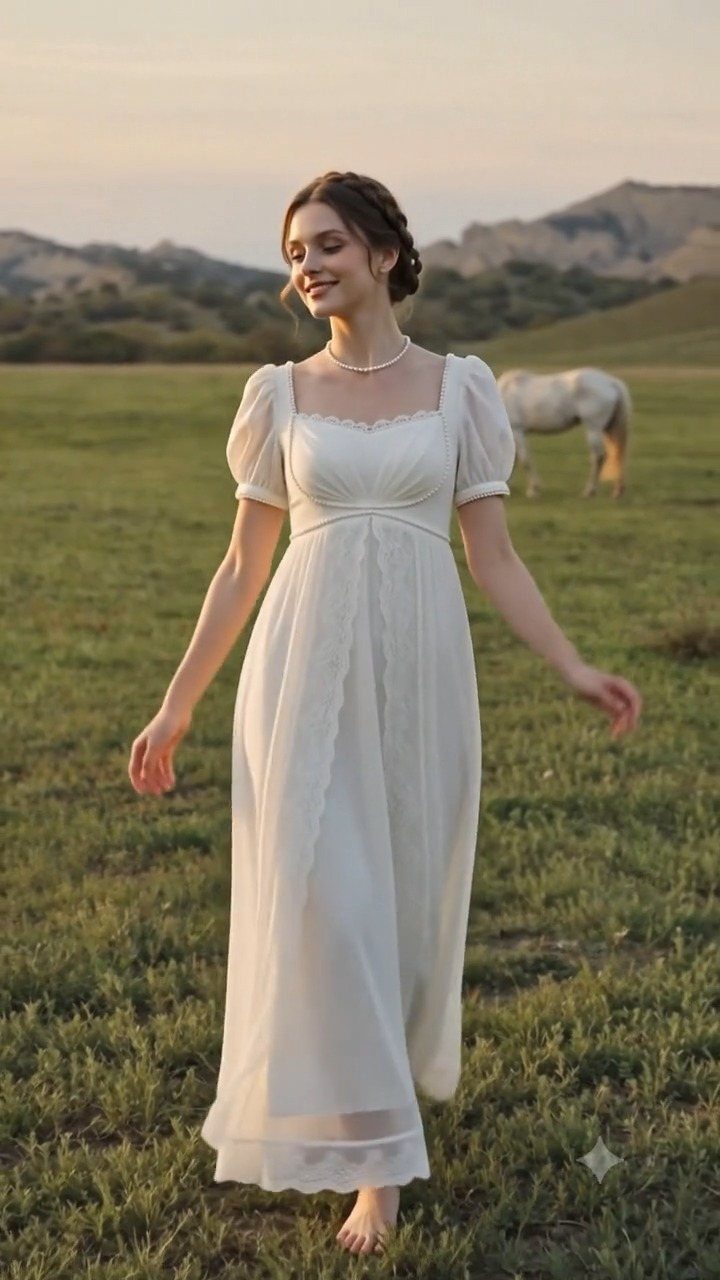
An empire waist seam sits directly below the bust, letting the skirt fall in one continuous line to the floor.
The effect raises the waistline directly below the bust, which shortens the torso and draws attention upward while leaving the midsection loose beneath it.
Brides who want comfort over construction find their match here. Chiffon and georgette keep the skirt light enough for outdoor heat; lace overlay adds texture without weight.
The shape carries Regency-era DNA, so it suits garden parties, beach ceremonies, and any setting where ease of movement matters more than structure. It is the silhouette I would pack for a destination wedding, no petticoat required.
9. Long Sleeve Wedding Dress
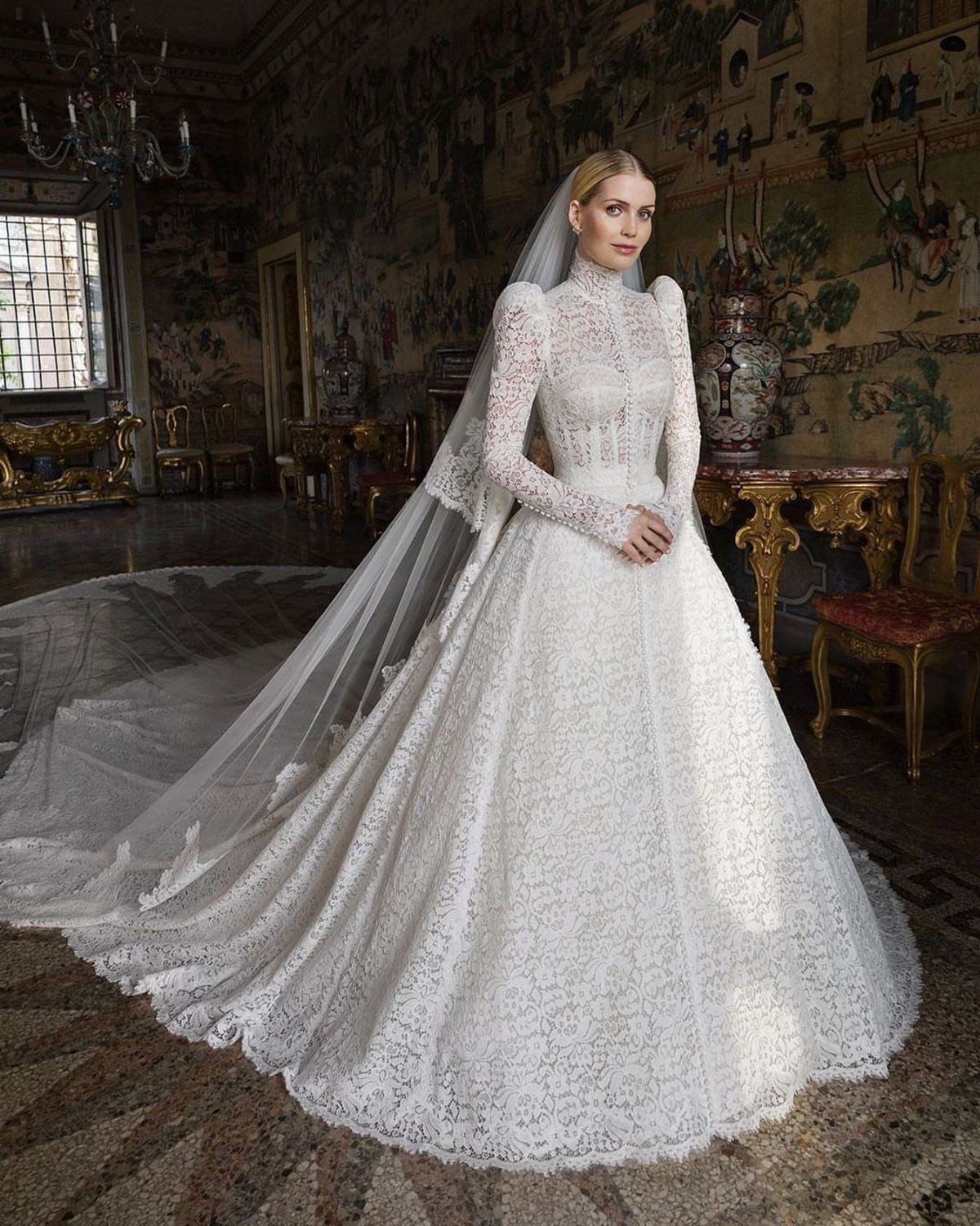
Long sleeves in bridal range from fitted lace to dramatic bell shapes, each version solving a different problem. Lace sleeves give coverage without weight; crepe keeps the line clean for minimalist tastes.
The sleeve becomes the dress’s personality, more than most brides expect.
Detachable versions exist if you want the coverage for the ceremony and freedom for the reception. I would check the wrist closure before committing: buttons, zippers, and elastic each behave differently when you reach for your bouquet.
10. Off-shoulder Style
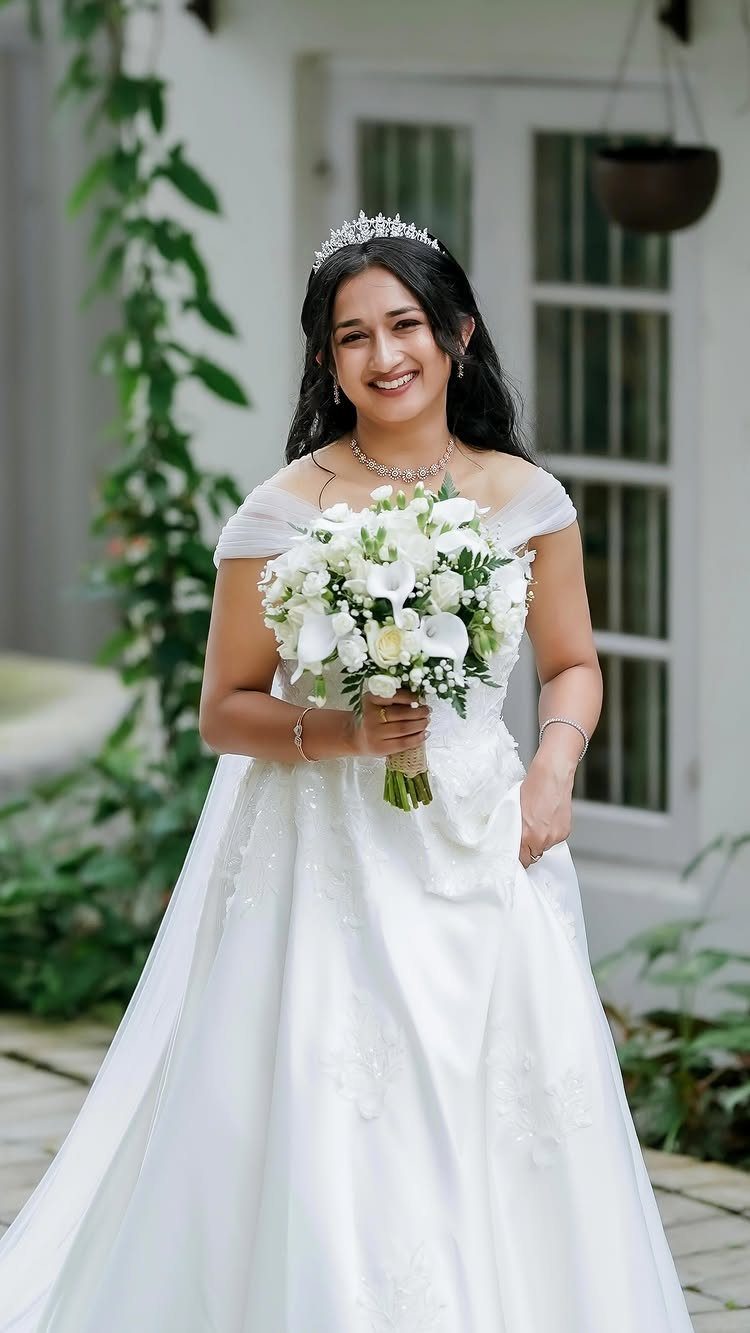
An off-shoulder neckline drops just below the shoulder bone, so your collarbone and upper chest show while the sleeve or strap takes care of the top of the arm.
The line can run straight across or curve; each reads differently, straight is more architectural, curved softer.
This is the middle ground between strapless and covered: shoulders out, upper arms in. Flutter sleeves hide what long sleeves reveal; tighter cuts do the opposite.
It pairs with almost any skirt shape, which makes it a useful choice when you love your shoulders but want the rest open. Summer brides get the benefit without the tan-line anxiety of halter or one-shoulder cuts.
11. Tea-Length
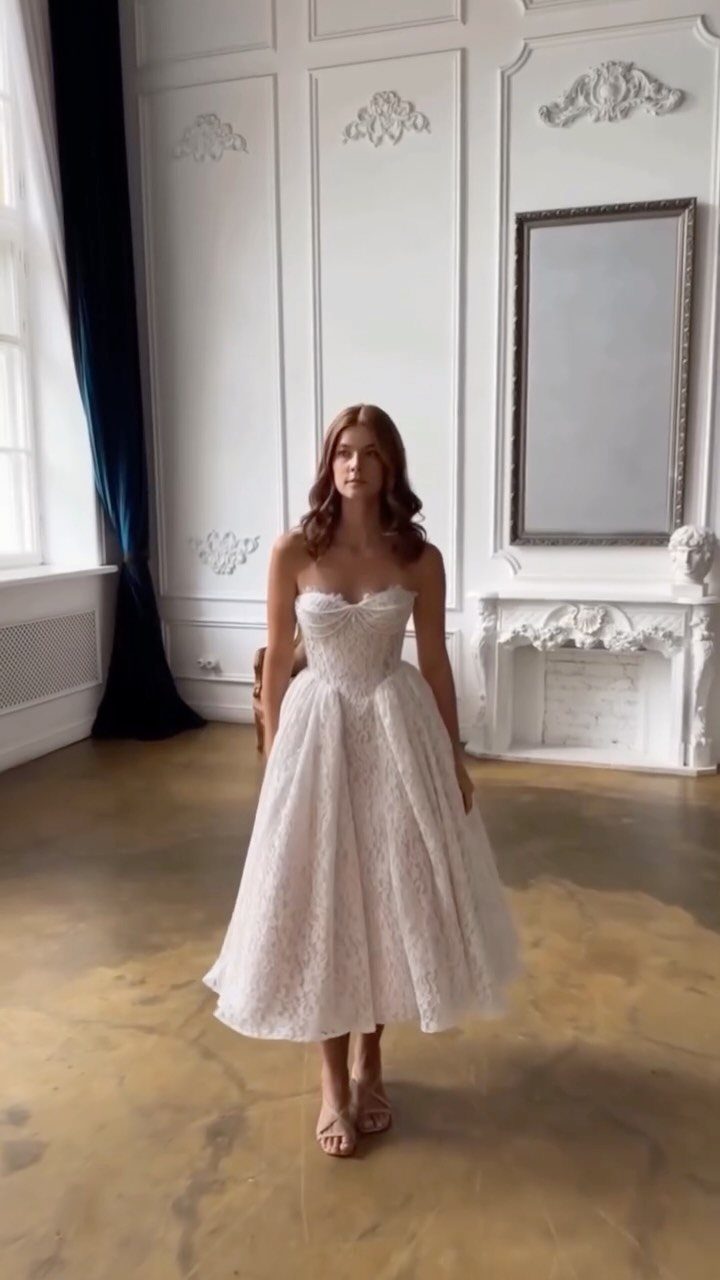
Tea-length hems stop between knee and ankle, a length that signals vintage without requiring a full period commitment. The cut works best in softer silhouettes, A-line, fit-and-flare, or slip shapes that keep the shorter line from feeling boxy.
This is the practical choice for courthouse ceremonies, reception second looks, or any bride who plans to dance without managing a train. The hem shows your shoes, so the footwear investment matters more here.
Silk crêpe, embroidered tulle, or fine lace keep the look unmistakably bridal rather than cocktail. I would choose it for the freedom alone, the ability to walk without lifting fabric is underrated after hours in a gown.
12. Mini and Short
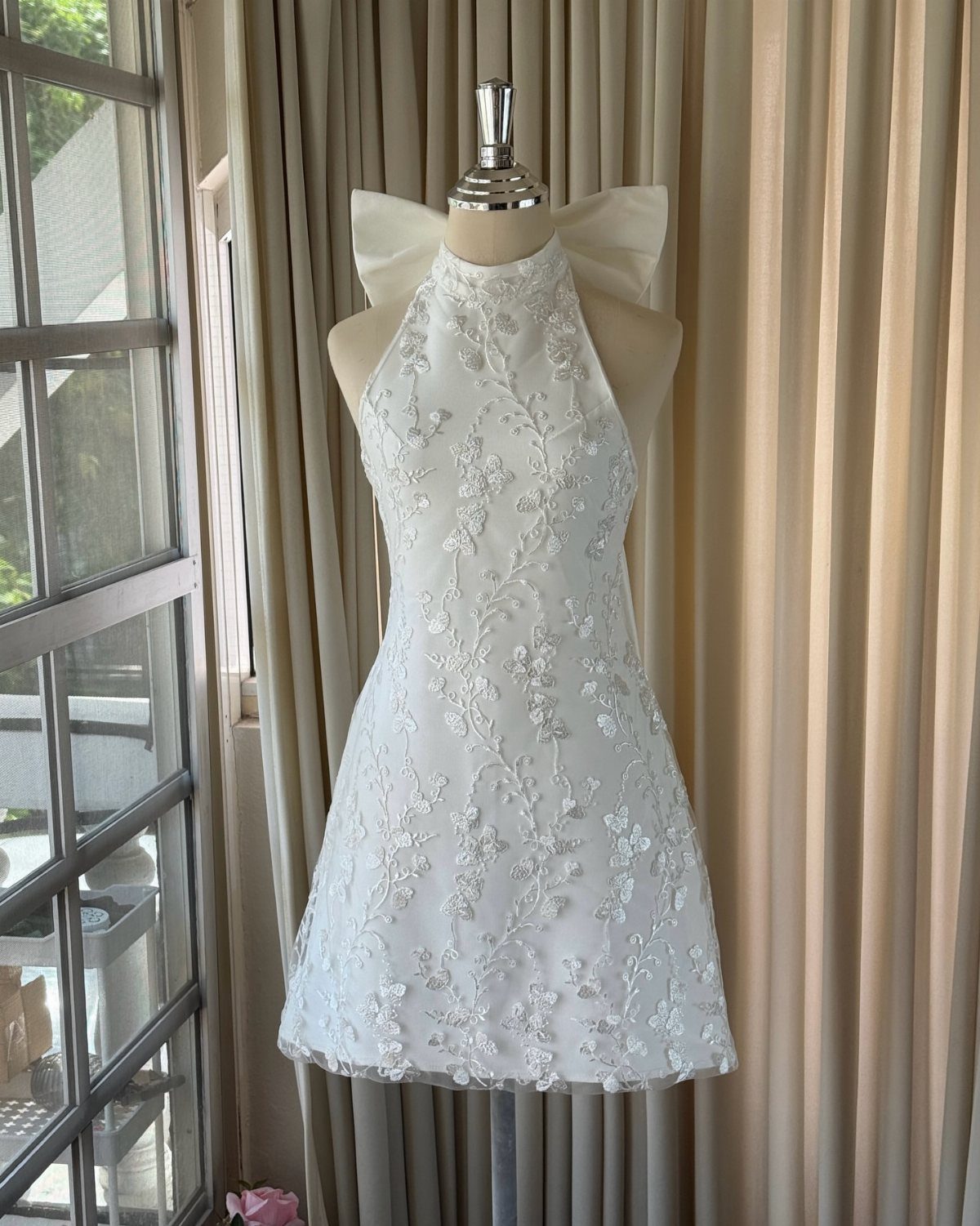
A mini wedding dress falls above the knee, the shortest option in bridal and the most deliberate departure from tradition.
The silhouette works best when the fabric insists on occasion, silk, fine lace, or structured embroidery that elevates the cut from casual to ceremonial.
This is the choice for elopements, city hall, or a reception change when the main gown has done its work. The abbreviated hem demands attention to leg and shoe, so the overall effect reads confident rather than underdressed.
Celeb brides have normalized it, but the decision still requires certainty. I would try it only if the venue and your own comfort level align, a mini dress at a formal church reads like a mistake unless you meant it.
13. Strapless Dress
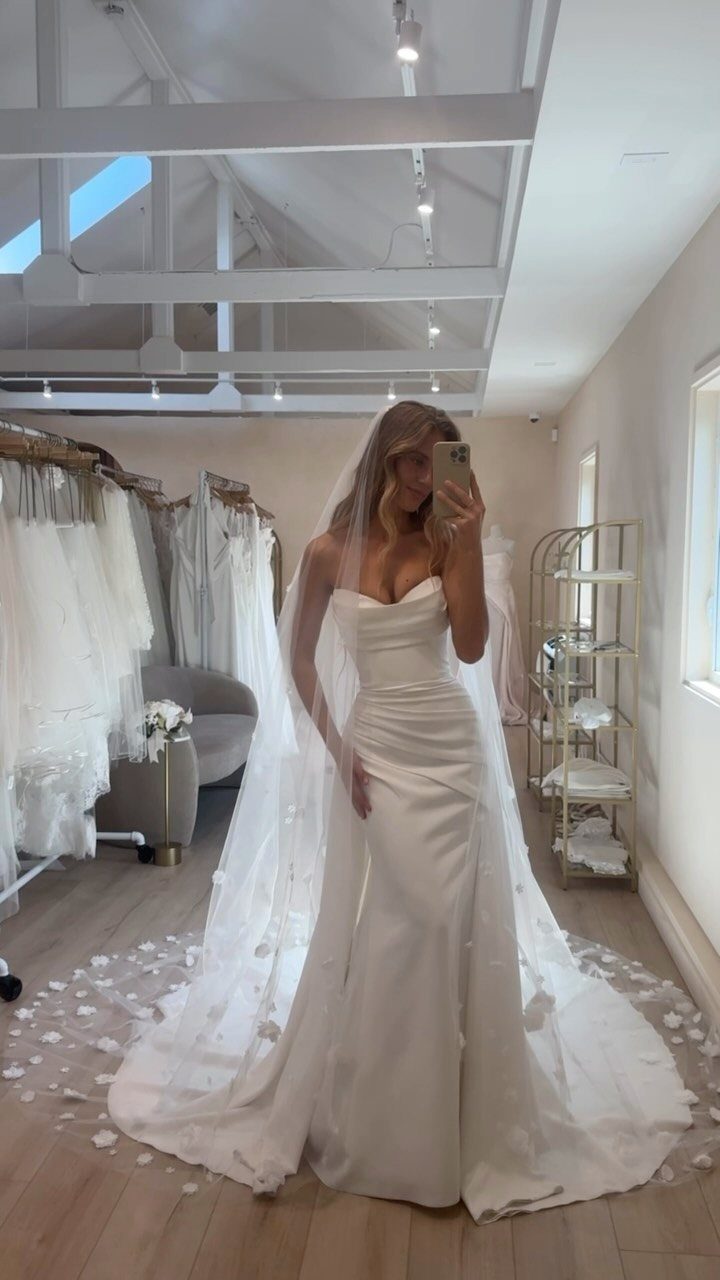
A strapless wedding dress puts the entire frame on your shoulders and collarbone, with nothing above the bust to interrupt the line.
Interior boning or a corset structure does the actual work of holding it up, so the fitting appointment matters more here than with almost any other neckline.
Warmer ceremonies reward this choice with ventilation no sleeved dress can match.
The cut reads formal by default, so the fabric and finishing decide whether it lands traditional or modern. I would ask about gripper tape and alteration policy before committing; a strapless dress that slips is a long day made longer.
14. Tiered Skirt Wedding Dress
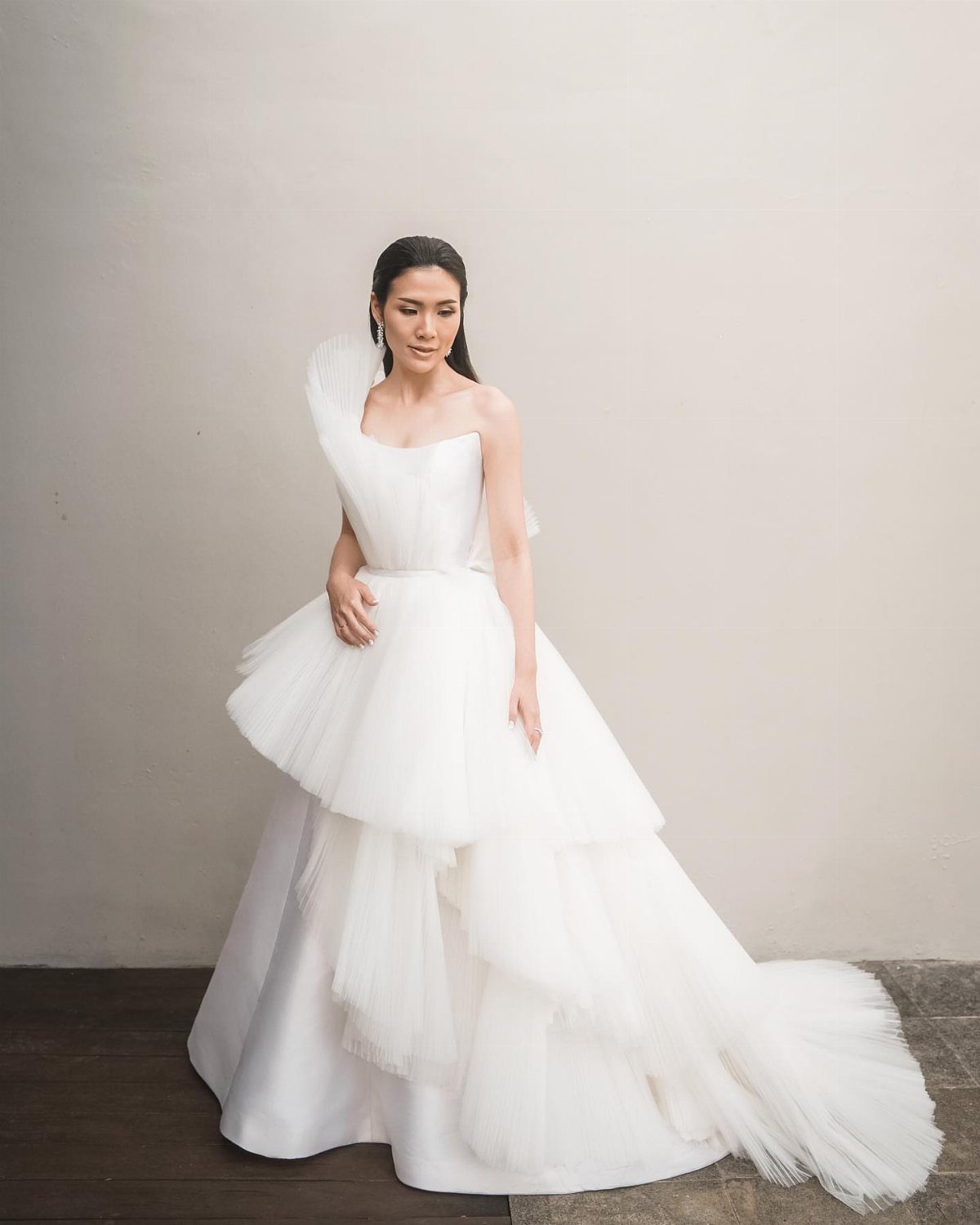
A tiered skirt builds volume from stacked horizontal bands of fabric, each one a separate seam that adds movement without the full weight of a ball gown.
This is the skirt for outdoor weddings and garden settings, where wind and walking animate the shape. Curvier figures gain waist definition from the horizontal lines; petite brides risk being swallowed, so fewer, wider tiers work better under 5’4".
A tiered skirt gives you volume that still moves, so you can walk and sit without the dress wearing you. I would choose it for the ceremony alone, the way it photographs in motion is hard to replicate.
15. Minimalist Wedding Dress
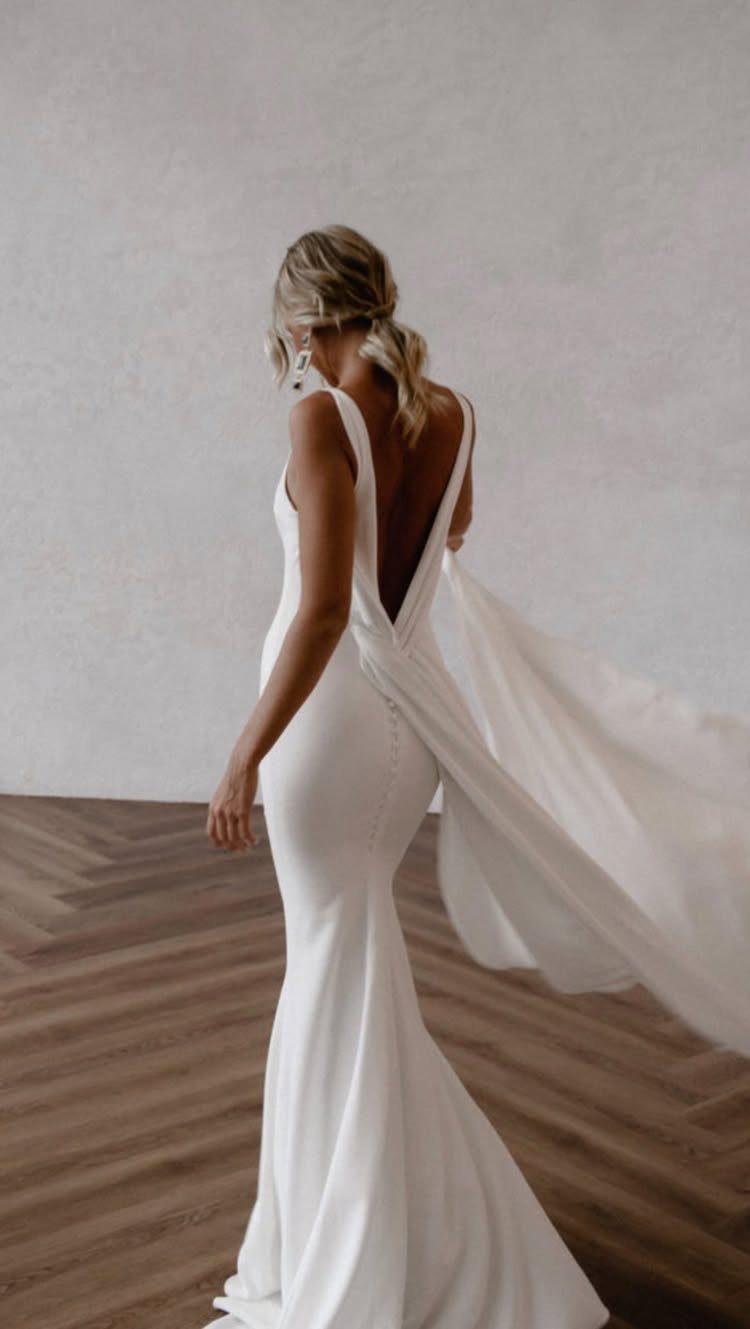
Minimalist bridal strips away beading, lace, and applique until only line, fabric, and construction remain.
Satin columns and crepe sheaths lead this category, though an unembellished ballgown qualifies too.
An asymmetric neckline or sculptural bow can substitute for embroidery if you want one focal point. The silhouette suits petite, tall, and rectangle-shaped frames most cleanly; the absence of detail leaves nowhere for the eye to hide.
Elopements, galleries, and destination venues are the natural settings. I would check seam finishing before buying, with no lace to distract, every stitch reads.
Choosing the Right Style
The right silhouette starts with the experience you want, not a body-type chart.
Ask yourself whether you need to climb stairs, walk grass, or dance for hours. A full skirt that floats when you turn and a fitted shape that holds its line give off completely different energy, almost like 2 separate events.
A-line and ball gown shapes balance wider hips; mermaid and sheath cuts trace what you already have. The waist can read defined, elongated, or understated depending on where the seam sits.
One gown will make you stand differently in the mirror. That is the one worth a second look.
Fabric Choices
Tulle turns that same shape into something out of a storybook; duchess satin makes it read straight-up royal.
Fabric changes the whole impression, so knowing a little before you walk in keeps you from writing off a silhouette that only needed a different material to work.
Structured fabrics like satin and mikado hold clean lines and read formal.
Chiffon and tulle follow your movement and catch light in photos with that weightless quality. Silk charmeuse drapes like liquid; organza builds volume in crisp, sheer layers.
Weight matters practically.
Thick silk in peak summer, June through August, fights you if any part of the day is outside. Match fabric to season and silhouette together, not as separate decisions.
Matching Dress to Venue
Your venue should shape your choice as much as your taste. A mermaid gown that kills in a city loft turns into a headache on grass; a train that glides over marble catches on every pebble and lawn edge.
City halls and intimate ceremonies suit sheath, A-line, and trumpet shapes.
Anything with a serious train needs room to spread out and a floor that stays flat. Grand ballrooms reward structure; beaches and gardens need lighter fabrics and easier movement.
Summer ceremonies in the US, especially June through August, favor lightweight materials and silhouettes that let air move. Winter formality can carry heavier construction.
Comfort comes first: a dress you can actually move in photographs better than one that looks perfect but has you adjusting every thirty seconds. Your confidence in the space shows in every frame.