The dresses below run from a cathedral ballgown to a city-hall sheath, with boho, vintage, modern, and beach shapes between, plus the A-line, mermaid, fit-and-flare, trumpet, and empire waist silhouettes that sit in the middle of the volume scale.
Which one belongs to you depends on where the wedding happens, what the dress is made of, and which part of your body the cut must fit most exactly.
A ballgown on packed sand, for instance, collects water with every step; the same shape in a ballroom, with tulle layers or heavy satin holding the line, reads as the main event.
1. Ballgown Wedding Dresses
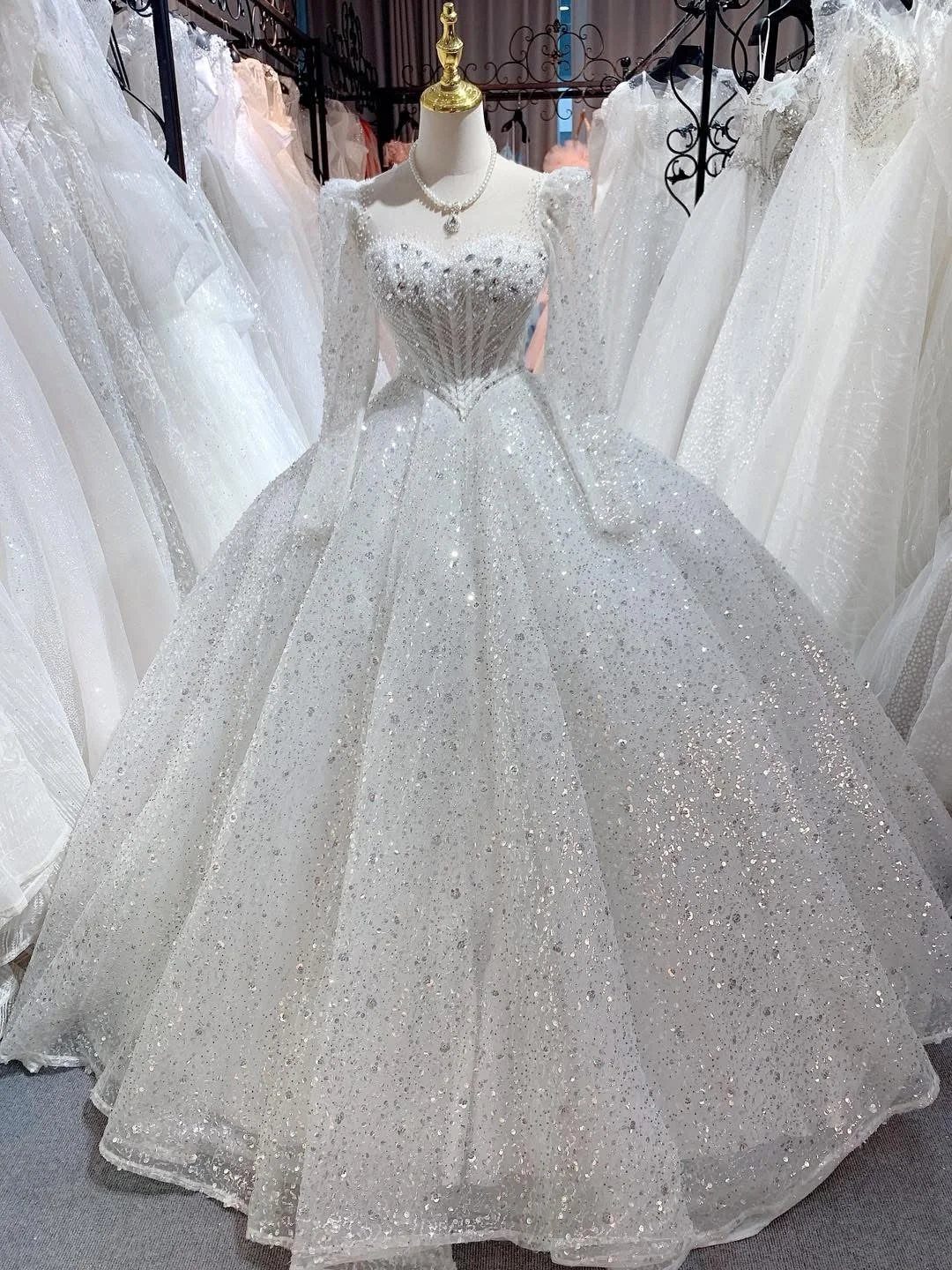
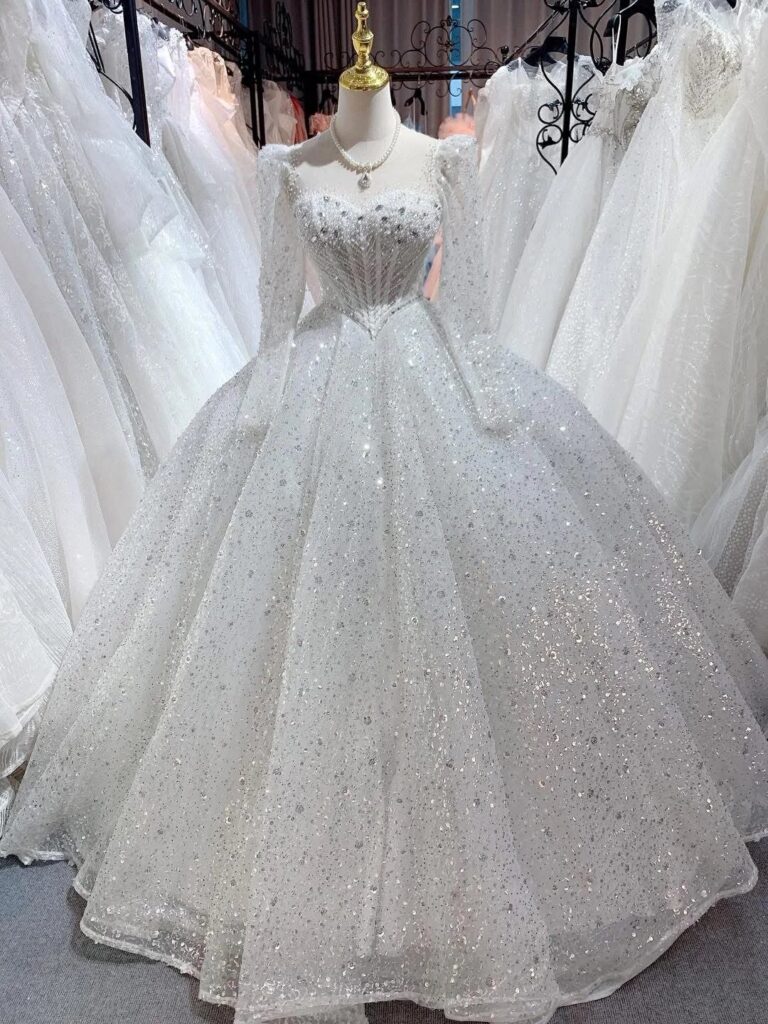
A ballgown earns its drama from construction, not ornament: fitted bodice, cinched waist, then volume that starts exactly there and keeps going. Tulle layers give the lightest sweep, satin holds a heavier line, organza sits between the two.
The shape works because the eye reads the waist as small against all that skirt, which is why it photographs well from a distance and why it needs space to move.
Cathedral-length aisle, grand staircase, ballroom floor: this is the dress that turns each one into a set piece. For the reception, a seamstress can add a discreet loop or button to bustle the train.
2. A-Line Wedding Dresses
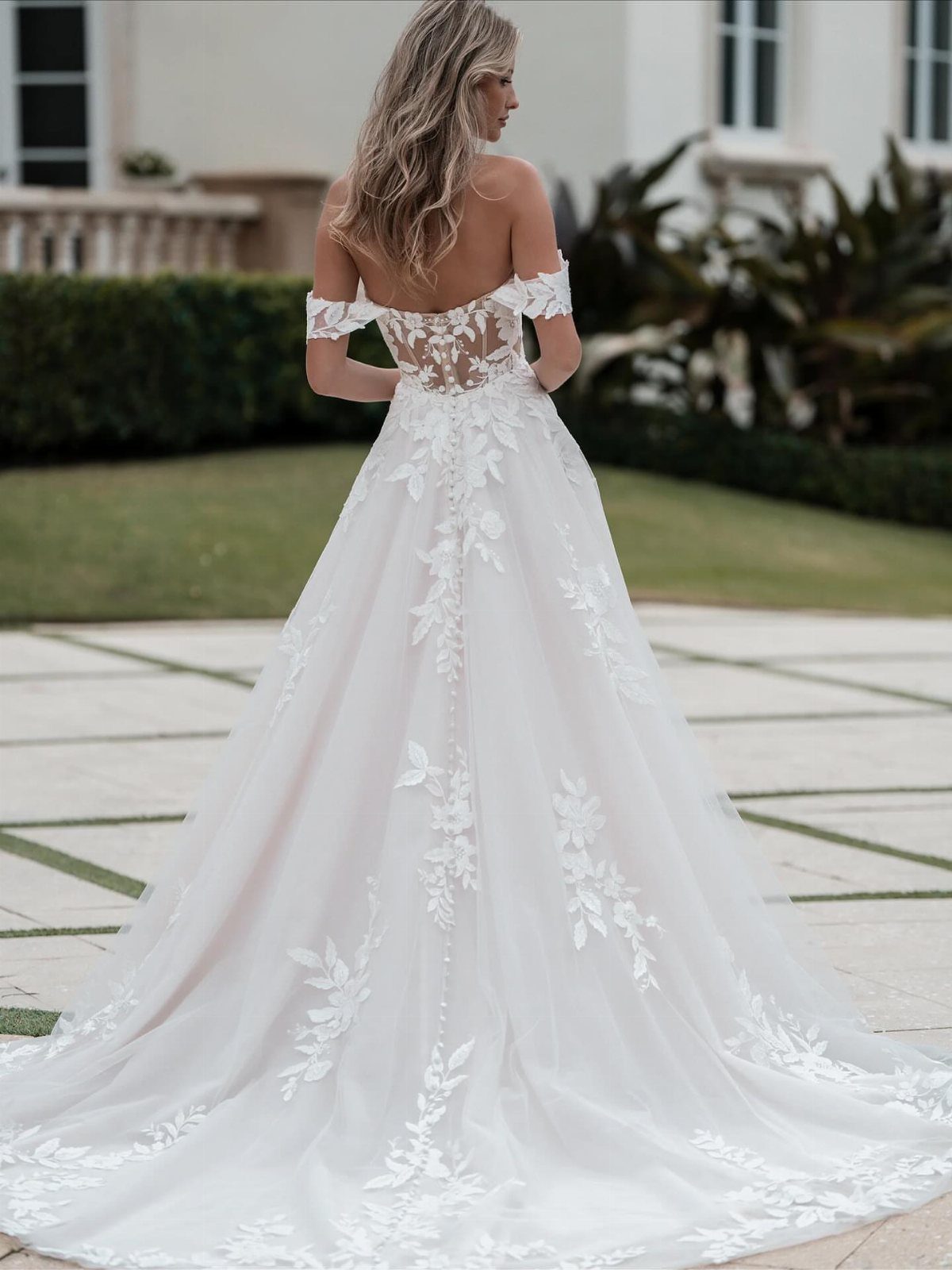
The A-line gets its name honestly: shoulders in, then a straight flare to the hem, no break at the hip.
That continuous line is why it reads graceful on nearly every frame and why it shifts so easily from garden ceremony to hotel ballroom. Lace gives it romance, satin gives it structure, tulle keeps it light enough to dance in.
An off-the-shoulder neckline works for summer; in winter, long sleeves and a heavier fabric keep the same silhouette season-appropriate. The train can be as long or as short as the venue allows.
3. Mermaid Wedding Dresses
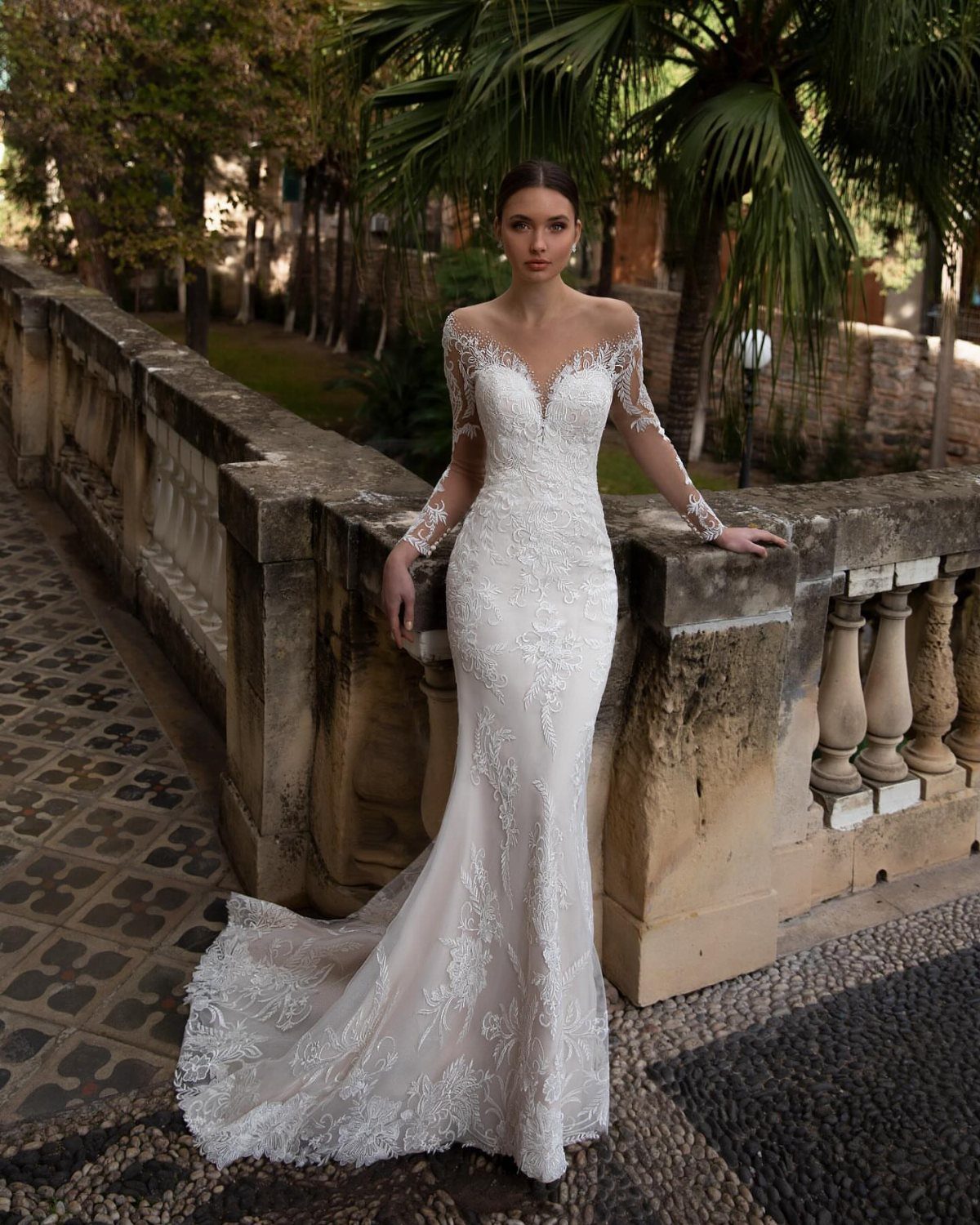
Mermaid dresses fit where others skim: bodice to knee, then flare. The break point matters; higher flares read more dramatic, lower ones more gradual.
Satin shows every seam and demands exact tailoring; lace forgives slightly and adds texture where the eye already rests. This shape demands that you know your measurements and your comfort zone with equal precision, because the fit is everything.
Walking and sitting both require practice; I have watched brides rehearse the shorter stride and the careful seat that keeps the line intact. The result, when it works, is unmistakable.
4. Sheath Wedding Dresses
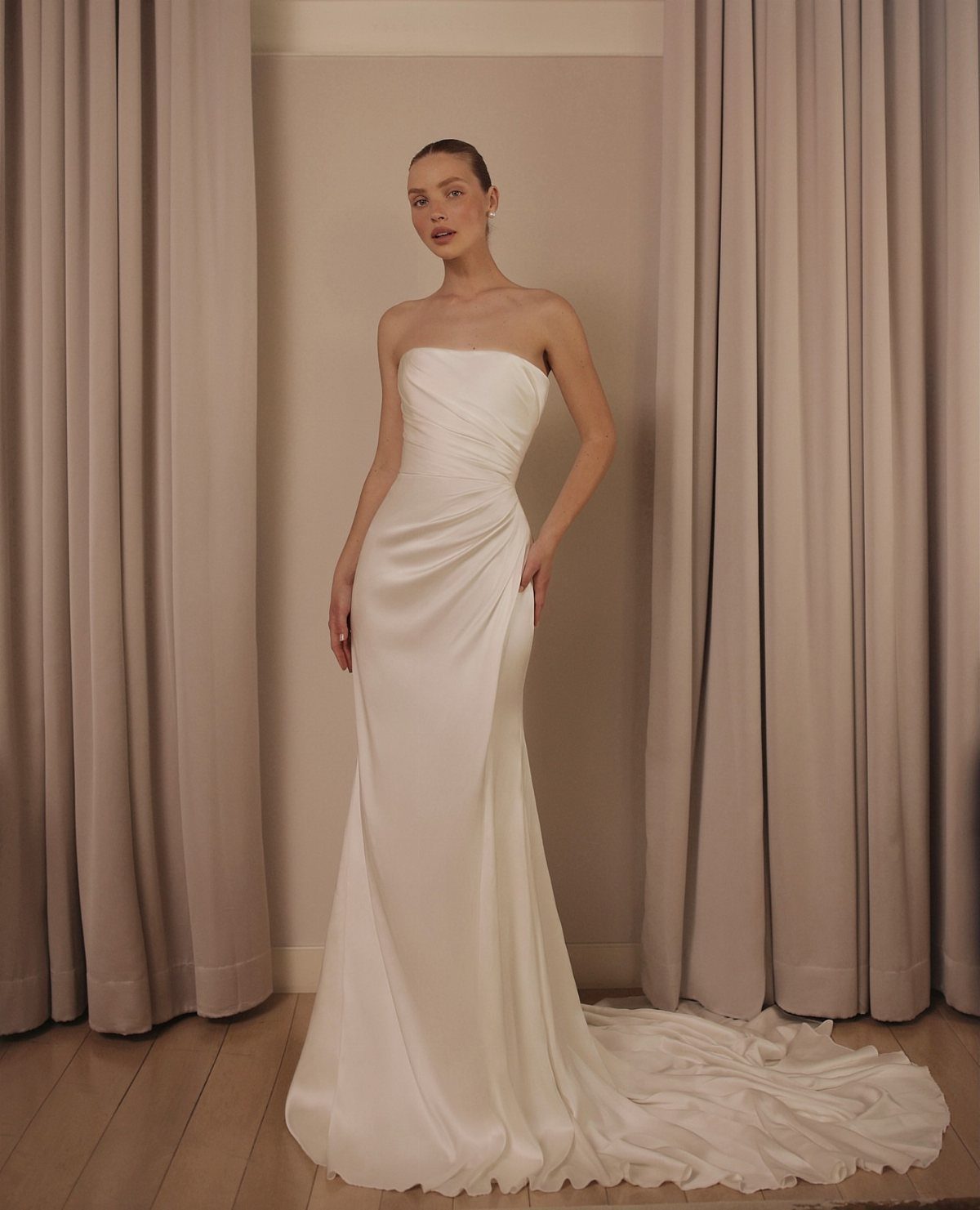
Sheath dresses refuse to perform. They fall straight from shoulder to hem, following the body without announcing it, and that restraint reads as confidence.
Crepe gives the cleanest drape, satin catches light, minimal lace adds texture without clutter. A strapless cut with soft draping keeps the line uninterrupted; sleeves or a higher neckline would shift it toward a different register entirely.
This shape suits the bride who wants to move through her day without managing her dress, and it suits city halls, beach ceremonies, or any setting where the architecture or landscape already supplies the drama.
5. Fit-and-Flare Wedding Dresses
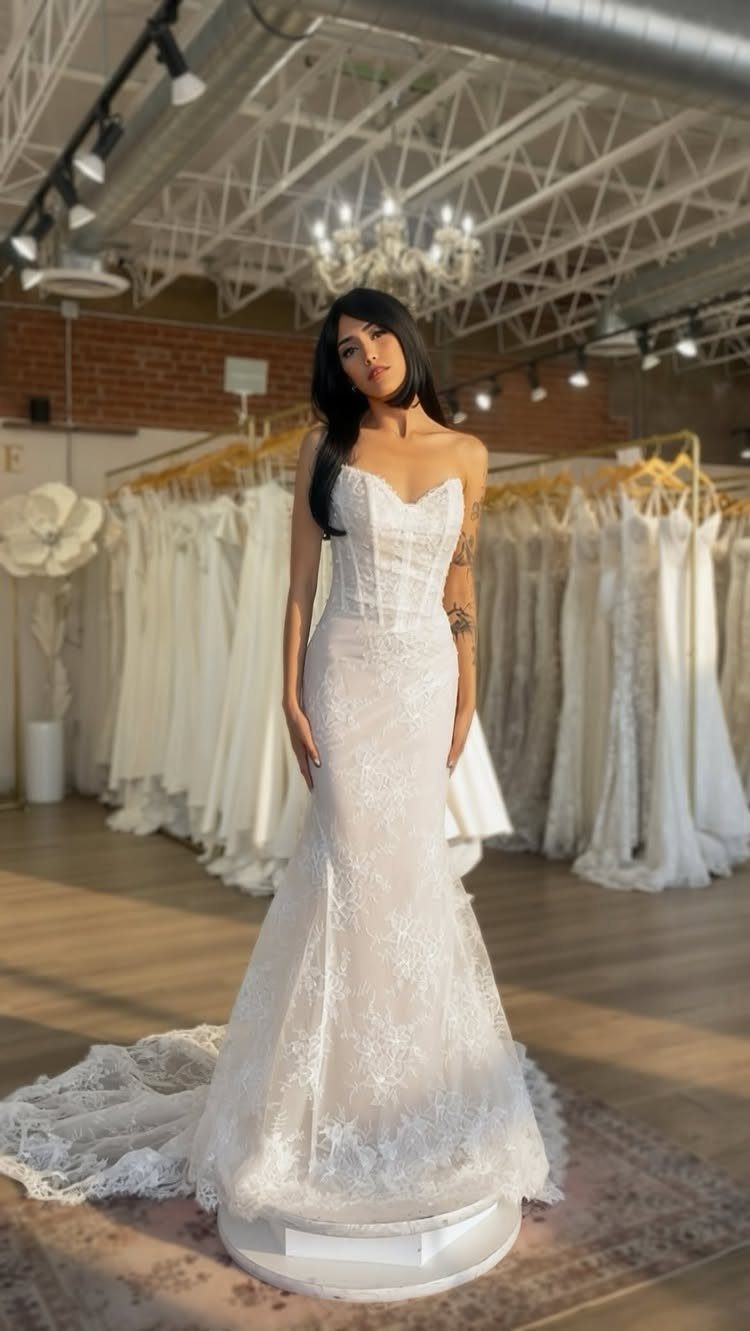
Fit-and-flare splits the difference between mermaid and A-line: fitted through bodice and hip, then flare starting mid-thigh rather than at the knee or waist.
That earlier break gives more walking room and a softer overall line, which is why this shape stays popular for receptions where dancing matters. Lace over structure adds romance without weight; plain satin reads more modern.
The bodice needs the same precise fit as a mermaid, but the skirt forgives more. I would ask about a built-in bustle before committing; the flare is light enough to pin up, and the dancing improves.
6. Boho Wedding Dresses
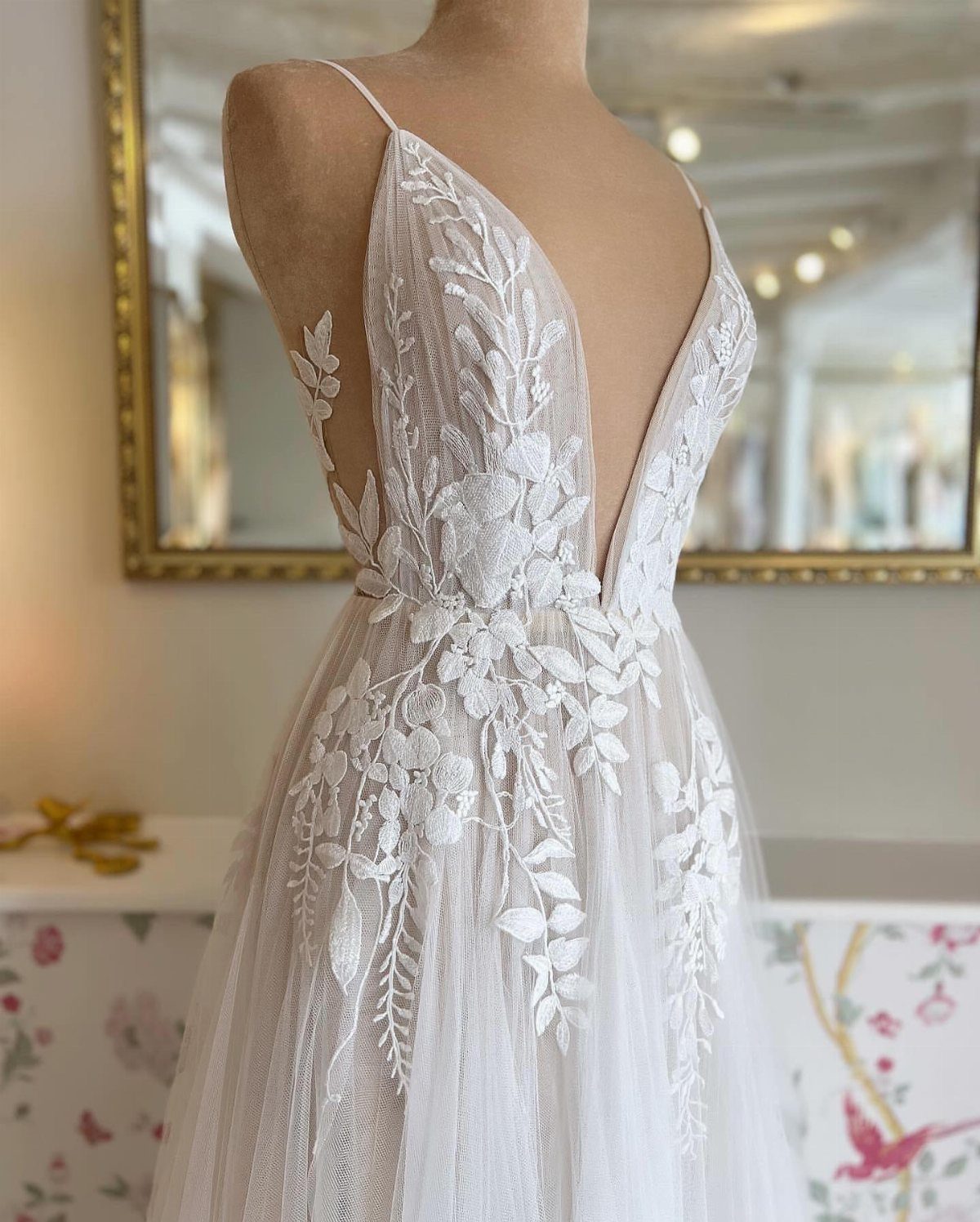
Boho dresses borrow from the 1970s: loose silhouettes, botanical details, the suggestion that the dress was found rather than fitted.
Scattered lace appliqués keep the look from reading as formal; thin straps and a plunging neckline add to the ease.
This is a shape for outdoor ceremonies where wind and light do half the work, and where heavy fabric would look wrong against grass or sand.
Movement is the point, so the skirt needs length to catch air and the fabric needs weight enough to drape but not so much that it drags.
7. Modern Wedding Dresses
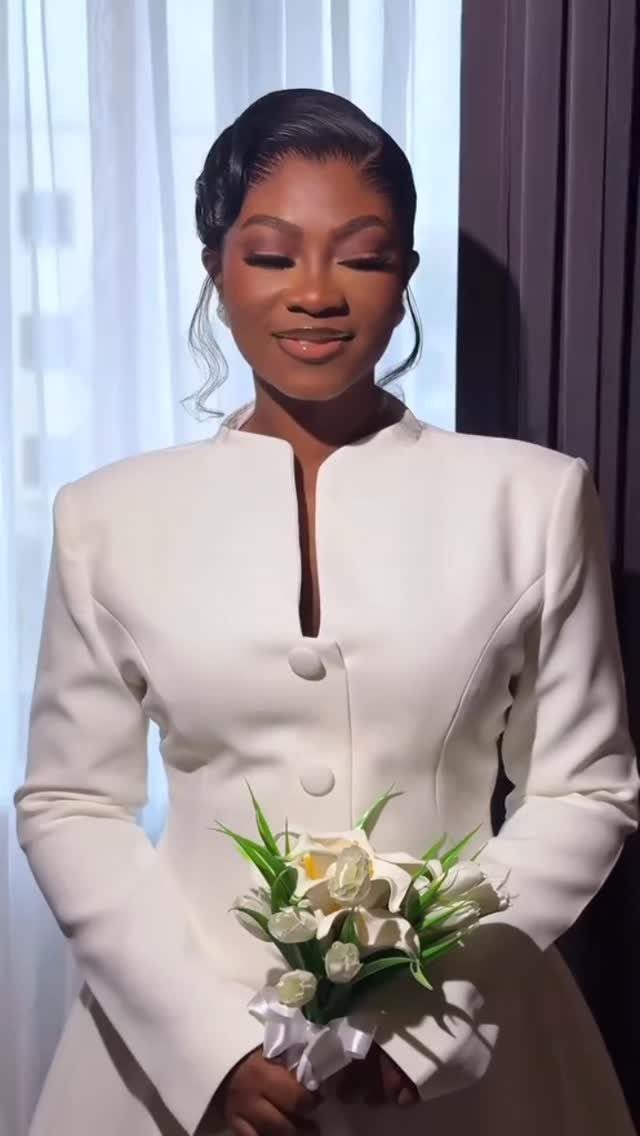
Modern wedding dresses strip away everything that isn’t structural: no lace, no beading, no train unless the line demands it.
The one I keep returning to has a high neck and a coat-style closure that reads almost like a jacket over a slim skirt.
Crepe or heavy satin holds the shape; a square or straight neckline keeps the look architectural rather than romantic.
This style suits brides who already dress minimally and feel false in fuss, and it suits venues with concrete, steel, or glass. Check that the tailoring is exact; without ornament, every seam shows.
8. Trumpet Wedding Dresses
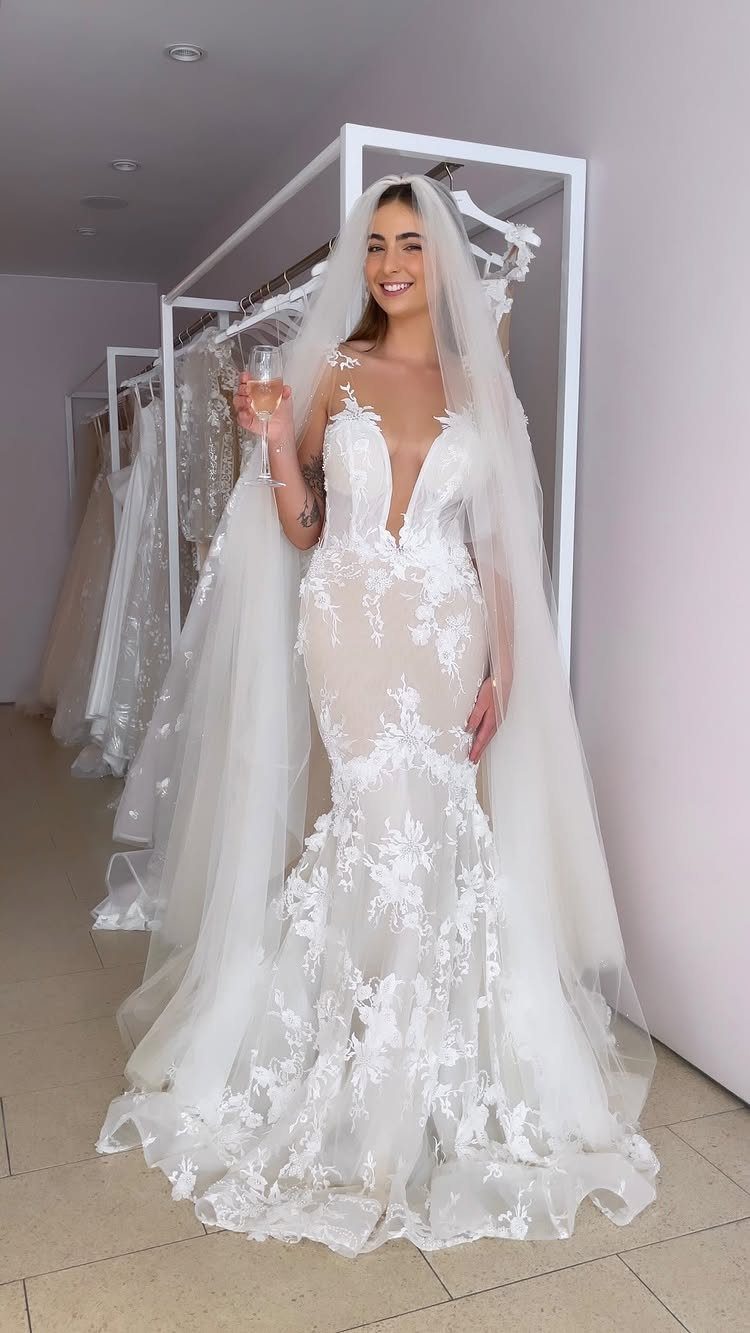
Trumpet sits between mermaid and fit-and-flare: fitted through the bodice and hip, flare starting lower than fit-and-flare but above the knee.
That earlier break gives the hourglass illusion with more room to walk and sit, which is why this shape works for longer receptions. Lace appliqué adds texture without weight, as in the photo; plain fabric reads more severe.
The fit through the hip still demands precise measurement, but the skirt forgives more than a true mermaid. Ask about a bustle before ordering; the flare is light enough to pin, and dancing improves.
9. Empire Waist Gown
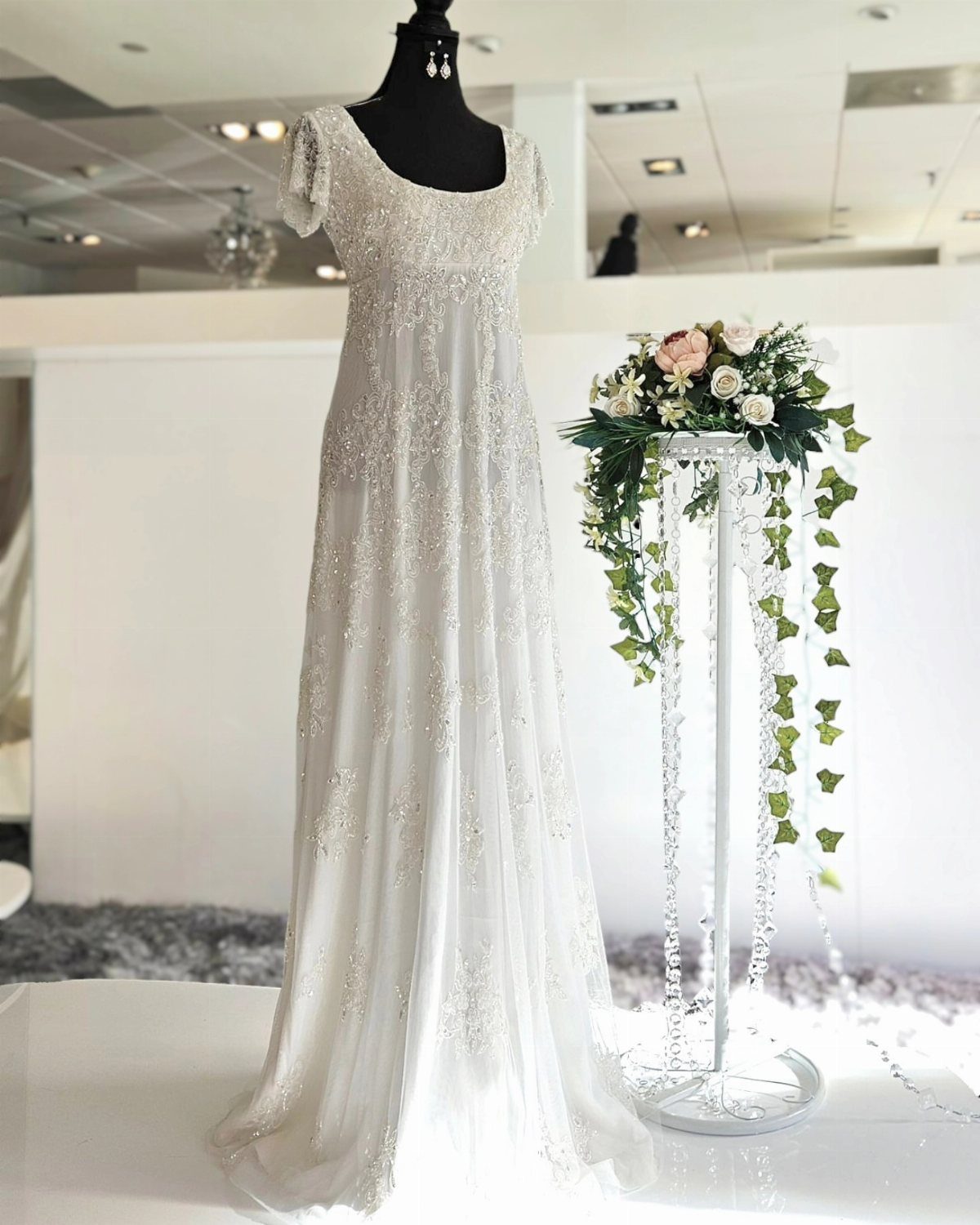
Empire waist gathers the skirt directly under the bust, letting the rest fall loose.
The effect is length for petite frames and ease for early pregnancy, since the waistband never tightens. A beaded or embroidered bodice keeps the eye high; the skirt can be light lawn or heavier satin depending on season.
This shape reads romantic rather than formal, and it suits outdoor ceremonies where wind might tangle a fitted skirt. Check that the bodice is structured enough to stay up; a loose top with a loose skirt can read as costume.
10. Vintage Wedding Dresses
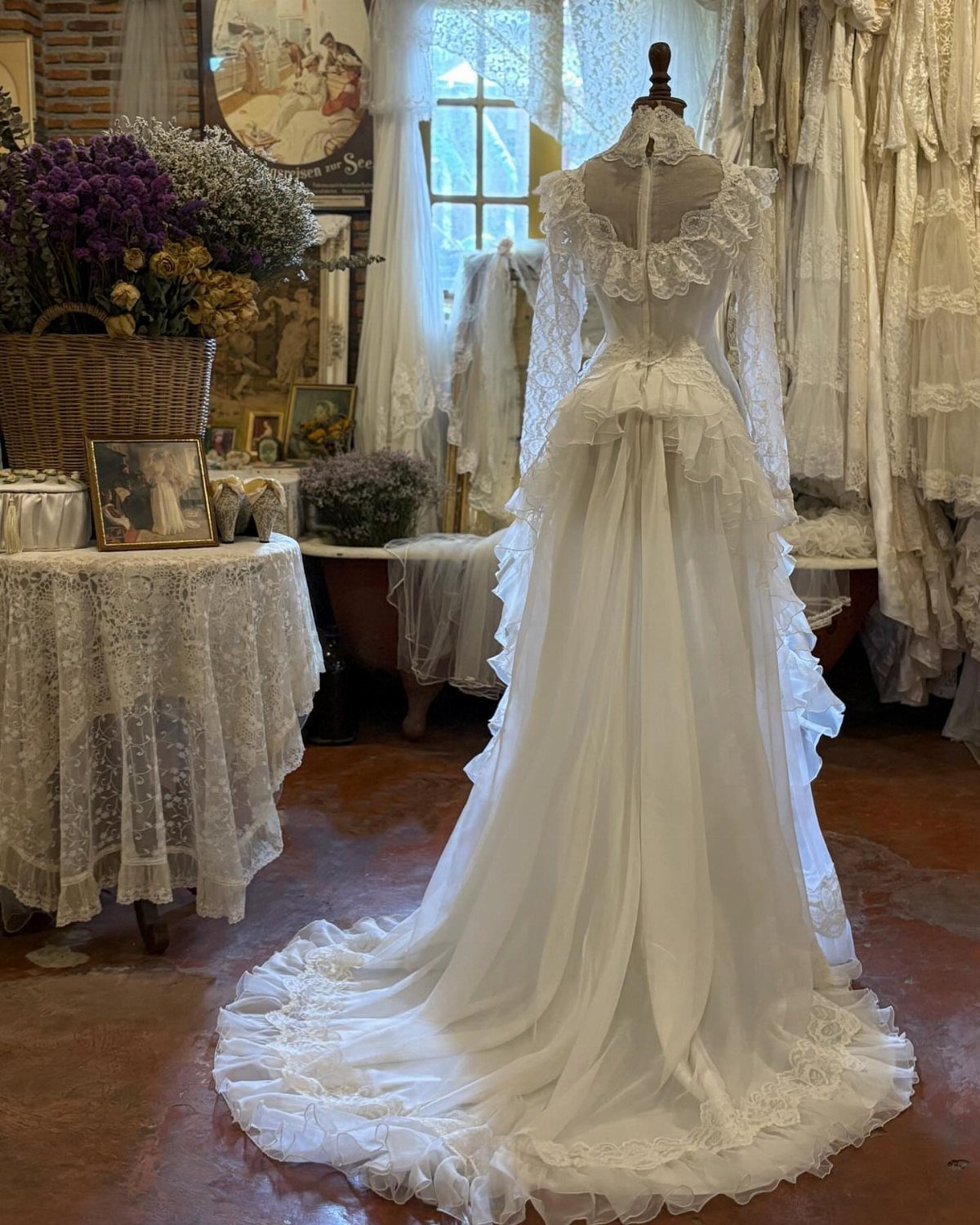
Vintage wedding dresses borrow from specific decades rather than gesturing vaguely at the past. Tea-length hems come from the 1950s, dropped waists and beading from the 1920s, lace sleeves and ruffles from the 1970s revival of earlier styles.
Long lace sleeves and a tiered skirt suggest something found in an attic rather than ordered new.
These dresses suit intimate venues, historic buildings, or any setting where a modern gown would look out of place. Check condition carefully if the dress is genuinely old; reproductions solve the wear problem but verify the era details are accurate.
11. Beach Wedding Dresses

Beach wedding dresses trade structure for movement: light fabrics, minimal or no train, straps that stay up without constant adjustment.
Chiffon and tulle catch sea breeze without dragging; a slit lets the bride walk on sand without gathering the skirt. This is not a shape for heavy beading or multiple layers; weight is the enemy.
The look suits barefoot ceremonies, tropical heat, or any setting where the bride will move on uneven ground. Check the lining; light fabrics can turn sheer in strong sun, and salt water stains permanently.
Choosing the Right Dress
Body shape matters most where the dress is tightest. A ballgown or A-line only needs your shoulder and waist measurements to hang right; mermaid, trumpet, and fit-and-flare need your hips too, and the difference between them.
If you carry weight through your midsection, an empire waist draws the eye upward and leaves the rest loose. Petite frames often read shorter in heavy volume; sheath and column lines keep the eye moving vertically.
Venue rules out more dresses than body type does. A ballgown on packed sand is a mistake I have watched brides make; the hem collects water and weight with every step.
City hall or a restaurant demands the same practicality for different reasons: narrow stairs, tight turns, other guests seated close.
Set your budget before you browse. Sample sales and trunk shows can drop a gown well below retail, but only if you know your ceiling and stick to it.
Consultants see hundreds of brides; their advice on what actually photographs well, or what alters easily, is worth hearing even when you disagree.
Wedding Dress Fabrics
Satin is the heaviest common choice and the most formal; it holds structure in a ballgown or trumpet but shows every wrinkle and seam.
Budget for pressing, and check whether your venue has space for the skirt to fall without creasing.
Lace varies more than most brides realize. Chantilly is light and often layered over another fabric; Alençon has a heavier corded edge that frames a neckline or hem.
Lace over nude lining reads differently than lace over ivory; the first disappears against skin, the second reads as pattern. Ask to see both in natural light.
Tulle builds volume without weight, which is why ballgowns use layers of it.
The finest tulle, called illusion, is what makes sheer necklines and sleeves possible. It snags easily; ask how repairs work before you buy.
Chiffon and organza both sheer, but chiffon drapes soft while organza holds its shape.
Beach dresses use chiffon for movement; boho styles use organza for structure that still catches air. Both turn transparent in direct sun or under flash; the lining matters as much as the top layer.
Satin wedding fabric demands a flawless fit; there is no lace or beading to distract from a seam that pulls.
Frequently Asked Questions
What are the different kinds of wedding dresses?
The main silhouettes are ballgown, A-line, mermaid, trumpet, fit-and-flare, sheath, and empire waist. Ballgown and A-line both flare from the waist, but the ballgown goes fuller and more dramatic.
Mermaid, trumpet, and fit-and-flare all fit through the bodice and hip, then flare at different points: mermaid at the knee, trumpet mid-thigh, fit-and-flare also mid-thigh but softer.
Sheath falls straight from shoulder to hem, and empire waist gathers under the bust with a loose skirt below. Each reads differently in photographs and suits different venues.
How do I choose my wedding dress?
The venue narrows your options faster than anything else about you: a beach in Malibu and a cathedral in Boston have opposite dress requirements, and most of what flatters you will exist inside one of those two circles.
Packed sand kills a ballgown hem; city hall stairs and tight turns demand practicality.
Then check where the dress fits tightest against your body: ballgowns and A-lines only need shoulder and waist measurements, but mermaid, trumpet, and fit-and-flare need precise hip measurements too.
Set a budget before you browse, and ask the consultant what photographs well or alters easily; they have watched hundreds of brides in that stock.
What is the most popular wedding dress style?
A-line has held the top spot for years because the silhouette does not fight with the wearer; it lengthens without adding height, conceals without looking like a tent, and photographs the same at an outdoor ceremony as under chandeliers.
The continuous line from shoulder to hem, with no break at the hip, flatters without demanding exact measurements.
Ballgown runs close behind for brides who want the drama of a cinched waist against full volume, though it needs space to move and a venue that deserves it.