These colored wedding dresses run from a single pastel ombre detail to full emerald lace or rainbow tulle, and the right one depends on how much color you actually want to wear.
A white bodice with a dip-dyed hem reads as traditional in posed photos, while 3D florals or horizontal rainbow bands announce themselves from every angle.
DaVinci Bridal builds the same ball gown construction in both black-over-nude and soft blue, which tells you the shape holds up even when the color changes.
1. Black Wedding Dresses
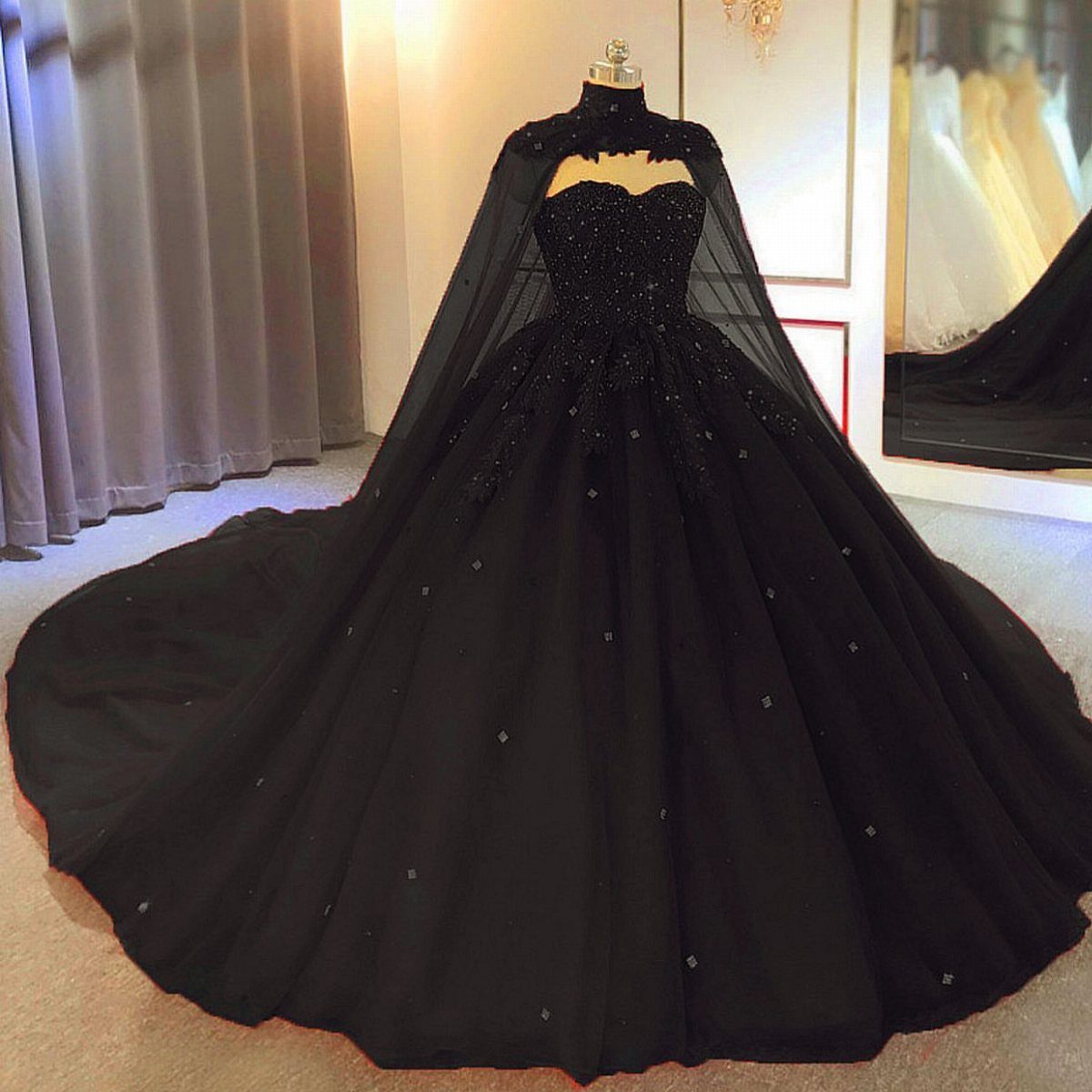
Black carries bridal weight through texture rather than color alone. Lace and tulle keep the ceremony feel in a black gown while the shade reads as deliberate choice, not absence.
DaVinci Bridal offers an A-line version with embroidered tulle and a faux-wrap ruched bodice, offered in black over nude or full ivory if you want to test the shape first.
Rachel Gilbert’s Frey Gown goes the other direction, sleek and minimal for city hall or evening vows.
The risk is photography: black lace can lose pattern against shadow.
Ask your photographer how they meter for deep tones, and whether they will bracket exposures to hold the detail. A cape or train that moves catches light better than a static silhouette.
2. Colorful Floral Embroidered Wedding Dress
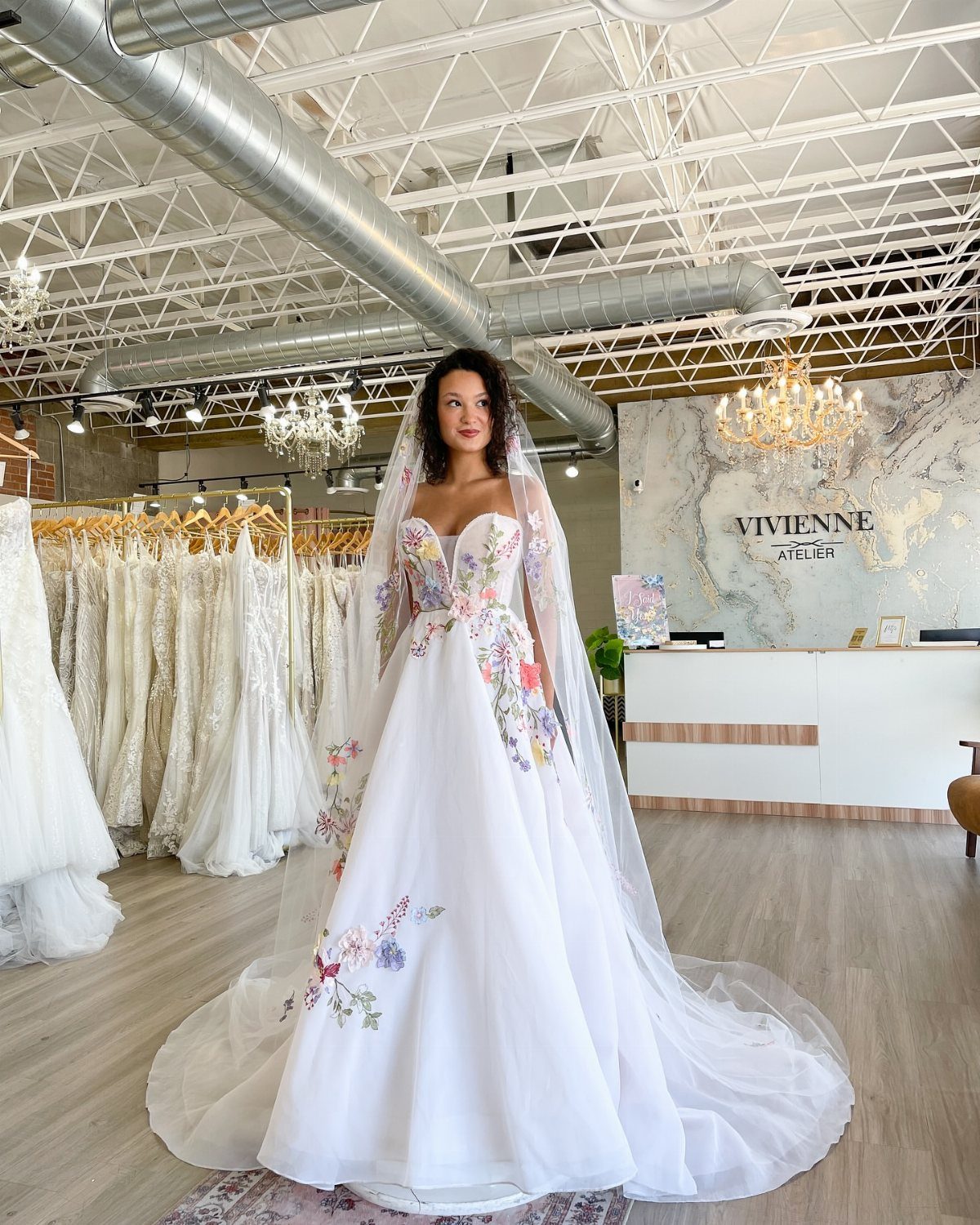
Colorful floral embroidery lets you keep a white base while the color moves across the surface in patches. Carrying embroidery from bodice through veil lets the eye travel rather than settling on one bright zone.
Before ordering this, check whether the embroidery is stitched through the outer layer only or backed with a lining that changes how the colors read against skin.
Desert Moon Bridal works on blush tulle with pink and blue thread; Dreamers and Lovers builds on cotton lace with garden motifs that resolve into botanical shapes up close.
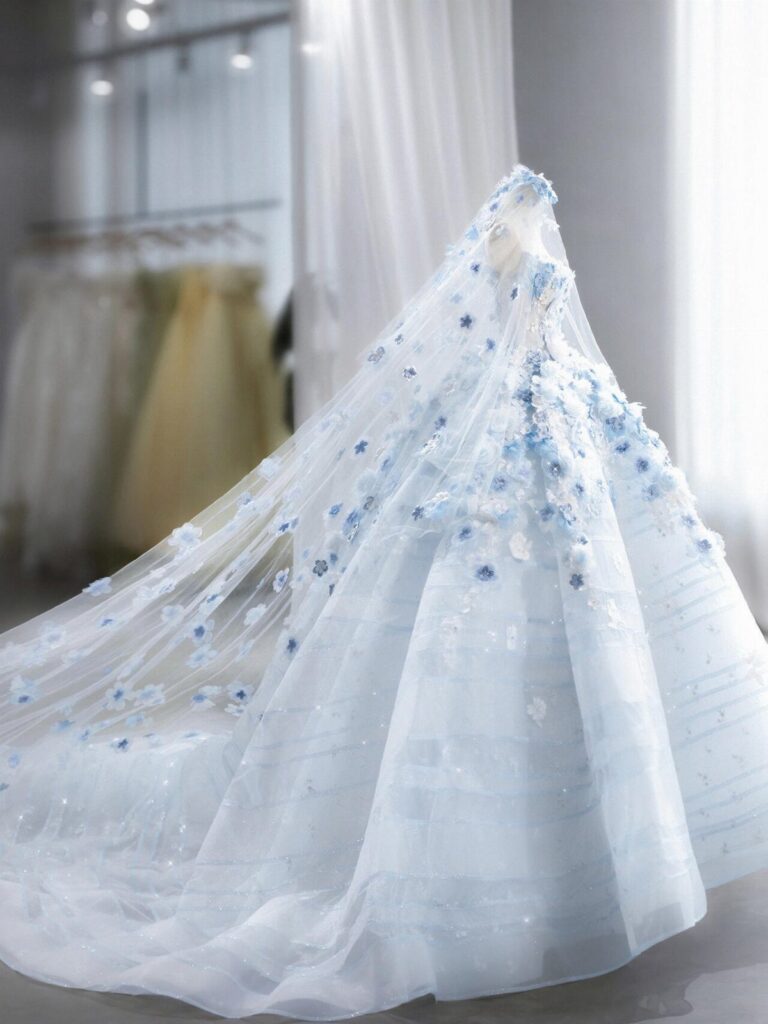
3. Light Blue Floral Ball Gown
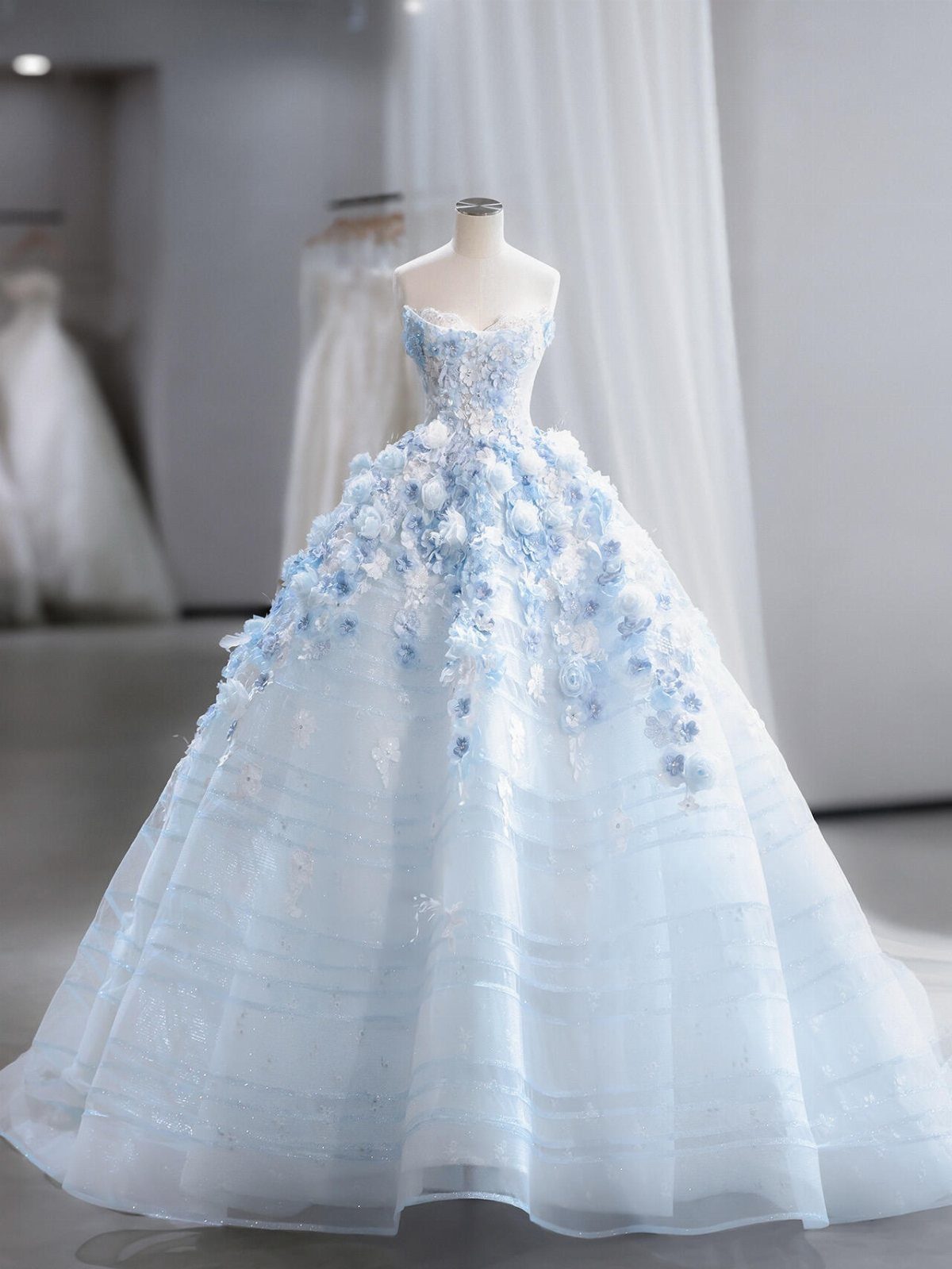
A light blue ball gown with 3D florals gives you the structure of traditional bridal volume in a color that reads as chosen rather than inherited.
Appliqués that sit above the surface rather than blending in catch light differently as you move.
DaVinci Bridal’s version pairs patterned organza with a contrast floral hemline and chapel train, while Claire Pettibone’s Ophelia layers organza flowers over gold lace in watercolor shades.
The strapless cut keeps the top clean so the skirt can carry the detail; if you need coverage, a matching bolero or sheer sleeve reads better than trying to add straps that fight the neckline.
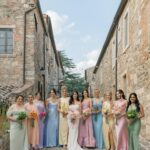
4. Pastel Rainbow Tulle Wedding Dress
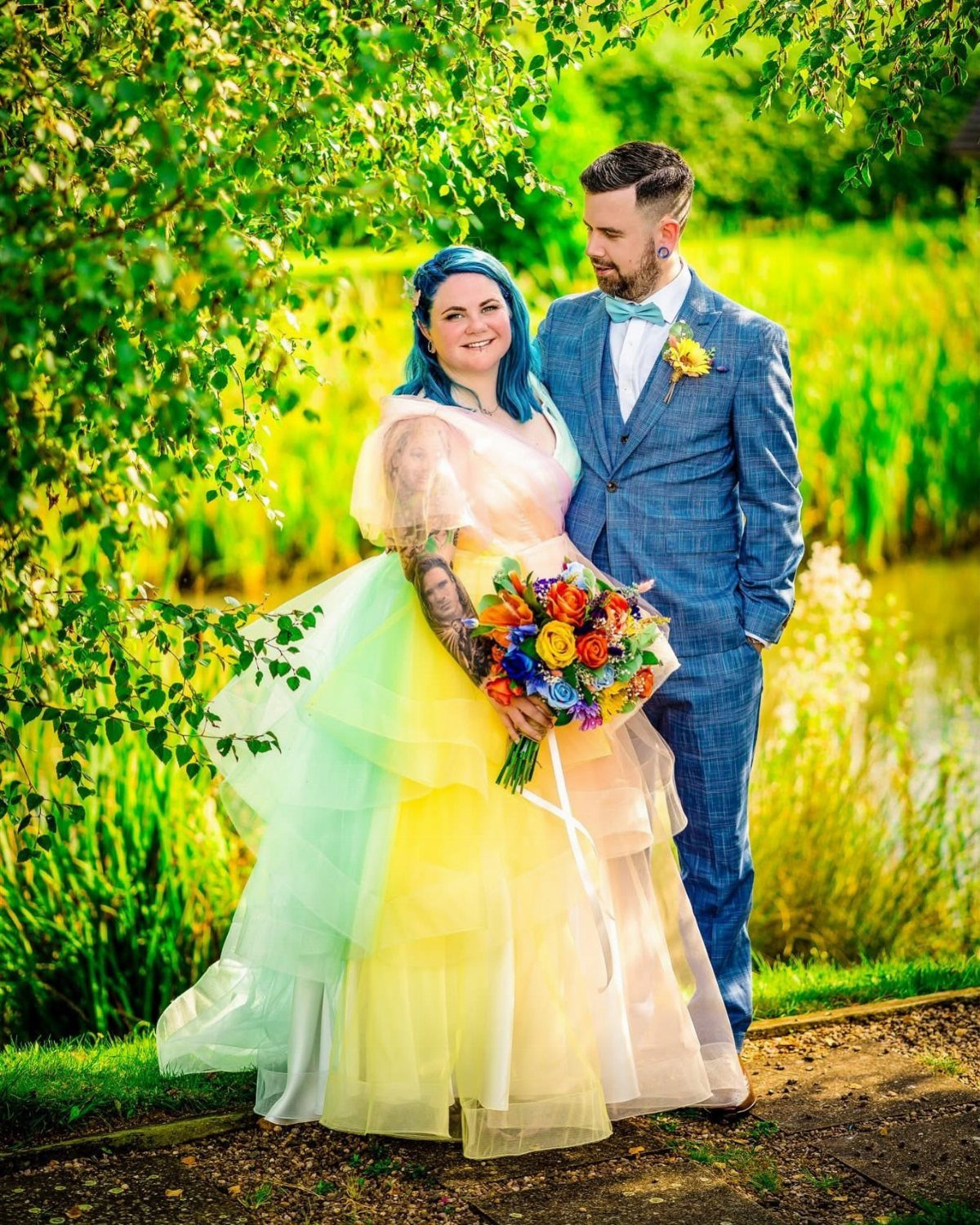
A pastel rainbow tulle skirt layers yellow, green, and peach in horizontal bands that shift as the fabric moves. A bouquet that picks up the same colors is the simplest way to keep the look intentional rather than costume.
For the full rainbow effect, you are likely looking custom or small-designer; Matching Look builds in pink and blue layers with a fitted bodice that keeps the volume below the waist.
The risk is dating your photos, so I would keep the top simple and let the skirt be the one loud element.
5. Pastel Ombre Tulle Wedding Dress
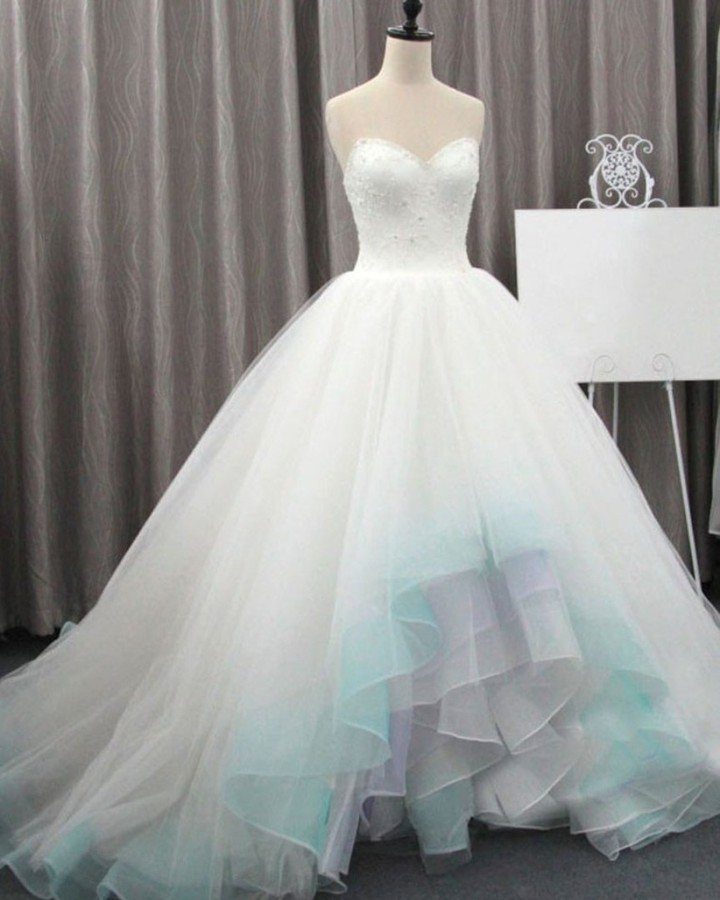
A white bodice with a dip-dyed mint and lavender hem gives you the entry point of color without committing the whole dress.
An ombre that starts high enough to show when you hold the skirt, low enough to read as white in standard posed shots, solves the family-album problem.
Monique Lhuillier does this with puff sleeves and floral embroidery if you want more texture; a bare top lets the dye do the work instead.
The technique is straightforward to describe, harder to execute evenly: tulle layers must be matched in length so the color shift reads as gradual, not striped.
Ask to see a sample in motion, not just on the mannequin, since the color pools differently when the skirt is relaxed.
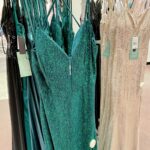
6. Emerald Green Lace Ball Gown
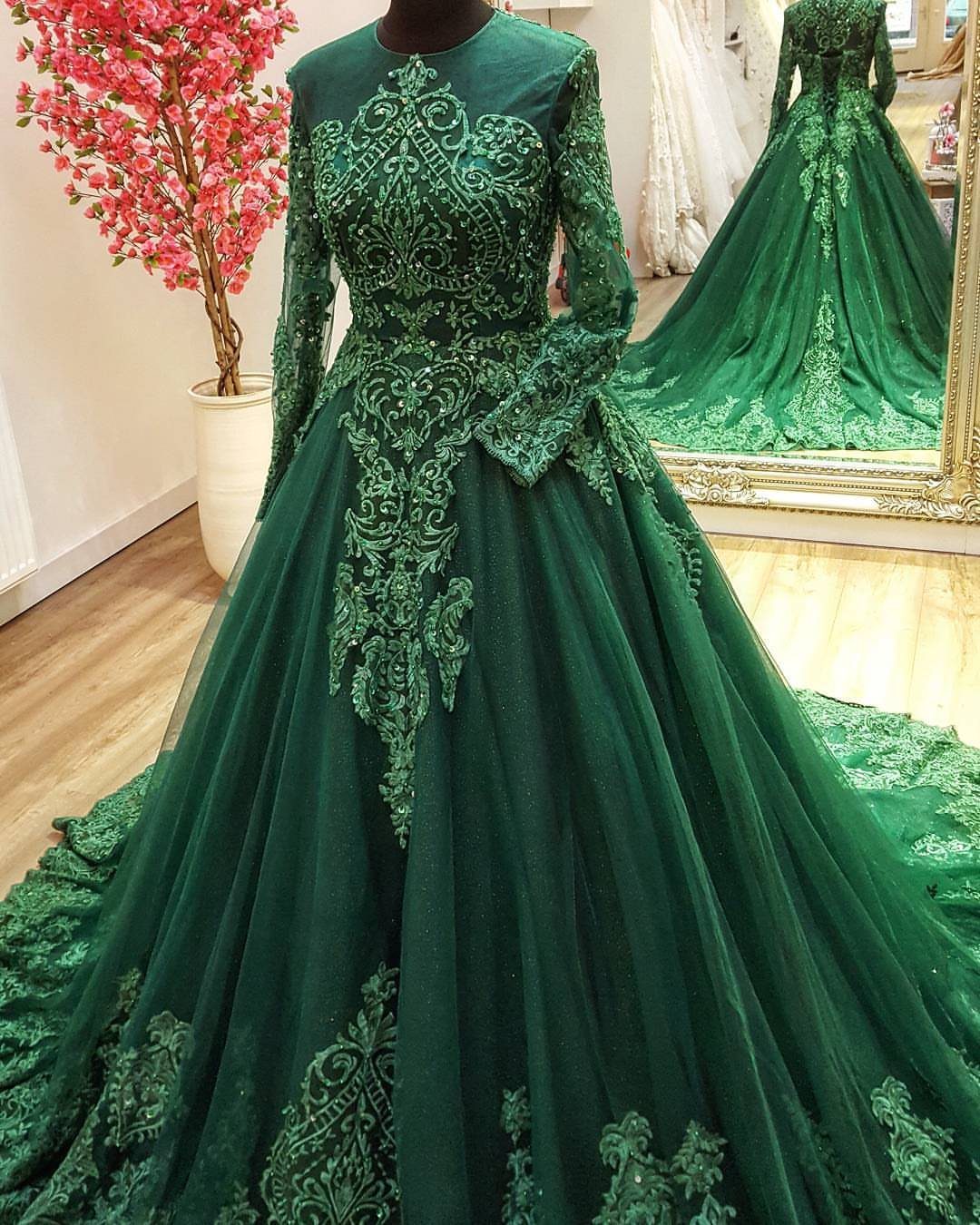
Emerald green in full ballgown volume reads as formal intention rather than novelty; the color has enough depth to carry lace without looking like a costume rental.
Long sleeves balance the expanse of skirt and give you coverage that needs no bolero or cape to solve.
DaVinci Bridal builds a related shape in embroidered tulle with a faux-wrap bodice, though that style runs in black over nude rather than green.
For this color you are likely looking custom or designer; Paolo Sebastian works in soft blue lace with similar off-the-shoulder construction if you want to see how the technique handles non-white tones.
The risk is venue lighting: emerald can shift toward forest or toward teal under warm bulbs. Ask your venue for a fabric swatch test under their actual fixtures, not just daylight.
Gold accessories warm the tone; silver pushes it cooler. Pick one metal and stay consistent, since mixed finishes will compete with the lace pattern.
A train in this weight of fabric needs bustling for the reception; plan the hook placement during fitting, not after, since lace overlays tear if the point stress is wrong.
Trends in Wedding Dresses
Colorful wedding dresses have moved from fringe to mainstream in the last few seasons.
What started with blush and champagne nudes has expanded into full saturation: emerald, black, rainbow tulle, and dip-dyed ombre are all in production from established houses now.
The shift is partly practical. White photographs well but limits your backdrop; a colored dress gives contrast against greenery, stone, or neutral linens without needing to change the whole venue palette.
It also solves the family-album problem for brides who want color in person but worry about dated photos later.
Small designers and custom ateliers are where the boldest options live. If you want something no one else will have, that is still the route.
Wearing Colored Dresses
Earlier brides picked red, blue, gold, or printed fabrics tied to their village, their trade, or what dye their family could afford. Choosing color today is not a rebellion; it is a return.
The restriction on white for second marriages, or the idea that older brides should avoid it, has softened to the point of disappearance.
The only remaining question is whether the color you pick feels like you. Brides who choose color usually give the same reason: the dress looked like them, not like a part they were supposed to play.
Your guests will adjust. A black gown reads formal; emerald carries weight and warmth; pastels signal celebration without the volume of white.
The color does the communicating. The color itself matters less than the act of choosing it.
Choosing Dress Colors
Start with your skin tone, not the Pinterest board. A color that flatters in daylight may flatten under reception bulbs.
Bring a physical swatch when you shop. Matching your dress to your wedding palette is easier with the actual textile in hand than with phone photos, which distort warmth.
This matters most for subtle shades: blush, champagne, and soft blue read differently against cream, sage, or rust than they do against white.
If your venue has a strong color already, let it guide you. A garden wedding with heavy greenery carries emerald or deep blue; a desert or coastal setting makes pastels and warm yellows readable.
The dress does not need to match the table linens. It needs to not fight them.
Frequently Asked Questions
What is the current trend for colorful wedding dresses?
Colorful wedding dresses have moved from fringe to mainstream, with blush and champagne expanding into full saturation: emerald, black, rainbow tulle, and dip-dyed ombre are all in production from established houses now.
The shift is partly practical, since a colored dress gives contrast against greenery, stone, or neutral linens without needing to change the whole venue palette.
What is the taboo color for wedding guests?
White remains the color wedding guests should avoid, since it competes with the bride.
What are the hottest wedding dresses right now?
The options in production include bold blue patterned organza, feminine pastel prints, black and black lace, and tone-on-tone jacquard.
What does each color wedding dress mean?
Any bridal gown that steps away from white or ivory counts, whether the fabric itself carries color or a white base holds colored details like floral embroidery, pastel lace, or botanical motifs.