Alternative wedding dresses can be a repurposed vintage find or a handmade gown that costs more than a car and takes half a year to arrive.
The right one depends on which part of traditional bridalwear you are actually trying to escape: the color, the length, the silhouette, or how little of it you will wear again.
A macrame gown carries the same craft story as a bespoke heirloom piece, but the fringe tangles in a receiving line and the knots stretch if summer rain hits them.
1. Handmade Heirloom Quality Gowns
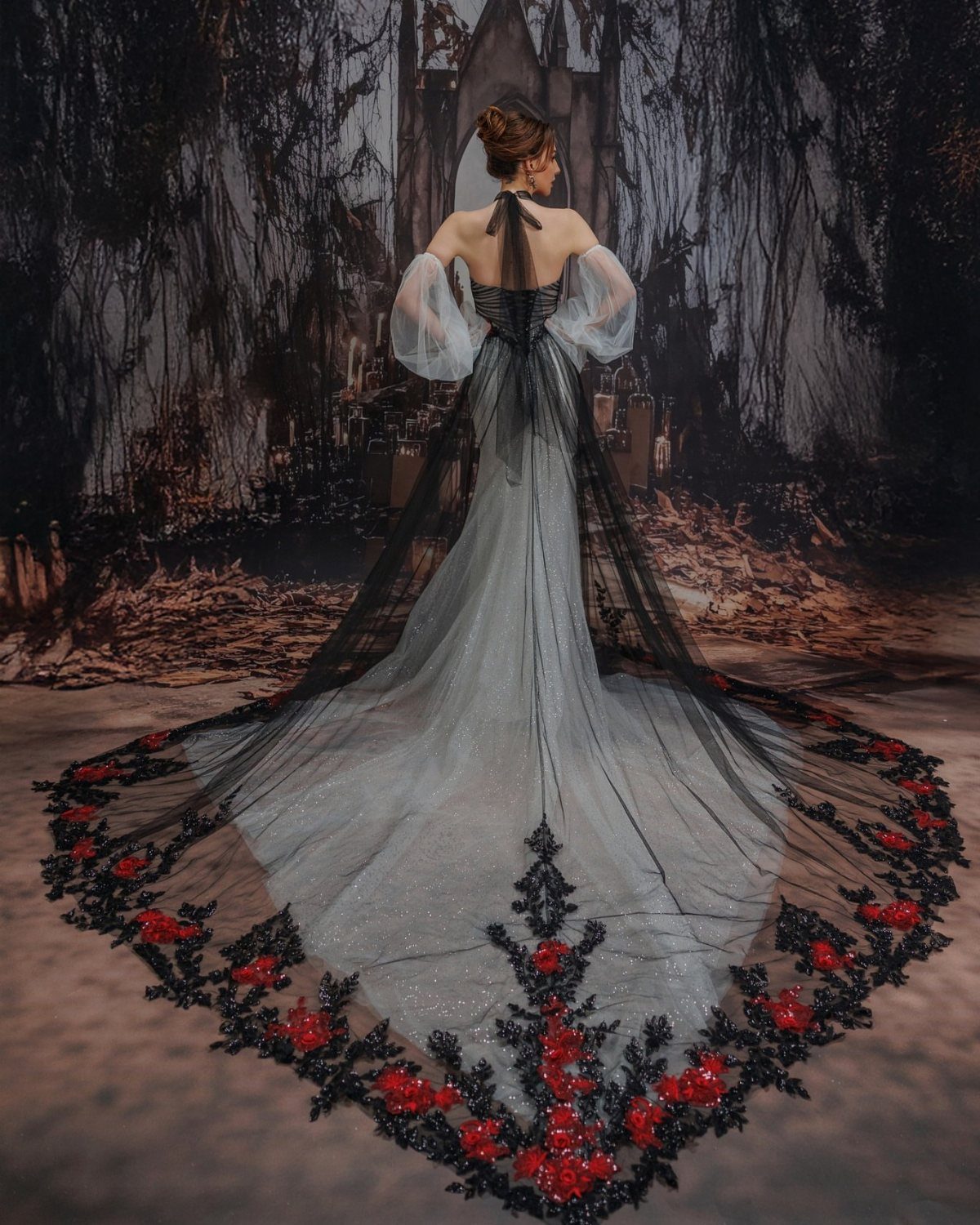
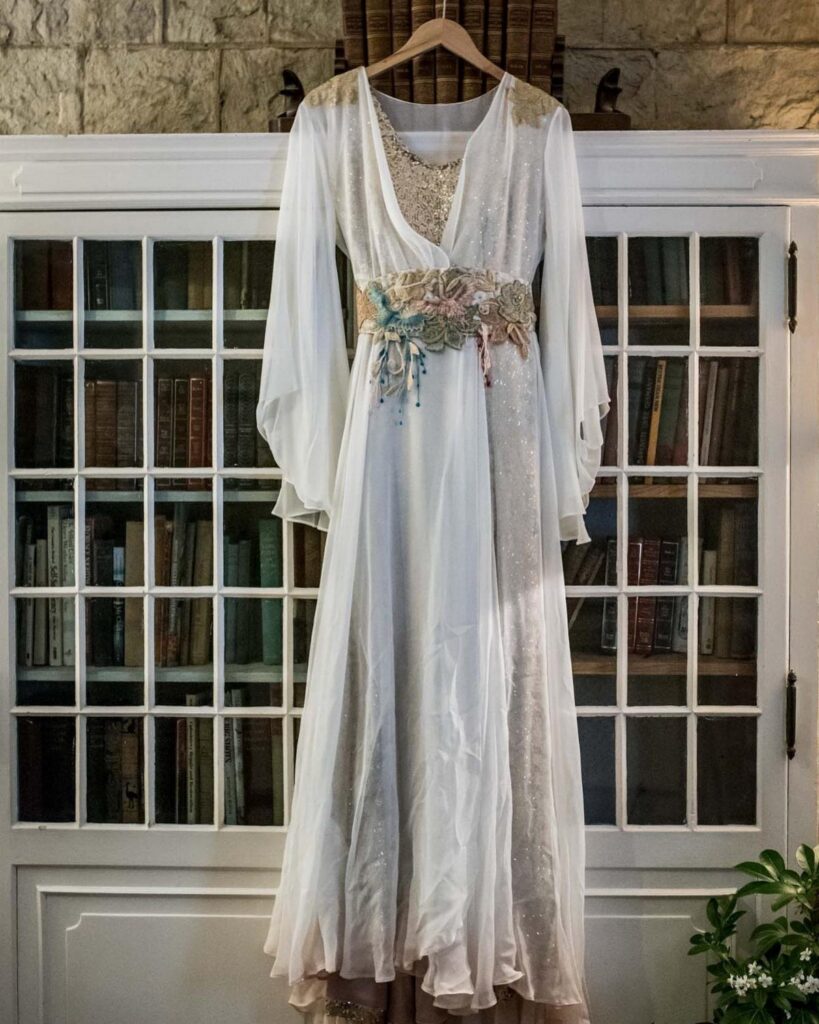
A handmade gown built to outlast the trend cycle gives you something traditional bridal shops rarely offer: a paper trail of who cut the fabric and where it came from.
I like this for brides who are already shopping small for other parts of the wedding and want the dress to match that intention.
The team behind these pieces works from South London, though most US brides order through consultations and fittings arranged by mail.
What you lose in the instant gratification of walking out with a dress the same day, you gain in construction details you can request: a detachable sleeve, a train in a contrasting color, embroidery that references something from your own family rather than a catalog.
The price sits below what I expected for bespoke work, though it still demands planning. Start this process as early as you would for any custom piece, and ask for fabric samples before you commit to a final color.
2. Short Wedding Dresses
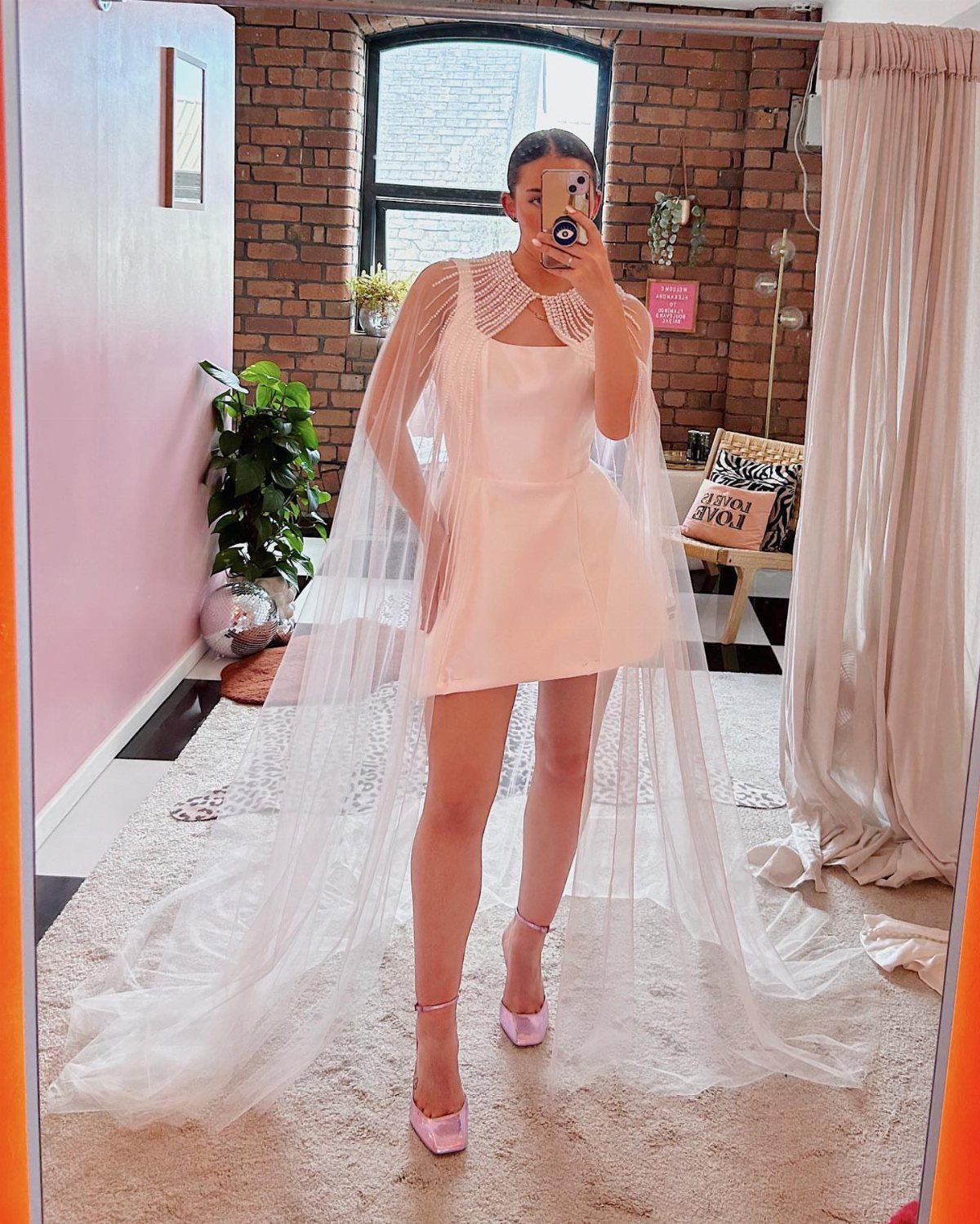
Short wedding dresses solve a problem I hear about more than I expected: the bride who owns nothing floor-length and feels like she is wearing a costume in one.
A knee-length or mini cut lets you move like yourself; add a cape for the ceremony feel without the tripping hazard.
I would look at tea length if your venue leans formal, the knee for a garden or courthouse, and the mini only if you already wear minis happily.
Lace or rhinestone embellishment keeps the look celebratory rather than cocktail-party, though the fabric weight matters more than the decoration. A structured satin or brocade reads bridal where a lightweight jersey might not.
The cape is optional but clever: it photographs like a train, then comes off for dancing. Pack a hanger for it.
3. Wedding Pantsuits and Jumpsuits
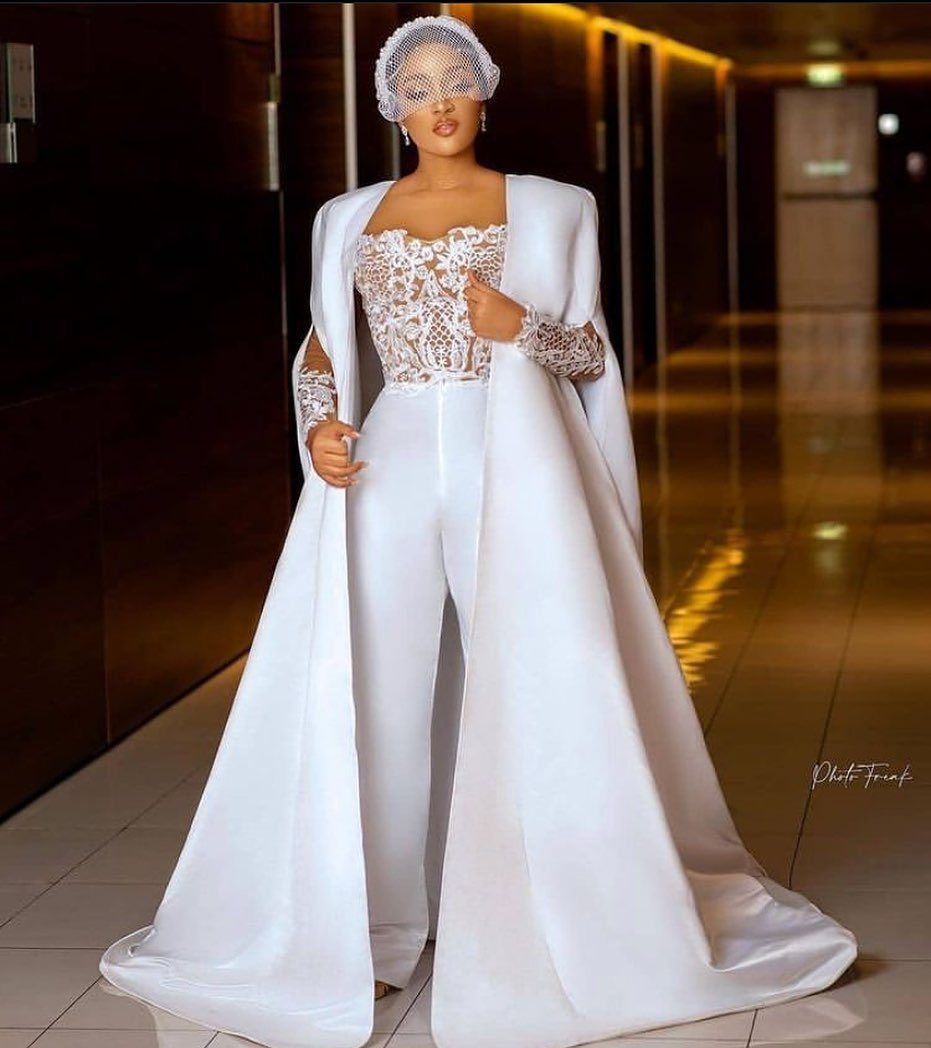
A jumpsuit with a lace bodice and flowing cape gives you the silhouette of a gown in photographs and the mobility of pants in person.
I have watched brides in full skirts need help up stairs, into cars, and back out of bathroom stalls; this option skips all of that.
White reads most clearly as bridal, though cream and pastel pink work as alternatives. I would avoid anything darker unless your wedding carries a specific color story already, the risk is guests misreading which person is marrying.
A lace top adds the traditional touch of a separate bodice and skirt without actually being separate; if you want more classic still, swap the trousers for a short fluffy skirt on the same base.
The real practical win is reusability. Worn again for a rehearsal dinner or an anniversary, it does not carry the same costume energy as re-wearing a full wedding gown.
Sleek tailored trousers, asymmetric slip dresses and marabou-trimmed minis are a succinct reminder to possessed brides that no one need lose their sense of self, or style, when it comes to wedding attire.
4. Vintage Wedding Dresses
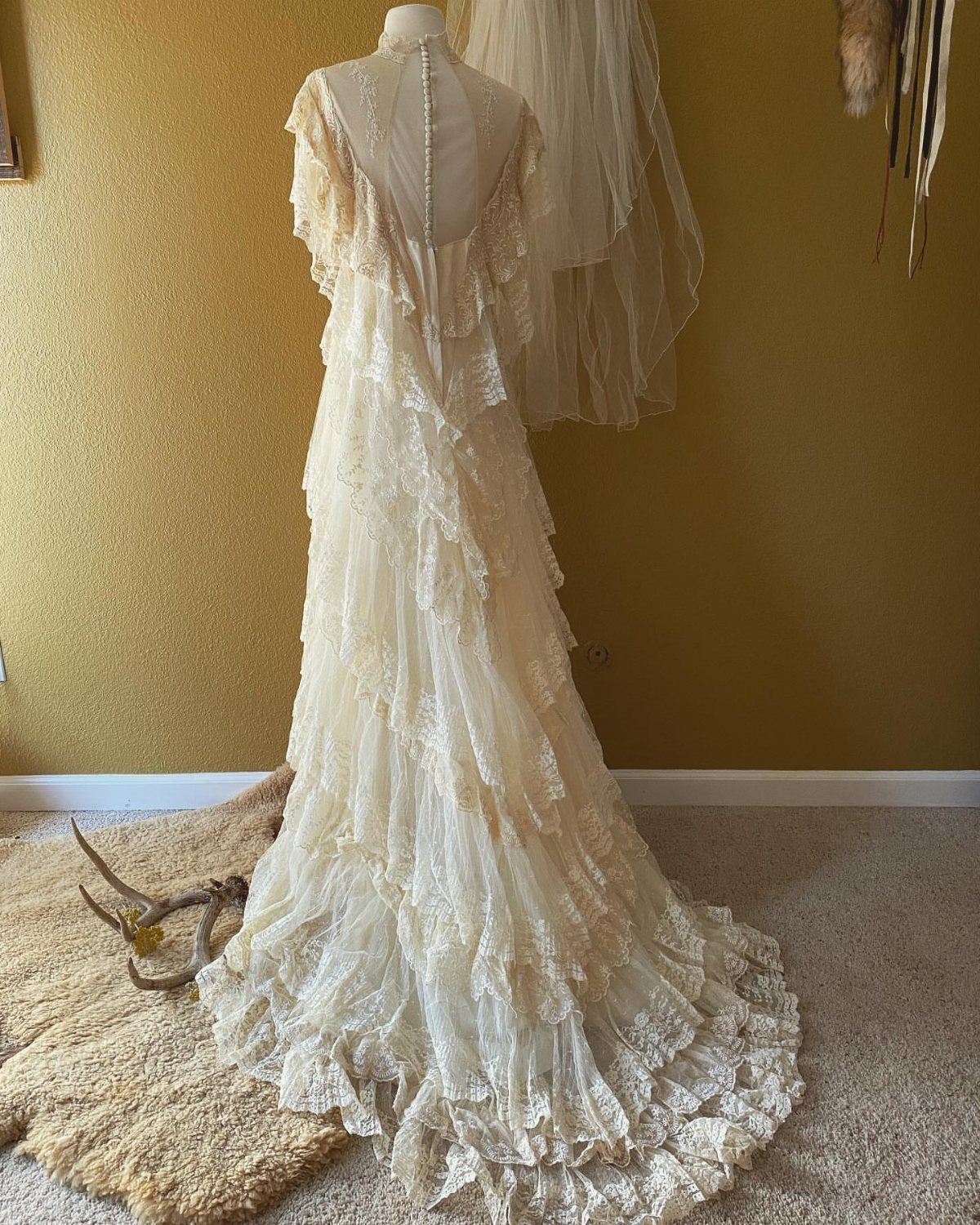
Vintage wedding dresses carry the patina of a specific decade rather than the blank slate of new fabric, and that is either exactly what you want or a reason to keep scrolling.
Color saturation varies widely in authentic vintage: a true white is rare, ivory and champagne are common, and the occasional pastel or deeper tone turns up in beaded evening pieces repurposed for daytime weddings.
Check the construction before you buy, older seams and fragile netting do not always survive alteration.
Accessories complete the look.
Gloves, a brooch, or a small handbag finish the look; hair matters as much as jewelry. A modern blowout fights the dress, while a set wave or structured updo lets it land as intentional rather than costume.
5. Bright Colored Wedding Dresses
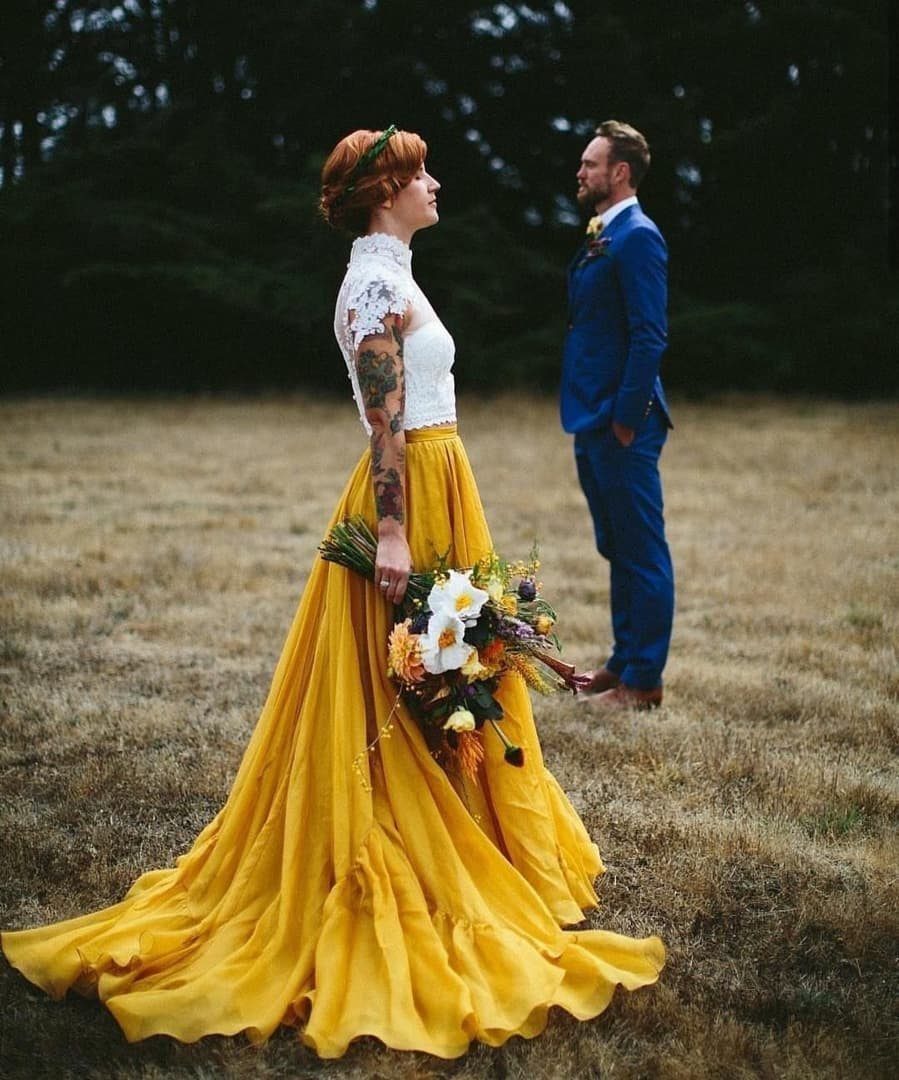
A yellow skirt against a white lace top is the kind of combination that makes guests look twice in the right way.
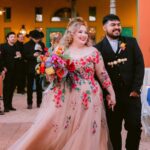
Bright color in a wedding dress does not have to mean all-over saturation; use it as an accent that still reads as bridal.
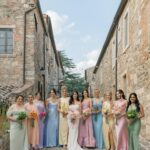
The full range runs from pastel pink and powder blue, which now feel almost traditional, through mint and peach, to the bolder territory of orange, green, or red.
I would warn that red still carries cultural weight in the US that it does not elsewhere, it can scan as provocative or simply as wrong depending on your family.
A watercolor effect that blends several colors together softens the statement if you want color without a single loud hue.
Light, flowing fabrics work best for multi-color designs, heavier materials fight the dye and read muddy. Ask your florist to pull from the skirt rather than defaulting to white, a matching bouquet sells the choice.
6. Dark Moody Gowns
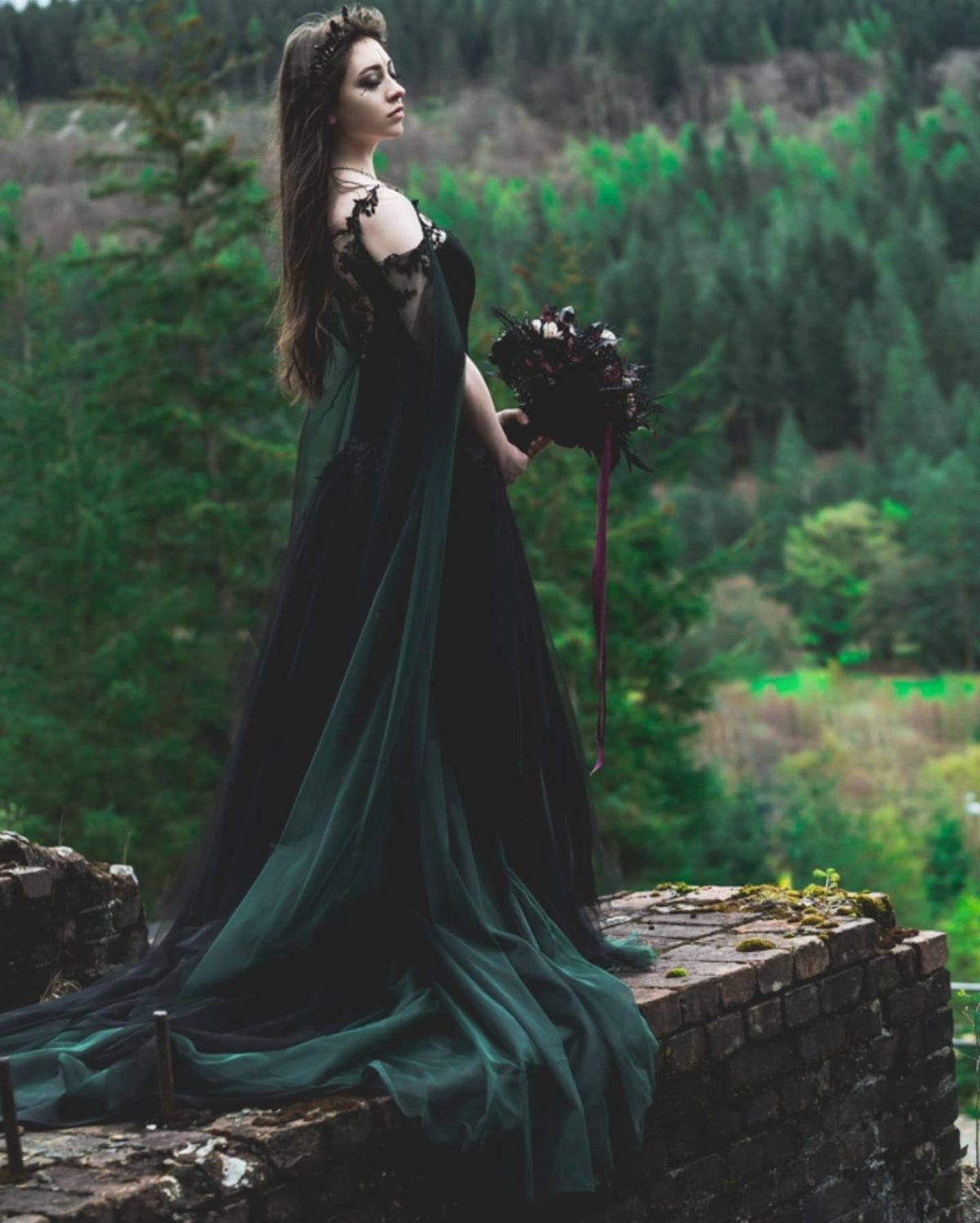
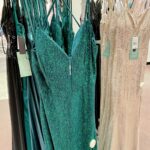
A dark green and black tulle ballgown in a woodland setting is the kind of look that only works if you commit completely.
A tiara and bouquet dyed to match rather than contrasting keeps the palette controlled and intentional rather than Halloween.
This route works for brides who want to experiment with silhouette and color both; the volume and the dark tones do most of the work.
Feathers, 3D flowers, or butterfly appliques are the variations to try, though I would be careful with large floral additions on a fuller figure. They add visual bulk exactly where the eye already lands.
If you want the mood without the full gothic commitment, consider a black or deep green underskirt with a sheer black or smoke overlay. You get the darkness in photographs and a slightly lighter effect in motion.
7. Black Lace Embellished Gown
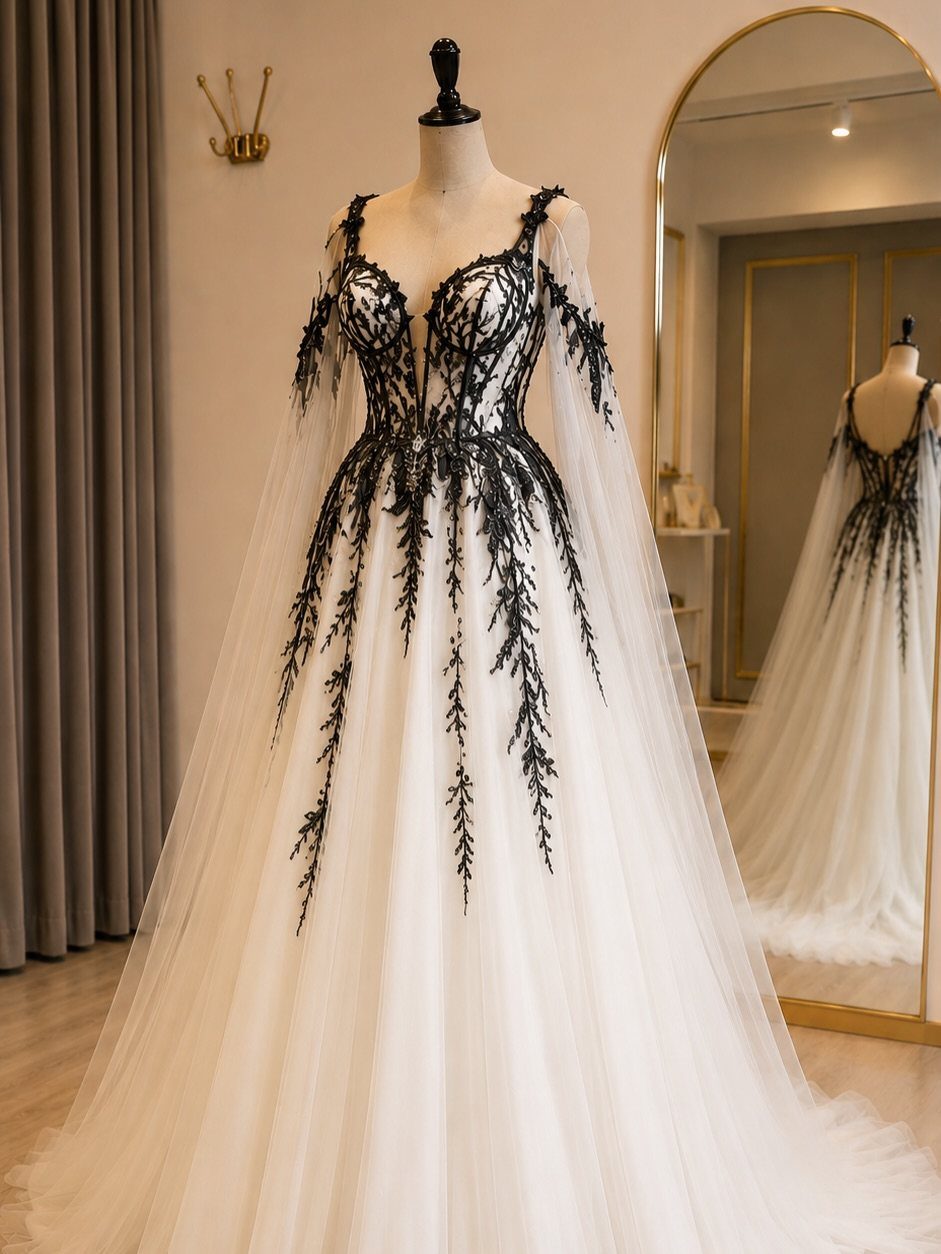
Black lace on white tulle gives you the contrast of a dark gown without surrendering the bridal register entirely.
The eye reads white first, then notices the embroidery, which keeps the look wedding-appropriate for families who might flinch at solid color.
Placement matters. Lace concentrated at the neckline and sleeves frames the face; scattered down the skirt reads more romantic, a trailing vine effect.
I would ask for the black to be silk or cotton thread rather than synthetic, the matte quality photographs better against tulle and does not glare under flash.
Sheer cape sleeves add movement without weight, which is exactly what you want when a full skirt already does the heavy lifting. They catch air when you turn and give the portrait photographer something to work with.
The construction is demanding: each appliqué is pinned, then sewn by hand so the tulle does not pucker. Budget for that labor, and confirm your timeline includes a final fitting after the lace is set.
8. Macrame and Fringe Gowns
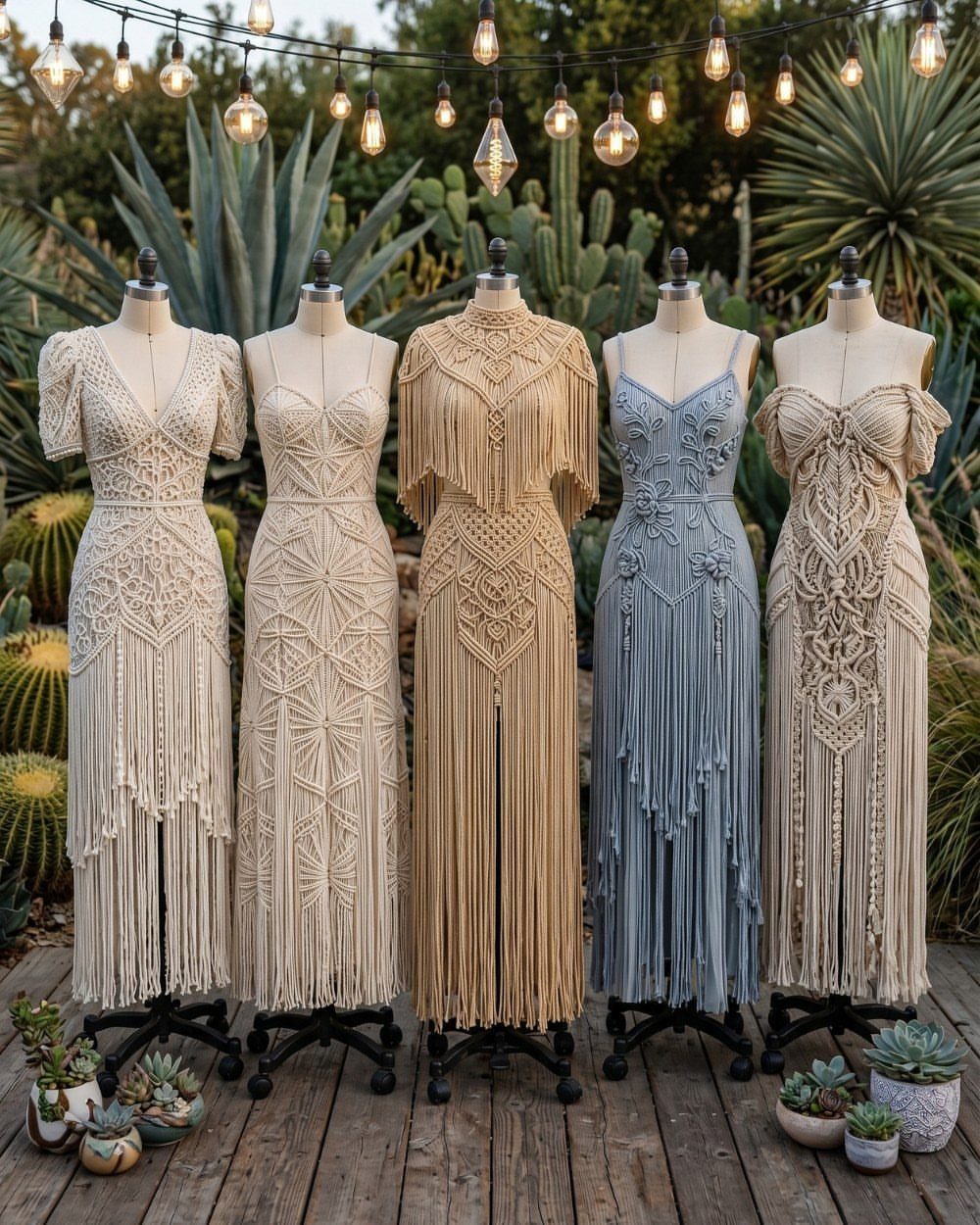
Macrame and fringe gowns carry the texture of handwork at a distance that reads as pattern up close. The knots themselves become the decoration, no lace or beading required.
These pieces start flat: a craftsperson ties the pattern in sections, then shapes it to the body on a form.
That process limits how fitted the silhouette can get, which is why most versions run column or A-line rather than mermaid.
The fringe hangs from the hem and sometimes the sleeves, moving independently as you walk. I would keep the underlayer simple, a slip dress in ivory or sand, so the macrame reads as deliberate overlay rather than incomplete coverage.
Outdoor or desert venues suit this best, the natural light shows off the shadow patterns the knots cast. Indoor evening runs the risk of the texture disappearing into dim corners.
Check the weight before you commit; wet macrame stretches and the fringe tangles. A steamer, not an iron, is the tool for travel wrinkles.