These outfits run from a strapless bra fix to full South Asian formalwear with professional draping, and the single thing that sorts them is whether your April wedding stays indoors or dares to step outside.
The tiered yellow satin and sleeveless pink peplum both assume afternoon garden light, while the ombré blue gown and champagne lace duster are built for evening bulbs and heated tents.
The fabric notes stay literal because April weather runs sun, drizzle, and chill in a single afternoon, and cotton crepe handles that range differently than chiffon that bunches under a jacket.
1. Floral Halter Maxi Dress
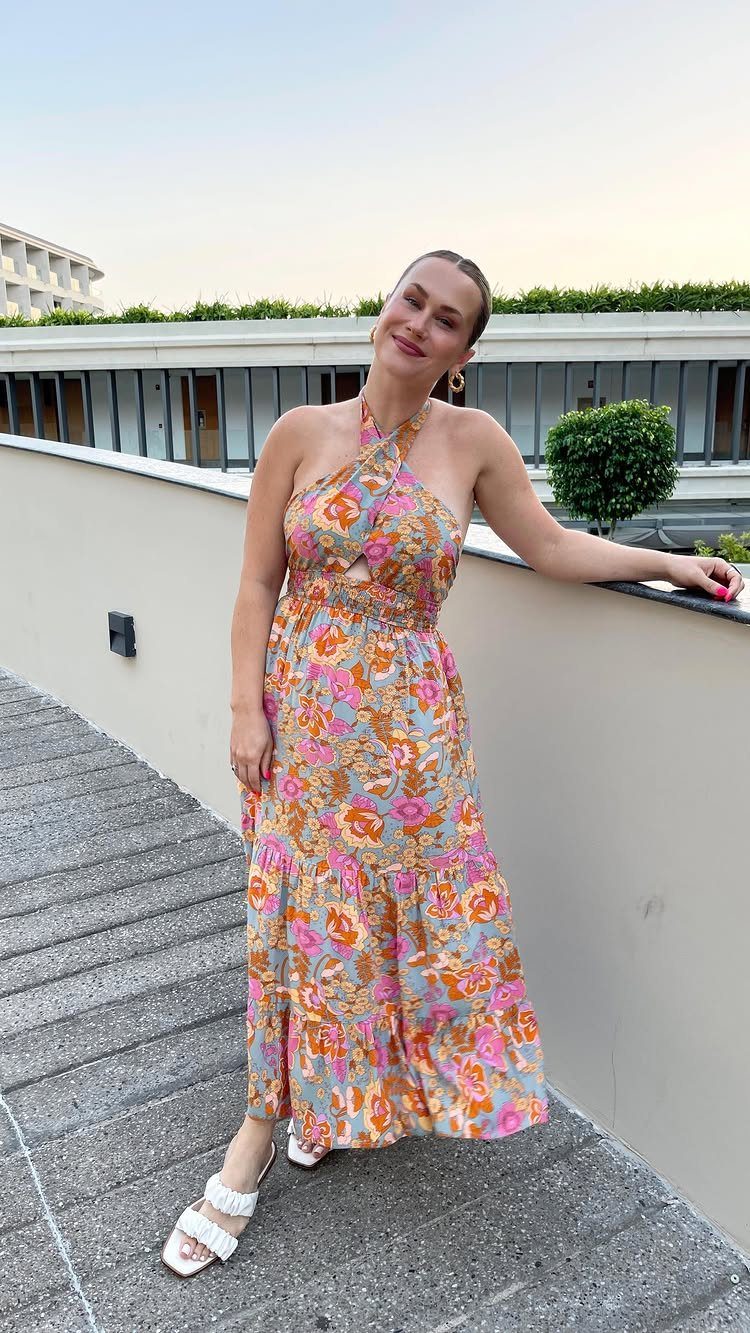
A halter neckline keeps shoulders bare for sun but the floor-length cut and small waist cutout give it more structure than a typical summer maxi.
April weather is what makes this tricky: the print reads spring, but you will want a wrap or cropped jacket in the car.
Check the fabric weight before you buy; a cotton blend works for a warm afternoon, silk or polyester crepe needs a layer.
White slide sandals keep it grounded rather than dressed up, which tells me this is a daytime outdoor or garden venue.
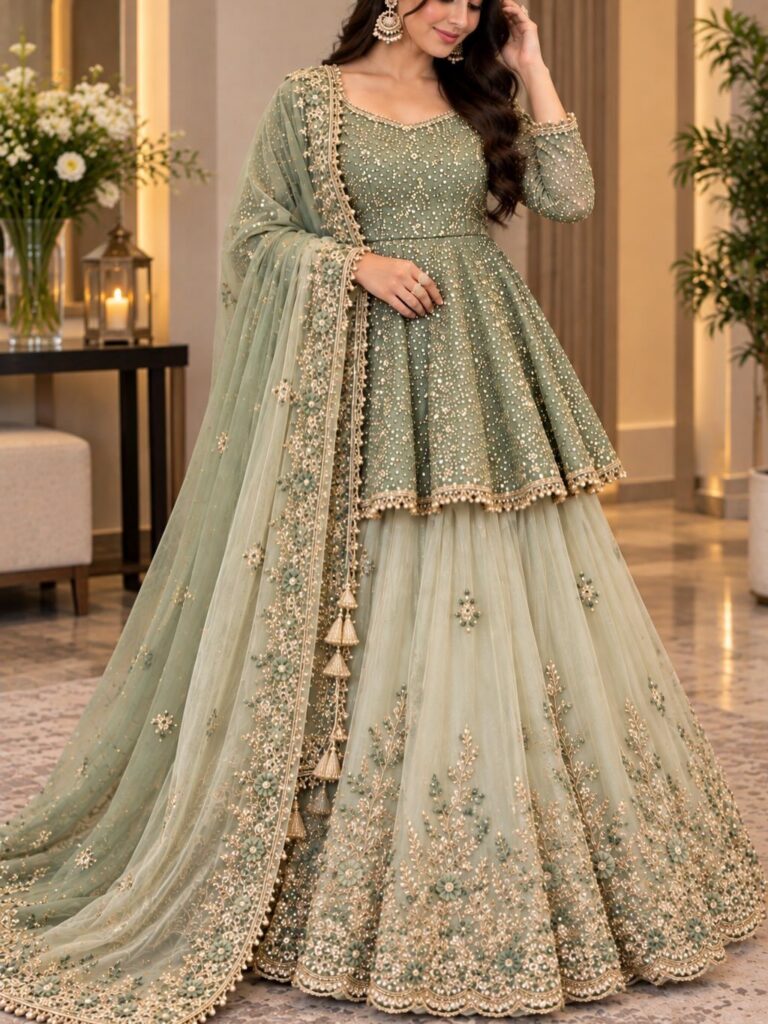
2. Sage Green Embroidered Lehenga
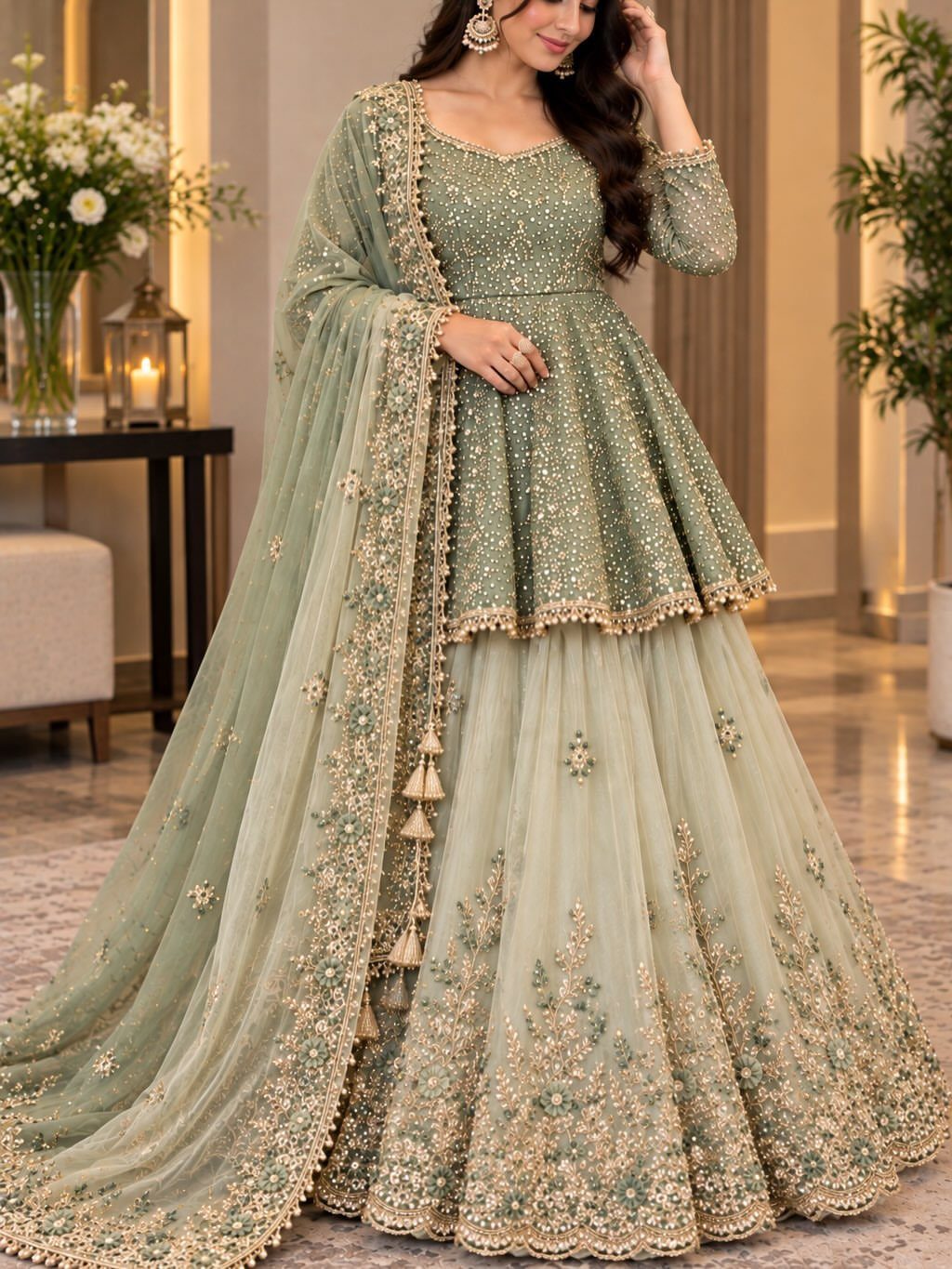
Sage green sits in that useful space between pastel and neutral, and the gold embroidery warms it up against still-pale April light.
A lehenga with peplum-top shaping and a sheer dupatta is more formal than a typical Western wedding guest dress, so verify the dress code on the invitation before you commit.
The dupatta draping is doing work here; if you are not practiced with it, set aside time at home to pin it securely, or ask your hotel concierge for a local shop that does same-day draping.
This is best for an evening reception, not a morning ceremony.
3. Embellished Copper Two-Piece Set
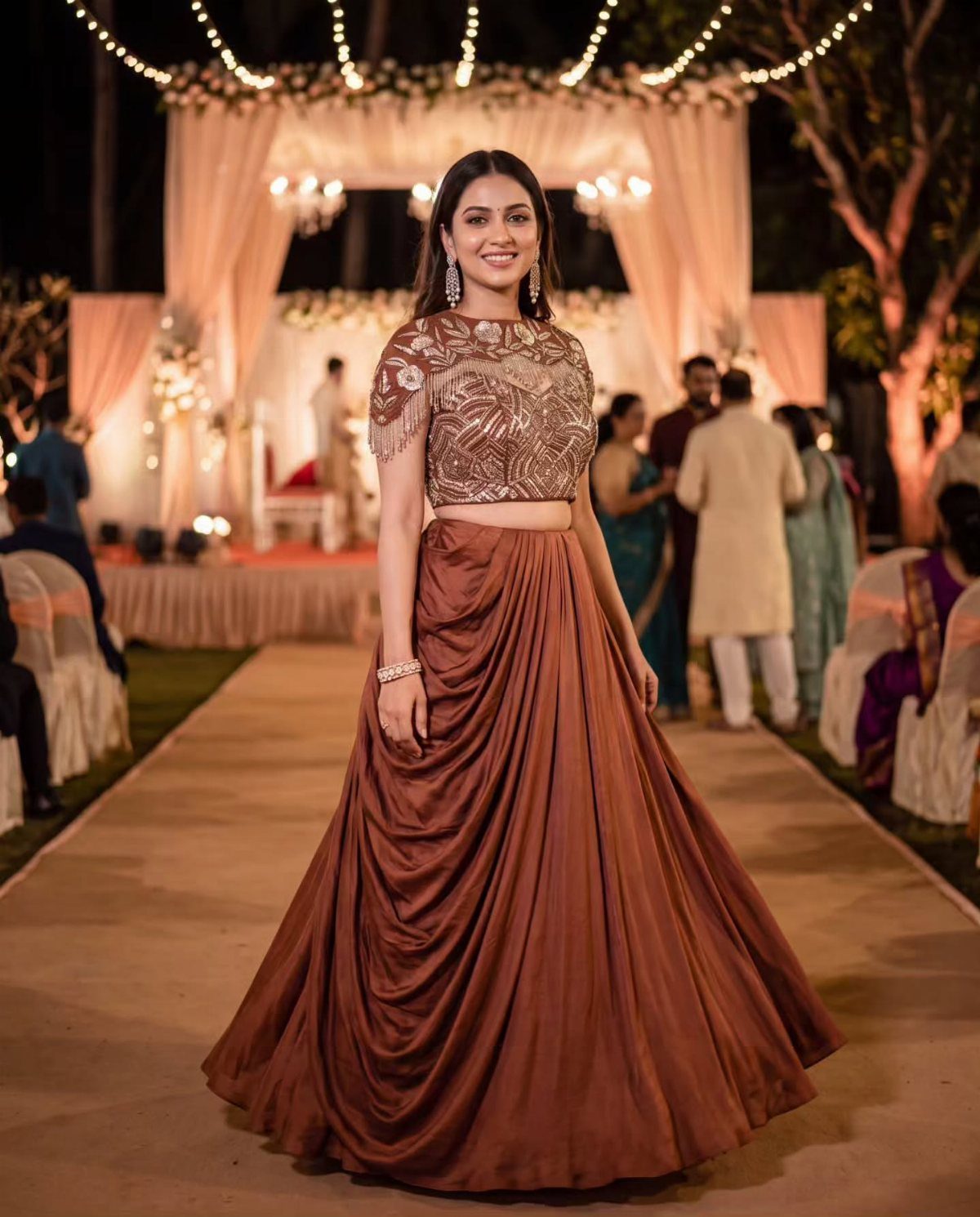
Copper catches artificial light beautifully, which is why this works for a sunset or indoor evening wedding even when the temperature drops.
The crop top and long skirt division is forgiving if you are between sizes; you can buy the skirt to fit your hips and the top to fit your shoulders separately.
Check the embellishment weight before ordering, some mirrorwork or beadwork on lighter silk can pull the fabric out of shape by midnight. A draped skirt like this moves best with a fluid fabric, not stiff brocade.
4. Coordinated Metallic South Asian Attire
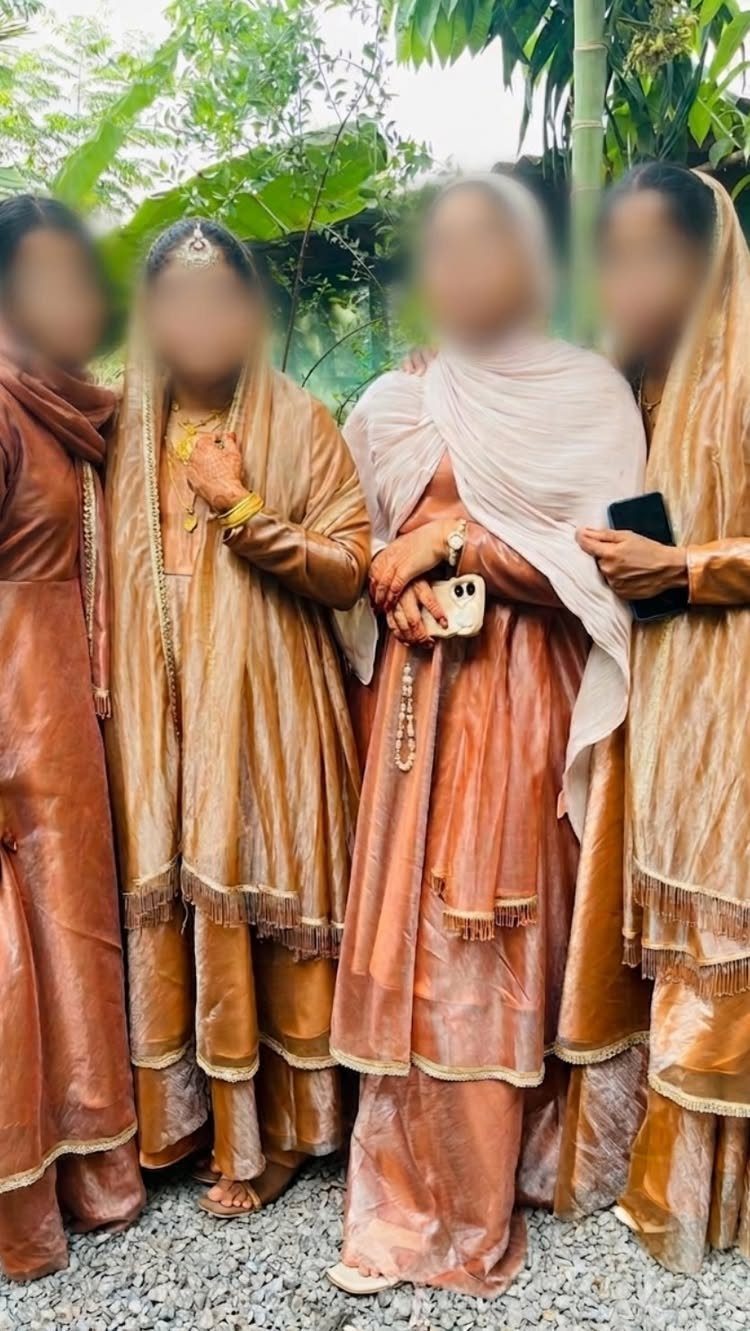
Coordinated dressing for a group only works if everyone commits well ahead for ordering and alterations. The metallic finishes here, peach through copper to gold, let each person have her own shade without clashing.
If you are the one organizing this, pick two base colors and let the others choose their exact tone; matching dupatta prints tie it together.
April outdoor weddings on gravel or grass mean hemline checks: have everyone walk in their shoes at the fitting, not just stand.
5. Tiered Yellow Satin Slip Dress
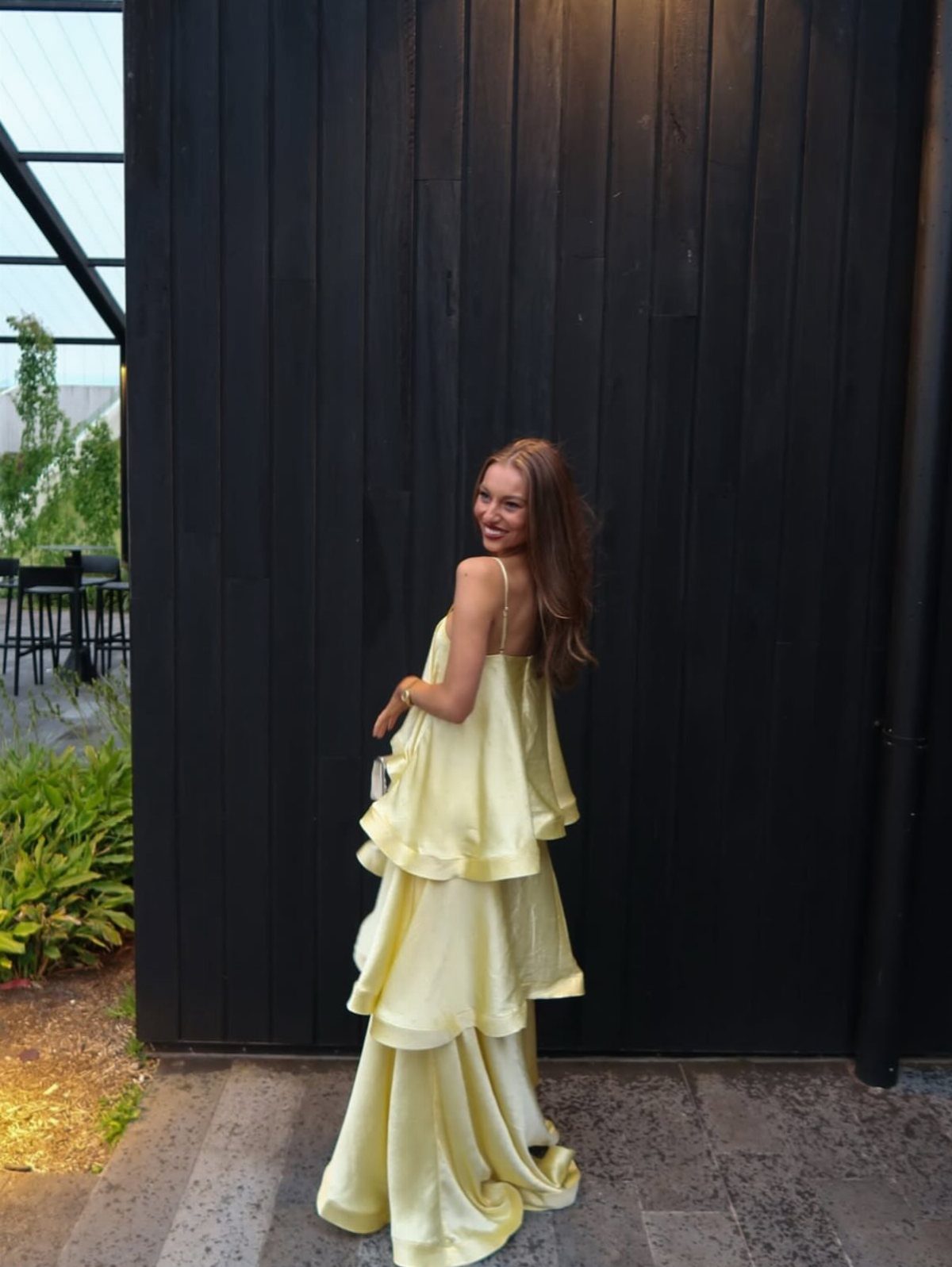
Tiered satin in pale yellow is a daylight choice; the tiers add volume and movement that a plain slip dress flattens out.
Thin straps mean you will need a strapless bra or silicone cups, plan for that cost if you do not already own one. April air can turn damp and cool fast; this is a bring-a-wrap dress, not a bare-shoulder-all-night dress.
The tiered hem drags more than a straight cut, so check your venue floor plan for stairs or grass before you commit to heel height.
6. Champagne Gown with Lace Duster
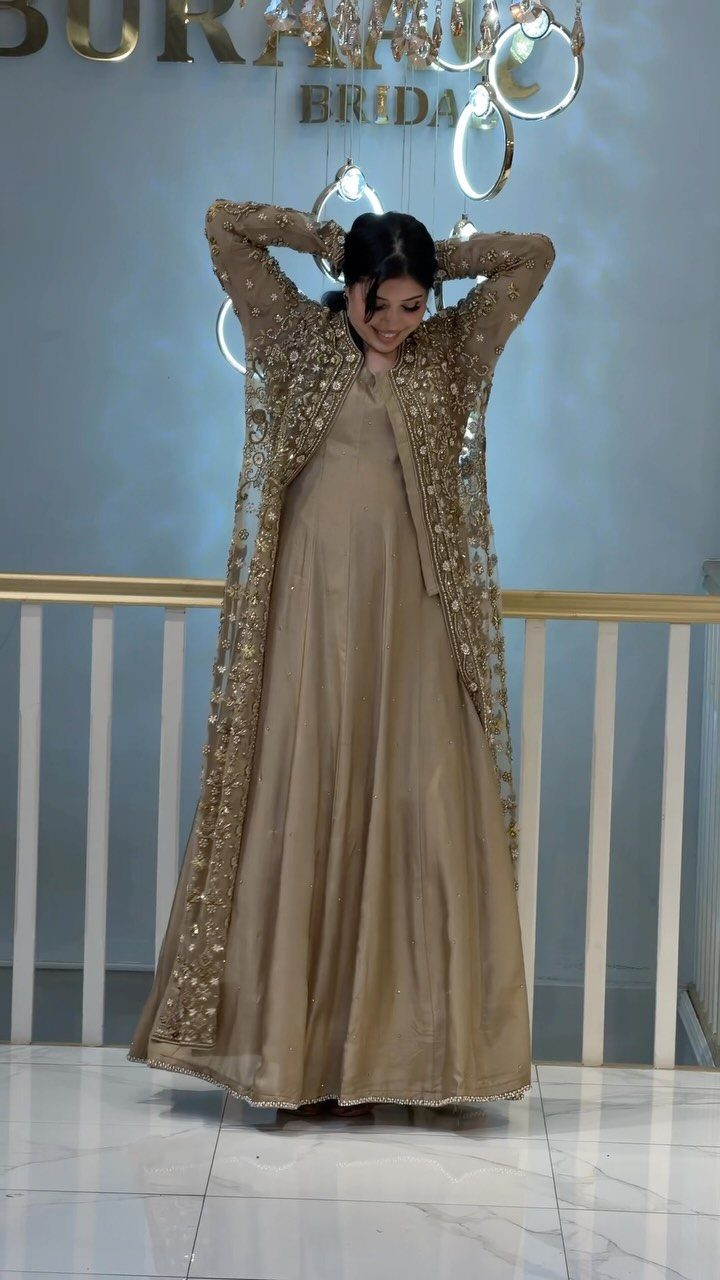
The gold-threaded lace duster over a champagne gown is doing double duty: it adds modesty for a ceremony, then comes off for dancing.
If you are buying separately, match the thread color, not the base fabric; under indoor light, champagne and gold go tone-on-tone, but ivory or stark white thread will read as a mismatch.
Check the duster length against your gown hem; it should hit at mid-calf or above, never longer than the dress. An indoor evening wedding in April, when heat may still be running, is ideal for this much coverage.
7. Ombré Blue and Purple Gown
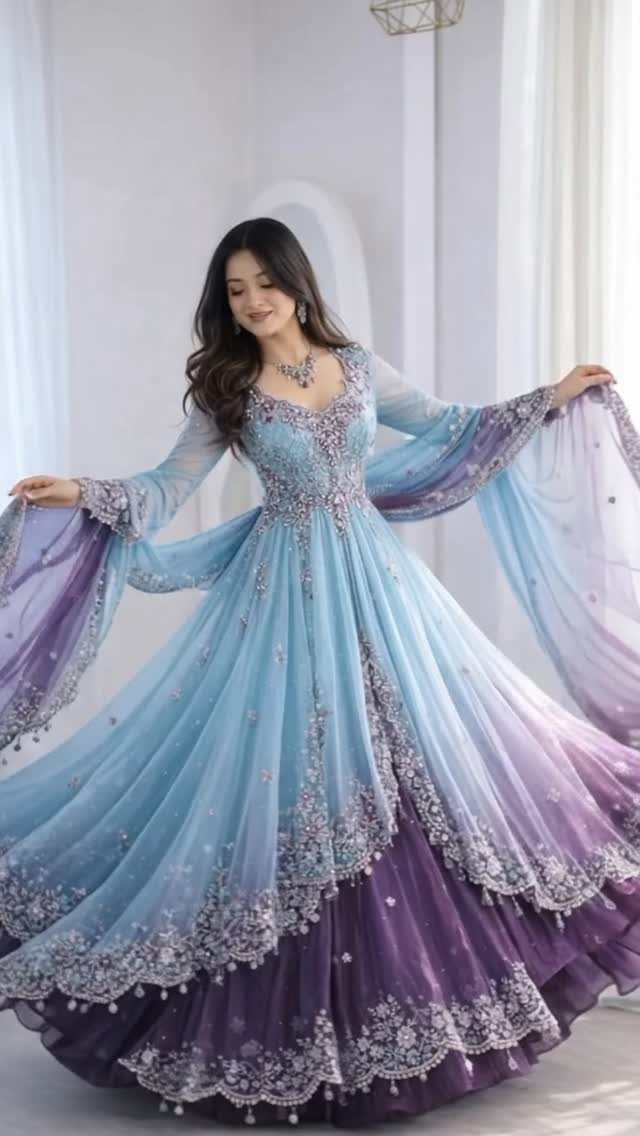
An ombré gradient from ice blue through violet reads evening but not winter-heavy, which is exactly where April receptions live.
The sheer wide sleeves add coverage without weight, though the beading and embroidery throughout mean this is dry-clean only, so factor that into the rental or purchase cost.
The volume in the skirt needs a crinoline or built-in structure; ask before you buy, since an underskirt changes how the dress packs and whether it fits your car for the hotel change.
This is a statement piece, so keep jewelry minimal and let the color shift do the work.
8. Light Pink Satin Midi Dress
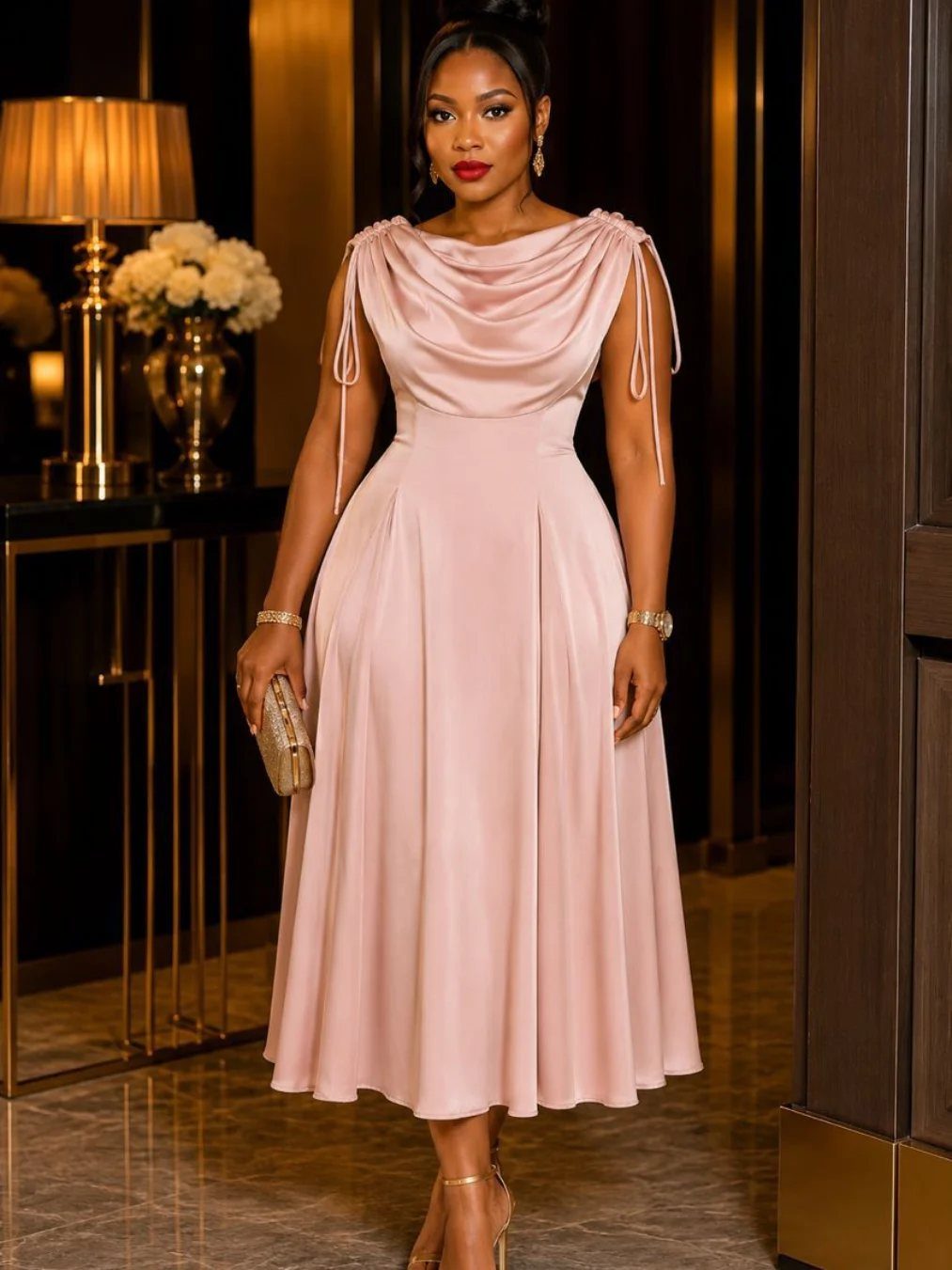
Cowl necklines in satin drape well but they also catch light unevenly, which means every angle photographs differently; check yourself in a mirror from the side before you commit.
The shoulder ties here are doing more than decoration, they hold the neckline in place so you are not adjusting all night.
Light pink satin for April reads spring without shouting it, and the midi length works for church ceremonies and cocktail receptions both.
A gold clutch warms up the cool pink tone; if you already own silver, it works, but it will read more casual.
9. Lavender Sleeveless Satin Maxi Dress
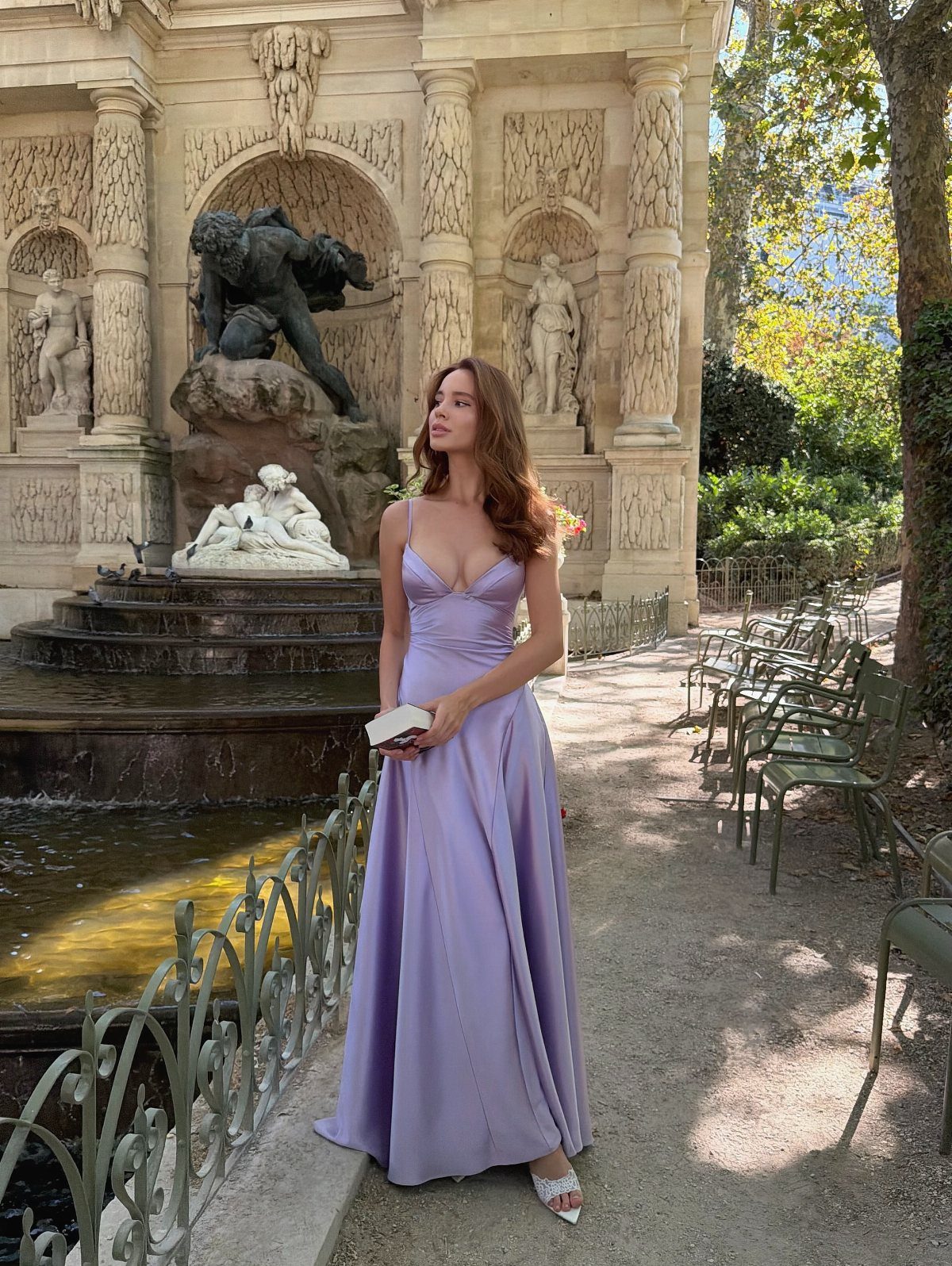
Thin straps on a floor-length satin gown in lavender give you bare shoulders for a warm April afternoon but leave you exposed if the wind turns.
A sleeveless satin maxi in lavender works for an April wedding, but only if you plan for the temperature drop between ceremony and reception; I pack a fitted blazer or a cashmere wrap I can leave at the coat check once the dancing starts.
Satin maxis wrinkle where you sit, so arrive early enough to steam or hang the dress in a bathroom during the ceremony.
The color sits between pastel and statement, which makes it versatile for daytime garden weddings and evening tent receptions both.
10. Sleeveless Pink Peplum Maxi Dress
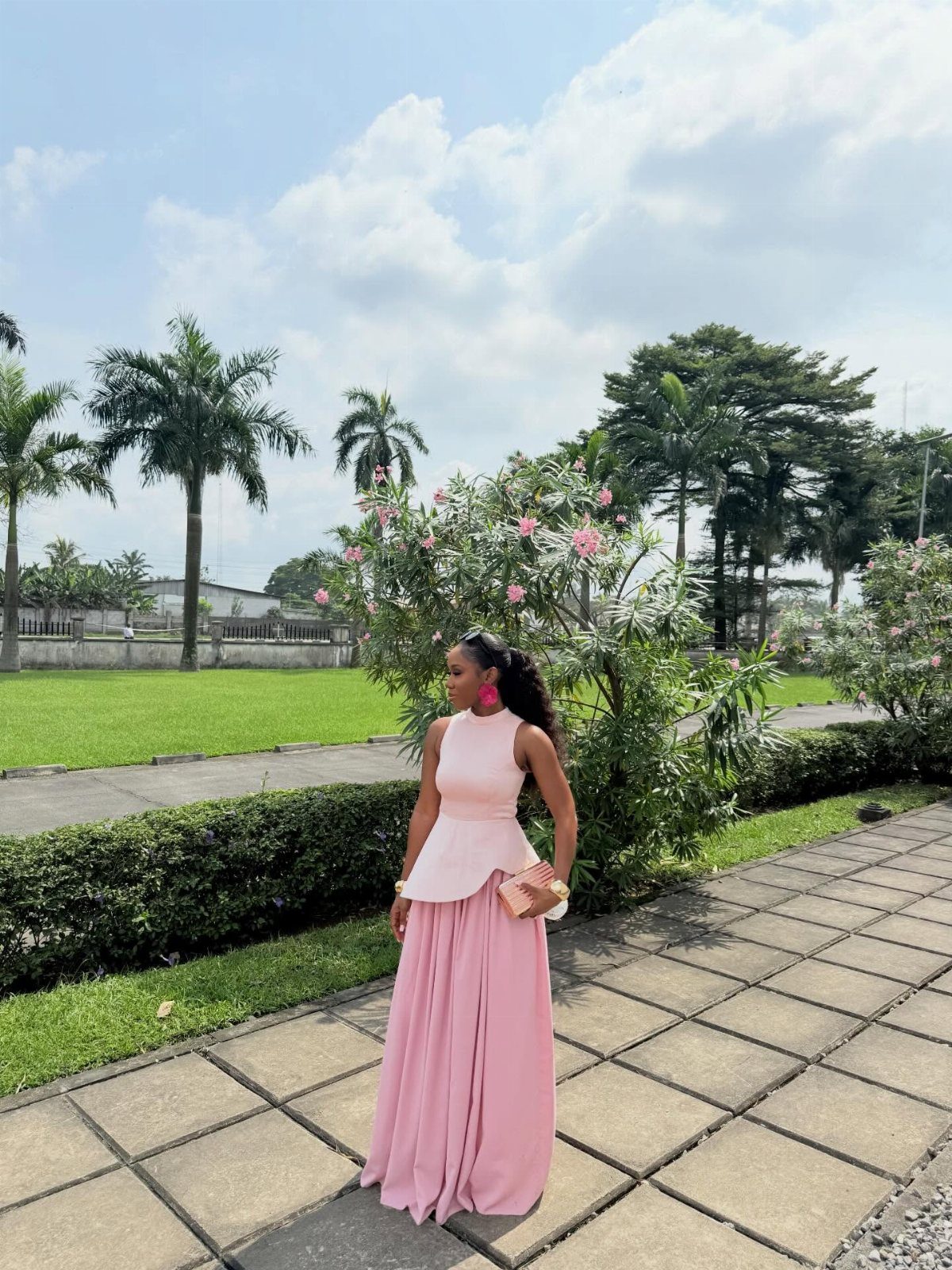
A peplum waist on a maxi dress is doing figure work that a straight column dress does not; it adds structure at the hip without requiring a belt or separate piece.
Sleeveless and floor-length in pale pink is a combination that reads formal daytime, so this fits a church ceremony or garden reception where the dress code is not stated outright.
The peplum volume shows best in a fabric with some body, not limp jersey; check the fabric content before ordering. This is a wear-again dress if your spring calendar includes graduations or luncheons.
11. Red Saree with Sequin Blouse
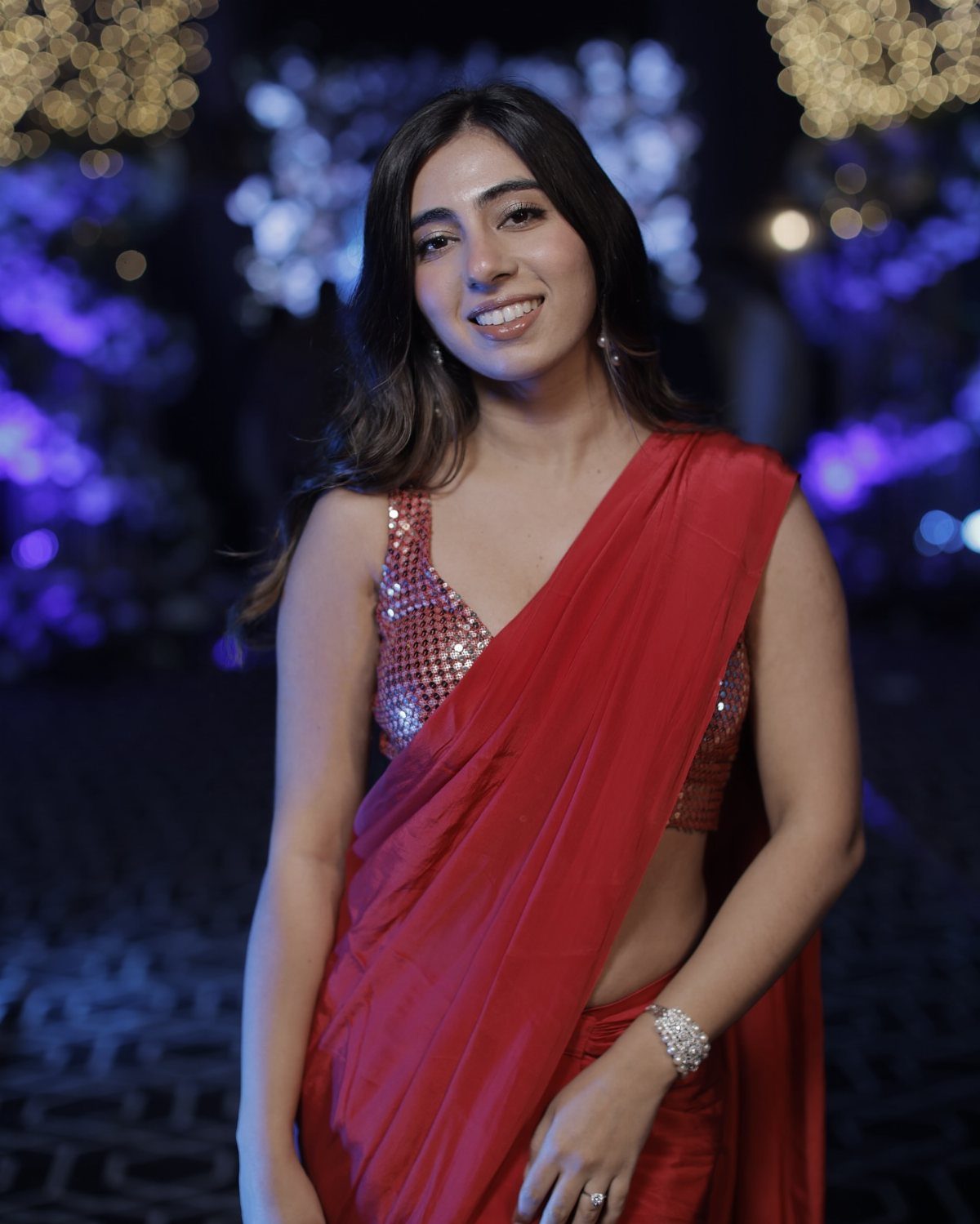
Red for a wedding guest is a choice that depends entirely on the couple and the culture; in many South Asian celebrations the bride wears it, and guests should ask before choosing it themselves, while at a Western church wedding it can read as trying to outstage.
The sequined blouse here is the focal point, so the saree drape stays simple and the jewelry should too, maybe just studs and a single bangle set.
April evening events can run cool, and a saree leaves the midriff bare between blouse and drape; a matching shawl or pashmina is practical, not an afterthought.
If you are not practiced with the pleating and securing, budget for a professional drape or a pre-stitched version.
Choosing the Right Outfit
The invitation tells you more than you think. A stated dress code is your starting point, but the venue and time fill in what the couple did not spell out.
An outdoor garden ceremony in April means heels sink into soft ground; a church ceremony before noon reads differently than the same church at 6 pm with candles lit.
I look at venue photos online when I am unsure.
A gravel path, a lawn, a polished hotel floor, each changes what shoe and hemline I can wear comfortably. Daytime events favor lighter fabrics and prints; after 5 pm, richer colors and more structure feel right even in spring.
If the invitation says nothing about dress code, the venue and time still speak. A restaurant reception at 7 pm expects more polish than a morning brunch in a garden tent.
When in doubt, I dress one step above what I guess; it is easier to remove a lace duster than to wish I had brought one.
Seasonal Colors
Spring weddings invite color, but April specifically sits in a narrow window.
Pastels and brights feel right, yet the light is still thin and the air can turn cold; colors that warm against pale skin and gray skies work better than pure ice tones.
Soft pink, lavender, sage green, pale blue, yellow, coral, and mauve all read spring without shouting.
Floral prints do the same work. I think of these as daylight colors; they photograph well when clouds move fast and the sun is unreliable.
Evening events after 5 pm shift the rules.
Navy or black become appropriate then, and deeper versions of spring colors, a saturated violet instead of pale lavender, feel at home under artificial light. The season does not ban dark colors; the clock does.
I avoid white, cream, and anything that approaches bridal territory. Beyond that, the only wrong color is one that fights the temperature and the light you will actually stand in.
Styling Tips
Accessories finish an outfit, but they should not become the outfit. A bag that holds your phone, keys, lipstick, and a wrap for temperature drops is practical first; if it also warms or sharpens your color, that is second.
Shoes matter for hours, not minutes. I have learned to break in wedding shoes at home on carpet, then on hard floors, before the event.
A heel that works for dinner fails once you have been standing through the ceremony, the cocktail hour, and the dancing that follows.
Jewelry follows the neckline.
A halter or bare shoulder invites a statement earring; a cowl or detailed bodice needs less, maybe studs and a single bracelet. The dress is doing work; let it.
I pack a wrap even when the forecast promises warmth.
April weather turns, and a borrowed pashmina from a stranger is never the right color. A clutch with a strap or a small crossbody keeps hands free for hors d’oeuvres and introductions.
Frequently Asked Questions
What should I wear to an April wedding?
Floral prints, pastels with some saturation, and fabrics that handle temperature swings are the safest bet. April light is still pale, so colors with depth hold up better than barely-there tints that flatten after 6 PM.
Chiffon and cotton blends breathe well for afternoon garden ceremonies, but pack a wrap or fitted blazer for the drop between ceremony and reception.
What colors are best for spring weddings?
Sage green, copper, lavender, pale yellow, and ombré blue-to-violet all read spring without drifting into the bride’s white territory.
Pastels work for afternoon sun, but richer tones with depth suit evening receptions under bulbs. The one color to avoid is anything near-white; April light photographs cream and ivory brighter than they look in a mirror.
Can I wear a jumpsuit to a wedding?
A tailored jumpsuit in a solid color works for most spring weddings, especially paired with heeled sandals and a clutch that reads celebration rather than office.
A jumpsuit would need to match the dress code stated on the invitation and use fabric weight appropriate for the venue’s temperature.