The dresses below move from an easy satin slip to a full tulle gown, and what works depends on whether you are braving August humidity outside or heading into a hotel ballroom with the AC blasting.
Satin catches light in a way poly-blend never quite manages, which is why even the lower-priced pieces here look like they cost far more once you step under venue lighting.
1. Light Blue Satin Maxi Dress
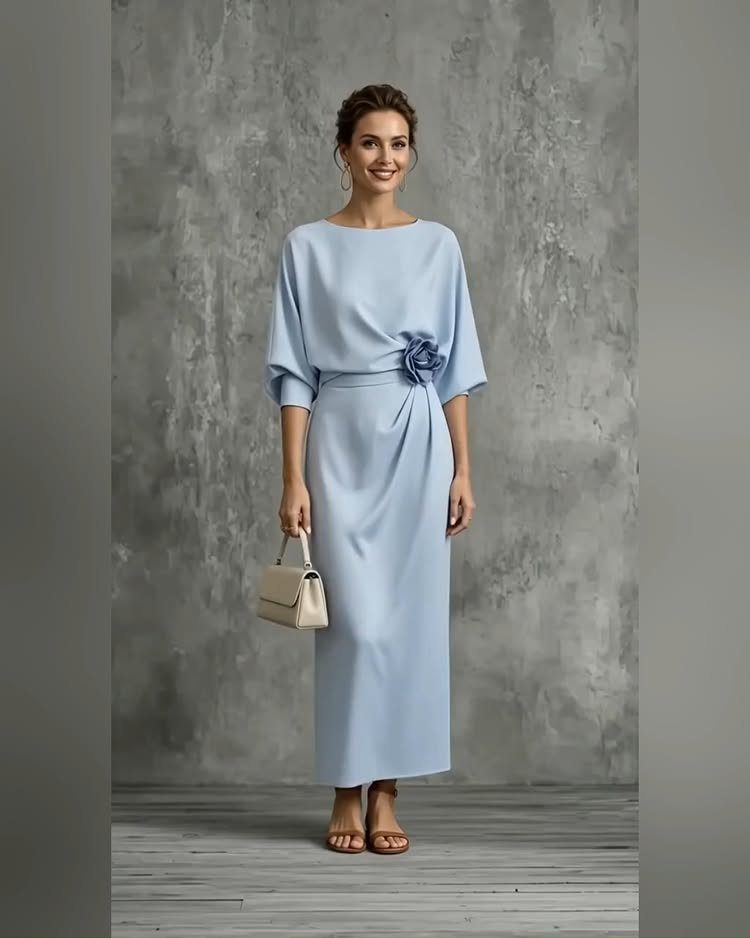
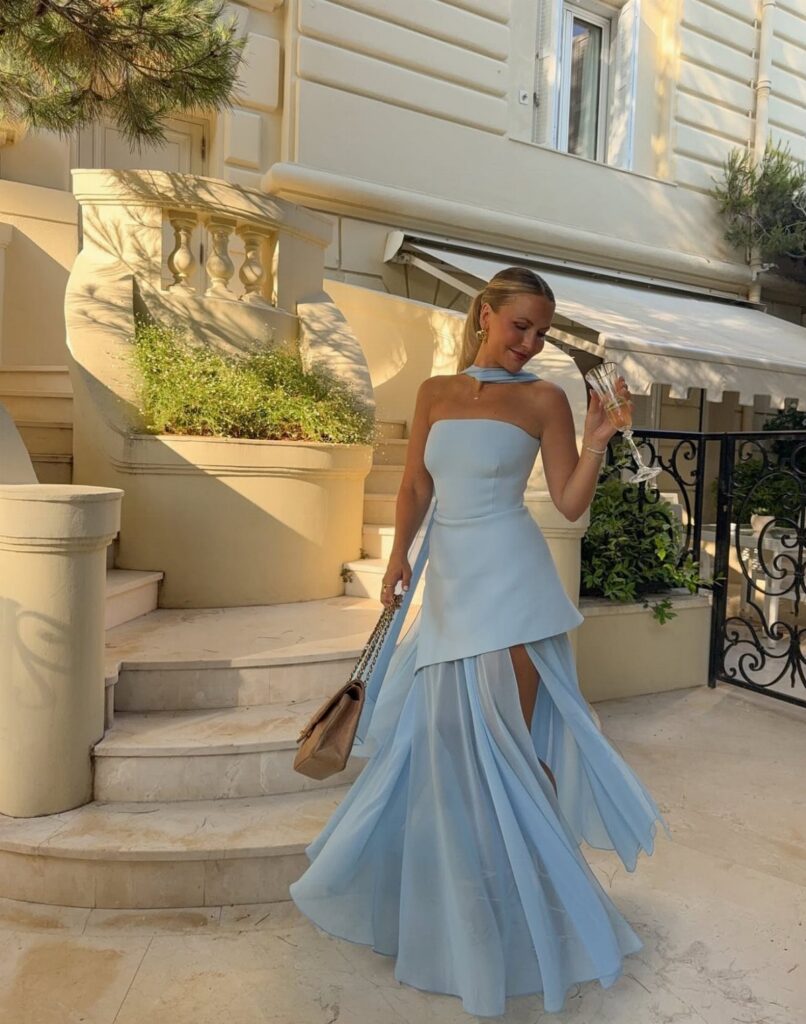
Satin catches light differently than cheaper poly-blends, which is why this fabric reads expensive even when the price tag is not.
The cowl neckline sits soft against the collarbone without needing a necklace, and the slim skirt moves well for seated dinners or slow dancing.
I would look for a version with the waist detail visible here; it breaks up the column of color and gives shape without a belt.
Elbow-length sleeves mean you can skip the strapless bra hunt entirely, which I count as a win. This is the dress I would pack for a destination wedding where the venue might be humid.
2. Light Blue Floral Print Dress
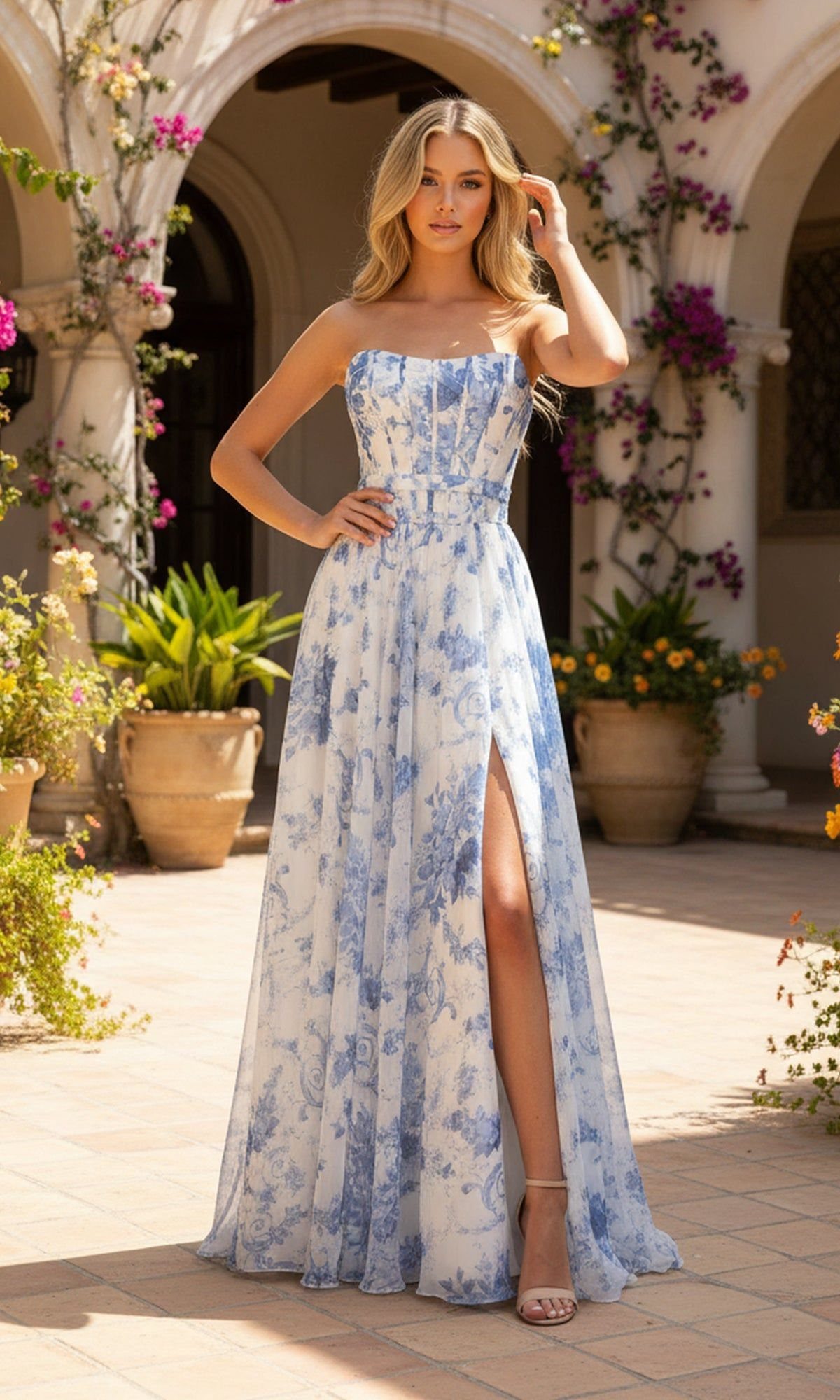
Floral print on light blue reads garden party or daytime ceremony, not black tie, so check the invitation before committing.
A strapless cut keeps the neckline open without the fuss of adjusting straps all night. Tiered skirts add volume without weight, which matters for outdoor events where wind or heat is a factor.
I prefer the thigh slit version shown because it keeps the tiers from swallowing a shorter frame. Silver or nude heels work; anything darker fights the airy mood.
Bring a wrap. Even summer evenings turn cold, and this dress is too pretty to cover with a borrowed jacket.
3. Light Blue Chiffon Gown
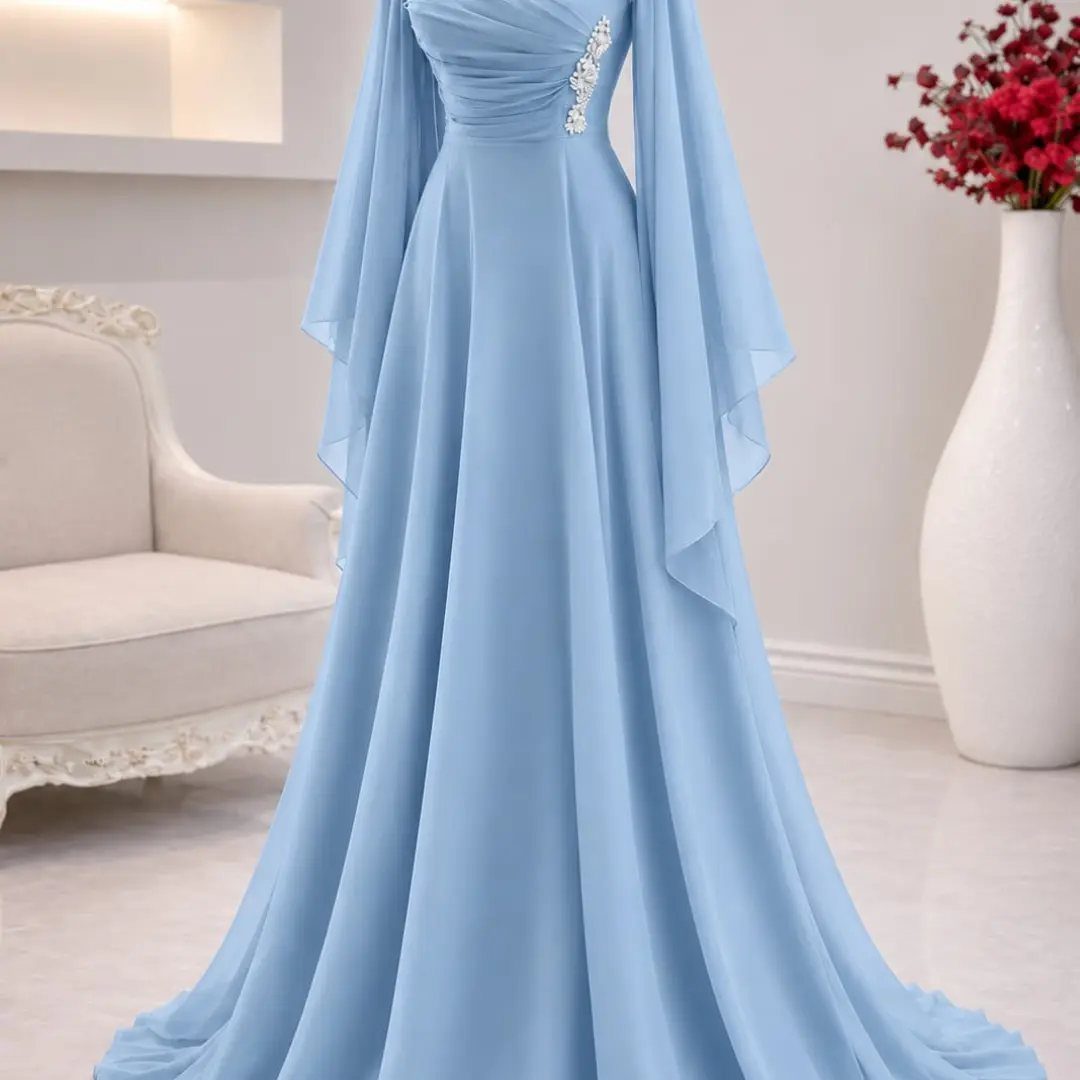
Chiffon is forgiving in 2 ways: it drapes over areas you do not want to highlight, and it travels well if you roll it instead of fold.
A sweetheart neckline is classic, though draped sleeves read more current right now. Layered skirts need a hem check; chiffon frays if it brushes the ground all night.
I have seen this color read as "something blue" for brides who want a non-white rehearsal dinner look. A beaded waist detail saves you from adding jewelry.
4. Light Blue Tulle Dress
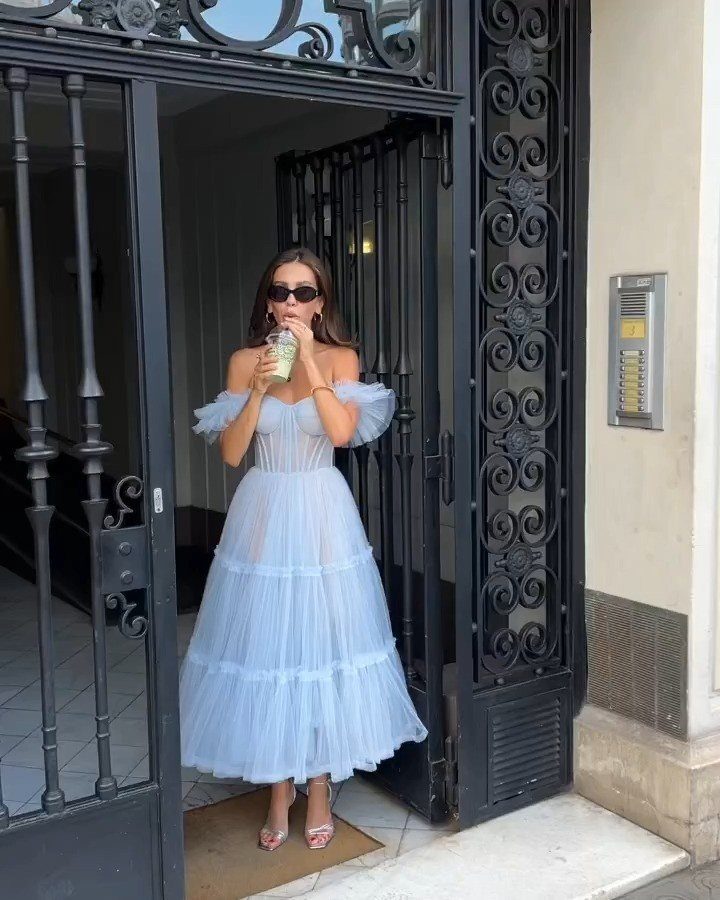
Tulle is the fabric people picture when they say prom dress, which makes it hard to wear without looking like you borrowed your little sister’s closet.
The fix is structure: a fitted bodice that reads grown-up, not pageant. The visible dress keeps the volume below the waist, where it belongs, and the off-the-shoulder neckline adds sophistication the material lacks on its own.
Sequin or lace appliqués are optional; I would skip them unless the event is genuinely formal.
This is a dress for someone who wants to feel dressed up, not someone who wants to disappear. Own that, or choose simpler.
5. Light Blue Off-the-shoulder Dress
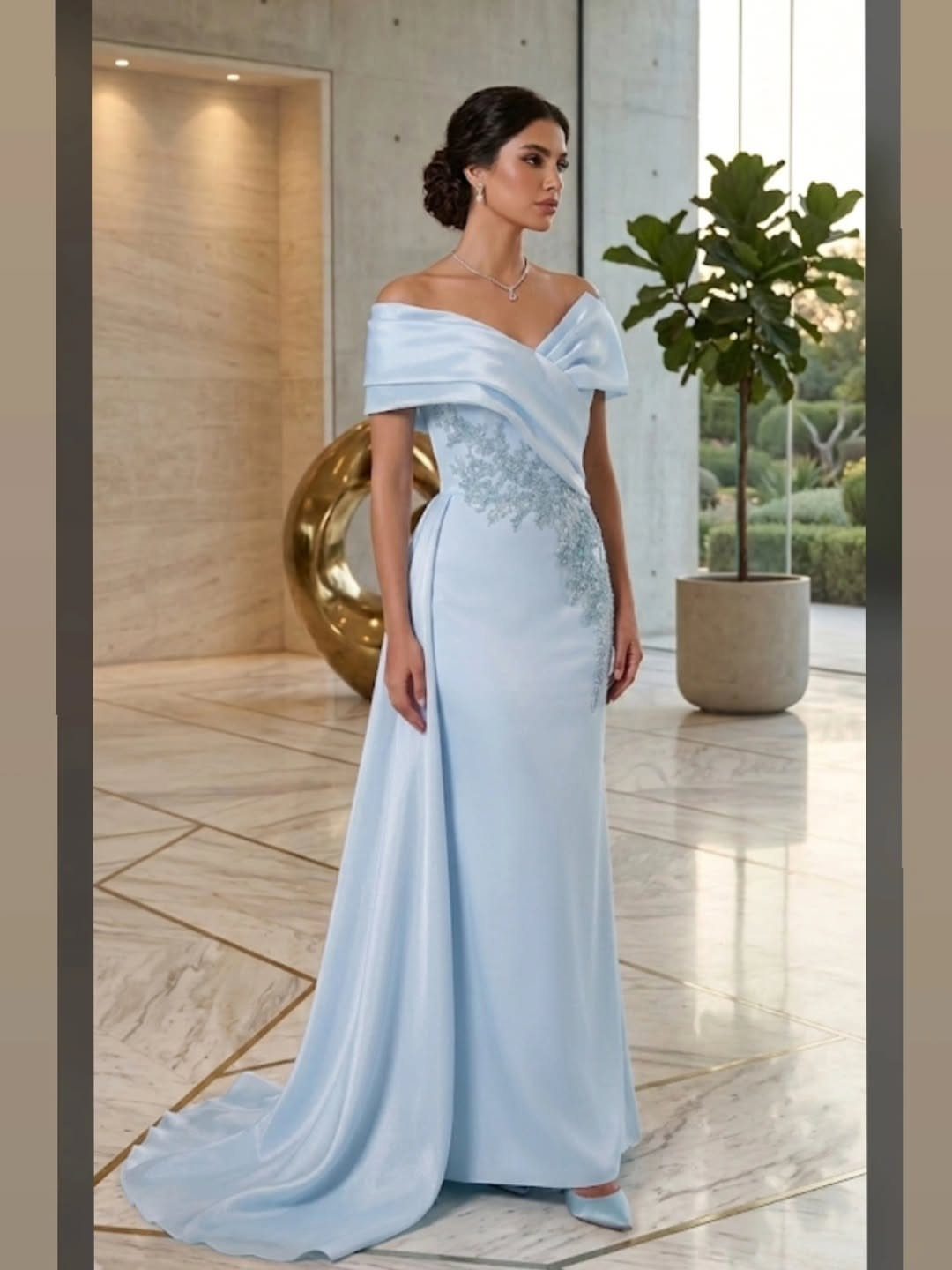
Off-the-shoulder dresses expose the collarbone and upper arms, which means the fit across the chest has to hold without straps digging in.
Ruched fabric helps; the visible gown uses subtle embroidery instead, which is less forgiving of gaping. I have had good luck with silicone grip tape along the inner edge for security, though test it on skin first.
A small train is pretty for photos, annoying for crowded rooms. If your event involves a lot of standing or moving between tables, ask about a bustle hook or choose a version without the extra length.
6. Light Blue Mermaid Gown
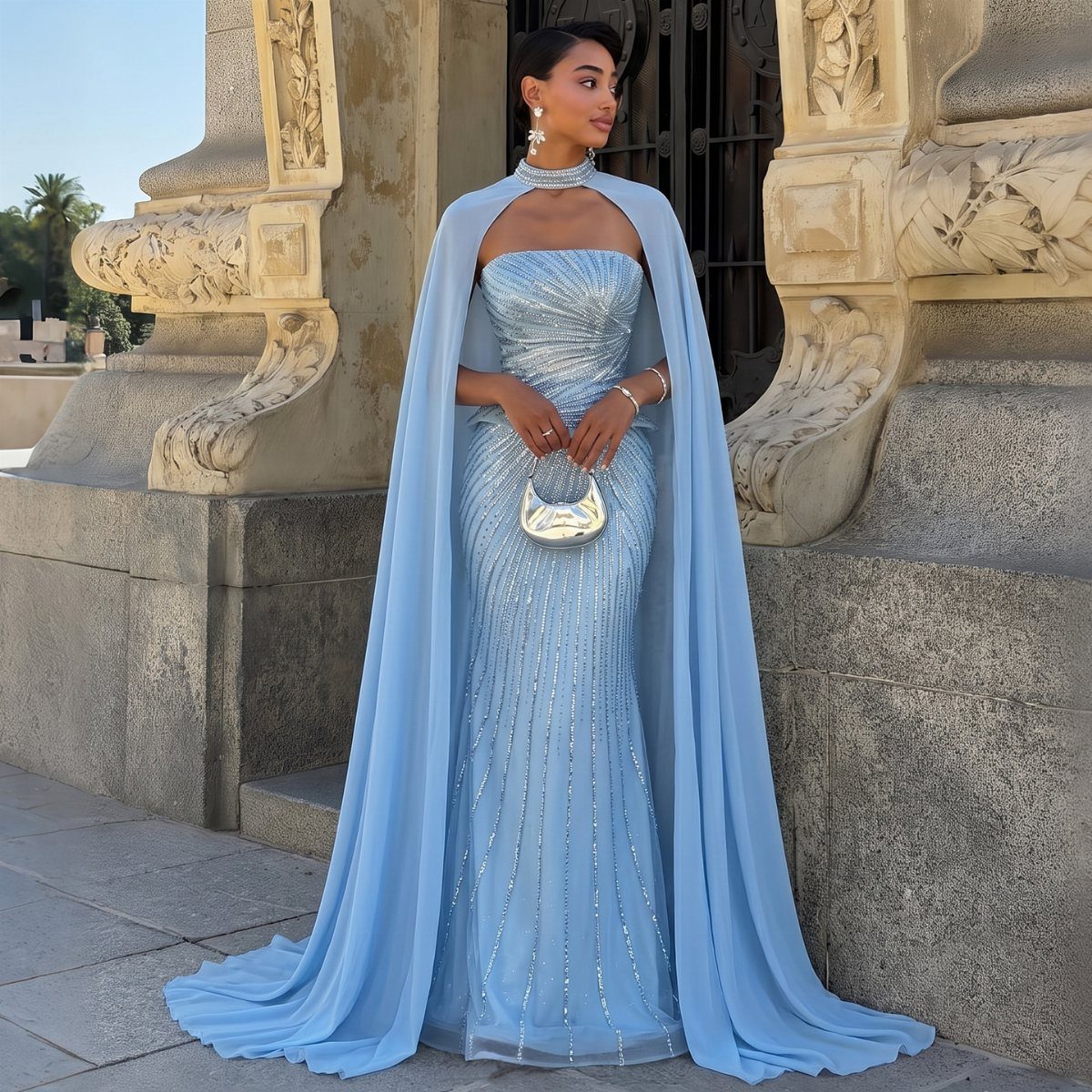
The mermaid silhouette is demanding: it shows every line from hip to knee, then flares where you want drama. Sequin coverage like the visible gown helps, since the texture hides what solid satin would display.
The cape is a choice I would make for a winter event; for summer, the dress works without it and breathes better. Intricate detailing typically means hand work, which raises the price.
If you are renting, inspect the flare for snagged beading. This shape needs height; at 5’4" or under, plan on a substantial heel or consider the A-line option instead.
7. Light Blue Slip Dress
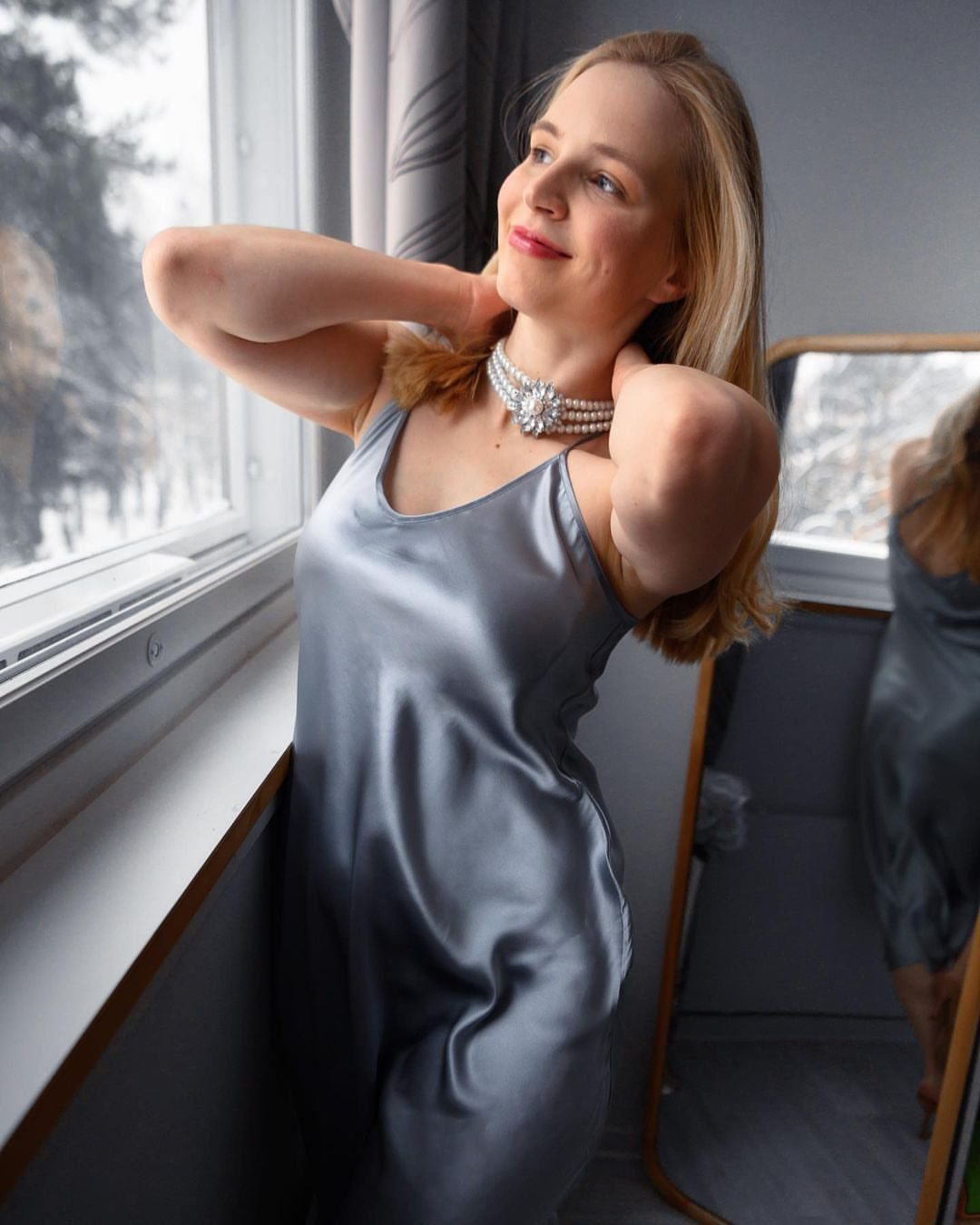
A slip dress in light blue reads intentional rather than lazy, which is the risk with anything this minimal.
Satin catches light and needs a necklace that can compete; the pearl choker visible here does that job without clutter. Spaghetti straps and a cowl neckline mean the fabric does the work, so check for pulls or snags before buying.
I would layer this under a cropped blazer for a ceremony with a stricter dress code, then lose the jacket for the after-party.
The satin version catches light differently than chiffon would, which matters if you will be photographed from the side.
8. Light Blue A-line Dress
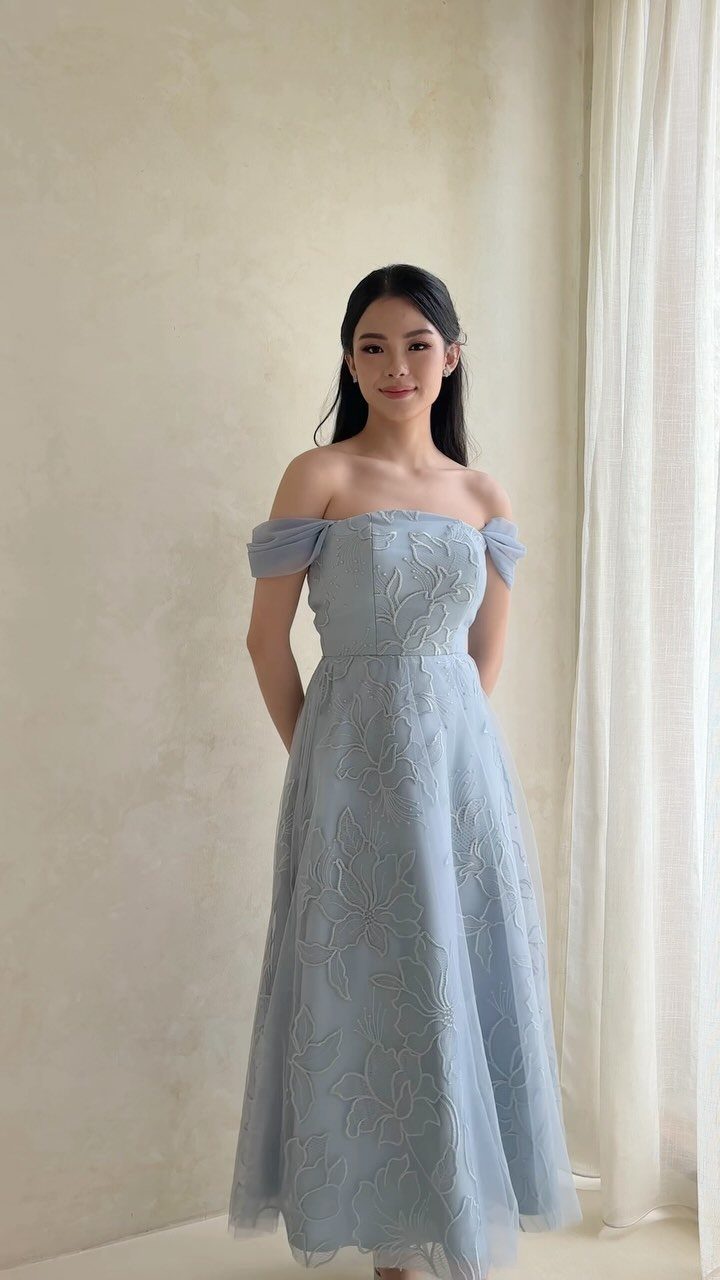
The A-line shape is the one I recommend when someone tells me they need a dress that works for multiple body types in the same shopping trip.
Floral embroidery like the visible gown adds texture without weight, though the off-the-shoulder cut limits your bra options to strapless or none.
A fitted bodice keeps the flare from looking like a tent; if the waist seam sits too high, the proportions read costume instead of formal.
Lace with a side slit is an alternative for mothers of the bride who want coverage without looking closed off.
Check the flare at the hip: too narrow and it is not an A-line, too wide and it swallows a petite frame.
9. Light Blue Maxi Dress
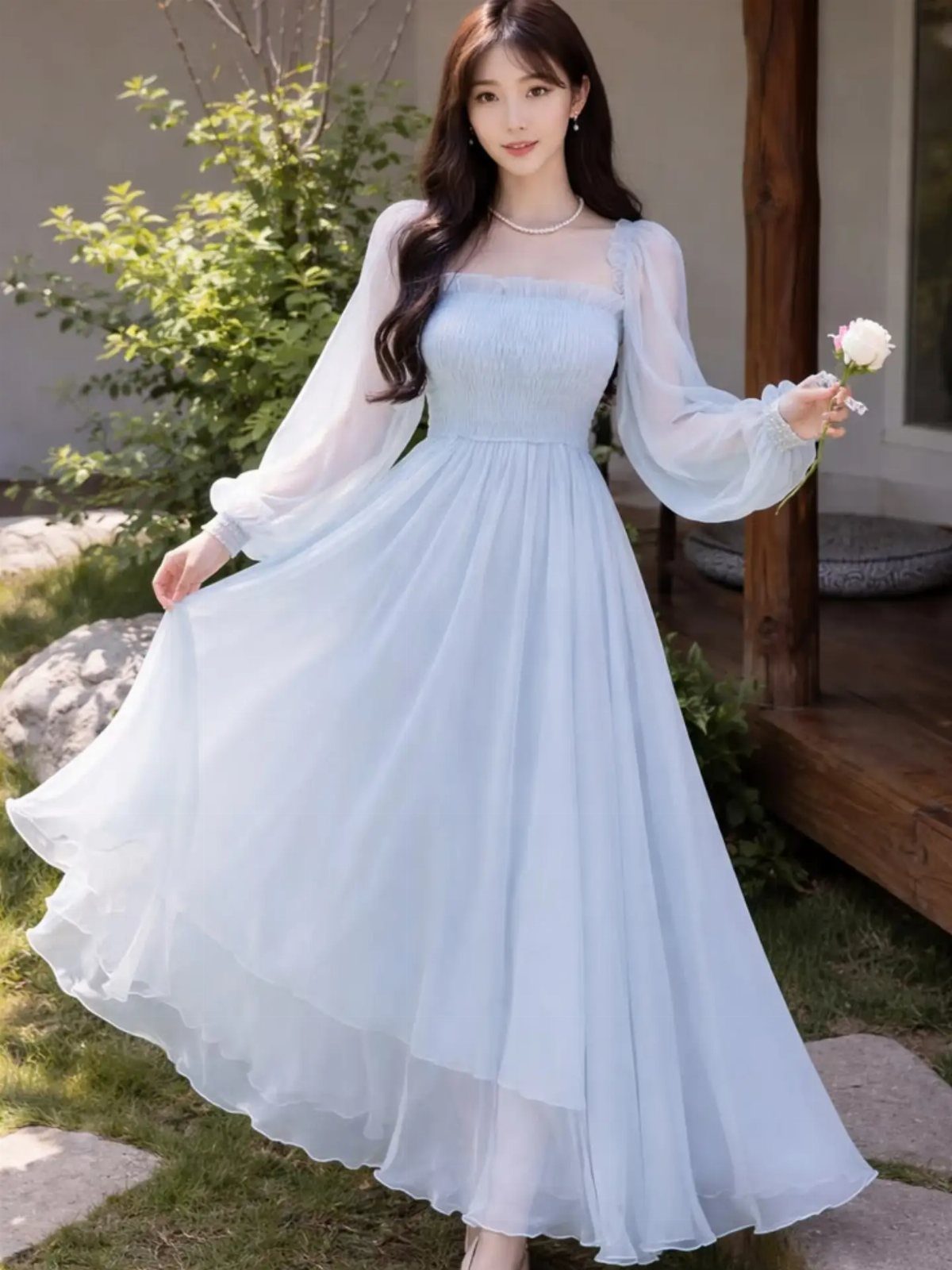
Chiffon maxi dresses with long sleeves bridge the gap between summer garden wedding and air-conditioned hotel ballroom, which is where I most often see this color requested.
The smocked bodice visible here stretches to fit without needing alterations at the waist, a cost saver if you are ordering online.
A flowing skirt needs a hem that clears your shoes by half an inch; anything longer and you will be holding fabric all night.
A cowl neckline in satin, held up by thin straps, hits the same evening note without asking for as much space.
Jersey with ruching through the bodice forgives a buffet dinner but clings more than chiffon; test the light before committing.
10. Light Blue Evening Gown
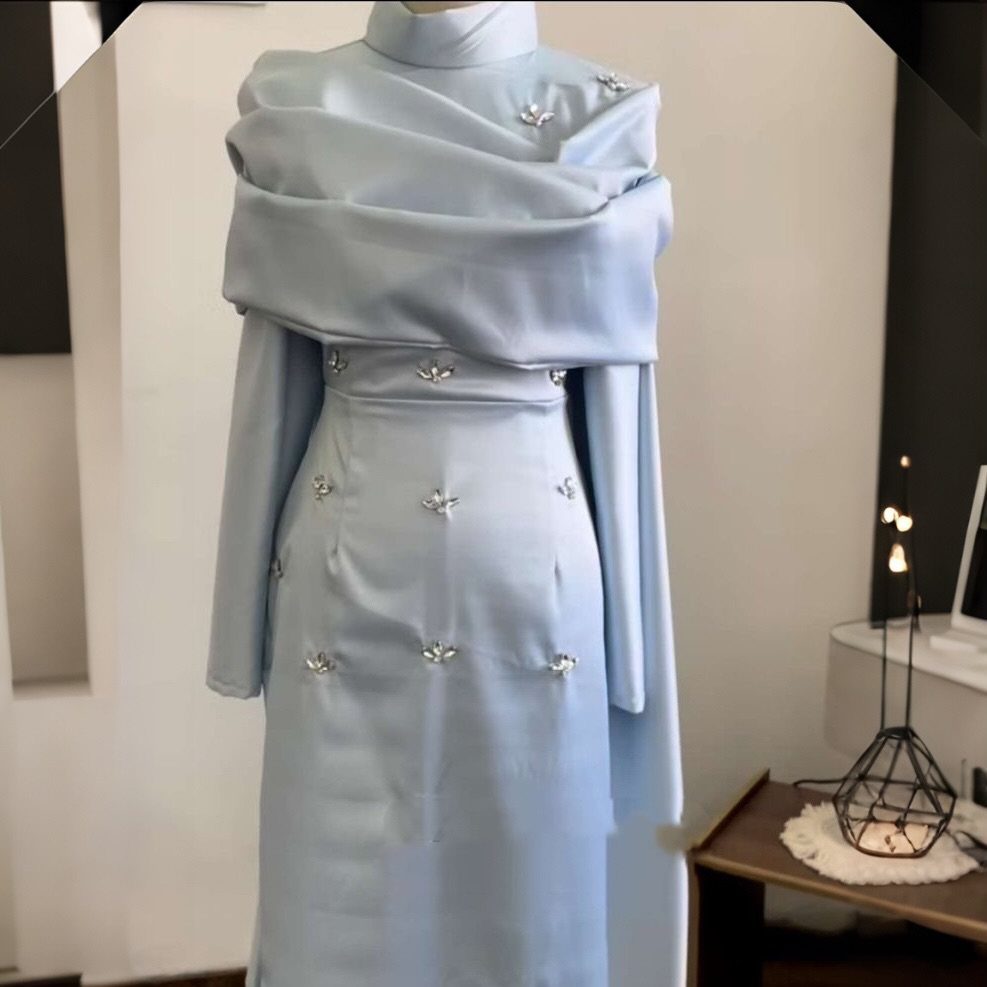
Crystal embellishments on light blue satin read evening immediately, which is useful when you are unsure how formal an event actually is.
The draped shawl detail visible here replaces a separate wrap, one less thing to lose at a crowded coat check.
Strapless versions need interior boning that does not give way once you’re seated through dinner; test by leaning forward in the fitting room. For a softer look, floral embroidery on chiffon with a matching choker keeps the color story tight.
Tiered tulle with 3D lace is the choice for someone who wants to be remembered; it is also harder to rewear. Inspect beading under direct light before buying, loose threads snag on chair arms and ruin the line.
Color Pairing Advice
Silver reads cooler against light blue, which suits the color’s natural tendency toward winter and spring events.
Gold warms it up for evening; I switch to gold when the dress is satin rather than chiffon, since the sheen of both metal and fabric compete less than silver would.
White accessories, especially a bag or shoes, keep the whole look from drifting into something too literal, like a costume ice queen.
One metal at a time: mixed silver and gold with light blue looks accidental, not layered. White works as the bridge if you must wear both, though I never do.
Styling Tips for Formal Events
A hotel ballroom with carpet and dim chandeliers needs more structure than a tent on grass; the same light blue dress that photographs beautifully indoors can look washed out under open sky.
For weddings, the time on the invitation matters more than the venue: a 5 PM ceremony in a church followed by a reception in a converted barn asks for two different levels of formality, and light blue works for either if the fabric weight shifts.
Prom venues run hot; a dress with a sheer overlay or cape detail traps less heat than full satin lining, and you will be standing for photos longer than you think.
I check whether the venue has air conditioning before deciding on sleeve length, not after.
Occasions for Light Blue Dresses
Prom requests for light blue spike in years when the spring runways lean pastel, though the color works regardless of trend if the cut is right.
Formal gatherings outside those 2 categories, charity galas and award dinners, are where light blue becomes a deliberate choice to stand out from the sea of black without going red; it reads confident at tables where everyone else played safe.
Frequently Asked Questions
Can I wear light blue to a formal wedding?
Yes, light blue works for formal weddings across every season. Spring and summer weddings let you lean into chiffon or tulle; the texture feels right for a garden setting and stays well below the bride’s spotlight.
Satin with crystal trim gives winter formals the weight they need without defaulting to emerald or burgundy like everyone else. The color photographs clearly under both natural light and chandeliers, which matters for the photos you’ll see for years.
What color compliments a light blue dress?
Silver, white, and gold all complement light blue, though each reads differently.
Silver echoes the cool base of the blue and reads correctly after dark; white accessories keep the whole look weightless for afternoon events where gold would land too hard.
Brushed gold, not the mirror kind, brings warmth that olive and deeper complexions need; it keeps the blue from washing you out.
Brown and olive drag the color down; they kill the brightness that makes light blue worth wearing in the first place.
What are the different styles of light blue formal dresses?
The styles range from satin maxi dresses with cowl necklines to structured mermaid gowns with sequin coverage. A-line shapes work across multiple body types, while off-the-shoulder cuts expose the collarbone without strap fuss.
Tulle builds volume below the waist for events where you want to feel dressed up, and slip dresses in satin read intentional rather than lazy when paired with a competing necklace like a pearl choker.
Chiffon skims over anything you want to downplay and packs surprisingly well rolled in tissue rather than creased into a fold.