

The veil lengths in this list run from a 38-inch fingertip layer to a 120-inch cathedral train, and the right choice depends on where you are standing and who is standing with you.
A beach wind will turn cathedral tulle into a kite regardless of how the image looked in planning, while a chapel length at 72–90 inches only earns its fabric in a venue with an aisle long enough to show the sweep.
1. Hairstyle with Veil
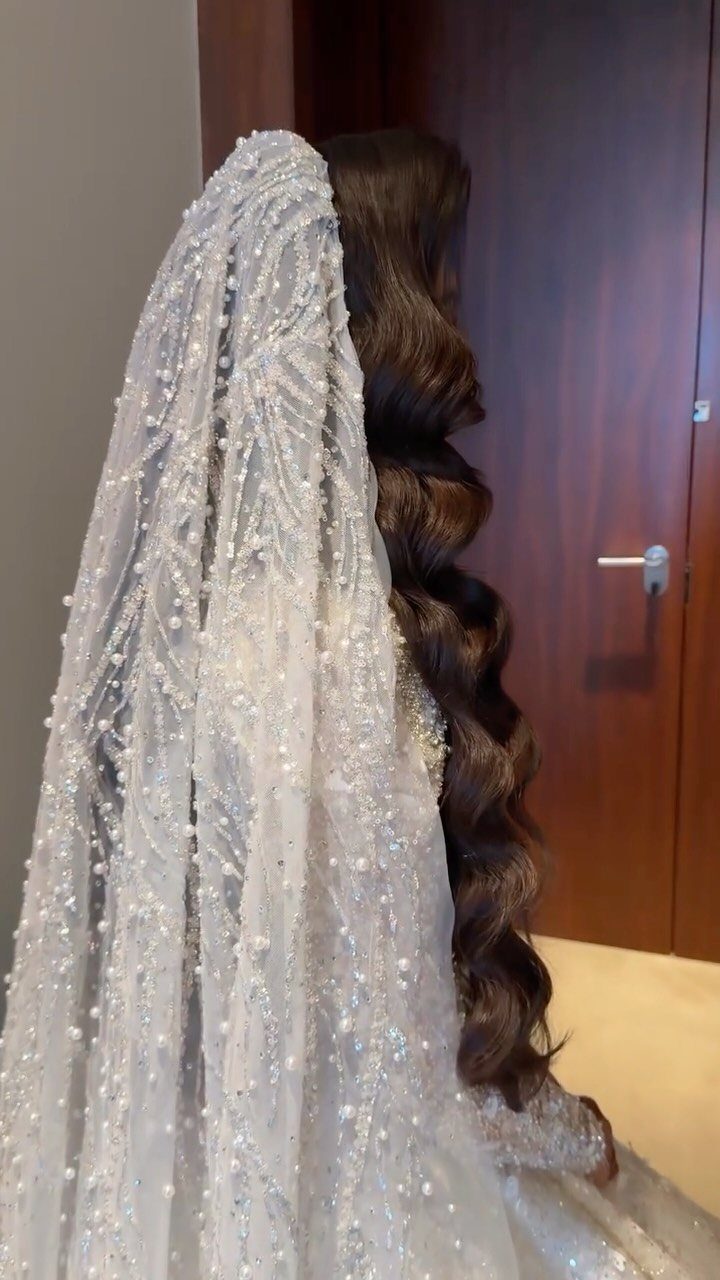
A chignon changes where the comb sits, while loose waves let the veil drape alongside the hair instead of hiding it.
I would bring a photo of the veil to your hair trial, not just the dress, since the weight and embellishment decide whether the style needs extra pins. Your stylist can then test placement before the morning of.
2. Fingertip Veil
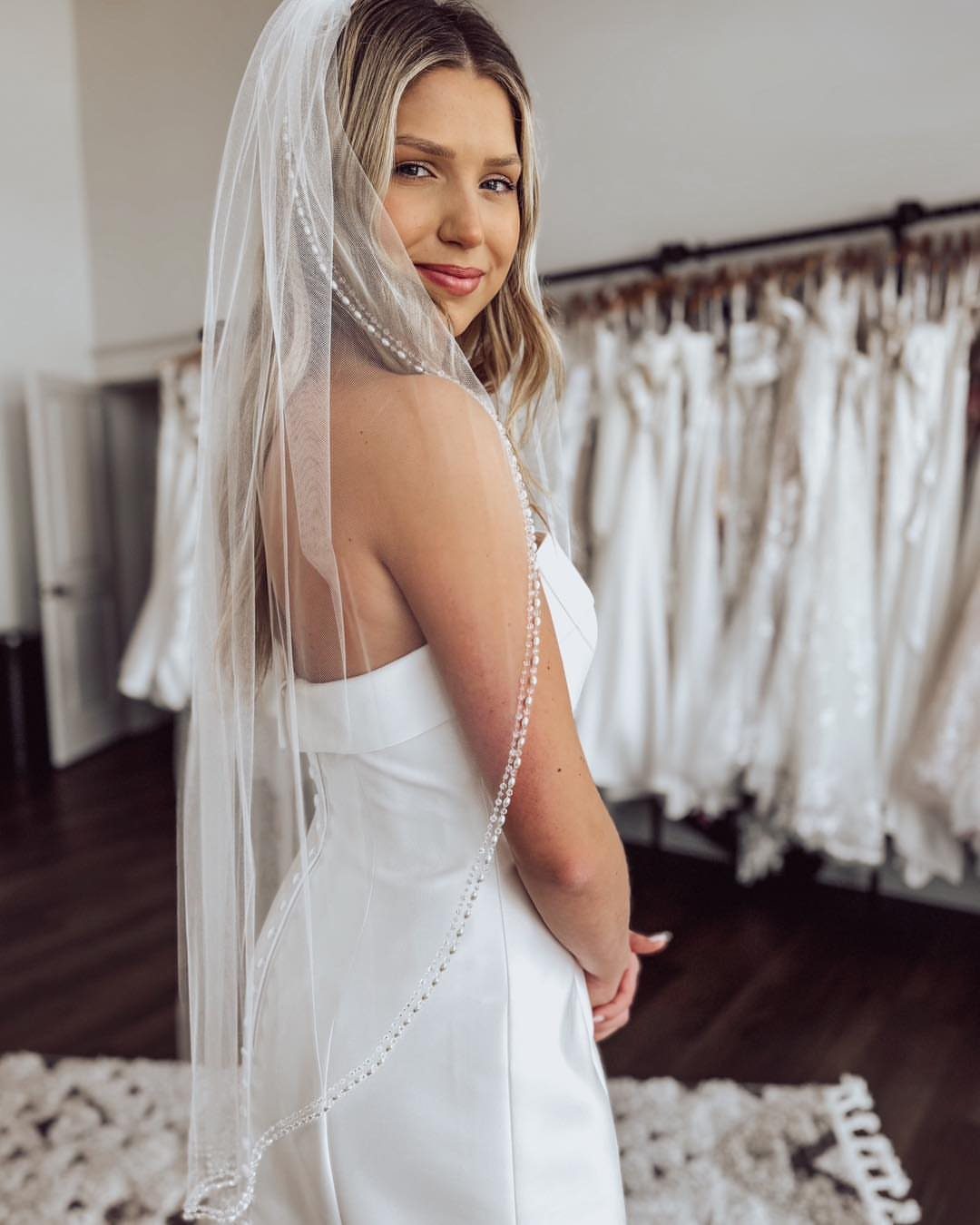
At roughly 38–40 inches, this length lands past the hip without touching the floor, which means it shows off back details and stays clear of guest feet during the reception.
It pairs with almost any dress silhouette, so the decision is really whether you want the veil to frame the gown or merely complement it.
I tend to favor this length for outdoor ceremonies where a longer train would collect debris.
3. Chapel Veil
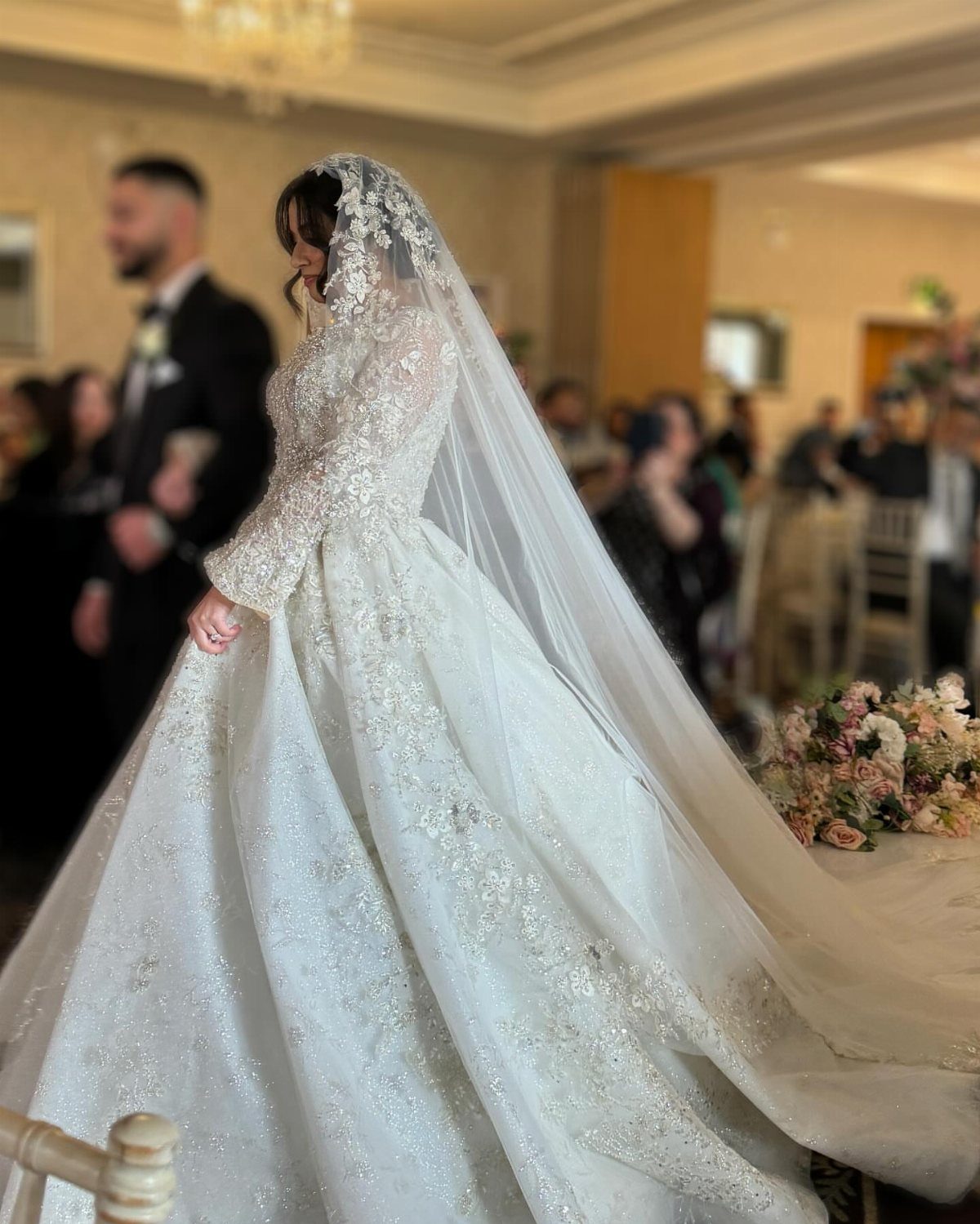
The 72–90 inch length falls just past the train of most formal gowns, enough to read as regal without requiring a team to manage it.
This is the threshold where venue matters: a chapel or church with an aisle long enough to display the sweep justifies the extra fabric, while a short carpet in a small room leaves most of it bunched.
Consider whether your train has heavy embellishment; a plain veil can balance it, or matched lace can extend the motif.
4. Cathedral Veil
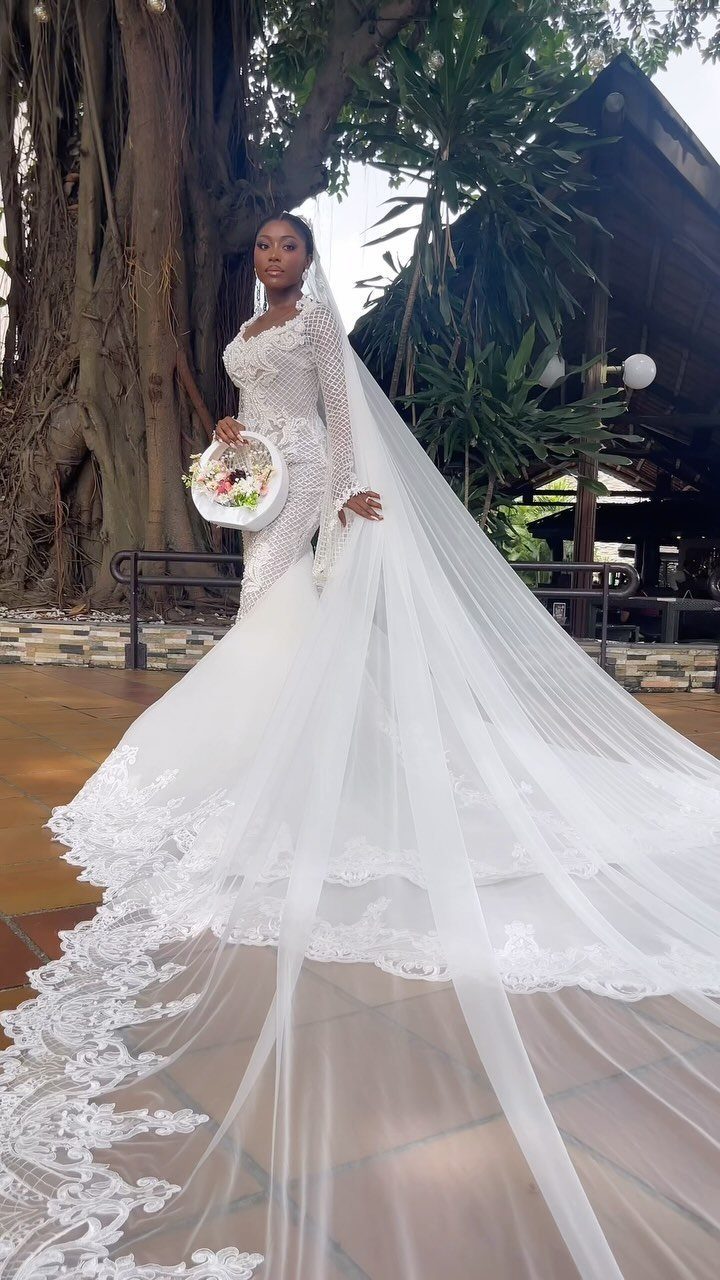
These run 108–120 inches and demand at least one person assigned to spreading and guarding the length during portraits and the recessional.
The material pools dramatically on stairs and long aisles, which is the entire point, but that same volume tangles instantly in crowds or narrow doorways. Budget for a steamer and a helper who is not also carrying flowers.
5. Long Veil for Beach Wedding
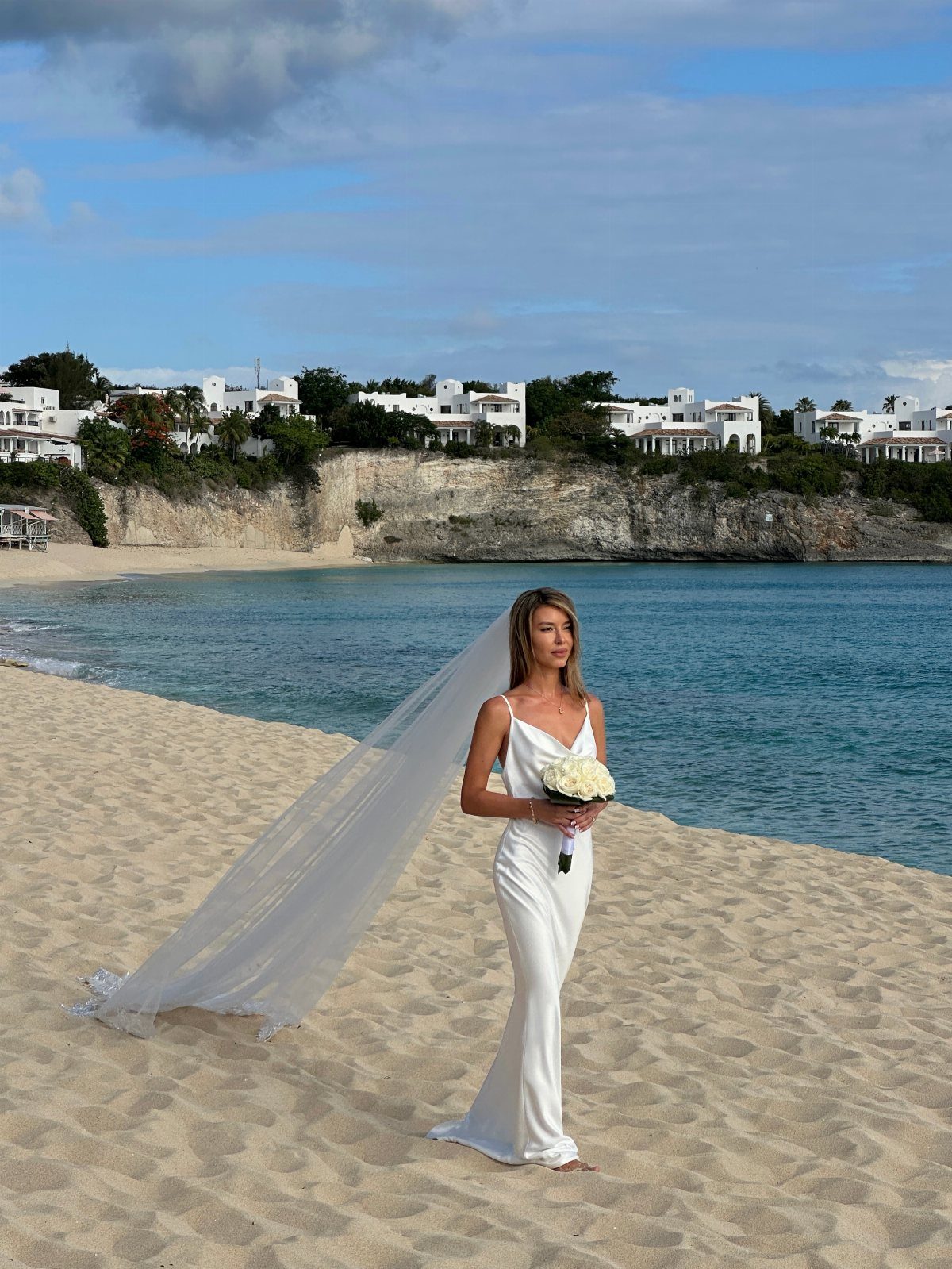
Sand and wind turn cathedral-length veils into kites and mops; salt stiffens fine tulle by the end of the ceremony.
If the image of a long veil against surf matters to you, assign someone to gather it immediately after the processional and switch to a shorter layer or nothing for photos near the waterline.
I would plan the portrait sequence before the veil meets the tide.
6. Lace Trim Veil with Lace Dress
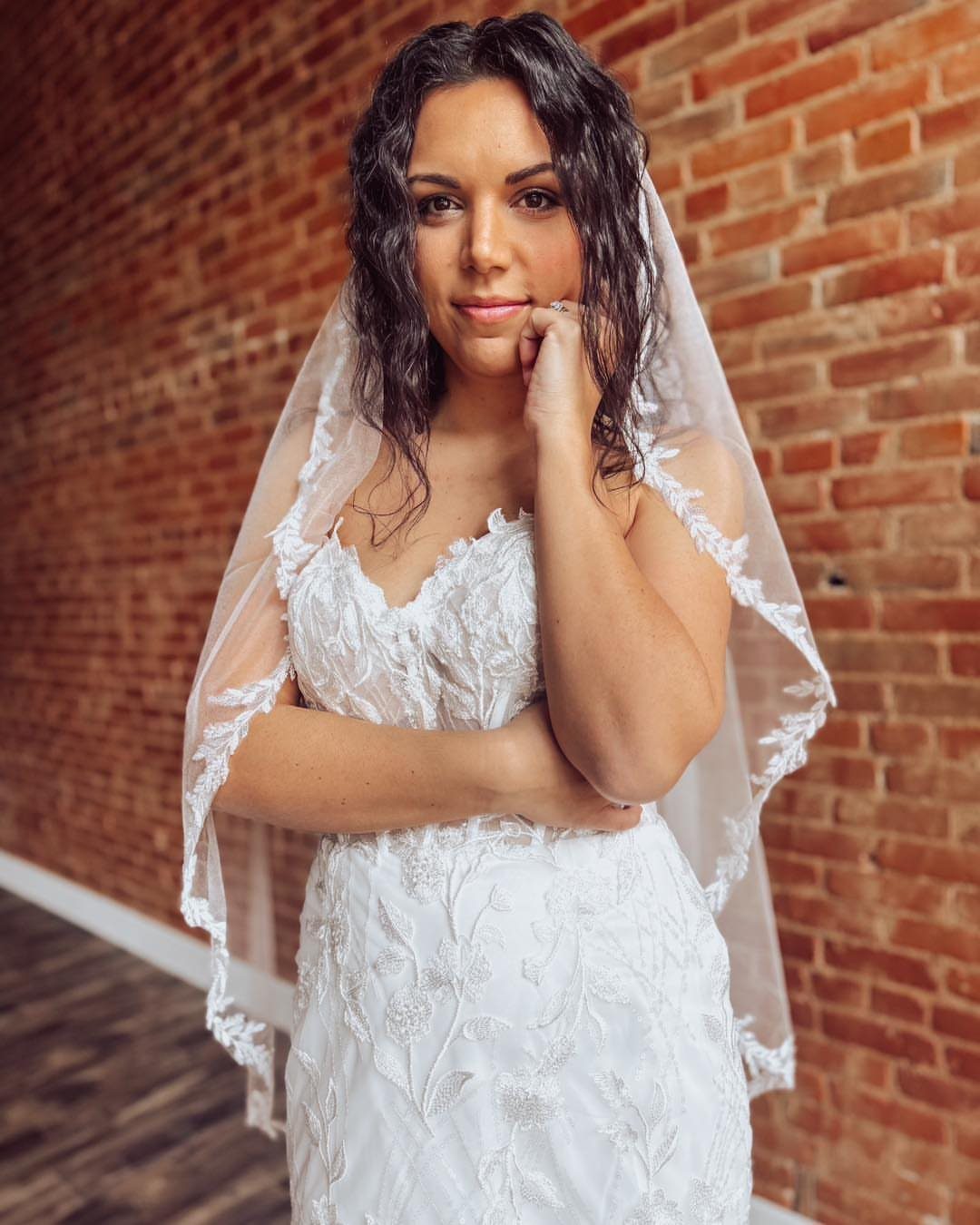
Matching lace trim to lace dress sounds obvious until you hold two whites under the same light and one reads ivory while the other reads stark.
Bring a fabric swatch from the gown when veil shopping, or ask whether the designer stocks a companion veil.
When the lace patterns line up, the veil and dress melt together; when they fight, both end up looking like a mistake you didn’t mean to make.
7. Sparkling Embellished Veil
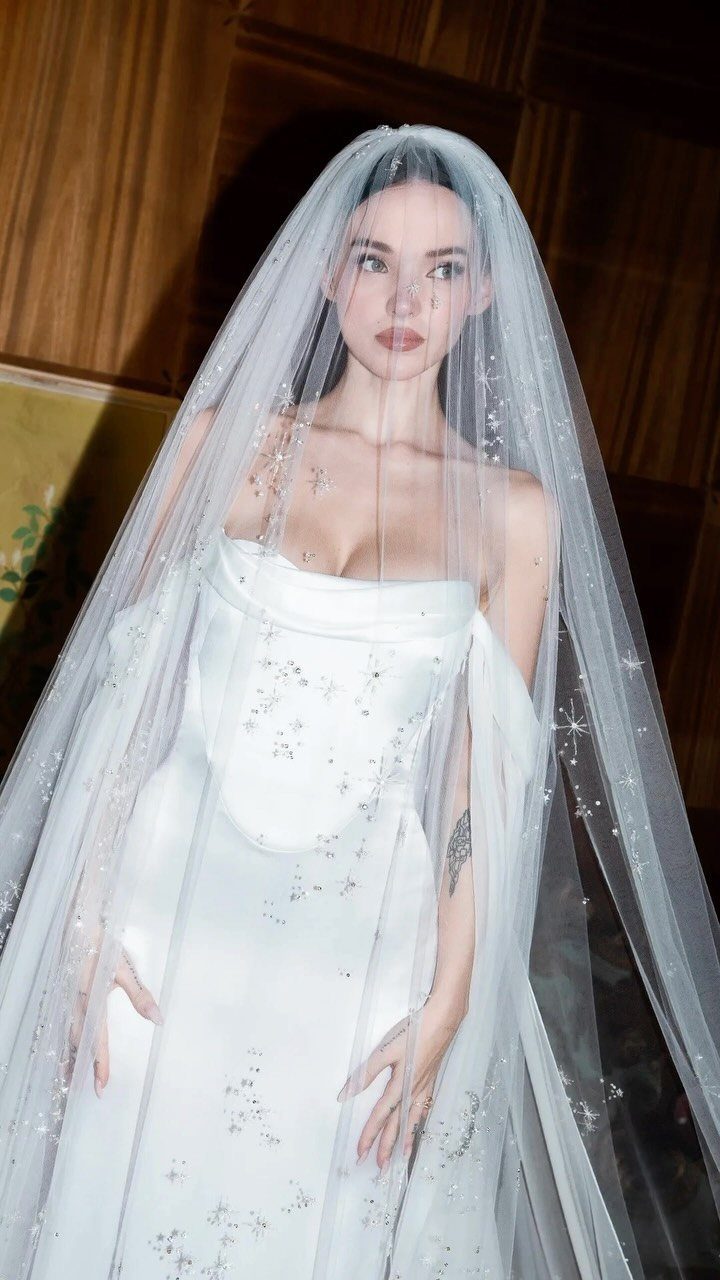
Star or crystal embellishment catches the light in photos and under venue chandeliers, but the weight changes how the veil hangs and where it needs anchoring.
Check whether the sparkle is scattered or dense; heavy clusters pull tulle toward one side and may need a second comb at the back.
I would ask to see the veil lit from the side before buying, since flat showroom lighting hides how much glitter reads as texture versus shine.
8. Red Wedding Dress and Veil
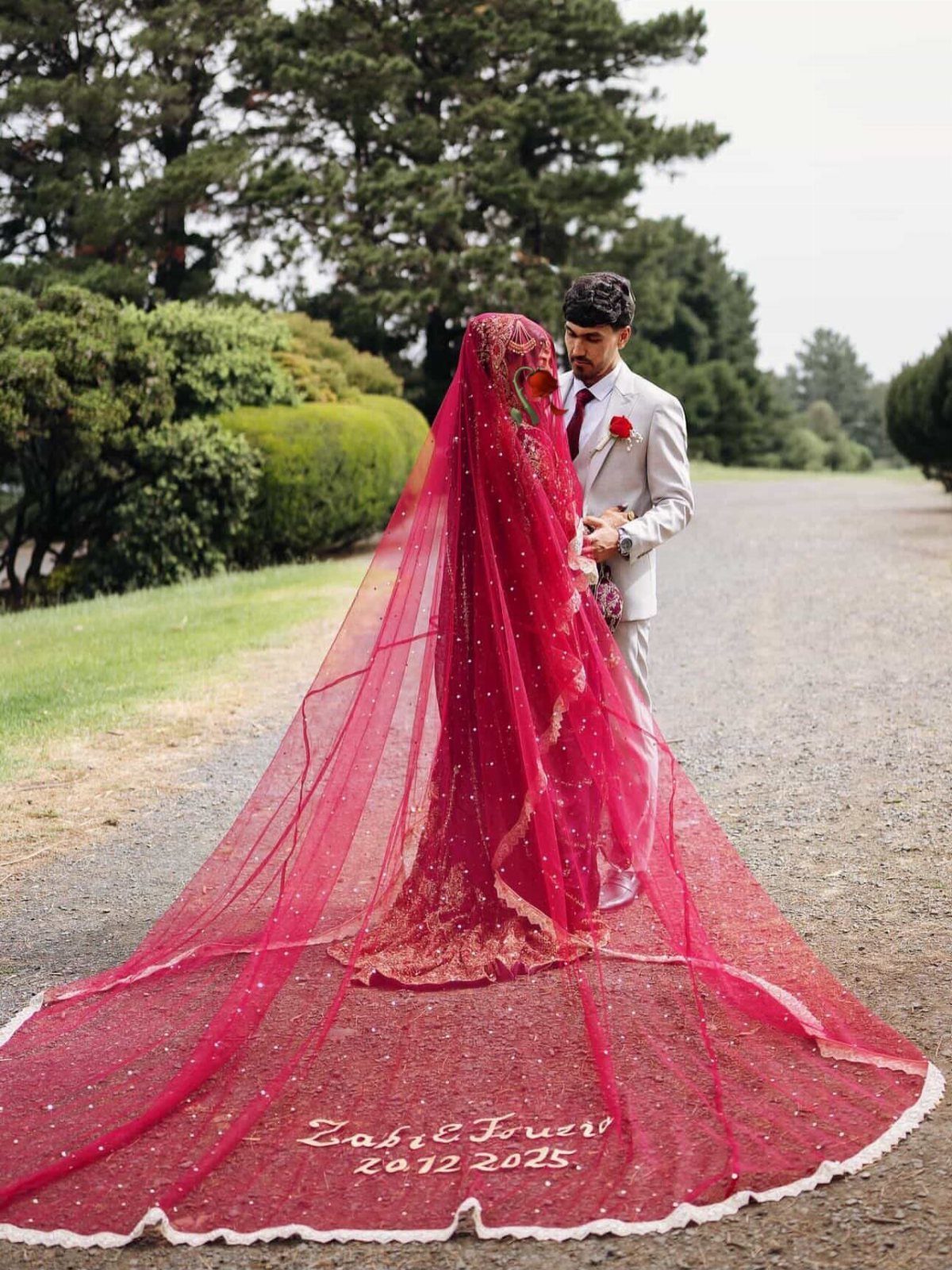
A matched red veil turns the color into a unified statement rather than an accent, though finding the same dye lot in 2 fabrics is harder than with white or ivory.
Names and dates embroidered on colored tulle read clearer against red than they would against white, so plan your personalization around the fabric color you choose.
Budget extra time for custom dyeing, and bring a dress swatch to the veil fitting so the tones do not drift apart under sunlight.
9. Veil Styled with Hijab
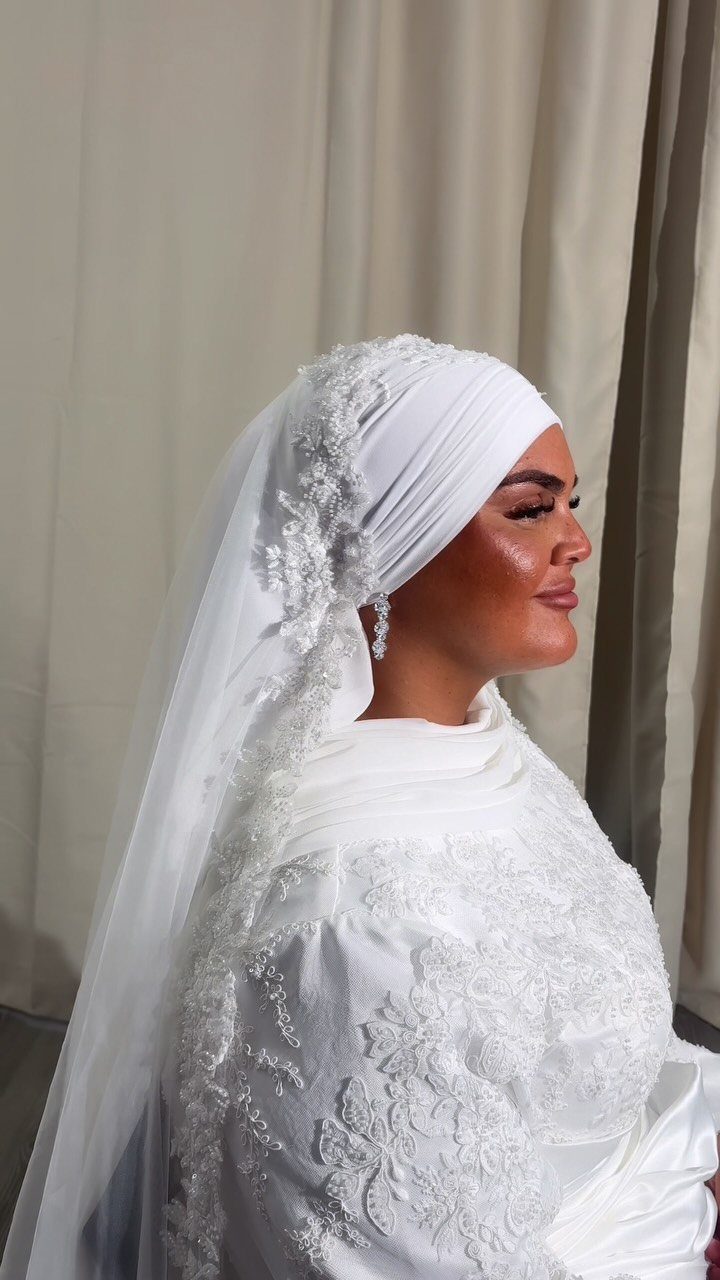
A fitted hijab underneath gives the veil a smooth anchor point that a bare head or loose hair cannot match, and the sheer layer over it reads as bridal without compromising coverage.
A lace edge needs to sit right where the hijab and veil meet, which means the 2 pieces need planning as a set rather than combining separately bought items.
Ask your hijab stylist and your veil source to coordinate on pin placement; the same spot cannot hold both without showing bulk.
10. Blusher Veil Covering Face
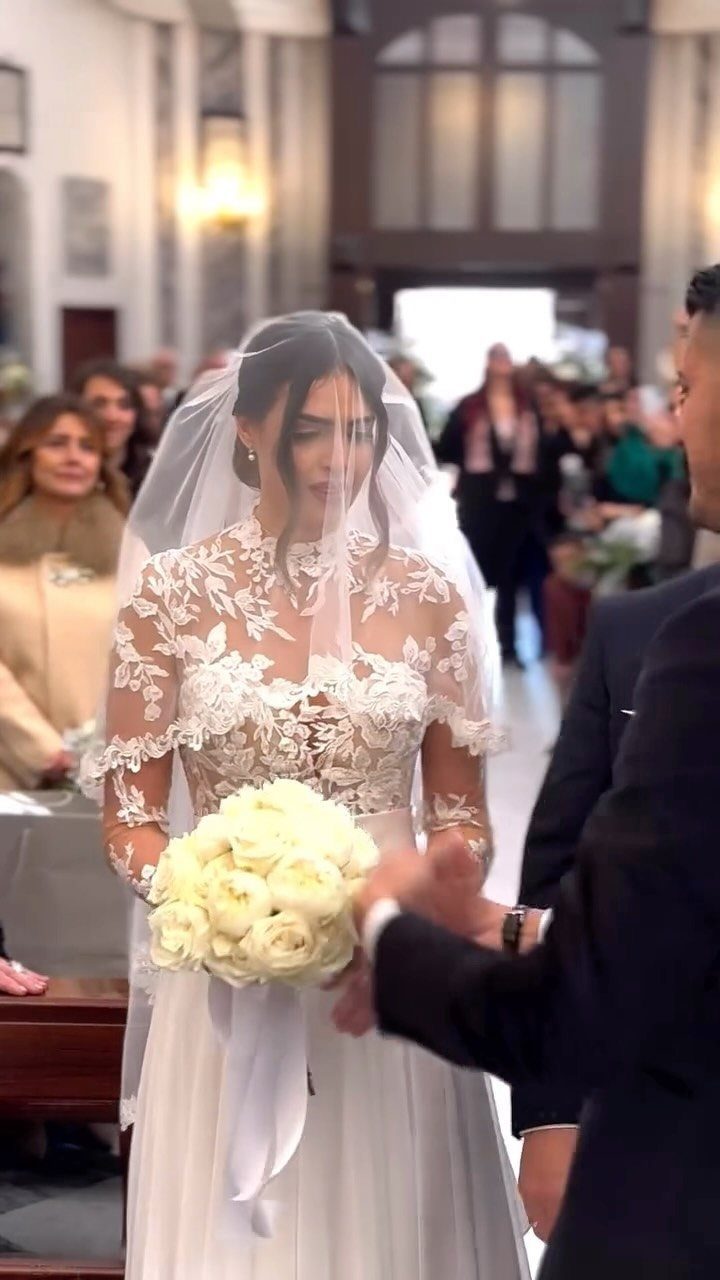
The sheer layer over the face is lifted at the vow exchange in traditional ceremonies, though some brides wear it through the whole aisle walk and others only for entrance photos.
Length matters for timing: a chin-length blusher lifts cleanly in one motion, while a waist-length one needs gathering to avoid snagging headpiece details.
Decide before the rehearsal whether the groom or a parent does the lifting, since the gesture looks awkward when improvised.
Choosing the Right Veil
A fingertip length at 38–40 inches keeps back details visible; a chapel veil at 72–90 inches competes with train embellishment unless you balance plain tulle against heavy lace.
Cathedral lengths at 108–120 inches require a second person during portraits and the recessional; budget that help when you budget the veil itself.
For beach ceremonies, sand and wind turn long tulle into a liability regardless of how the image looks in planning.
Trying on Veils
The weight of embellishment decides whether your style needs extra pins, and your stylist can test placement before the morning arrives.
For a blusher, rehearse who lifts it.
Frequently Asked Questions
Should I wear a veil with my wedding dress?
That is entirely up to you. Veils still show up on plenty of brides because they add a romantic, finishing layer to the gown, but they are not required.
If you want the look without the fuss, a blusher or fingertip length is easy to manage; if you skip it entirely, the dress stands on its own.
Are brides wearing veils in 2026?
Yes, veils remain a popular choice.
Lengths from fingertip to cathedral still appear in ceremonies because they frame the gown and photograph well, though more brides now treat them as an accessory they can remove after the ceremony rather than wearing one all night.