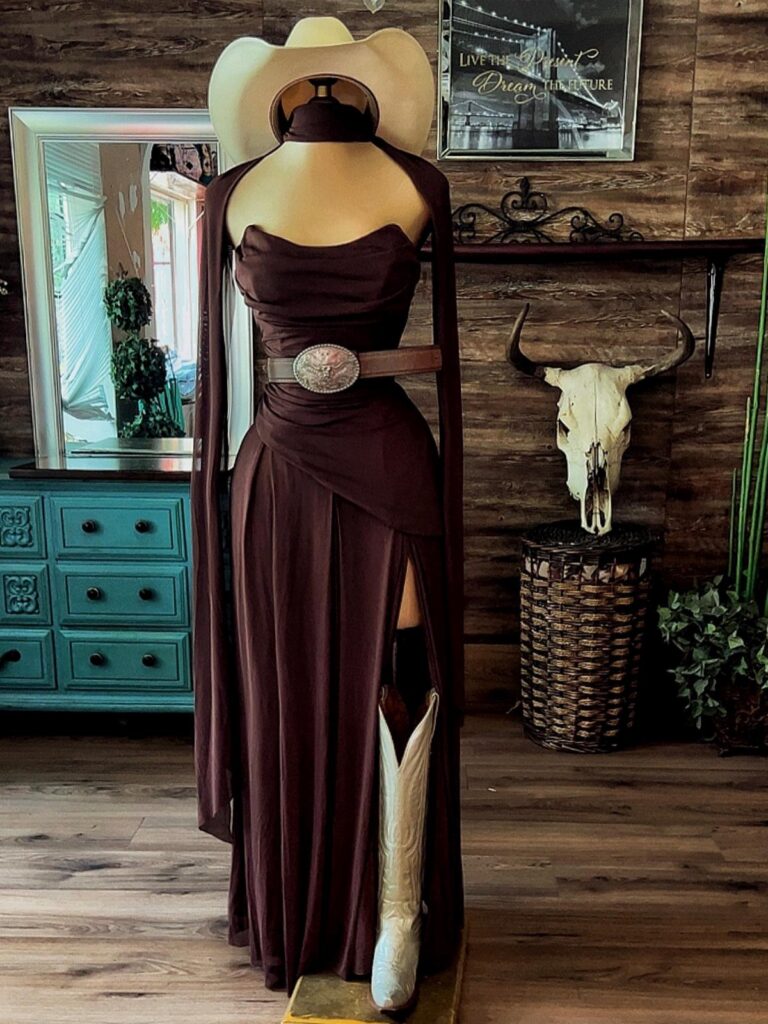
Western bridesmaid dresses in this list run from burgundy long-sleeve minis to teal satin maxi gowns with high slits, with cowboy boots pulling most looks together.
The color palettes here shift with the light; terracotta satin turns luminous in late afternoon, while dusty blue reads softer at sunset than at noon.
A knee-high slit hits right for shorter frames, keeping a western wedding out of costume territory.
1. Mismatched Floor-length Gowns
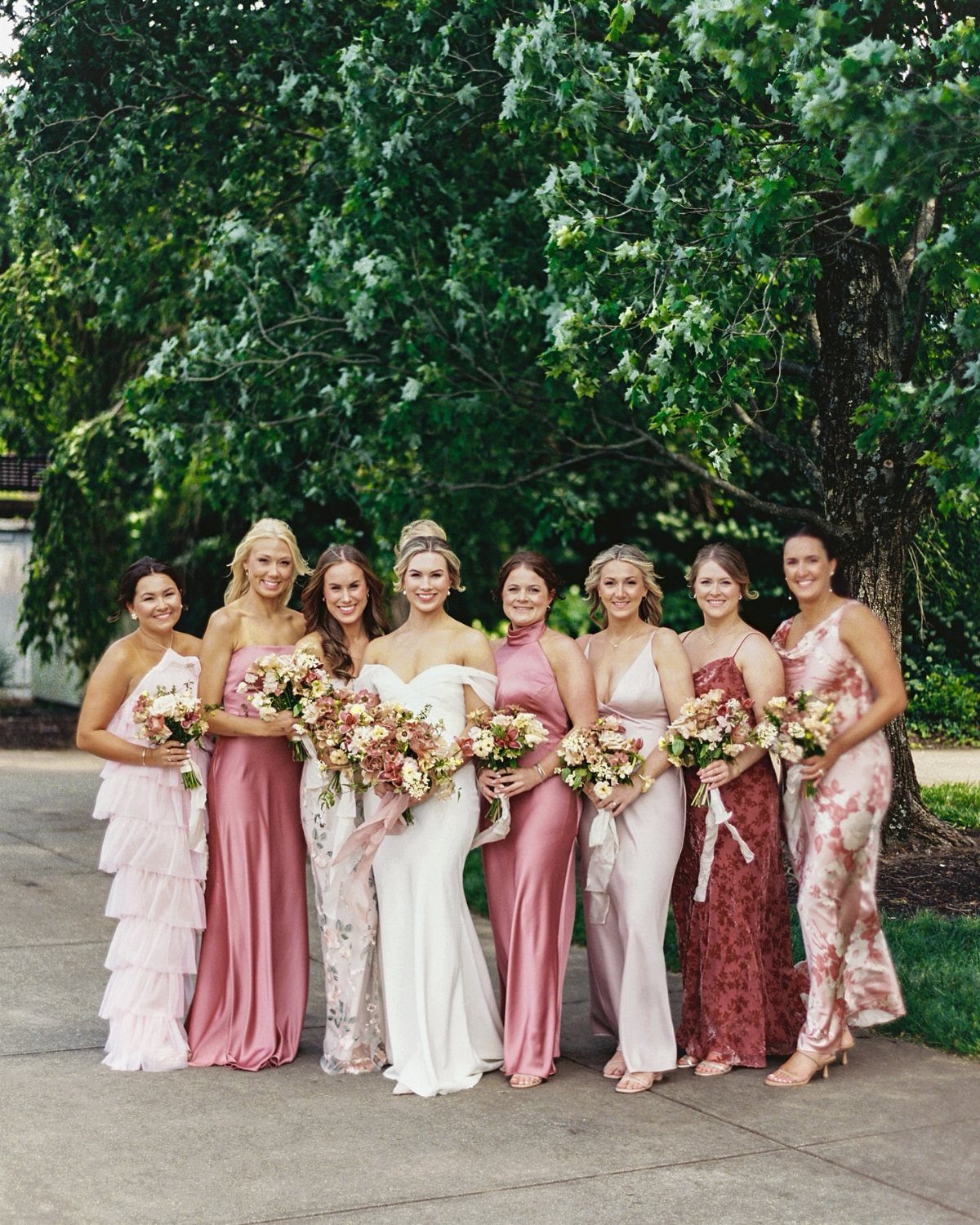
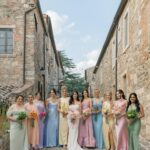
Floor-length gowns in terracotta, rust, and mauve tones create a warm palette that reads western without costume. The satin catches late-afternoon light; chiffon moves better for outdoor aisles.
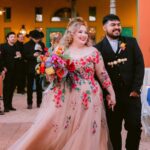
Mixing fabrics and exact shades lets each bridesmaid choose her best neckline while the length and color family keep the group photograph coherent. White and burgundy bouquets tie the look together without matching exactly.
This works best when someone, bride or planner, holds the final say on whether a given dress reads warm enough. Cool pinks or true reds will break the palette.
2. Burgundy Long-sleeve Mini Dress and Cowboy Boots
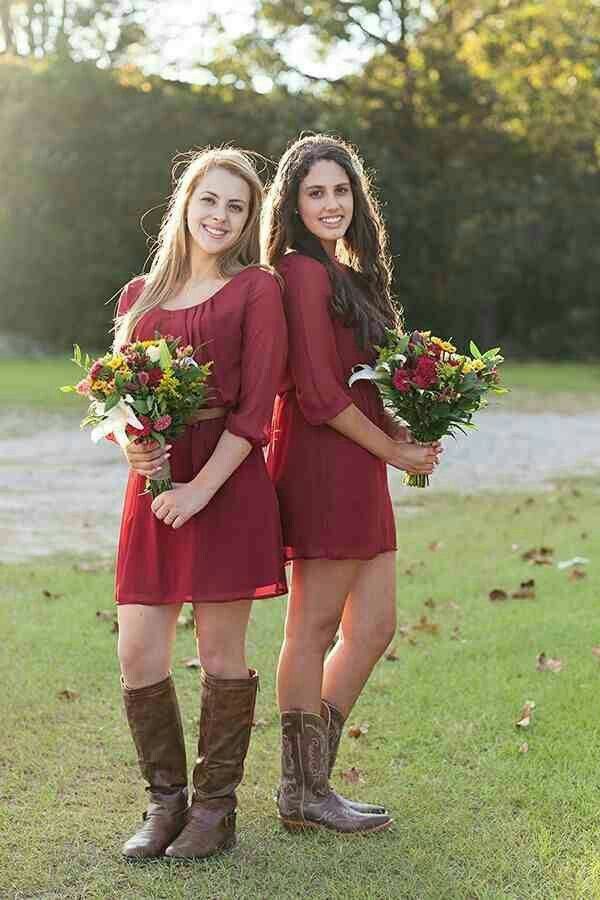
Burgundy mini dresses with long sleeves balance coverage against a shorter hem that shows off boots. The color carries a western wedding without needing fringe or embroidery.
Check the sleeve length against your ceremony month; this much fabric reads autumn or early spring.
The boots do the regional statement here, so the dress can stay simple. Embroidered leather costs more than plain, but either works if the tones match.
I would watch the skirt length with boots: too short and the proportion looks off, too long and you lose the point.
3. Light Blue Halter-neck Dress
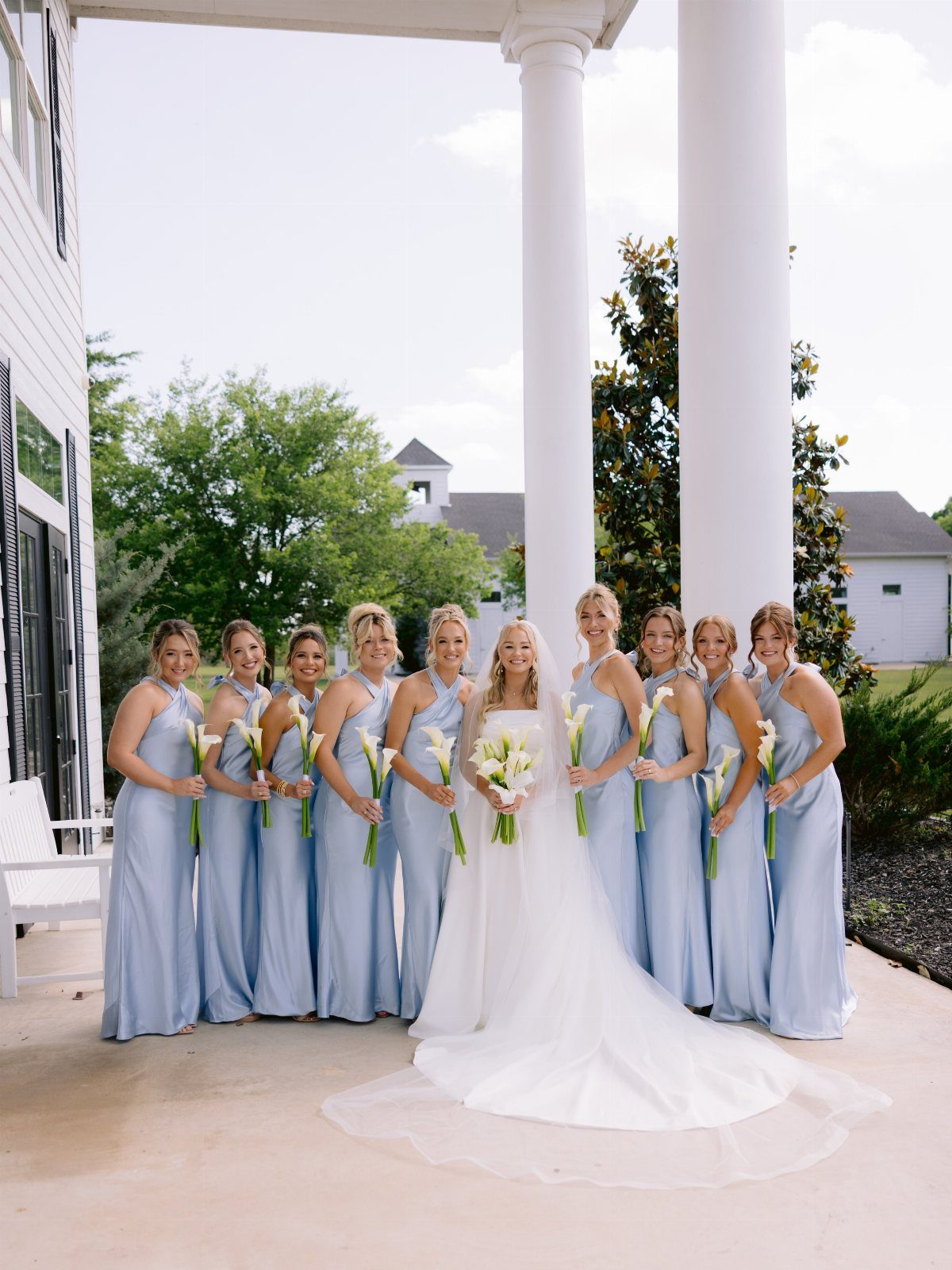
Halter-neck satin in light blue reads fresh against tan barn wood or golden grass. The white calla lily bouquets keep the palette clean for a summer wedding, and the neckline suits women who want support without straps.
Satin this weight photographs with a sheen that reads expensive; lighter fabrics can look wrinkled by the reception. The style works with lace bridal gowns because both share some formality, though the bride’s dress stays the more detailed piece.
If your wedding runs into evening, bring pashminas or shawls; bare shoulders after sunset cool fast in open country.
4. Black Ruffled High-low Dress with Cowboy Boots
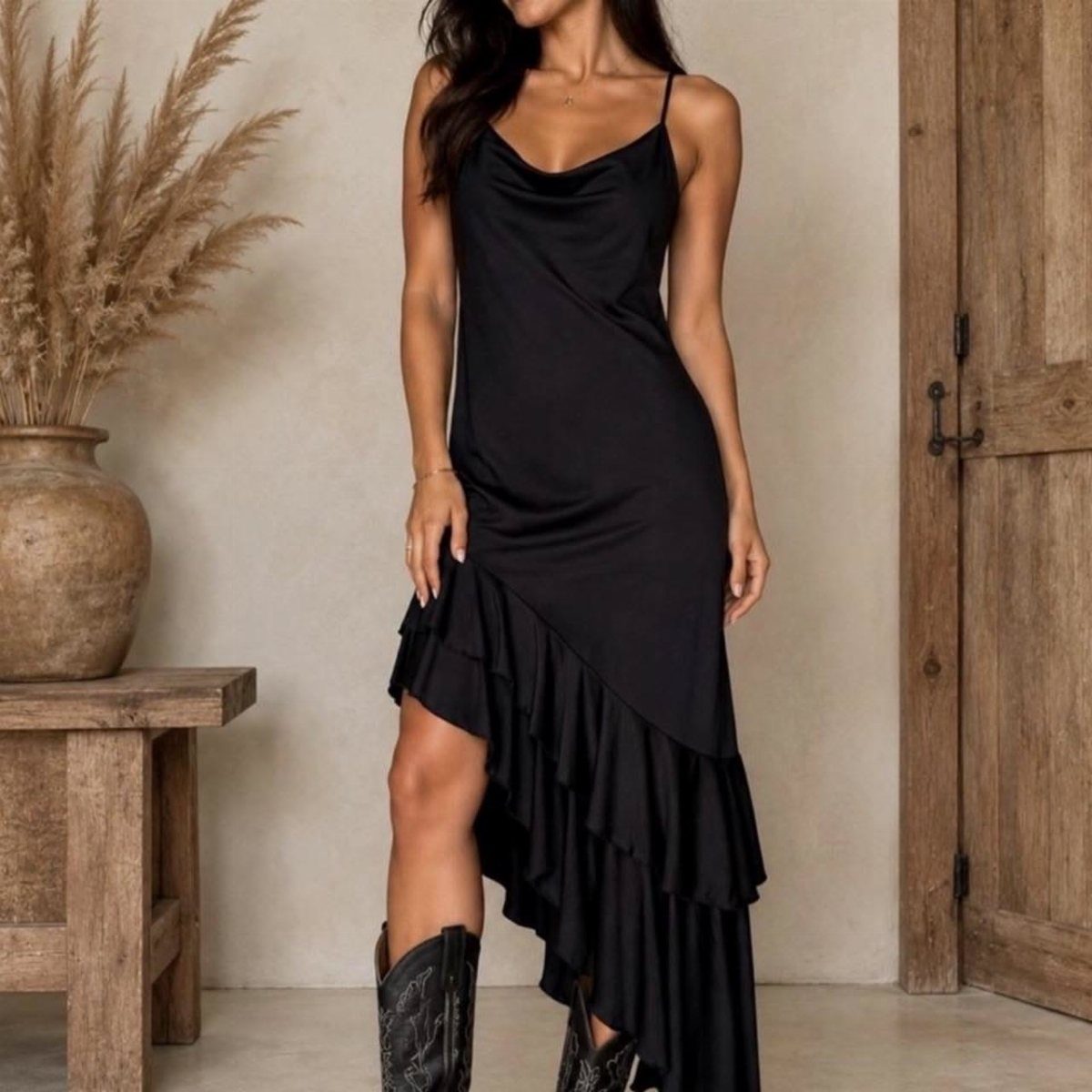
A black high-low ruffle with cowboy boots takes the western theme through texture rather than color. The ruffle moves when you walk; the high-low hem shows the boots without requiring a short skirt.
Add a wide-brimmed hat and you have the full look, though I would limit hats to photos or the ceremony, not dinner.
Black reads evening more naturally than most western palettes, so this suits a later ceremony or a barn reception with real lighting rather than daylight.
The boots here are black embroidered; matching the embroidery tone to your jewelry keeps the outfit from splitting into too many competing details.
5. Champagne and Rust Dresses with Cowboy Boots
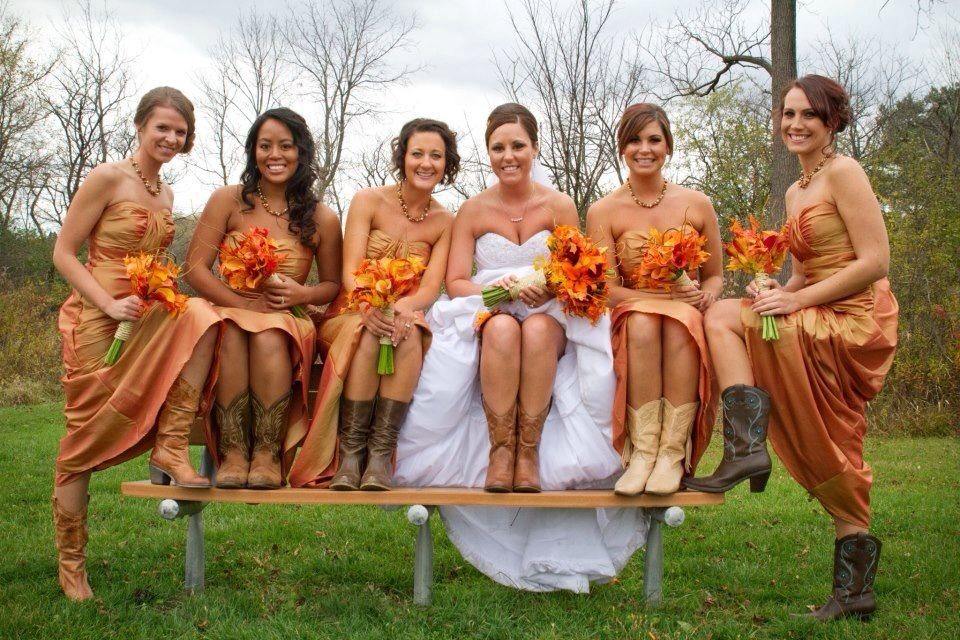
Champagne and rust dresses on the same bridal party split warm neutrals from deeper earth tones without clashing.
The bridesmaids’ varied cowboy boots pull the 2 groups together; each pair has enough detail to feel chosen for a bridal-party purpose beyond footwear.
Satin slip dresses with high slits need underpinnings that stay hidden when you sit. The slit also means hem length matters less for mixed-height groups, though you will want to coordinate how high each dress opens.
Autumn bouquets with neutral tones keep the focus on the dress colors rather than fighting them.
6. Teal Satin Dresses with Boots
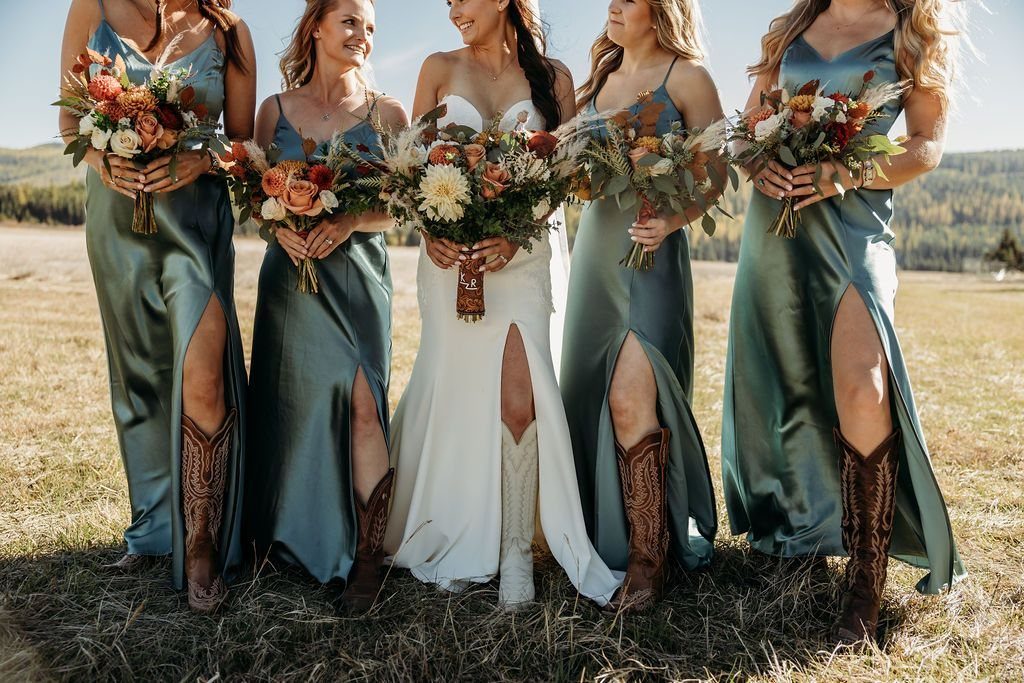
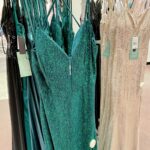
Teal satin maxi dresses with high slits and brown boots put a color on the bridal party that stands apart from typical western pinks and tans.
The high slit is functional for walking in long skirts and shows enough boot to justify western footwear.
Brown boots keep the look grounded; black would fight the teal. The satin weight visible here holds shape through a long day better than thinner fabrics.
I would check the slit placement on each bridesmaid before the wedding; a slit that hits at a modest point on one frame can ride high on someone shorter.
7. Rust Tiered Dress with Boots
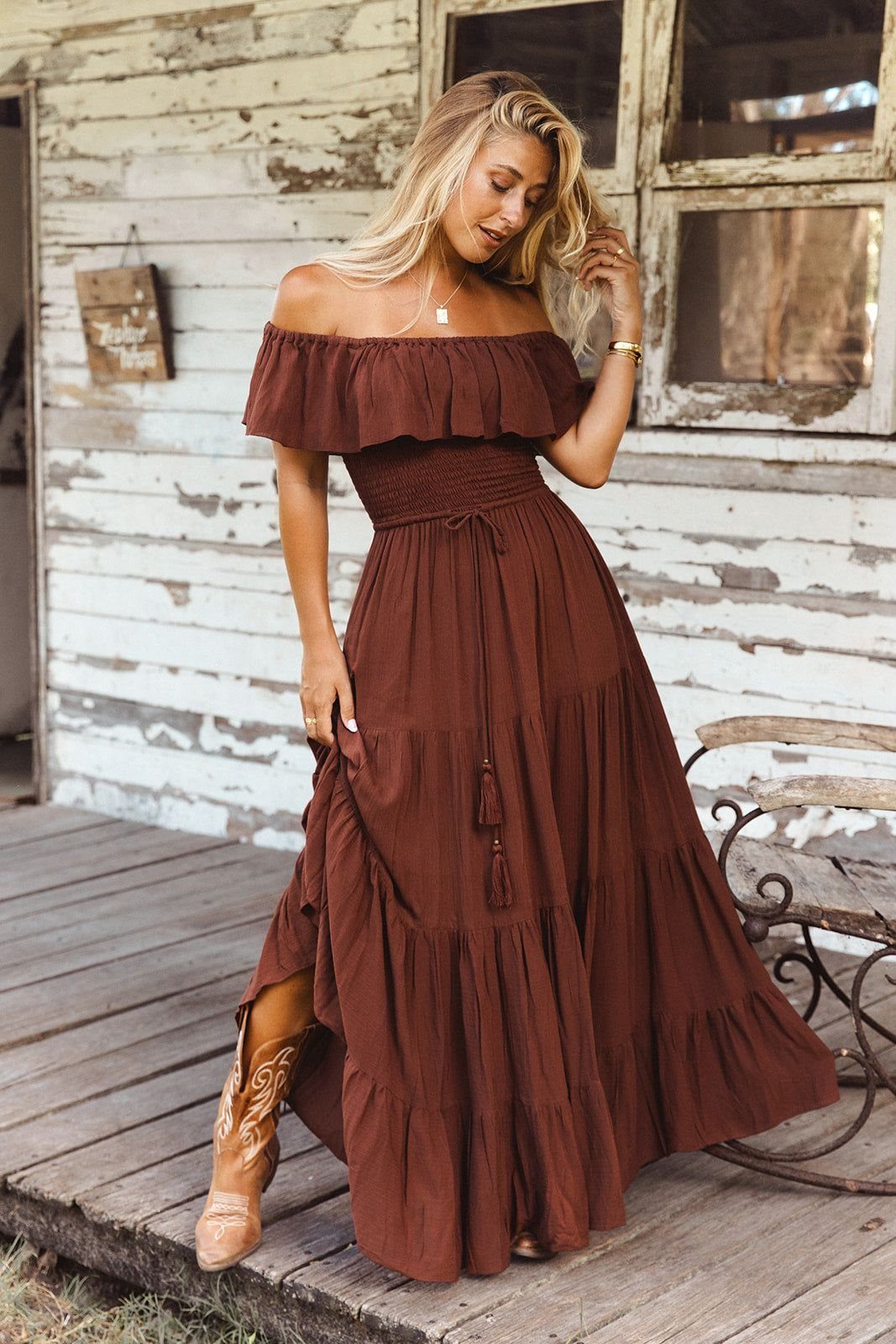
Off-the-shoulder tiers in rust chiffon bring movement to a western wedding without the more expected silhouette of a straight maxi. The tiers catch air between fabric layers, which photographs well outside.
Chiffon this color reads autumn; pair it with tan boots rather than darker brown to keep the look from going too heavy.
The spaghetti-strap versions I have seen run more formal, so the off-shoulder cut here suits a barn or ranch setting better.
8. Dusty Blue Dresses with Boots
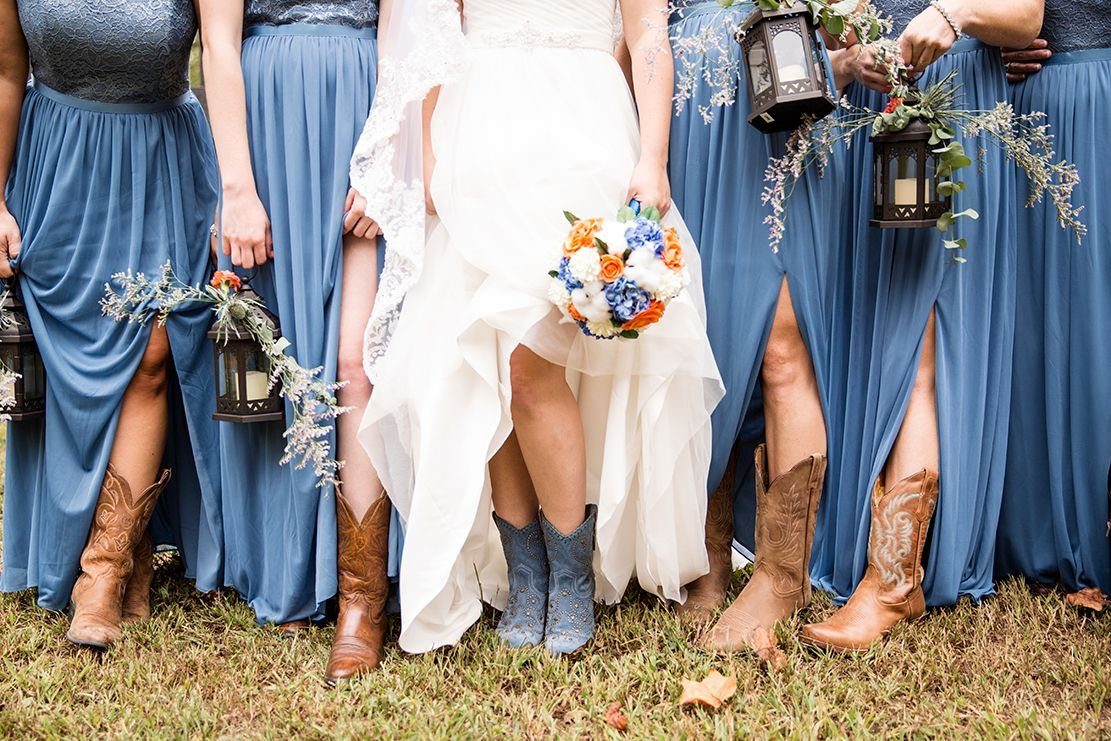
Dusty blue gowns against grass and later-season wheat give the western palette a cooler branch that still photographs soft at sunset. A lifted hem that flashes the boots reads playful rather than posed when the boots are already worth showing.
Cowboy boots under a full skirt need enough shaft height to stay visible when you move; ankle booties disappear. A satin cowl-neck version in this color, or lace with a high-low hem, both work with the same boot principle.
Check your blue against the sky at your venue hour; noon dusty blue and dusk dusty blue are different colors.
9. Sage Green Dresses with Boots
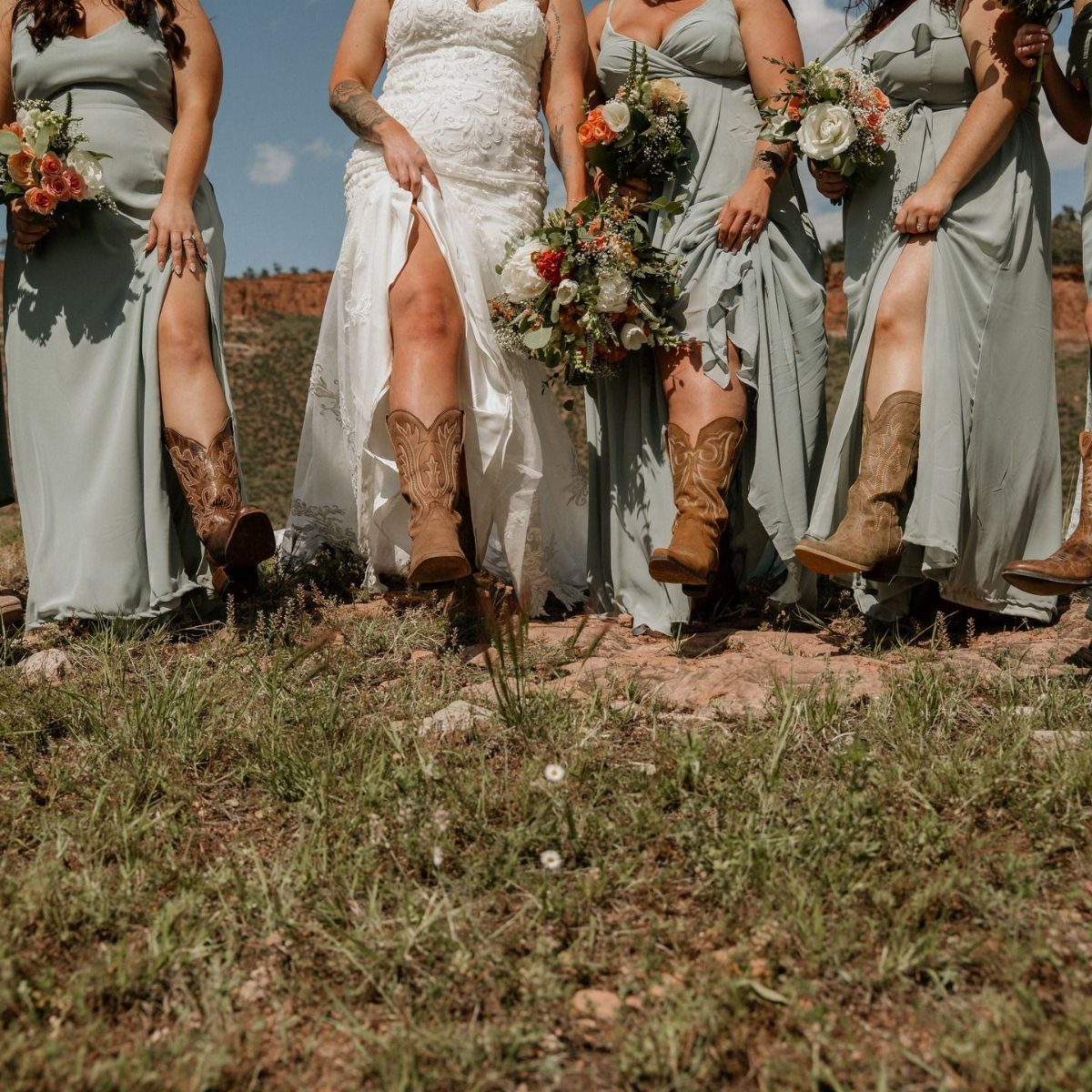
Sage green in desert light reads quieter than rust or teal, which suits a bridal party that wants the landscape to dominate. The white or cream bouquet each bridesmaid carries ties back to the bride without matching her directly.
This palette pairs naturally with brown boots; the tone similarity lets you choose embroidery or plain leather without either fighting the dress.
Cowl-back satin in sage, floor-length chiffon, or a mismatched set of champagne and rust companions all share this boot choice.
For outdoor desert ceremonies, the light color shows dust; schedule photos before the wind picks up.
Western Wedding Themes
Western wedding themes center on the landscape rather than fighting it. Earthy tones, floral patterns, and cowboy boots all serve the same purpose: they let the setting read as intentional, not accidental.
The color palette runs warm because American western landscapes do.
Terracotta, rust, sage, and dusty blue all pick up something already present in barn wood, open grass, or desert light. Cream and champagne work because they match the pale tones in dried vegetation and sun-bleached structures.
Floral patterns should stay small-scale and muted.
Large bright prints read costume; something that could have grown nearby does not. The same rule applies to bouquets: neutral and cream tones with soft pink accents photograph as found objects rather than imports.
Cowboy boots are the one piece that signals western most directly.
Tan leather keeps the look lighter for daytime; darker browns suit evening ceremonies. The boot shaft needs enough height to stay visible under a moving skirt, which matters more in group photos than you might expect.
Mix-and-match Styles
In the western context, the fixed point is usually color temperature, not exact shade. Terracotta, bronze, and champagne share a warm base even as they differ; sage and dusty rose both read muted against landscape.
Satin and chiffon can sit in the same bridal party if the color family holds.
The eye registers sheen difference second; temperature difference first. One bridesmaid in terracotta satin and another in bronze chiffon will photograph as coordinated; the same terracotta satin against a cool pink satin will not.
Individual choice stops where it breaks the group photograph. Black works as a western bridesmaid color when the setting includes shadow, iron fixtures, or evening ceremony time; it fails in bright midday barn light where the contrast turns harsh.
High slits help mixed-height groups because the leg opening creates a visual rhythm that varies naturally. Without that variation, a tall bridesmaid in floor-length satin beside a shorter one can look like a scale error.
Accessories for Bridesmaids
The shaft height determines whether the boot reads as footwear or disappears into fabric.
Silver embroidery with silver jewelry; warm stitching with gold. Mixing metals in western styling reads as unconsidered because the boot is already doing visual work.
Floral bouquets for western bridesmaids run larger and looser than formal wedding standards.
Cream and pink blooms with neutral greenery suit the scale of open landscapes; tight structured arrangements look imported and small. Ribbon wraps in tan or raw-edge fabric extend the rustic reading without adding another material fight.
Turquoise jewelry appears in western wedding photos but needs restraint.
One piece per bridesmaid, or the bride alone wears it. The color is strong enough that multiple turquoise statements in a group photograph compete rather than complement.
Frequently Asked Questions
What styles are popular for western bridesmaid dresses?
Maxi, mini, and high-low dresses in earthy tones like terracotta, rust, and sage are the most common choices. Satin keeps its structure through hours of photos and dancing, while chiffon catches the breeze if you’re outside on ranch grounds.
A hem that dips longer in back has turned into the practical choice, since it frames boots without the wind-risk of a full mini.
How to accessorize western bridesmaid dresses?
Cowboy boots are the core accessory, and matching the leather tone across the bridal party keeps the group looking tied together.
Oversized bouquets in blush and ivory give hands a purpose during portraits; the size should feel proportional to the skirt, not swallowed by it.
One turquoise piece per person is my cutoff, a bracelet or a pendant, letting the boots and the flowers handle the regional nod.