The 14 wedding dress trends here run from a clean sheath you could wear to city hall to a cathedral-length ballgown that needs a train bearer and aisle width to match.
Which one is yours depends on one thing: your venue’s scale and light, since a dark romantic gown dense with pearl beading goes flat in a sun-flooded garden, and a thigh-high slit that behaves while standing can gape on chapel steps.
Elbeth Gillis traced the current ballgown surge to postponed pandemic weddings, and the proof is in how many brides now want entrance and impact after waiting.
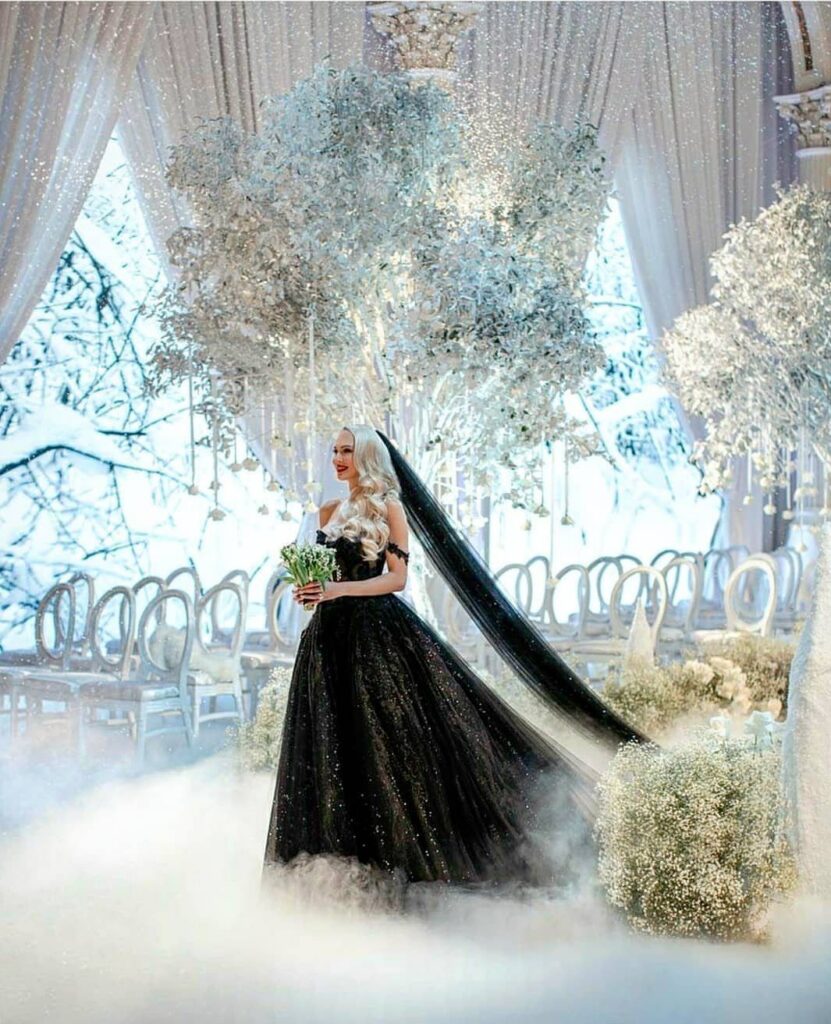
1. Dark Romantic Gowns
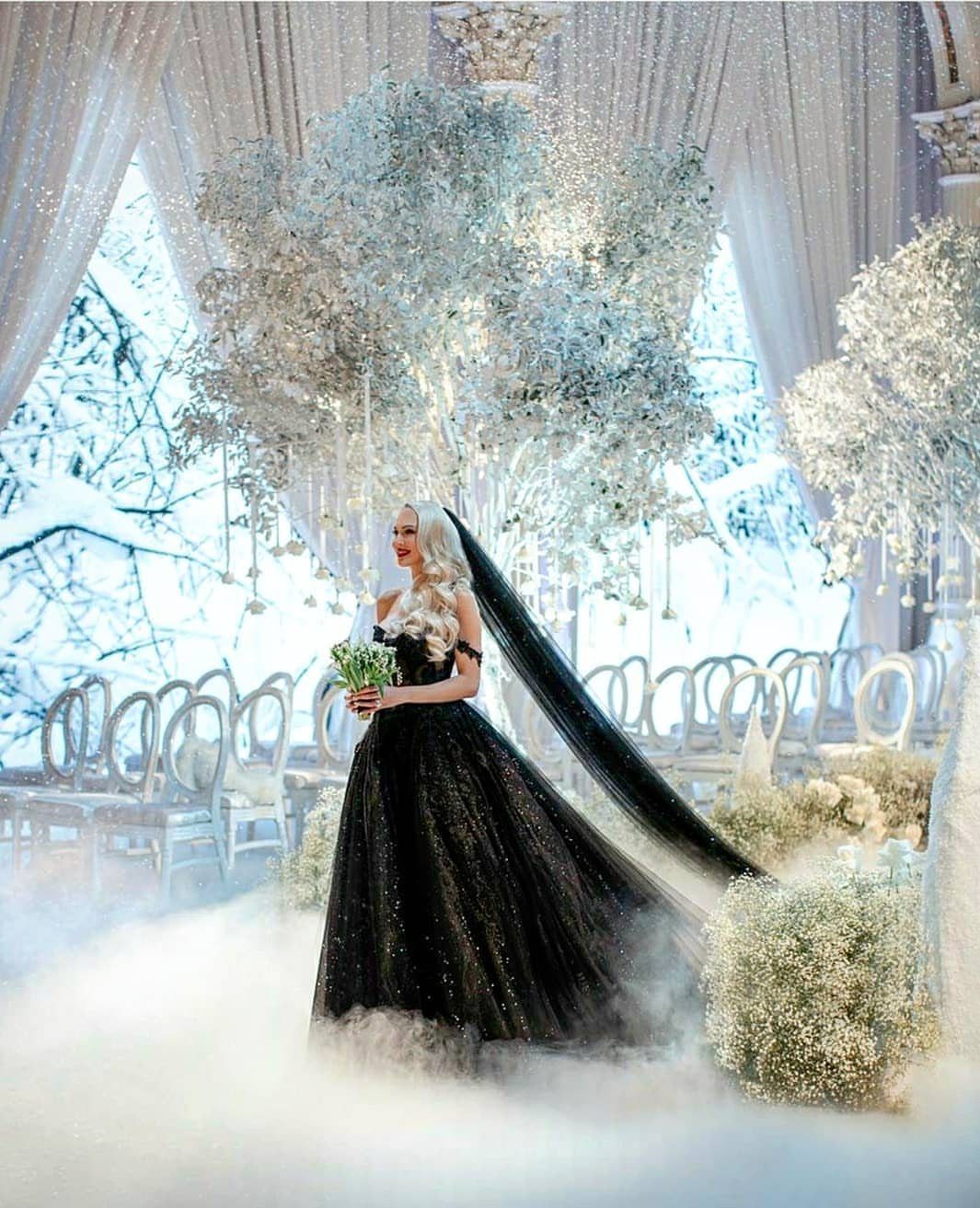
These gowns borrow their mood from candlelit rooms and winter gardens rather than from color alone.
Most are still ivory or champagne, but the treatment runs cinematic: pearl-trimmed necklines, chandelier crystal, velvet ribbon accents, beading dense enough to catch low light. I think of them as the dress equivalent of a minor key.
The effect needs a venue that cooperates.
A ballroom with tall windows at dusk, a barn strung with bare bulbs, any space where shadow does half the work. The dress supplies the rest.
Pearl and crystal placement matters more than quantity. A neckline band and scattered drops at the waist read intentional; all-over scatter reads costume.
If your venue floods with sunlight, this trend fights back. Choose something else.
2. A-Line Silhouette
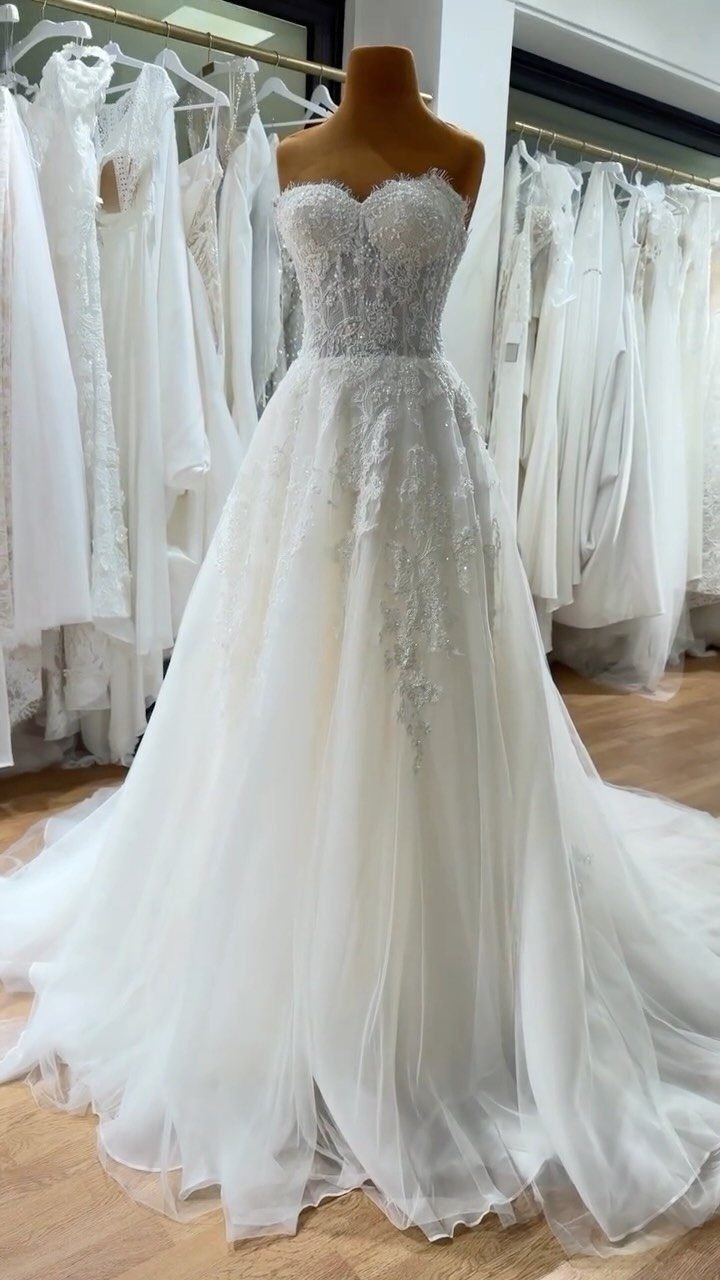
The name comes from the way the cut fits close through the bodice and widens softly from the waist, letter A made in fabric.
Nothing dramatic happens at any single point, which is exactly why it works on nearly every body.
I have watched friends try this last, after mermaid and ballgown, and settle on it. The waist gets attention without demanding a dramatic hip or a flat stomach.
It scales. A full-skirted A-line carries cathedral grandeur as easily as a crepe version with no train suits city hall.
The silhouette does not insist on formality level. If you want one dress to survive a change of venue or a revised guest count, this is the safest architecture.
3. Ballgown Silhouette
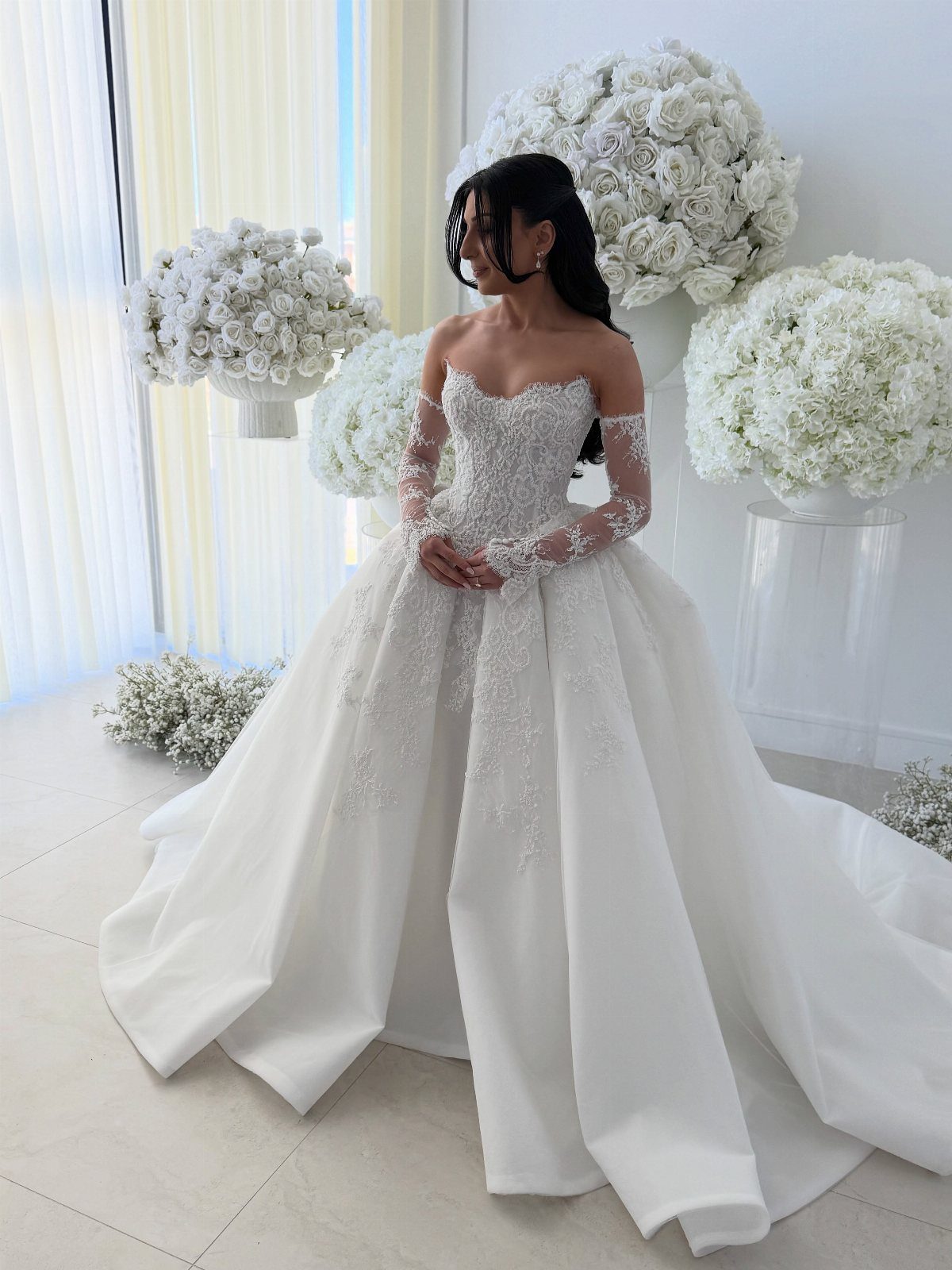
Fitted through the bodice and exploding into a full skirt that brushes the floor, this is the shape people picture when they picture a formal wedding.
Elbeth Gillis, a bridal designer whose work I have followed, traced the current surge to postponed pandemic weddings. Brides who waited wanted entrance and impact, and the ballgown delivers both photographically and in person.
The volume creates height, which helps petite frames more than people assume. What you gain in presence you lose in aisle width and guest-row clearance.
A ballgown in a small restaurant or narrow chapel aisle collects chairs and steps on hems. Grand ballrooms, churches, estates with scale to match: these are the rooms this dress was built for.
Gillis’s advice on proportion holds. Keep the bodice minimal if the skirt goes big.
Tulle or lace stacked in layers builds the volume; a lace bodice paired with a plainer skirt keeps the eye from fighting itself, though some gowns carry lace all the way through.
Paris Hilton wore two ballgowns at her 2021 wedding, which tells you something about how hard it is to stop at one.
“With so many weddings postponed or canceled over Covid, so many brides are wanting the biggest ball gown dresses to get married with a boom,” says bridal designer Elbeth Gillis.
4. Modern Cut Out Sides
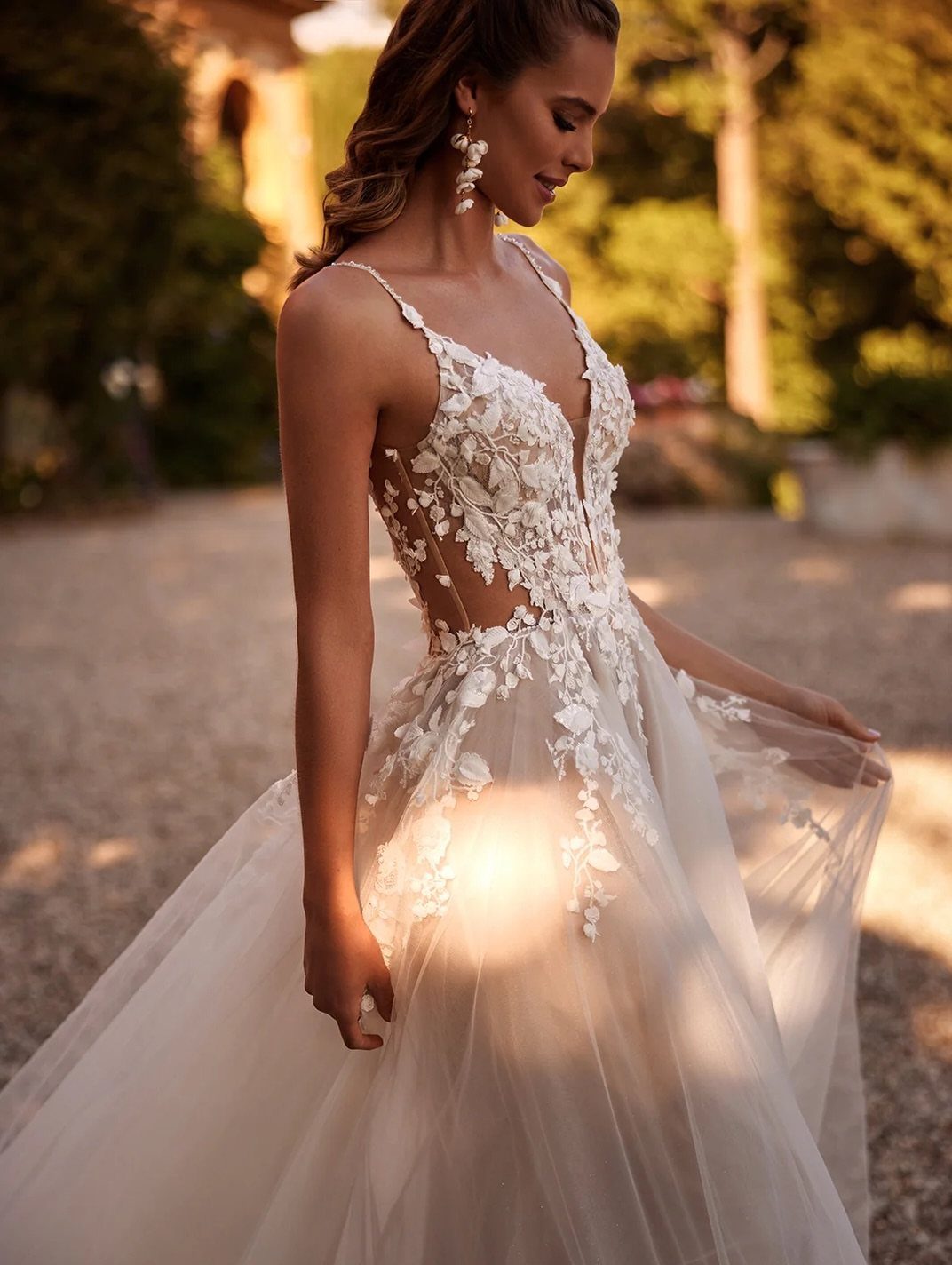
Small openings at the sides of the bodice read current without losing the softness a wedding calls for. The eye goes to the gap while the rest of the dress keeps its straight, uninterrupted line.
I like this best where the fabric does the negotiating.
Satin with a single oval cut reads confident; lace with sheer illusion paneling reads softer, the skin suggested rather than declared. A cut too low fights the line of the dress; one too high disappears.
This is for brides who want the feeling of a statement without the statement itself.
It photographs well in movement, the flash of skin at a turned waist, but does not demand the room’s attention the way a bare back or plunging front does.
If your ceremony has modesty requirements, skip this entirely. The cut-out cannot be added back with a panel the way a neckline can.
5. Square Necklines
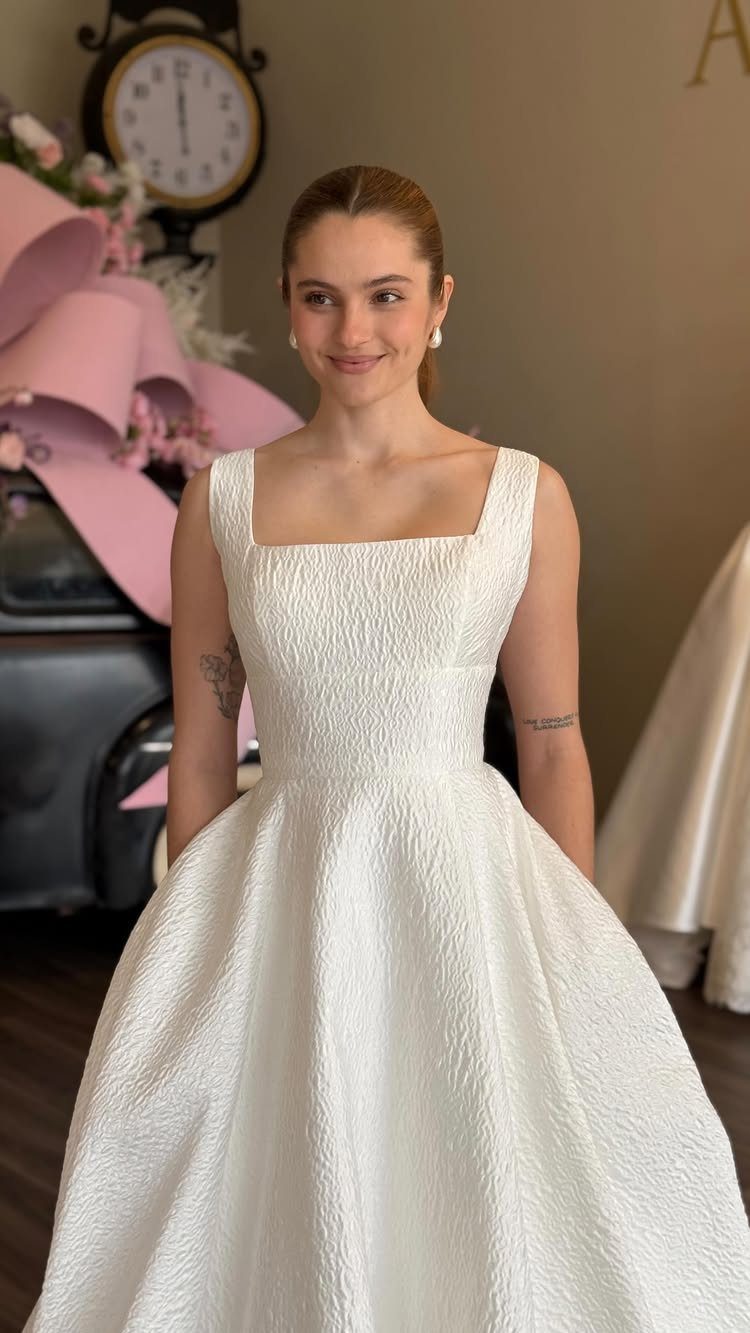
After silhouette, neckline shapes the dress most. The square neckline is clean, architectural, and drawing from Regency-era portraits through to the minimalism of the late 20th century.
Nicole Peltz wore one to marry Brooklyn Beckham, and the headlines put the shape in front of brides who had never thought to ask for it.
Kobus from Anna Georgina, whose work I respect, advises letting the neckline carry the whole upper half. No necklace, minimal earrings.
The shape itself brings structure to the shoulders and draws the eye to the collarbone. Jewelry competes rather than complements.
This pairs naturally with minimalist gowns.
A heavily beaded bodice with a square neckline fights its own geometry. The line wants simplicity: textured matte fabric, perhaps, or clean satin.
If you are broad-shouldered, the horizontal emphasis can exaggerate what you already have. A V-neck or sweetheart serves that frame better.
6. Sheath/Column Silhouette
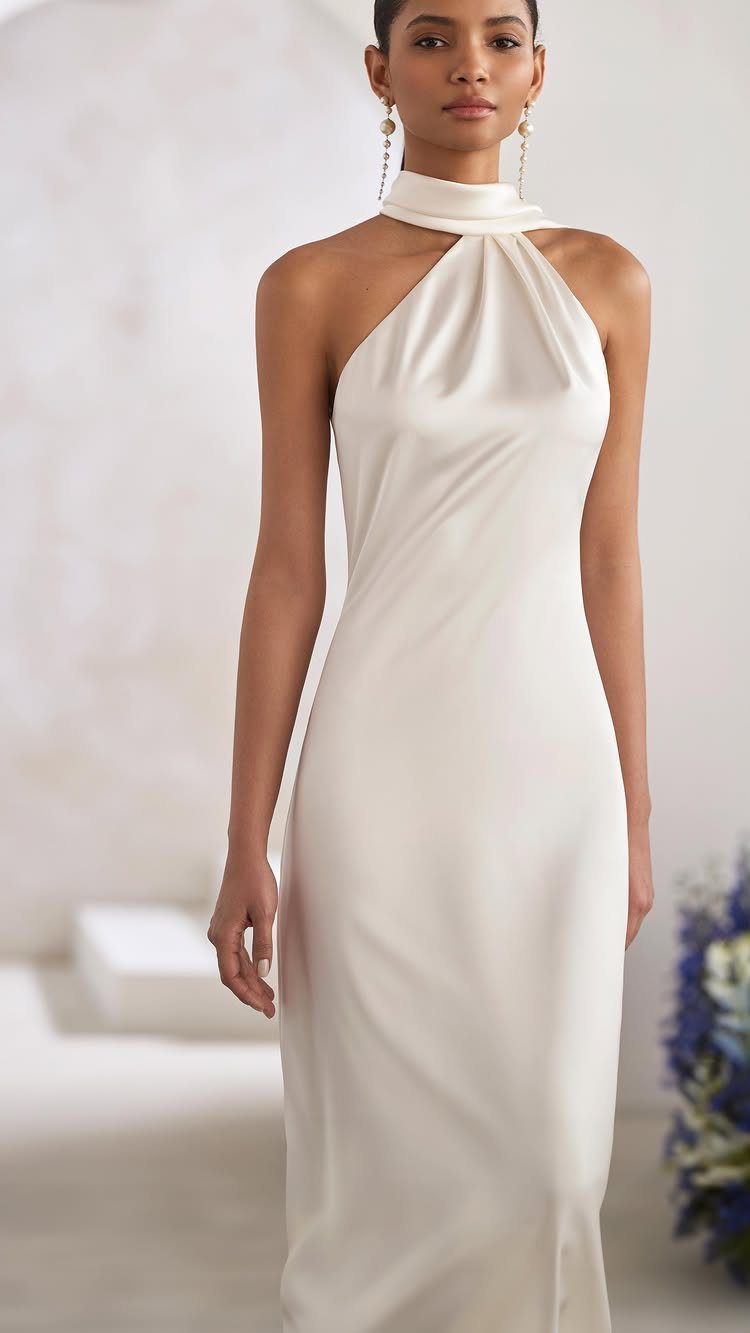
From shoulder to hem the fabric stays close, tracing what is underneath without adding volume or hiding it. It is the most minimalist architecture a wedding dress takes, and it makes no promises it cannot keep.
This shape belongs to intimate ceremonies and outdoor settings where a ballgown would look like it took a wrong turn.
City hall, a beach at sunset, a back-room restaurant: the sheath does not demand space or attention it has not been given. It reads sophisticated rather than simple, which is a different thing entirely.
Tall, lean frames wear this most naturally, though I have seen it work on shorter women when the fabric has enough weight to fall straight rather than cling.
What it wins in ease it loses in room to hide; every line of the body shows, and the fabric does not lie.
There is no skirt volume to balance a hip, no waist emphasis to create one where it is less defined.
What the dress offers is honesty about the shape underneath. Choose your underpinnings accordingly, and consider whether you want that honesty on a day when cameras run constantly.
7. Mermaid/Trumpet Silhouette
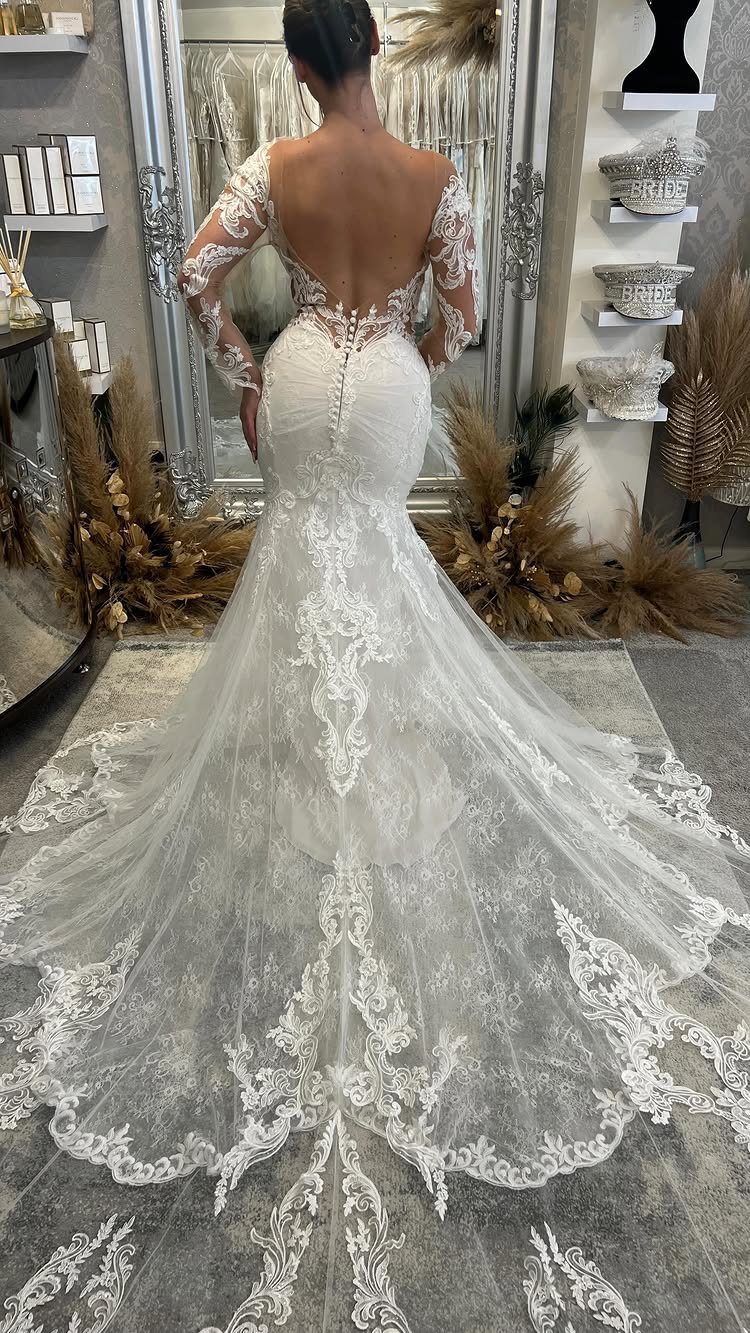
The mermaid silhouette fits close from bodice through thigh, then flares below the knee.
The trumpet shape starts that flare sooner, right around the middle of the thigh. Both trace the body rather than skimming it.
This is the most movement-restrictive shape common in bridal.
Sitting, stair climbing, and dancing all require adjustment; the fitted leg does not allow a natural stride until the flare releases it. Hourglass figures carry this most naturally, though any bride willing to own the line can wear it.
Long lace sleeves and a bare back can dial down the exposure while keeping the line. The fitted cut still reads glamorous, but the sleeves and train add a formality that head-to-toe satin would not.
This shape asks you to trade easy movement for a very specific outline; only you know if that price works for your day. An A-line nips in at the same waist point but skims past the hips instead of clinging.
8. Full Lace Coverage
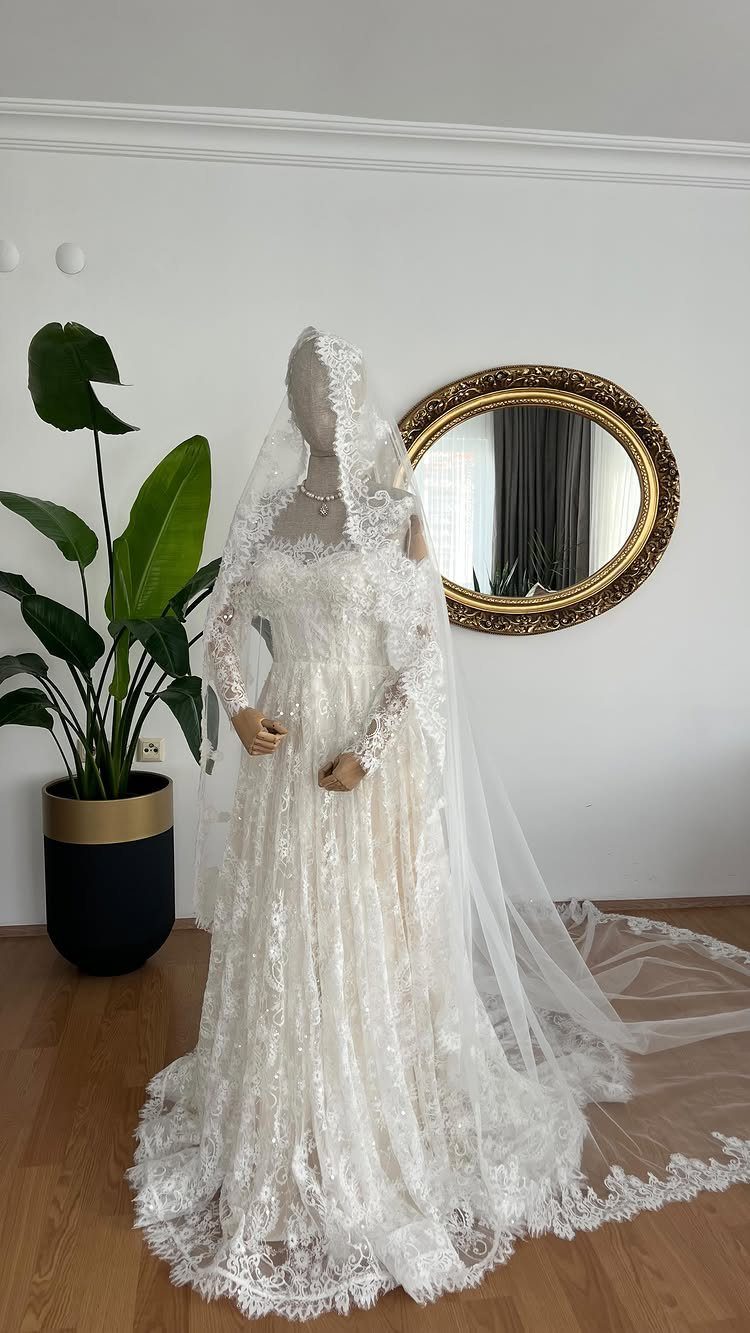
Lace from neckline to hem is back, though this time it reads as a choice rather than a hand-me-down. Keep the neckline plain and the cut current so the lace looks chosen, not borrowed.
A long-sleeved cut with a plain bodice leaves the lace itself to do all the talking.
A matching veil extends the treatment without adding competing detail. Thicker lace without full lining gives a different effect than sheer illusion; the opacity changes the mood from lingerie reference to architectural surface.
Lace this season moves between boho, vintage, and overtly sensual depending on cut and density. The cuff sleeve and full coverage here sit toward the formal end.
Consider your venue’s scale.
Dense lace absorbs light; in a dim chapel it goes flat, while outdoor afternoon sun picks out the pattern. If the lace is thick enough to stand alone, skip the necklace and let the neckline shape speak.
9. Pearl and Crystal Embellishment
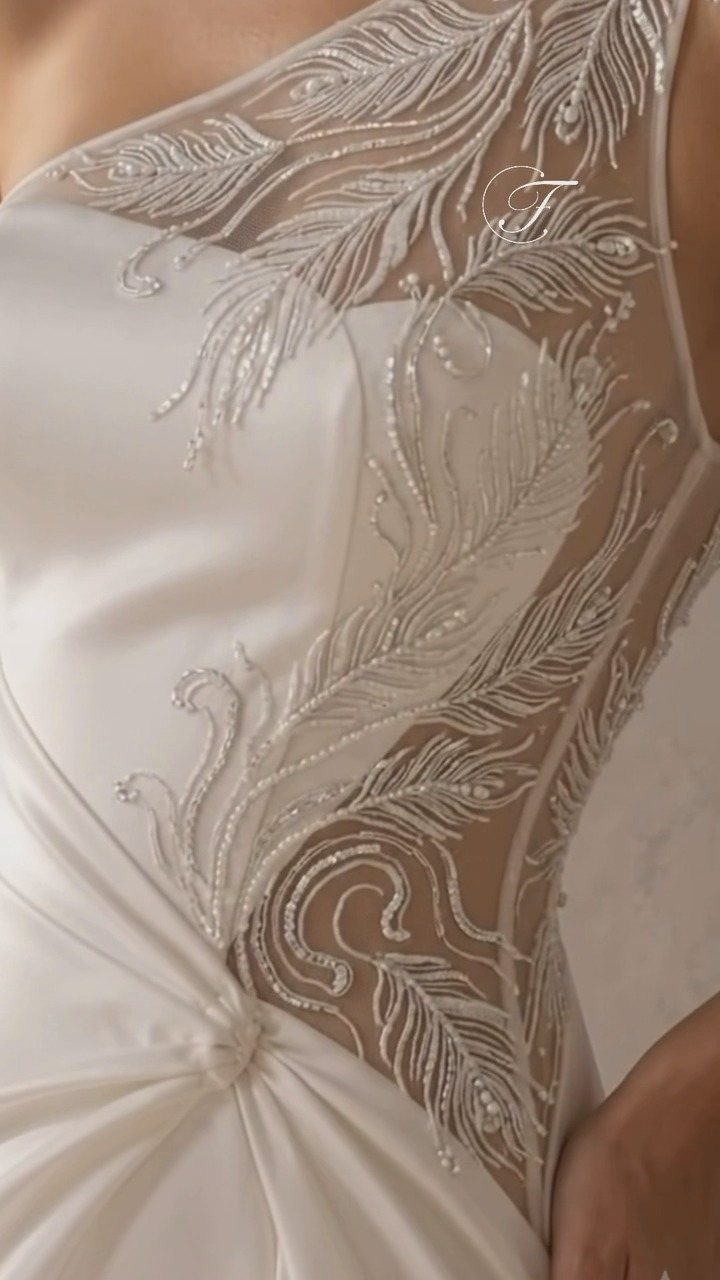
Pearl detailing runs along necklines, straps, and bodice edges, adding an heirloom softness that outlasts trend cycles. Crystal placement, especially chandelier-style drops, serves a different purpose: it catches flash photography and stage light.
Beading in a feather pattern over sheer mesh needs little else; one bare shoulder is enough. The effect is specific and ornate, suited to brides who want the dress to be the conversation.
Choose between the 2 materials based on your day’s lighting. Pearls reward intimate settings and natural light; their luster is subtle and needs proximity.
Crystals demand distance and darkness to perform, so ballroom and evening receptions suit them better. Mixing both, as here, works when one dominates and the other accents.
For maximum impact in photos, ask your photographer about flash use during portraits. Crystal without direct light disappears into white fabric.
10. Basque Waist Silhouette
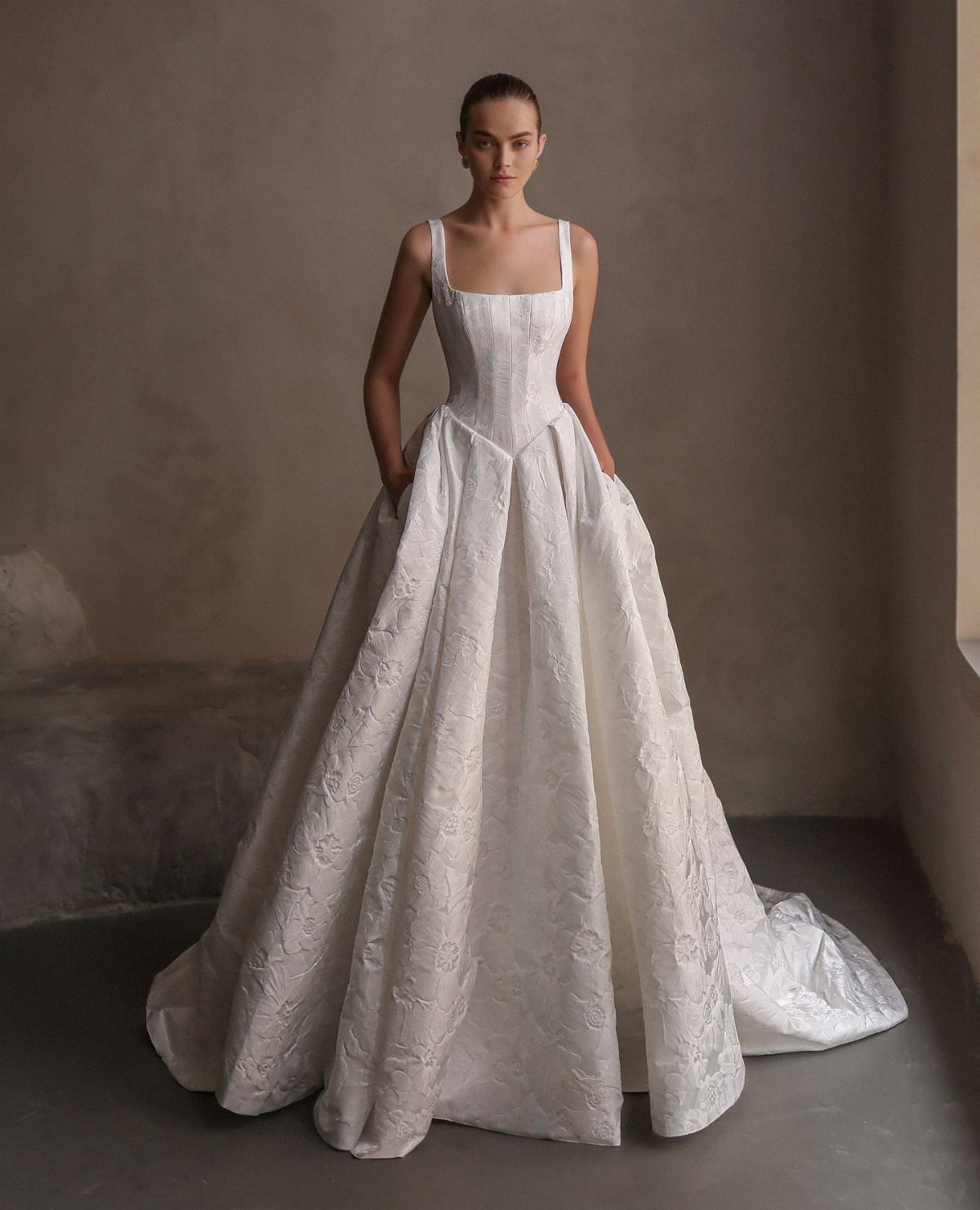
The basque waist drops to a pointed V below the natural waistline, elongating the torso and letting the skirt flare from a lower anchor. It reads historical without choosing a full costume era.
Lace dresses carry this shape often because the waist seam gives structure while the skirt below flows soft. Thick straps, a square neck, and pockets keep the rest quiet so the dipped waistline can stand alone.
This suits brides who want waist definition but not the tension of a fully fitted bodice.
The point draws the eye downward, creating length that a natural waist seam does not. Broad or short-waisted figures benefit most; if you are long-waisted already, the extra drop can stretch proportions past balance.
Check that the point centers cleanly. An off-center basque line, even slightly, reads as mistake rather than style.
11. Thigh-High Slits
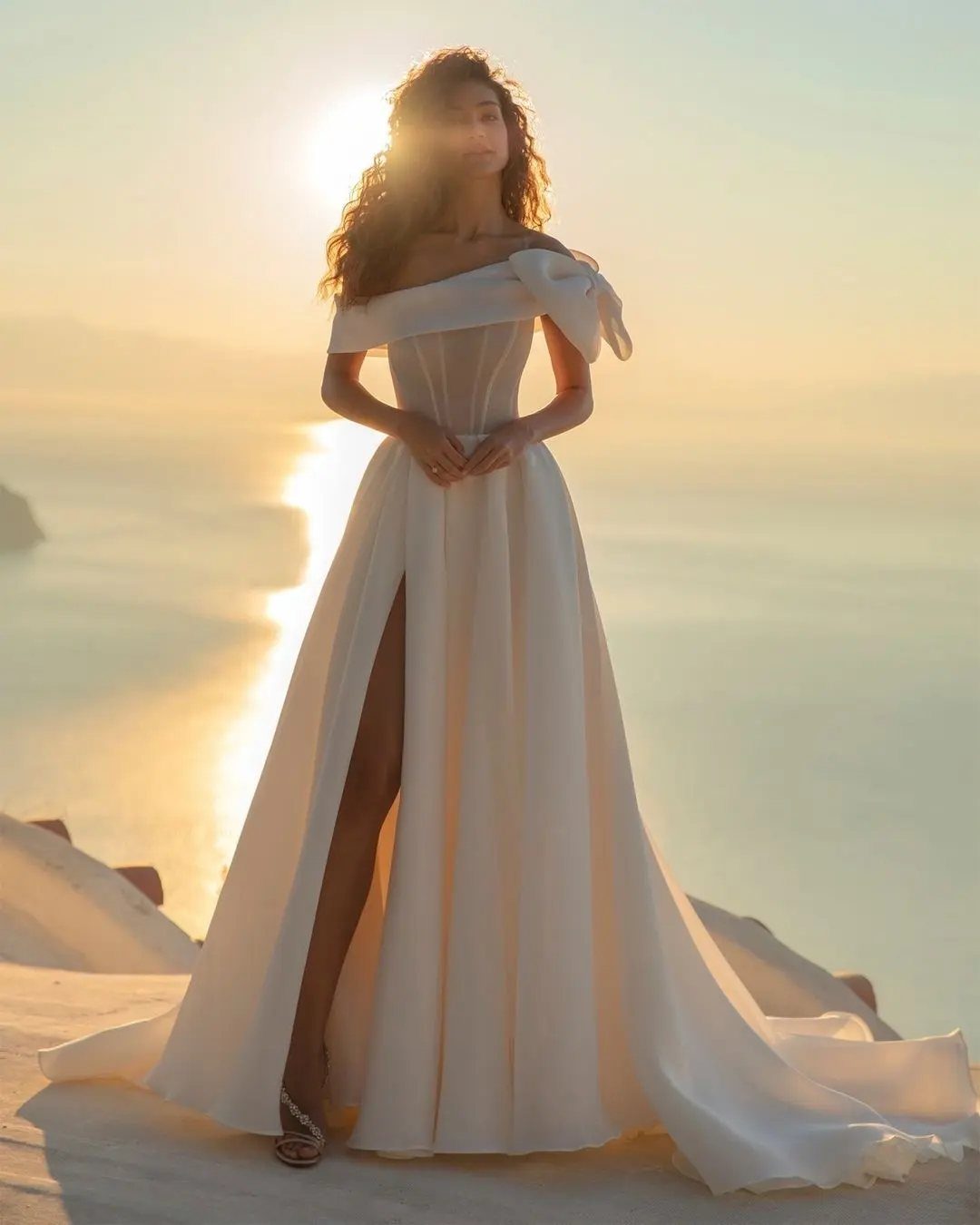
A single vertical opening in the skirt allows leg to show without remaking the dress into eveningwear.
Since Angelina Jolie’s 2012 Oscars appearance moved the slit into global formal vocabulary, brides have adopted it as a controlled way to add sexiness to traditional shape.
Bare shoulders and a long skirt with a high slit need only moving air and good light. The setting matters: this dress belongs outdoors or in light-filled spaces, not dim churches with step risers.
Many slit styles let you control exposure. For ceremony, the leg stays covered by fabric fold and position; come reception, movement and posing reveal what you choose.
Some brides add a slit to an existing dress rather than buying one made with it. A seamstress can evaluate whether your chosen gown’s construction allows the alteration without distorting drape.
If your ceremony requires modest coverage, test the slit in sitting, kneeling, and climbing stairs. A slit that behaves while standing can gape elsewhere.
12. Corset Wedding Dress
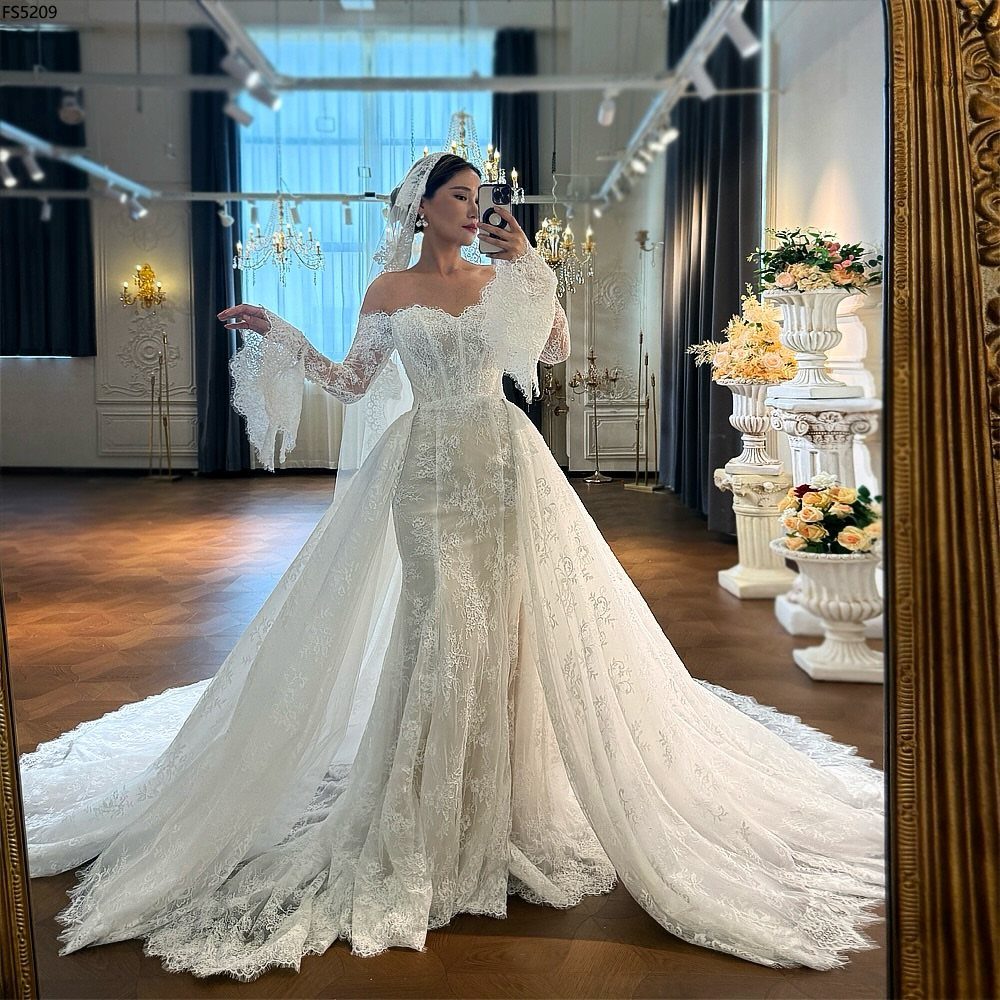
Corsetry in bridal now combines structural support with visible construction. Boning, lacing, and sheer panels that reveal the architecture beneath create dimension without the weight of solid beaded bodice.
Off-the-shoulder bell sleeves and visible boning under lace give the structure drama; a detachable overskirt gives you two dresses in one.
The corset serves 2 functions: it shapes the torso into hourglass proportion, and it replaces separate undergarments for bust support. Athletic figures gain curves; larger busts gain engineering.
For warm-weather weddings, sheer corset bodice with transparent layers keeps the structure light. The transparency is the point; opaque corsetry reads as historical reenactment, while sheer panels read as current fashion.
Movement matters with structured bodice.
The boning that creates shape also resists bending; sitting and eating require posture awareness. A full corset gown demands more comfort with constraint than a softly constructed alternative.
13. Vintage Gowns
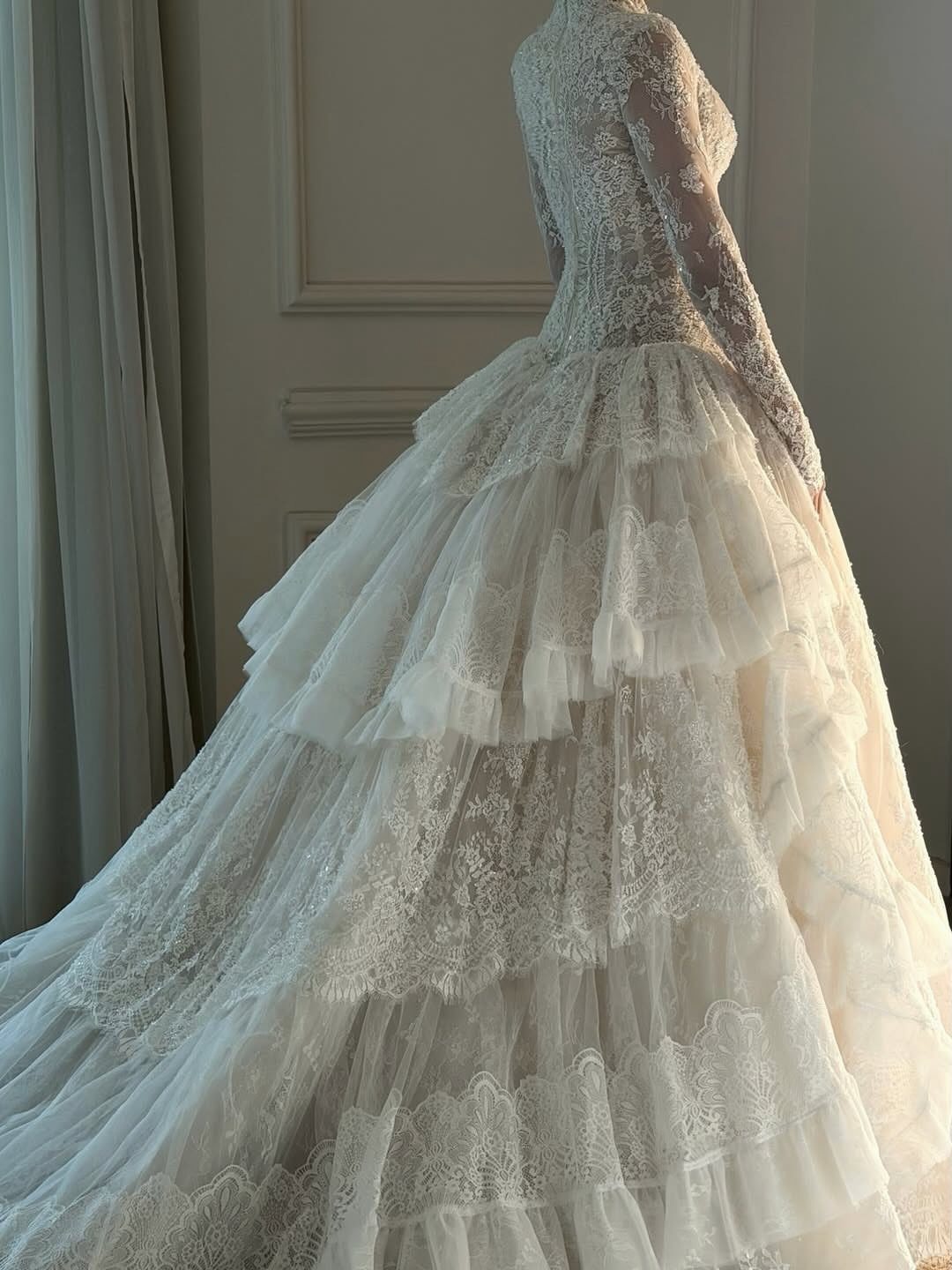
A high lace neck and tiered skirt carry the 1920s and 1950s without requiring a costume rental. A vintage gown works best when the silhouette and sleeve nod to the past but the fit stays current, not theatrical.
Empire waists from Bridgerton-era styling work for brides who want length in the torso. A true 1920s drop waist sits lower than most modern adaptations; check that the seam hits at your hip, not below it, or the proportions flatten.
Long lace sleeves and full coverage read formal, but the tiered skirt adds movement a fitted vintage gown would not have.
This suits outdoor ceremonies where a straight sheath would look stiff against wind and grass. The lace density matters: thick cotton lace reads daytime and garden; finer Chantilly moves toward evening.
If your venue is dim, test the dress in that light. Cream and ivory lace can shift toward yellow where bulbs run warm.
14. Elaborate Veils
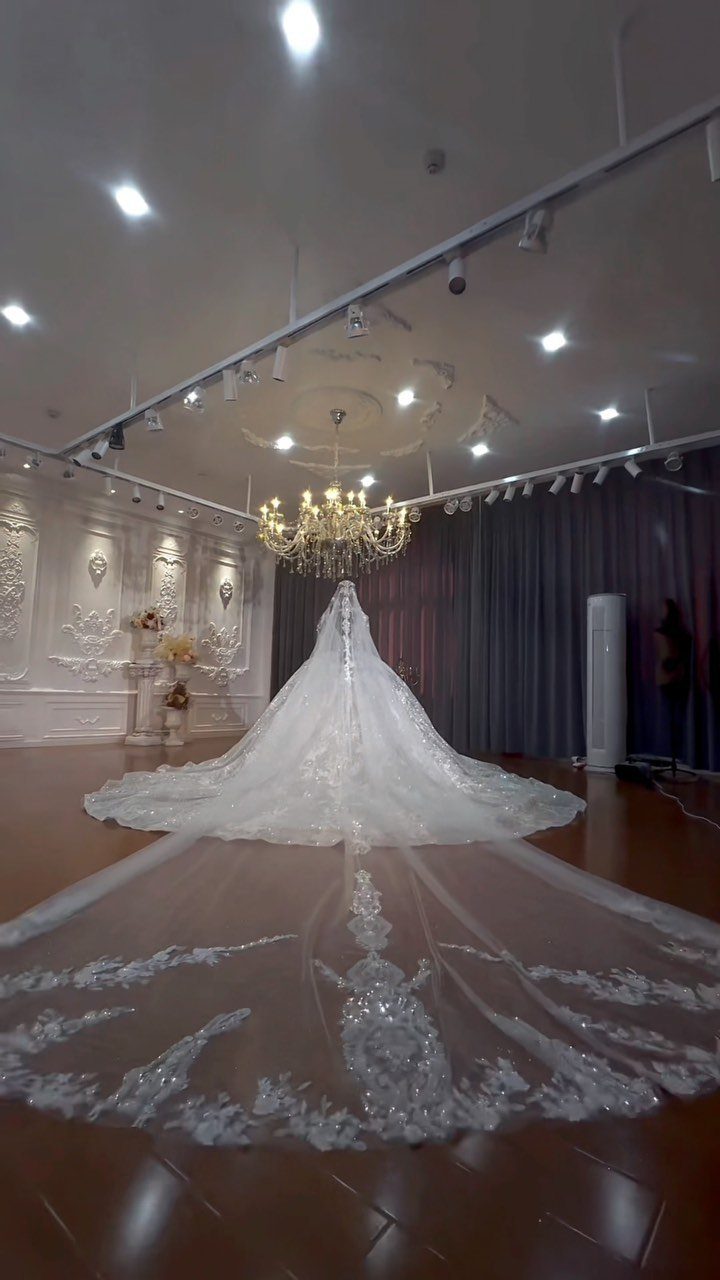
A veil that spreads farther than the dress itself, with lace detailing continuing the gown’s pattern onto the floor, makes the entrance without competing.
Cathedral length needs aisle space and a train bearer or the fabric pools at the altar steps.
Hand-sewn florals and scattered pearls add detail that competes with a simpler dress or complements an elaborate one. This pairing only works when one element dominates; a fully beaded gown with an ornate veil competes with itself in photographs.
Long veils photograph as translucent grey unless backlighting is arranged.
Ask your photographer about window or doorway placement for portraits. For the ceremony itself, the weight of lace embroidery can drag the comb backward; secure it with additional pins or a wrapped bun rather than a half-up style.
Some brides keep the elaborate veil for ceremony and photos, then switch to a plain fingertip veil or bare head for reception. The comb transfers to a simpler piece in under a minute if planned.
Frequently Asked Questions
What is the most popular style of wedding dress right now?
Right now the 3 shapes I see most often in bridal shops and real weddings are A-line, ballgown, and sheath, in that order of frequency. The ballgown has surged since postponed pandemic weddings created demand for entrance and impact.
A sheath dress sits close to the body without the volume of a ballgown, which makes it the practical choice for a backyard wedding or city hall where space and formality are both limited.
What are the 2026 bridal trends?
Dark romantic gowns, pearl and crystal embellishment, full lace coverage, detachable elements, and clean minimalist lines define 2026 bridal fashion.
Dark romantic gowns borrow mood from candlelit settings with pearl-trimmed necklines and chandelier crystal. Detachable sleeves, capes, and trains let one dress serve ceremony and reception differently.
Maggie Sottero still does the beaded bodices, Vera Wang pushed sheer layers and architectural folds this season, and Monique Lhuillier stayed with her soft tulle and floral appliqué lane, so the 2026 runways did not settle on one single direction.