The 19 gowns below range from a practical A-line you can wear to a garden wedding to a dramatic bow accent gown built for red carpets.
Your body shape decides which silhouette flatters, since a waistline set too low on a ball gown starts the skirt at your hips instead of your smallest point.
I check that single measurement first on every style, from the mermaid that traces the body to the maxi whose loose skirt hides a flat or full hip equally.
1. Ball Gown
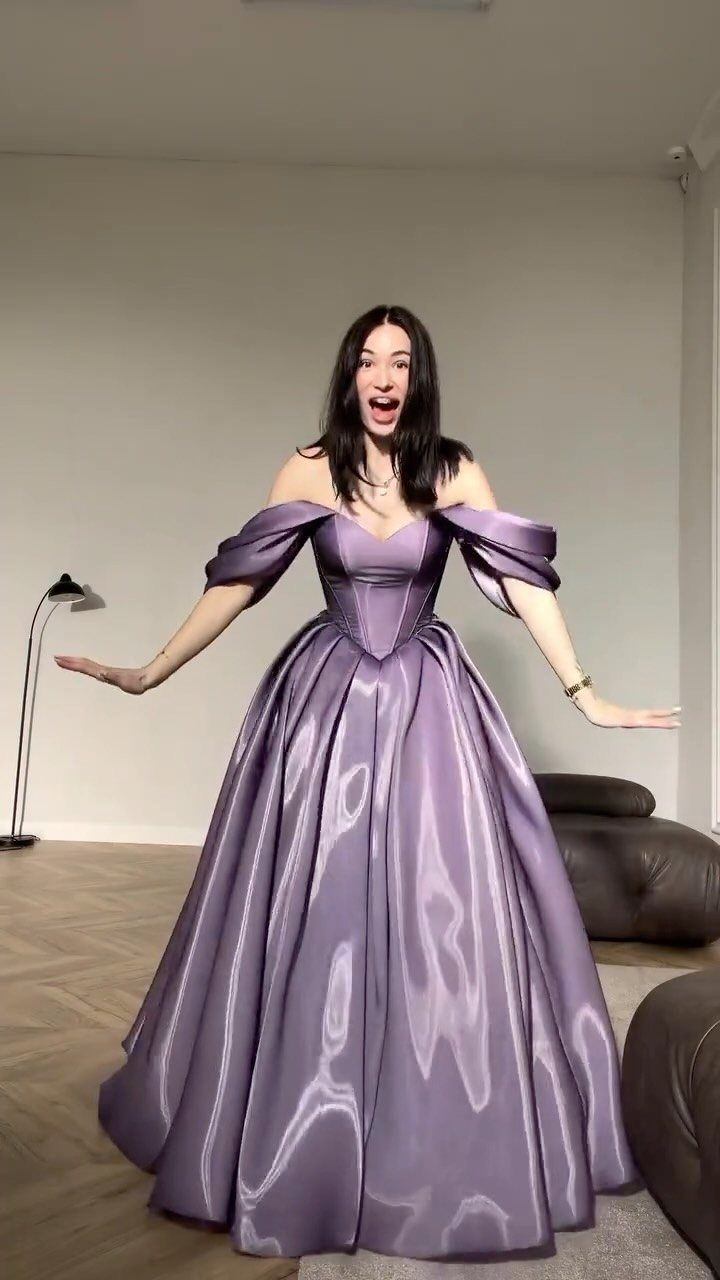
A ball gown builds its drama from the waist down: fitted bodice, then a skirt that takes up real space.
Satin and silk hold the shape best, and the volume does the work of dressing up so jewelry can stay minimal.
The full skirt balances a fuller bust and draws the eye upward, though petite frames can get swallowed if the proportions run too wide.
I check where the waistline hits before ordering; too low and the skirt starts from the hips instead of the smallest point.
This is the silhouette for events where the dress code actually means it.
2. Sheath Gown
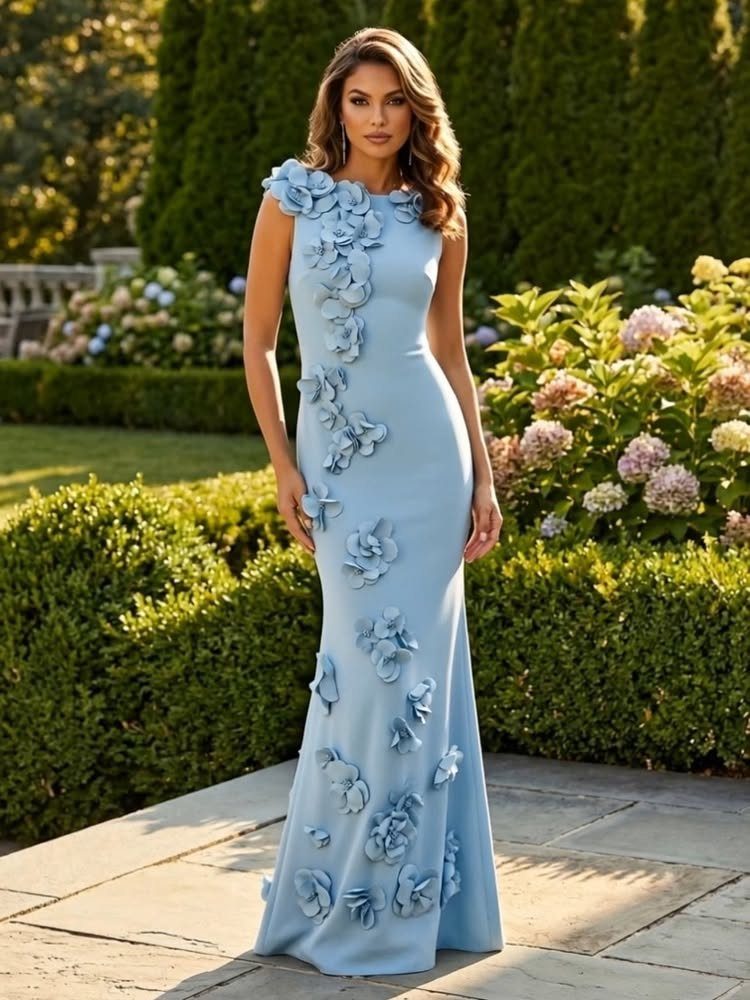
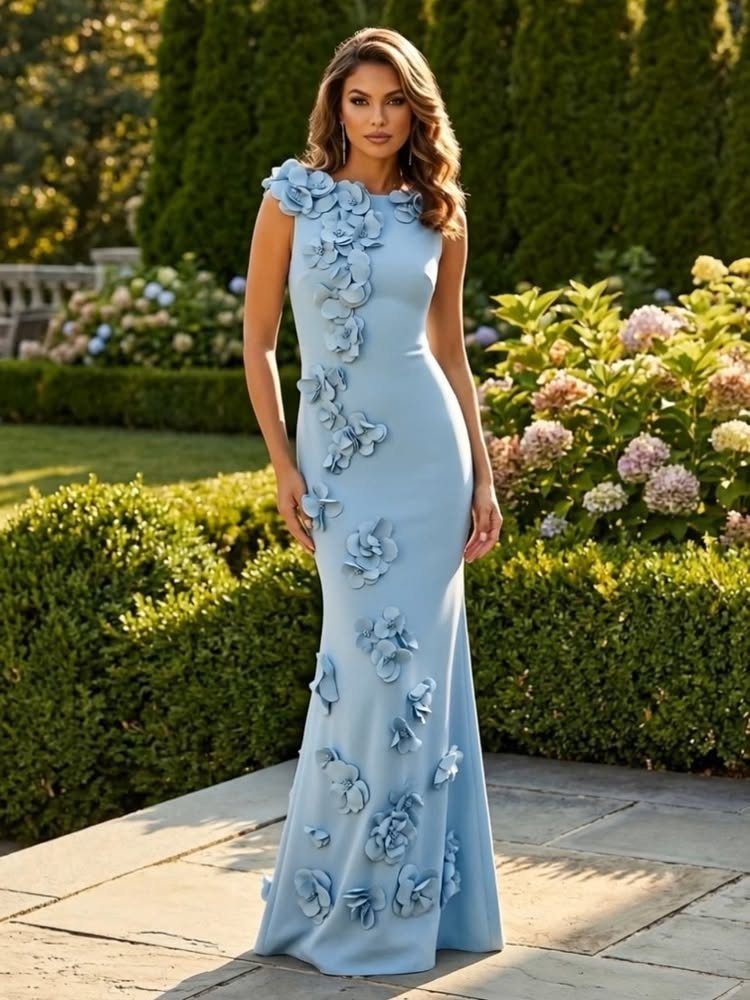
Sheath gowns trace the body without squeezing it, falling straight from shoulder to floor in one clean line. Silk or satin gives the best drape, and 3D appliqués add texture without breaking the column.
The shape elongates a smaller frame, though it does not forgive much in the midsection.
I would size for the hips and have the top taken in if needed; alterations on a straight seam run cheaper than letting out a tight one.
For black-tie events where you want to look dressed but not costumed, this reads as intentional restraint.
3. A-Line Gown
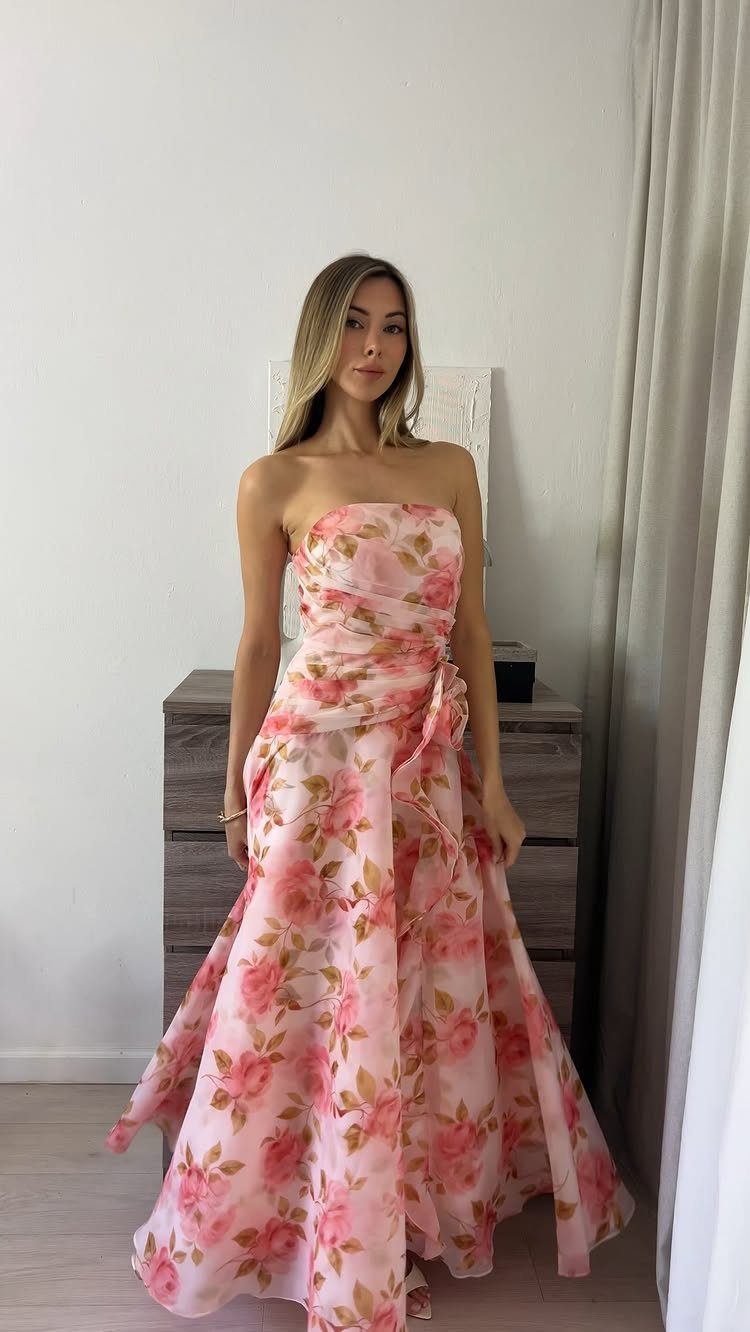
An A-line gown nips in at the bodice and flares gently to the hem, making that capital-A shape without the ball gown’s full commitment.
Chiffon and organza keep it light, and the cut works across body types because the waist is the only fixed point.
The princess seams that create this shape also let it move easily; I have worn versions I could actually sit down in.
What you trade away is the mermaid gown’s curve-hugging drama, but you gain a silhouette that does not require constant adjustment.
For garden weddings or any venue with stairs and grass, this is the practical romantic choice.
4. Mermaid Gown
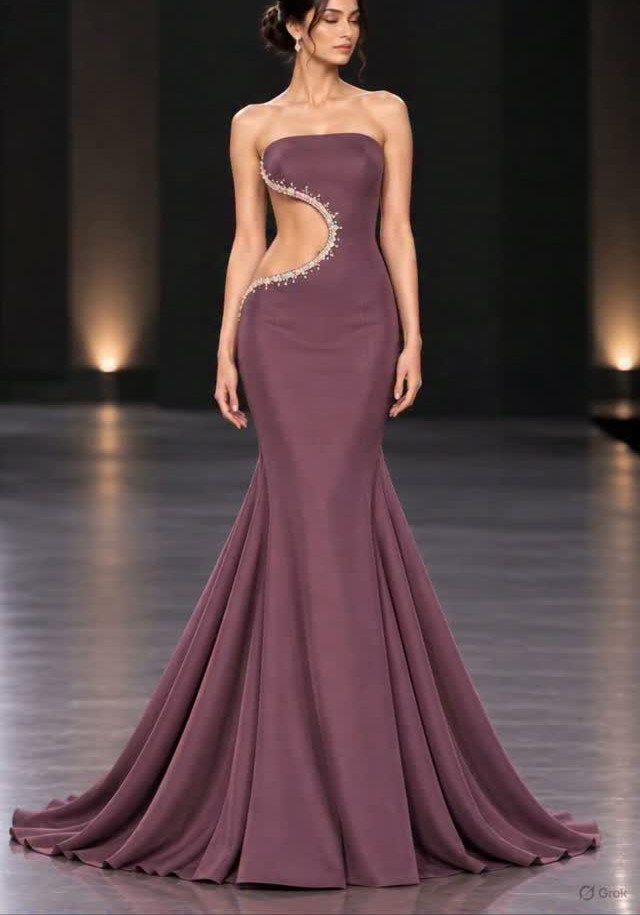
A mermaid gown fits close from chest through knee, then flares where the leg begins to taper. Stretch lace or satin with structure lets you walk, though the kick at the bottom is more gesture than stride.
The cut demands confidence in your hips and thighs; it will highlight rather than smooth.
I would budget for proper underpinnings, since every line shows, and plan on a heel height you can maintain all evening. A waist cut-out breaks the expanse of fitted fabric, though that detail reads as trend rather than classic.
For red carpets and formal galas where the dress is the point, this silhouette delivers.
5. Halter Neck Gown
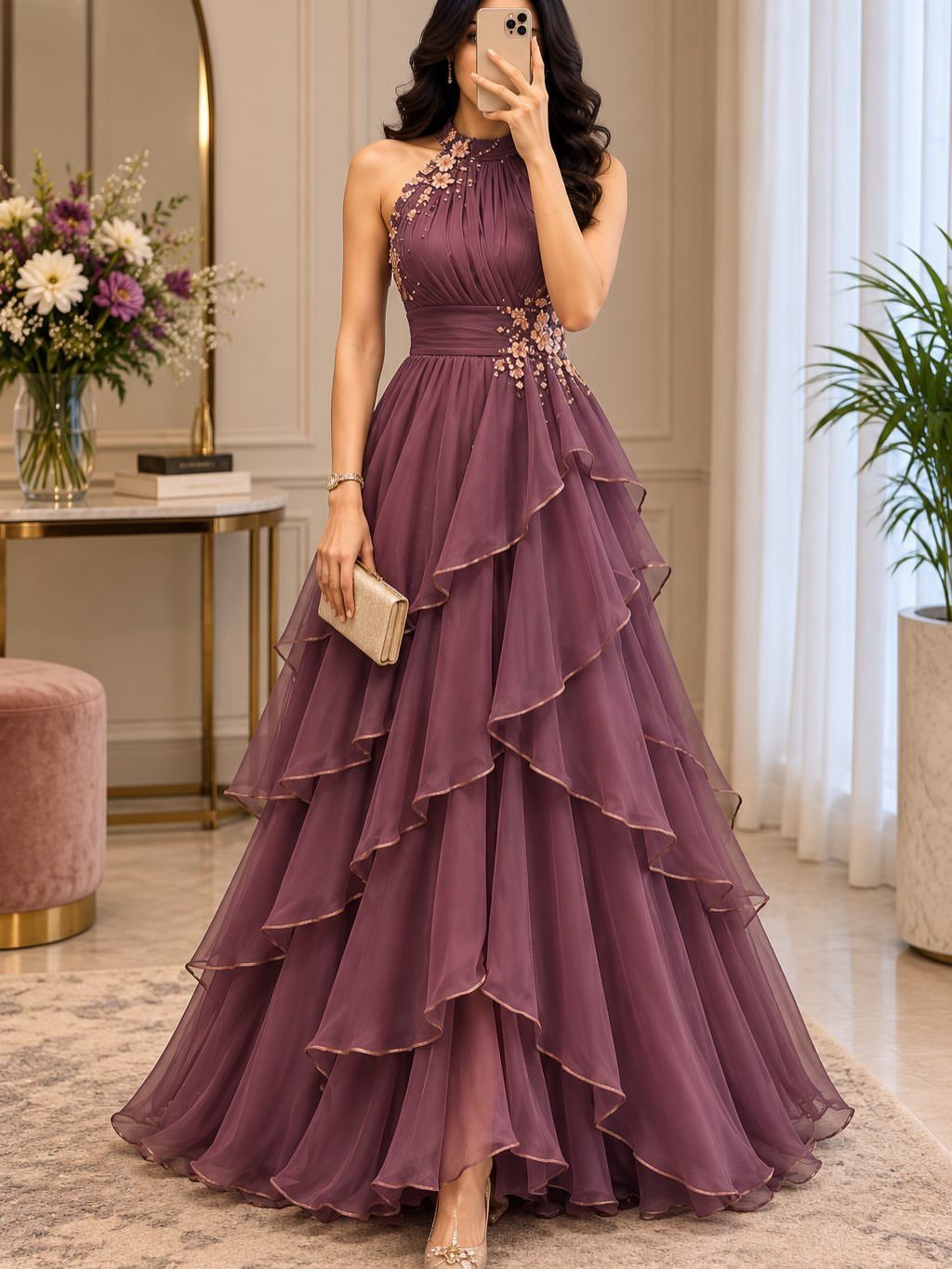
The halter neck wraps fabric around the neck and leaves the shoulders bare, drawing a long vertical line that suits toned arms and a smaller bust.
Beaded embellishments at the neck add weight that keeps the top from feeling too bare.
The trade is mobility: your neck carries the dress, and heavy tiers pull down over hours.
I would check the closure, whether it ties, buttons, or hooks, and test reaching upward before committing. A metallic clutch in hand gives you somewhere to put your arms in photos.
This neckline photographs cleanly from the front and reads as formal without requiring a necklace.
6. Off-the-Shoulder Gown
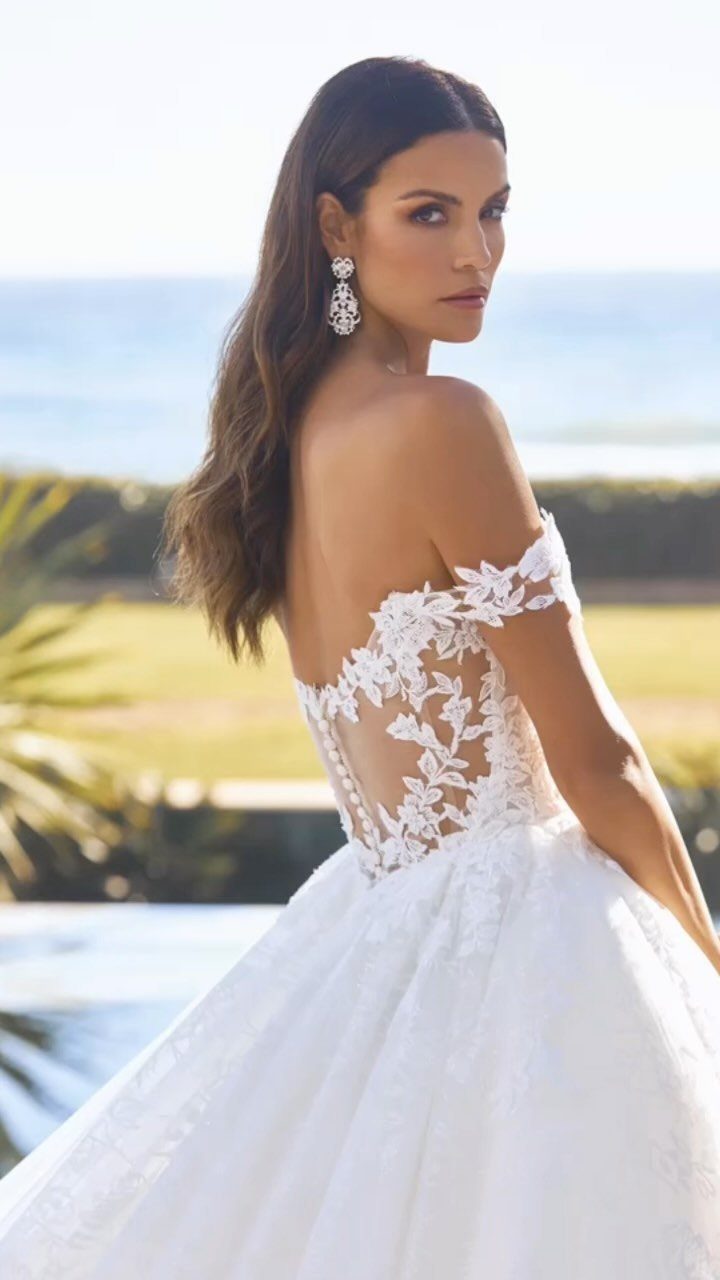
An off-the-shoulder gown sits below the collarbone, held by structure or elastic rather than straps, exposing the shoulders and upper chest. Lace adds texture that keeps the wide neckline from reading as blank space.
The cut suits narrow shoulders and draws attention to the face, though it can shorten the neck visually.
I would try the neckline sitting level; one side higher than the other reads as mistake, not style. For coverage, the upper arms stay hidden, which matters more in photos than in memory.
This is the romantic choice for coastal or outdoor ceremonies where bare shoulders feel right for the setting.
7. Tiered Gown
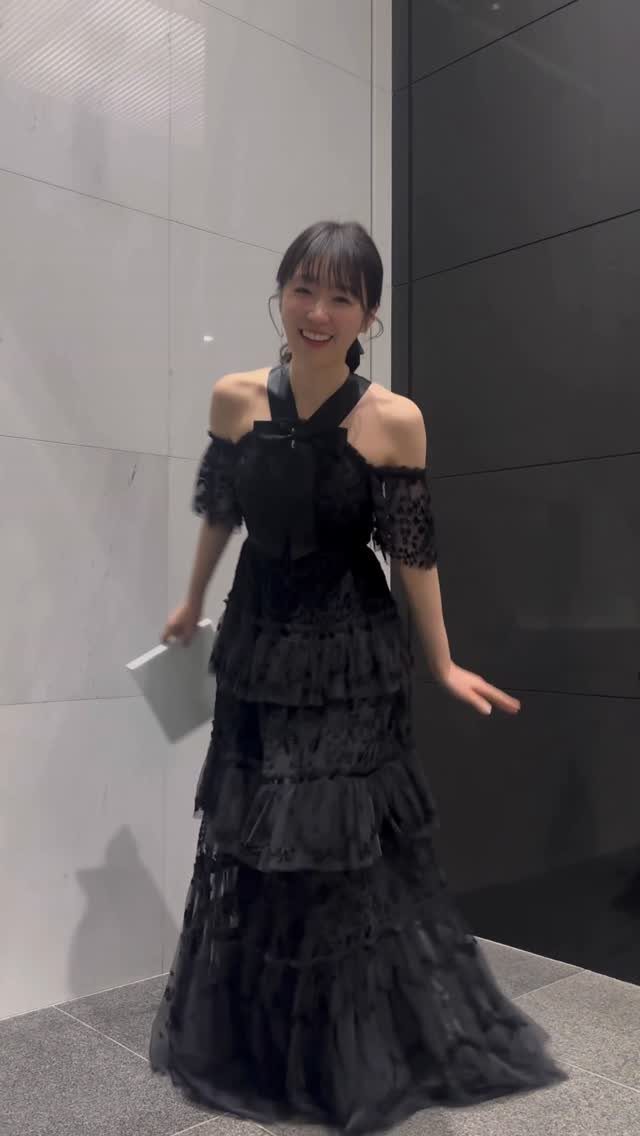
Tiered gowns stack graduated layers of fabric, each one shorter than the last, building volume from the hem upward rather than puffing out from the waist.
A tiered gown builds volume through stacked layers of fabric that move independently as you walk, which is why lace and chiffon are common choices; the weight stays manageable if each tier is slightly shorter than the one below it.
The silhouette suits women who want movement without the full architecture of a ball gown.
I would check where the top tier hits; starting too high adds bulk at the hip instead of the intended float. For casual summer events or a rehearsal dinner, this reads as dressed-up but not effortful.
If the tiers run too wide, a tie at the natural waist reins them in.
8. Maxi Gown
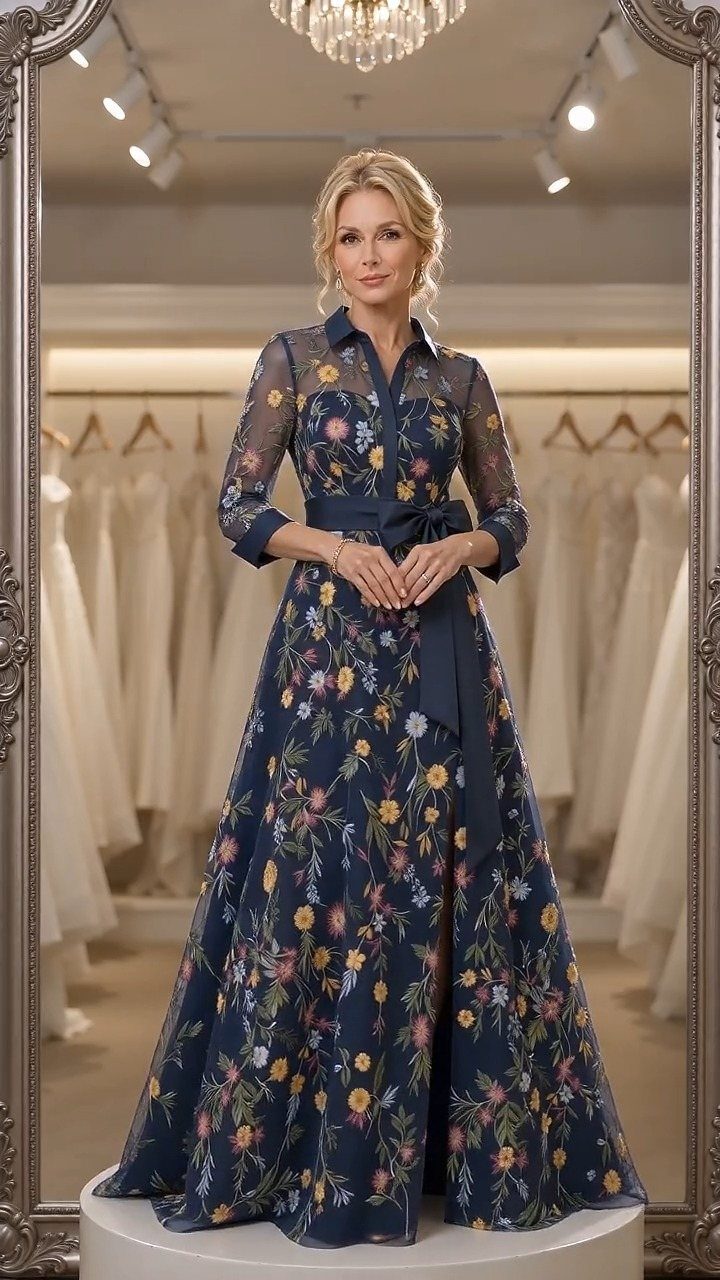
A maxi gown reaches floor or ankle in one continuous flow, usually cut from lightweight fabric that moves rather than holds shape.
This is the silhouette for women who want comfort alongside formality.
The loose skirt hides a flat or full hip equally, and the length elongates without requiring a heel. I would check the hemline against my tallest shoes before tailoring; too short and it becomes a midi that drags.
For outdoor ceremonies or any event with unpredictable weather, this travels better than structured alternatives and layers easily under a cropped jacket.
9. Cut-out Dress Gown
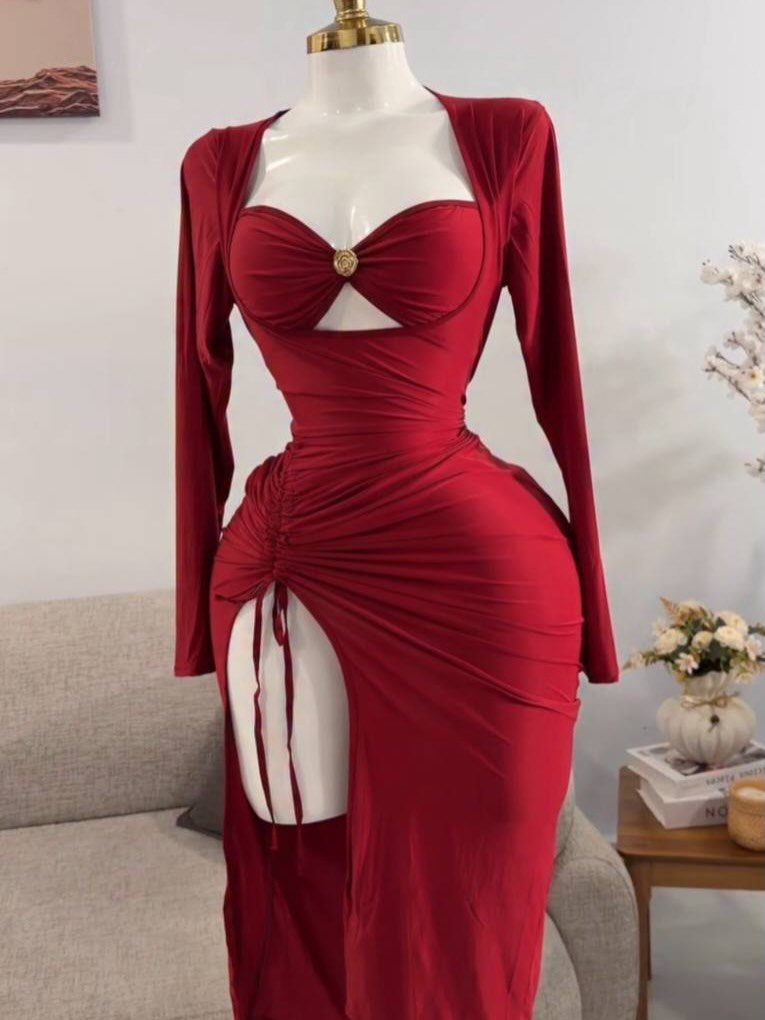
A single cut-out at the chest or waist draws the eye without requiring the constant adjustments that multiple openings demand; red satin in particular turns that one slit into a vertical line that lengthens the torso.
The long sleeves and high slit balance the exposure so the effect stays edited rather than scattered.
The placement determines who this flatters. A cut-out at the waist demands a midsection you want to spotlight; under-bust placement like the visible version draws the eye upward without requiring a flat stomach.
I would keep the rest minimal, no necklace competing with the neckline and no large earrings pulling attention sideways.
10. Backless Gown
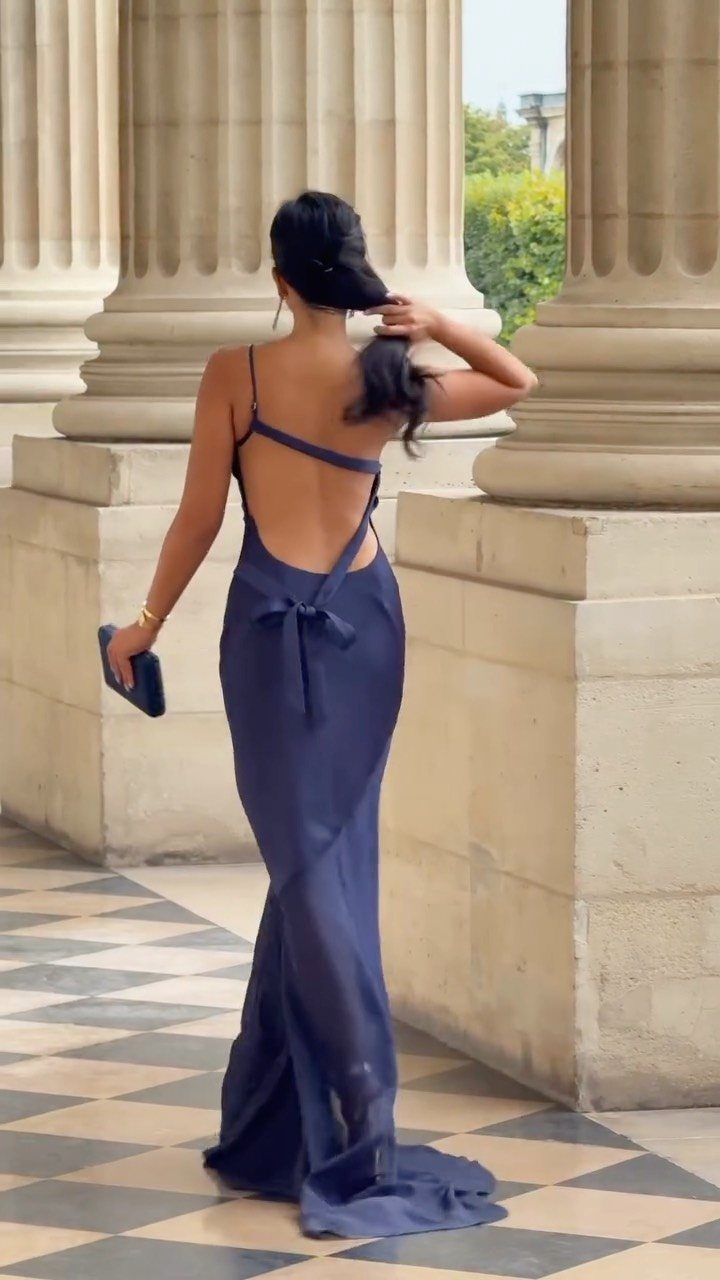
A backless gown turns the exit into the entrance, exposing the spine and shoulder blades to varying degrees depending on how low the fabric drops. The navy version uses thin straps that crisscross for structure without cluttering the open expanse.
The effect requires a foundation that does not show. Adhesive cups or a backless bodysuit work better than a standard strapless bra whose band would announce itself.
I would test the depth of the drop against my comfort sitting and leaning; a back cut to the waist demands different posture than one that stops at the shoulder blades.
For formal evenings where you will be photographed from behind, at a wedding ceremony or gala entrance, this delivers drama no necklace achieves.
11. Peplum Gown
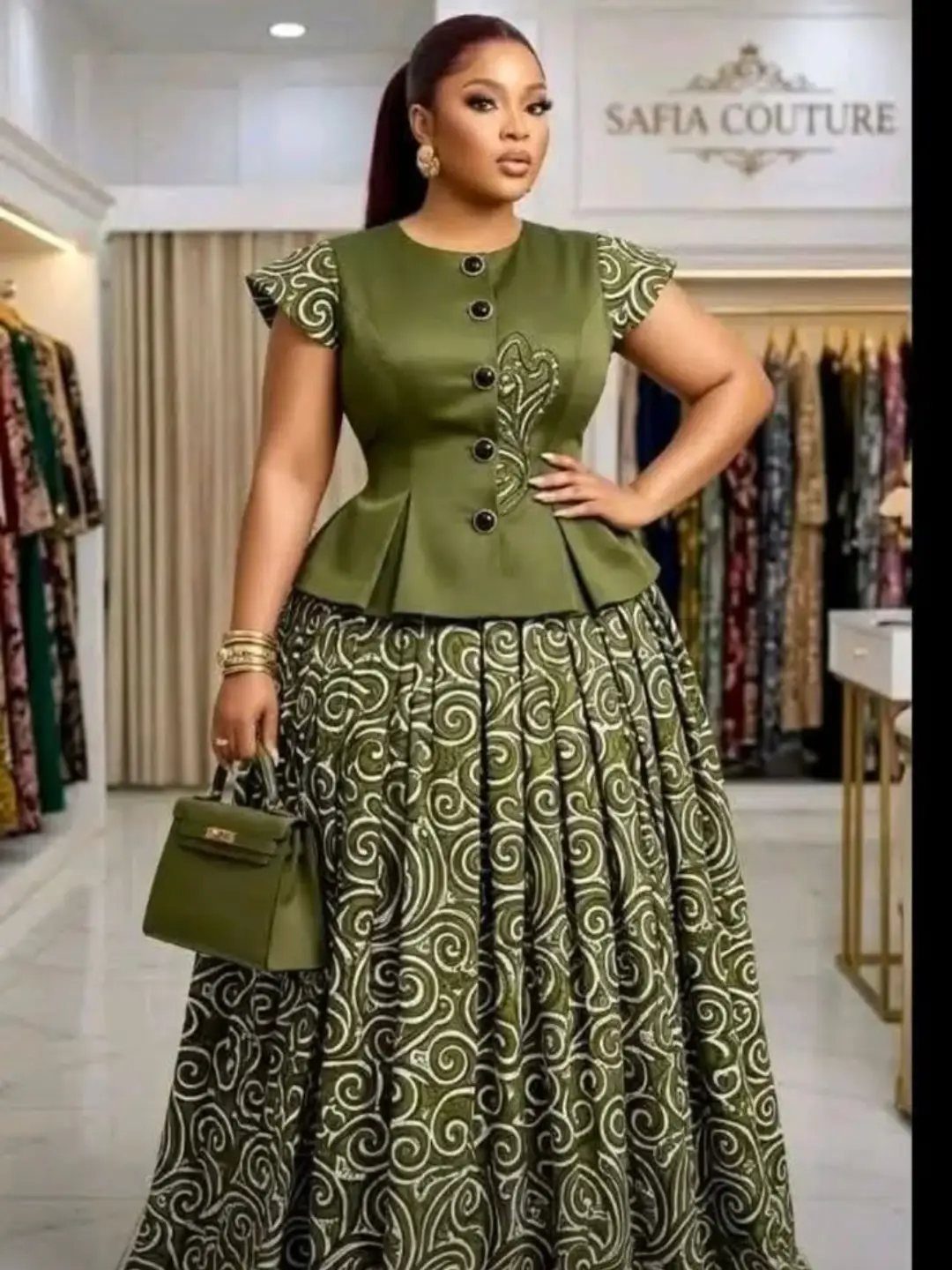
A peplum gown attaches a short flared ruffle at the waistline, creating the visual of a nipped middle and wider hip below it.
The olive version pairs this structure with a long patterned skirt, the peplum acting as a bridge between fitted bodice and flowing lower half.
The ruffle adds volume where narrow hips need it, balancing broad shoulders or a straight torso. I would choose a fabric that holds the peplum’s shape, cotton faille or structured silk, rather than anything that collapses against the skirt.
The waist seam must sit exactly at the natural waist; higher and it shortens the torso, lower and it thickens the middle.
For office celebrations or semi-formal dinners where you want polish without full evening drama, this reads as considered and current.
12. Cape Gown
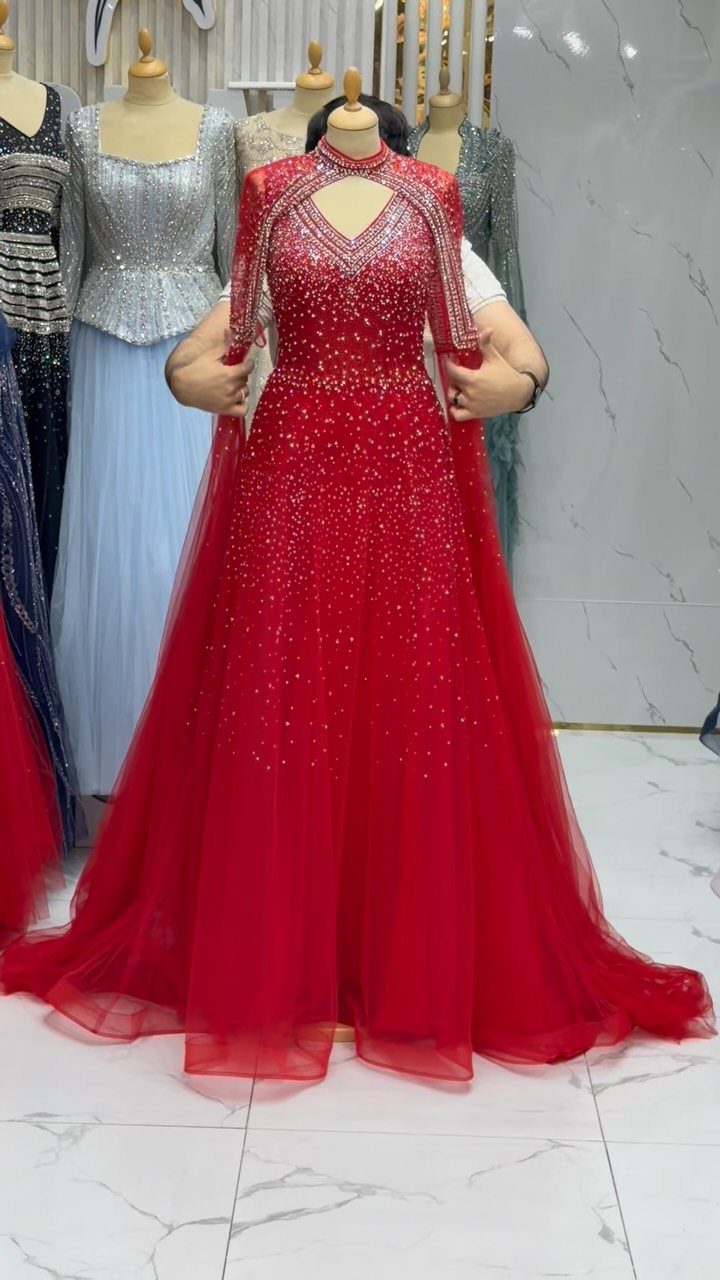
A cape gown attaches flowing fabric at the shoulders or back, replacing or layering over sleeves with something that moves independently. The red beaded version uses sheer overlay, the cape catching air while the bodice underneath carries the actual structure.
This silhouette shoulders its own drama, so jewelry stays minimal and hair works best up or swept to one side.
I would check the attachment points; capes that hook at the neckline can pull, and ones sewn at the shoulder need to sit flat to avoid bulk.
The length matters for practical movement, a floor-length cape trailing behind requires conscious handling on stairs.
For red-carpet events or any occasion where the photograph matters as much as the evening, this guarantees a frame that no standard gown achieves.
13. Asymmetrical Hem Gown
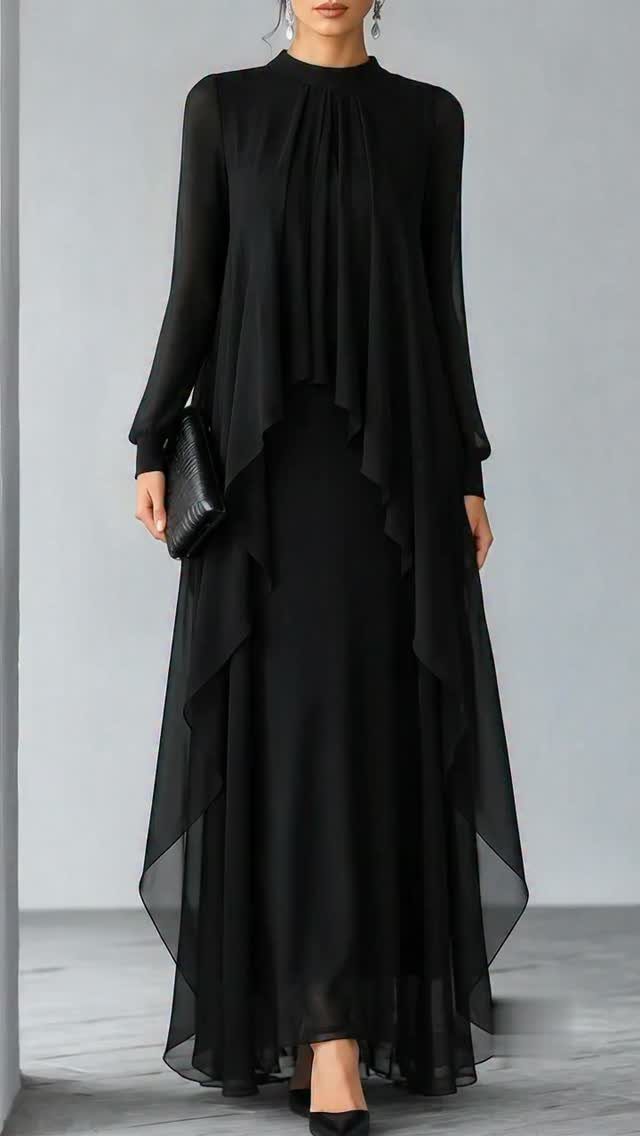
An asymmetrical hem drops in staggered points or slanted layers, creating movement that a straight edge cannot match. Chiffon keeps the drape fluid so the uneven line reads intentional, not accidental.
The cut adds vertical interest that elongates a shorter frame, though the eye travels to the legs and the shoes you pair with it.
I would avoid flats that compete with the hemline; a simple sandal or pump lets the angle stay the focal point. A high neck and long sleeves balance the leg exposure, keeping the overall coverage formal.
For events where you want to look dressed without the full architecture of a ball gown, this delivers shape in a lighter package.
14. Deep V-Neck Sequin Gown
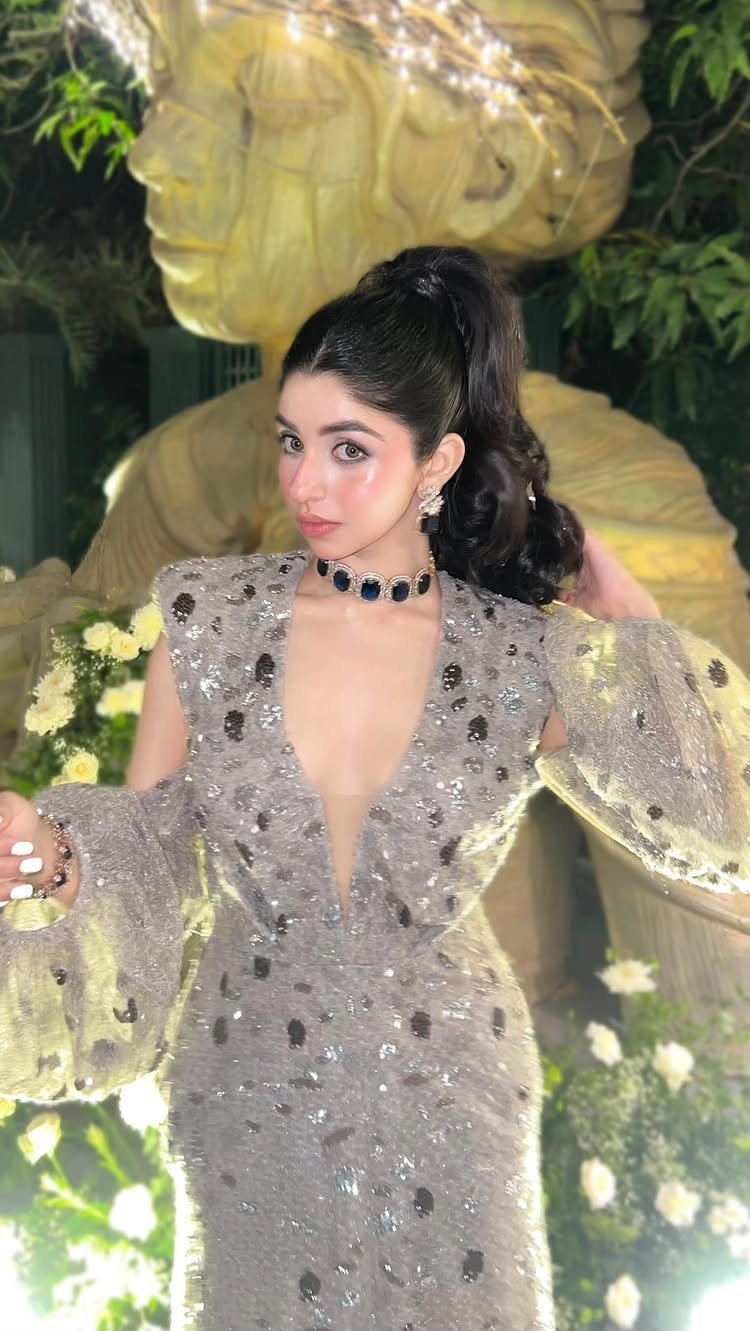
A deep V-neck sequin gown uses its neckline to break up the shimmer, creating a vertical channel of skin that keeps the sparkle from reading as costume.
The plunging line elongates the torso and draws the eye upward, which suits women who want to highlight the bust without adding bulk.
Sheer detached sleeves give arm coverage without the heat of full fabric; I would check that the attachment stays secure through raising your arms.
Sequins photograph intensely, so the depth of the V matters more in pictures than in the mirror.
For galas or formal evenings where the dress must read as expensive, the combination of coverage and exposure hits the mark.
15. Masquerade Costume Gown
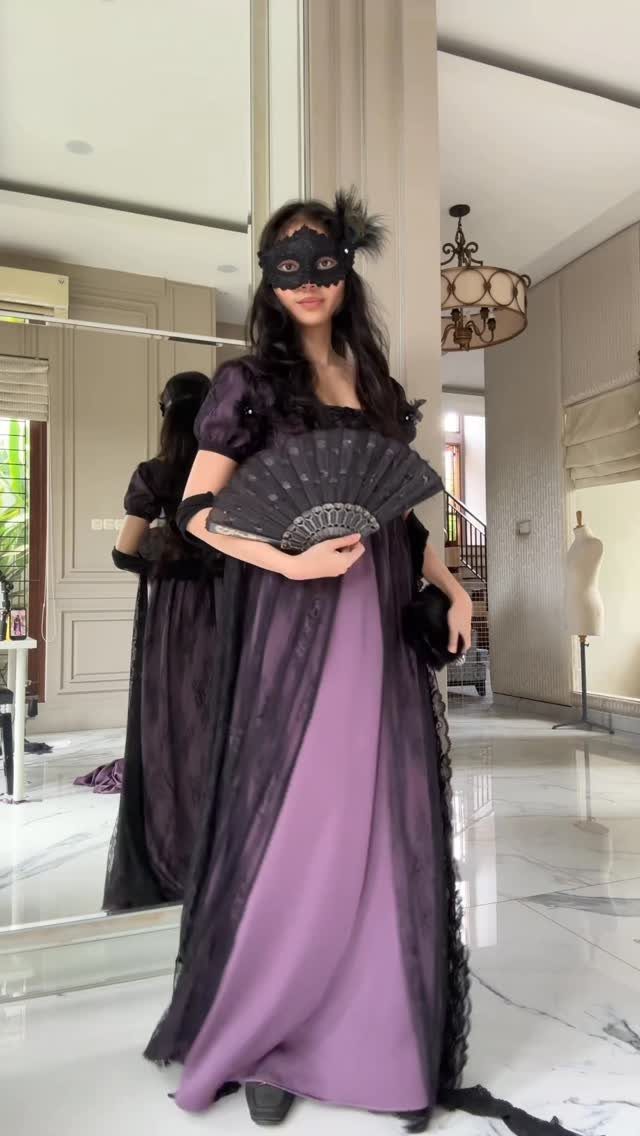
A masquerade costume gown commits to theme: Regency-inspired silhouettes, rich color, and props that complete the character. A purple and black pairing reads period without requiring historical accuracy.
Before trying this, decide how far you want to carry the reference.
A mask and fan are easy to hold and set down; full gloves or a headdress demand more planning. I would check the venue’s temperature, since heavy fabric and sheer overlay together trap heat when rooms run warm.
For themed balls or Halloween galas where half the guests make an effort and half go further, this sits comfortably in the further camp.
16. One-Shoulder Evening Gown
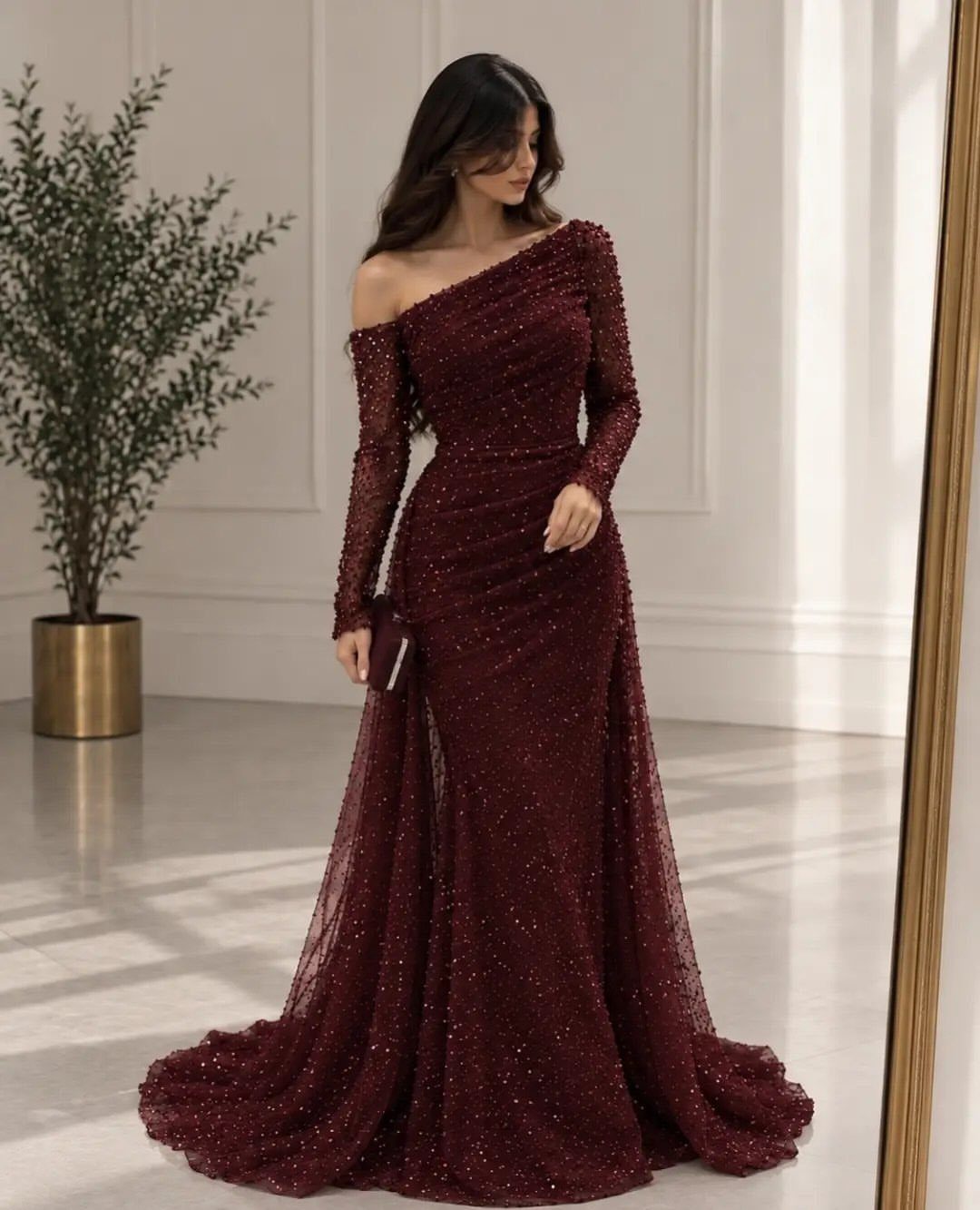
A one-shoulder evening gown drapes the full bodice from a single point, leaving one arm and shoulder exposed while the other stays covered. The asymmetry creates a diagonal line across the torso that visually narrows a wider frame.
The single sleeve must carry enough structure to support the dress; I would check that the internal boning or built-in bra does not shift weight to one side and cause the neckline to gape.
Sequins add evening weight that helps the fabric fall cleanly.
For formal events where strapless feels expected and off-the-shoulder too romantic, this reads as architectural and modern.
17. Strapless Floral Embroidered Gown
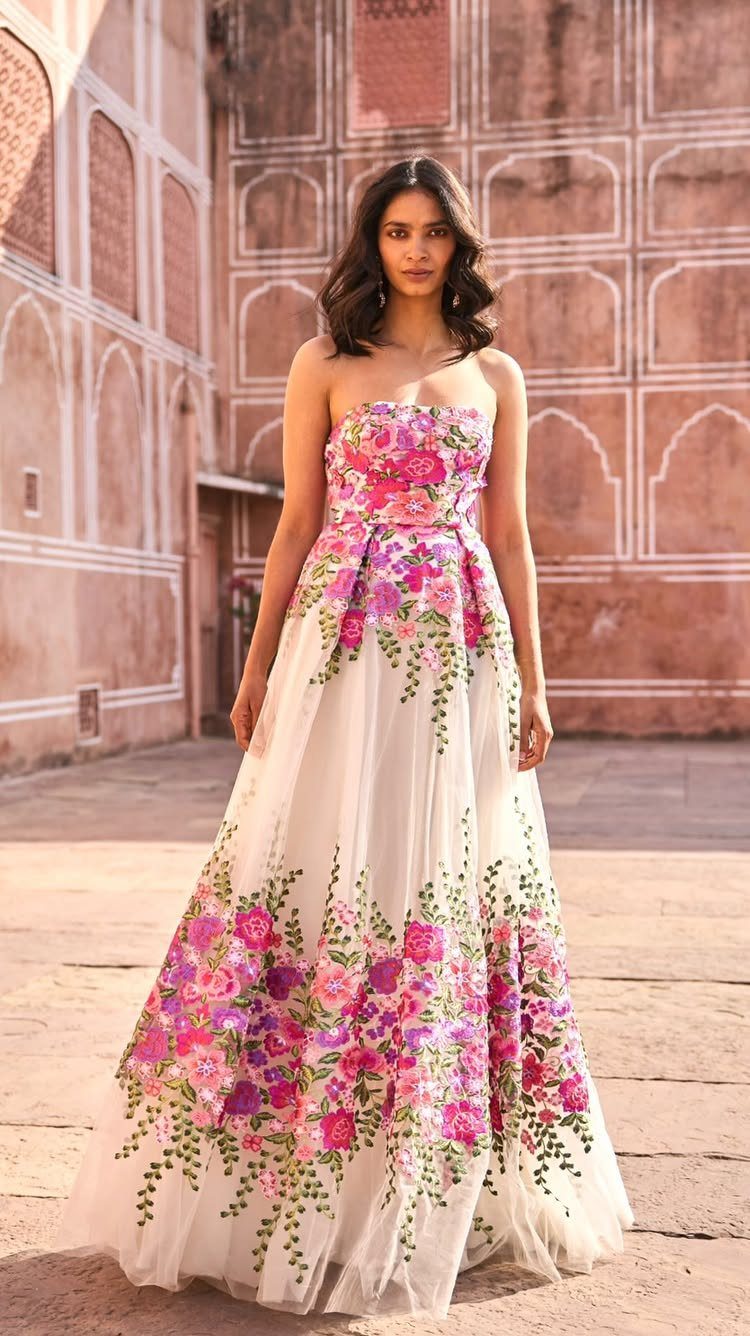
A strapless floral embroidered gown replaces jewelry with needlework, the bodice and hem carrying the decoration so accessories stay minimal.
The maker of the visible version used multi-color floral lace embroidery and 3D lace patches placed at the top and near the hem, which gives the eye specific places to rest.
Without straps, the bodice must fit precisely; boning or corset structure holds it in place, and I would budget for tailoring at the bust.
The white ground with bright embroidery suits daytime or destination events more than strict black tie, where simpler reads as richer.
For garden weddings or outdoor celebrations where the setting already supplies color, this meets it rather than competing.
18. Indian Embellished Anarkali Gown
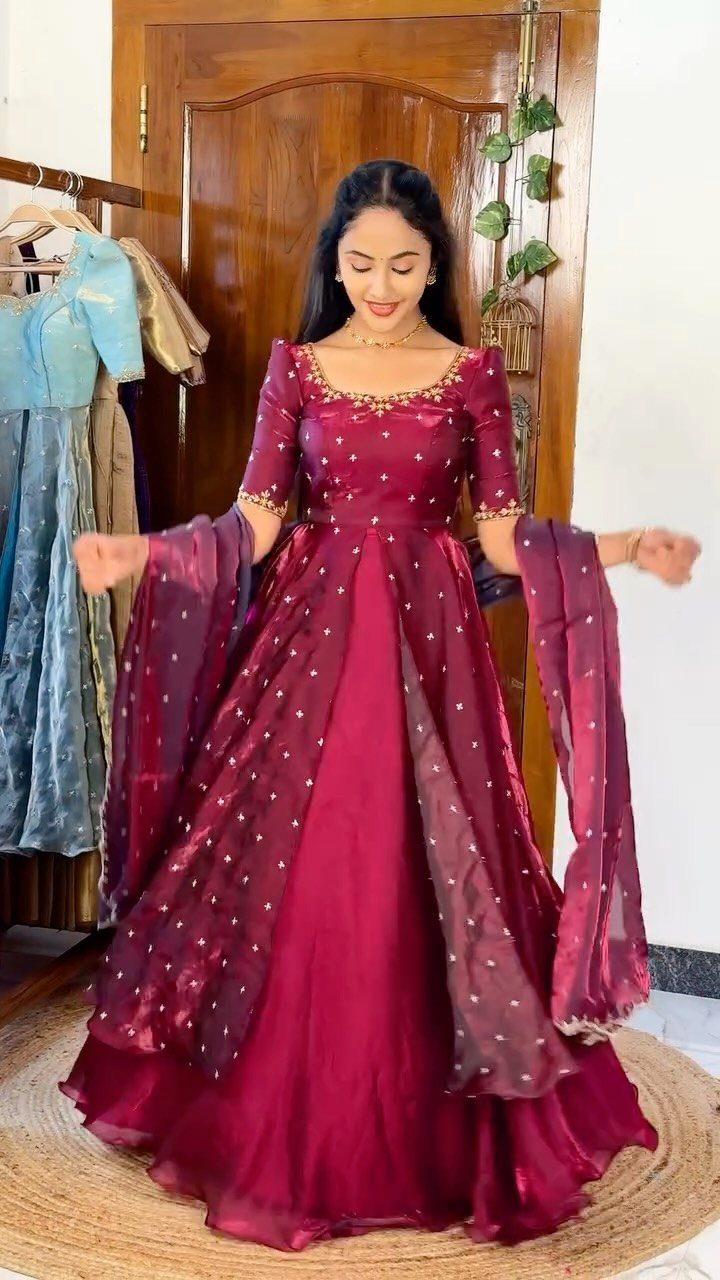
An Anarkali gown takes its name from a Mughal silhouette: fitted through the bodice, then flaring dramatically from below the bust to floor length.
Gold embroidery on a maroon ground carries the embellishment traditionally, and the matching sheer dupatta drapes over the arms or head for coverage during ceremony.
The volume through the skirt suits women who want waist definition without hip emphasis; the flare begins high enough that the stomach and hips stay hidden in motion.
I would check the dupatta’s attachment or weight; a heavily worked one slides off shoulders without pins or careful draping.
For South Asian celebrations or fusion weddings where one outfit must carry from ceremony to reception, this silhouette has the history and the presence.
19. Dramatic Bow Accent Gown
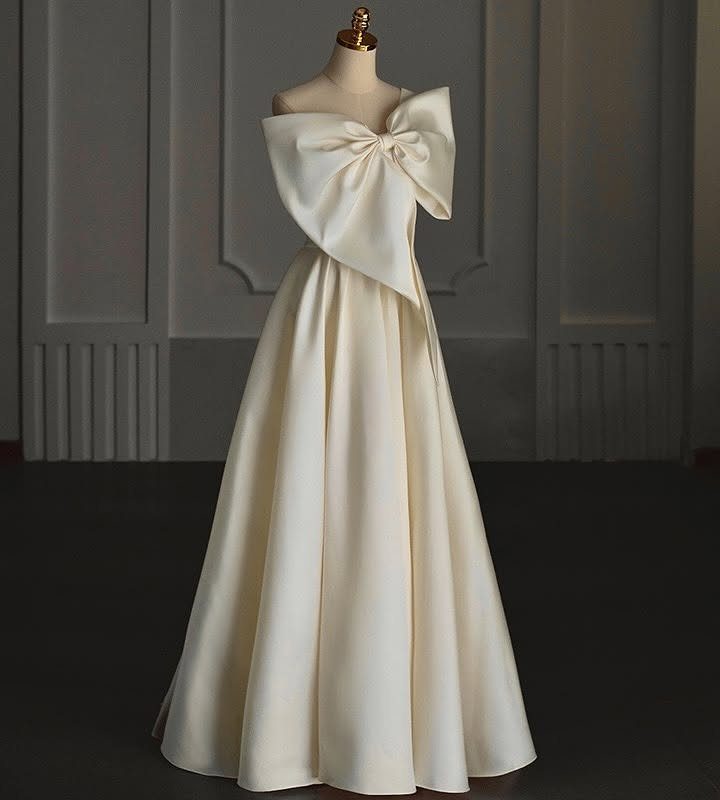
A sculptural bow at the neckline turns a simple strapless column into the entire statement, the fabric folded and pinned to hold its shape without drooping.
The visible version uses cream satin heavy enough that the bow stays upright; lighter fabric would collapse into a floppy ribbon.
This detail demands minimal jewelry, a small earring at most, since the bow occupies the space where a necklace would sit.
I would check the internal structure that anchors the bow; it needs boning or interfacing to keep the bodice flat beneath the volume.
For formal occasions where you want one memorable element rather than all-over embellishment, this reads as confident and edited.
Choosing the Right Gown
Start with the event, not the mirror.
A black-tie invitation sets the floor for formality; a garden wedding sets the ceiling. Buy for the stricter dress code and you can always soften with accessories, but a too-casual gown in a ballroom reads as mistake.
Your body shape narrows the field faster than trends ever will.
Pear-shaped frames carry ball gowns and A-lines well because the volume below balances a smaller top. Hourglass figures can take the mermaid or sheath that follows their existing line, though both require exact fit to avoid looking squeezed.
Straight body types gain shape from the same structured silhouettes that flatter hourglass, since the fabric supplies what the body does not.
The waistline placement matters more than the skirt shape.
Too low and it thickens the middle; too high and the torso disappears. I check this measurement before color, before fabric, before anything else.
Accessorizing Gowns
A gown that does its own talking needs less help.
The cape gown, the tiered gown, the backless gown, the one-shoulder evening gown, each carries enough architecture that jewelry becomes punctuation rather than statement. In those cases, a small earring or a single bracelet finishes without competing.
When the gown is simpler, the accessory carries more weight. A sheath or A-line in plain silk gives you room for a substantial necklace or a clutch with real presence.
The balance is visual weight: heavy fabric or heavy detail on the gown, light on the body; simple gown, stronger accent.
Shoes matter more than bags because they affect posture and comfort across hours.
I would choose the heel height before the event, not in the store, and walk a carpeted surface in them if possible. A shoe that shifts your weight changes how the gown hangs.
Fabric Choices
Silk, satin, and chiffon are the standards for a reason.
Silk takes dye deeply and catches light with a soft glow rather than a hard shine. Satin, with its dense weave, holds structure for ball gowns and peplums that need to keep their shape through an evening.
The weight of the fabric determines what the silhouette can do. Heavy satin builds volume in a ball gown skirt; the same weight in a sheath would read as armor.
Stretch lace or structured satin works for a mermaid because the body underneath needs to move, and the fabric must recover its line after each step.
The lining is the first thing I check before buying any gown.
A silk gown with synthetic lining traps heat; chiffon without enough underlayer goes sheer in camera flash. The face fabric gets the attention, but the layer against your skin decides whether you stay through the last dance.
Frequently Asked Questions
What are some other names for gowns?
Gowns go by several names depending on context and era. Academic dress uses the cap and gown combination, while historical terms include the bedgown, bouffant gown, coronation gown, tea gown, and nightgown.
In modern usage, evening gown and wedding gown are the most common formal variants, and hospital gown covers the medical context. The word itself signals length and occasion rather than one fixed shape.
What are the different styles of formal gowns?
Formal gowns break down into 4 core silhouettes: ball gowns with their fitted bodice and full skirt, A-line gowns that flare gently from the waist, mermaid gowns fitted through the knee before flaring, and sheath gowns that fall straight from shoulder to floor.
Each reads at a different level of drama, with ball gowns at the most ceremonial end and sheath gowns offering restrained elegance. Fabric choice and neckline then further distinguish one formal gown from another.
What occasions are suitable for wearing a gown?
Gowns fit events where the dress code actually means it: black-tie galas, formal weddings, proms, homecomings, and red-carpet events.
A ball gown or mermaid silhouette suits these highest-formality settings, while a maxi gown or tiered style works for outdoor ceremonies and rehearsal dinners where comfort and movement matter.
The venue’s practical demands, stairs and grass and unpredictable weather, should shape the choice as much as the invitation’s stated dress code.