Sunday morning asks for something quieter than weekday denim, and the 12 ideas below run from a statement hat with a modest dress to a tiered maxi with long sleeves.
The 12 outfits below move from a plain t-shirt with a flowing skirt to a cape top and pleated maxi, and the right one depends on how formal your pew tends to run: a hat and gloves tradition, or sleeves and a knee-length hem.
I hold tulle up to a window before leaving the house, because light changes everything.
1. Statement Hats with Modest Dresses
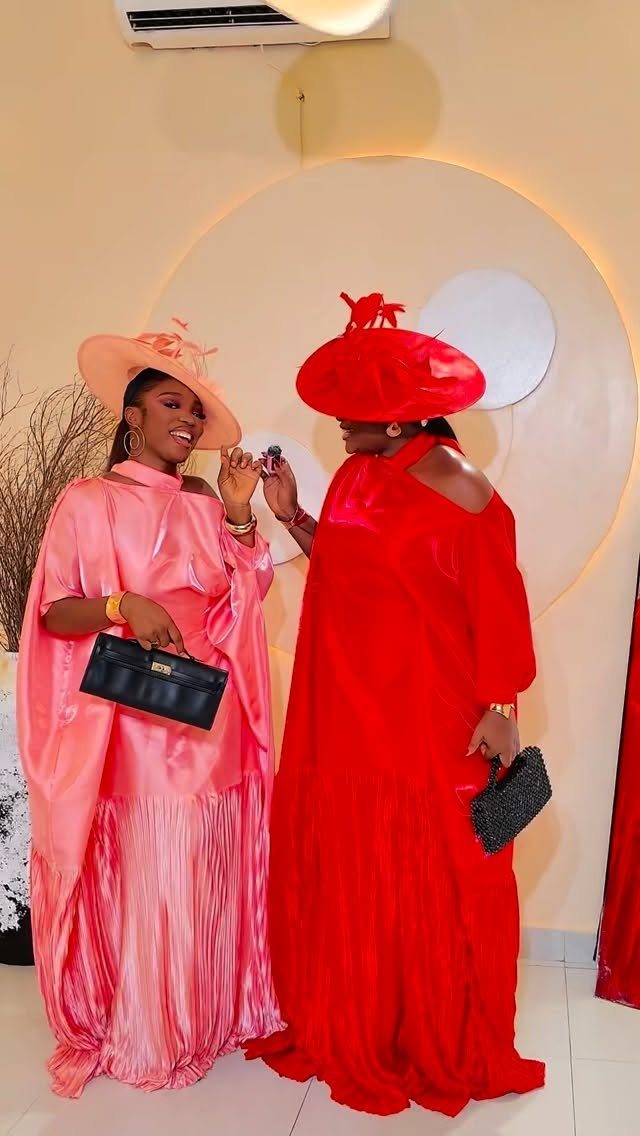
A structured hat does the heavy lifting that jewelry and bold color usually attempt. It signals Sunday intention without asking the dress to work harder.
A flowing maxi dress with a defined waist gives the hat something to work with without competing for attention.
The hat carries the personality: a formal church topper, a wide structured brim, or an elegant fascinator depending on your community’s tradition.
Low court heels and a simple box clutch stay quiet underneath. Gloves fit more formal services where that tradition still holds.
A hat at church carries weight that a necklace or bracelet never quite matches.
2. Versatile Everyday Dresses
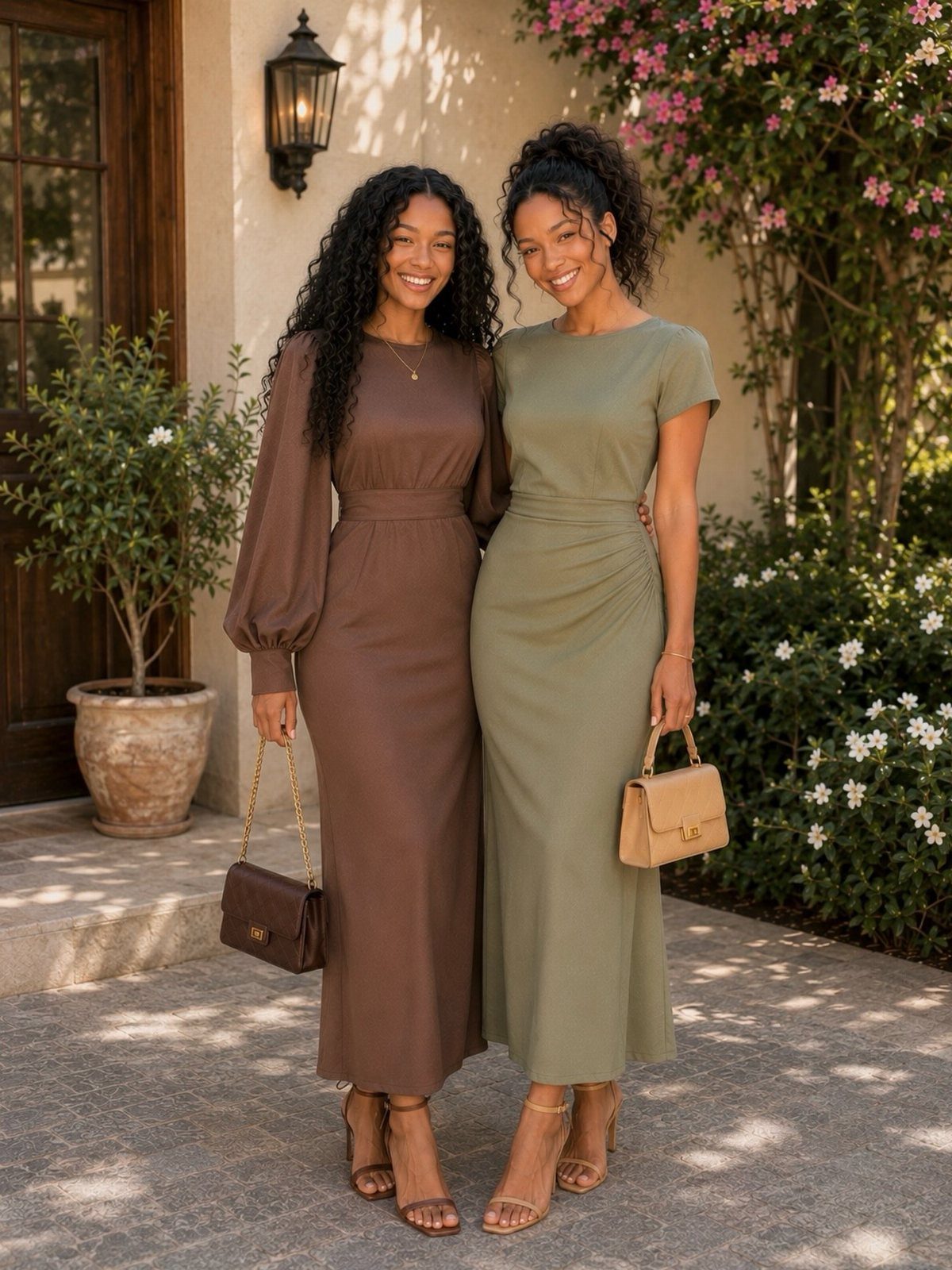
The dresses that earn their closet space are the ones that survive Monday through Saturday scrutiny too.
Look for sleeves and a hem that falls at or below the knee, in a fabric that does not read as sleepwear or beach cover-up.
A brown maxi with long sleeves handles a Wednesday office meeting as calmly as it does a pew; olive green leans more casual but still pulled-together. Small handbags keep both versions from feeling like costumes.
Breathable fabrics matter most in packed sanctuaries. Test the dress sitting, bending, and walking before committing.
3. Floral Midi Dresses
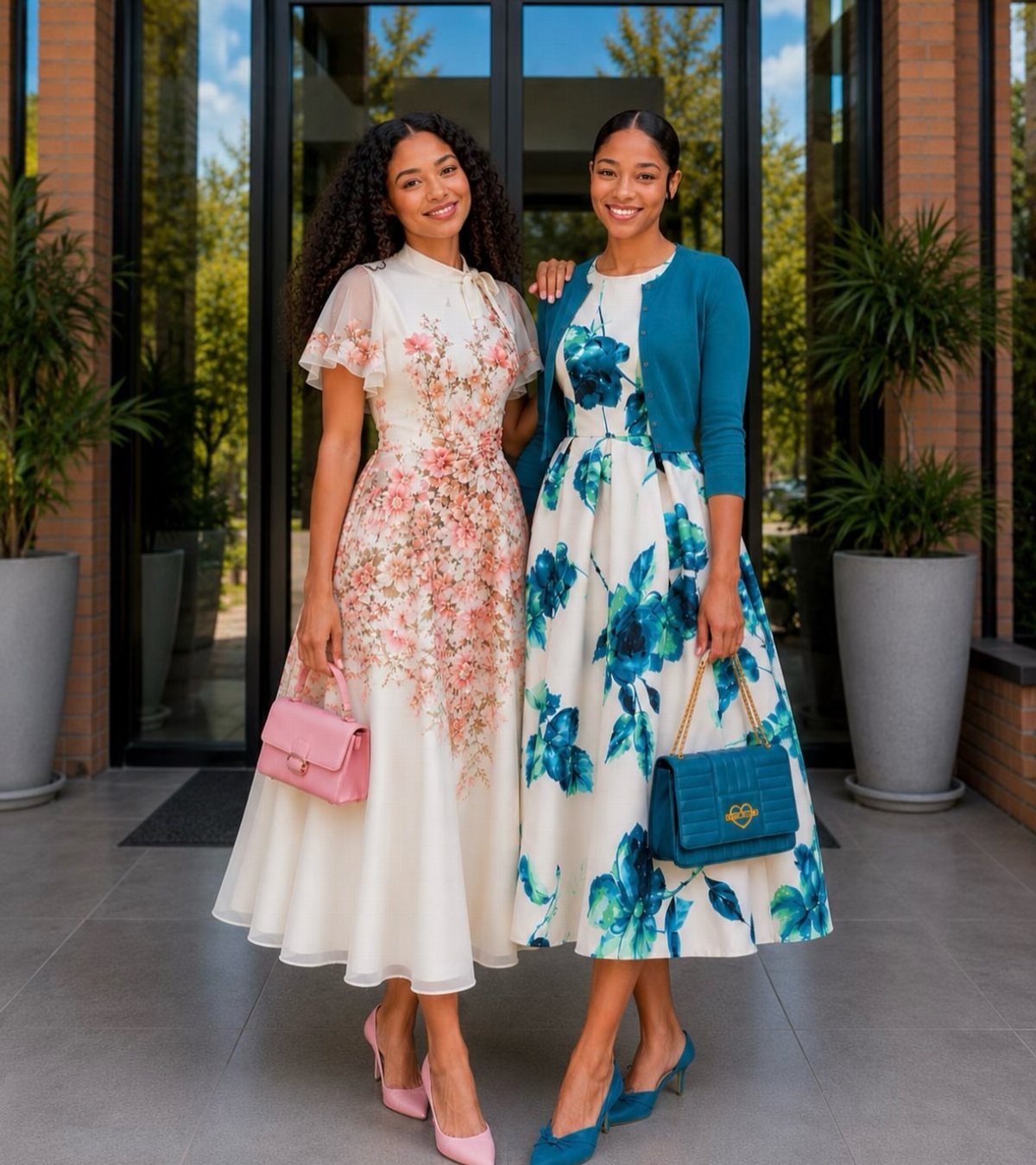
Florals for church separate themselves from vacation prints by scale and tone.
Choose smaller repeats in dusty, muted palettes rather than saturated tropical blooms.
The midi length handles the modesty on its own; throw a blazer in cream or ivory over it and the print suddenly has borders, a shape, a reason to be there. Block-heeled pumps or pointed flats both work.
This is the outfit that looks like you planned it even when you did not.
4. Gingham Maxi Dresses
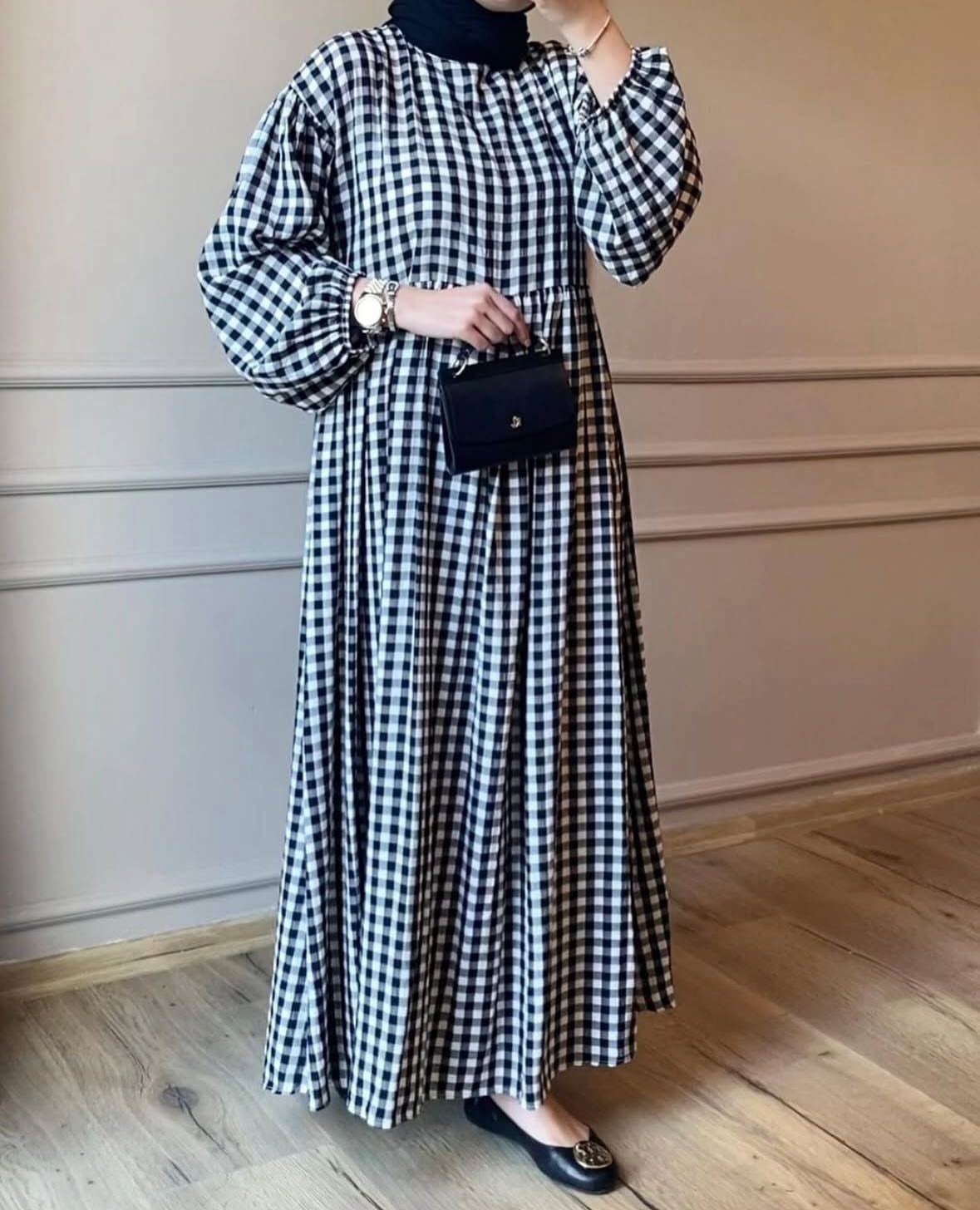
Gingham carries a picnic reputation until the scale shrinks and the cut grows up.
A black-and-white check in a maxi length with a covered neckline moves the pattern firmly into Sunday territory. Small checks read more formal than large ones; a neck scarf or under-cap adds coverage where needed.
The pleated construction catches light and moves well without demanding attention. This kind of quiet dressing passes in almost any pew, any denomination, any Sunday.
5. Modest Dresses
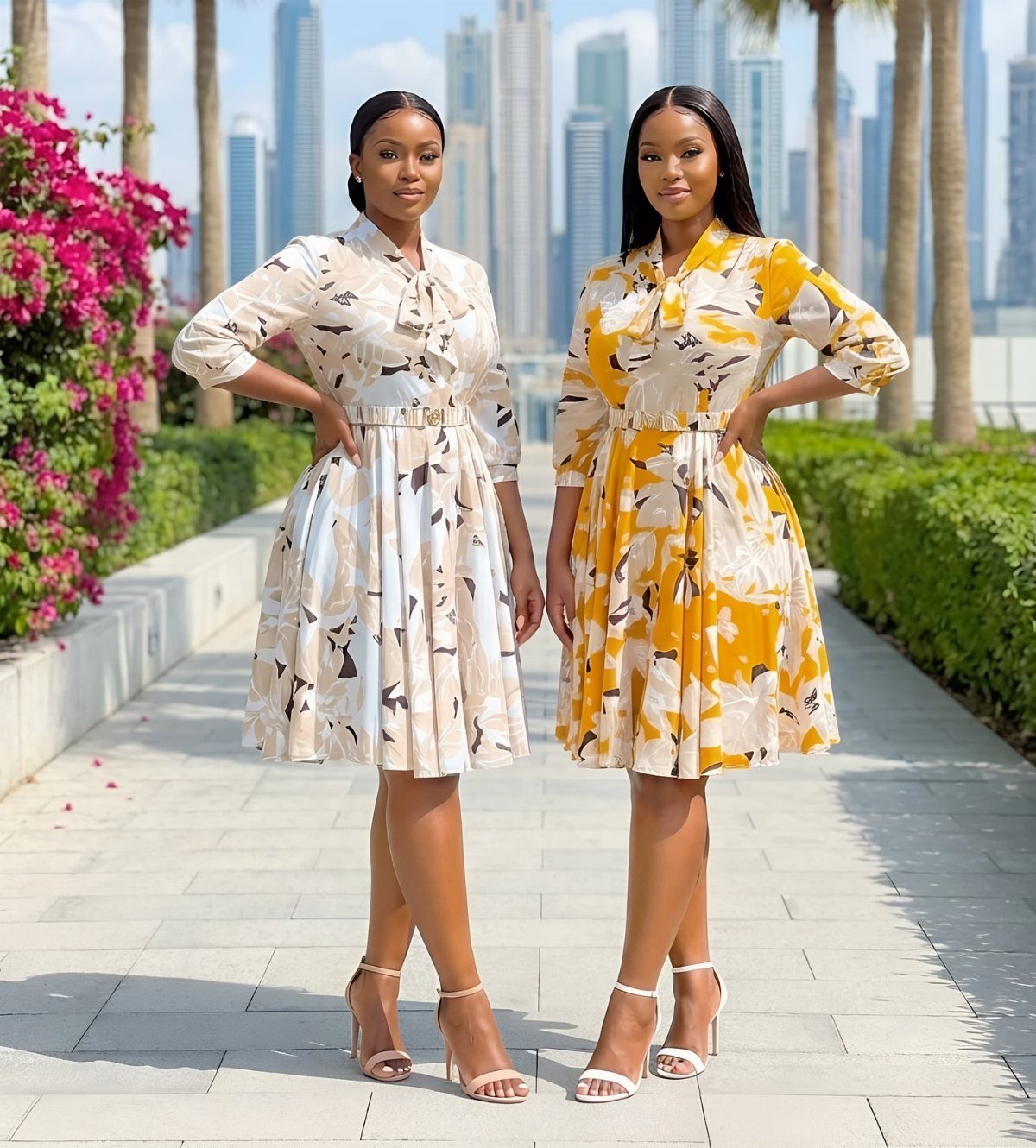
Patterned knee-length dresses with high necklines photograph as complete outfits because the coverage itself becomes the design.
Look for long sleeves or three-quarter lengths in breathable fabrics that do not cling. A high neckline replaces the need for layers; the knee-length hem handles modesty without the extra fabric of a maxi.
When a dress turns out sheerer or clingier than it looked online, a fitted crewneck underneath the bodice and a long half-slip in a matching tone fixes it without adding visible bulk.
Check the outfit in daylight, then sit, bend, and walk comfortably before Sunday morning.
6. Monochrome Skirt and Top Set
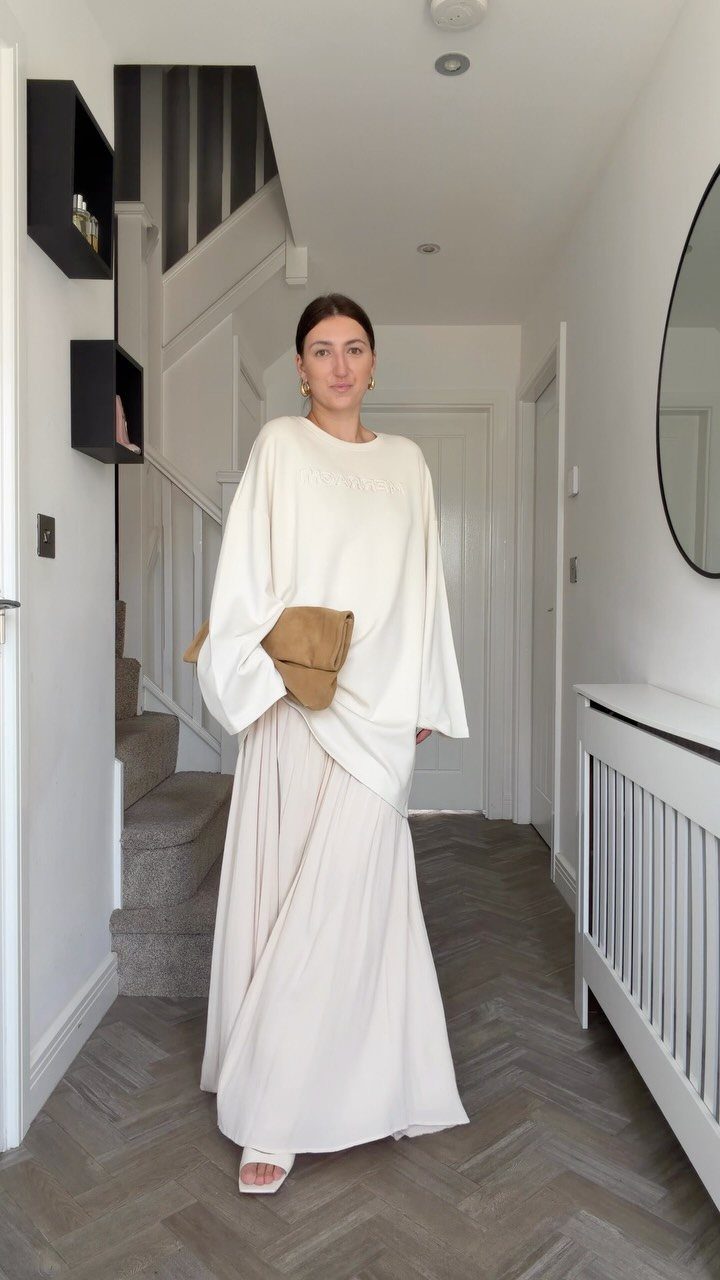
Matching a loose long-sleeved top to a flowing maxi skirt in the same tone creates a column effect that elongates without tailoring.
The cream version works because the oversized sweatshirt and skirt share a relaxed weight; anything too stiff would fight the easy shape.
Sandals keep the look from overheating, though a closed-toe flat or low boot shifts the same set into cooler months. A tan clutch breaks the monochrome just enough.
This is the fastest route to looking like you thought about it when you barely had time to think.
7. T-Shirt with Flowing Skirt
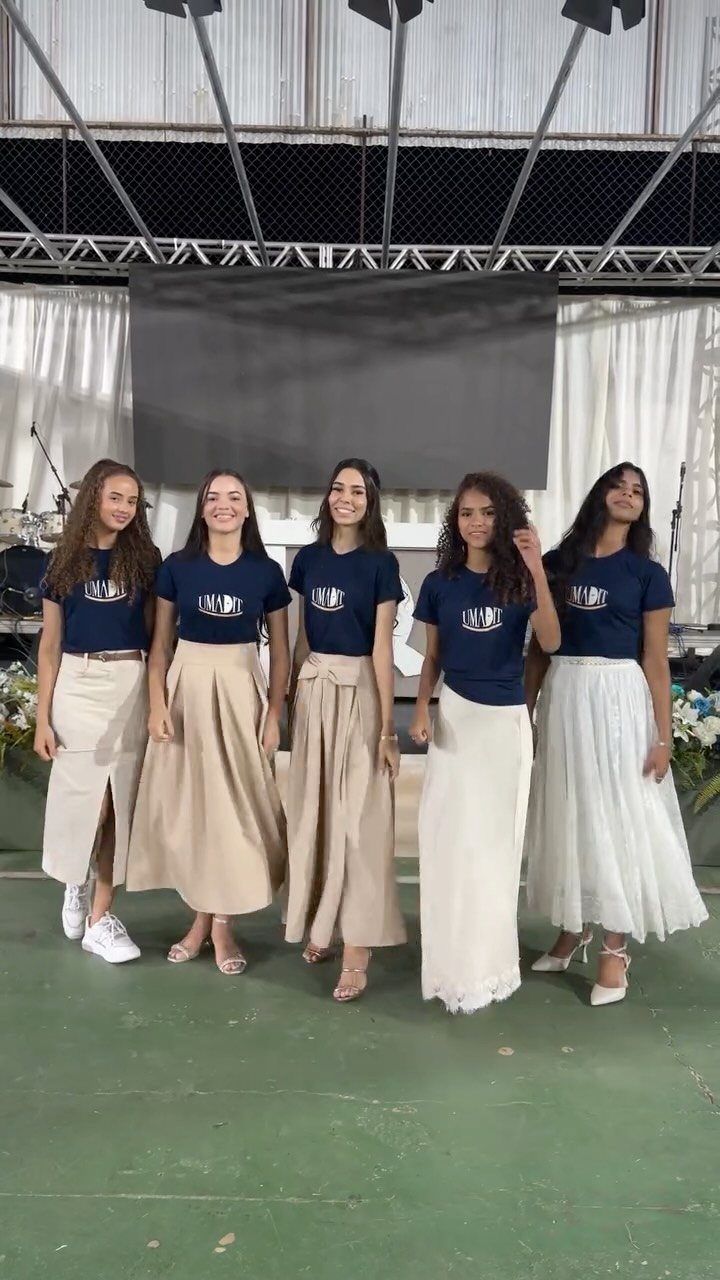
A plain t-shirt and a long skirt solve Sunday dressing with pieces most closets already hold.
Navy reads more intentional than a faded souvenir tee; pair it with a skirt that hits mid-calf or lower in a neutral tone that does not compete.
The skirt does the modesty work, the t-shirt keeps it from feeling like a costume.
Check the tee’s length untucked: it should not swallow your shape or ride up when you raise an arm. Cotton or linen skirts breathe better than synthetic linings in a packed sanctuary.
This is group-dressing made simple: everyone matches in spirit without matching exactly.
8. Matching Shirt and Skirt Sets
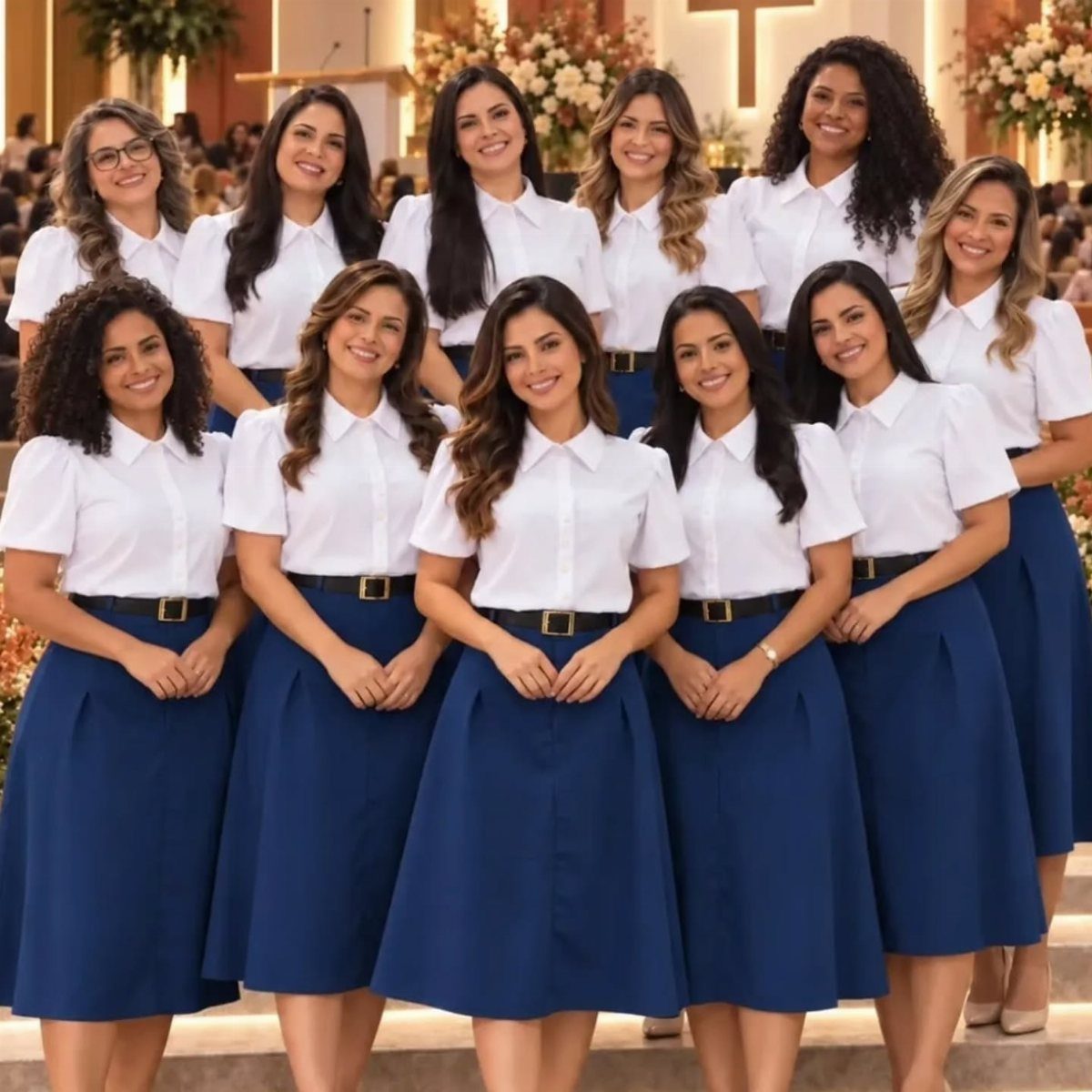
The white shirt and blue skirt combination is Sunday school uniform elevated to something a woman chooses for herself.
A short-sleeved button-down in cotton poplin stays crisp through a long service; tuck it into an A-line midi that skims without clinging.
A black belt defines the waist and breaks the block of color. The set reads as pulled-together because the pieces share a formality, not because they match exactly.
For a more formal service, swap the short sleeves for long and add a matching jacket in the same blue.
I like a structured mini bag and low heels with either set; the heels raise the hem just enough to keep it from sweeping the floor. This is the skirt suit’s quieter cousin, less pastel, less expected, equally appropriate.
9. Tulle Maxi Skirt Outfit
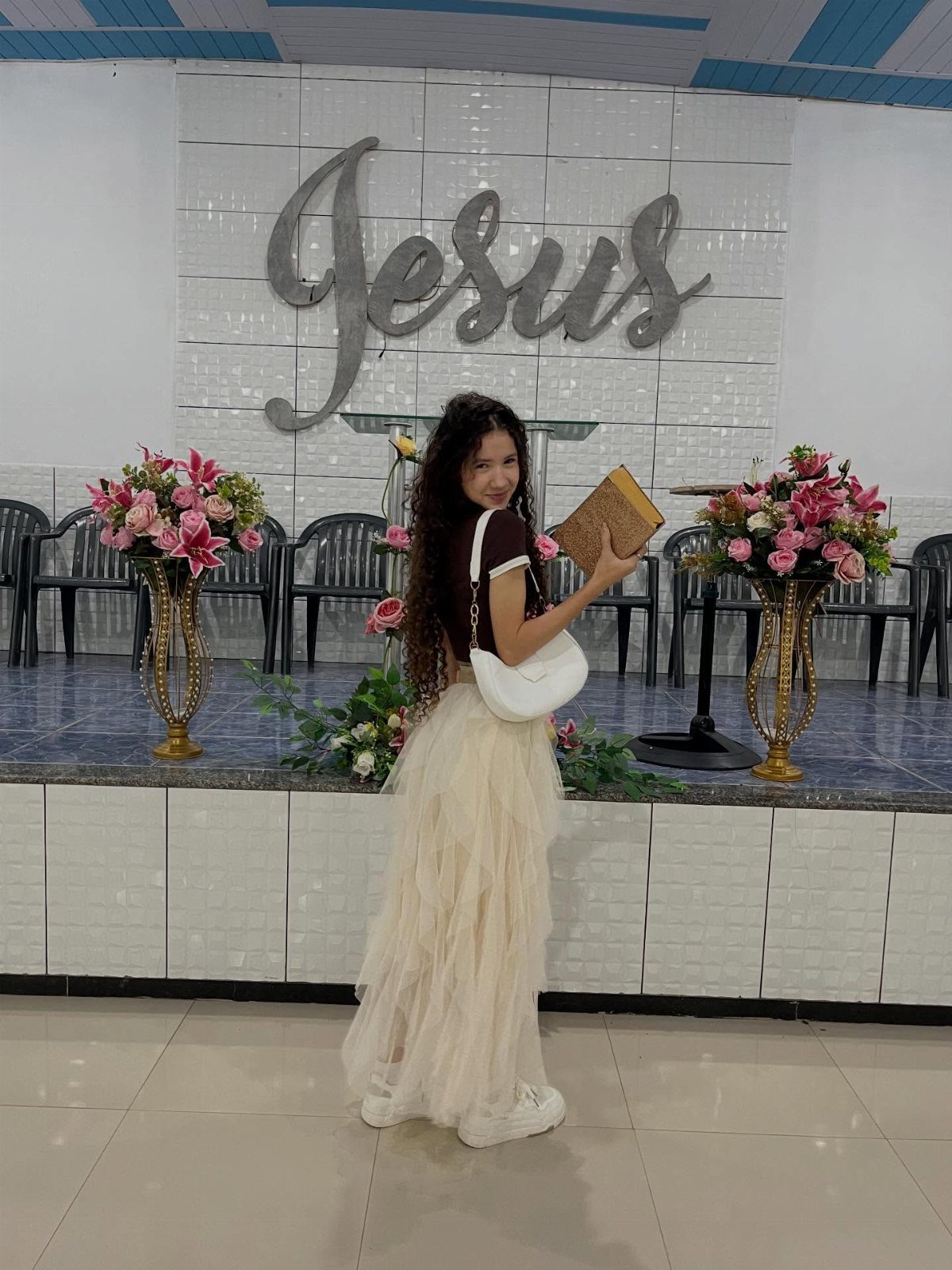
Tulle at church works when the volume stays in the skirt and the top stays grounded.
A cream tiered maxi in tulle or organza moves beautifully when you walk and photographs well without demanding attention.
Pair it with a fitted top in a dark, matte tone; the contrast keeps the skirt from reading as bridal. A tucked blouse creates the proportion a drop-hem would lose, though a well-cut crewneck works if the waist is defined.
Tulle can read bridal in full sun if the light goes straight through, so I hold the skirt up to a window before I leave the house.
Low block heels or kitten mules keep the hem from dragging. This is the outfit for a service where you want to feel dressed without the weight of a formal suit.
10. Sweater with Pleated Metallic Skirt
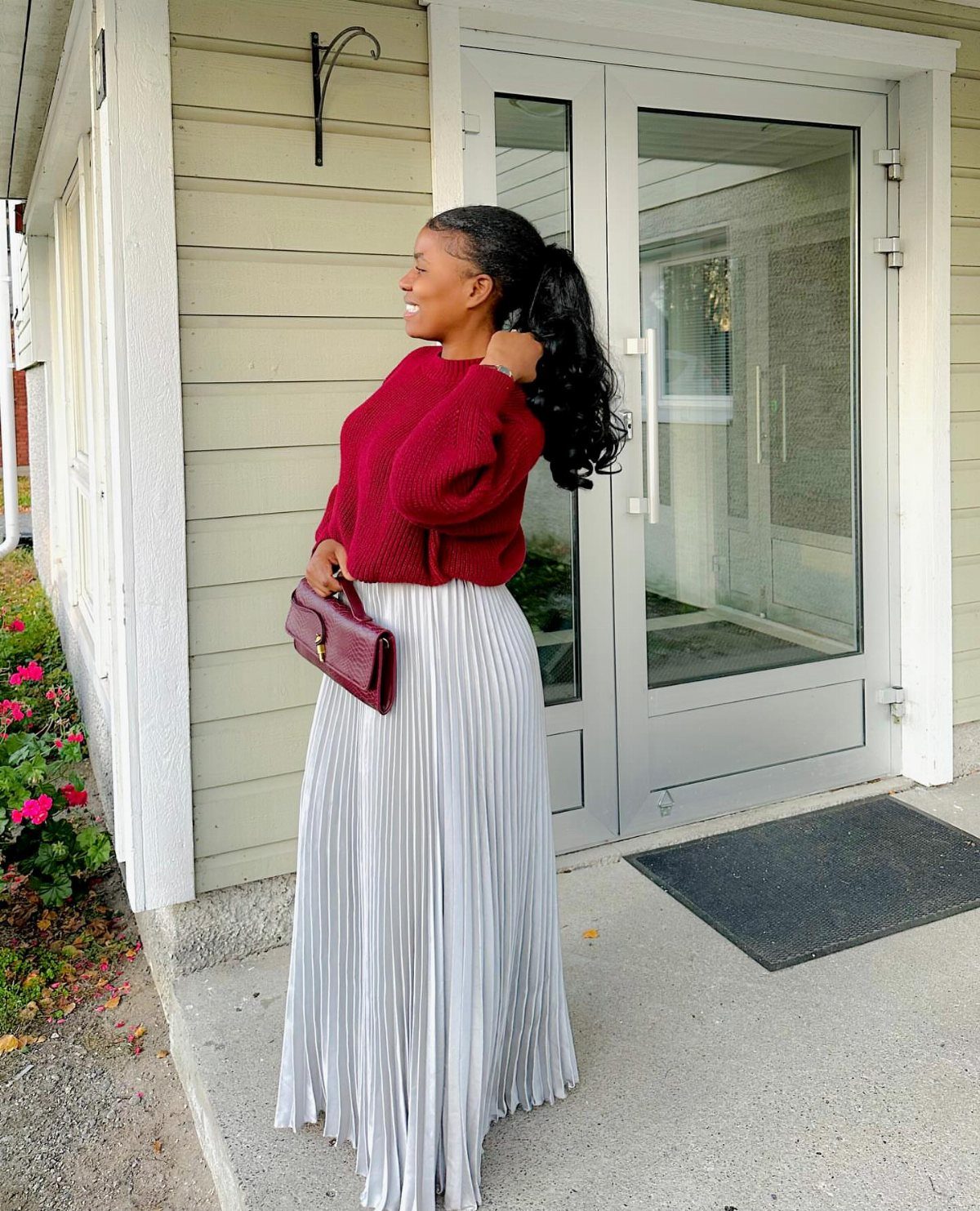
A metallic pleated skirt sounds like evening wear until you see it against a bright sweater in daylight.
The red knit here keeps the silver from reading as New Year’s Eve; the combination lands closer to art-class teacher than cocktail party.
The pleats catch light and move well, but the matte texture of the sweater anchors the shine. A clutch in a deeper tone, burgundy or wine, bridges the 2 pieces without matching either exactly.
This trades quietness for confidence.
It suits services where individual expression is welcome, less so for traditions that prefer subdued dressing. The metallic will show wear faster than a matte fabric; hand-wash or dry clean to keep the finish.
11. Tiered Maxi Skirt with Long Sleeves

Tiered construction gives a maxi skirt movement without the fullness of tulle or the stiffness of heavy cotton.
A fitted long-sleeved top in a neutral tone keeps the silhouette clean; the tiers add interest lower down so the top can stay simple.
The pink here is soft enough to read as modest rather than playful, though a dusty blue or olive would shift the mood entirely.
Check the waistband sits flat and does not bulk under the top. The tiers add horizontal lines that can widen visually; a top that fits closely through the torso balances this.
A cropped cardigan layered over works for temperature control without adding volume at the hip. This is the skirt that feels like pajamas and photographs like effort.
12. Cape Top and Pleated Maxi Skirt
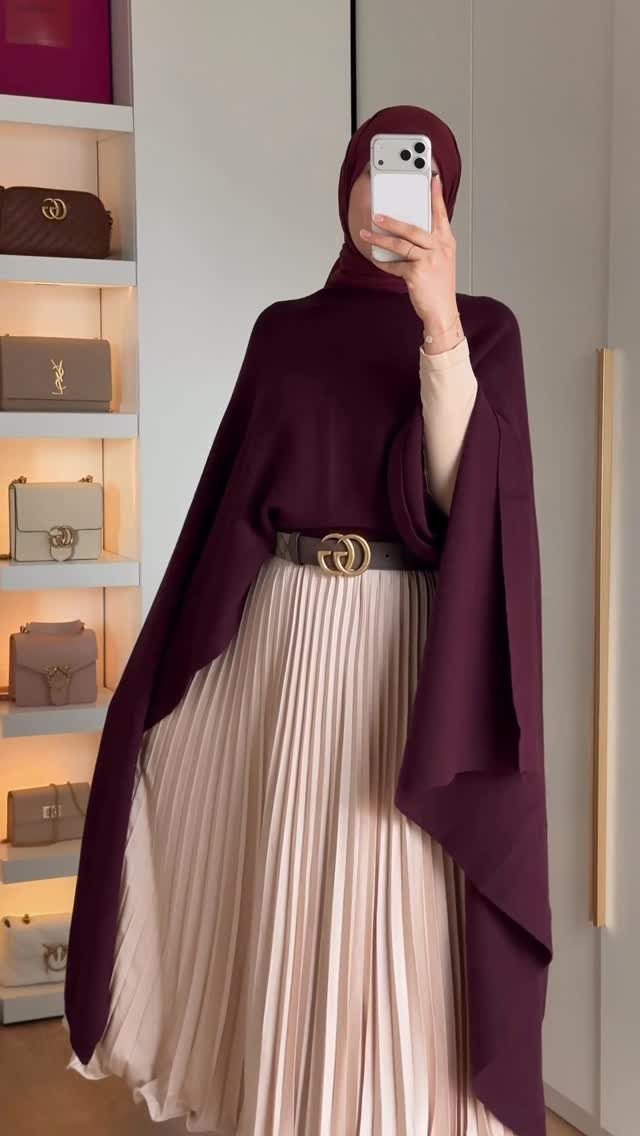
A cape top replaces the blazer for coverage that moves differently.
The maroon here is rich enough to carry the outfit; the cream pleated skirt below it stays quiet and lets the top do the work. The cape creates its own drama at the shoulders, so jewelry stays minimal or absent.
The cape layer hits at hip level on most of these sets, so I thread a slim belt right at the natural waist before the fabric starts to billow.
The pleated skirt in satin or lightweight crepe moves beautifully and photographs well.
A cape top paired with a pleated maxi skirt creates an elegant silhouette that suits services where head covering is customary; the cape’s line continues the coverage naturally. Low block heels keep the hem from dragging.
Understanding Modesty in Church Attire
Modesty in church attire starts with coverage of shoulders, chest, and knees, but the reasons behind it matter more than the checklist.
Dressing this way shifts attention away from the body so the focus lands on worship instead of appearance. Different denominations read the same guidelines differently; a sleeveless dress passes in one congregation and needs a cardigan in another.
The internal shift can run deeper than the external one. Some women arrive at modest dress through conviction about honoring God, others through practical respect for the community gathered there.
Both routes land in the same place: clothing loose enough, opaque enough, and covered enough that it does not distract the person wearing it or anyone near her.
Avoiding tight or revealing cuts is not about shame. It is about removing friction between how you look and why you came.
Building a Versatile Wardrobe
A versatile modest wardrobe rests on pieces that pair across categories. Three dresses in different colors, two skirts that work with multiple tops, and four blouses with necklines high enough to stand alone cover most Sundays without repetition.
Pants enter the mix where tailoring allows: culottes or straight-leg cuts that cover the ankle and do not cling through the thigh.
Cardigans and jackets do double duty for coverage and temperature; a cream blazer over a floral midi reads differently than the same blazer with a monochrome skirt set, but both work.
Scarves and shawls fill gaps rather than forming outfits. I keep a lightweight one in my bag for sanctuaries where the air conditioning runs cold or where I need to cover shoulders I did not plan for.
Breathable fabrics matter more than fabric type; cotton, linen, and lightweight wool each have seasons. Test layering combinations sitting down, since a skirt that works standing can ride up in a pew.
Caring for Your Modest Church Clothes
Modest church clothes last longer with simple care. Air-drying preserves elastic and fabric finish better than machine heat, especially for tiered or pleated skirts where the shape matters.
Seasonal rotation keeps the same pieces usable year-round.
Lightweight cotton and linen handle spring and summer services in packed, warm sanctuaries. Wool layers, fleece-lined tights, and heavier cardigans shift the same dresses into fall and winter without buying separately for each season.
Layering pieces need the most attention. Cardigans pill at the underarm; depill before the texture spreads.
Scarves wash more often than they appear to need. Check care labels individually rather than sorting by eye: a cotton poplin shirt and a cotton voile blouse tolerate different cycles.