Spanish wedding dresses favor fabric that does its own work rather than relying on minimal cuts, and the ones that stick with me fall into a few clear types.
The right dress depends on whether your ceremony space can handle the weight and movement the design demands: a ball gown needs floor length and aisle width, while a mermaid needs only your own shape and a dance floor.
Rosa Clará still builds from her Barcelona base, and her lace gowns photograph with real depth in afternoon church light because the structure and decoration are the same material.
1. Lace Wedding Dresses
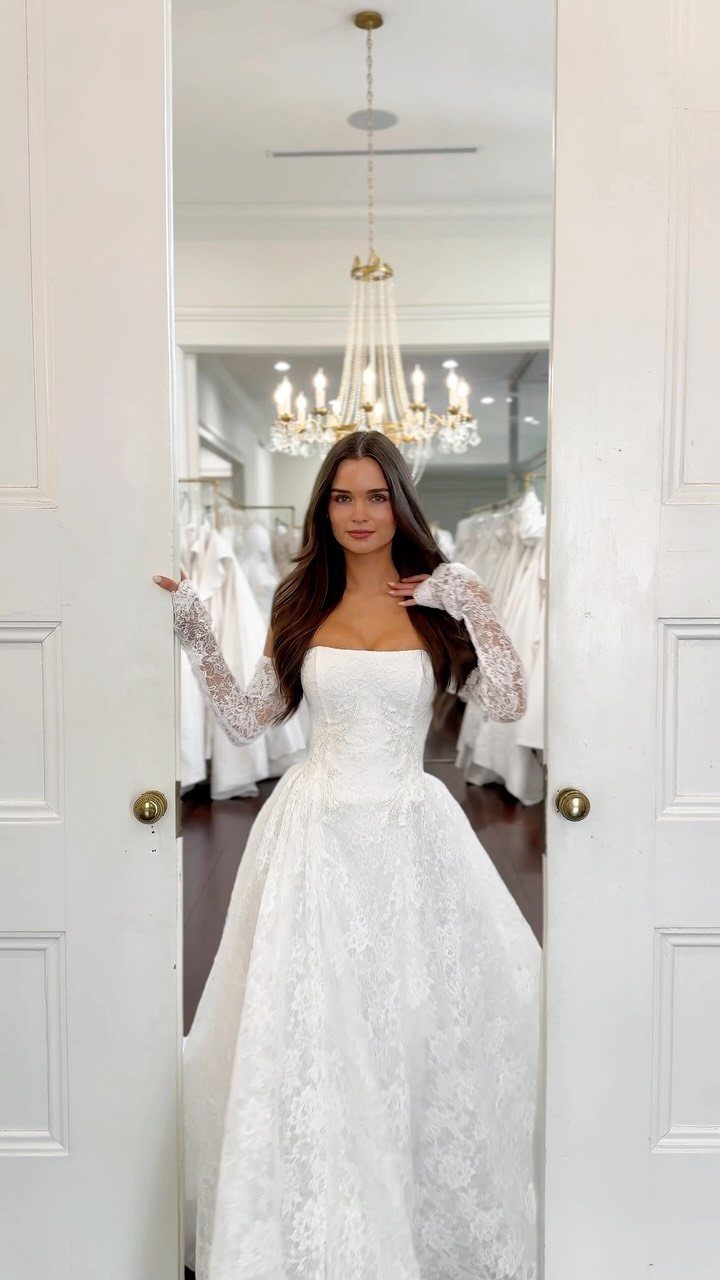
Lace wedding dresses carry a soft, romantic weight that works especially well for Spanish-style ceremonies where the fabric itself does the talking.
Chiffon and tulle each read differently, but lace is the one that photographs with depth in afternoon church light and holds up to close inspection during the receiving line.
I would look for Spanish designers who build the gown from lace rather than overlaying it, since the drape changes entirely when the structure and the decoration are the same material.
Long sleeves in matching lace extend the look without adding bulk.
2. Mermaid Wedding Dresses
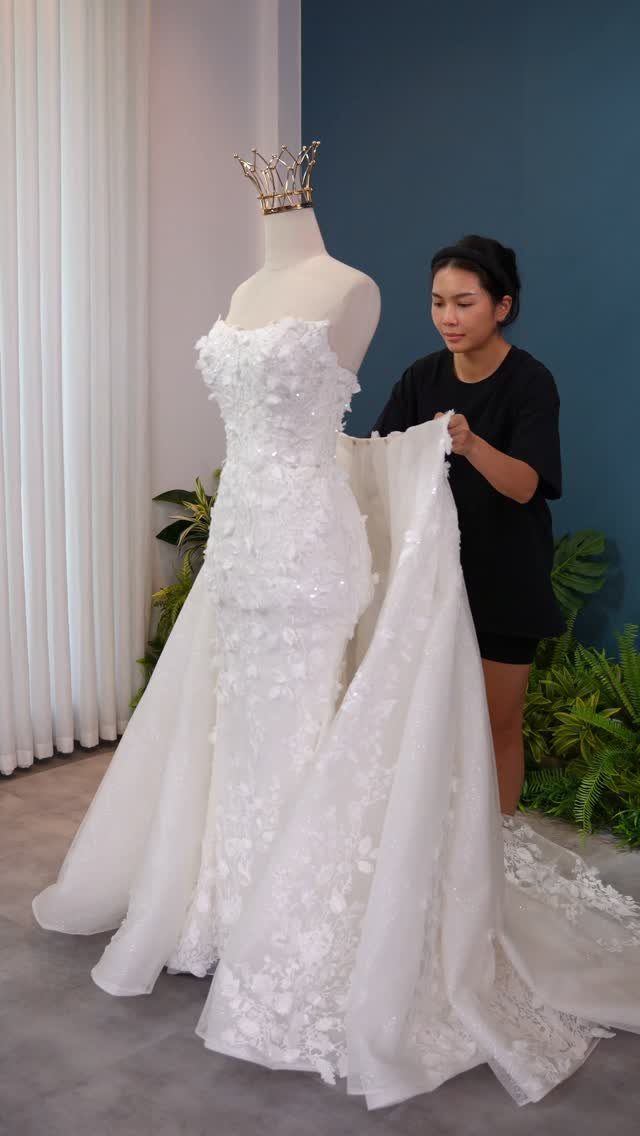
A mermaid silhouette forces you to commit to your own shape, which is why it suits brides who already know they want definition at the hip and flare below the knee.
Spanish houses often load these with embroidery or beading that would overwhelm a simpler cut, and the density of the work needs the fitted base to hold it.
A detachable overskirt is worth asking about: it changes the ceremony silhouette to something more formal while the reception stays danceable underneath. Cap sleeves or a detachable capelet solve the same problem for shoulders.
3. Ball Gown Wedding Dresses
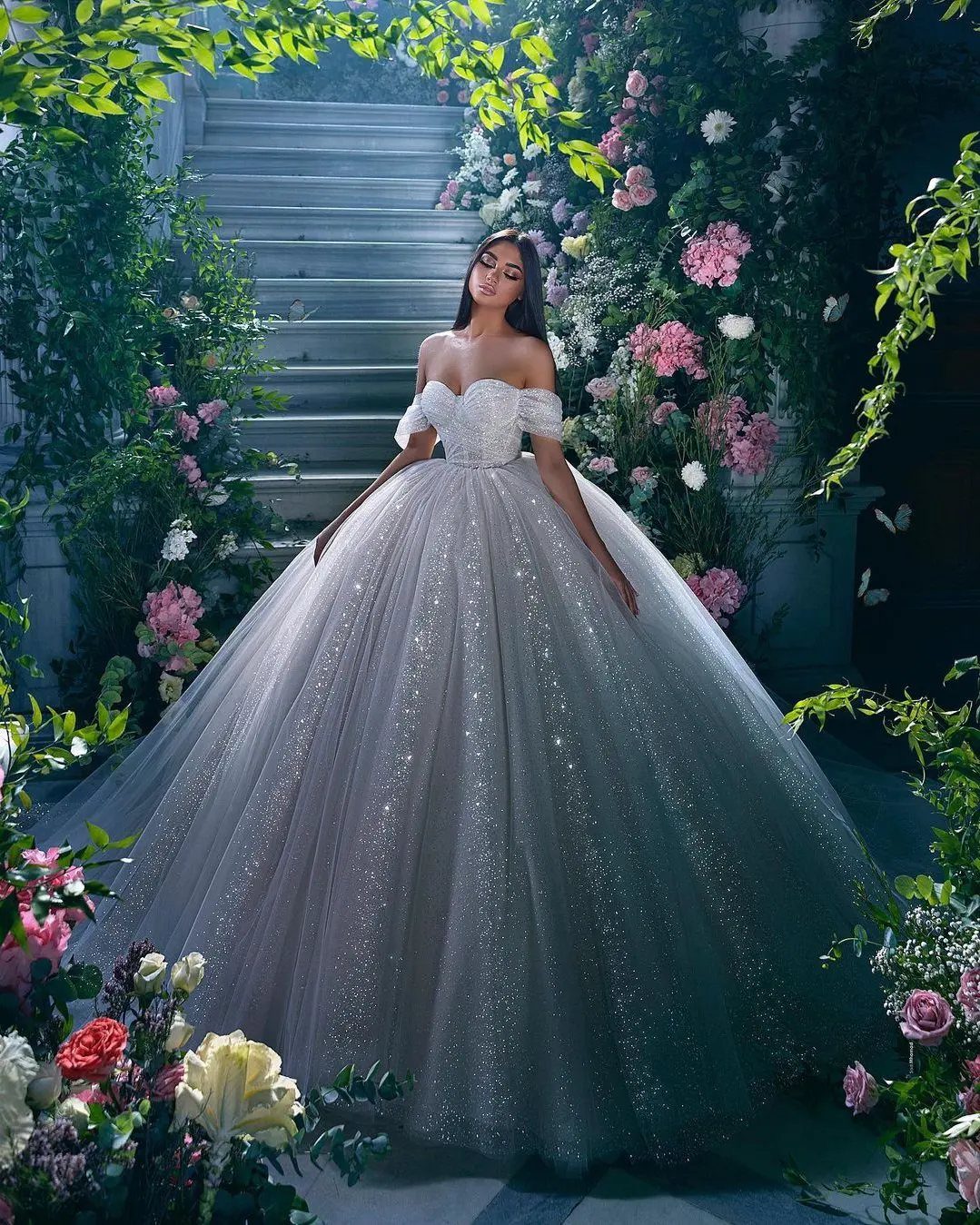
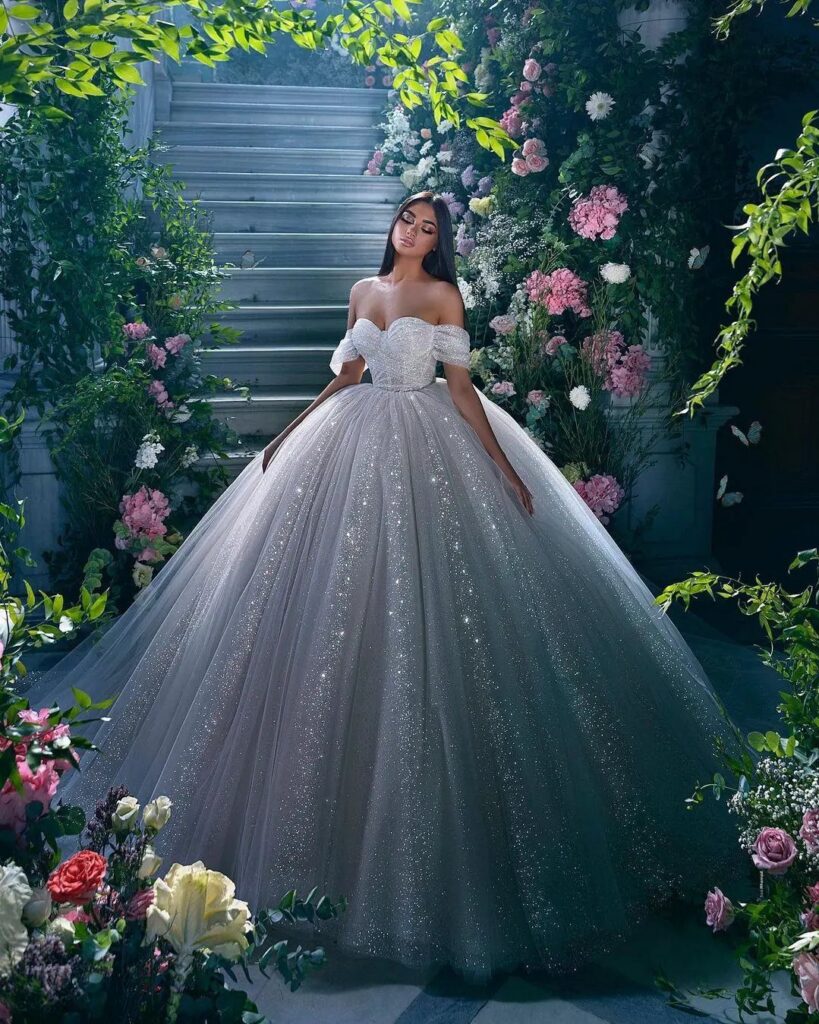
Ball gowns answer a specific question: how much volume can the space handle? A layered skirt with real structure, not just tulle over crinoline, gives the ethereal movement that Spanish designers favor for cathedral settings.
An off-shoulder neckline keeps the top simple so the skirt does not compete, which is the balance I would look for.
These dresses need fittings with the shoes you plan to wear; the hem drops differently when the skirt weighs several pounds and the petticoat has its own architecture.
4. Traditional Spanish Wedding Dress
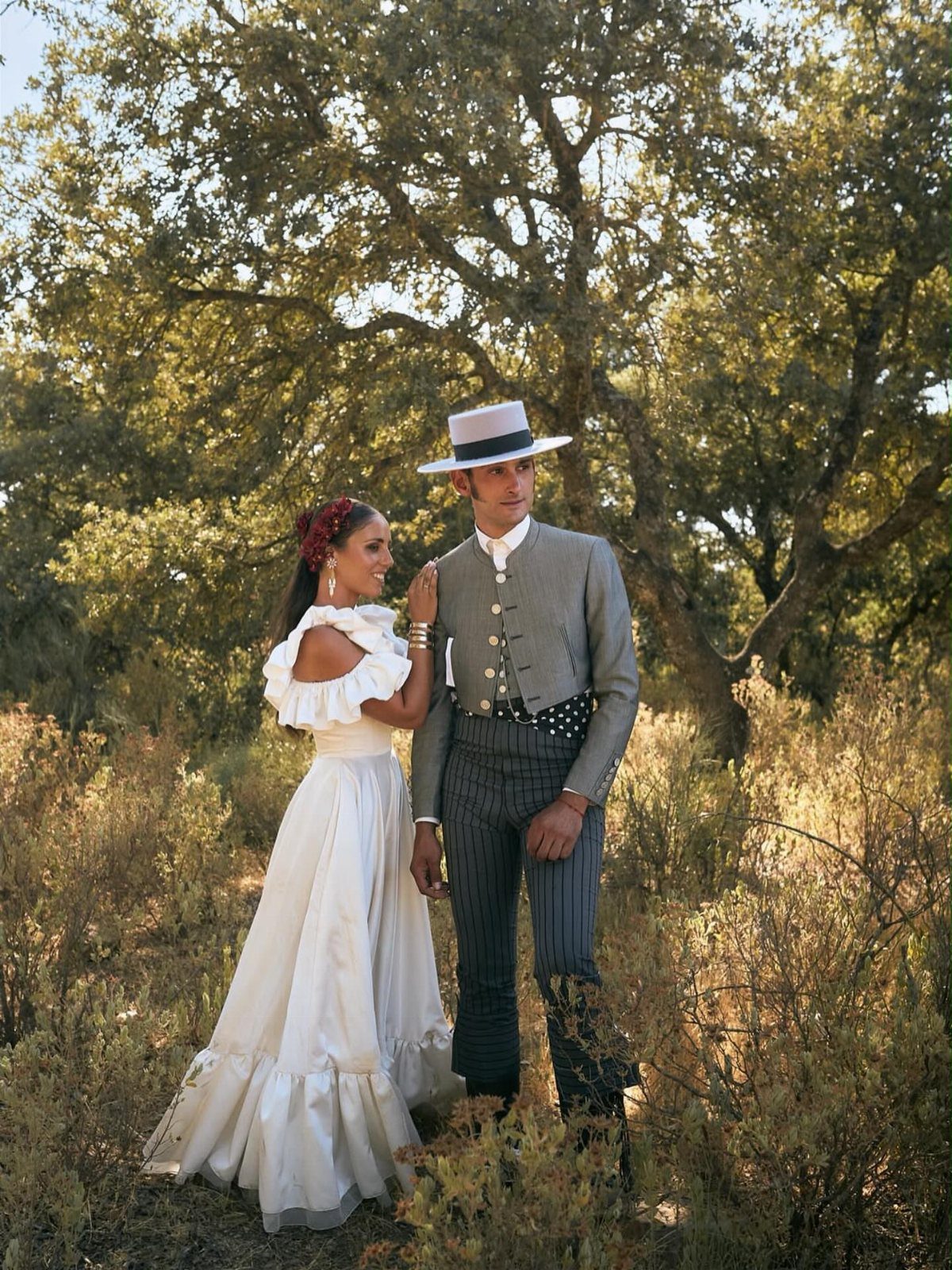
A traditional Spanish wedding dress carries more color and embroidery than the white-only standard that took hold elsewhere in the 20th century.
Rich fabrics with floral motifs, sometimes in gold thread or deep red accents, mark the regional heritage the bride is dressing for. The groom’s Andalusian suit gives you the full picture: this is a coordinated statement, not a solo one.
I would check whether your church or venue has expectations about color before committing, since the traditional version reads as festive in a way that some American ceremonies still pause at.
5. Flamenco-inspired Wedding Dress with Ruffles
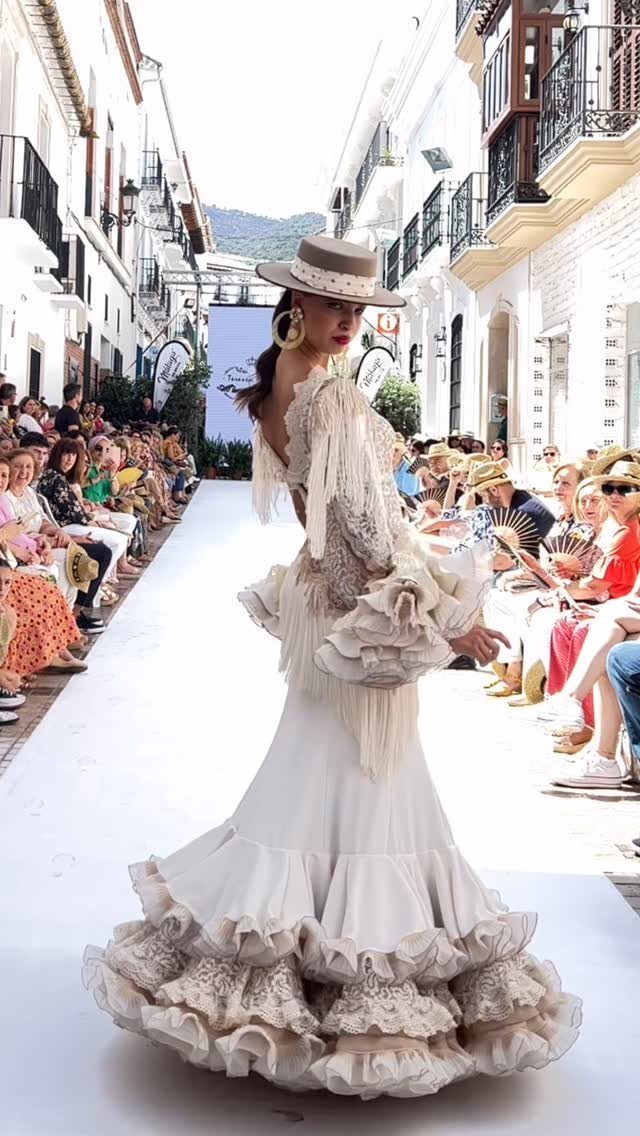
Ruffles move differently from lace or tulle: they catch air and create shadow, which makes a flamenco-inspired dress its own kind of drama.
Tiered construction in lightweight fabric needs space to perform, so the aisle width and the first dance matter here.
Spanish designers often build these with a fitted bodice to anchor the volume below, and I would not skip the inner structure that keeps the waist defined.
6. Halter Neck Satin Gown
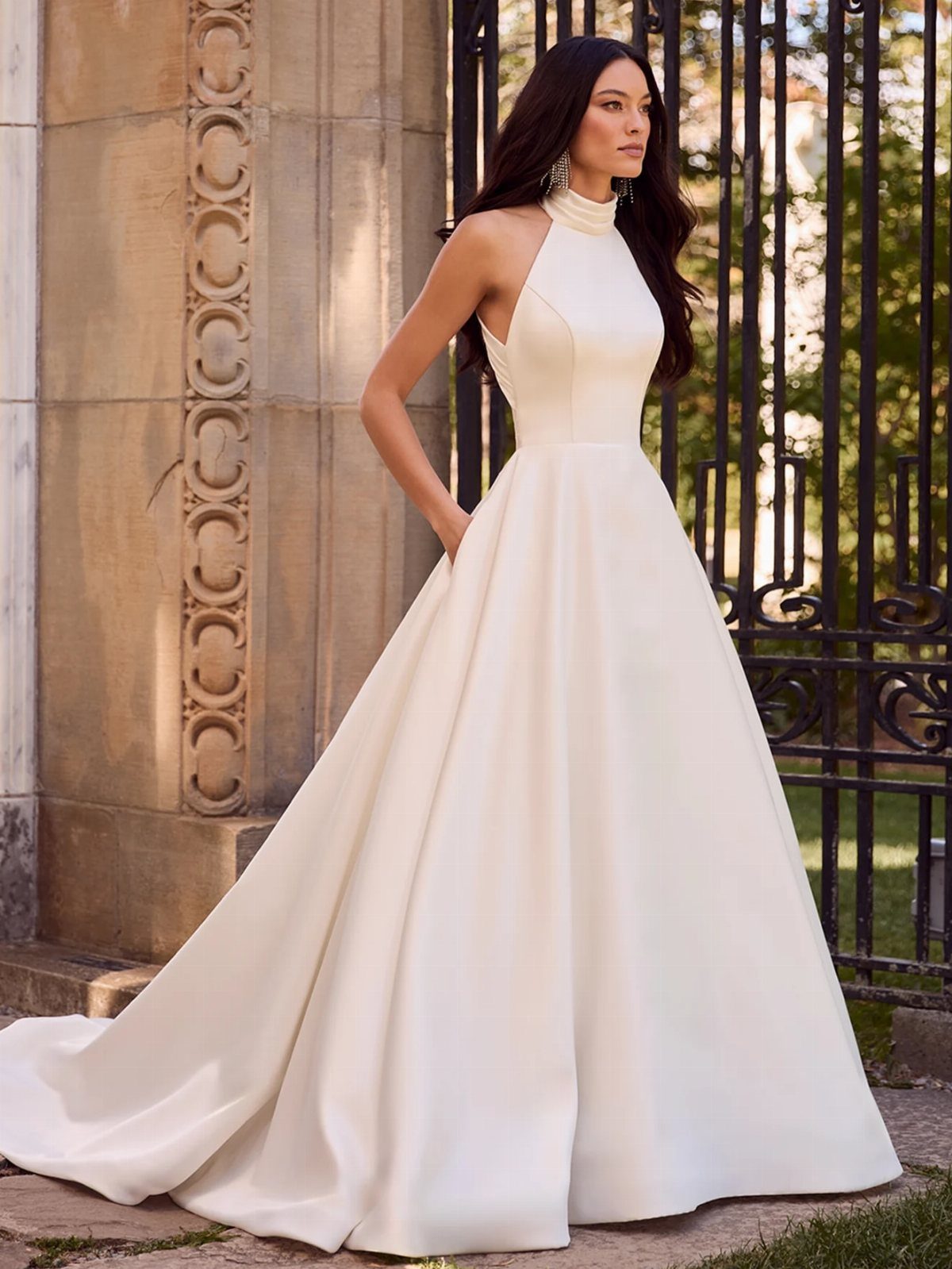
Satin in a halter neck reads clean and deliberate, with no lace or beading to soften the line.
A high neckline leaves the shoulders and back as the focal point, which suits brides who want coverage without fabric to the wrist.
Spanish satin tends to be heavier and more structured than the draped versions common in American bridal, so the skirt holds its shape without extra layers.
I would check the closure at the neck: a hook that is easy to fasten alone, or one that needs assistance, changes how you move through the getting-ready hours.
Quality and Craftsmanship
Rosa Clará opened her first store in Barcelona in 1995, and her house still runs from that same base.
I look at her prices, $2,000 to $6,500, and what stands out is the spread: the entry point sits where many American designers top out, which tells you where the money goes.
Lace built into the structure rather than overlaid, ball gowns with real weight to the skirt, long sleeves that read as fashion rather than afterthought.
These are the pieces the list touched on, and Clará’s pricing reflects the labor in each.
Spanish bridal houses never really bought into the stripped-back minimalism that American runways pushed for years; they kept building dresses where the fabric itself does the work, which is why Clará’s lace photographs with depth in afternoon church light and her ball gowns move with that ethereal quality the originals described.
If you are comparing across borders, ask whether the quoted price includes import duties and whether fittings happen in the U.S. or require travel. The dress is only part of the cost.