These 7 ideas cover everything from a casual shirt dress you could wear straight from work to a bow-neckline style that looks polished with a hat.
The right one depends on how your congregation dresses, from relaxed Sunday morning to full formality.
1. A-Line Church Dresses

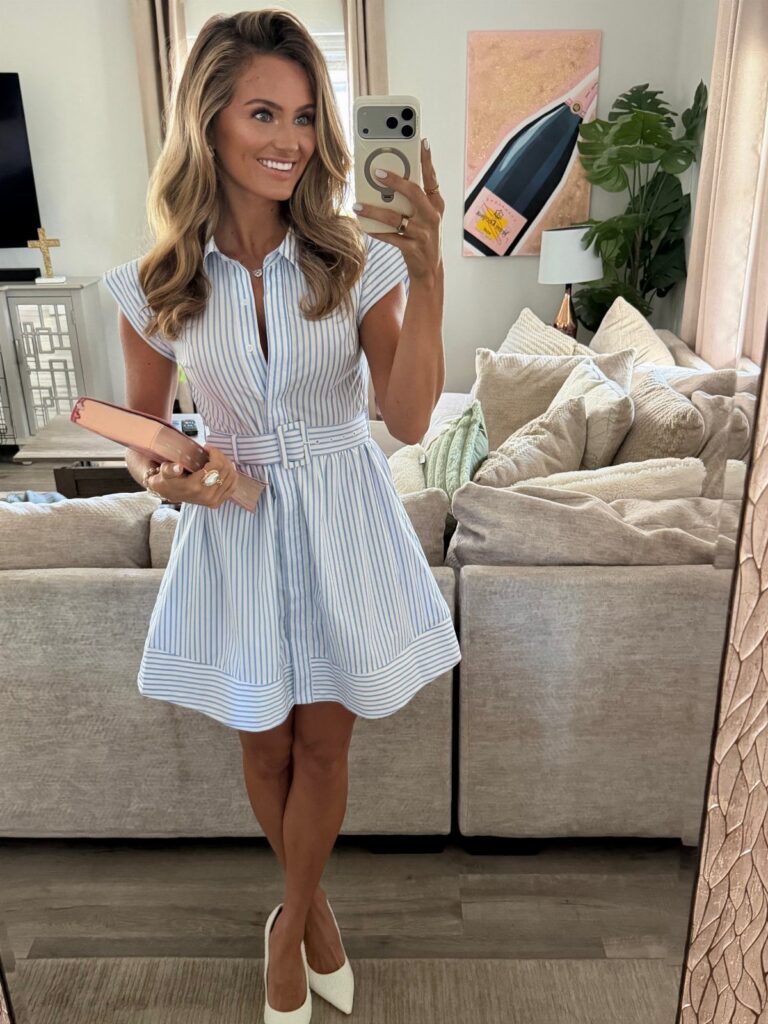
An A-line dress flares gently from the waist, which means it skims the hips rather than clinging to them. I reach for this shape on days when I want to look put together without thinking about it much.
The visible belt helps define the waist, but the cut itself does most of the work for you. Pair it with simple heels for a service or add a cardigan when the sanctuary runs cold.
This works across body types because the flare balances shoulders and hips equally. For Easter or a church celebration, the clean lines photograph well without looking like you dressed for an occasion you didn’t get invited to.
2. Midi Church Dresses
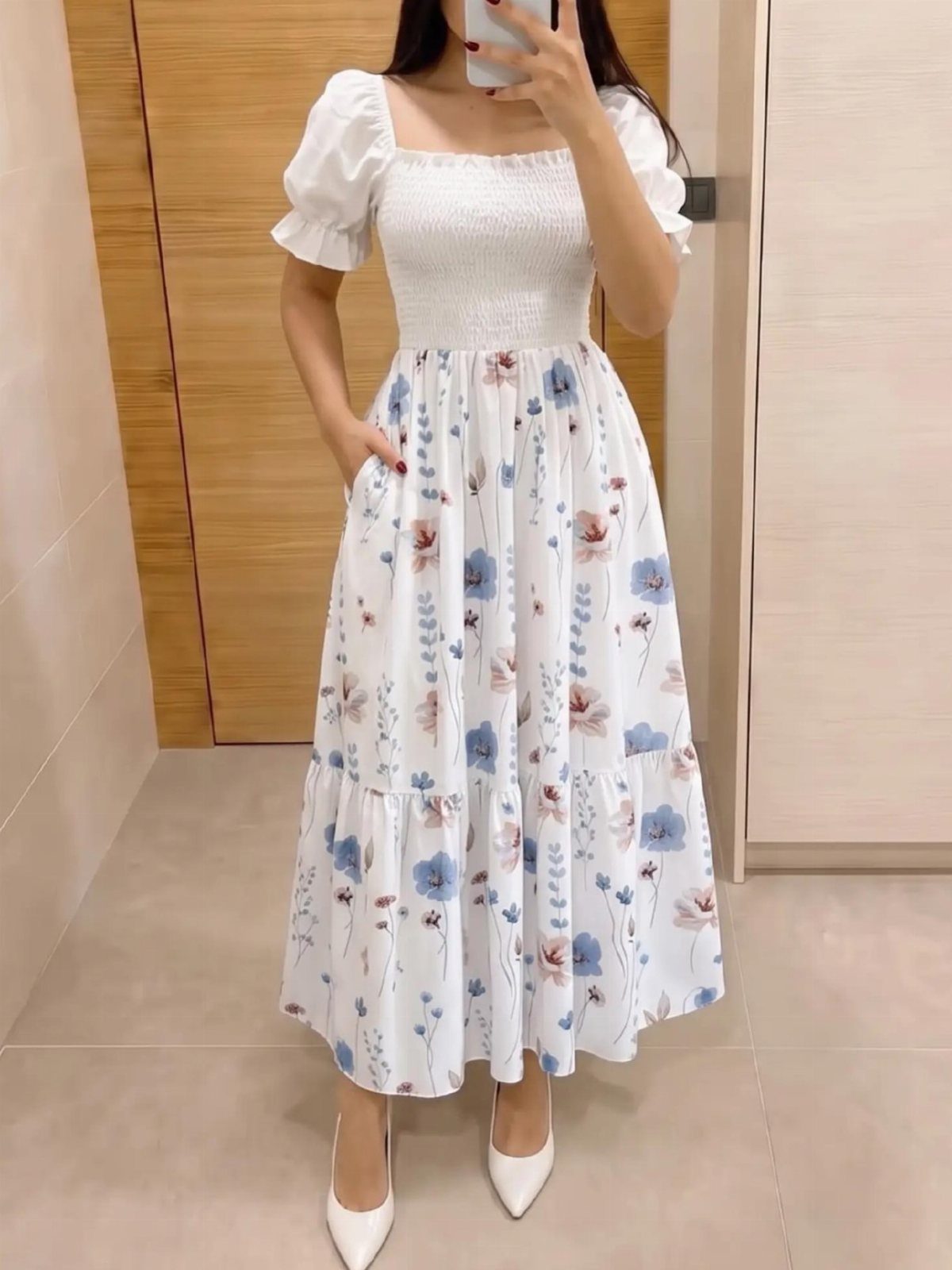
The midi length, landing mid-calf, solves the problem of not knowing how formal the service will be. Too short feels careless; too long feels like you’re trying too hard.
Smocking at the bodice gives structure without requiring a close fit, and short puff sleeves cover the shoulder without adding heat. I would wear this with flats for a morning service and switch to heels for an evening event.
A muted floral midi reads as respectful without trying too hard for a Sunday morning. That balance matters more than people admit.
3. Floral Church Dresses
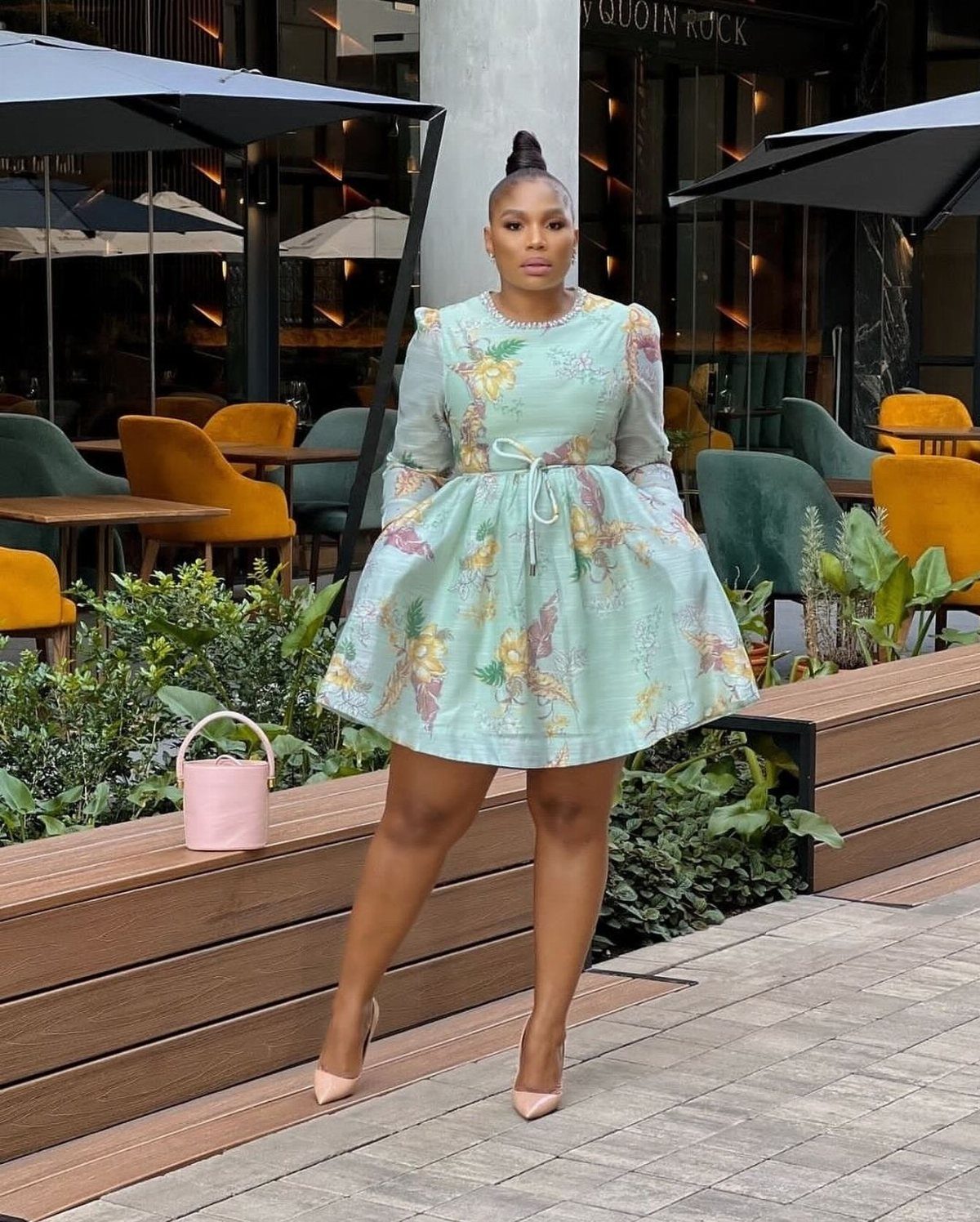
Mint green reads as fresh without the brightness that can feel casual in other contexts. Long sleeves keep the short length from tipping toward party territory, which is the line floral prints sometimes walk.
Neutral shoes, like the nude heels visible, keep the eye on the dress without adding another color to manage. I find this matters in spring when I want to feel seasonal but not like garden décor.
A soft print suits outdoor services or receptions after. The fabric looks light; bring a jacket if the church air conditioning has opinions about summer.
4. Pleated Church Dresses
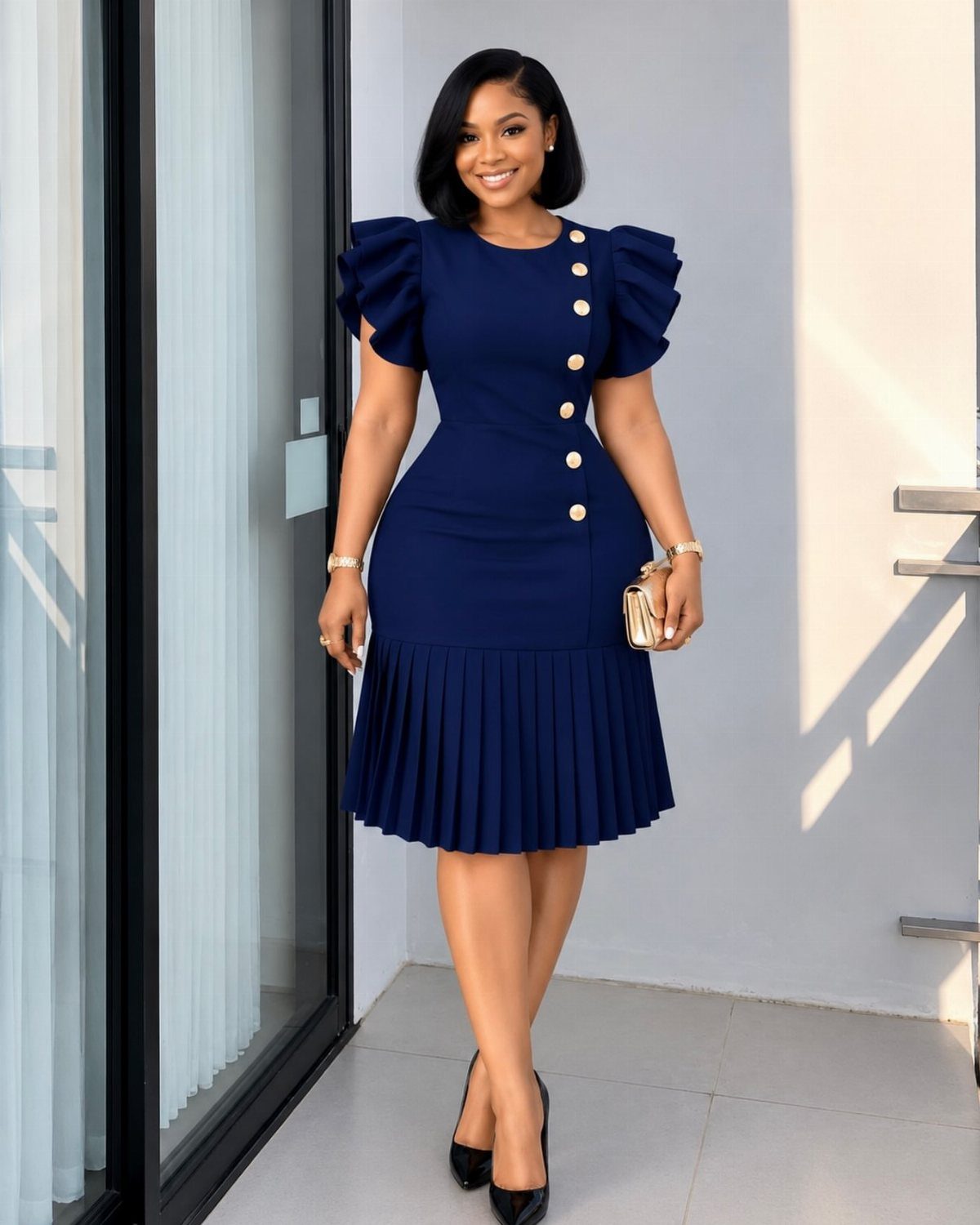
Pleating adds movement that catches light differently than a flat skirt. The visible gold buttons give you something vertical to draw the eye, and the ruffle at the sleeve keeps a dark color from feeling too severe.
Texture does the work of pattern without requiring you to match anything. I think of pleated dresses as the equivalent of a good blazer: they signal effort without actual effort.
This navy would carry into fall without looking wrong. The clutch suggests this setup works for services that include a meal or visiting afterward, when you want to look finished.
5. Button-Down Shirt Dresses
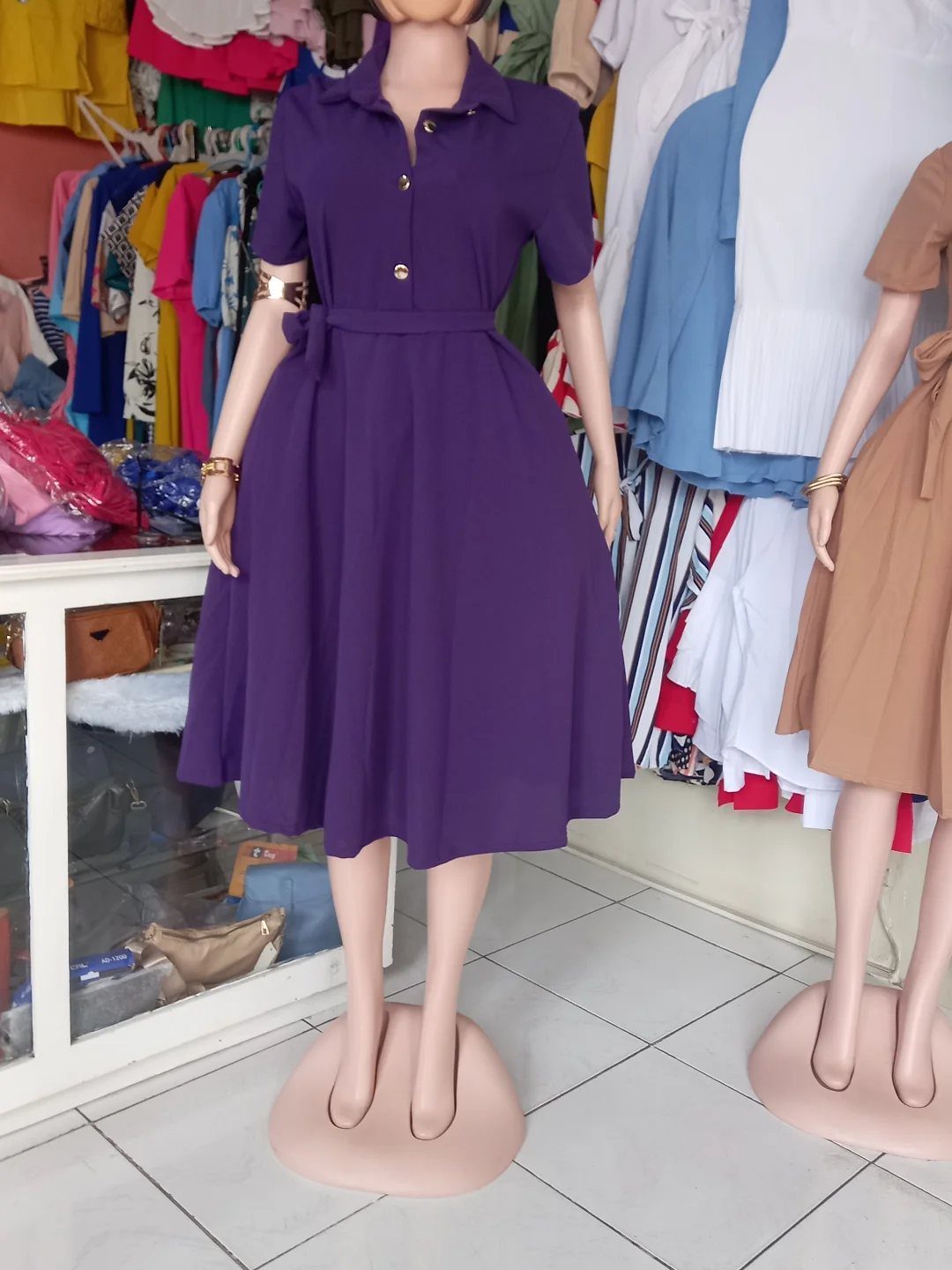
A shirt dress borrows structure from menswear and softens it with a waist tie. The visible purple reads as intentional color without being hard to find again in your closet.
Short sleeves and a tie waist mean this adjusts across seasons.
I like this for weekday services or when I am coming from work and need one outfit to cover both.
6. Bow-Neckline Modest Dresses
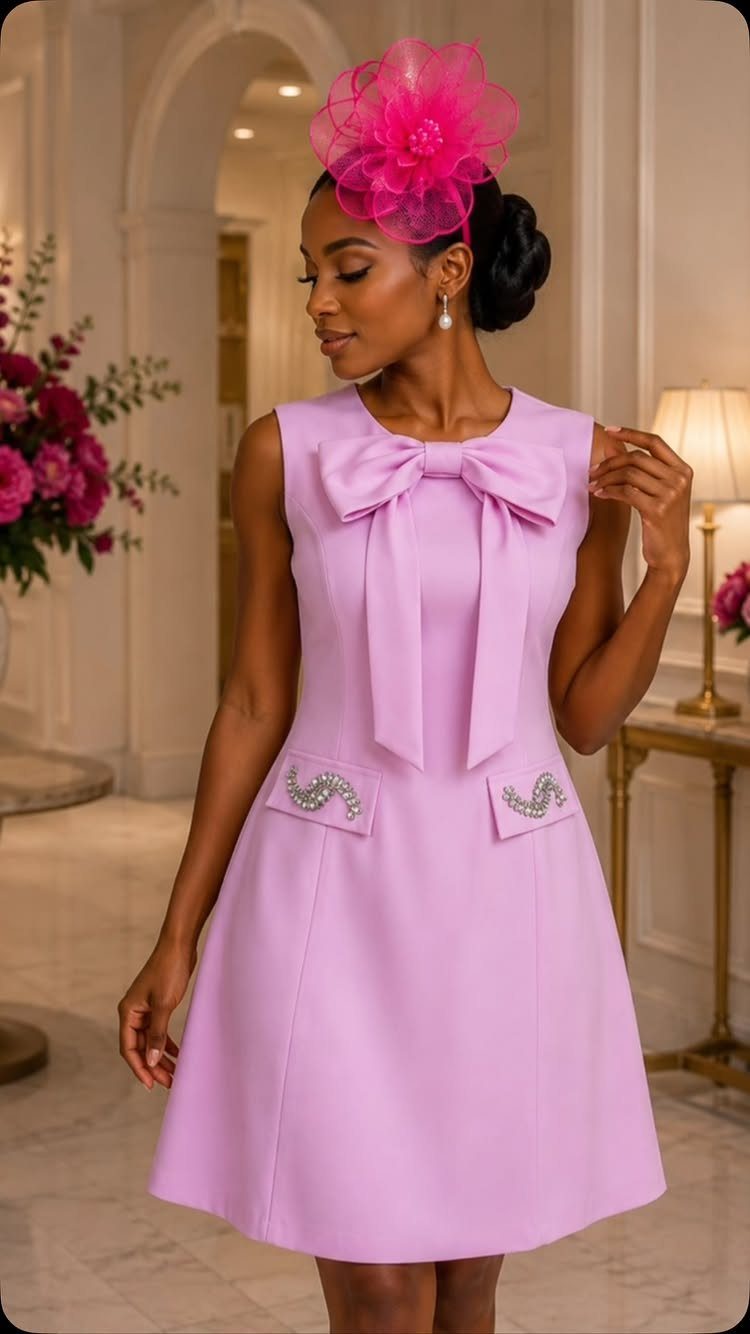
The bow at the neckline does 2 jobs: it adds visual interest where a necklace might feel wrong, and it draws attention upward which helps on days when I feel less sure about the rest.
Sleeveless with a high neckline keeps coverage where it matters while staying cool. The matching fascinator suggests this could work for a wedding guest outfit or a special service where other people are also dressing with intention.
Modest dress shopping sometimes means accepting that the interesting detail is at the neck or the hem, not everywhere at once. This version puts it where people actually look.
7. Short-Sleeve Patterned Dresses
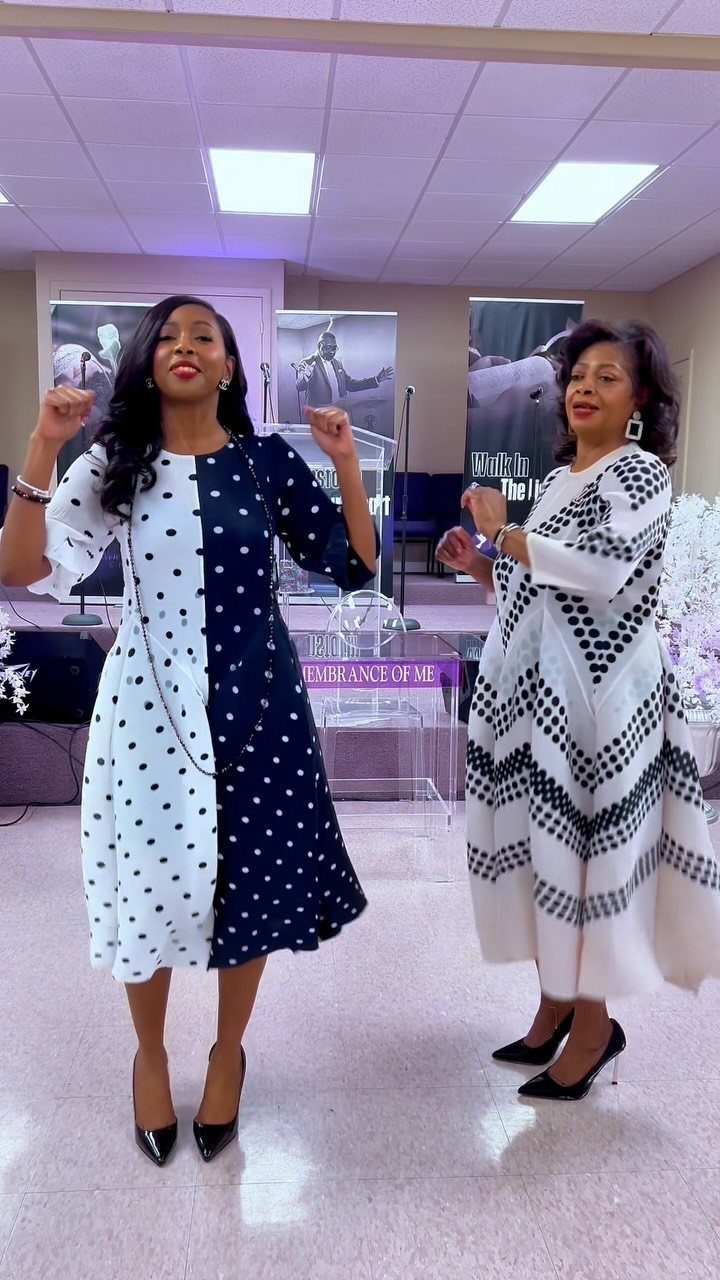
Short sleeves keep a patterned dress from feeling too covered up, which matters when the print is already doing quiet work.
Small-scale polka dots and chevrons read as intentional without competing for attention, which is exactly what you want when the dress itself is short.
A modest neckline and knee length keep busy prints church-appropriate. I would choose smaller patterns for morning services and save bolder geometry for afternoon events where the room runs warmer.
Black and white solves the shoe question: whatever you own works. This is the kind of dress that moves from service to lunch without looking like you planned an outfit change you never made.
Choosing the Right Dress Length
Knee-length, midi, and maxi dresses all work for church, but the choice matters more than people treat it. Maxi covers most uncertainty.
The real test is sitting.
A dress that feels fine standing can ride up or bunch in a pew. I look for cuts that keep their shape while I’m seated through a full service.
Heels, flats, or modest accessories all pair with midi length without looking like an afterthought. That flexibility is why it ends up my default when I don’t know the church’s usual dress level.
Dress Fabrics and Colors
Fabric choice shows faster than cut in a church setting.
Crepe, high-quality cotton blends, and light wool hold up through sitting, standing, and the receiving line after. Cheap synthetics wrinkle where you can’t see them until you stand.
Sheer fabrics and anything that reads as clubwear, bodycon spandex, or heavy sequins are the wrong signal. The fabric tells you before you even check a mirror.
White carries specific weight: baptisms, communions, Easter.
Navy, dusty blue, sage green, soft pink, lavender, cream, and burgundy all read as considered without claiming an occasion that isn’t yours. Florals work in spring and summer; the season does some of the deciding for you.
Color changes the personality of an outfit faster than changing the dress. I treat it as the first filter before I think about anything else.
Frequently Asked Questions
What type of dress is appropriate for church?
Knee-length, midi, and maxi dresses all work well in most churches. The right length is the one you stop thinking about once you sit down.
Can you wear a sleeveless dress to church?
Sleeveless dresses can work if your church allows them, though adding a cardigan or blazer gives you coverage when you want it.
Sleeveless cuts with high necklines stay cool while keeping coverage where it counts. The test is the same as any church outfit: does it let you forget about your clothes during the service?