The looks below run from a sharply cut women’s tuxedo to a strapless tulle ballgown, with the deciding factor being what you already own and what your body needs from an evening of standing, sitting, and moving through a crowd.
A high-slit gown in jersey or soft crepe solves the walking problem a floor-length hem creates, while a backless maxi demands you settle the undergarment question before you buy.
1. Black Tie Optional Alternatives
Black tie optional means the host would love to see you in full formal dress but will not hold it against you if you arrive in something slightly less.
For men, that gap is narrow: a dark navy or charcoal suit with a crisp white shirt and a bow tie or necktie in a color or texture that reads intentional, not leftover from the office.
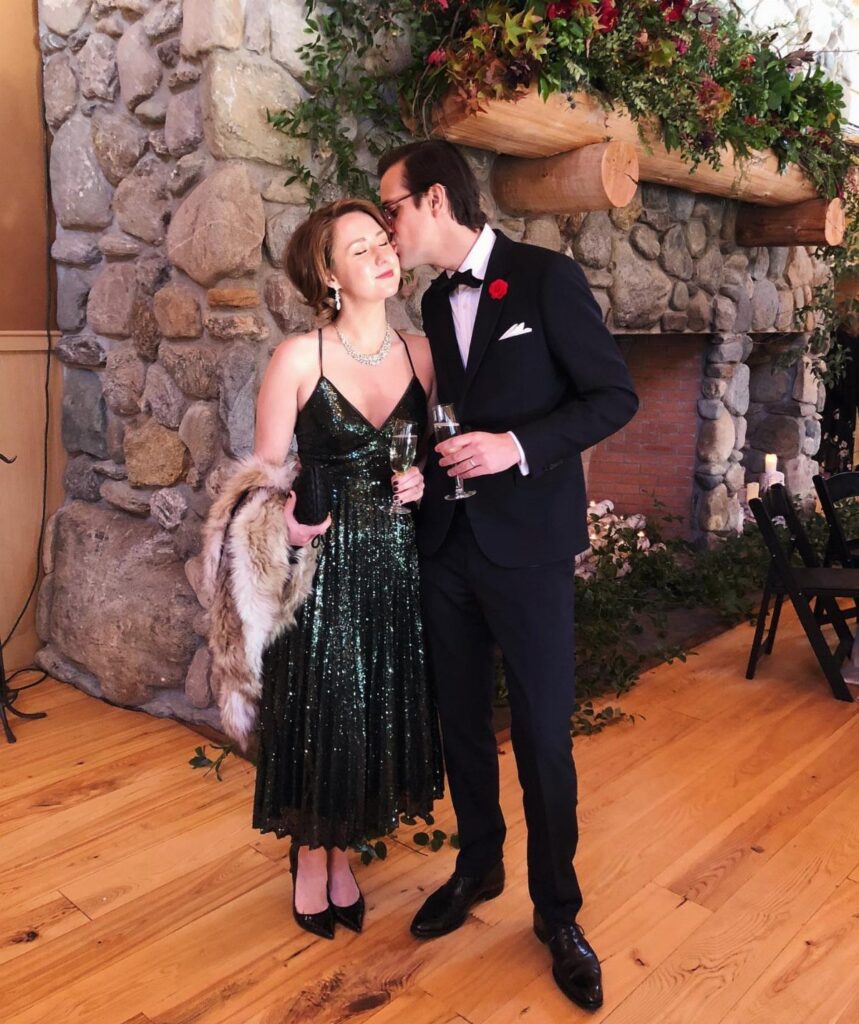
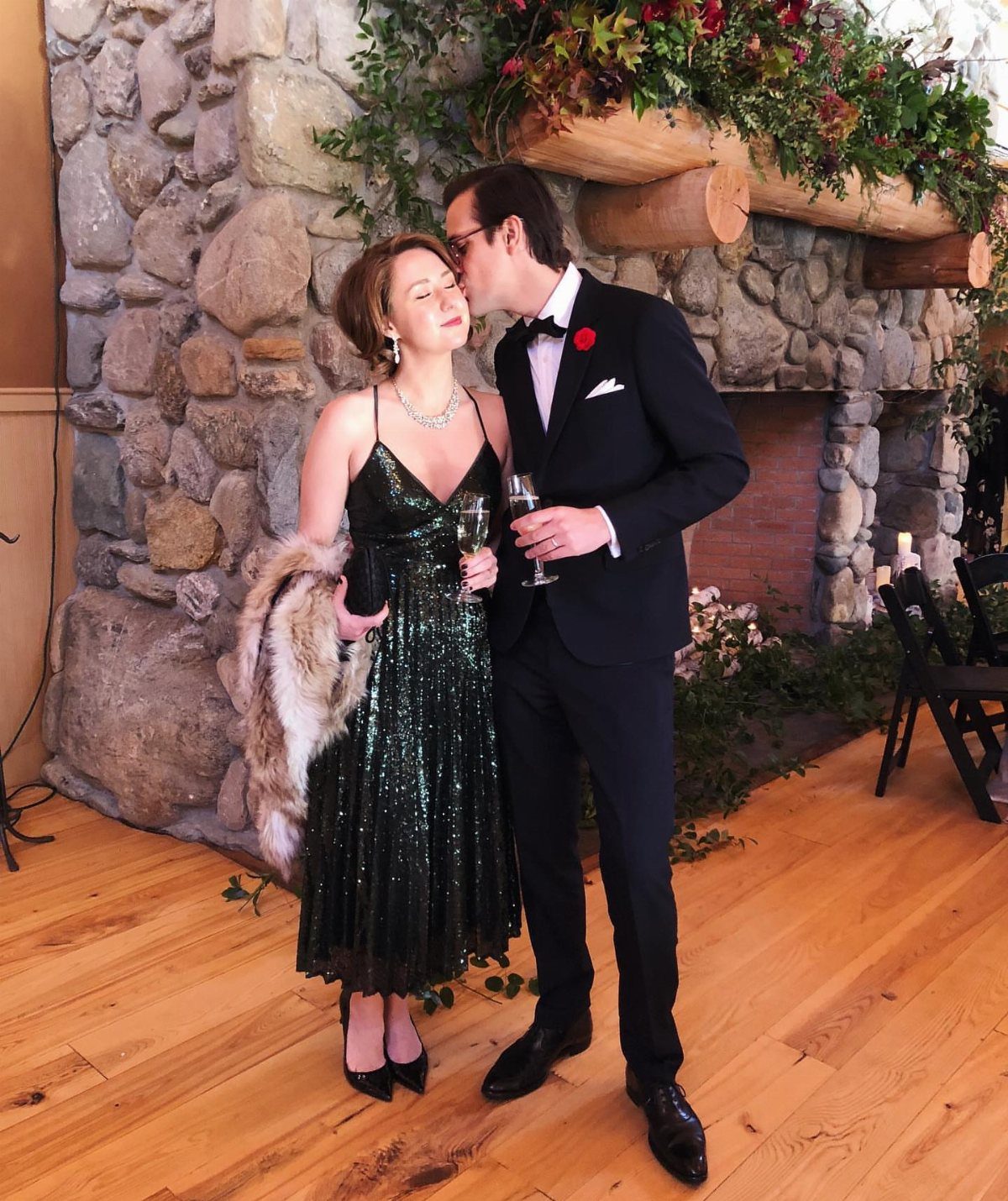
Women get more room to move. A sequined midi in forest green or deep burgundy hits the same note of occasion as a floor-length gown without the fuss of hemming for heels.
Green sequins against stone read as a celebration rather than a compromise, and they catch light in a way matte fabrics never will.
So, while they hope guests will dress in black tie, they’re also giving people more aesthetic leeway to avoid any undue stress or burden to those who may not be able to wear a tuxedo or evening gown.
— Vogue
2. Women’s Attire Options
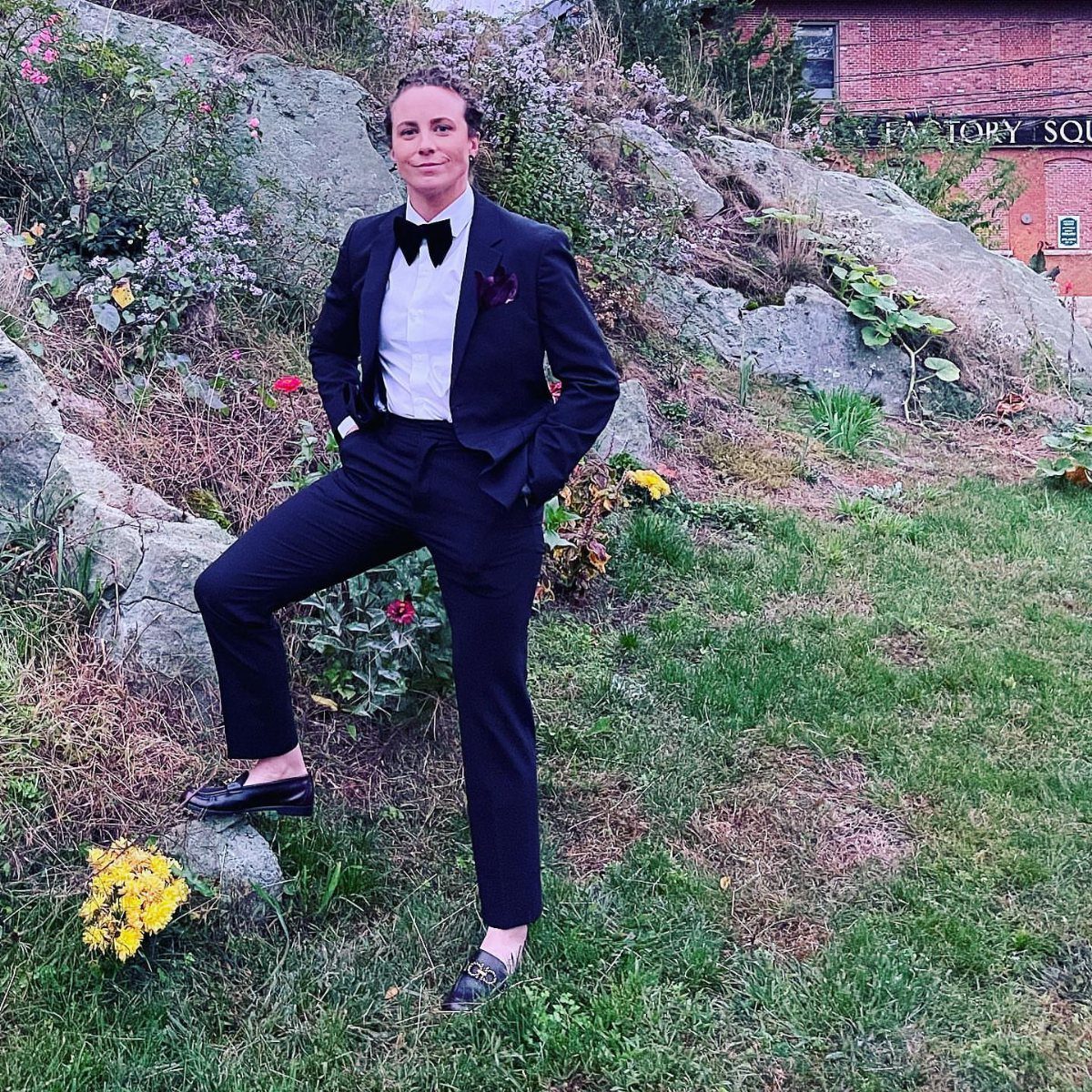
A black tuxedo on a woman reads black tie optional in the best way: you showed up for the dress code but rewrote who gets to wear it.
A sharply cut suit with a bow tie and loafers works when the tailoring is exact and the accessories stay minimal.
If trousers feel like too far a swing, a dressy jumpsuit in satin or crepe lands in the same territory. Floor-length gowns and structured cocktail dresses remain the safest choice for evening, especially in velvet or jacquard.
The rule that narrows your options is fabric first, length second: a midi in cheap rayon looks like you missed the memo, while a wide-leg jumpsuit in heavy silk looks like you understood it perfectly.
3. Statement Jewelry
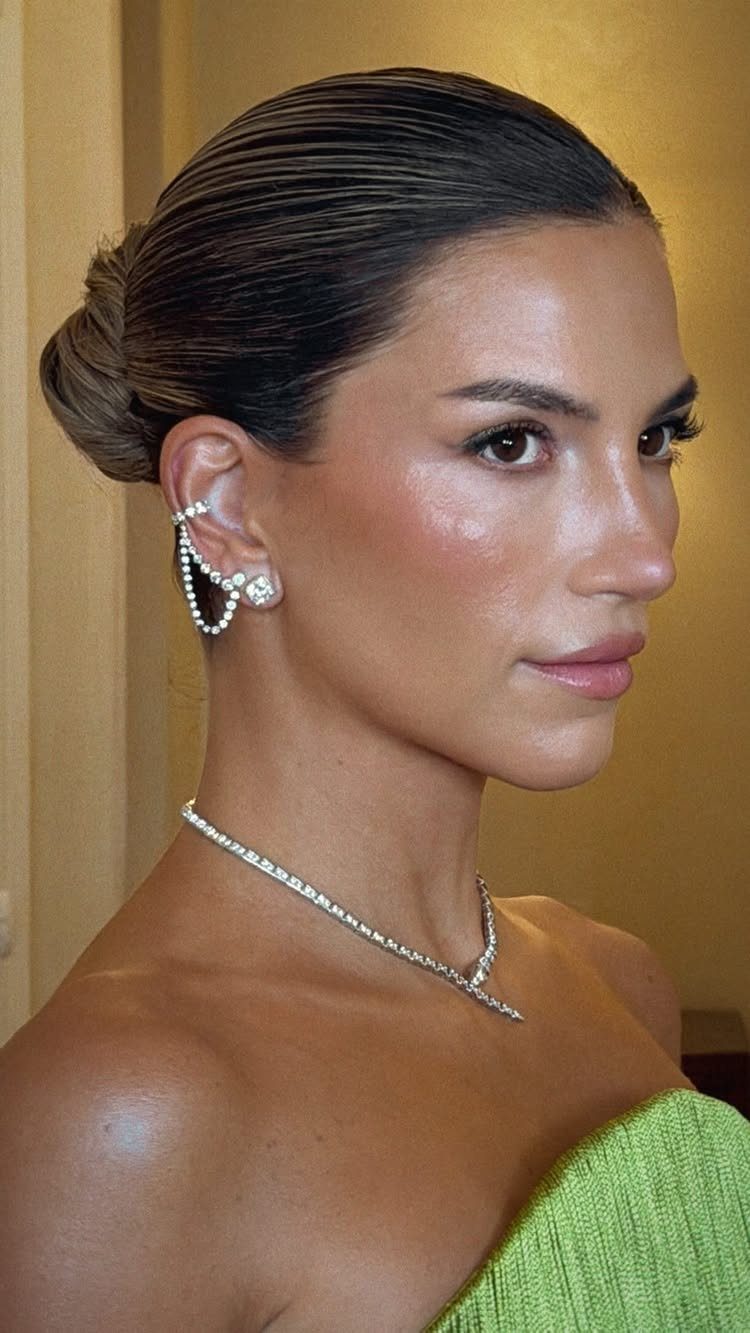
One piece of jewelry can carry the formality when the dress itself stays simple. A lime green textured dress, not beaded or sequined, lets crystals at the ear and neck do the work of signaling evening.
I would choose one statement piece rather than stacking. A single dramatic earring or a collar necklace draws the eye; layered delicates read daytime unless each piece is substantial on its own.
Pearls stay timeless, metallics should complement rather than match your dress color, and anything that catches candlelight is doing its job.
Leave the wrist bare or add one thin bracelet if you must; the moment is in the face and neckline.
4. Bags
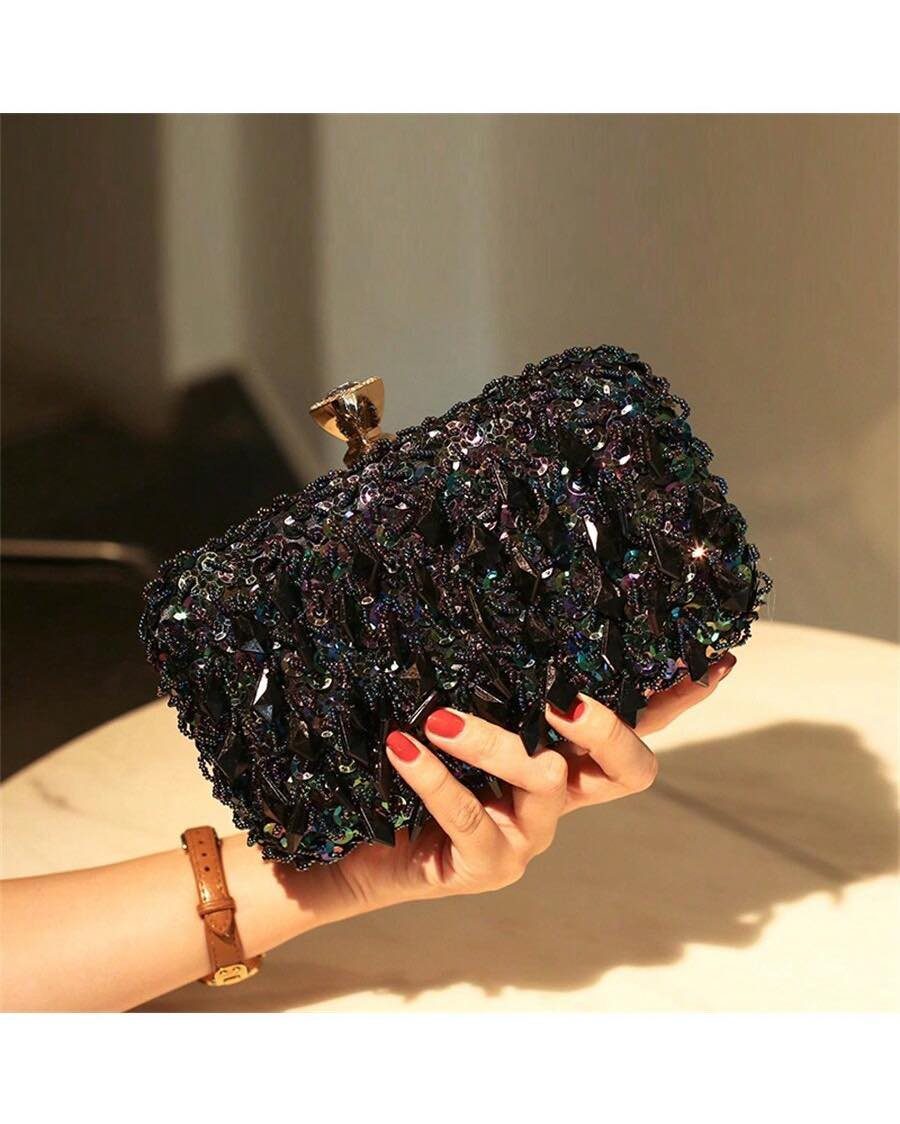
A clutch this heavily beaded needs nothing else competing for attention. A black clutch with gold hardware and dense crystal work should be small enough to hold through cocktails and structured enough to set beside a plate.
Before you buy or borrow one, check that the clasp closes securely and the interior lining will not catch on silk.
A mini shoulder bag works if the chain tucks inside for photos and the ceremony itself. The wrong bag is anything with a crossbody strap, anything that holds a water bottle, anything that looks like it could survive a commute.
5. Men’s Attire Options
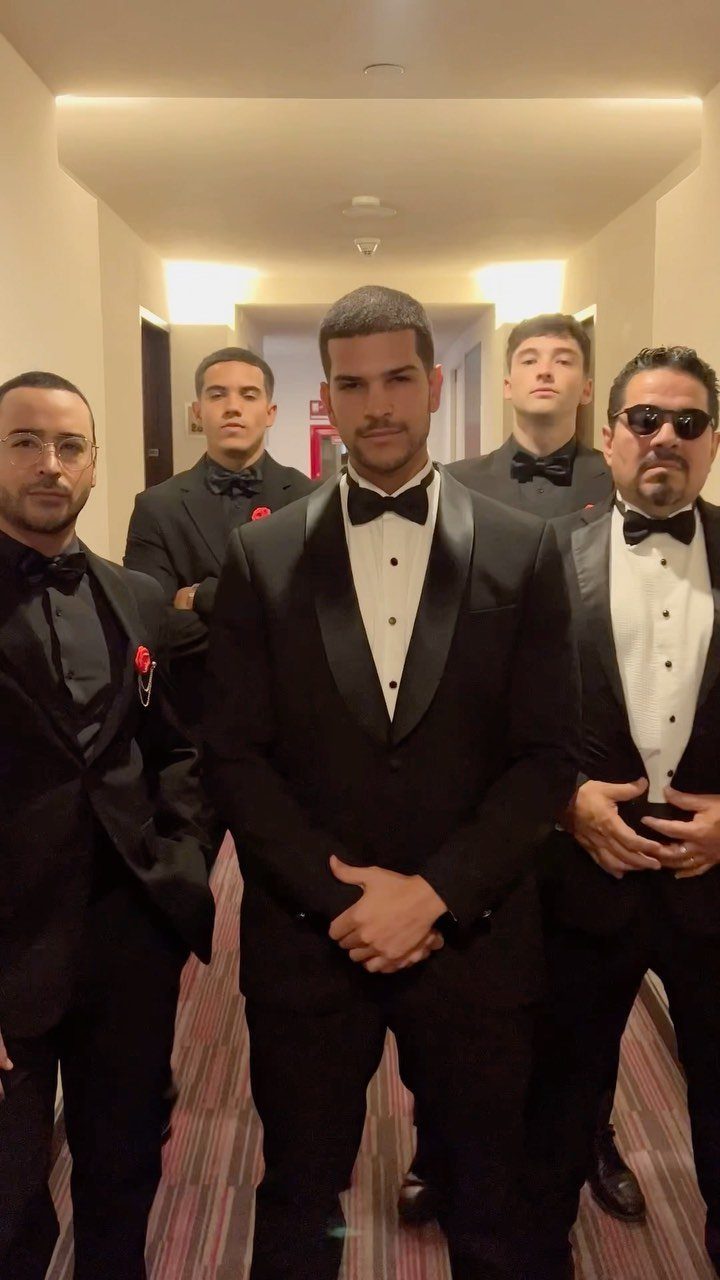
A tuxedo is preferred for black tie optional, but a dark suit in black or navy with a tie is acceptable and common.
A group of five men in full tuxedos with satin lapels mixed with dark suits looks unified when everyone chooses darkness and polish. If you are renting, a tuxedo costs little more than a suit and removes the question entirely.
If you own a well-tailored dark suit, a white dress shirt and a black bow tie or a slim necktie in a subtle pattern will carry you.
The mistake is a light gray suit, a brown shoe, or any texture that reads business casual.
Satin lapels on a tuxedo jacket are the easiest signal; if you are in a suit, let the darkness of the cloth and the crispness of the shirt do the same work.
6. Black, Navy, Burgundy, and Jewel Tones
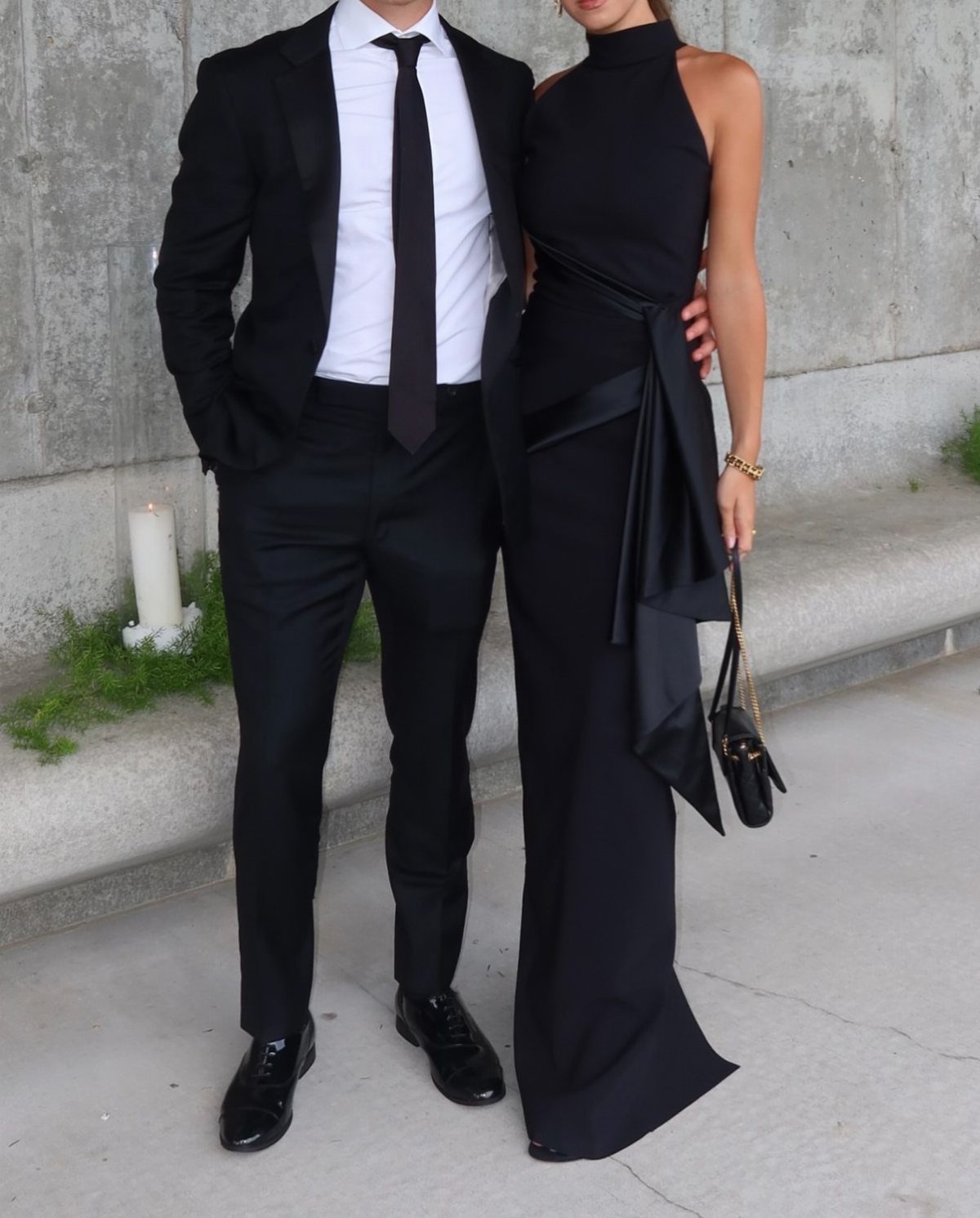
Black, navy, burgundy, and the deeper jewel tones are the backbone of black tie optional because they read formal in almost any fabric.
Black for both partners is always appropriate and always photographs well against whatever backdrop the venue provides. Navy softens the look slightly without losing formality; burgundy and emerald add warmth that works especially well for fall and winter weddings.
Silver and pale blue have entered the conversation for spring and summer, though I would keep them in satin or crepe rather than anything casual.
White, ivory, cream, and any shade that might appear in the bride’s photos are the ones to avoid.
The color rule is simpler than it sounds: if you would wear it to a job interview at a law firm, it is probably wrong; if you would wear it to accept an award, you are closer.
7. Coordinating Couple Outfits
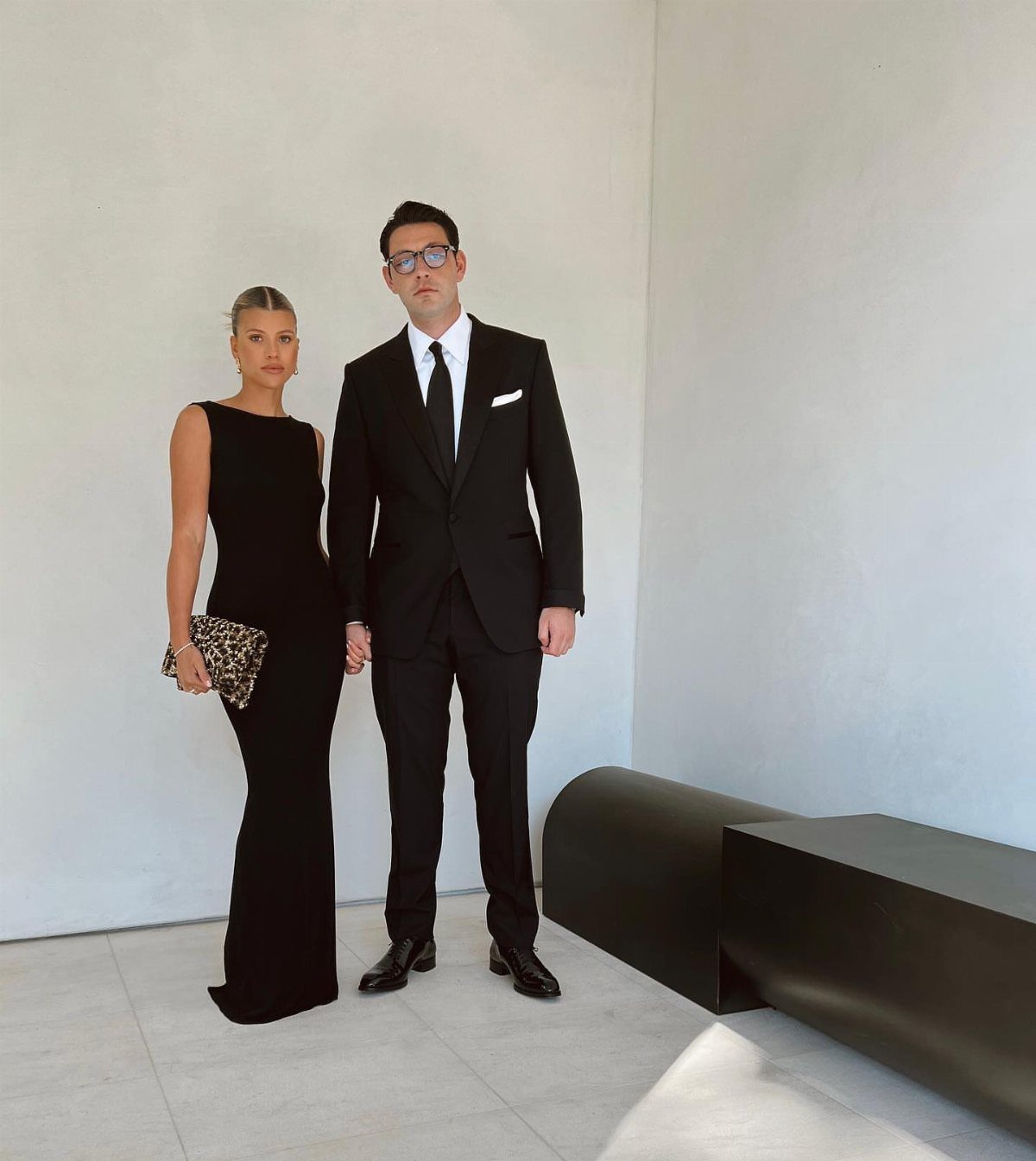
Matching your partner in black is the simplest coordination and the hardest to get wrong. Dark, floor-length formal wear reads as a unit in photos without requiring identical colors or fabrics.
The risk is looking like catering staff; the fix is texture and cut. Her gown should move differently than his suit, satin against wool, a neckline that shows skin where his shirt stays buttoned.
Check the venue before you commit to full black.
An outdoor summer wedding absorbs light differently than a candlelit ballroom, and 2 bodies in matte black can disappear into shadow. Navy for one partner, black for the other, keeps the coordination without the uniform effect.
8. Black Evening Gown with Cape Detail
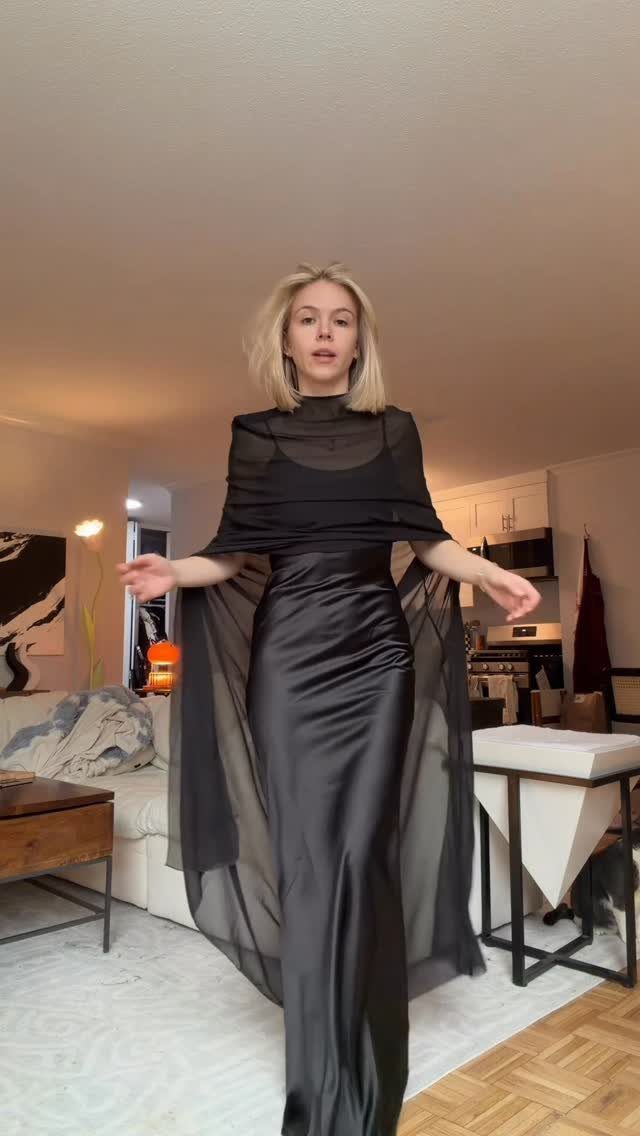
A cape replaces a wrap or jacket with something that stays put through the ceremony and photographs as part of the dress rather than an afterthought.
Sheer black over black satin reads as one garment from a distance and reveals its layering up close. The cape does the work of sleeves for a woman who wants coverage without the bulk of actual sleeves.
The weight matters more than you would think. A cape too heavy pools at the shoulders and tugs the neckline back; too light, it flutters during dinner and catches on chair backs.
Look for a point where the cape attaches, at shoulder or collar, that keeps it centered when you raise a glass.
9. Strapless Black Tulle Ballgown
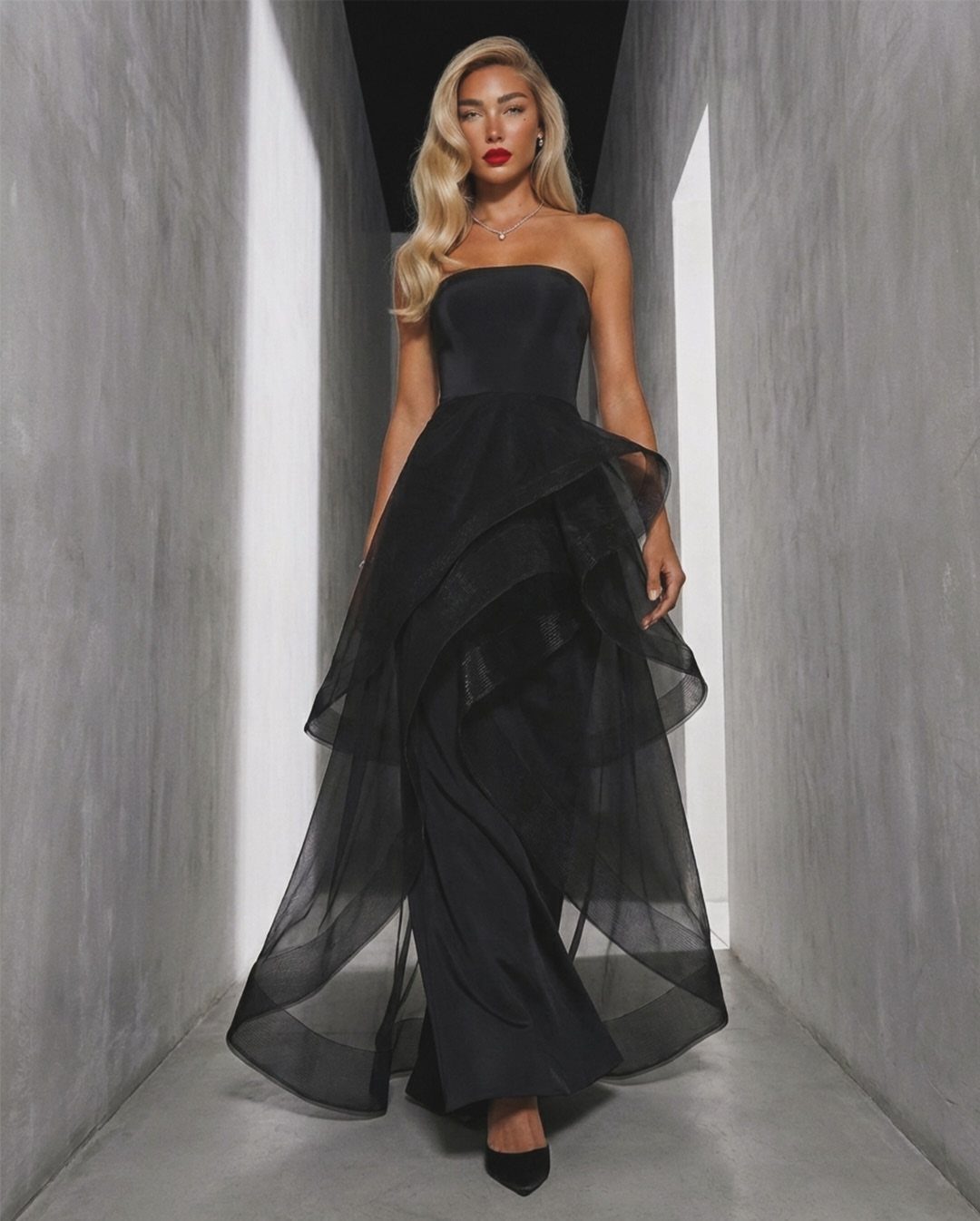
Strapless with volume below the waist is a shape that needs a real waist to hold it. The bodice must grip firmly enough that you are not adjusting all evening; the skirt’s layers do the rest of the statement.
Tulle this full adds inches to your silhouette, so check door widths and chair spacing at the venue before you commit.
A delicate necklace works because the neckline is bare, but anything larger competes with the skirt’s drama. One strong color, like red lipstick, is the right scale of accent against all that black.
10. High-Slit Black Evening Gown
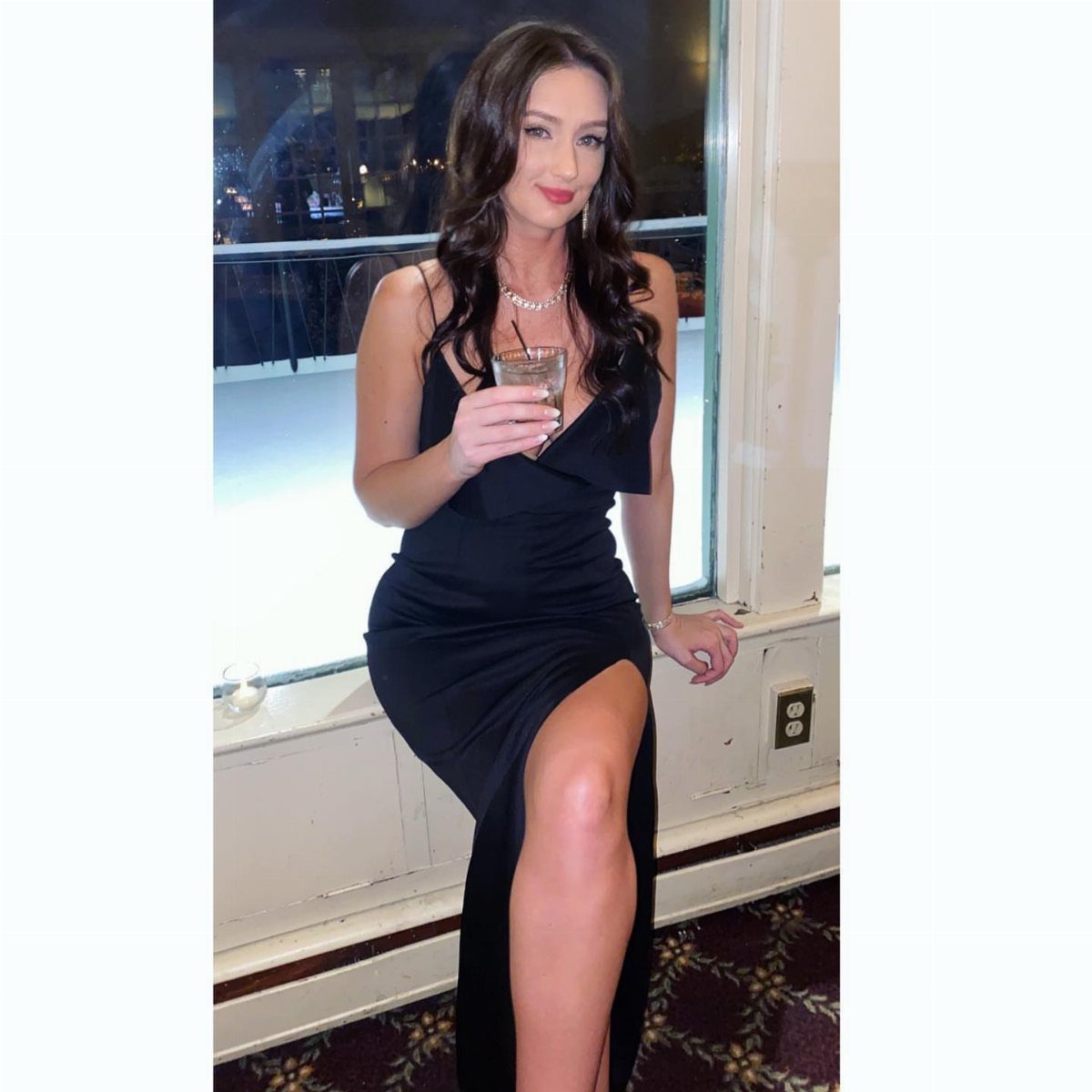
A high slit solves the main problem of a long gown, which is walking, without shortening the hem to cocktail length.
The leg shows when you move and covers when you stand; it is practical as much as it is dramatic. Spaghetti straps keep the top light to balance the reveal below.
A mid-thigh slit is high enough to matter, not so high that sitting becomes a calculation. Test this before you buy: walk, sit in a low chair, climb a step.
The jersey or soft crepe that drapes well in a long dress also drapes away from the slit when you move, which is the effect you want. Stiffer fabric holds the slit open and looks deliberate in the wrong way.
11. Backless Black Maxi Dress
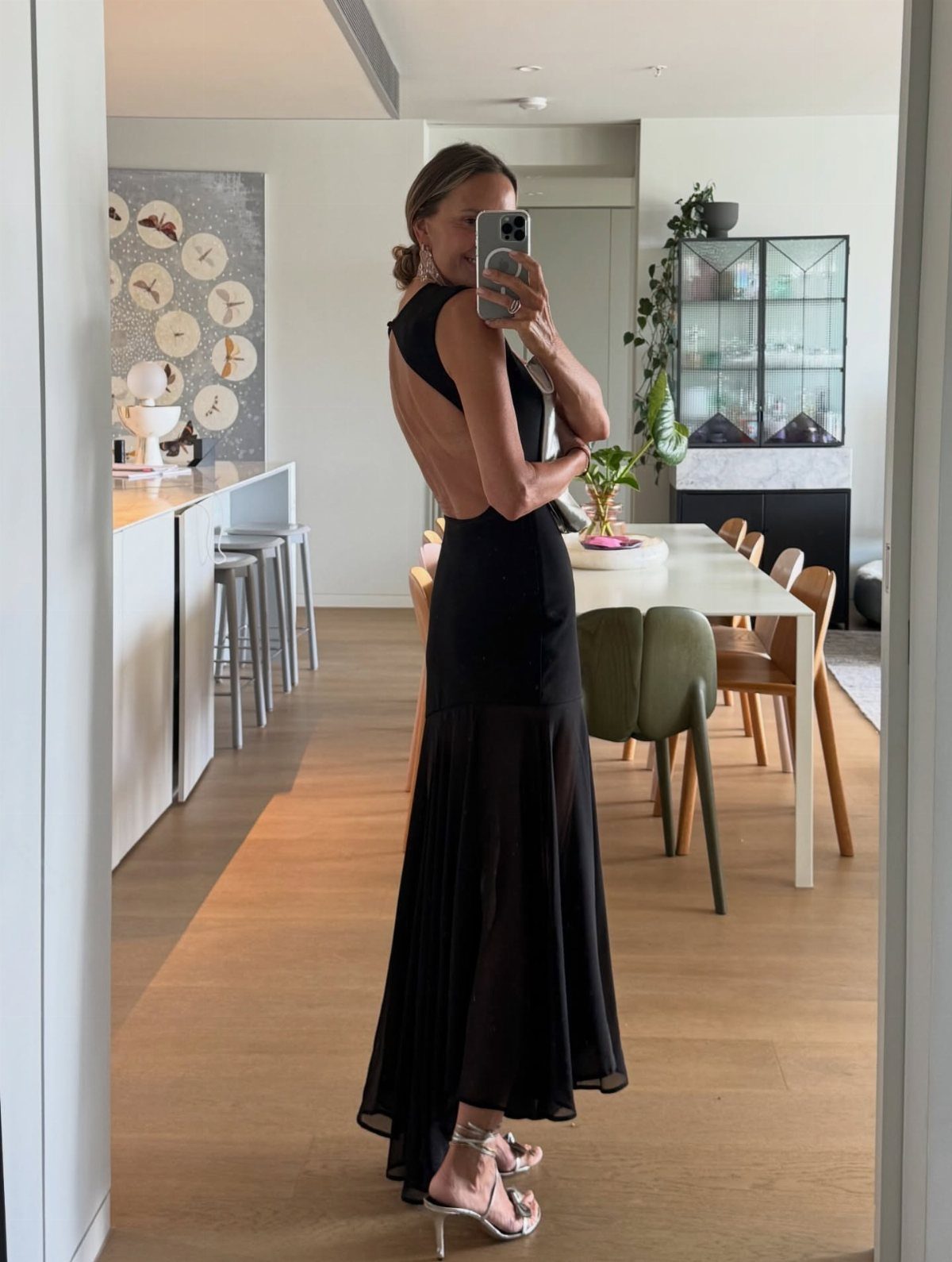
Backless to the waist is formal when the front stays high-necked and the skirt falls straight to the floor.
In a backless dress, the line of your spine and the fall of fabric from shoulder blade to hip are what other people see.
Silver strappy heels pick up light that the black absorbs; they also show in the gap when you walk.
The bra question is the practical one. A backless dress requires a solution you decide on before you buy: adhesive cups, a low-back converter, or nothing, depending on your build.
Do not assume you will figure it out later; the dress is cut for a specific undergarment or for none, and the wrong choice shows in the line across your back.
Understanding Black Tie Optional
The word "optional" applies to the tuxedo or gown, not to the formality itself; you are still expected to dress for an evening event rather than a nice dinner.
A dark suit is the minimum for men here, though a tuxedo is what the hosts would rather see. For women, the range runs from floor-length gowns to dressy cocktail dresses in fabrics that read evening rather than office.
The code sits between strict black tie and semi-formal. It acknowledges that not every guest owns full evening dress or wants to rent it for one night.
What it does not acknowledge is business casual, light colors, or anything that reads daytime. The flexibility is in the silhouette and the fabric, not in the effort.
Styling Tips for Black Tie Optional
The right accessories bridge the gap between what you own and what the occasion demands. Statement earrings in a molten or fluid metal shape catch light without competing with your face; one bold cuff does the same work.
A sleek bun or soft waves keep the look controlled rather than casual. Makeup should read defined: glowy skin, defined eyes, or a strong lip, chosen for what holds up under evening light rather than what photographs well in daylight.
Burgundy, emerald, chocolate brown, and deep teal feel native to the season; velvet, jacquard, and subtle metallics signal that you understood the assignment.
A floor-length dress settles the question before anyone has to ask it. If you prefer a midi, the fabric must carry the weight: satin with structure, lace with lining, something that does not read as a workday upgrade.
Seasonal Considerations
Summer black tie optional means lighter formal fabrics: silk, lined chiffon, flowing crepe. Brighter jewel tones and lighter metallics like champagne or rose gold feel right for the season, and elegant sandals work with the right dress.
Fall turns toward velvet, deeper colors, and sleeves or wraps that handle cooler air. Bronze and copper metallics complement autumn settings without looking borrowed from December.
Winter rewards heavier fabrics and deep saturated colors that photograph well against bare trees or snow.
Coverage becomes part of the look rather than an afterthought: long sleeves, elegant layers, formal outerwear you keep on through cocktails. Spring allows fresh colors in structured fabrics, lighter jewel tones, and sophisticated pastels that avoid the bridal range.
Venue and time refine these further.
A ballroom or formal space calls for full-length and elevated; outdoor or coastal settings allow slightly softer lines and lighter tones. Evening weddings want deeper shades and more structure.
Daytime events can relax a degree, though not into casual territory. When the wedding party is going full formal, match that energy rather than interpreting the code downward.
Frequently Asked Questions
What does black tie optional mean for wedding guests?
It means formal attire is strongly encouraged, but you have flexibility. You can leave the full ballgown at home; you still need to look like you are attending an evening event, not a dinner out.
What are some good shoes to wear to a black tie optional wedding?
Satin, velvet, or metallic shoes in a dressy heel or polished loafer tell everyone you understood the assignment. Sneakers, flat sandals, or anything that reads casual footwear clashes with the formality of the event.
Can you wear a cocktail dress to a black tie optional wedding?
Yes, as long as it is elevated and made from formal fabrics like satin, velvet, or crepe with a structured silhouette. A midi that hits mid-calf gives you cocktail-dress comfort while still reading formal enough for the room.