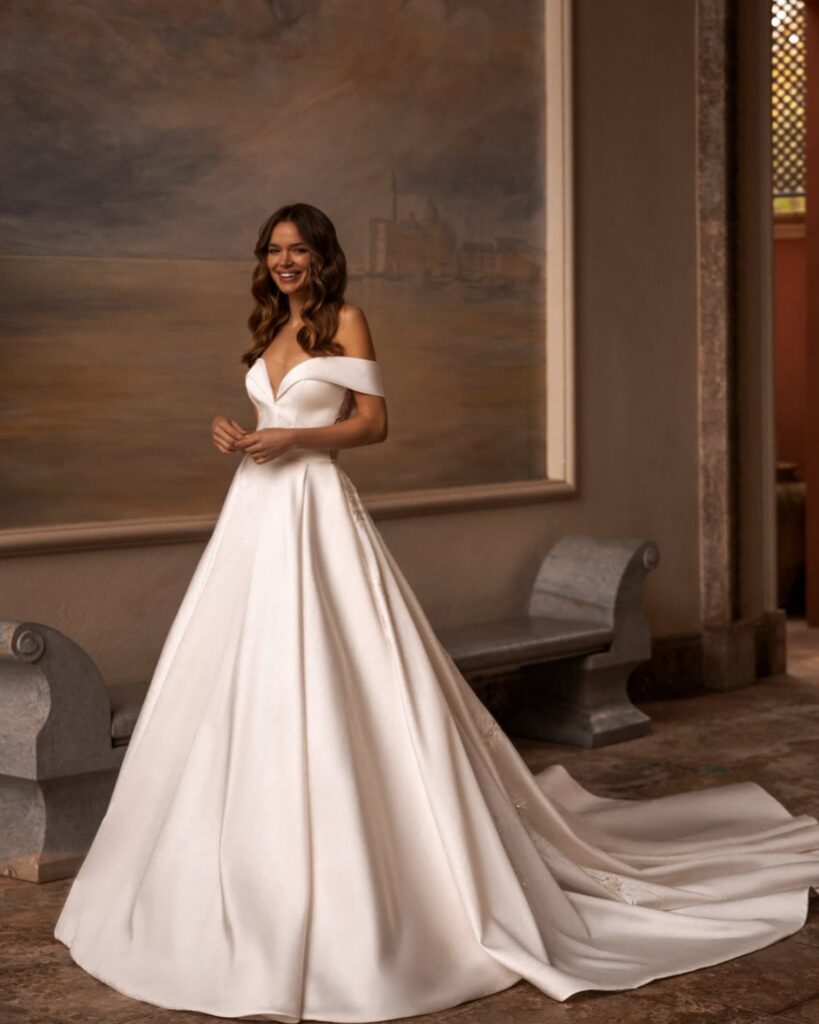
A satin gown that catches light without embellishment and an A-line with clean lines that skim the body sit at opposite ends of the same idea: the dress should outlast the season you marry in.
The right choice depends on whether your venue already carries the mood, or whether details like long sleeves or an off-the-shoulder neckline need to create it.
1. Simple Satin Gown
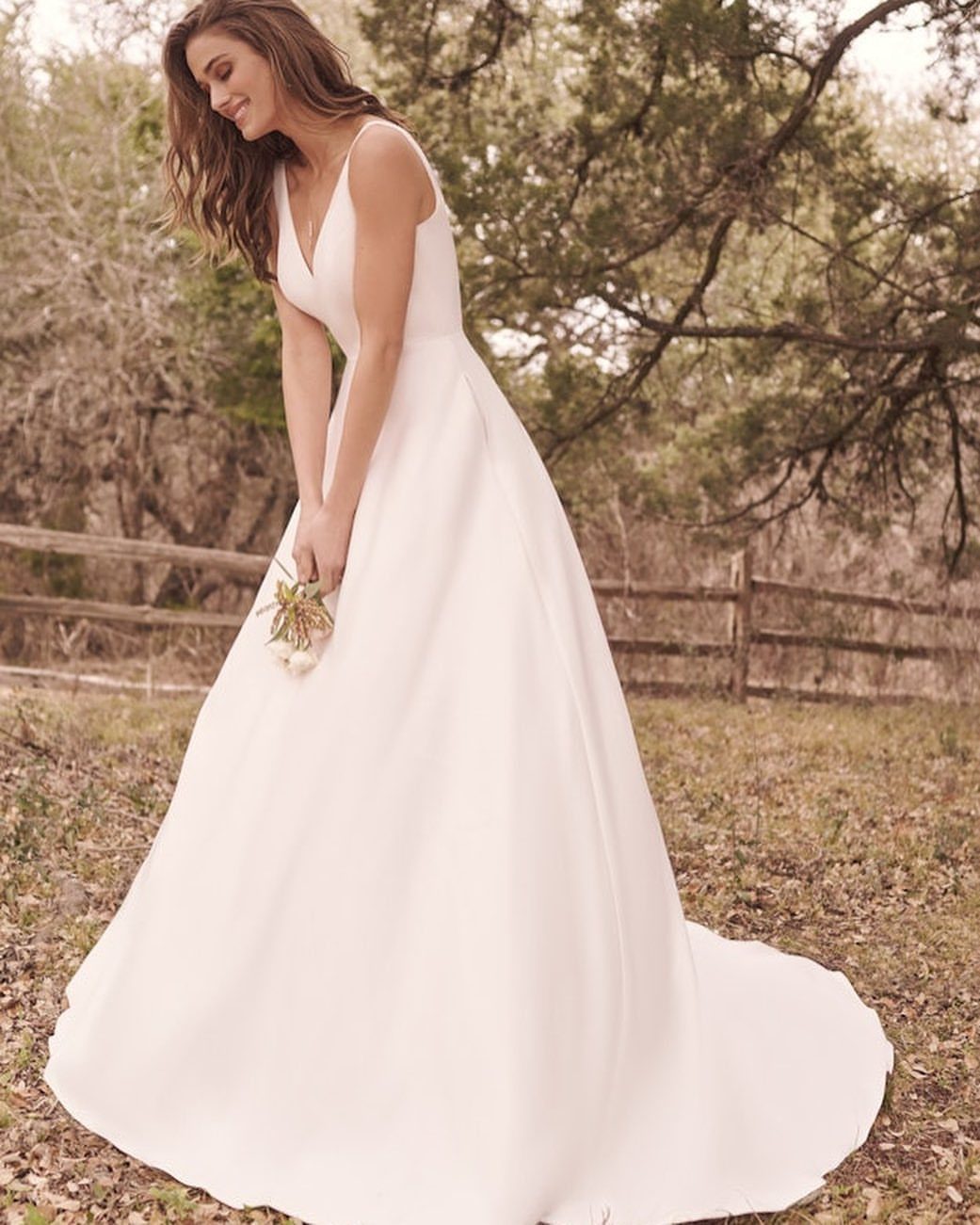
Satin asks for almost nothing in the way of detail to read as expensive. The fabric does the work, catching light across a clean bodice and falling straight to the floor without interruption.
A sleeveless cut with a soft V-neck keeps the line modern and avoids the costume feel that heavier satin can take on.
I would look for Mikado if I wanted more body and structure, or charmeuse for something that moves more fluidly as I walk.
Crepe is the quieter cousin, worth trying if the wedding is outdoors and I wanted less sheen against a natural backdrop.
This is the gown for a bride who already knows her venue and her flowers will carry the mood, and who wants her own silhouette to stay out of the way.
2. A-Line Wedding Dress
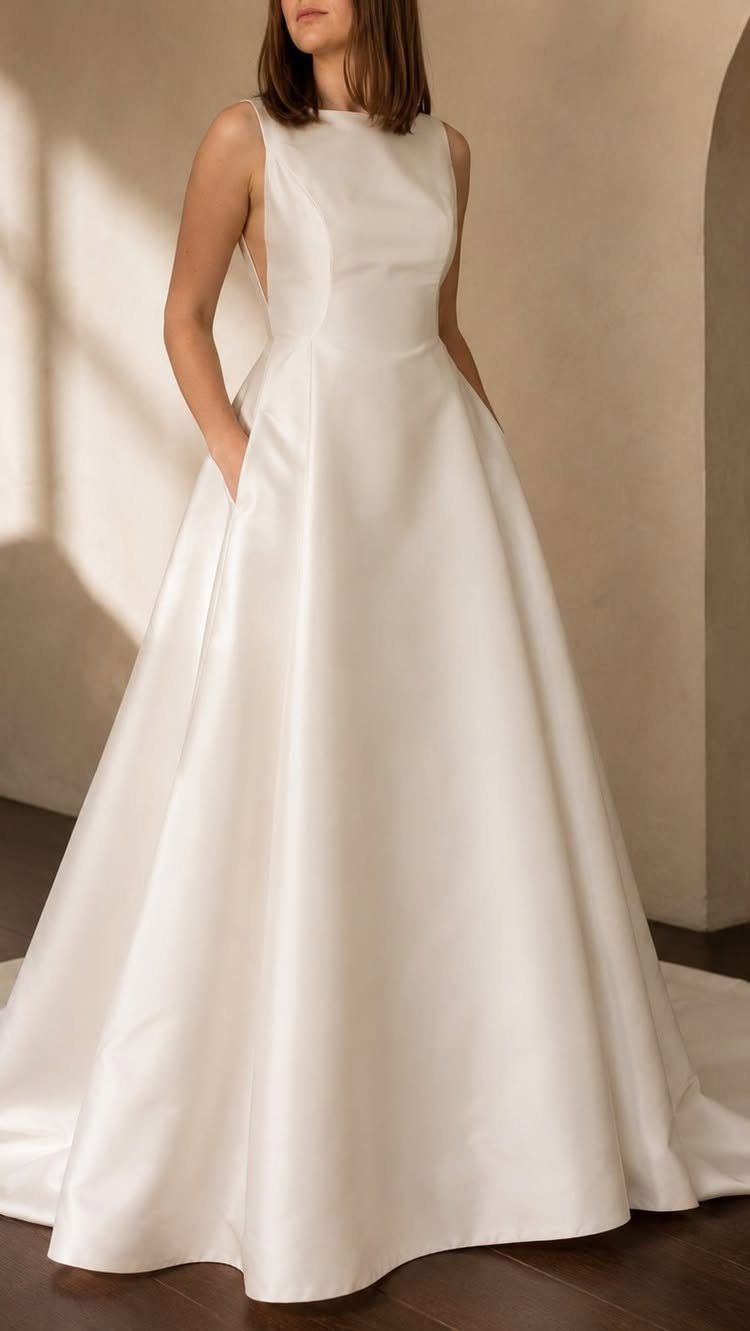
Pockets change how a bride moves through her day.
An A-line with a fitted bodice and a skirt that begins its flare at the natural waist gives structure without volume that overwhelms, and pockets sit at the hip seams where the fabric has room to hide them.
The shape flatters nearly every figure because it defines the waist and lets the skirt do the forgiving. Satin keeps it formal; a softer fabric would read more casual than most church or ballroom settings want.
I would check that the pocket openings are deep enough to actually hold a lipstick or a tissue, not just decorative slits.
For a bride who wants one dress to carry her from ceremony to dancing without a clutch in her hand, this is the practical choice that still photographs like a classic.
3. Lace Fit-and-Flare
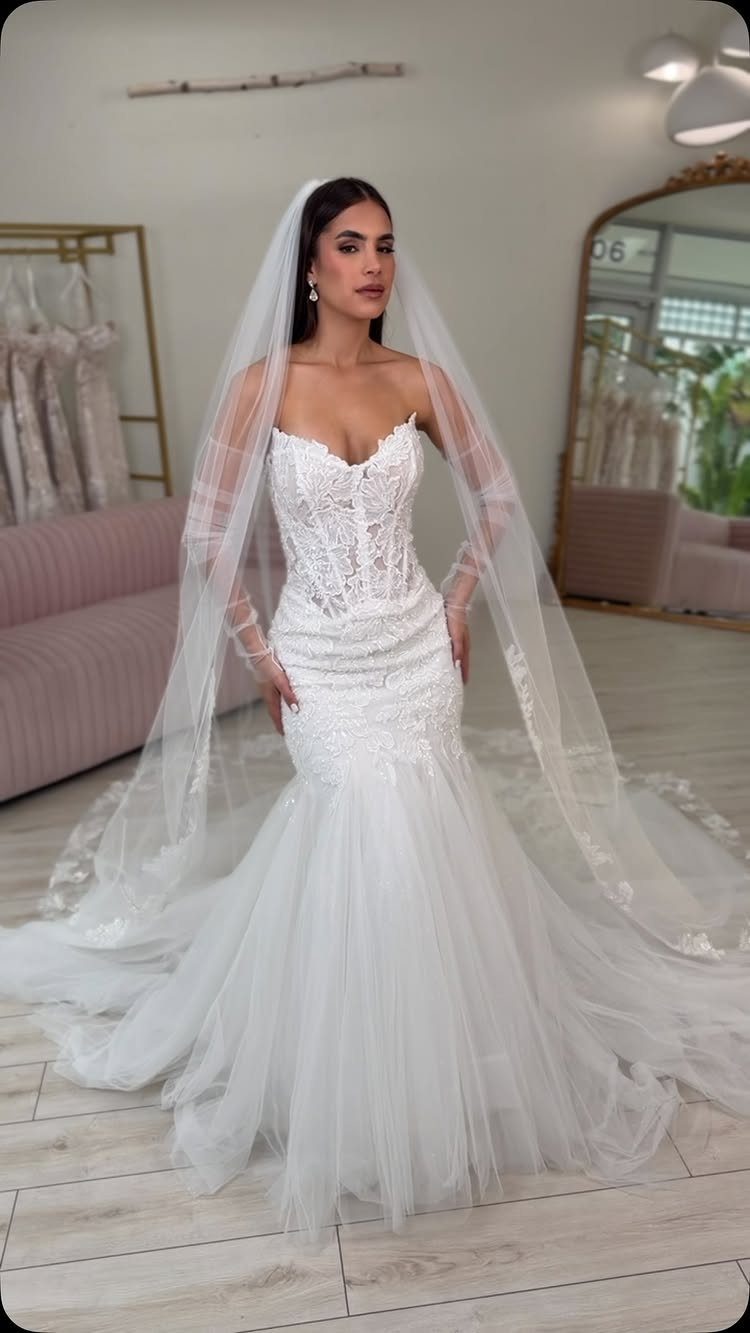
Lace over a fitted bodice that hugs through the hip and breaks into flare at or below the knee creates a silhouette that reads old-Hollywood without needing the full costume.
The fit-and-flare demands more attention to underpinnings than an A-line; the line only works if the lace lies flat and the structure beneath holds its shape.
Sheer gloves and a floor-length veil extend the romantic mood without adding bulk at the shoulder or neck. I would ask about a sweetheart neckline if I wanted softness, or a straight across cut for more structure.
This gown suits a bride who wants to feel the fabric as she moves, not just see it in photos. The flare at the knee means the train has natural movement when she turns.
4. Long Sleeve Dress
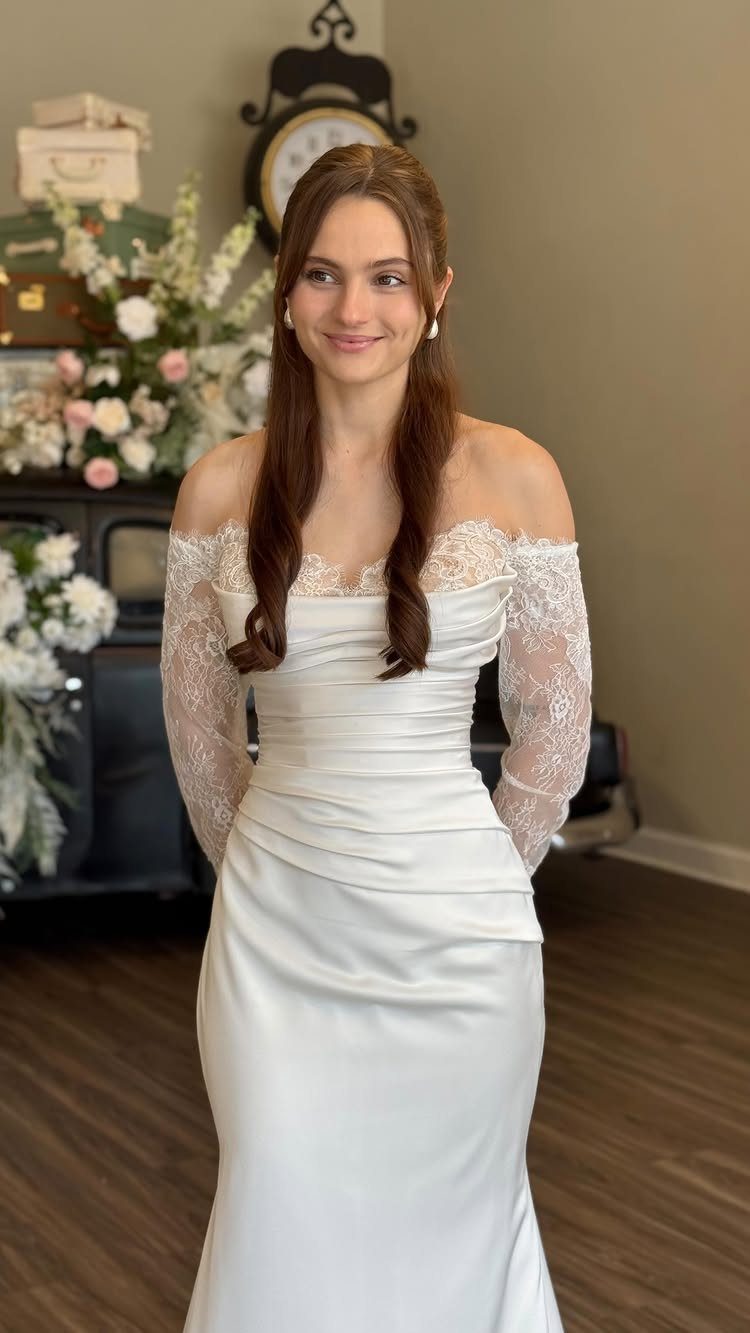
Long sleeves carry the weight of royal weddings without requiring a royal budget.
Sheer lace sleeves give coverage while keeping the arm visible and the overall look light; structured satin reads more formal and holds its own in a cathedral setting.
An off-the-shoulder neckline balances the covered arm with an open neck, so the silhouette never feels closed in. For a fall or winter wedding, this is the practical warmth that still photographs as elegance rather than outerwear.
I would bring a cathedral veil if the ceremony space has the height to carry it; the vertical lines of sleeve and veil together elongate the figure.
A bride who wants modesty without sacrificing the sense of occasion finds it here.
5. Vintage-Inspired Gown
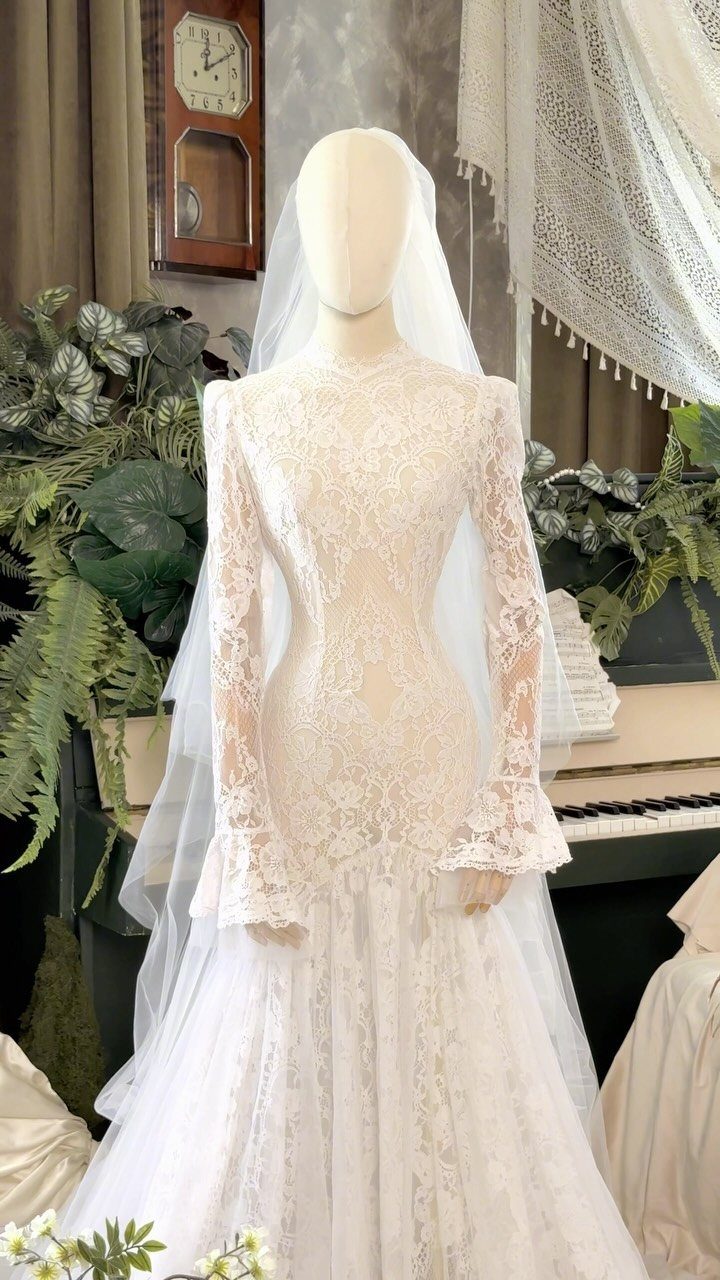
A high neck and long flared sleeves on a lace mermaid gown pull from decades when dresses were made to be inherited, not worn once and resold.
A vintage-inspired silhouette follows the body through the hip and knee, then releases into a train that pools with the weight of old lace techniques.
Button-back closures and delicate beading are the details to look for if you want that heirloom quality.
I would add pearl earrings or a birdcage veil, but not both; the dress already carries enough story that competing accessories would scatter the effect.
This style suits a bride whose venue has some age on it, a stone church or a hotel with wood paneling, where the gown looks like it belongs to the walls.
6. Ball Gown
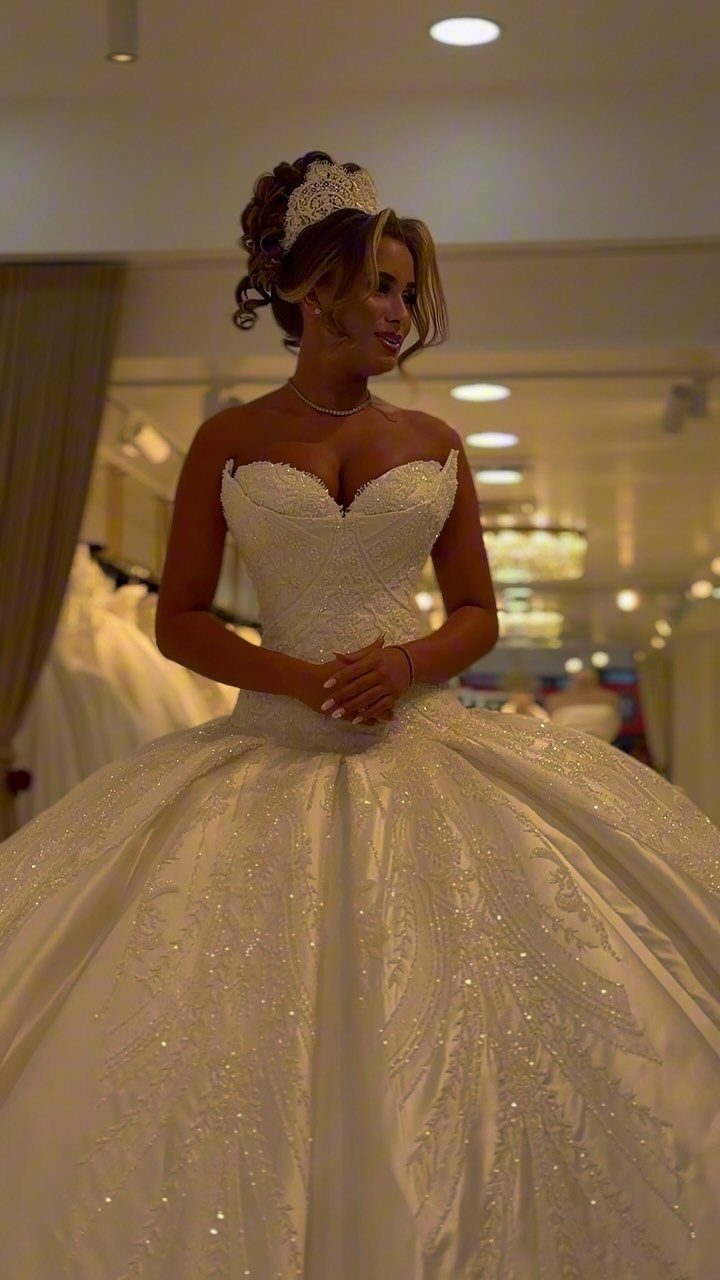
A fitted bodice that drops straight into a full, voluminous skirt creates the ball gown’s particular drama: the waist looks smaller because the eye reads the contrast.
Nearly every figure type benefits from that proportion, though petite brides should check that the skirt does not swallow their frame in photographs.
Heavy lace and a matching crown push toward fairytale, which works if that is the mood you want. Consider how much embellishment to keep for a ballroom versus edit back for a garden tent.
The structure holds its own under chandeliers and against formal floral arrangements; in a smaller space it can feel like too much dress for too little room.
For a bride who has pictured her entrance since childhood and wants the skirt to move around her as she walks, this is the silhouette that delivers.
7. Off-the-Shoulder Wedding Dress
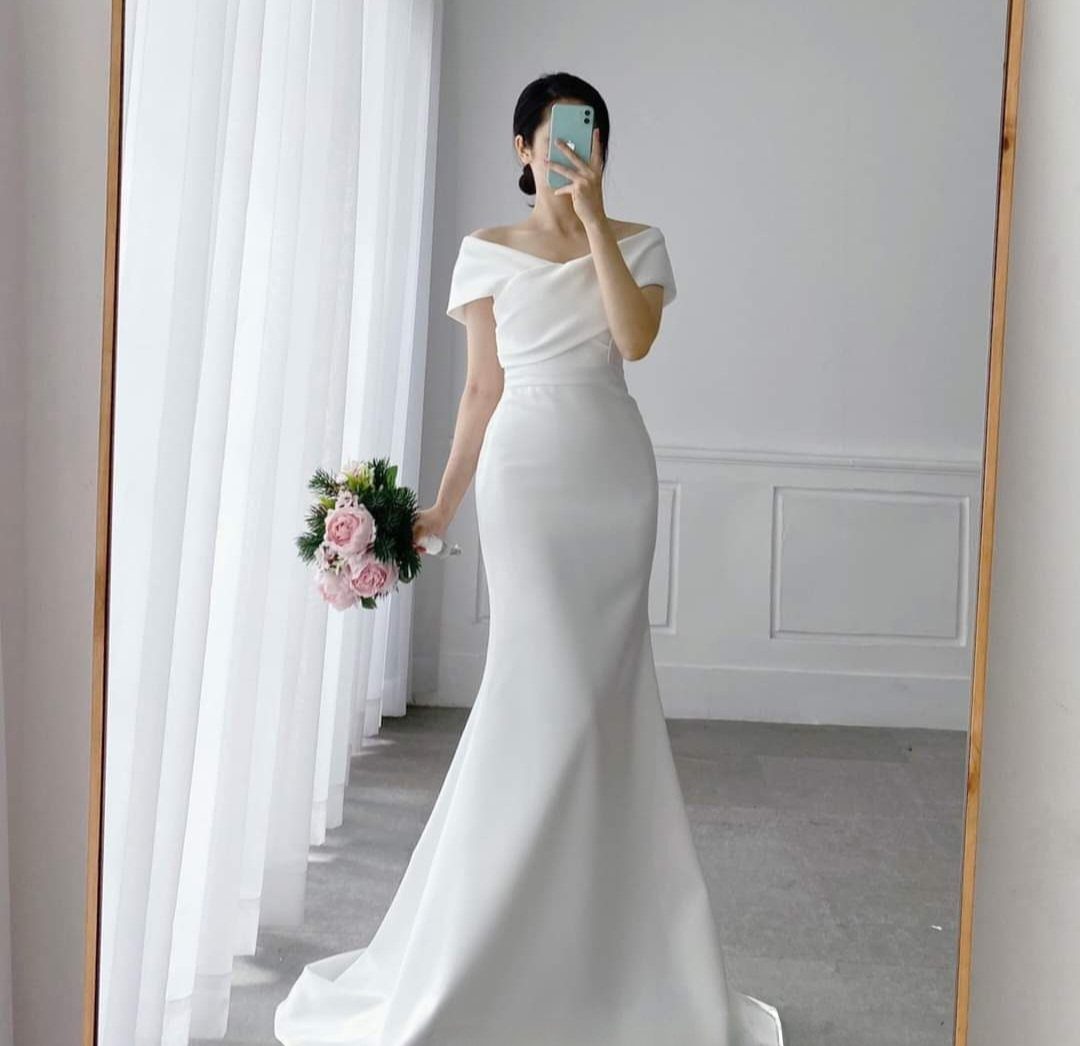
The neckline sits at the edge of the shoulder bone, exposing the collarbone and the line of the neck without dropping into strapless territory. Satin in this cut keeps the shape architectural; lace softens it toward romantic.
I would check that the bodice has internal boning or grip tape; without it, the dress slides down as you raise your arms during the first dance.
This is the choice for a bride who wants coverage without fabric at the neck, and who has the shoulders to carry the frame.
8. Embroidered Bodice Ruffled Skirt Gown
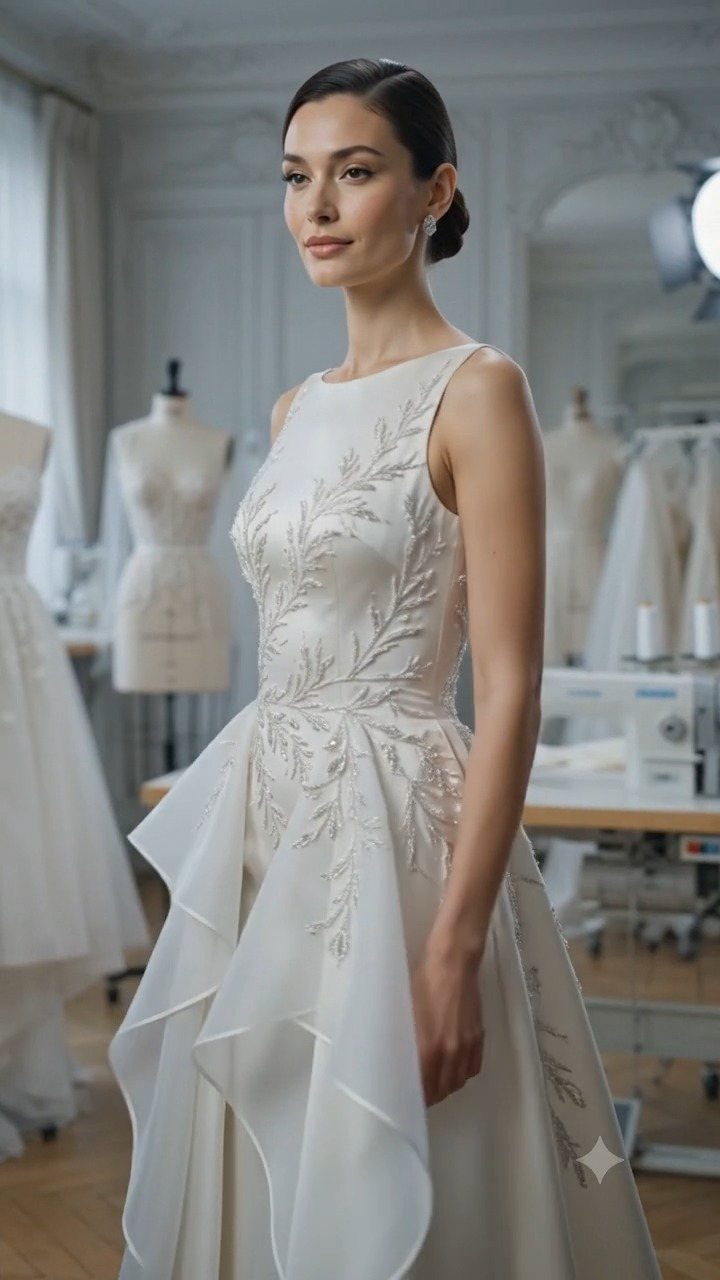
Silver thread on white satin catches light differently than beadwork, reading as texture from a distance and revealing its pattern only up close.
The ruffled skirt breaks in tiers rather than one continuous volume, which keeps the gown from reading as costume even with full embroidery at the bodice.
A sleeveless cut lets the detail hold the eye without competition. I would ask whether the embroidery continues to the back or stops at the side seams; a fully wrapped bodice photographs better from behind during the ceremony.
For a bride whose venue has the scale to carry the skirt, this is the statement that still photographs as a gown rather than a trend.
9. Floral Lace Appliqué Detailing
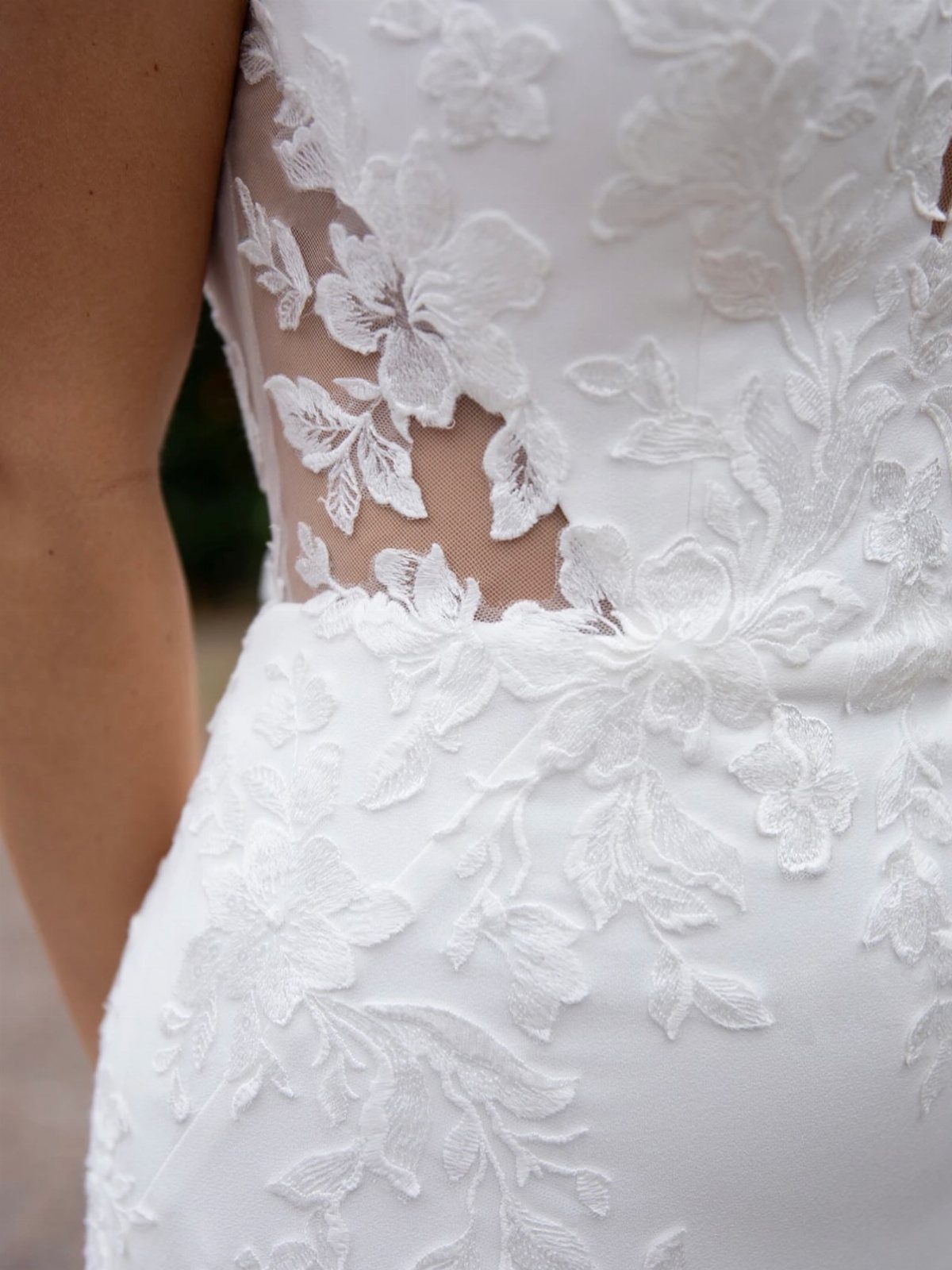
Lace appliqué laid over sheer mesh creates depth without weight; the eye reads the floral pattern as floating against skin rather than sitting on top of fabric.
The technique works at the waist, the back, or trailing down a train, wherever the designer wants to break solid white with shadow.
Mesh supports the lace but needs a lining that matches your skin tone, not the dress, or the effect turns into cutouts instead of illusion.
I would check whether the appliqués are hand-sewn or machine-applied; the former lifts slightly and catches light, the latter lies flat.
This is the detail for a bride who wants ornament that moves with her rather than hanging still.
Choosing Timeless Vs. Trendy
A bride who lives in sneakers and structured blazers will feel like a guest at her own wedding in a gown that fights her instincts.
The same dress that looks wrong on her becomes right on someone whose closet holds vintage slips and pearl buttons.
The venue sets the real test. A stone church with stained glass windows swallows a trendy cut faster than a converted warehouse with Edison bulbs.
Comfort matters more than most brides admit until hour four: a bodice that requires constant adjustment, or a train that needs a babysitter, turns the day into logistics.
I would try on one dress from each camp before deciding. The mirror tells part of the story; the way you forget to think about the dress tells the rest.
Timeless Dress Characteristics
A-line and ball gown shapes earn their keep by working on nearly every figure without demanding the body change for them.
The waist sits at the natural waist; the skirt falls or flares from there. No surprise angles, no reliance on a trend-specific undergarment.
Lace, satin, and tulle have lasted because they photograph honestly. Lace reads as texture in person and pattern in stills.
Satin catches window light and candlelight differently but never turns flat. Tulle gives volume without weight that drags at the shoulders.
Refined details mean buttons that function, seams that line up, a hem that hangs straight without 3 layers of crinoline.
Sweetheart necklines and long lace sleeves recur across decades because they frame the face and the gesture of raising a hand, not because any single year claimed them.
Personal Style Reflection
A woman who reaches for lace camisoles and soft skirts will find herself at home in a romantic gown; one who defaults to strapless evening tops and clean jewelry already knows she wants modern structure.
The question is how much twist the classic base can take.
A vintage-inspired gown with a birdcage veil carries one story; the same silhouette with bare shoulders and a simple stud reads as another entirely. Accessories are the lever, not the dress itself.
I would decide the single detail that matters most, whether that is a sleeve length, a neckline, or the way the train moves, and let the rest support it.
A dress that tries to be every kind of bride at once scatters the effect. One clear choice, even a quiet one, photographs as confidence.