Wedding dress silhouettes range from a straight sheath with zero flare to a ball gown built on tulle and structure, and the right one depends on where you marry as much as how you’re built.
An empire waist sits up under the bust and skims right past the midsection, a mermaid grips you through the hips and thighs before it flares at the knee, and a tea-length hem chopping the calf turns even the most formal shape into something you can move in.
The 11 types below pair each cut with the body shape, venue, and movement level it actually serves.
1. A-line
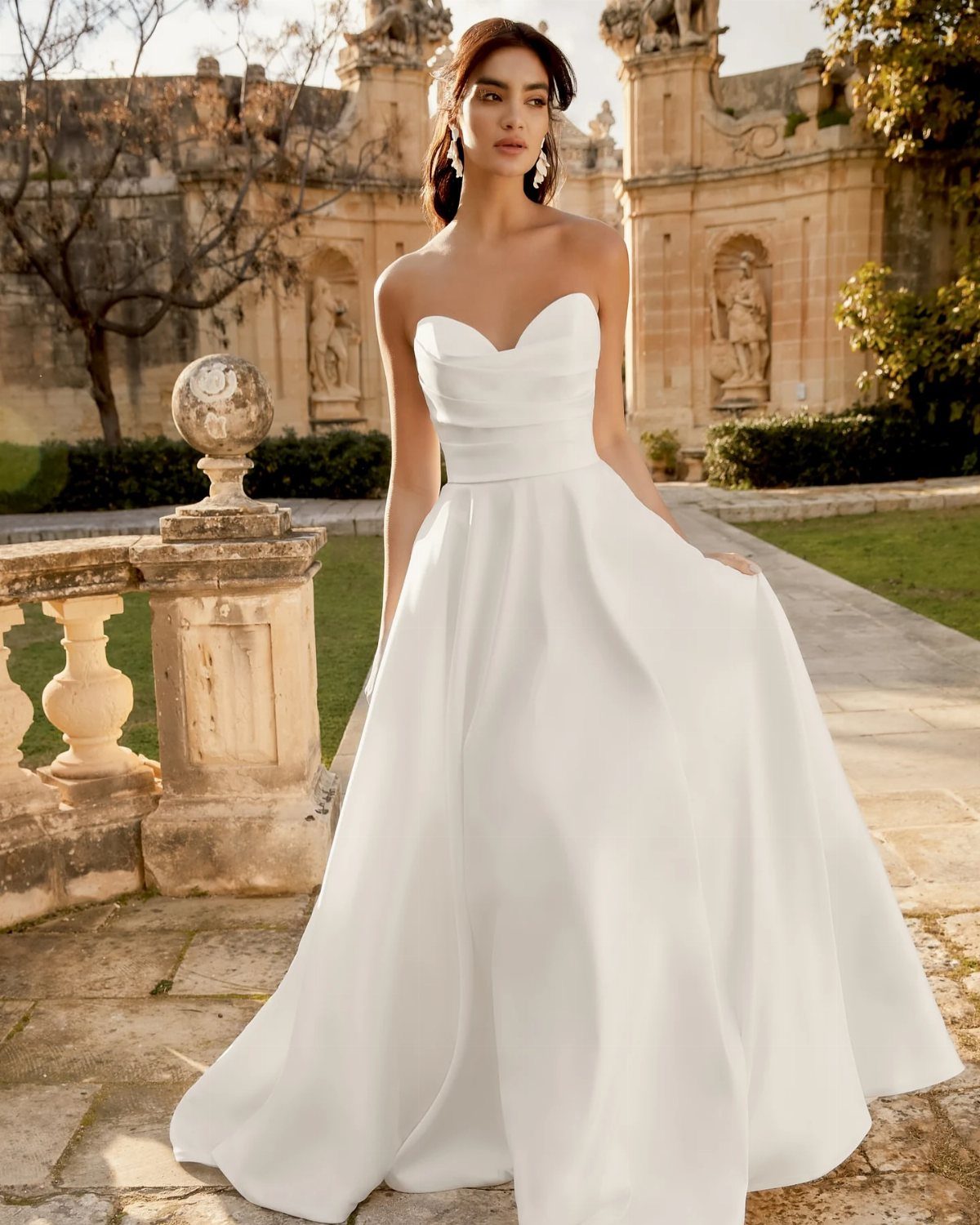
The A-line traces a capital A in fabric: fitted through the bodice, meeting the waist at its natural point, then releasing into a gentle flare that falls clean to the hem.
It is the most forgiving shape in bridal, working in lace, silk, tulle, or organza and fitting in at a garden ceremony or a ballroom without looking out of place.
I would reach for this silhouette if I wanted one dress to do everything. The flare starts high enough to skim the hips without adding volume, which balances a fuller bust and gives structure to a straighter frame.
Most bodies look proportional in an A-line because the eye travels to the waist, then lets the skirt do the rest.
For a bigger bust, the skirt’s weight below anchors the silhouette so the bodice does not dominate. Pair it with almost any neckline or sleeve length; the shape accepts additions without fighting them.
2. Ball Gown
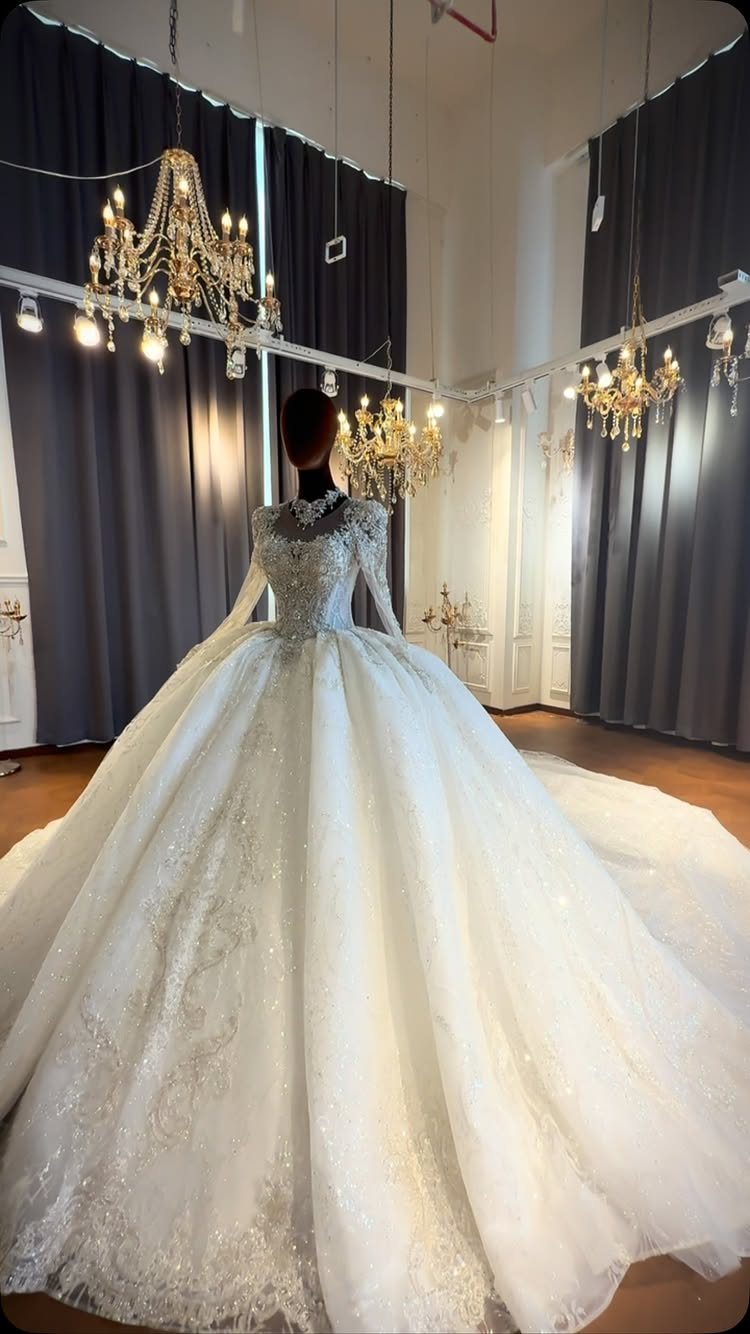
A ball gown is architecture first, dress second.
A ball gown keeps the bodice tight and structured, then explodes into a full skirt at the natural waist, layered in tulle or silk that pools at the floor, with or without a hoop underneath.
No other silhouette announces wedding so clearly.
The drama is the point, and so is the trade. The skirt demands space: a narrow aisle, a crowded car, or a low ceiling will fight it.
But in a cathedral or a ballroom with room to move, the contrast between the small fitted bodice and the mass of fabric below makes the waist disappear by comparison.
I would reserve this for a formal evening reception or a ceremony with real procession. It photographs as timeless, not trendy, and the structured bodice supports itself, which matters if you want a strapless neckline without constant adjusting.
3. Mermaid
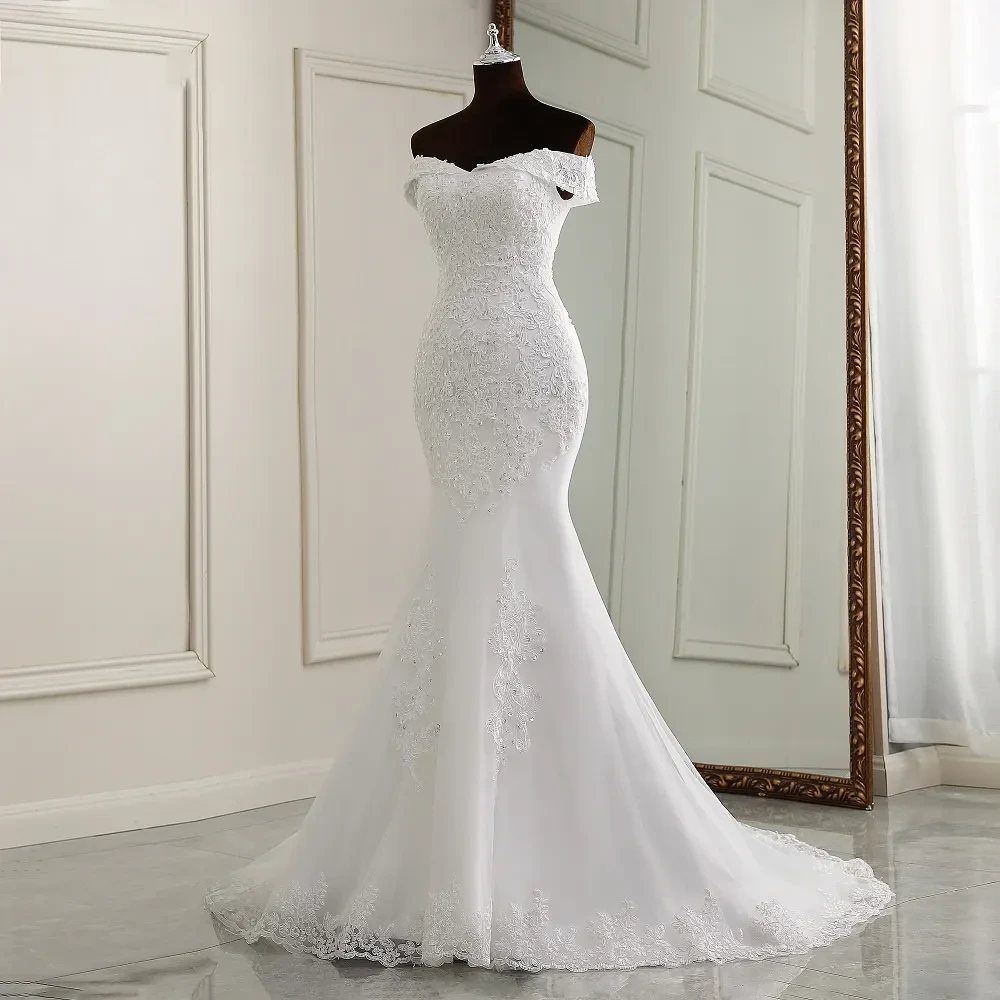
No other bridal shape builds curves into the architecture of the dress itself; this one sculpts them outright.
Hourglass and pear figures fill this dress the way it wants to be filled; the flare below the knee continues the curve the body already has.
A straighter frame may find it gapes at the hip or loses the drama the shape depends on.
The fit is close enough that sitting, walking, and dancing all take planning, and the fabric needs to hold its line without buckling.
I would choose this for a formal evening wedding where the dress is part of the event, not background to it.
It photographs beautifully in stillness and in motion, but the motion takes work. If you want the look with more give, the trumpet entry below trades some drama for movement.
4. Fit-and-flare
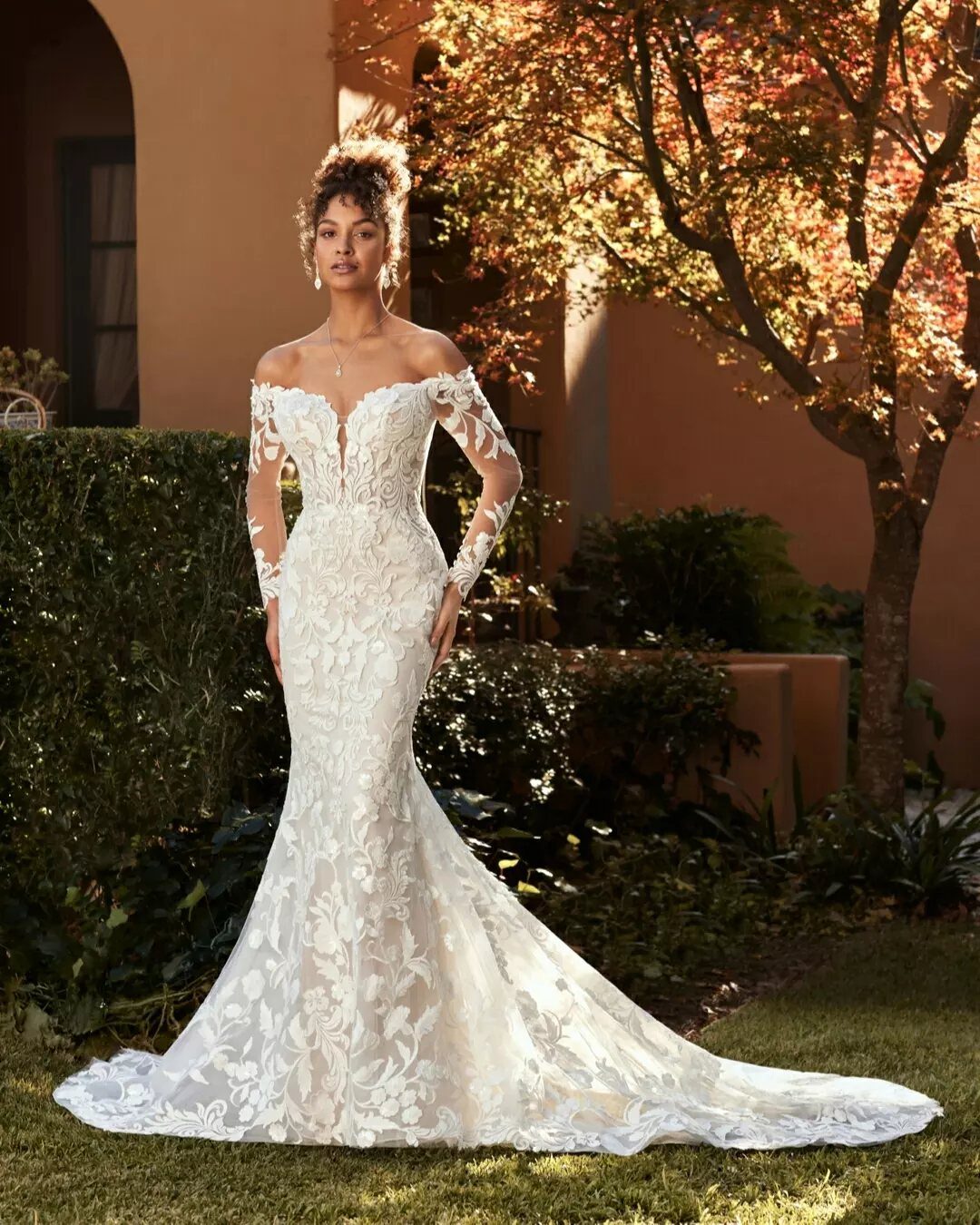
Fit-and-flare occupies the middle ground: tight through bodice and hips like a mermaid, but the fabric releases higher on the thigh, catching movement without swallowing the wearer.
I would pick this shape for a defined waist without the full drama of a mermaid flare.
It flatters pear, hourglass, curvy, and athletic builds because the flare begins low enough to skim rather than squeeze, and the silhouette stays proportional in photographs whether you are standing still or turning on a dance floor.
The bodice does the work of shaping, so construction matters more here than in an A-line. Look for seaming that sits at your natural waist, not above or below it; an inch of misplacement changes the whole proportion.
5. Sheath (column)
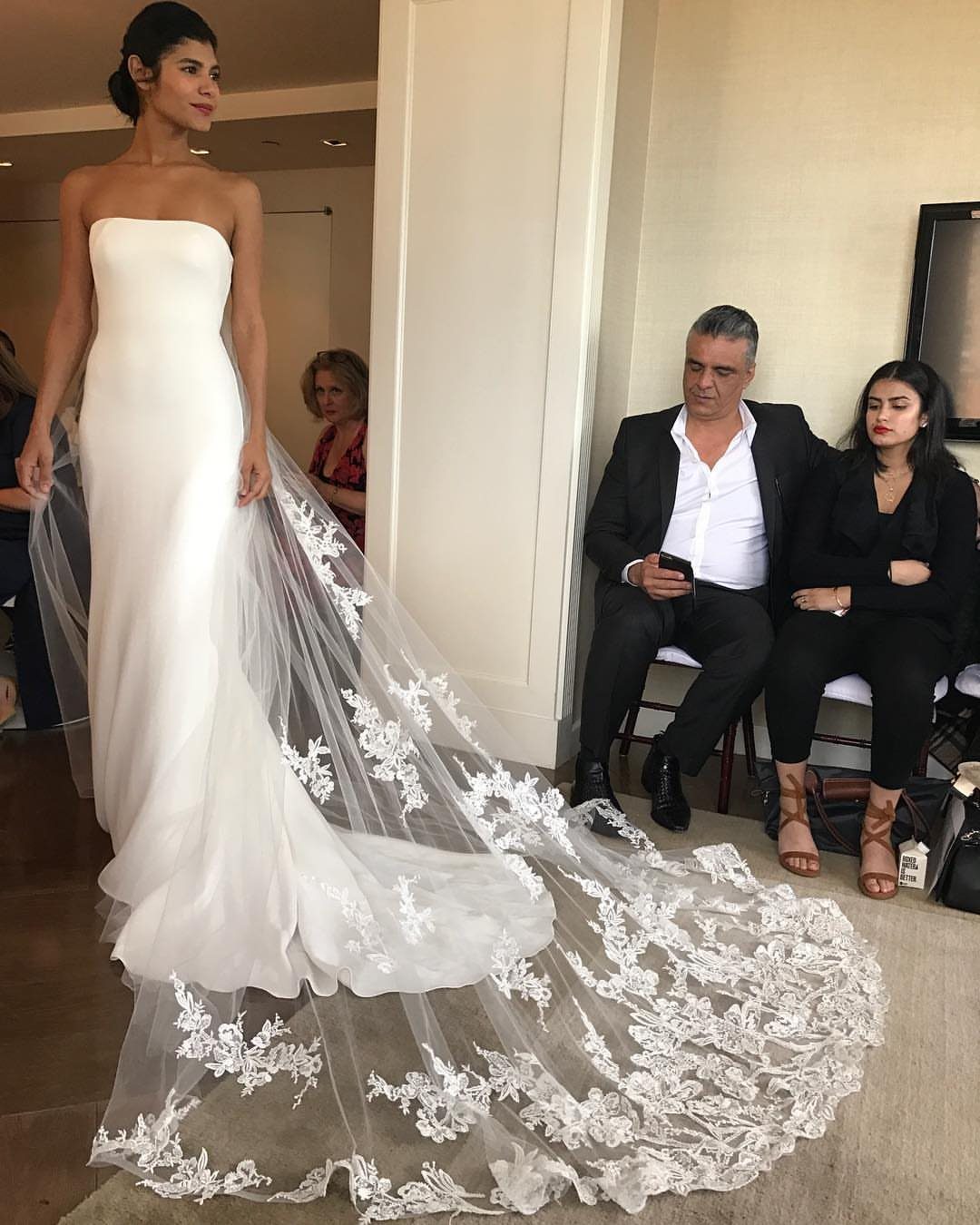
A sheath drops straight from shoulder to hem with zero flare, no gathers, no extra volume.
The cloth runs in one vertical line and leaves the body beneath to supply every curve. This is bridal at its most stripped back, nearly a long evening slip in its simplicity.
This shape rewards fabric that hangs from its own weight: silk satin, silk crêpe, heavier lace. Anything too light or too stiff fights the fall.
The straight line elongates a petite frame and suits a tall one that does not need help, but it also reveals what is there without the forgiving structure of a fitted bodice and full skirt.
I would wear this to a city-hall ceremony, a museum reception, or any venue where the dress should look modern and unstudied.
It moves easily, packs small, and photographs as intentional rather than underdressed. The trade is coverage: there is no skirt to hide behind and no waist to emphasize, so the fit through the torso needs to be exact.
6. Trumpet
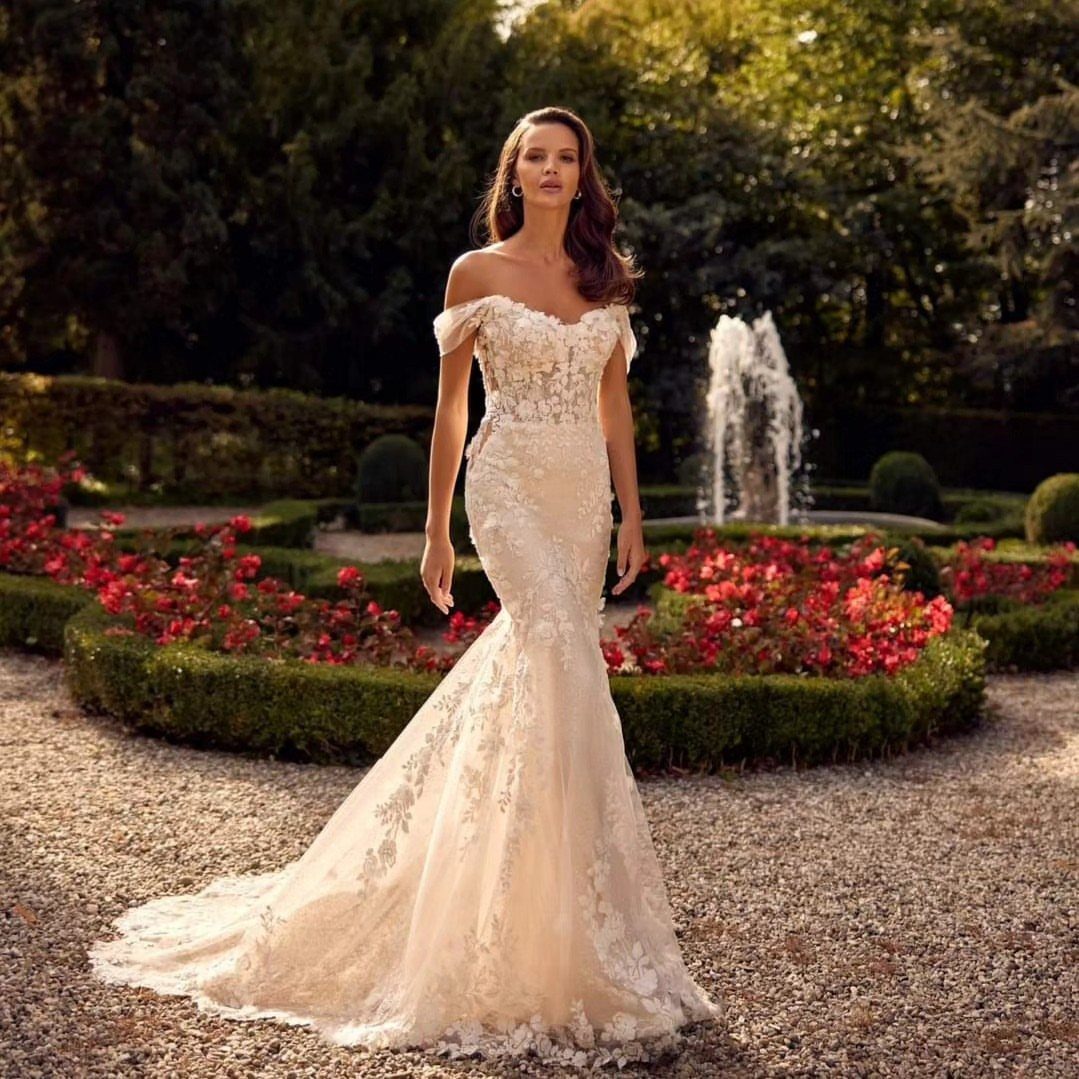
The trumpet hugs through the bust and hips like a mermaid, but the flare releases higher, at mid-thigh, in a softer bell of fabric that gives way when you walk, sit, or dance.
It keeps most of the mermaid’s curve without the restriction below the knee.
A bride who loves the fitted look but plans to move at her reception usually lands here.
The extra fabric at mid-thigh means the dress moves with you rather than against you, and the shape photographs as dramatic without reading as overtly formal as a true mermaid.
I would try this on if I were deciding between the mermaid’s look and the need to move freely.
The fit through the torso still needs to be precise, and the flare still needs a body with curves to support it, but the evening wears easier in a trumpet than in its stricter sister shape.
7. Off the Shoulder Wedding Dresses
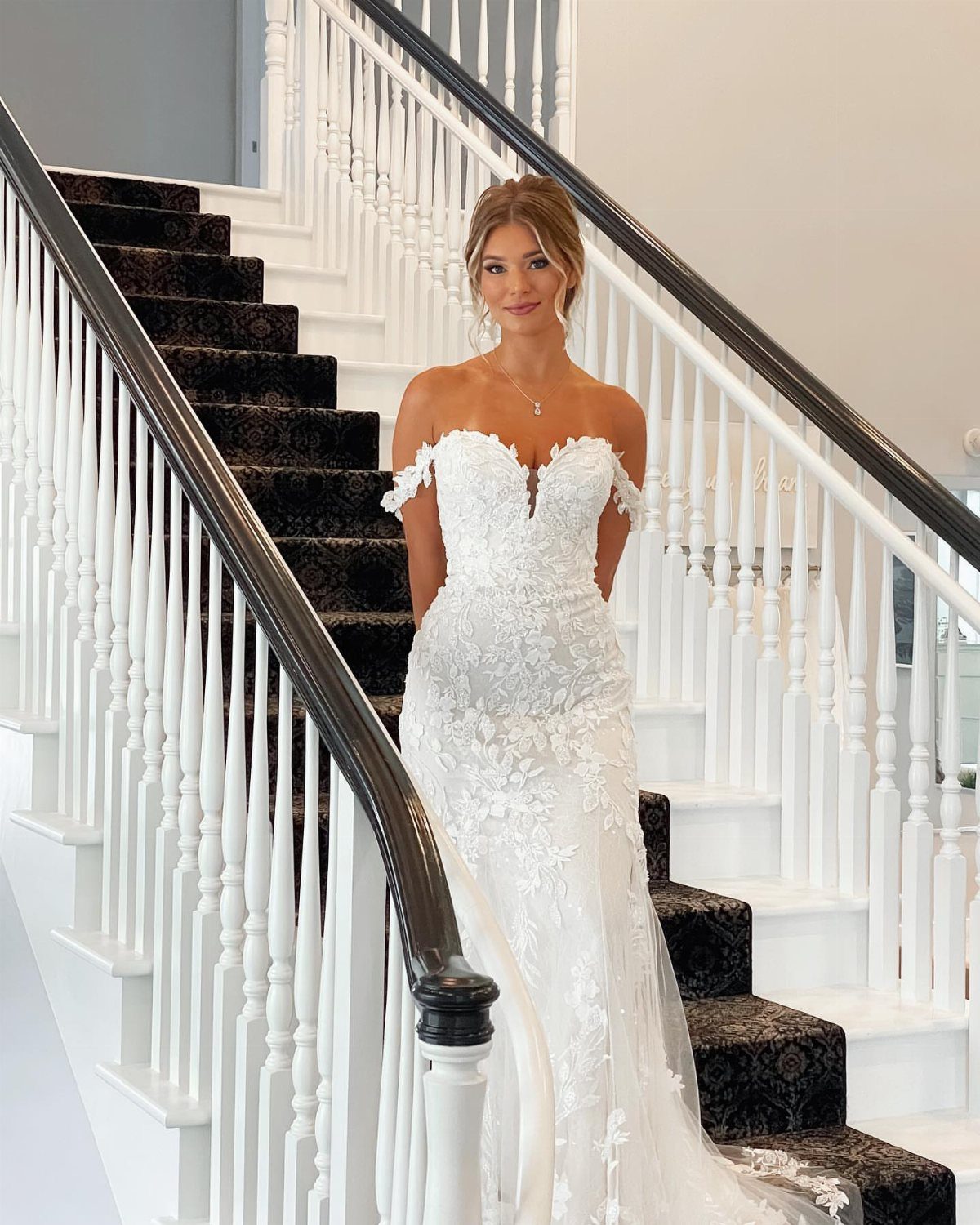
An off-the-shoulder neckline rests just below where the shoulder ends, leaving the collarbone open while the fabric drapes across the top of the arm.
The look reads romantic because it borrows from vintage eveningwear, and it photographs as feminine without veering into costume.
The drape across the arm is the variable that changes everything. A flutter sleeve softens the line and gives coverage if the upper arm is where you want it; a tighter fold shows more shoulder and reads more formal.
Either version pairs with almost any skirt shape, A-line through mermaid, because the neckline does not fight the waist.
I would check the point where the fold sits. Too high and it creeps toward the neck and loses the effect; too low and the dress slips toward becoming strapless.
8. Empire
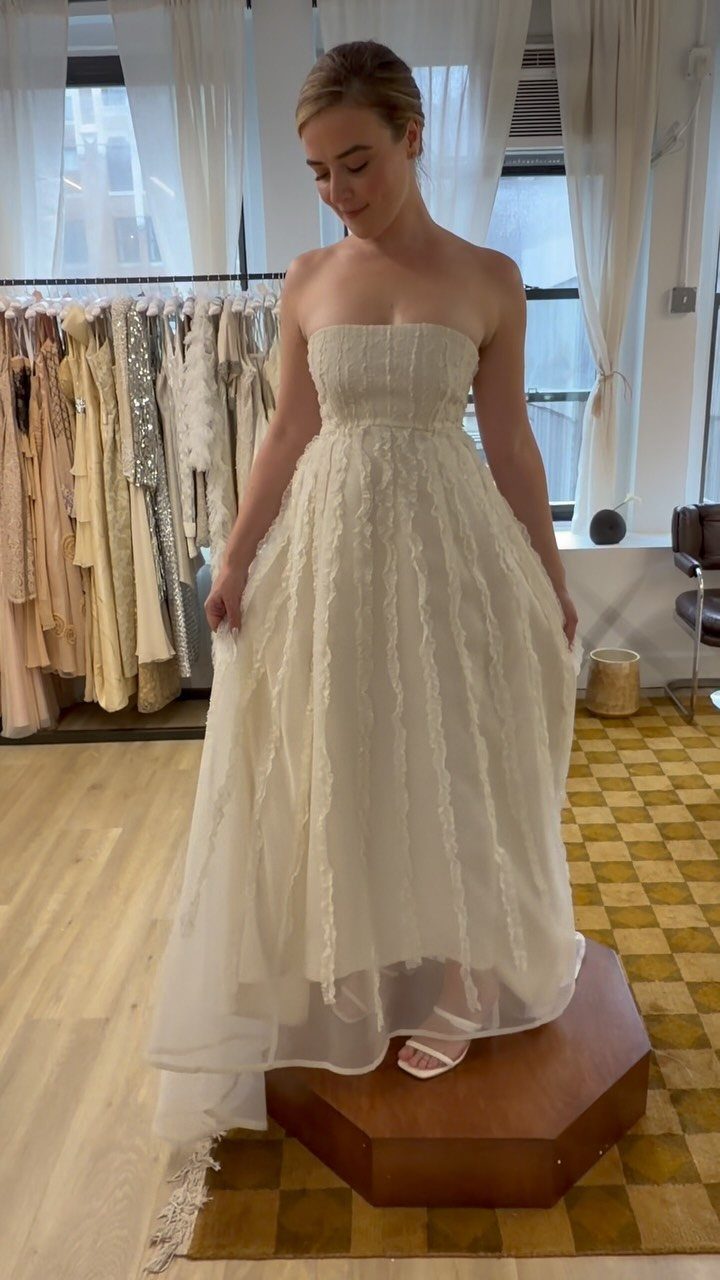
An empire waist starts directly under the bust, then lets the fabric drop straight to the hem without cinching or gathering in between.
That high seam is what makes the shape work: it hides the midsection entirely and lengthens what shows below it.
I would consider this for a garden ceremony or a destination where heavy structure would feel out of place.
The gown moves lightly, packs without fighting, and suits a pregnant bride because the waistline sits above the changing shape rather than across it.
The trade is that the chest becomes the focal point by default; the cut beneath the bust needs to sit exactly right, or the silhouette flattens what it should frame.
A straighter figure carries this well because the skirt’s fall supplies its own line. Pear and apple shapes find forgiveness here that few other silhouettes offer.
9. Two-piece / Separates
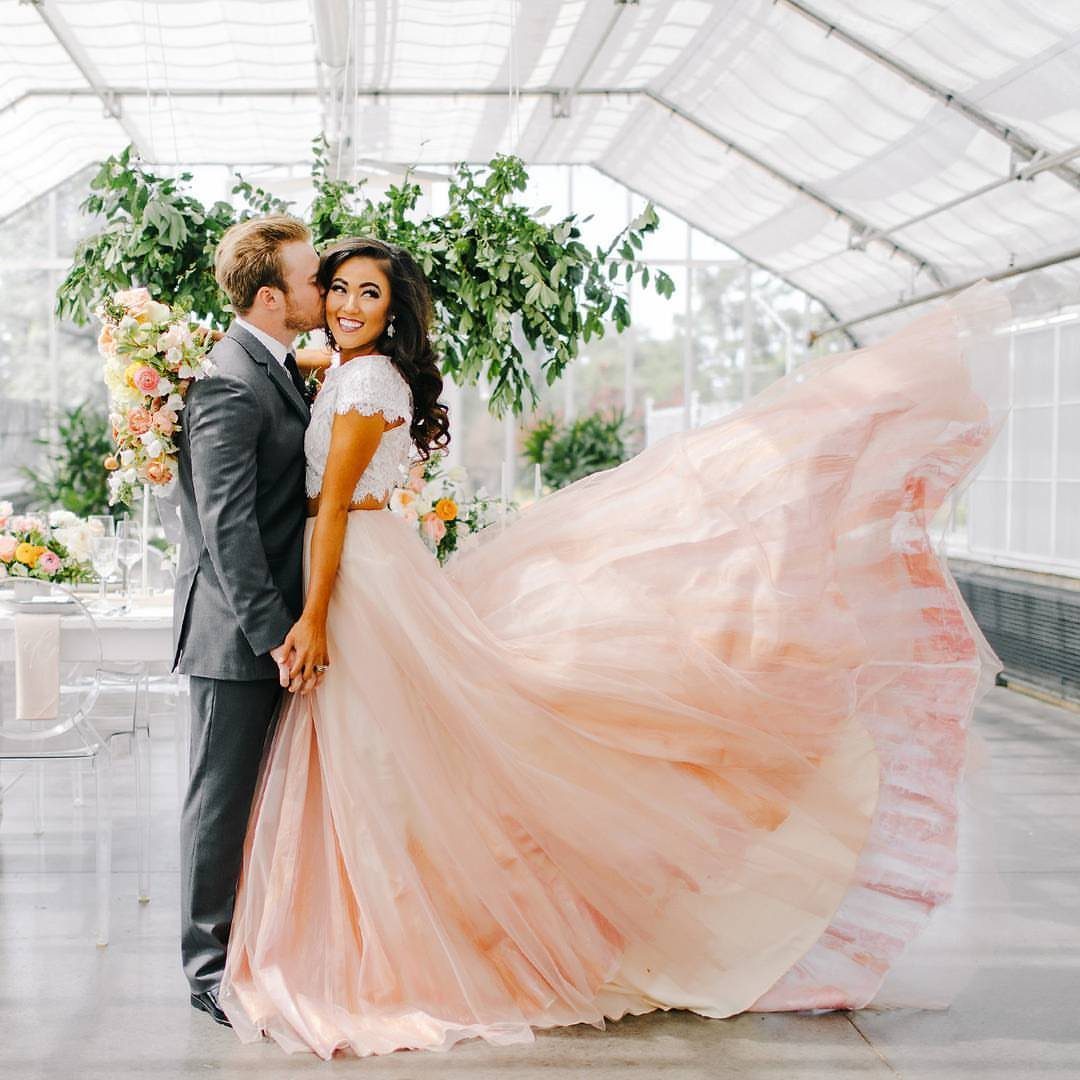
A separate top and skirt treated as one bridal look gives more control than any single gown allows.
The break between them becomes part of the design; a lace crop against a tulle skirt reads as intentional, not as a dress that failed to connect.
The practical value is what would draw me in. The pieces travel apart, which matters for a destination, and one top can pair with multiple skirts across the day.
A beaded top for the ceremony and a simpler skirt for the reception changes the look without a full change of clothes.
The break between them becomes part of the design; a lace crop against a tulle skirt reads as intentional, not as a dress that failed to connect, and the 2 pieces must meet cleanly without gap.
10. Tea-length
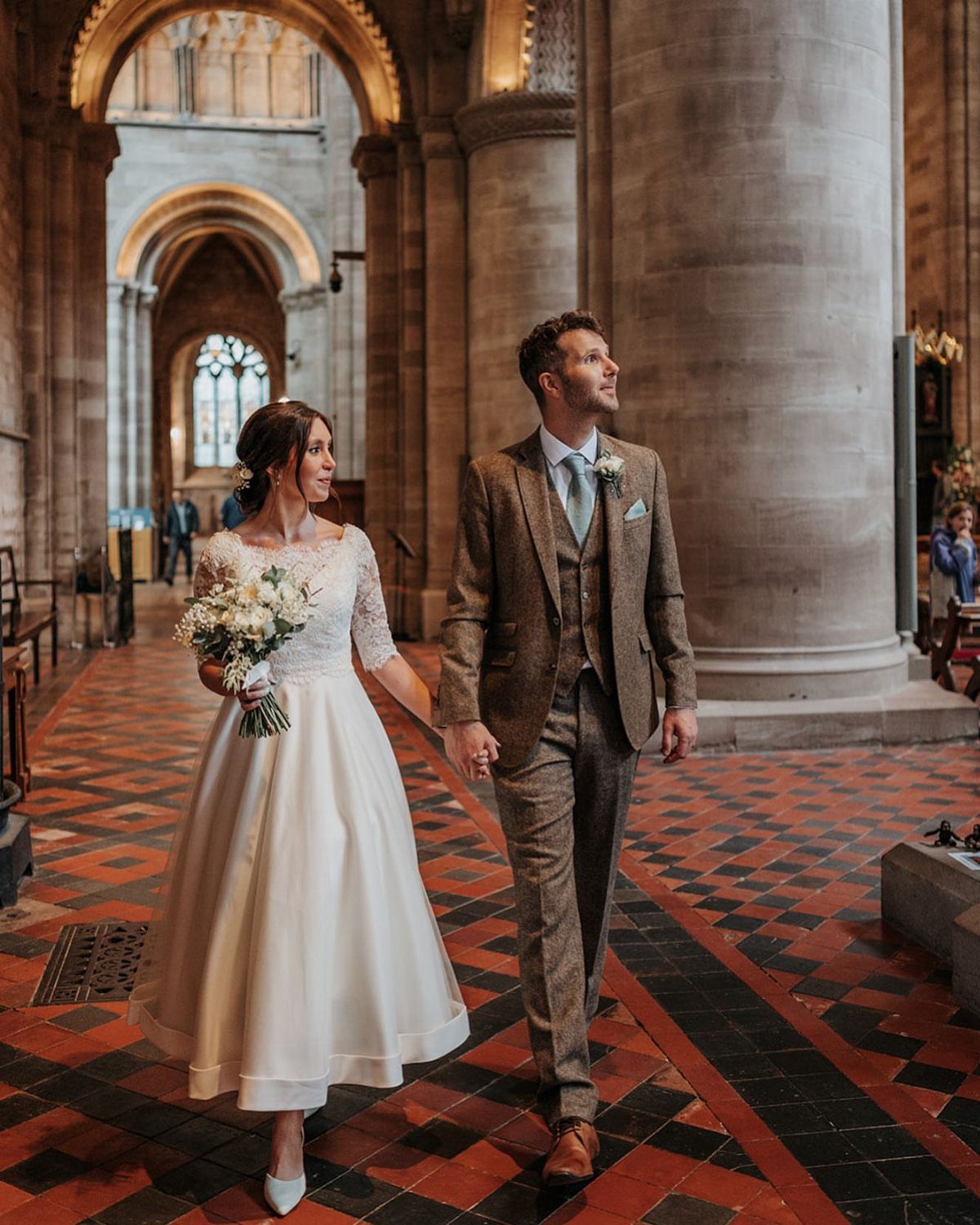
A tea-length hem lands at mid-calf, and that single change turns any silhouette into something else entirely. The same A-line or sheath that reads formal to the floor becomes playful, vintage-leaning, and practical when cropped.
Shoe choice becomes proportionally critical because the feet are fully visible.
I would plan the shoe as part of the outfit from the start, not as an afterthought; a heel lengthens the calf, but a flat in a contrasting color can be the point.
The length suits a courthouse, a garden, or a reception where the first gown was grander and this one needs to move.
The trade is coverage and formality. A tea-length dress will not serve for a black-tie ceremony, and it leaves the lower leg exposed in a way some brides prefer not to have in photographs.
11. Mini / Short
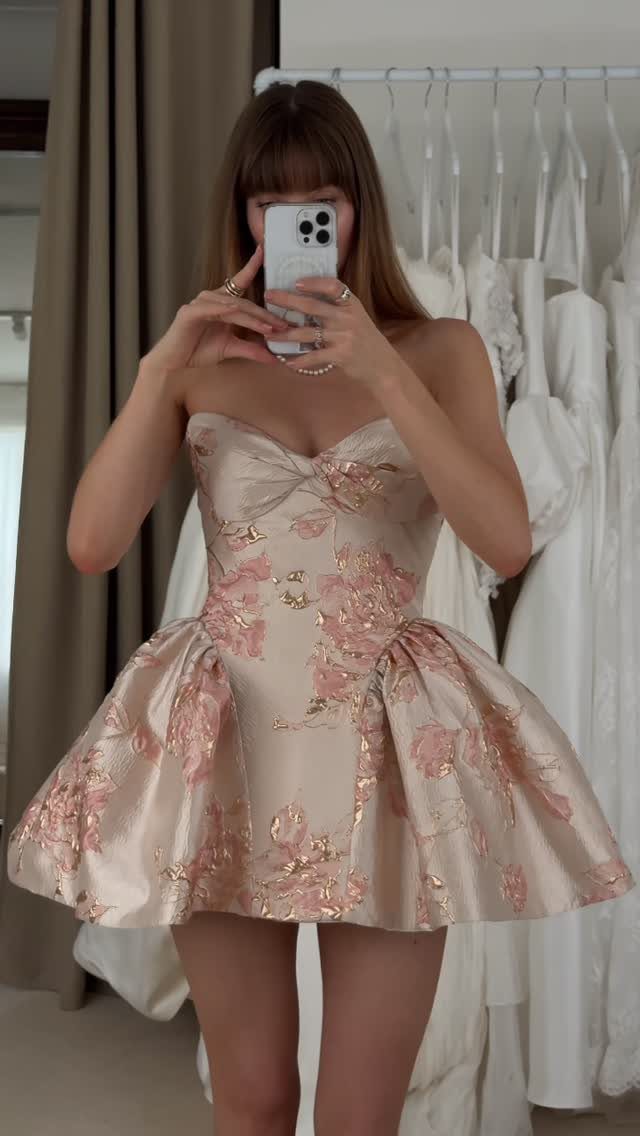
A hem above the knee commits to movement and to a mood. This is the second-look dress, the courthouse ceremony, the after-party change when the main gown has done its work.
The shorter length demands fabric that reads unmistakably bridal; silk crêpe, fine lace, or embroidered tulle signal wedding rather than cocktail.
I would avoid anything that could read as a white party dress unless that is the exact intention. The exposed leg changes proportion completely, and a structured bodice or voluminous skirt keeps the silhouette from feeling underdressed.
The real consideration is context. A mini works when the setting is casual, the guest list small, or the event is one of several looks across the day.
It trades away the gravitas of a floor-length gown for ease and for a certain kind of confidence.
Choosing the Right Dress for Body Type
The eye settles at the narrowest point and the skirt does the rest.
The close fit through the torso and the release below creates the hourglass the silhouette needs.
Petite brides, under 5’4", need the eye to travel up. Empire waists, sheaths, and tea-length hems all keep the line vertical; heavy ball gowns and long trains swallow the frame.
Tall brides with long torsos can carry a drop-waist or a trumpet without looking stretched. An empire waist, by contrast, shortens the torso visually, which can throw off proportions that already read long.
These are starting points, not rules. The dress you feel right in overrides any chart.
Neckline Options
A sweetheart neckline curves in 2 arcs below the collarbone, meeting at a dip in the center.
It frames the face and adds softness to a structured bodice; most strapless gowns use this shape because it holds the eye at the décolletage without cutting across it harshly.
A V-neck sends the gaze downward, which lengthens the neck and adds the illusion of height. A deeper plunge reads more dramatic; a modest V stays traditional.
Either version works especially well for shorter brides who want vertical pull. Pairing it with a nude heel extends that line straight through.
Sleeve Styles
Long sleeves carry fabric from shoulder to wrist in one continuous line, which elongates the arm visually.
Fitted lace sleeves read formal and add coverage without weight; billowed or bishop sleeves move more freely and suit a garden or outdoor setting.
Beading or embroidery on the sleeve turns it into its own detail, which matters if the gown’s skirt is simple.
Short sleeves, by contrast, break the arm at its widest point. They work best when the fabric is light enough that the line still flows, or when the sleeve is structured enough to stand as a shape on its own.
A cap sleeve adds barely there coverage; a fuller short sleeve can balance a heavier skirt.
Fabric drapes across the upper arm rather than attaching at the shoulder, which softens the transition from skin to gown.
The construction needs to hold the fold in place through raising arms, hugging guests, and every other motion of the day.