Pleated wedding dresses range from a strapless bodice to an off-the-shoulder neckline or a full tiered ball gown, and the right one depends on where your waistline sits best.
1. Strapless Pleated Gown
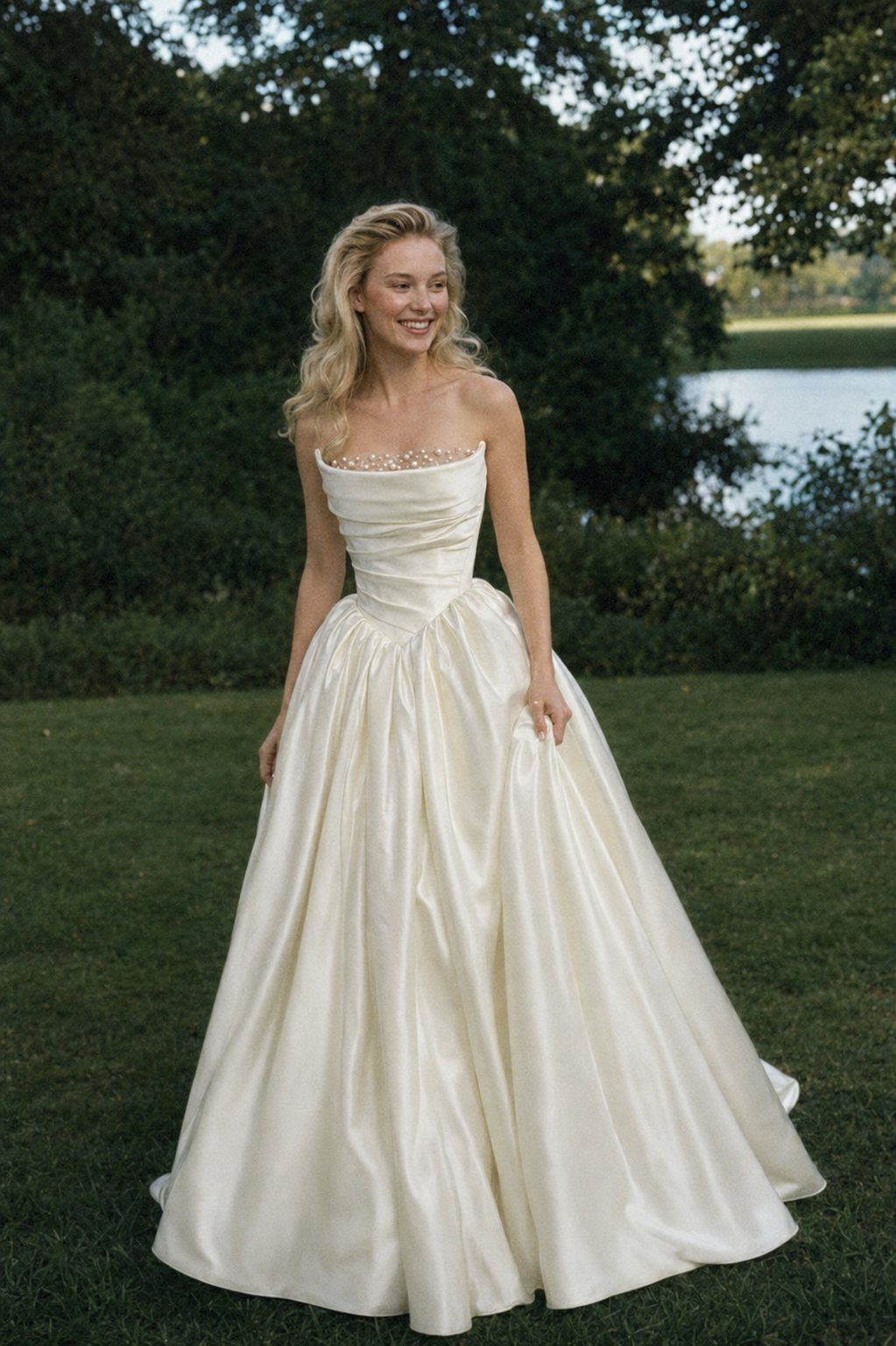
Asymmetrical pleating across the bodice gives a strapless gown something to look at besides your shoulders.
Pearl trim along the neckline looks delicate, but I would skip it if the wedding is outdoors; grass stains on ivory silk are not worth the risk.
Polyester is the practical choice here. It holds the pleat memory through humidity and packs flat for a destination wedding.
If you need a gown by next month and alterations are not in the budget, order the standard size closest to your upper bust measurement and plan to wear a longline strapless bra that does the lifting instead of the dress.
2. Off-the-Shoulder Pleated Dress
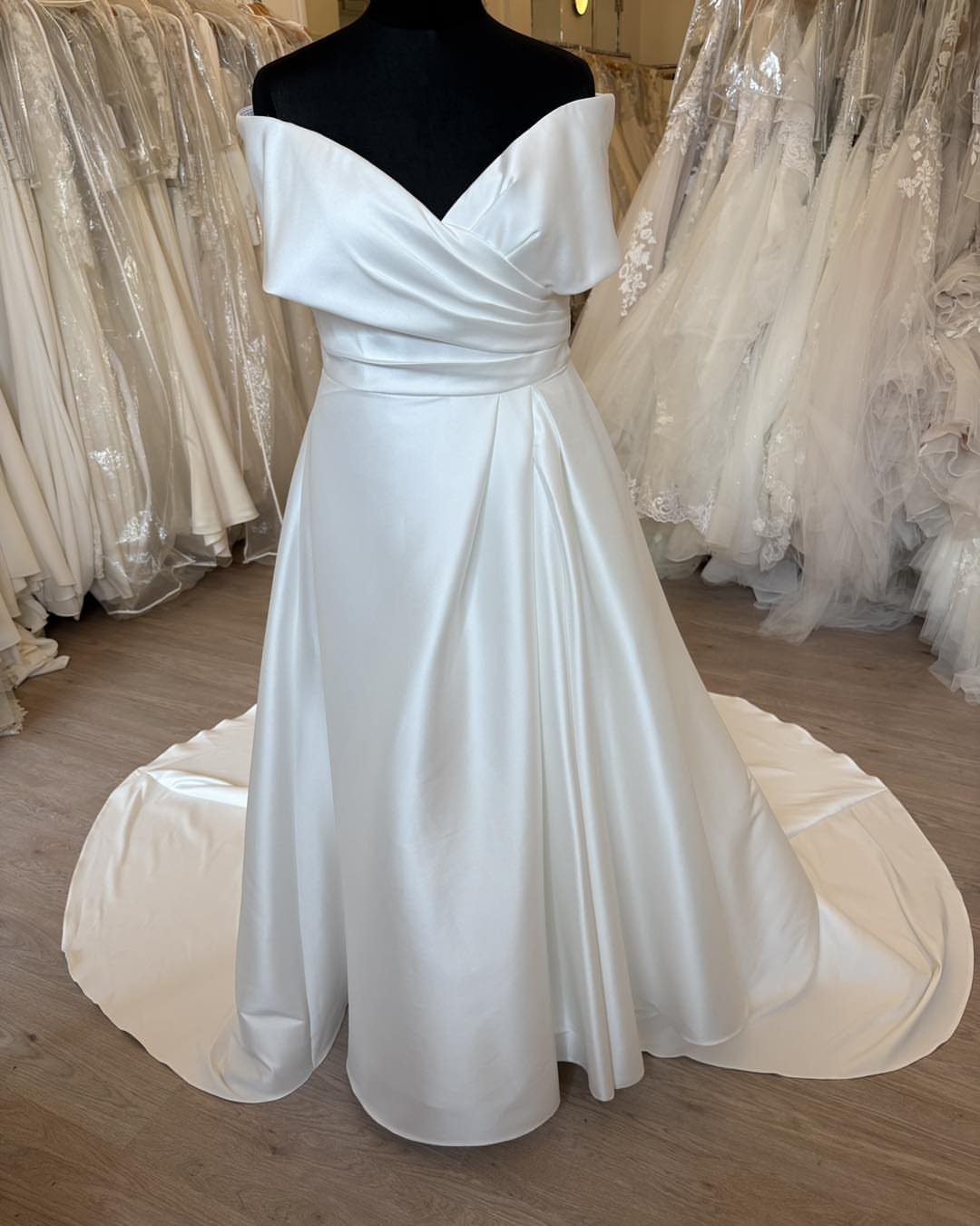
Off-the-shoulder sleeves frame the face without the constant readjustment of a true strapless. The pleated bodice sits best with some structure, though the same construction works in chiffon if you want the skirt lighter.
A voluminous A-line in lightweight fabric needs a petticoat or it collapses between body and lining during photos.
Ask the boutique whether the skirt includes built-in structure; if not, budget for a hoop or crinoline slip. Cap sleeves are an option if the bare-shoulder look feels too exposed for a church ceremony.
3. Drop Waist Pleated Dress
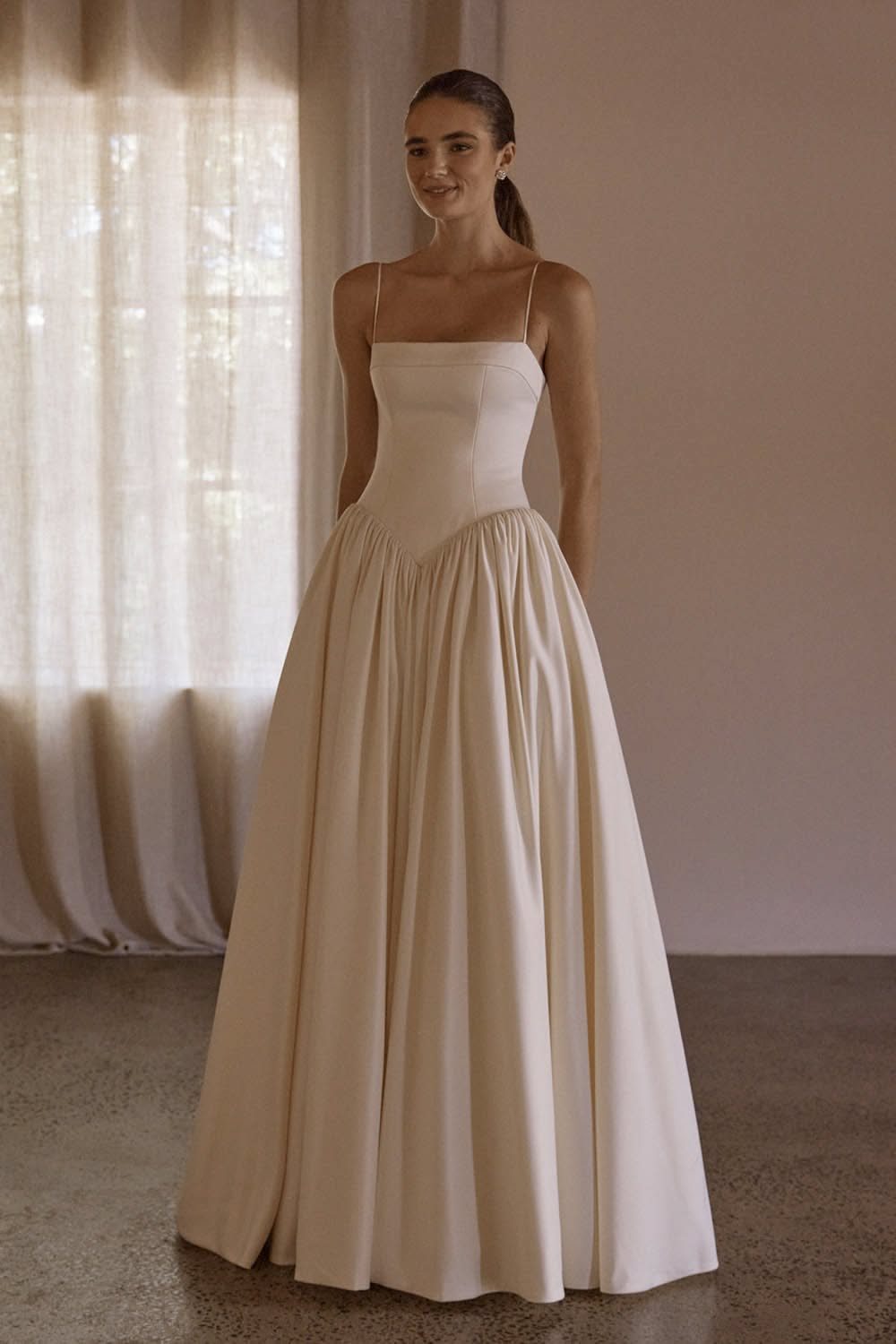
A drop waist pleated dress lands at the hip, which means the pleated skirt starts exactly where many women are widest.
A basque waistline that angles downward at the center softens that line, and I would not consider a version without that detail.
Spaghetti straps and a fitted bodice keep the top half from competing with the skirt.
Chiffon pleating needs steam, not ironing; budget time with a handheld steamer the morning of, or confirm your venue has one. Some versions come with a detachable train, which matters once the dancing starts at the reception.
4. Accordion Pleated Wedding Dress
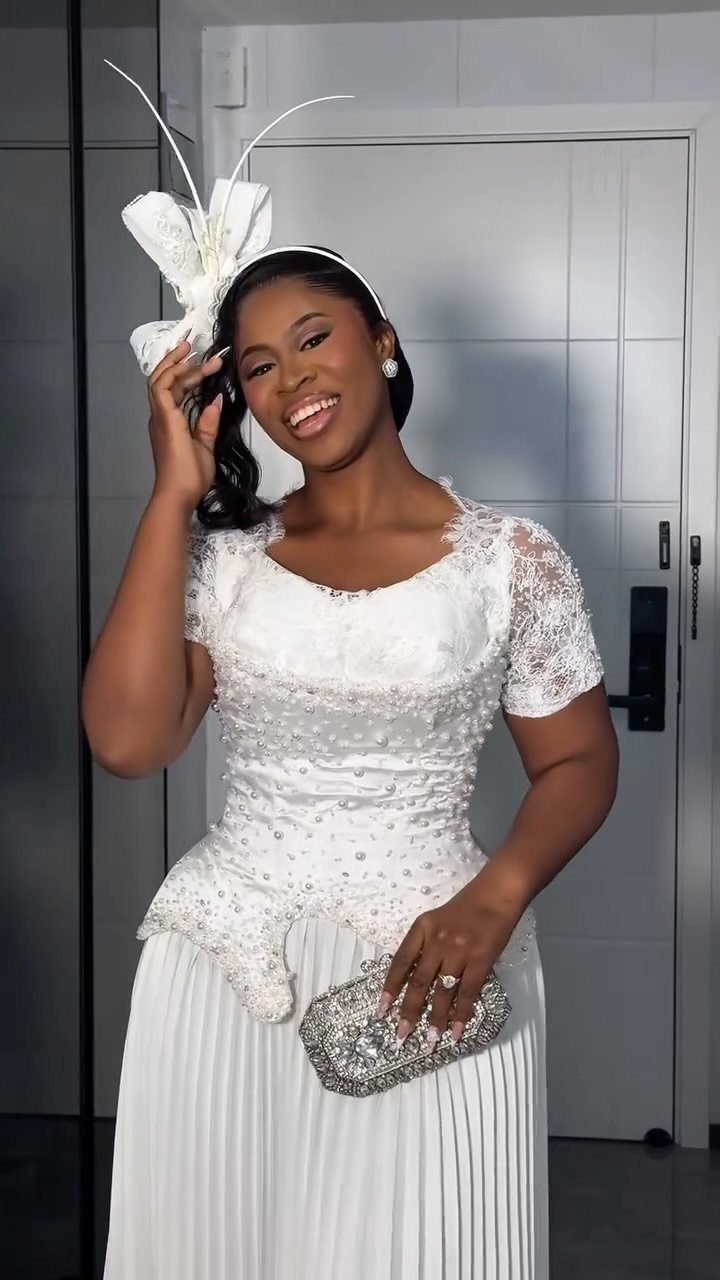
Accordion pleating runs vertically and narrow, which reads as texture from a distance and stripe up close. When the bodice carries beading or other detail, the skirt stays matte chiffon rather than competing.
A structured bodice with a flowing skirt is the standard pairing, but the proportions matter.
If the bodice ends at the natural waist, the accordion pleats need to start immediately below; a band of smooth fabric breaks the line and makes the skirt hang heavy.
This is the dress for a bride who wants movement in photos but not the full volume of a ball gown.
5. Pleated A-line Wedding Dress
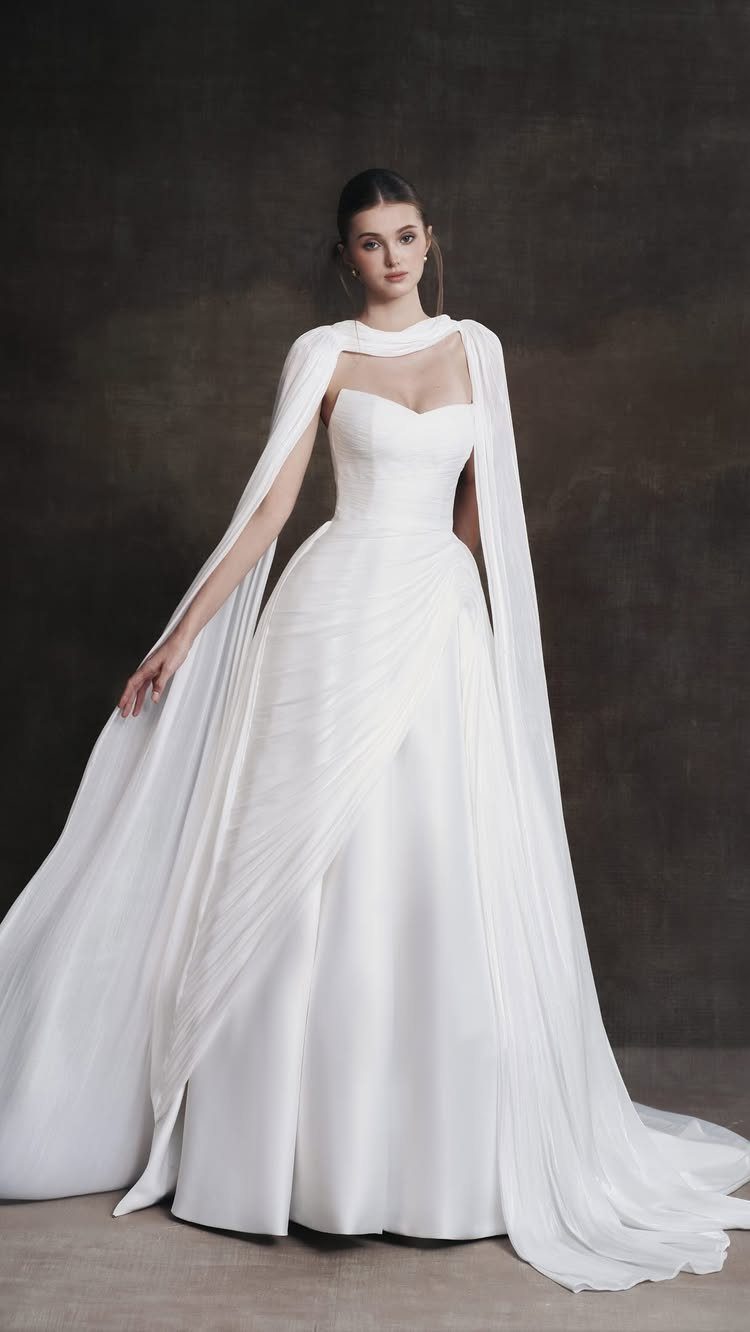
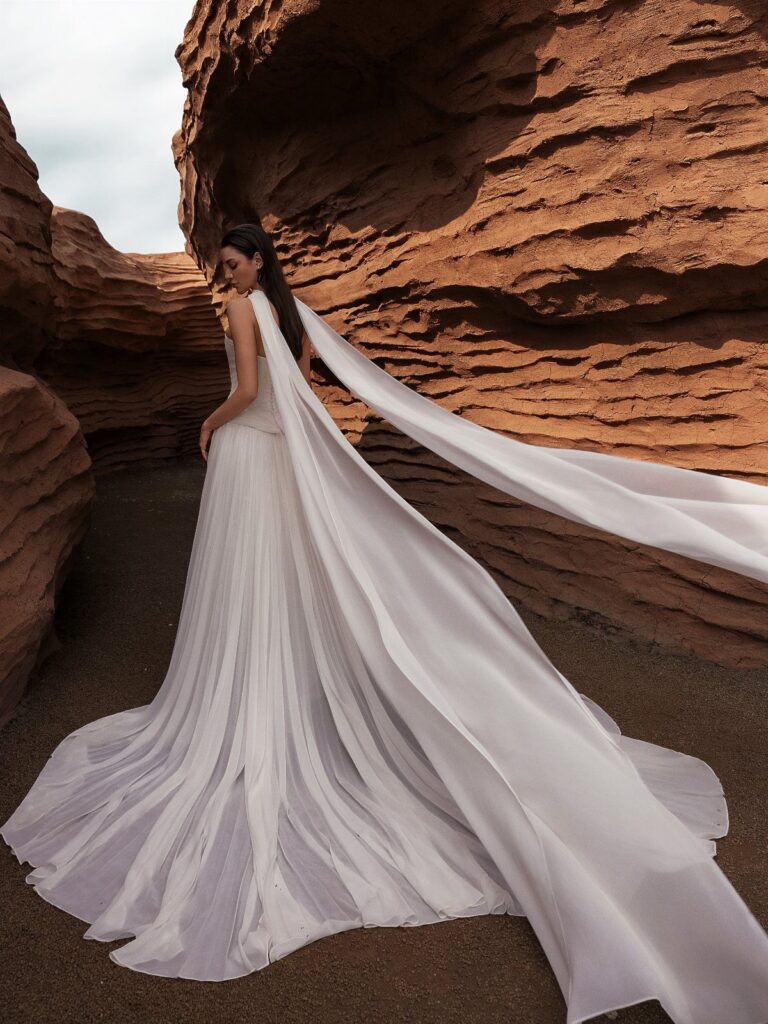
Satin and pongee together give weight to the skirt without the stiffness of taffeta. A pleated bodice that drapes across the hips means the A-line starts higher than usual; that lengthens the leg line but requires careful undergarment choice.
Standard and custom sizing are both usually available, though some houses include customization at no extra charge while others add a noticeable premium.
Measure your waist at its natural point and your hip at the fullest part; if those fall in different size columns, order to the waist and let the skirt ease handle the hip.
A sheer cape attached at the shoulders is simpler than a separate veil and easier to manage in wind.
6. Tiered Pleated Ball Gown
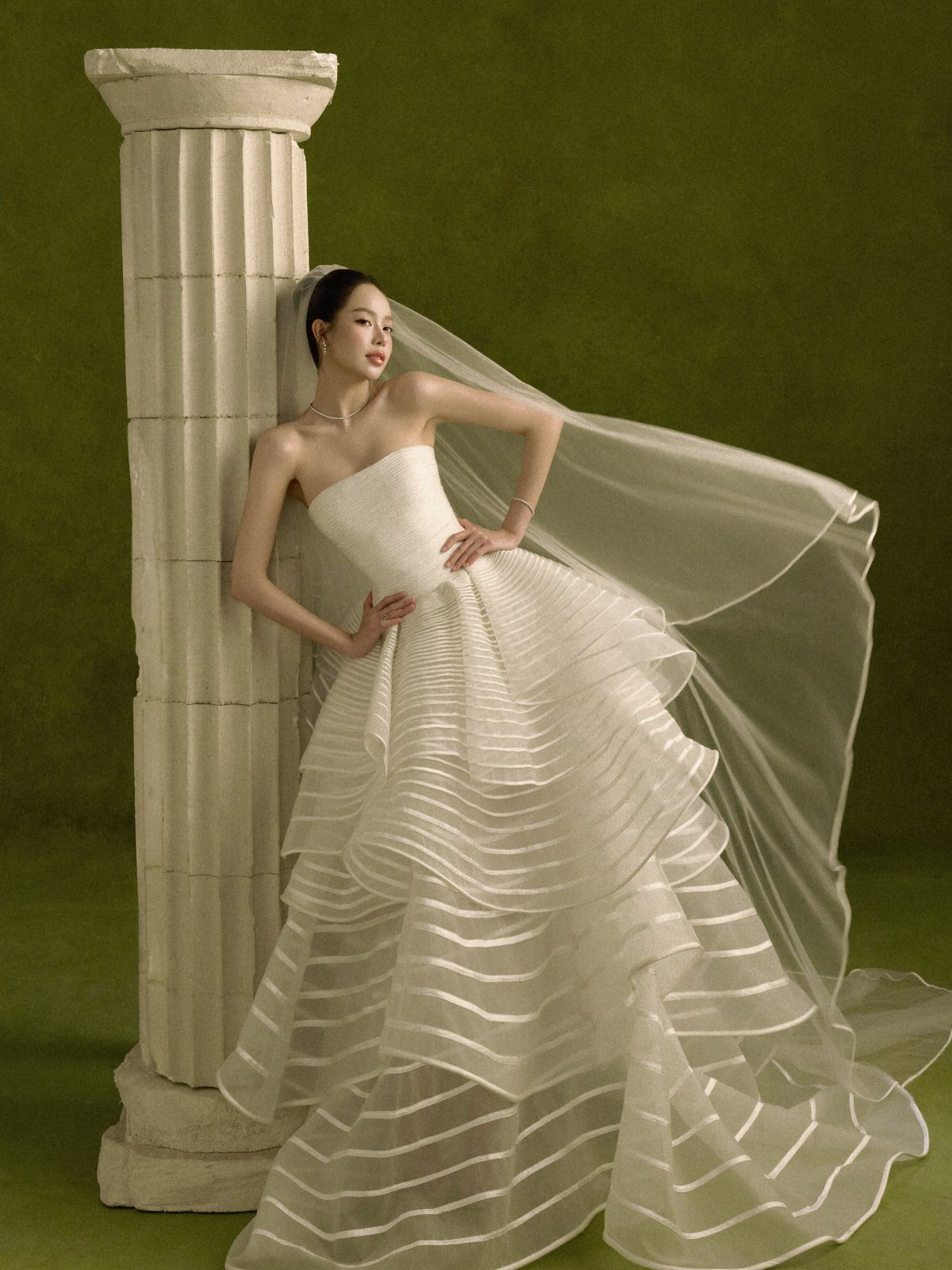
Tiered pleats build volume without the weight of solid fabric. The striped effect comes from the way light catches each folded edge, so the skirt reads as dimensional even in a still photograph.
A ball gown this full needs a doorway check. Measure the widest tier plus your arms at your sides; if that total is wide, you will not fit through standard doors sideways.
A fitted bodice with this much skirt needs boning; without it, the whole dress shifts out of place. Confirm the inner construction before ordering; a soft bodice will sag under the weight by the end of the ceremony.
Frequently Asked Questions
What styles of pleated wedding dresses are available?
Strapless gowns with asymmetrical pleating, off-the-shoulder with pleated bodices, drop waist styles with hip-starting skirts, accordion-pleated vertical styles, pleated A-line dresses that start above the natural waist, and tiered pleated ball gowns with folded volume are the main silhouettes.
Each handles pleating differently: strapless versions rely on bodice detail, drop waists need a basque waistline to soften the hip line, and tiered ball gowns use stacked folds for dimension without weight.
The right choice depends on whether you want structure, movement, or full volume.
Can pleated wedding dresses be customized?
Yes, free customization is standard at some houses for size, color, fabric, and detail changes with no extra charge.
A custom size reduces alterations but does not remove the need for them entirely, so ask how many revision rounds are included before ordering.