The 10 ideas below run from a tailored jumpsuit to a cobalt evening gown, so the real deciding factor is the wedding’s formality and how much you want to stand out.
1. Tailored Jumpsuits
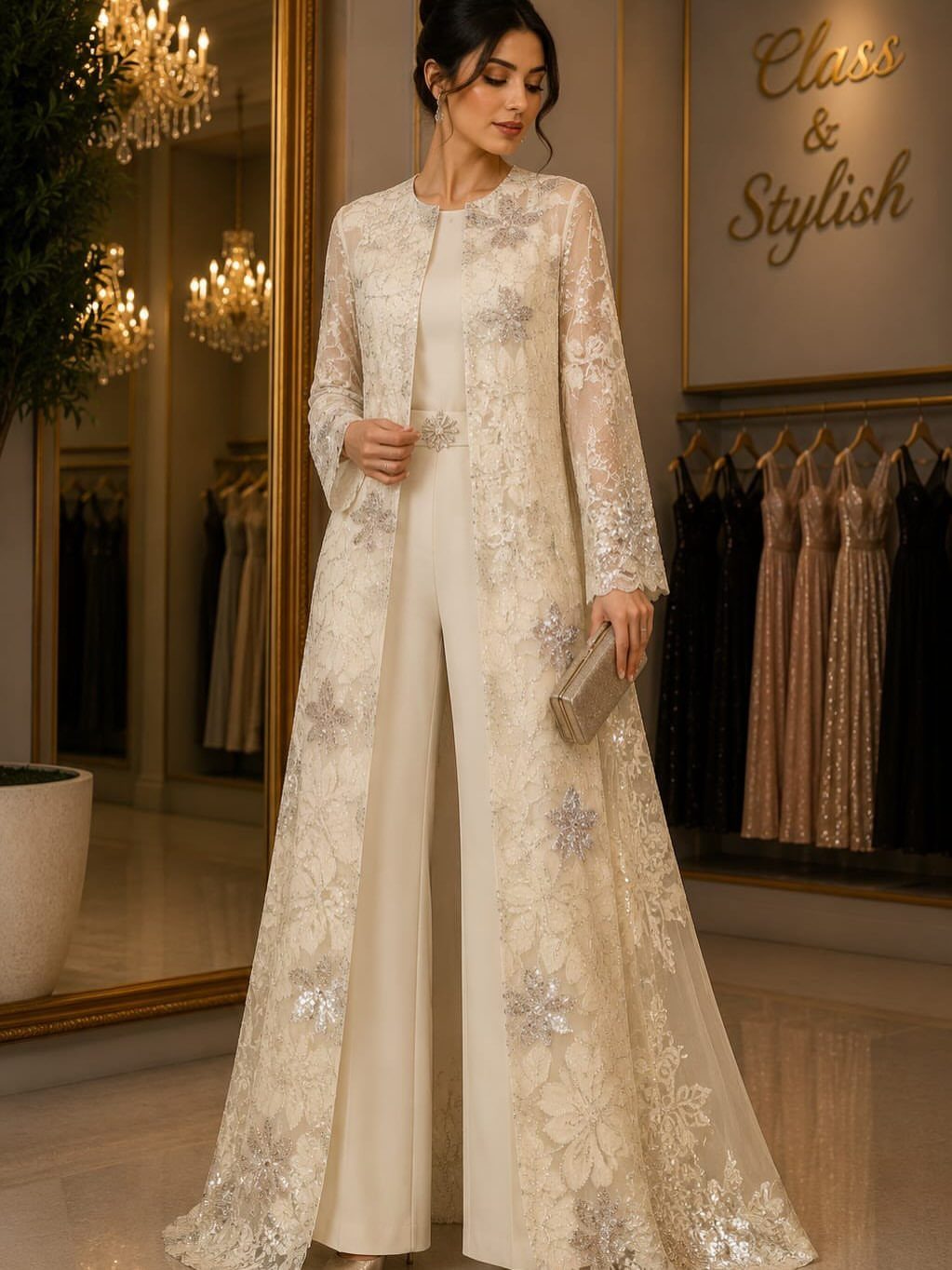
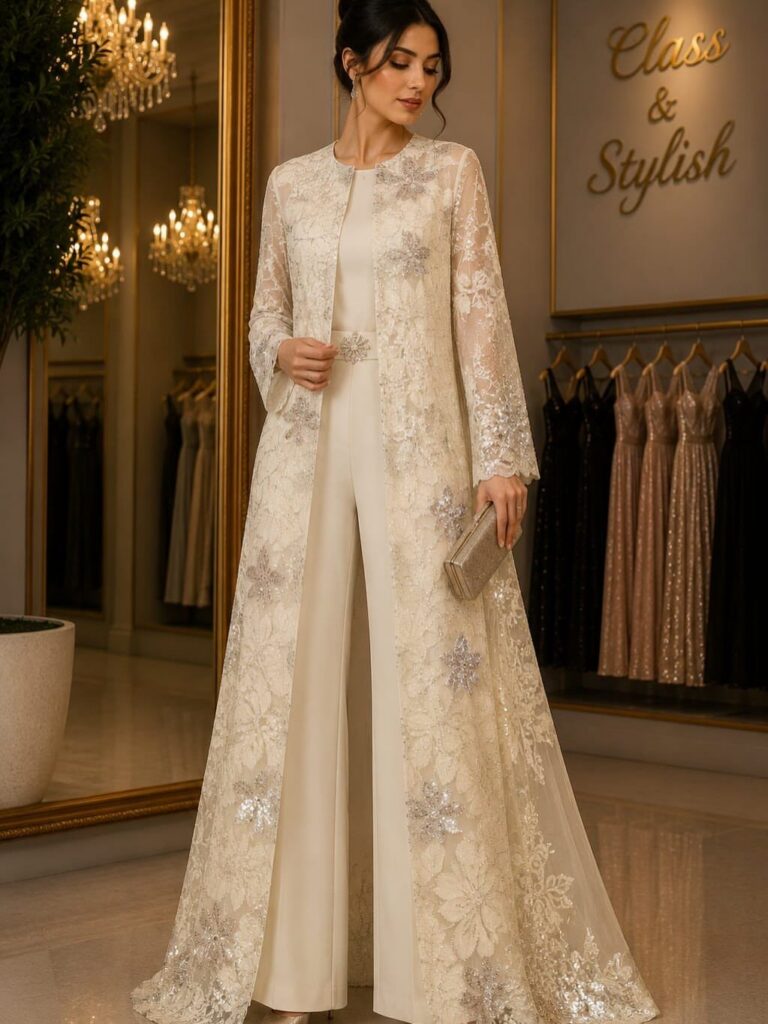
A tailored jumpsuit in crepe or satin reads formal without the fuss of a gown. Wide-leg cuts move like a dress but let you sit through a long reception without adjusting layers.
Structured shoulders or a one-shoulder neckline add ceremony to a tailored jumpsuit; a sheer embroidered coat on top handles the church and comes off for dancing.
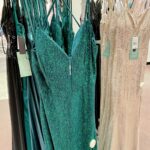
Deep teal and metallic tones are a solid direction if you want color, though black or champagne never dates.
Check the inseam: too long and the wide leg pools; too short and the pant sits awkwardly above your shoe. Bring the shoes you’ll wear to the fitting.
2. Sparkly Gowns
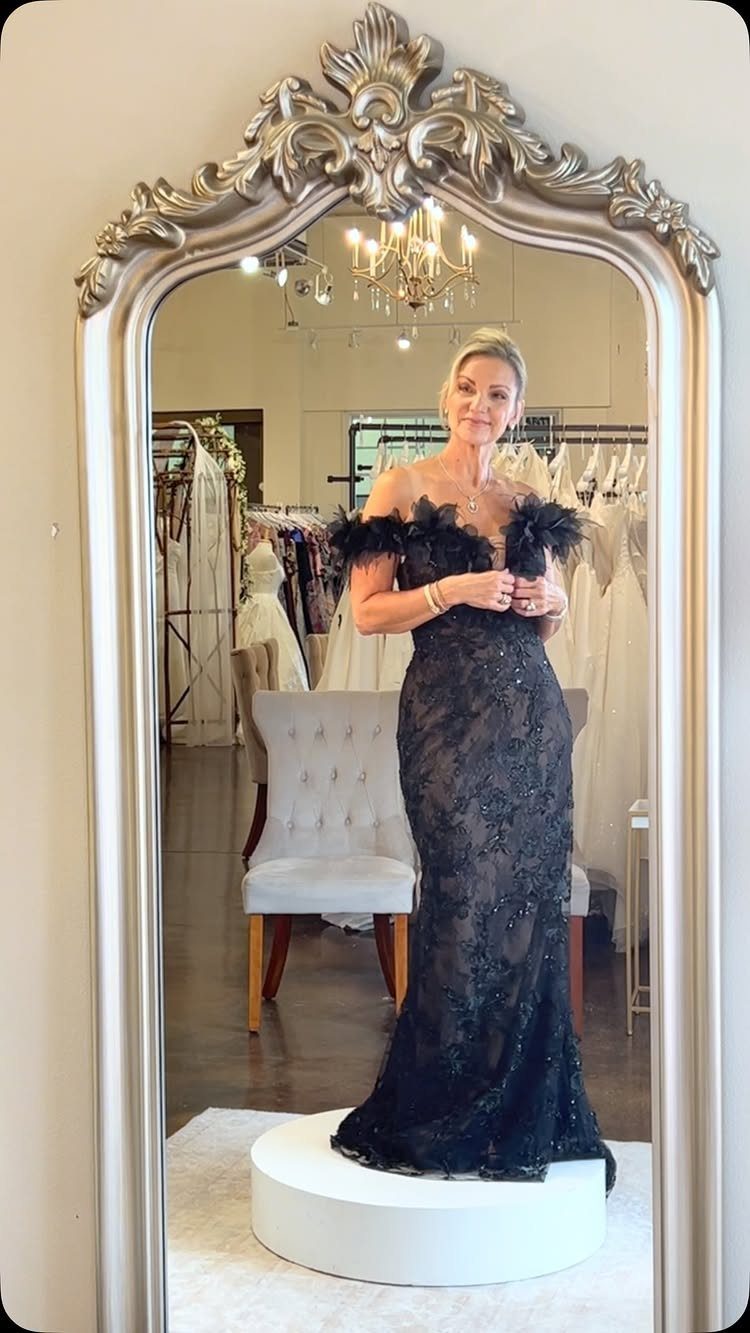
Sequins work when the cut is simple.
Keep the sparkle on the bodice and let the skirt fall clean; feather trim at the hem adds movement without more shine. Charcoal and champagne read softer than silver or gold against mature skin.
Navy sequins are my standby for evening weddings: they photograph near-black but catch light in person. For a black-tie affair, this is the one time I let shimmer do the talking.
One rule I follow: if the dress glitters, everything else stays quiet. Small pearl studs, a clutch without hardware, done.
3. Floral Midi Dresses
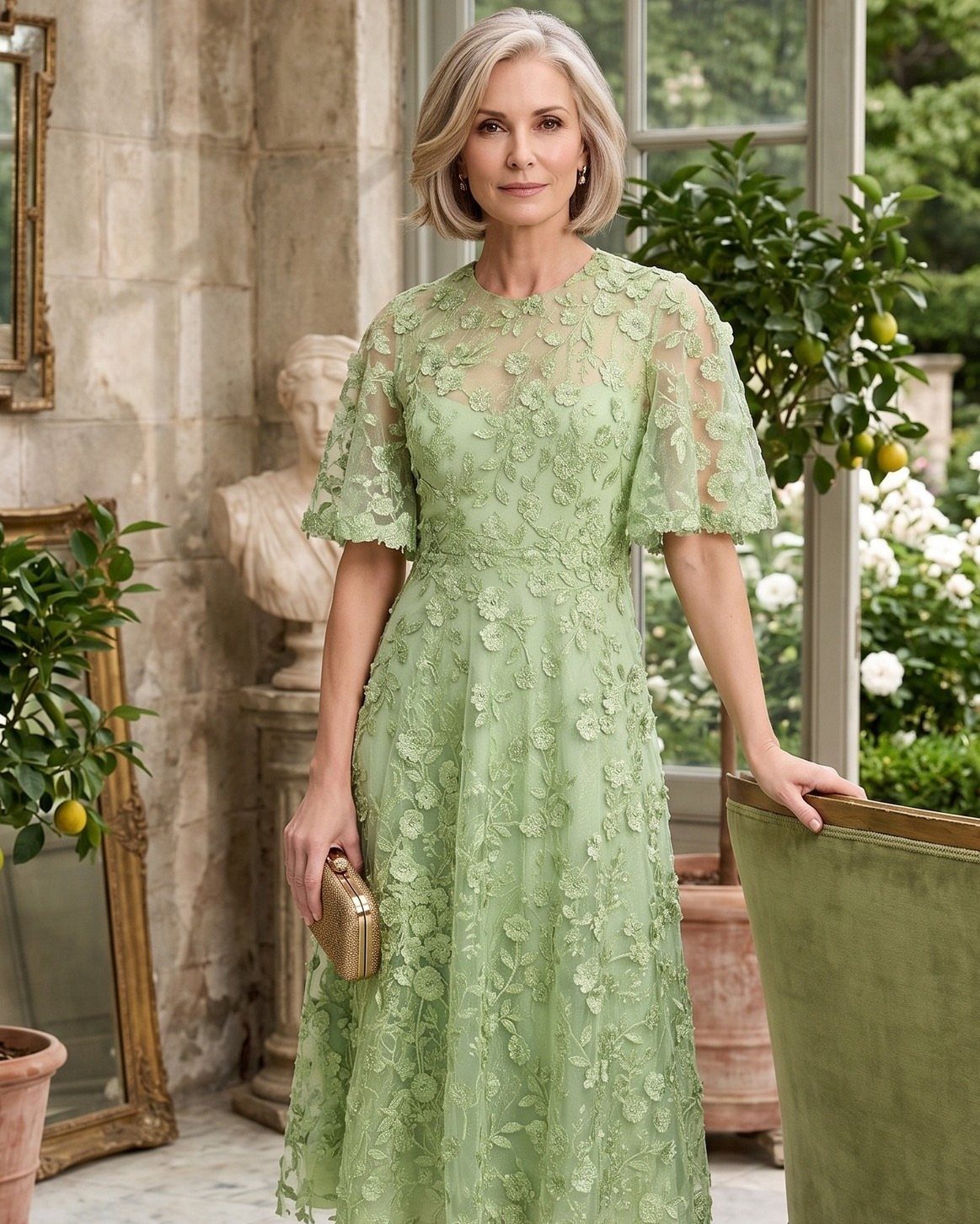
Midi length at or below the knee keeps you comfortable from ceremony through last call.
Light, embroidered sage lace suits a garden or outdoor wedding where a floor-length gown would drag. Kitten heels work here; so do block heels that won’t sink into grass.
Before you buy, check the lining: some floral lace overlays read sheer in sunlight, and you’ll want a slip that matches your skin tone, not the dress color.
A wrap in a solid pulled from the print, not another competing pattern, finishes it. This is the entry I’d hand to my own mother for a spring afternoon wedding.
4. A-line Dress
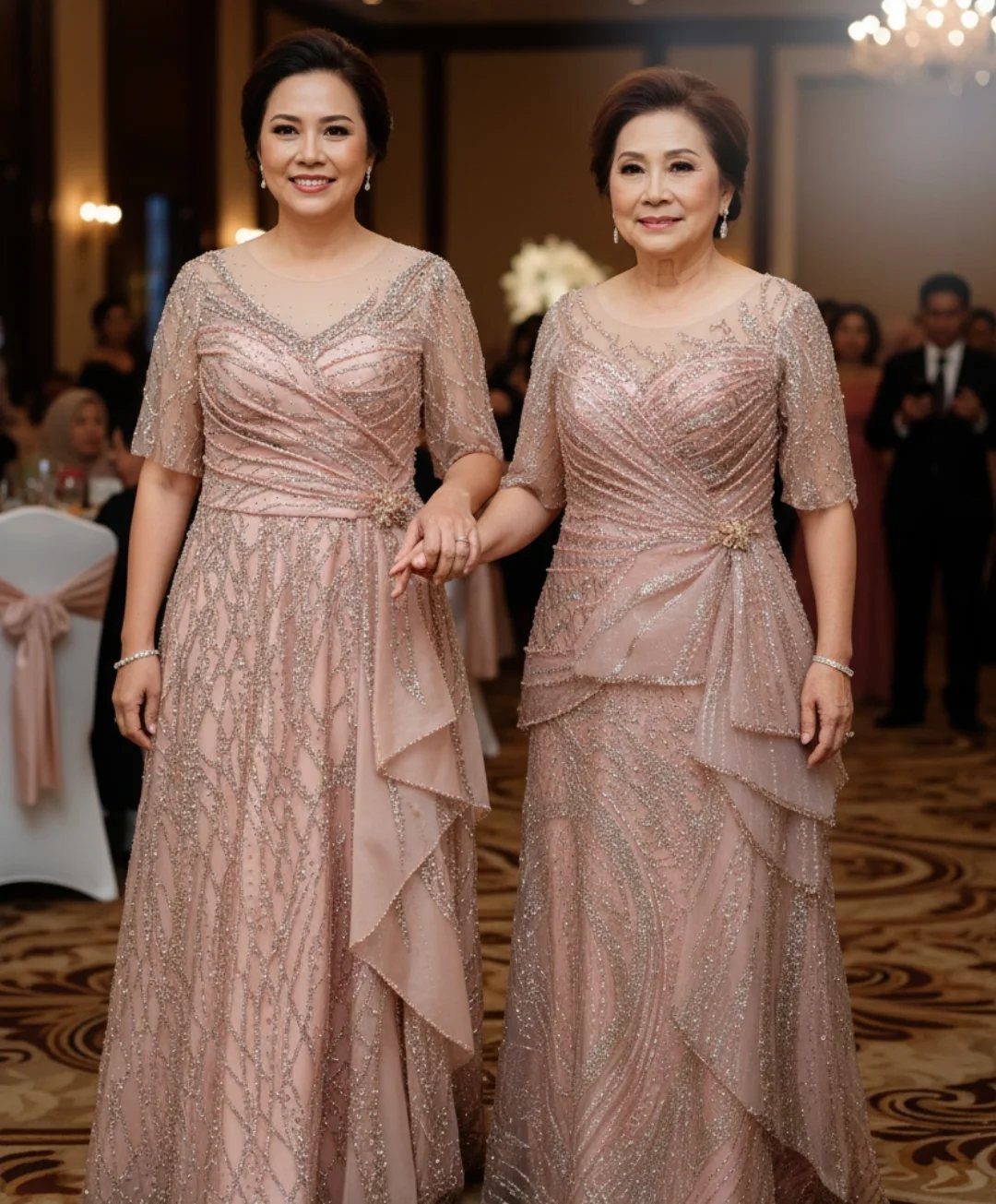
The A-line is the shape I recommend when a client doesn’t know where to start.
It nips at the natural waist and falls away from the hip, which means it works across body types without tailoring drama. The A-line cut carries sparkle without heaviness: the beads stay on the bodice, the skirt moves free.
Satin or silk versions fit black tie; lace or chiffon drop the formality for garden or beach settings. Sheath and fit-and-flare are options if you want closer to the body, but the A-line forgives a buffet dinner.
5. Floral Lace Overlay Dress
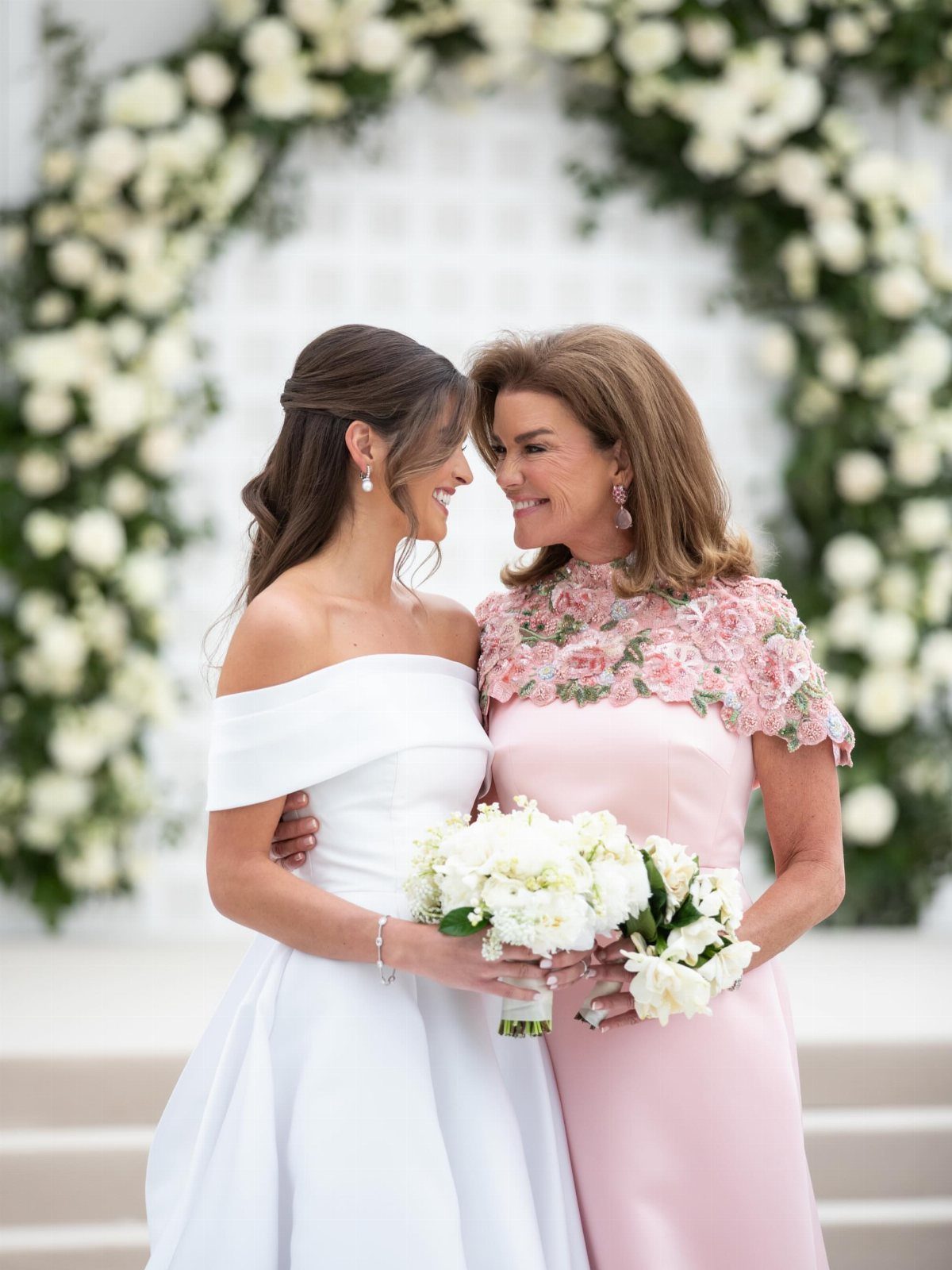
A lace overlay lets you wear color without committing to it head-to-toe.
A pink base with green floral appliqué reads as a neutral from a distance and reveals itself up close. Sleeveless works for warm weather; if you need coverage, a matching lace jacket looks intentional while a pashmina does not.
Check whether the floral sits on top of the lace or is woven through: appliqué like this catches on chair arms and seat belts.
For a spring ceremony, this is the middle ground between a solid gown and something too casual. I’d add small gold hoops and stop there.
6. One-Shoulder Ruffled Gowns
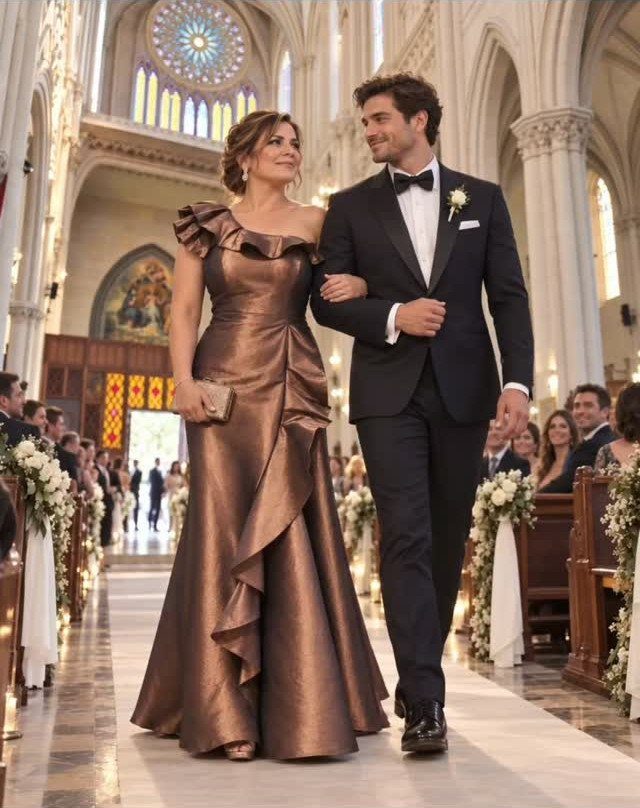
One-shoulder cuts draw the eye up, which I like for women who want presence without a neckline that plunges. A single strap balances volume in a one-shoulder ruffled gown: the drama is on one side, the other stays clean.
Metallic fabrics in this shape need careful undergarments; a standard strapless bra shows on the bare side, so budget for a one-shoulder foundation or a dress with built-in support.
This is the silhouette for a mother of the groom who wants to look current without borrowing from the bride’s playbook. The ruffle moves in photos; the bronze flatters most skin tones.
7. Formal Off-the-Shoulder Gowns
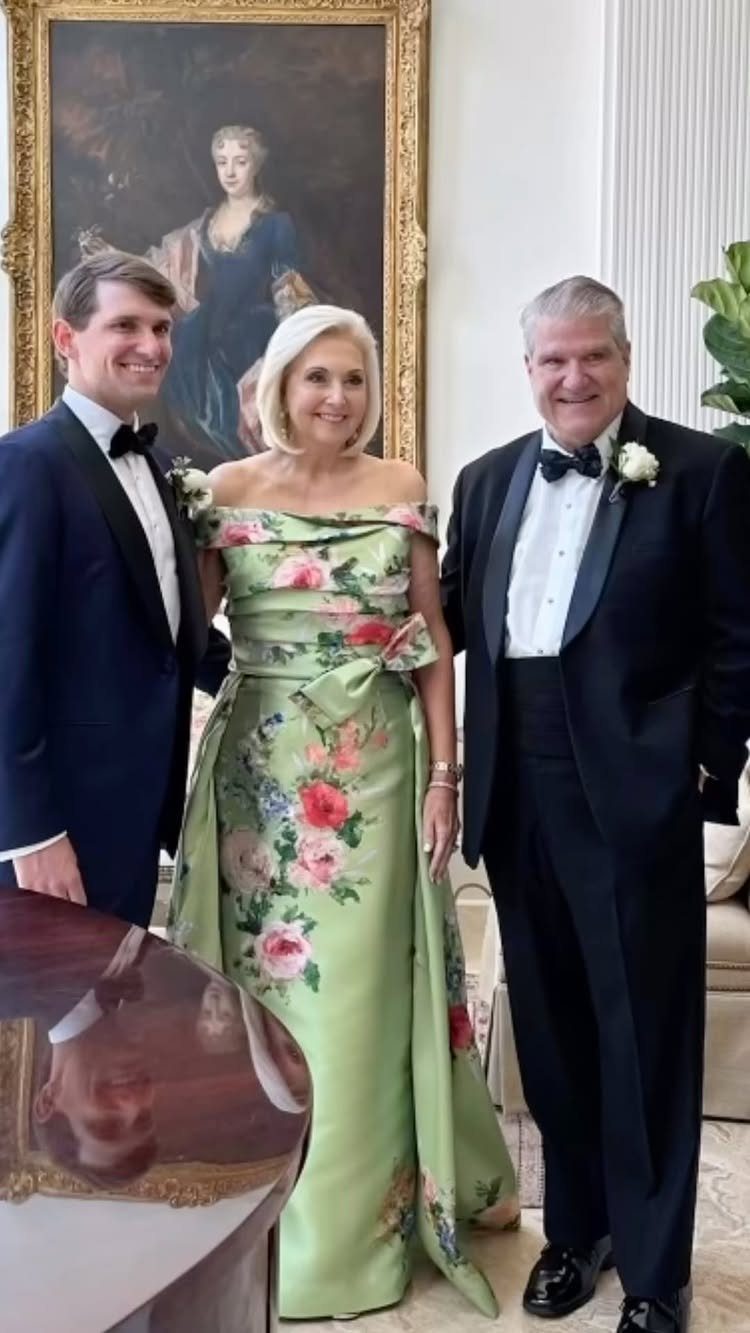
Off-the-shoulder gowns frame the collarbone and keep the neckline high, which reads formal without competing with the bride. The bare shoulder works best when the sleeve sits secure; test the elastic or structured band by raising both arms.
Silk or satin weights suit evening receptions, while chiffon and lace drop the formality for afternoon ceremonies. Soft pastels and muted grays photograph well against tuxedos; jewel tones like emerald or burgundy suit winter weddings.
A strapless bra is non-negotiable here; standard straps ruin the line entirely. This is the cut for women who want presence without volume, the eye goes up, not out.
8. Vibrant Gown with Fascinator
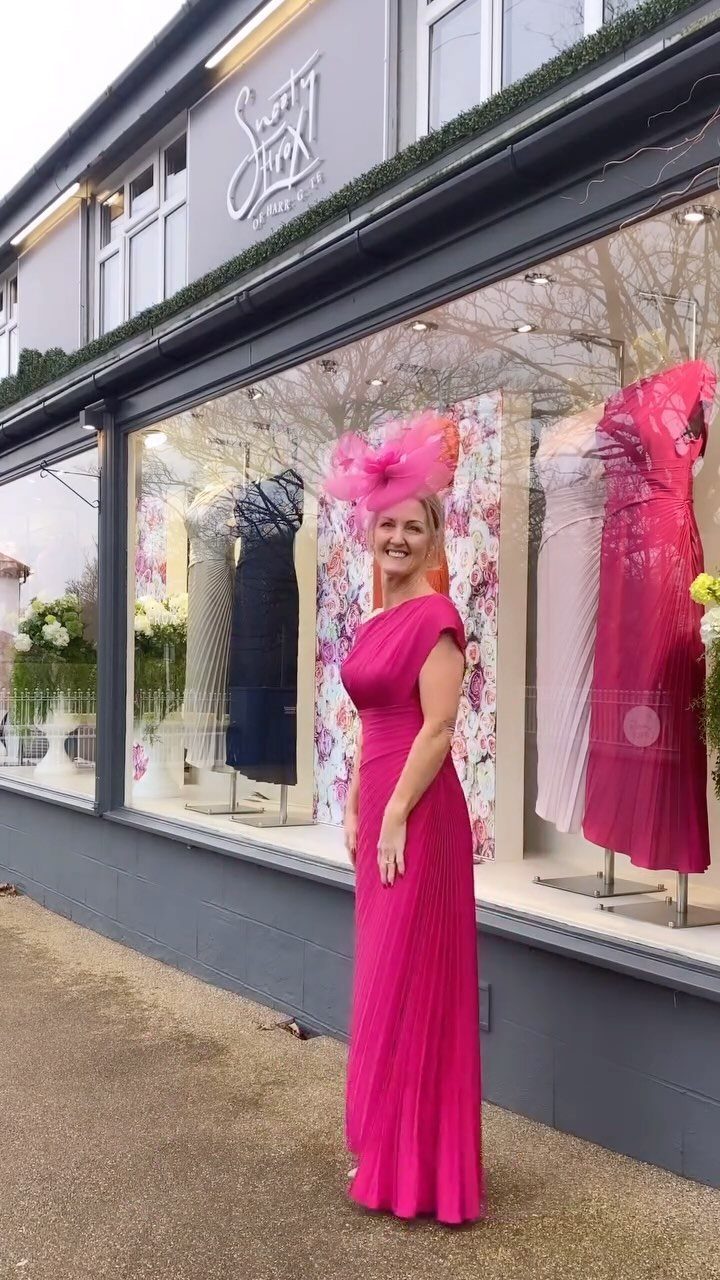
A fascinator turns a bright gown into an event. A bright pink gown with a sculptural fascinator turns the volume up on celebration dress; this pairing works when the wedding calls for joy, not safe choices.
The fascinator should match or deliberately contrast; a matching tone reads coordinated, black or navy reads editorial.
Keep the jewelry minimal, the hat is doing the work. This is not a church-aisle look for every region; American weddings rarely use headpieces this formal, so check the venue and the bride’s comfort before committing.
For a British-inspired or daytime affair, though, nothing else delivers this much personality this fast.
9. Classic Navy Blue Gowns
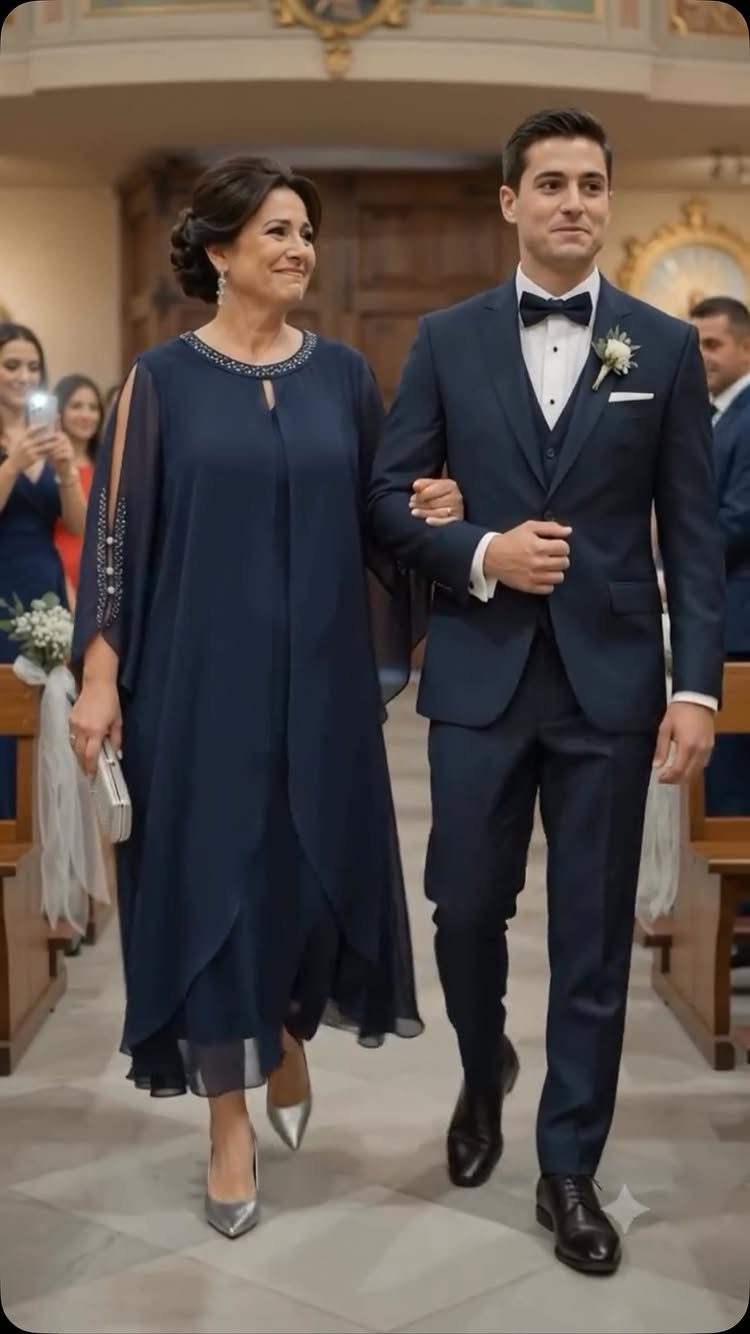
Navy blue is the color I steer mothers toward when they want to look right without thinking hard.
It photographs near-black in evening light but reads softer in person, and it never clashes with the wedding party. Chiffon falls light for summer; satin or crepe weights the gown for winter formality.
Beaded embroidery or lace inserts add interest without leaving the classic lane. Small pearl or crystal studs finish it; a colored stone fights the neutrality that makes this choice work.
10. Cobalt Blue Evening Gowns
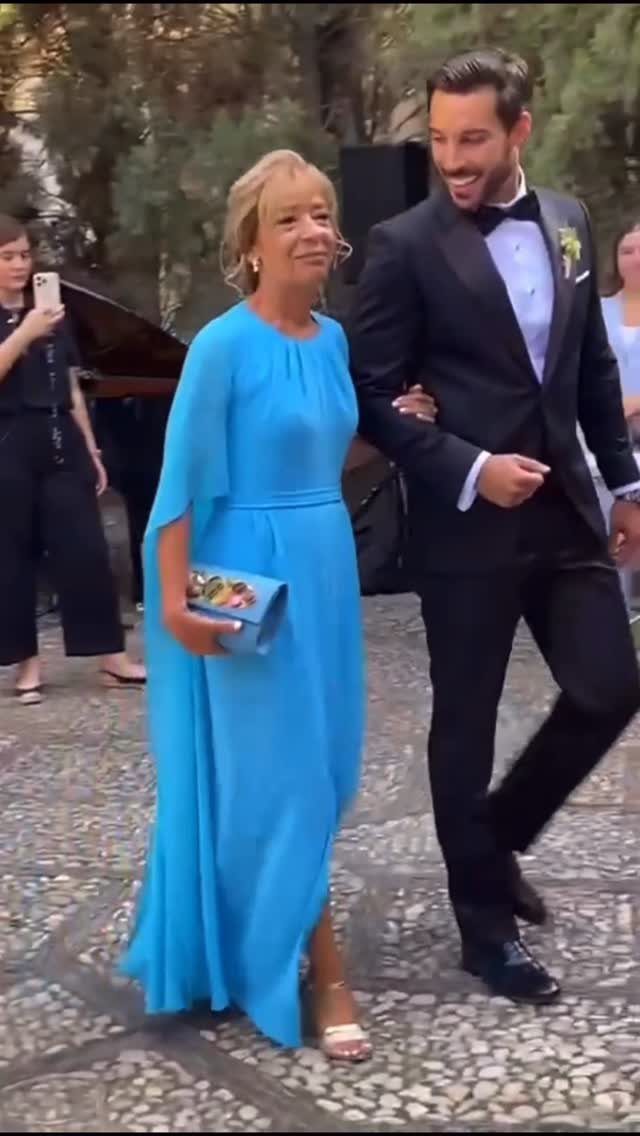
Cobalt is navy’s bolder sister, the difference between blending in and arriving. A flowing skirt in this blue moves like water under reception lights and stands apart from the sea of darker tones at most weddings.
Satin or silk catches the light; chiffon keeps it airy for outdoor heat. The color suits women with cool undertones in their skin; warm undertones read better in teal or emerald.
This is not a color for hiding, so own the choice or stay with navy. A simple metallic clutch and no necklace, the neckline and the hue do the speaking.
Importance of Communication
Talking to the couple before you shop saves the headache of returning a dress that clashes with the wedding party. Ask the bride about the color palette she has settled on, then check what her mother is planning.
Etiquette books still say the bride’s mother gets first pick; once her color and formality are settled, you can land somewhere that nods to her choice without twinning it.
Neutral tones like blush, soft pink, pearl gray, and powder blue usually fit without fighting the overall look.
If the wedding leans formal, that conversation will tell you; if the bride wants relaxed, you will know before you buy satin you cannot wear.
The groom’s opinion matters too. His sense of how his mother should look is part of the day he imagined.
Balancing Tradition and Style
Your job is to look festive without becoming the photograph anyone remembers instead of the bride.
The mother of the groom should aim to complement the mother of the bride‘s outfit without copying it, which might mean matching her level of formality in a different color, or echoing her shape in a different fabric.
What you do not do is arrive in something louder, shorter, or more decorated than what the bride’s mother chose. Joy shows in how you carry yourself, not in competing for attention.
If the couple wants a traditional feel, respect that; if they want relaxed, do not overdress out of anxiety. The balance is between honoring the occasion and honoring who is at the center of it.
Selecting a Flattering Silhouette
Start with what your body actually needs from a dress.
A-line and empire waists forgive where you need them to; sheath or column dresses sit closer if you prefer a cleaner line. Tailored jumpsuits with a defined waist are a current option that still photographs formally.
The wedding’s atmosphere matters too. A long gown suits evening and black tie; knee-length or cocktail length fits daytime or outdoor heat.
Your comfort carries the day. If you cannot sit through a long ceremony and a longer reception without adjusting, the silhouette is wrong no matter how flattering the mirror says it is.
Pick the shape that lets you focus on your son, not on your dress.