The 9 ideas below run from a dress-and-jacket duo you can wear again to a full embroidered sari, so the deciding factor is where you stand in the ceremony and how much moving, greeting, and ritual your role demands.
A capelet overlay frees your arms for a microphone or a caught flower, while an embroidered tunic with trousers lets you sit on marble banquet floors without adjusting a fitted skirt.
1. Dress and Jacket Duo
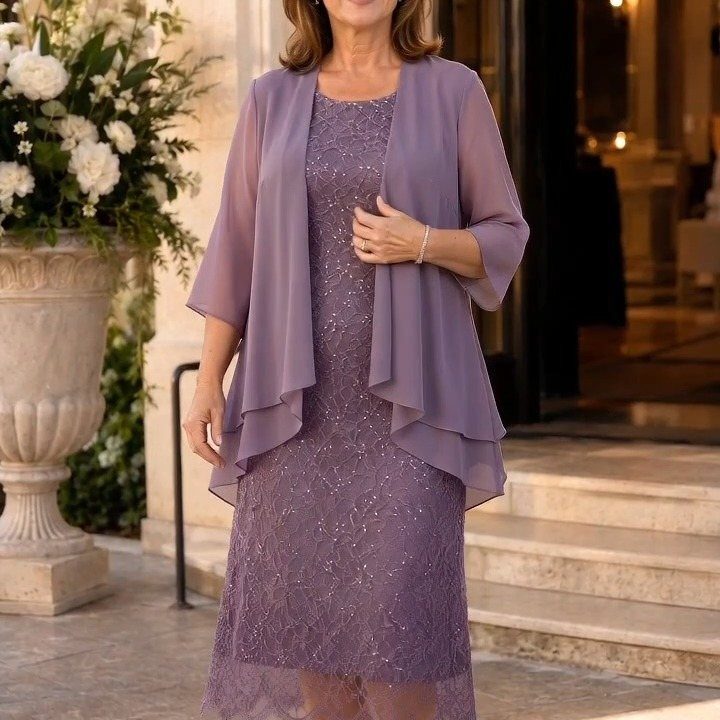
A matching jacket and dress set keeps you covered for ceremonies in religious buildings where bare arms or lower necklines would feel out of place.
A chiffon jacket floats rather than structures, so you get modesty without the boardroom stiffness of a standalone blazer.
I like that this duo works as 2 pieces later. After the wedding, the dress stands alone for dinners out and the jacket softens a sleeveless top you already own.
For your own version, look for a fit-and-flare base; that shape sits comfortably through long receptions and photographs well from any angle. Heels and a small clutch finish it, and the jacket pockets hold a tissue for the obvious moments.
2. Floral Prints
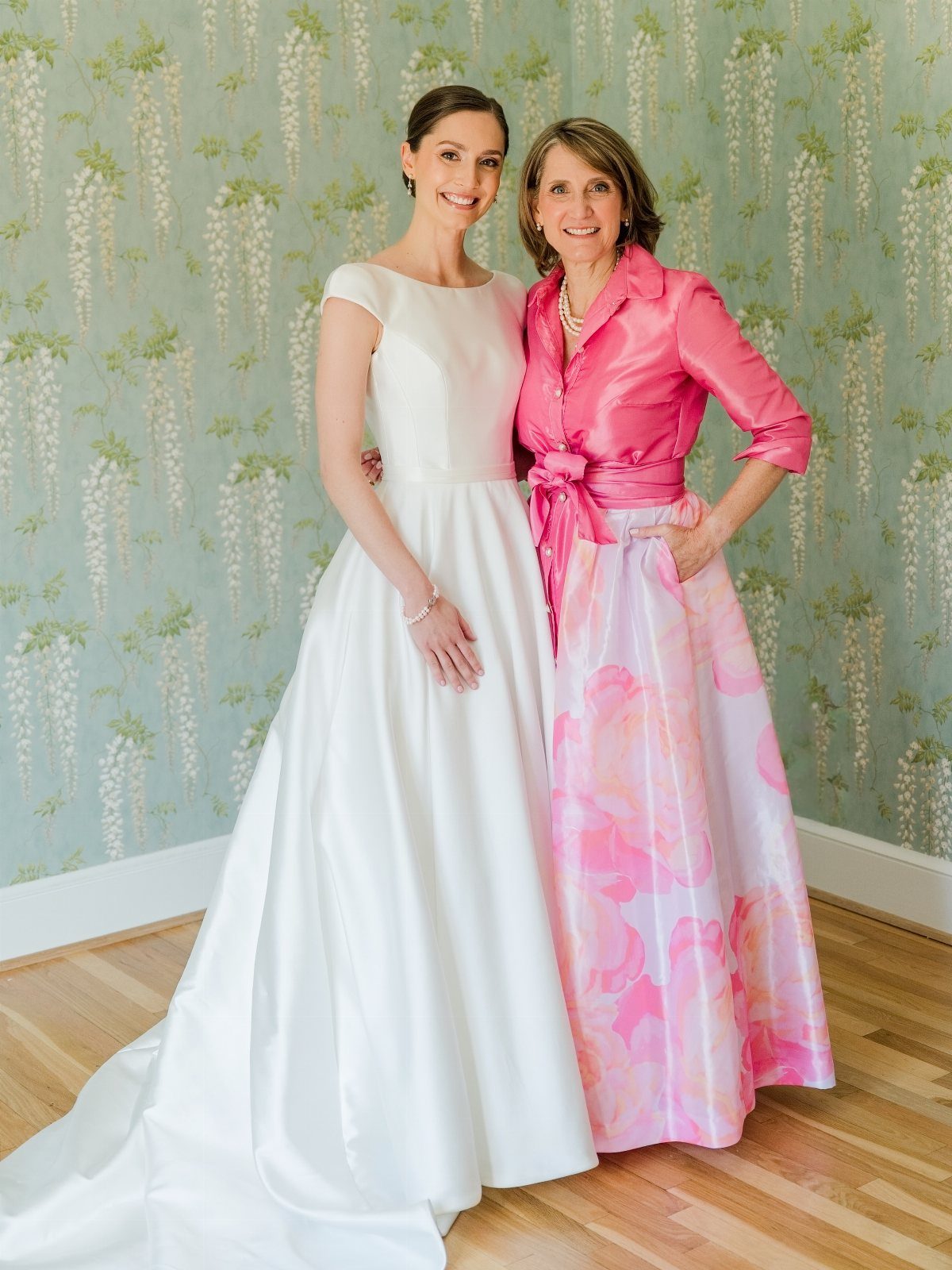
Prints can nod to the wedding’s own palette without matching it exactly; a pink floral skirt with matching shirt is one way to do it. The mother is not in the wedding colors; she is in conversation with them.
If the couple has chosen blues, your floral might pull in dusty or navy tones. If their scheme runs warm, peach and coral prints photograph cleanly against both white bridal gowns and green outdoor backdrops.
A button-down shirt and maxi skirt in a floral fabric keeps the print moving so it does not read as wallpaper. For spring and summer ceremonies outdoors, that floating weight matters more than you would think in midday heat.
3. Chiffon Dresses
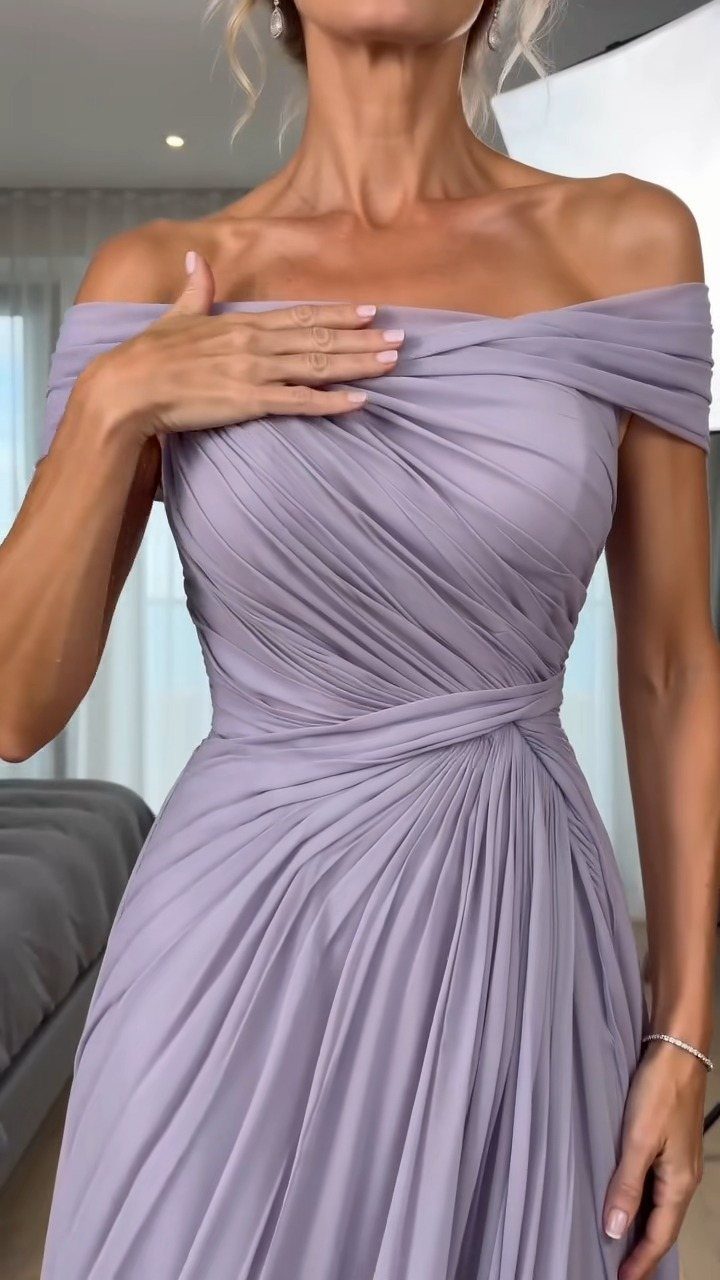
Chiffon gives you the structure you want in a formal photograph and the movement you need for a receiving line that lasts an hour.
Soft pleating on an off-the-shoulder lavender dress does not cling; ruching across the bodice does the shaping instead of any tight cut.
Lace, satin and crepe belong to the same category of fabrics that read as occasion-appropriate without trying to outdo the gown at the center of the day.
Chiffon specifically suits warmer venues and long ceremonies because it ventilates. If the wedding runs into evening, bring a wrap rather than a jacket; chiffon’s delicacy competes with heavier layers.
4. Dresses with Embroidery
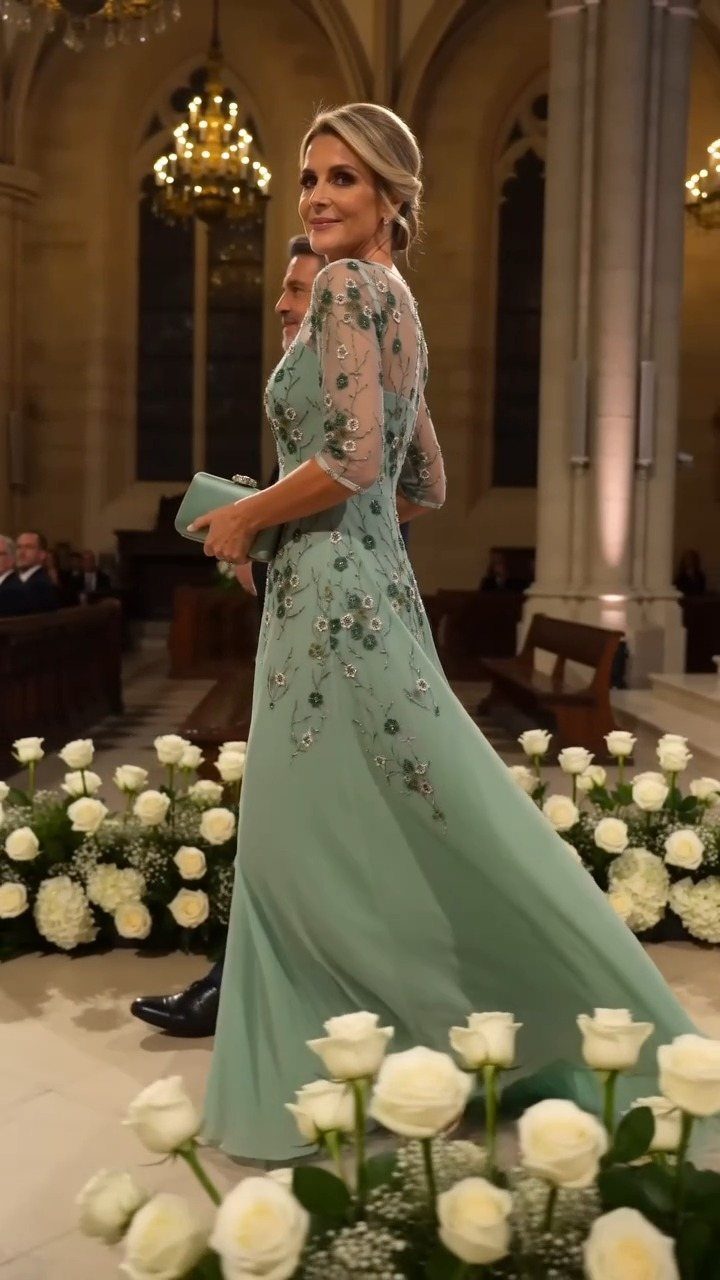
Embroidery reads as intentional where sequins can read as competitive. Detail along the bodice and down the skirt draws the eye without flashing it, which is the balance a mother of the bride needs to strike.
Look for threadwork rather than applied embellishments if you will be seated for long stretches; raised beading catches oddly on chair fabrics and car upholstery.
Metallic thread or tonal embroidery gives you that special touch without the visible scratch of sequins. This is the choice for a church aisle procession where restraint matters, followed by a reception where you still want to feel dressed.
5. Lace Dresses
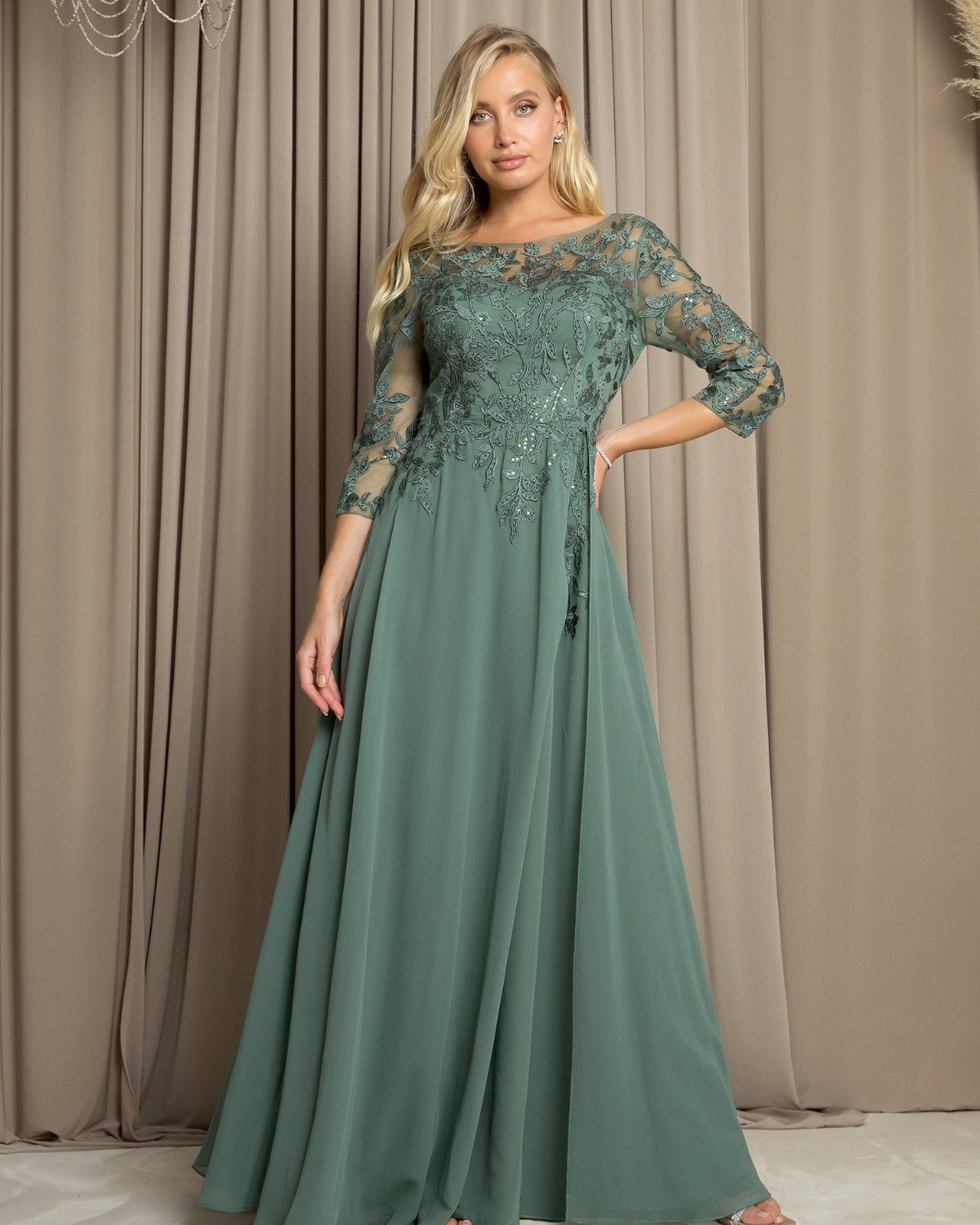
Lace has been a wedding classic long enough that wearing it as the mother of the bride signals belonging, not rivalry.
Selective lace on a bodice and three-quarter sleeves shows skin through pattern rather than sheer panels, which keeps the look grown.
For cocktail receptions, a shorter lace dress in a deeper shade, burgundy or navy, moves easily from ceremony to dancing without a change. Summer ceremonies outdoors ask for lighter grounds and skater shapes that do not trap heat.
The common thread is that lace photographs as texture in person and reads as detail from a distance, so you register as well-dressed in both the professional shots and the blurry candid ones.
6. Gowns with a Capelet Overlay
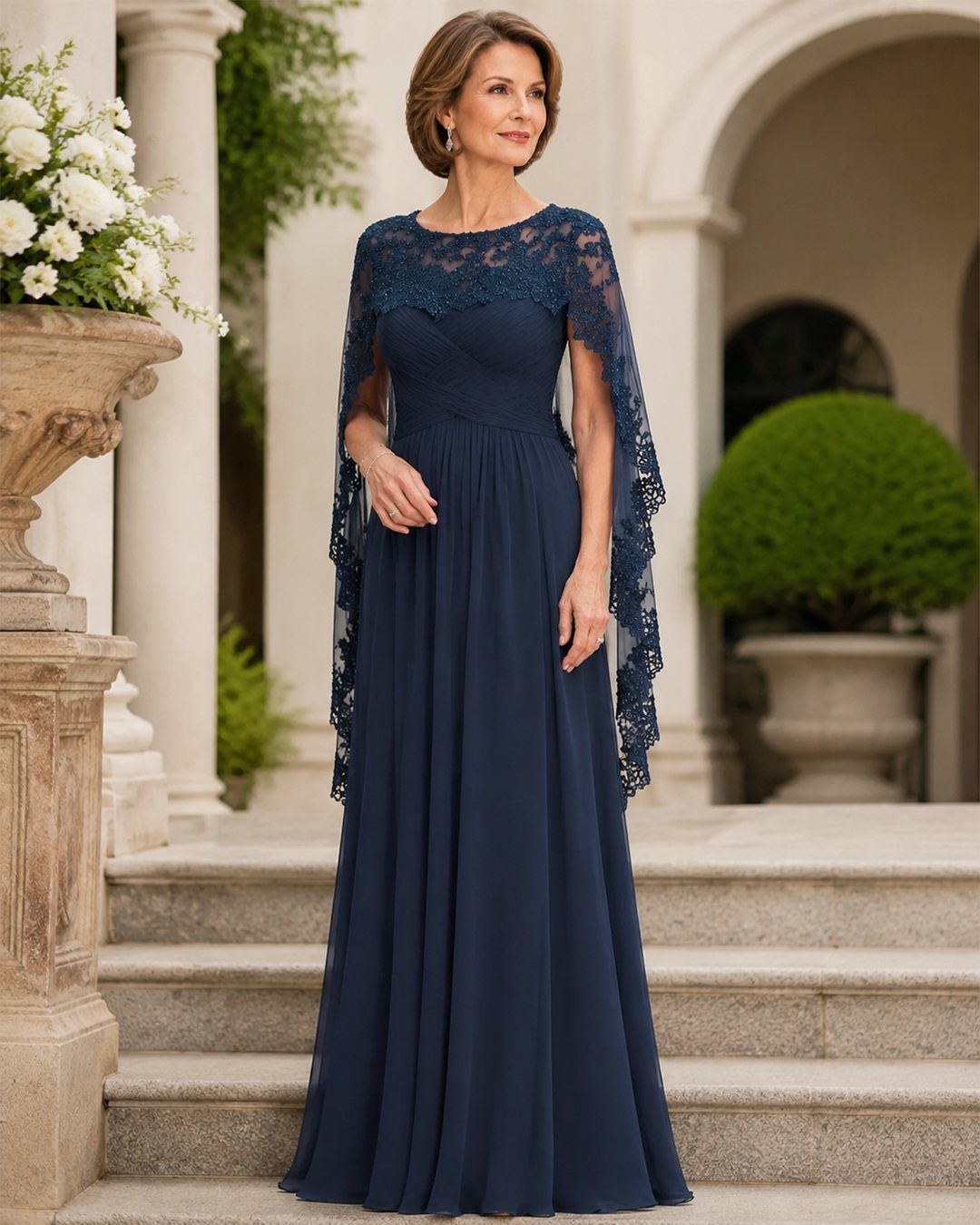
A capelet gives you the coverage of a jacket with none of the collar-to-cuff decision-making.
A capelet that attaches at the shoulders and falls to the elbow solves the problem of what layer to bring for an outdoor ceremony that turns cool.
Check that the capelet is substantial enough to read as intentional; a too-short or too-sheer piece looks like a mistaken leftover from another outfit. The visible gown runs floor-length under the overlay, which keeps the silhouette formal.
For your own choice, test the arm movement before you commit; some capelets carry heavy trim that tugs when you reach to adjust a microphone or catch a flower.
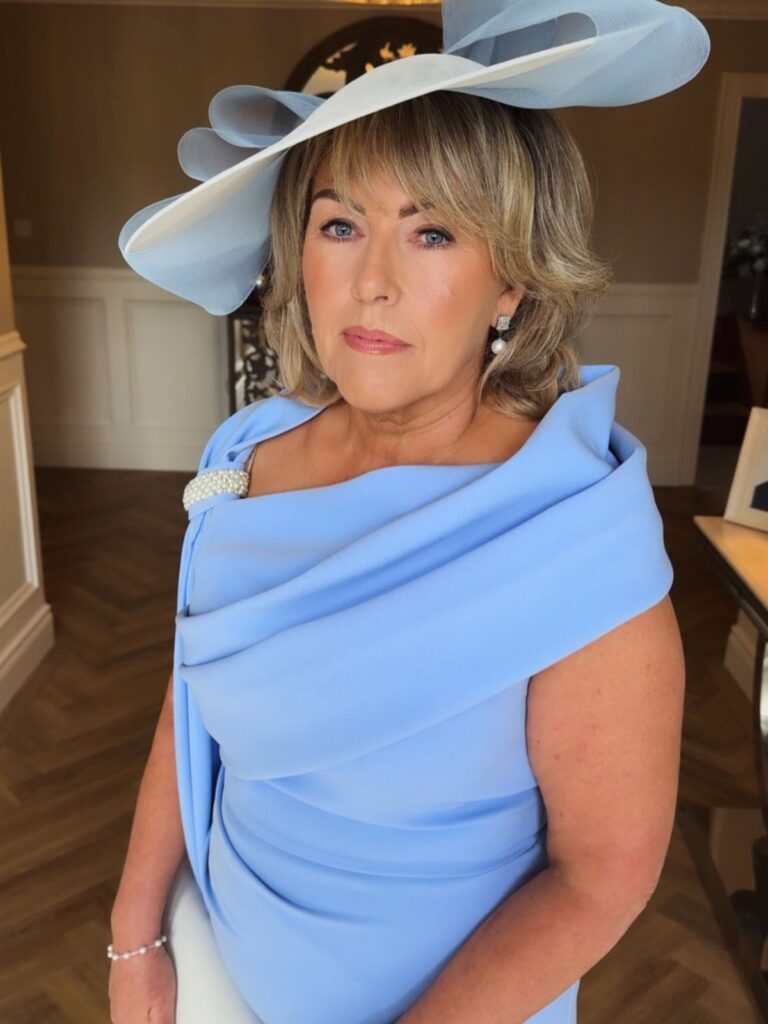
7. Pleated Dress with Matching Fascinator
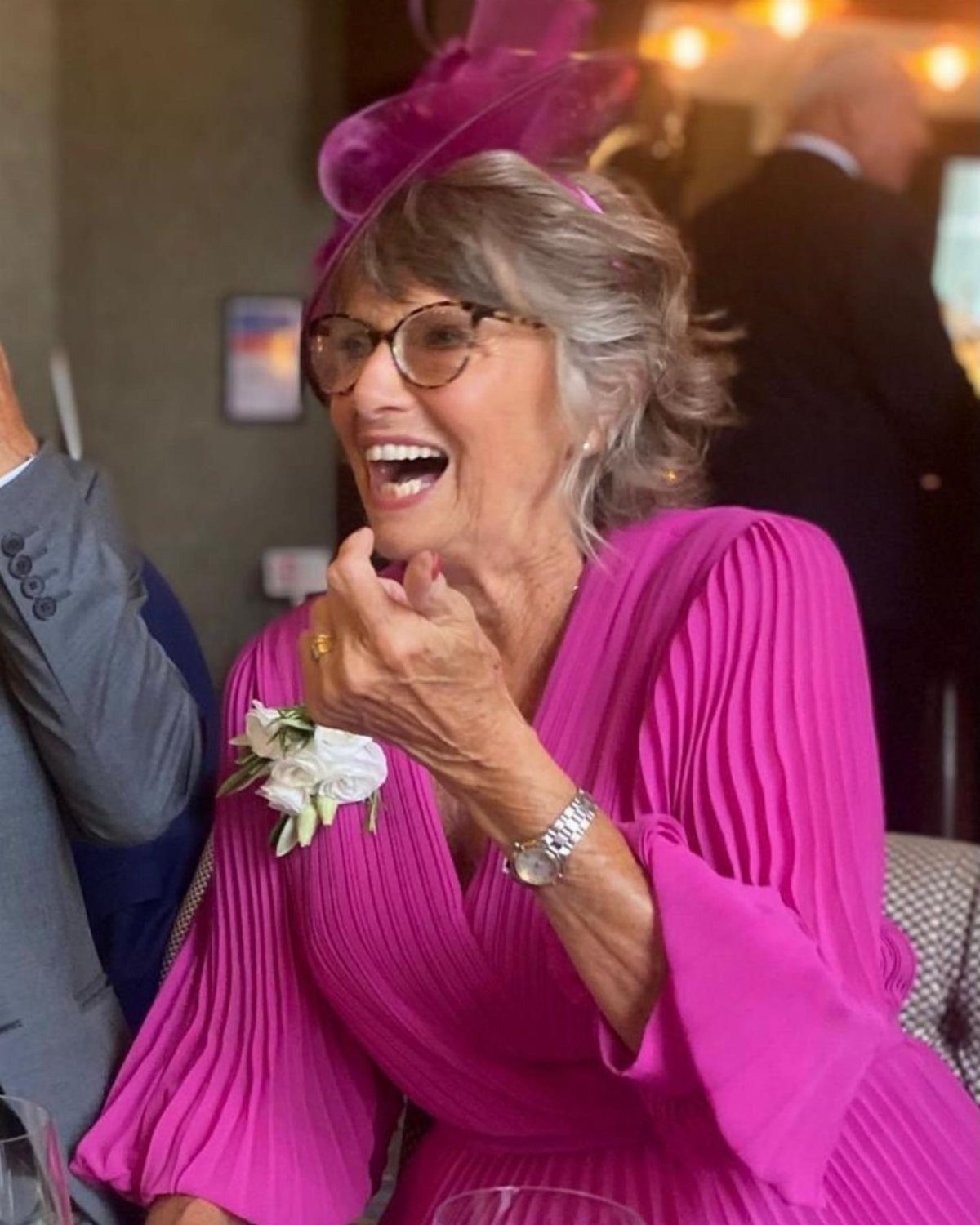
A pleated dress in a strong color, matched to a fascinator in the same shade, gives you ceremony presence without competing with the wedding party.
The hat signals formality the way a floor-length gown would, which means the dress itself can stop at the knee or just below.
The fascinator’s size should sit in proportion to your comfort level and the venue.
Too small looks apologetic; too large blocks sightlines in a church or garden ceremony. Check that the headband or comb secures firmly enough for hugging and dancing.
A corsage pinned to the dress rather than the fascinator keeps the 2 pieces from competing for attention. This pairing works best for daytime weddings with some traditional structure; evening receptions in ballrooms may read the hat as costume.
8. Traditional Embroidered Sari
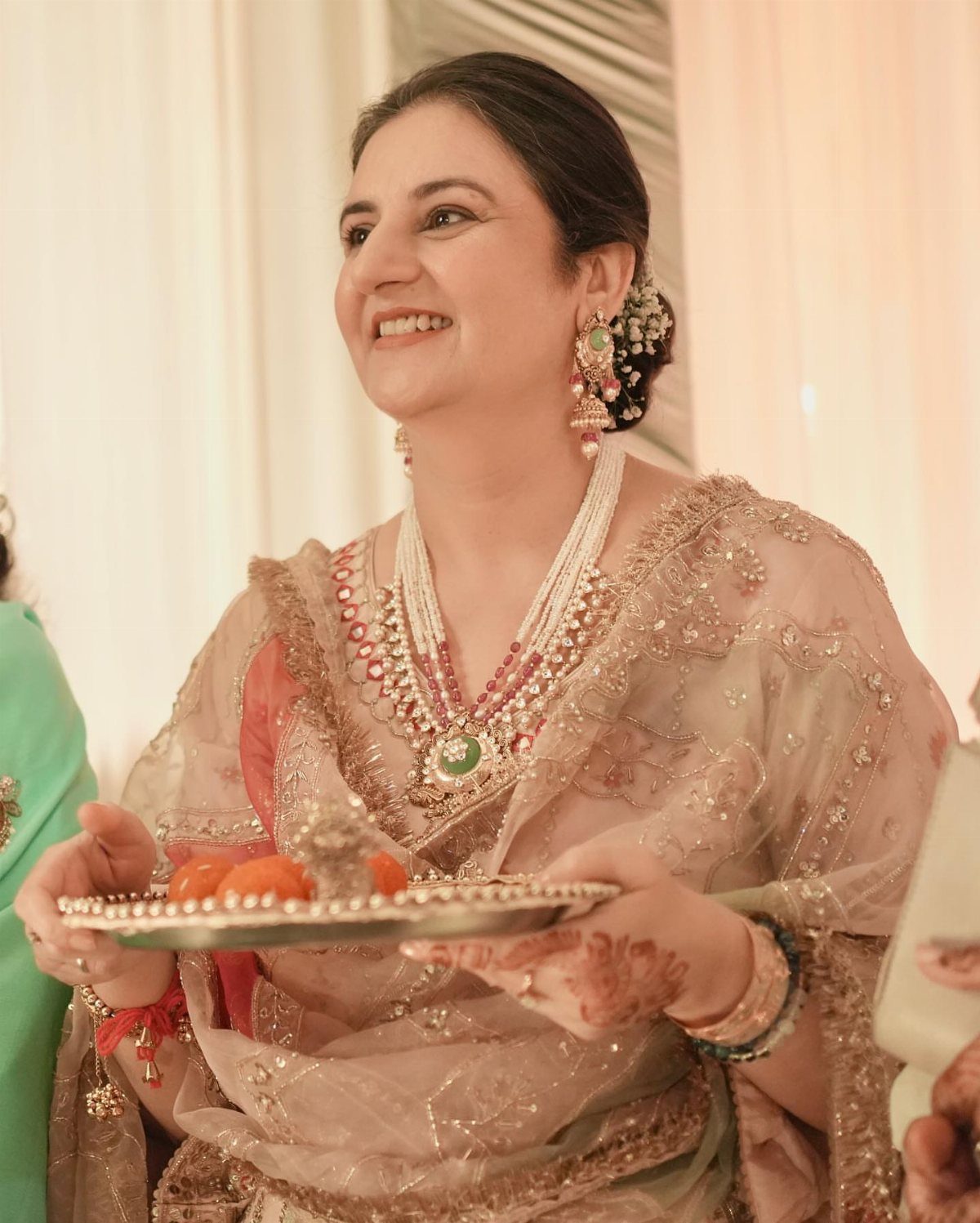
A sari in neutral silk with gold embroidery carries the weight of a formal mother-of-the-bride role without the color statement of a lehenga or gown.
The embroidery density, visible here along the border and scattered through the field, reads as occasion dress rather than everyday wear.
The draping method matters for movement and modesty. A nivi drape, secured at the waist with pleats tucked left, leaves the right shoulder and arm free for greeting guests and holding ceremonial items.
Practice the pin placement at the shoulder before the day; a loose pallu shifts during long periods of standing.
Henna and layered necklaces are traditional accompaniments rather than required ones; wear both, one, or neither based on your own practice. This choice suits ceremonies where the mother holds a visible role in rituals or processions.
9. Embroidered Tunic with Trousers
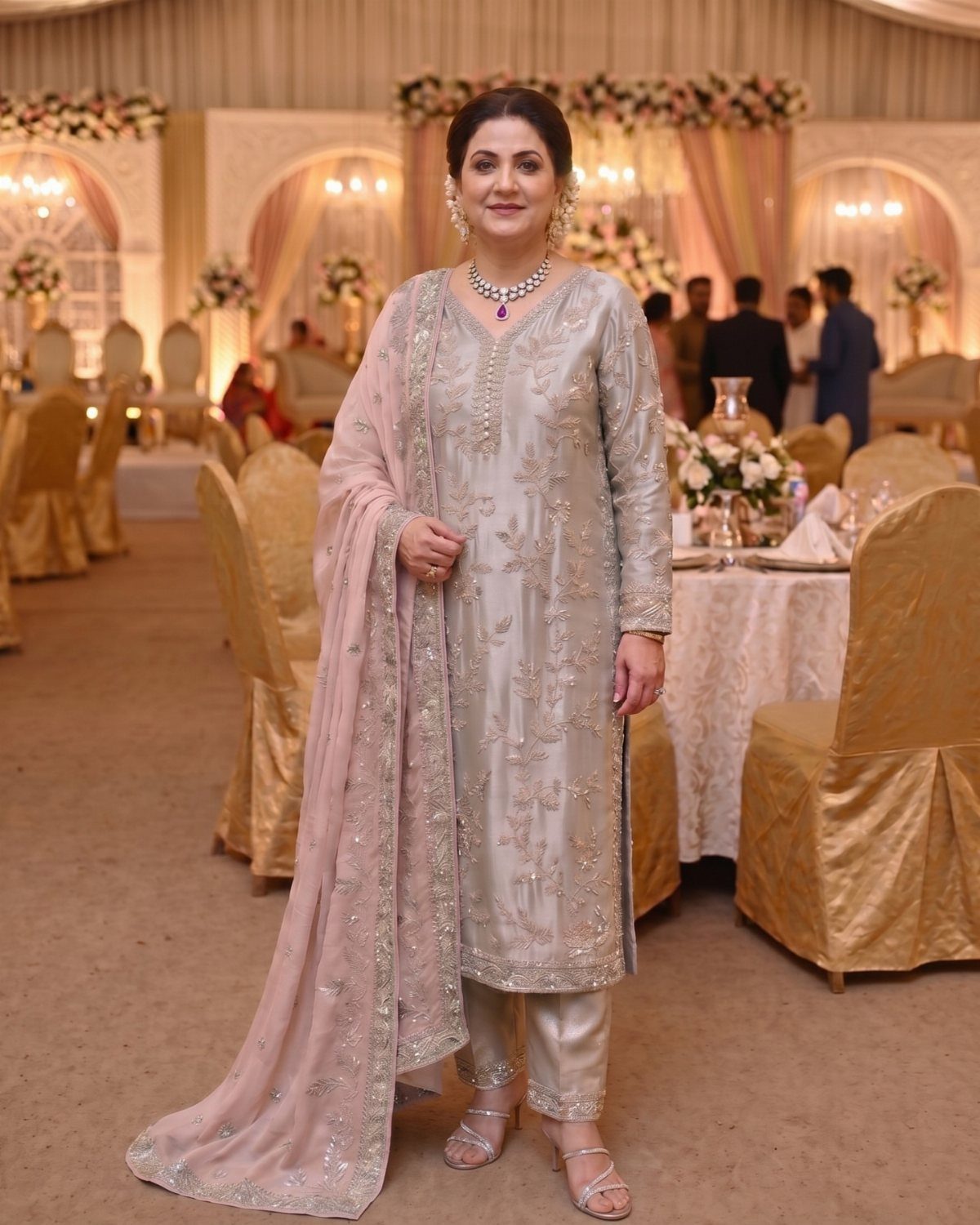
A tunic and trouser set in a quiet color, with embroidery in a heavier thread, gives you the coverage of a dress with the mobility separated pieces allow.
The trousers here match the tunic exactly, while the dupatta in a pale contrast carries the softening detail.
Dense embroidery on the tunic front and sleeve edges reads as dressed-up without catching on chairs or table linens.
The sheer dupatta can drape over one shoulder for ceremony, or be set aside for the reception if it trails. Silver heels work better than you might expect for long hours on marble or tile floors common in banquet halls.
Check that the trouser waistband sits at your natural waist, not hip level; the tunic length depends on that placement to look proportional.
Choosing the Right Dress
The venue shapes your color more than most mothers realize. An outdoor summer ceremony in midday sun will wash out pastels that read beautifully in a dim church interior.
I have seen lavender and powder blue hold up against green backdrops better than sage, which tends to merge with the foliage in photographs.
Navy carries across both settings without shifting, which is why it remains the fallback for uncertain locations.
Jewel tones do the heavy lifting for evening receptions where the light drops.
Emerald, sapphire, and plum absorb rather than reflect the ambient glow of candles and string lights, so you register as rich rather than faded in the background of formal shots.
Metallic detailing, whether in beading or threadwork, picks up that same low light; pair your jewelry to the dominant metal tone so the effect reads as intentional rather than accumulated.
Pink occupies a strange middle space for the mother of the bride. It photographs as nostalgic and soft, which works for daytime, but can skew juvenile under ballroom chandeliers unless the cut is severe enough to balance it.
Champagne and cream risk reading as white-adjacent in certain processional lighting; I would confirm with the couple before committing, especially if the bridal gown itself carries ivory rather than pure white undertones.
Colors to Avoid
White is the only color with an actual rule attached, and even that rule bends by couple.
Some brides welcome ivory or cream among their guests; others want the full spectrum reserved. The only safe move is to ask, then honor the answer without negotiation.
Beyond white, the real restrictions are situational. A color the couple chose for their wedding party is not forbidden territory for a mother, but wearing it head-to-toe reads as confused identity rather than solidarity.
I have seen mothers pull dusty blue from a navy bridal scheme successfully by keeping the value lighter and the texture different, but matching the bridesmaid dress exactly creates photographic ambiguity about who holds which role.
Black carries its own regional weight. In some families it signals respect and formality; in others, mourning.
The couple’s background matters more than current fashion coverage here. If you are uncertain, neutrals like tan and grey split the difference without carrying symbolic baggage.
Dress Comfort
A mother of the bride sits through a ceremony, stands for photographs, walks a receiving line, sits again for a meal, then stands for dancing.
Any dress that restricts movement at one of those stages becomes a problem for all of them.
The waistband placement determines whether you can breathe normally after a seated dinner. A natural waist cut lets the fabric settle above the compression zone; a dropped waist or hip-level band cinches exactly where expansion happens.
Sleeve length affects temperature regulation across a long day more than most fabric choices.
Three-quarter sleeves trap heat during outdoor ceremonies and leave you cold in air-conditioned ballrooms. A removable layer, whether capelet or jacket, adapts where a fixed sleeve cannot.
Shoe choice compounds or solves the problem.