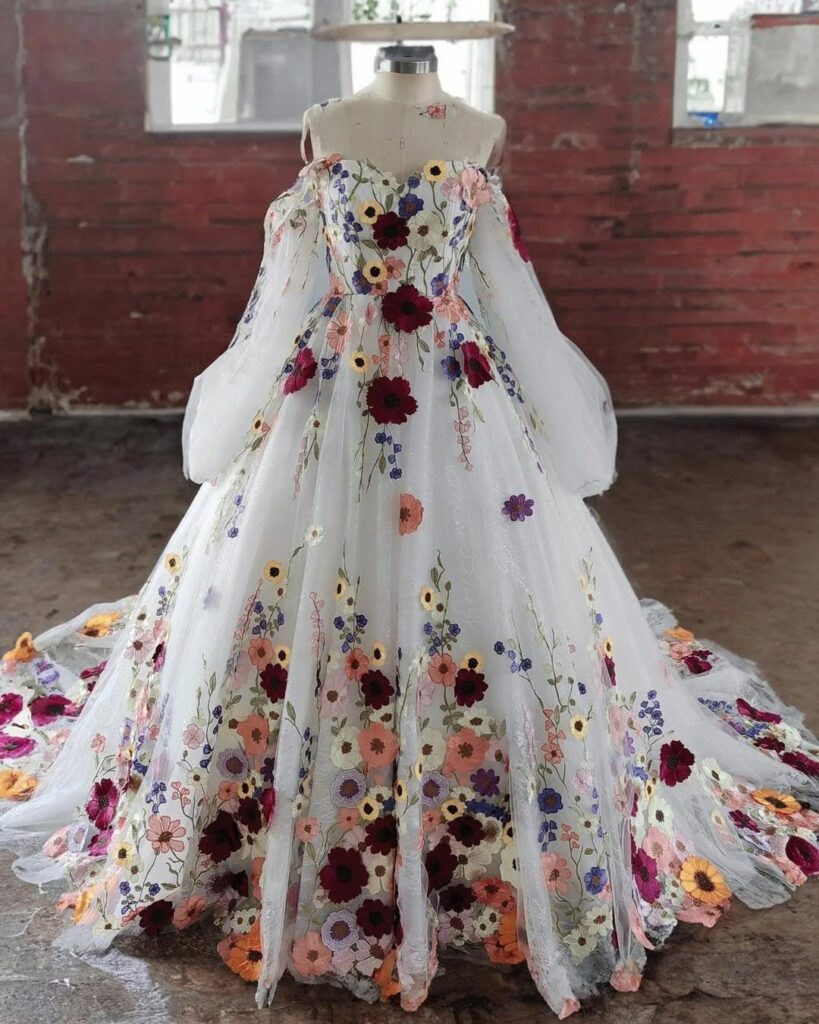
The range runs from flat embroidery you can dry clean to dimensional appliqués that need structure underneath to hold their shape through the night.
A garden ceremony lets you carry bright sunflowers and blue butterflies without fighting the setting; move indoors to a hotel ballroom and smaller, muted embroidery reads more clearly under chandeliers.
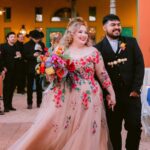
1. Colorful Wedding Dresses
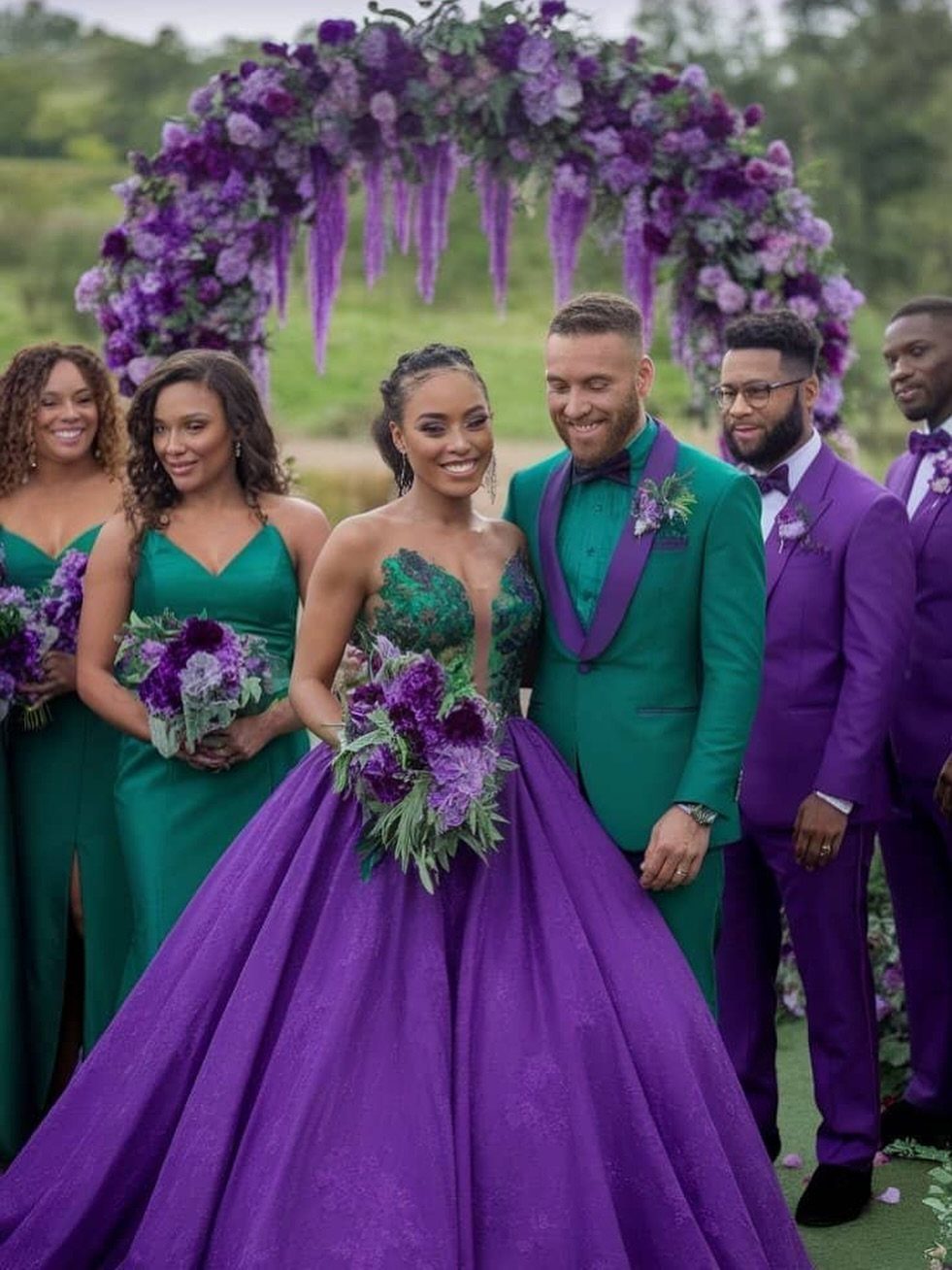
Moonlight Bridal stocks colored gowns from blush to navy if you want the same effect without custom work; Maggie Sottero cuts theirs in black, gold and red too.
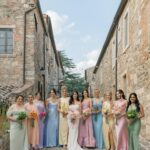
Hold the line at two colors, three at most, so the group photo reads as planned, not accidental.
Match your bouquet flowers to the dress shade, not the other way around: the gown is the larger field of color and sets the tone for everything else.
2. Embroidered Floral Patterns Wedding Dress
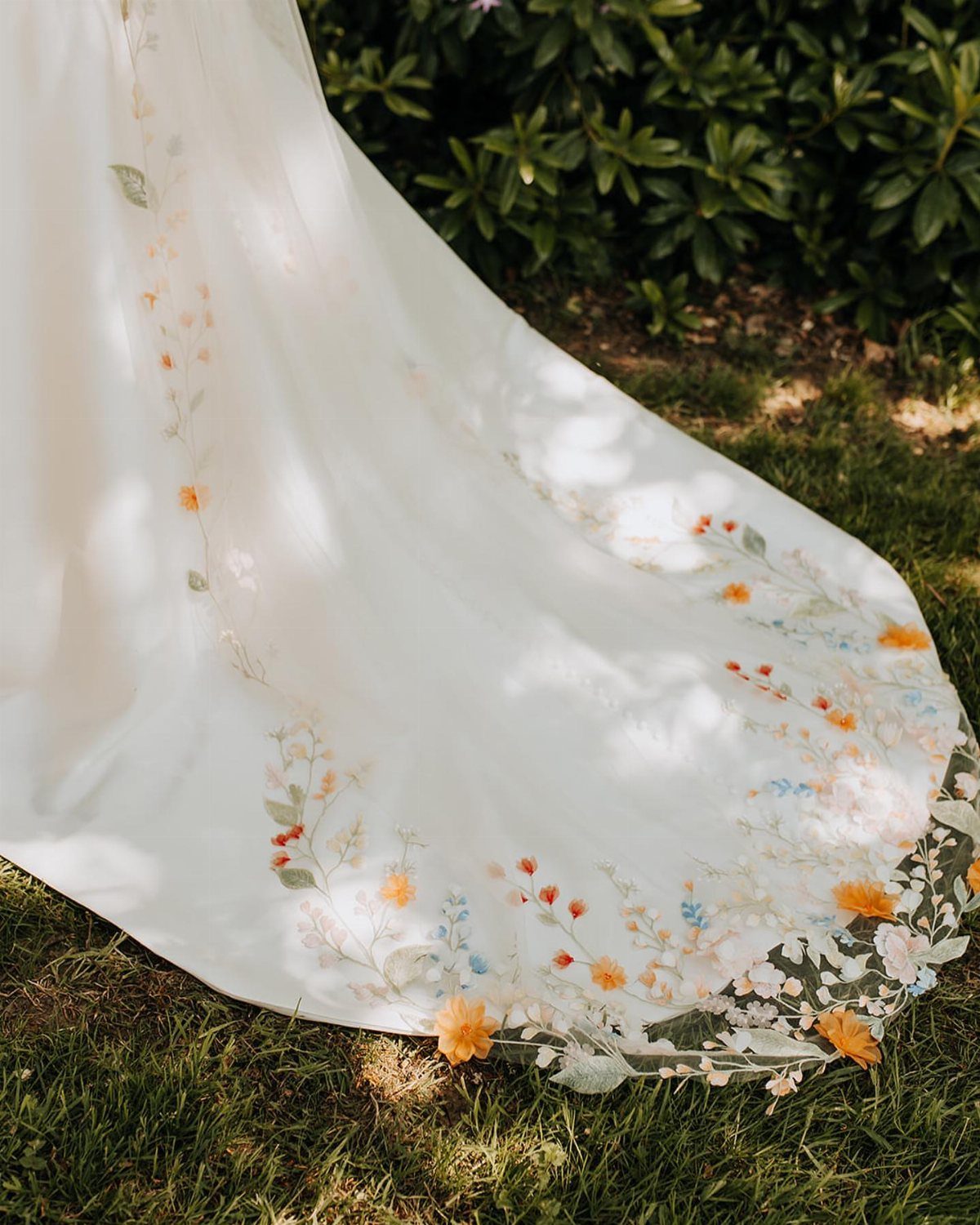
Embroidery sinks the color into the weave rather than floating it on top, which means the flowers survive train shots and grass stains better than appliqués would.
Temperley London and Needle and Thread build theirs with hummingbirds and sequins; Claire Pettibone keeps hers quieter.
The density matters more than the brand: scattered small blooms read vintage, a full skirt garden reads maximalist, and the labor shows in the price either way.
Dry clean only, and ask your boutique whether the backing stiffens the drape before you buy.
3. Floral Appliqués Wedding Dress
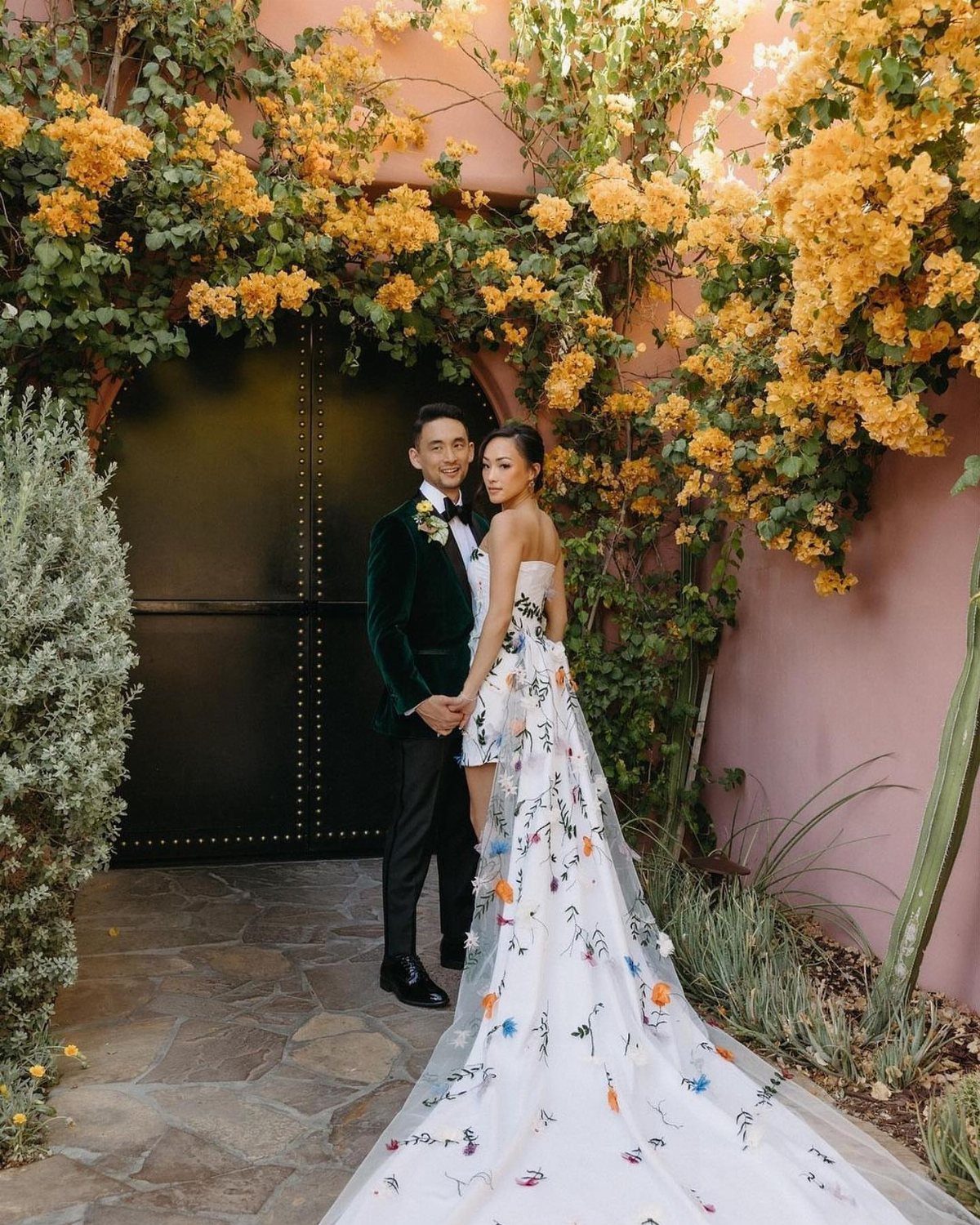
Three-dimensional flowers cast shadows and catch light in a way flat embroidery cannot, especially on a short dress with a long train that moves separately from the body.
Justin Alexander laser-cuts satin appliqués for cleaner edges than hand-cut ones, and Madi Lane builds whole collections around the technique with Australian florals as the starting point.
The weight adds up: a full skirt of appliqués needs interior structure or the gown pulls downward. Check that the bodice is boned and the shoulder straps, if any, are wide enough to carry the load through a reception.
4. Sunflower Wedding Dress
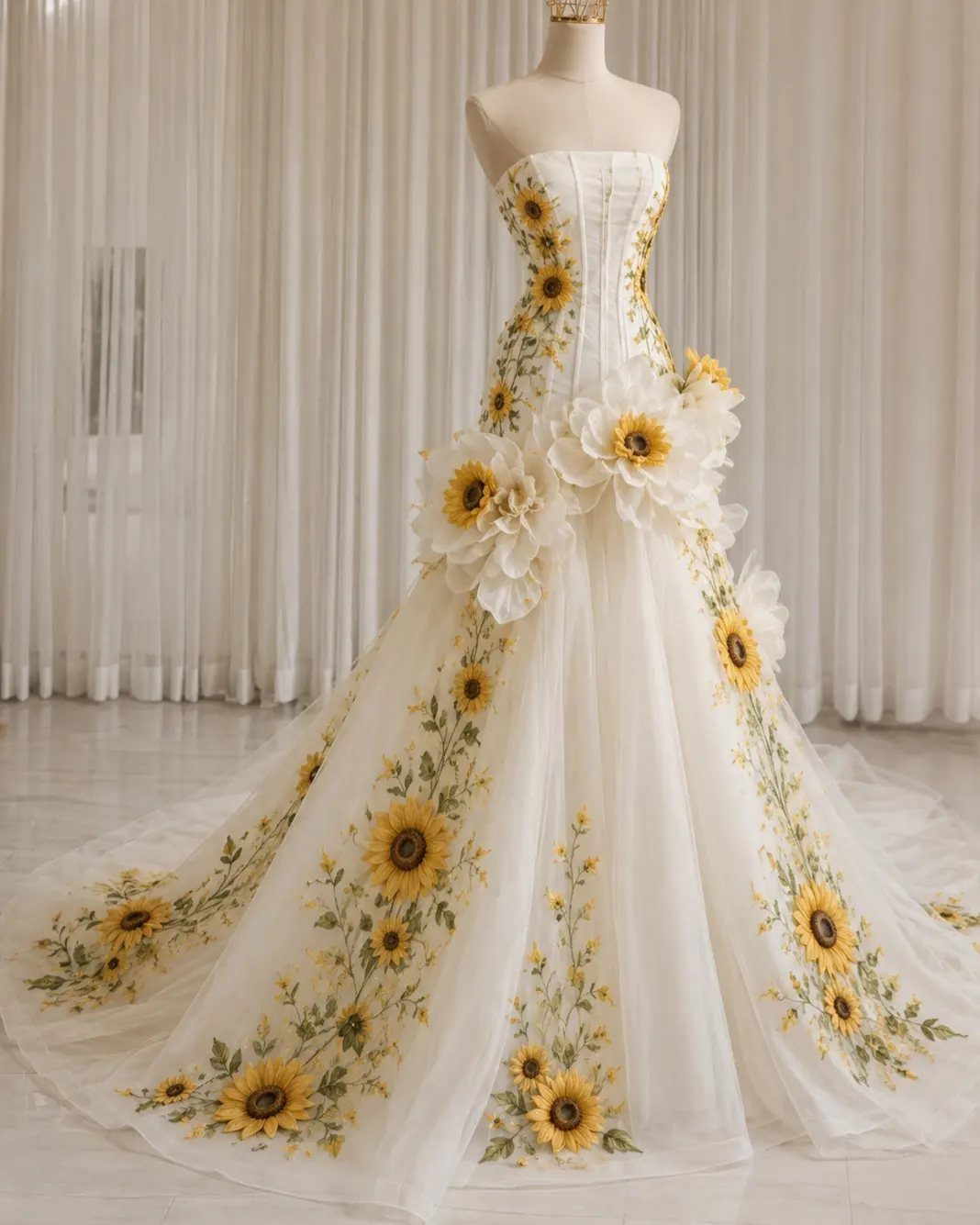
Yellow sunflower embroidery on ivory reads country and confident, not tentative. The 3D fabric versions add height and snag risk in equal measure: consider whether your aisle is outdoors or your reception involves narrow tables between chairs.
A mannequin shows the dress at rest; you will be moving, and those petals catch on everything from greenery to groomsmen buttons. Keep the rest of the styling simple, or the look tips into costume.
5. Butterfly and Blue Floral Accents
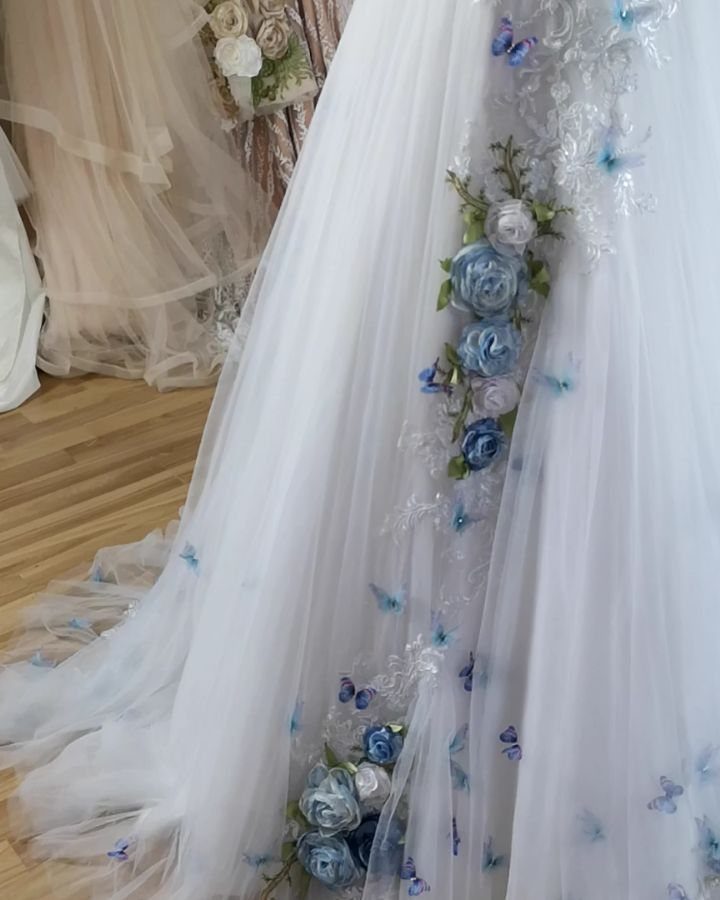
Blue fabric roses with butterfly appliqués on white tulle give the effect of flowers drifting upward, not falling, which changes the mood from romantic to almost kinetic.
Justin Alexander uses the same 3D technique on bodices and trains; the low-back versions show more skin between the decorations.
The tulle layer matters: too sheer and the blue reads as scattered, too opaque and the butterflies lose their floating quality.
Ask to see the dress under fluorescent light as well as warm boutique bulbs; blue shifts more than most colors.
Choosing the Right Color
Cool undertones in skin read pink or blue; warm reads gold or olive.
Hold a white and an ivory swatch to your collarbone in daylight, not under boutique spots, and the one that makes your face look alive is your base.
From there, blush and champagne stay safe, navy and black need the stronger contrast of deep winter coloring.
Bring your wedding palette swatches to every fitting.
The dress should harmonize with the table linens and the bridesmaids, not match them exactly. Maggie Sottero’s gold reads very different under tungsten than in noon sun; check it in both.
Accessories stay minimal when the dress carries this much color. Simple earrings, a single hairpin, and let the flowers in the fabric do the work.
Suitability for Various Weddings
Garden and outdoor venues make the easiest pairing: the dress borrows context from real greenery instead of fighting a blank ballroom wall.
That said, embroidery with classic density, like Claire Pettibone’s quieter builds, holds up in a church or hotel without reading costume.
The key is the flower treatment, not the flower itself. Scattered small blooms in muted thread feel timeless; a full-skirt garden in 3D appliqué demands the right room.
A kinetic blue butterfly piece needs space to move and light to catch the tulle layers, so check your venue’s ceiling height and bulb temperature. Fluorescent light shifts blue more than warm boutique spots will warn you.
If your heart is set on sunflowers or bright yellow embroidery, lean into the country confidence and book the barn or the meadow.
Frequently Asked Questions
What are some colorful wedding dresses with flowers?
Brides can choose from embroidered floral patterns, three-dimensional appliqués, or printed floral fabrics. Appliqués cast shadows and catch light as you move, though the weight adds up and needs interior structure to keep the gown from pulling downward.
Is a white dress with colored flowers appropriate for a wedding?
Yes, a white base with colored flowers blends tradition with personal style without abandoning either. The gown stays bridal while the floral details carry the personality, and accessories should stay minimal so the fabric does the work.
Garden and outdoor venues are the natural fit, because real greenery around you gives the print somewhere to belong instead of shouting against a bare wall.