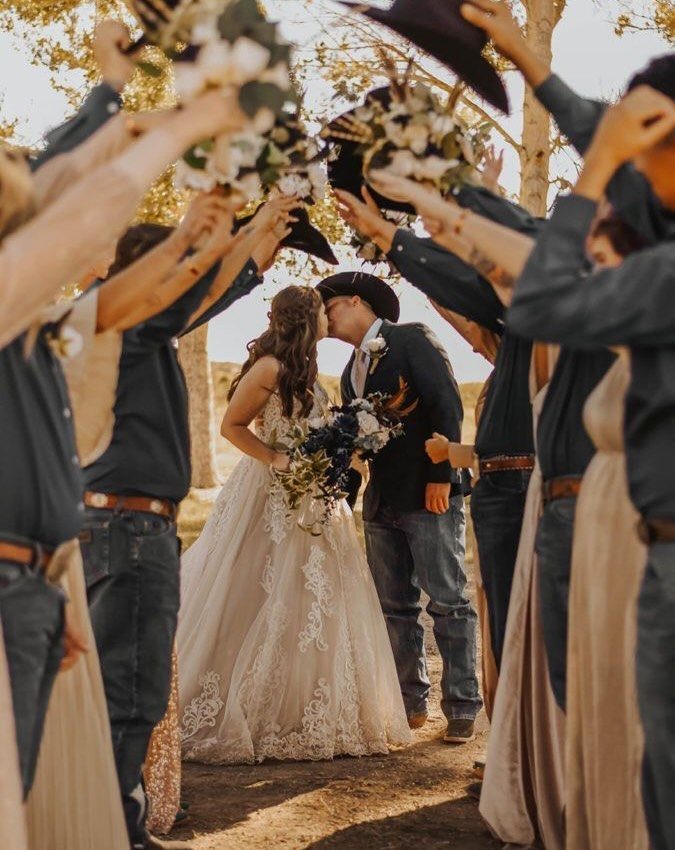
A western themed wedding can run from cowboy boot centerpieces to a western-themed guest book, and the deciding factor is whether the couple actually lives around boots and barn wood or is importing the look.
The palette that keeps it honest starts with terracotta, cream, and sage green because those colors are already in the boots and the barn wood, not because someone chose them.
1. Western Wedding Attire
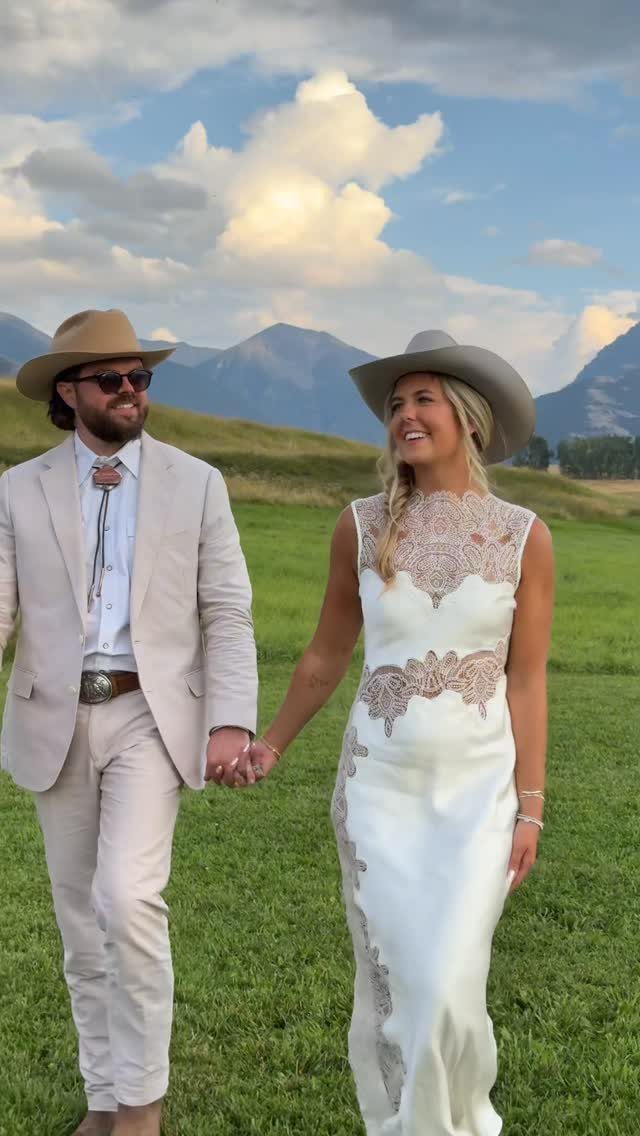
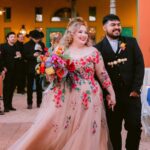
Cowboy boots under a lace dress hit differently than any other wedding look I have seen.
Tan leather with a high slit gown is the balance most guests want: western enough to read the theme, dressy enough to honor the occasion.
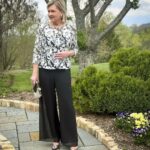
For a guest, I would start with a cream midi dress and add a structured black blazer, then let the boots carry the statement.
A bolo tie on a groom keeps the formality without a standard necktie. Missing the hat is fine; the boots and the cut of the blazer do the work.
2. Western Wedding Decor
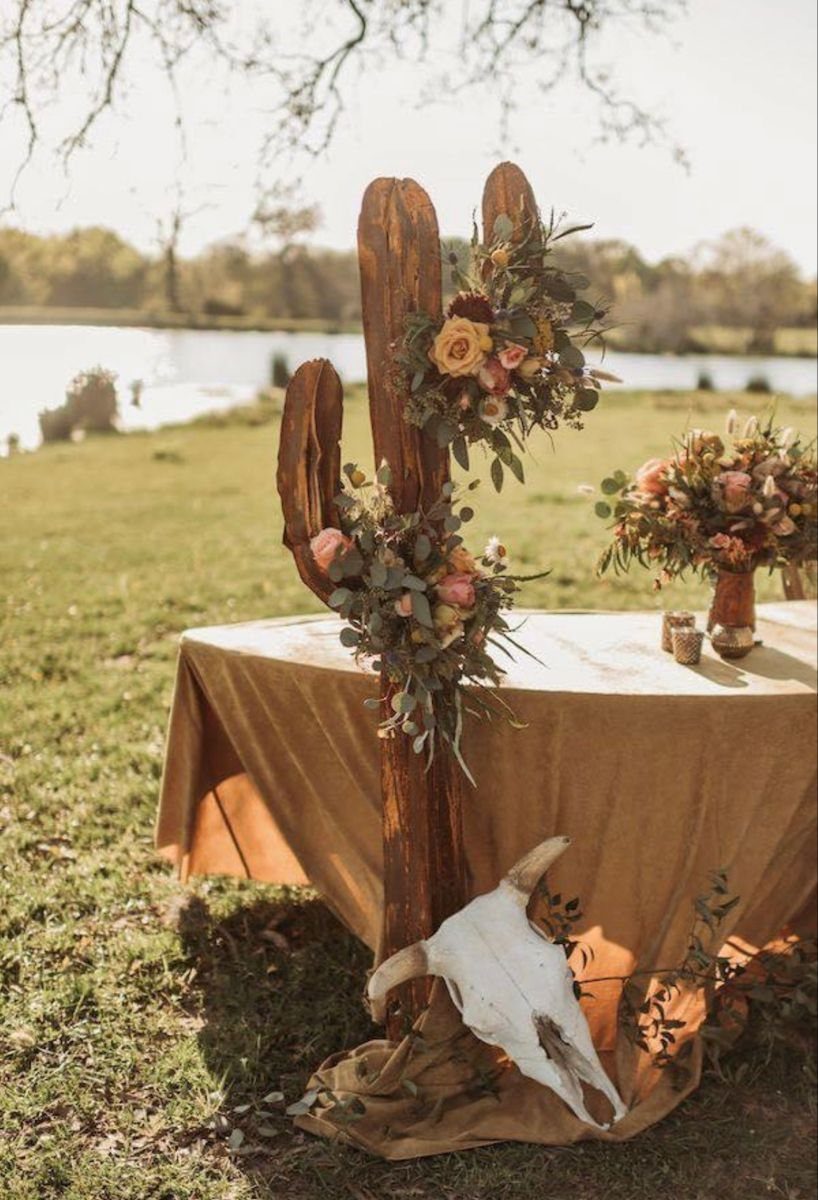
A carved wooden cactus with peach roses and eucalyptus sets the scene, and the shape matters as much as the flowers. Round western objects, cacti and steer skulls, read as scenery rather than clutter.
I would place one large sculptural piece per table, not several small ones fighting for attention.
The skull in that setup sits low, which keeps the eye moving across the arrangement instead of stopping at bone white. Greenery draped nearby softens the edges.
Steer skulls work if the couple actually spends time around them; otherwise they feel rented.
3. Western Wedding Invitations
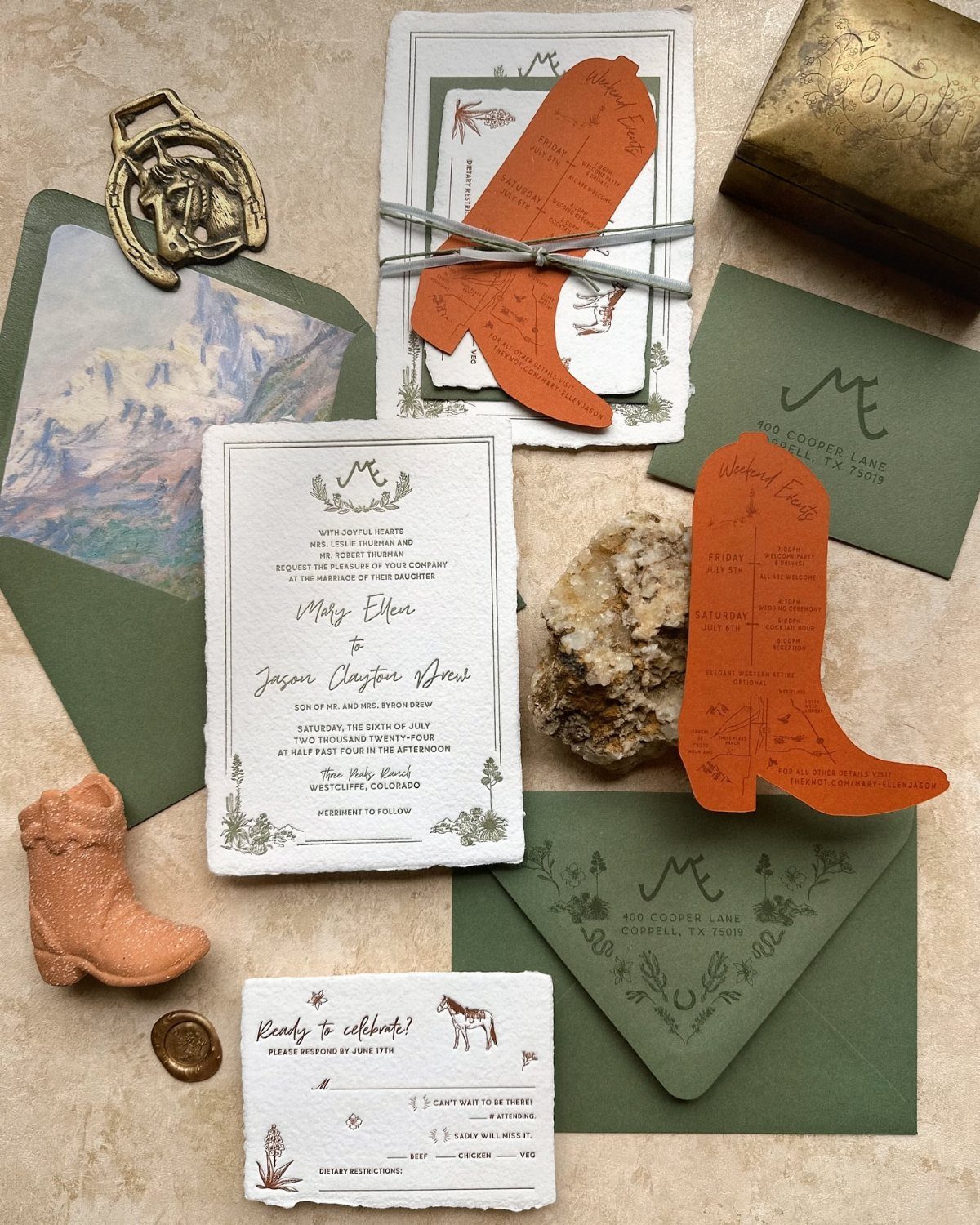
A terracotta boot-shaped itinerary card is what guests will photograph and keep. Deckled edges and sage envelopes frame it without competing, and the brass stirrup adds weight a paper suite usually lacks.
I like the boot as the single western gesture in an otherwise standard invitation.
Layer too many motifs, horse illustrations plus boots plus stars, and the design starts to look like a costume. One shape, one color story, and the rest stays clean.
Print the RSVP card on the same stock as the itinerary so the hand-feel matches across pieces.
4. Western Wedding Cake
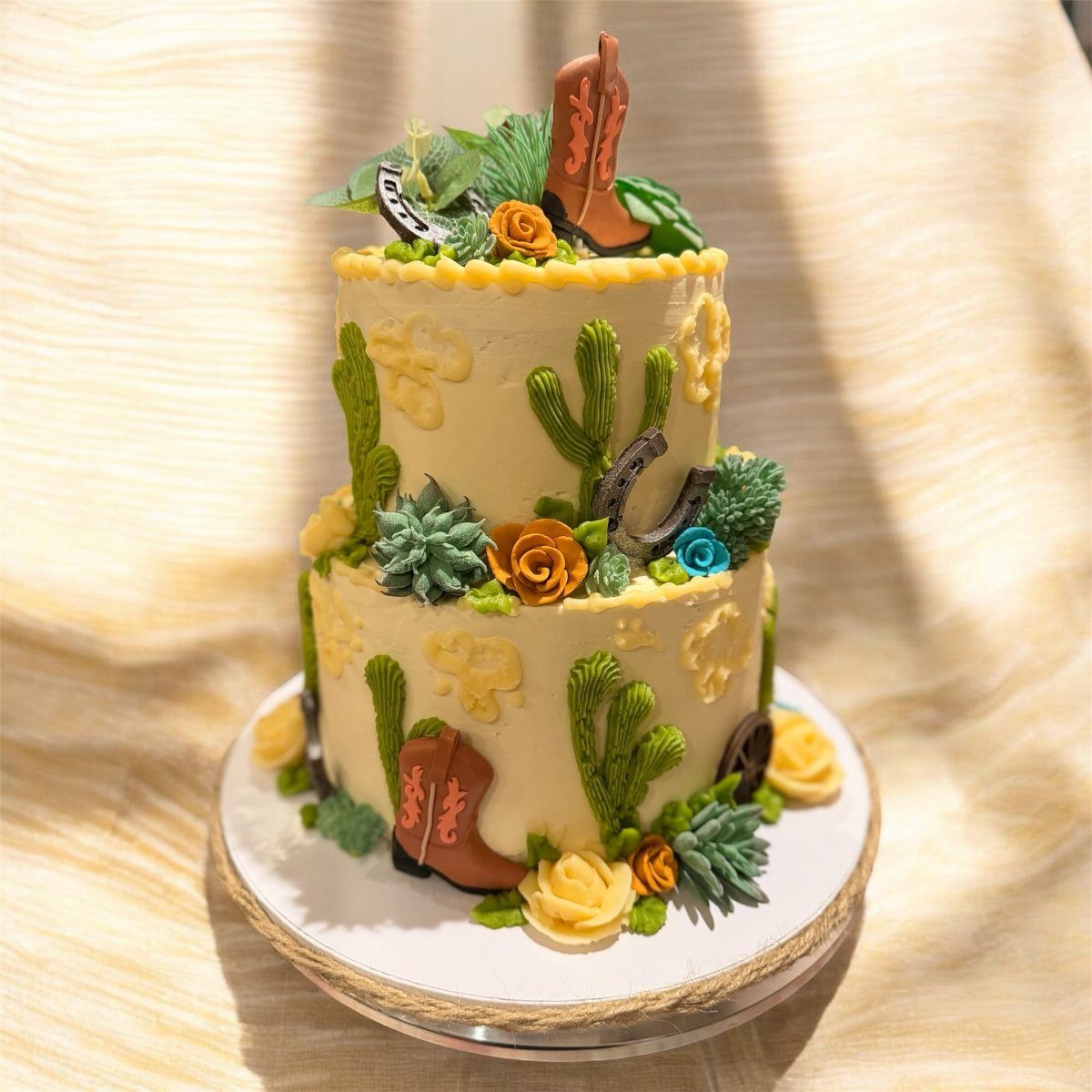
Textured buttercream catches light the way fondant cannot, and a spatula-stroked cake with dried pampas and terracotta roses against a cream base holds its own. Piped cacti and edible boots go further, which is more commitment than I would make.
A single large horseshoe on top, dark metal against white frosting, gives the western nod without turning the cake into a diorama. Dried elements last the whole reception; fresh succulents wilt and sag after a couple hours in June heat.
5. Rustic Barn Wedding Venue
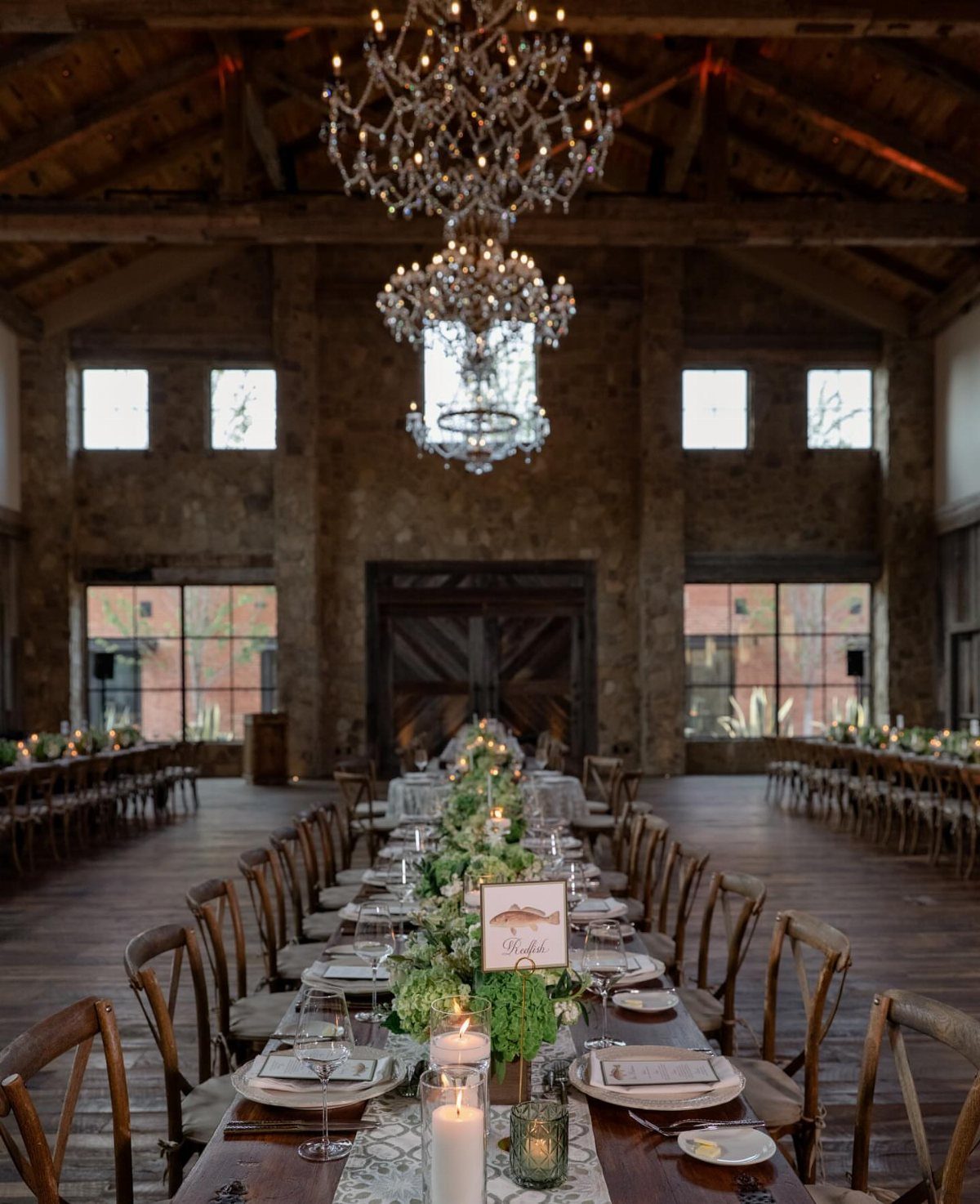
Stone walls and exposed beams do half the work before any decoration goes up, and that is why choosing a barn already built in character beats building character into a blank hall.
Crystal chandeliers add the surprise where you expect bare bulbs.
Long tables with runners of greenery, not full floral arrangements, keep sight lines open across the room. I would add string lights only where the barn lacks them; competing light sources flatten the space instead of deepening it.
Check whether the barn has climate control for spring and fall dates.
6. Western Wedding Bouquet
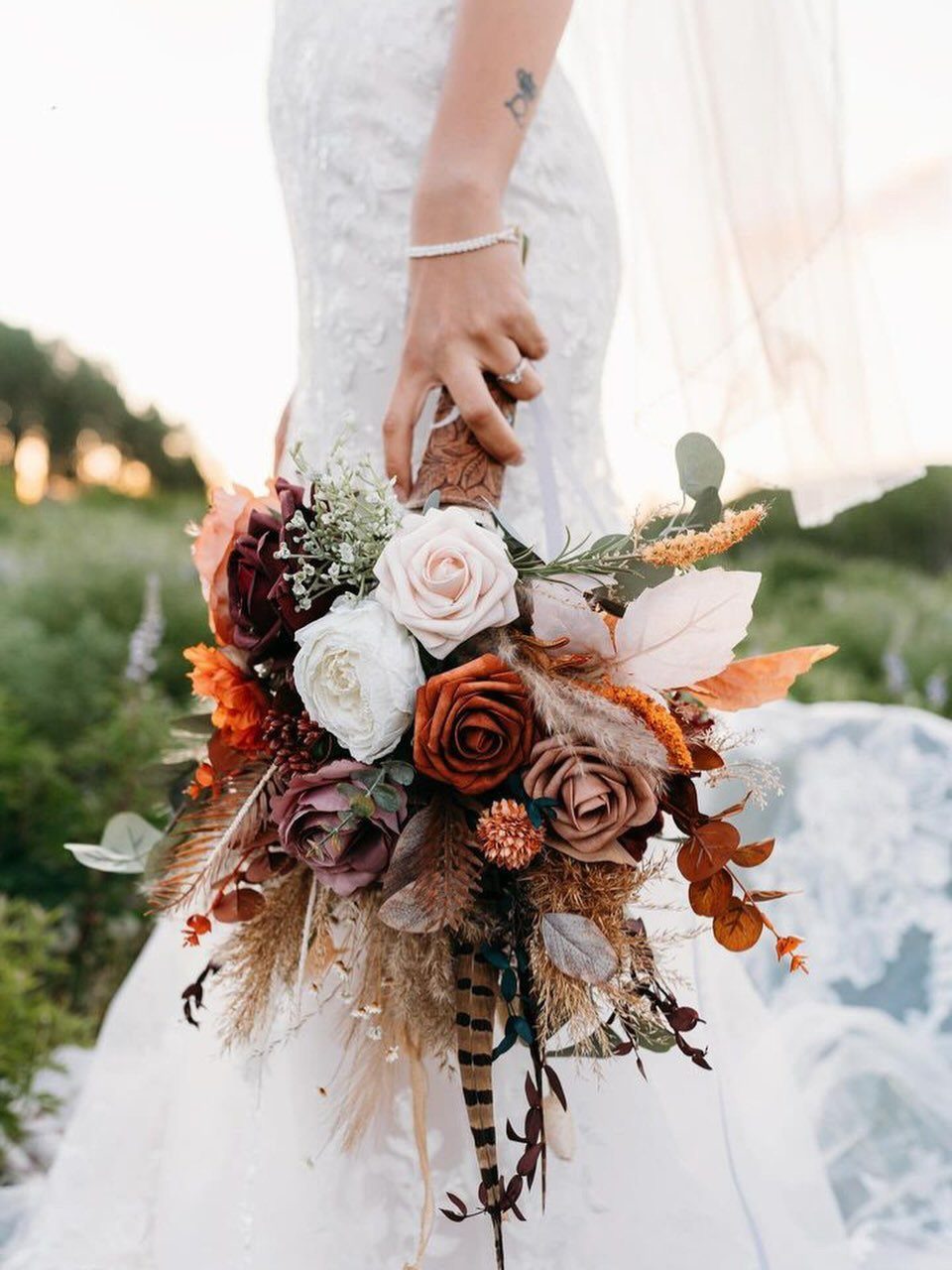
Pampas grass and feathers in a bridal bouquet read as western without reading as costume, and a tooled leather wrap on the handle is the detail that sells it.
Most florists can source the grasses; the leather sleeve is the part that takes asking.
Terracotta and blush roses with dried foliage hold color better than an all-fresh arrangement in outdoor heat.
I would skip cotton bolls unless the wedding is actually in cotton country; otherwise they feel like a prop from a store labeled "western."
7. Cowboy Boot Centerpieces
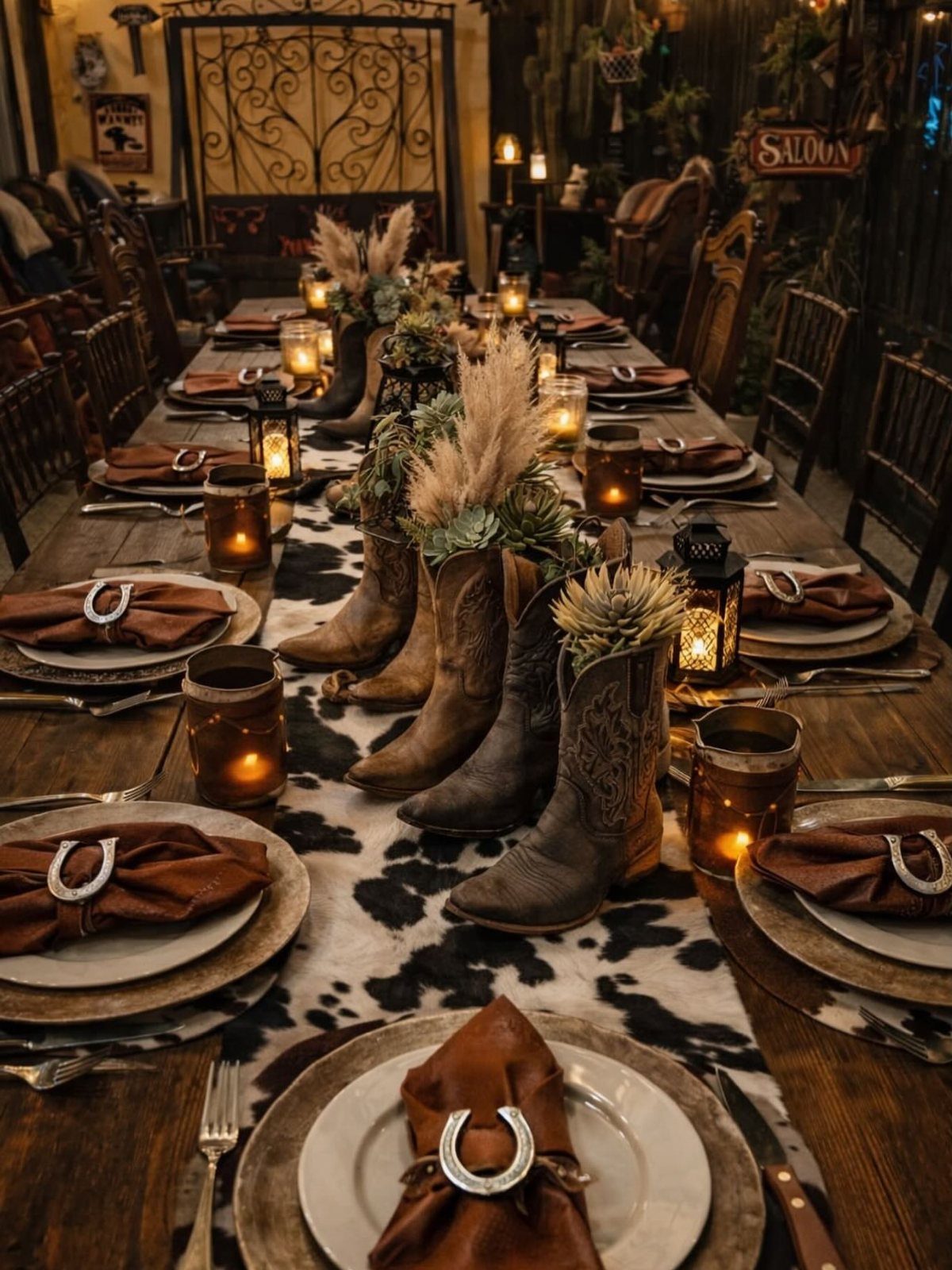
A boot standing upright with pampas grass and a few succulents spilling out is the centerpiece guests talk about before they talk about the food.
The heel holds water if you line it with a florist’s tube, so the greens stay upright through the speeches.
One boot per table is enough; a matched pair looks cute in photos but blocks sight lines.
The boots in that setup sit at alternating angles, which keeps the room from feeling staged. I would use worn tan leather with visible stitching, not new black, because the scuffing reads as real.
Check that the boots are clean inside; leather conditioner residue transfers to table linens.
8. Earthy Color Palette Wedding Decor
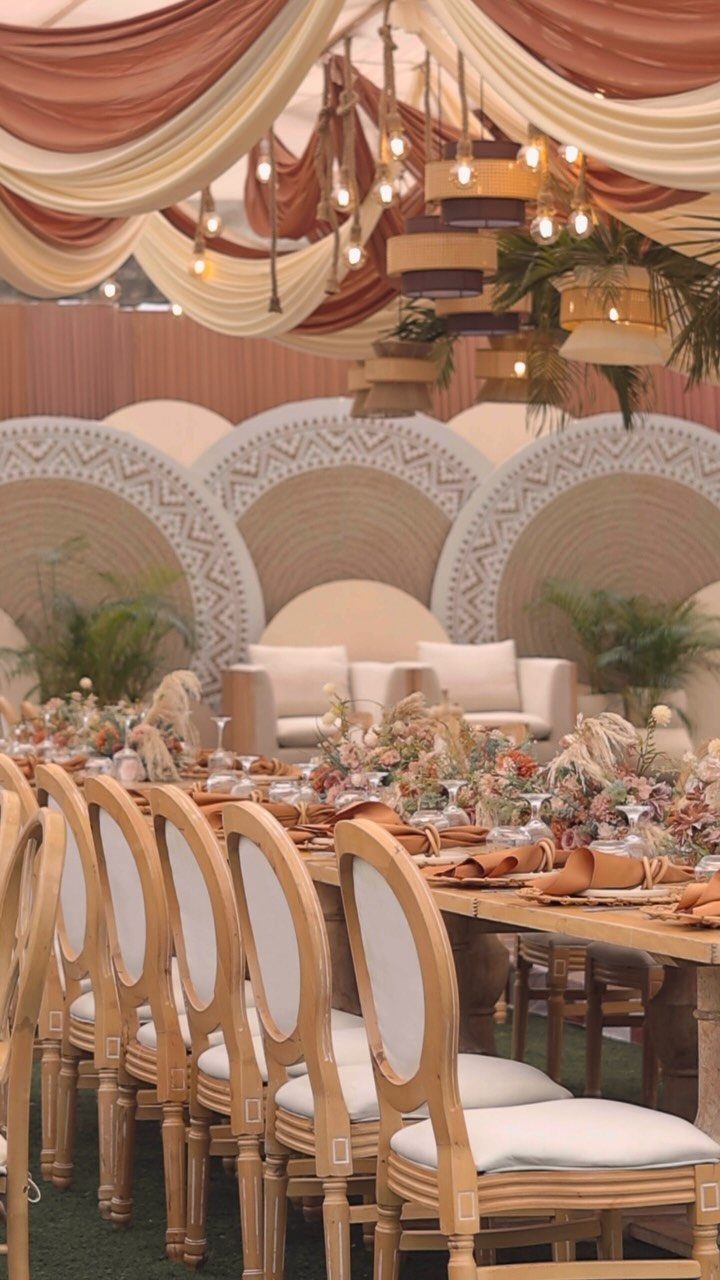
Terracotta napkins against a wood table with dried flowers and hanging woven lamps is a color story that does not need flowers to carry it. The palette works because nothing competes with the barn itself.
I would keep the ceiling draped fabric in cream or oatmeal, not white, because stark white against wood reads as beach house.
Brown glass bottles for water, green velvet ribbon on programs, and rust-colored taper candles are the accents that tie it together without adding another texture.
The dried arrangements last the whole weekend; fresh flowers in July under draped fabric wilt from trapped heat.
Skip burlap unless the barn is actually rough-hewn; on polished wood it looks like a craft project.
9. Western Wedding Signs
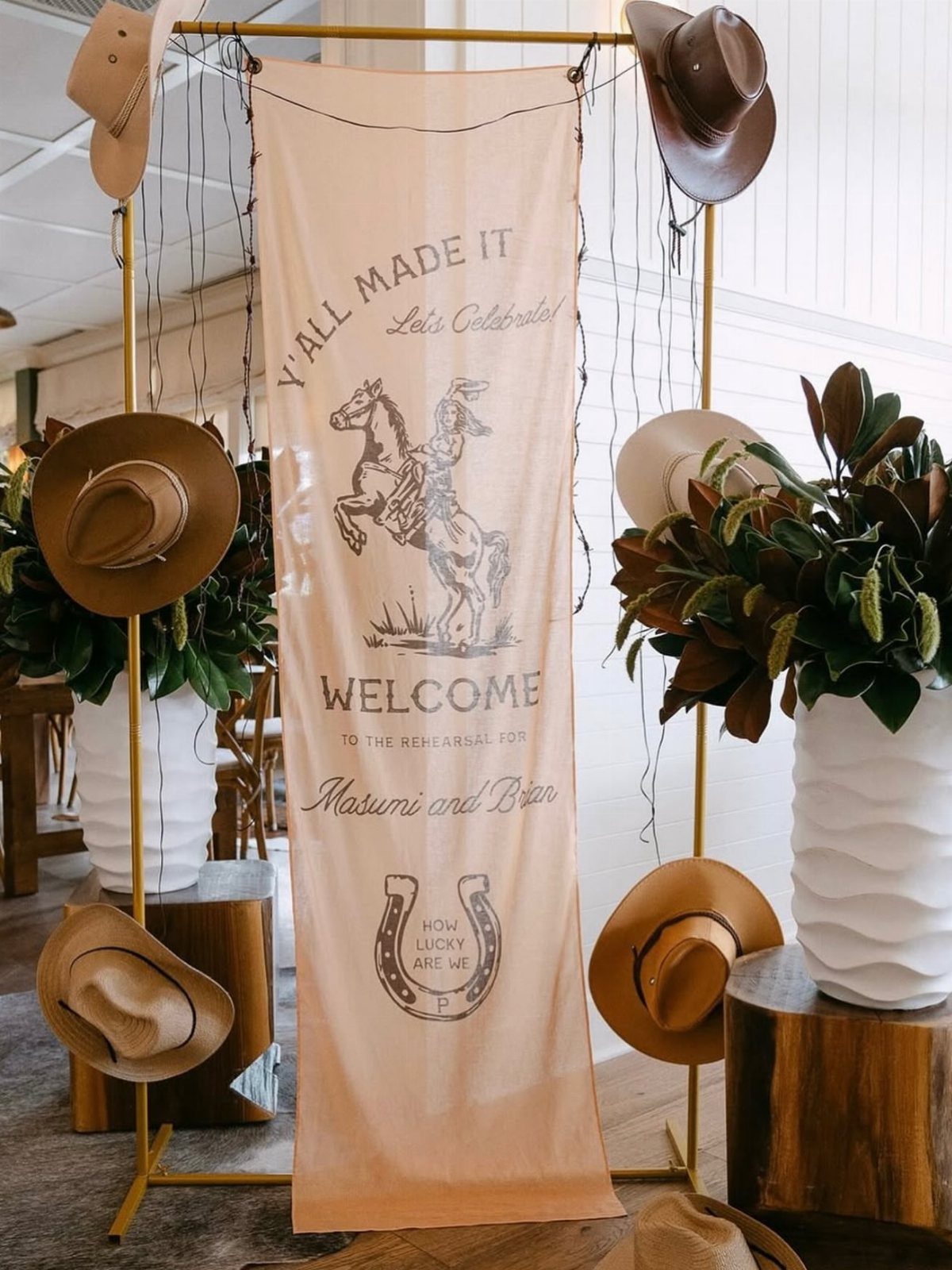
A fabric banner with "Y’ALL MADE IT" in type that looks hand-painted is the greeting that sets the tone before anyone reaches the bar. The cowboy hats suspended nearby turn a directional sign into a photo stop.
Wood-textured canvas on a dark easel works for the welcome sign; for arrows pointing to ceremony and reception, I would use actual weathered planks with routed lettering, not printed.
The weight difference matters when guests are moving in heels on grass. One large sign at the entrance carries more weight than a cluster of small ones, which start to feel like a theme park.
Painted cactus shapes or boot illustrations on every sign is where I would draw the line; the lettering and the material should do the western work.
10. Western-themed Guest Book
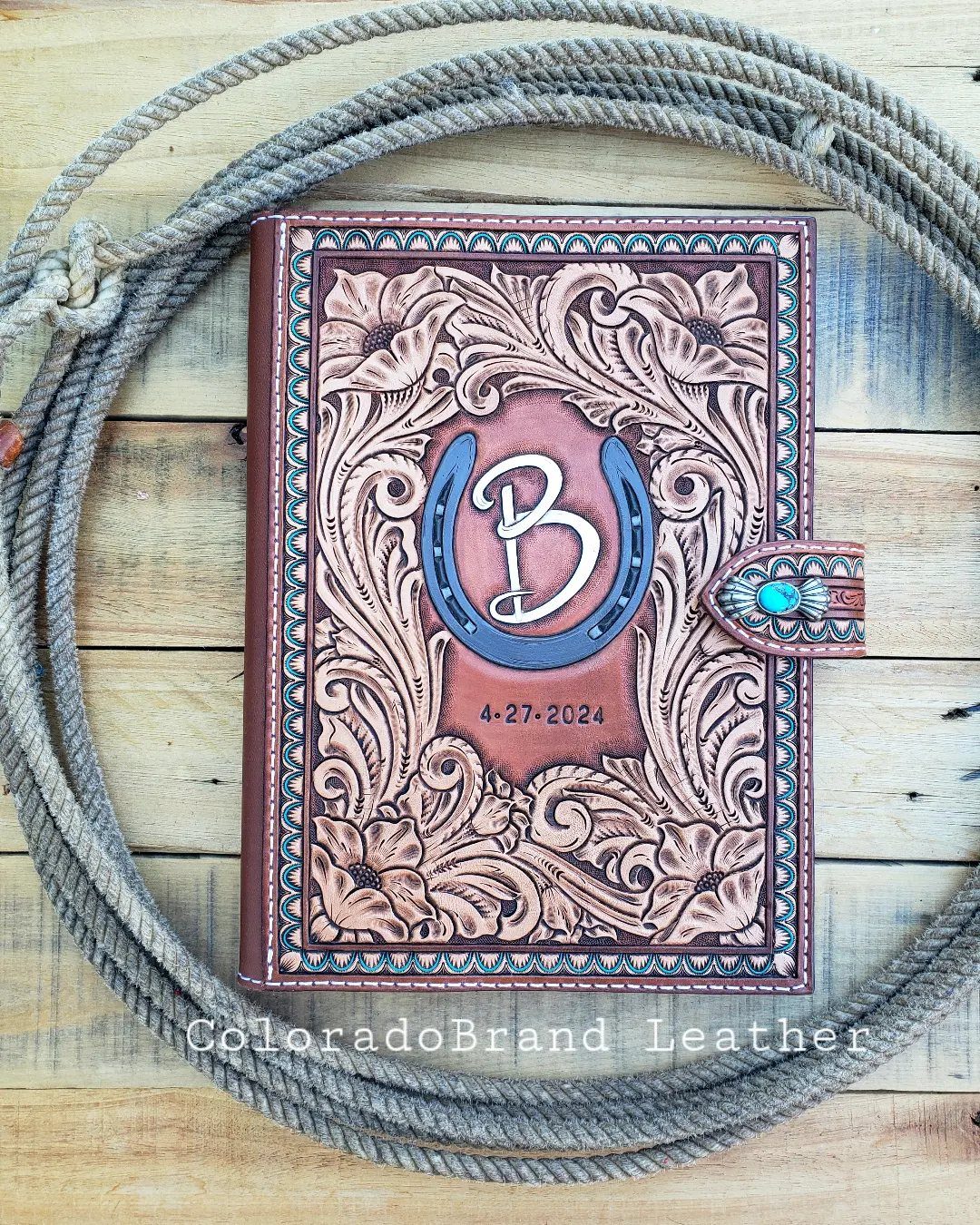
A hand-tooled leather binder with a horseshoe and initial is the guest book that sits on a shelf afterward instead of hiding in a closet. The lasso looped nearby is decoration; the book itself is what lasts.
A hand-tooled leather binder with thick pages and rope trim lets guests write without the pressure of a blank page staring back.
A set with plenty of pieces handles most weddings, since couples sign together and some will skip it. I would set out 2 fine-tip Sharpies in brown, not black, because black on light wood looks like a contract.
A laser-cut frame to hold the finished boots is worth ordering if the couple plans to display it; otherwise the box keeps them safe until someone sorts photos in January.
What to Wear to a Western Wedding
A floral midi dress in an earthy tone is the starting point most guests get right, but the boot choice is where the look breaks. Tan leather reads western; black leather reads city boots that got lost.
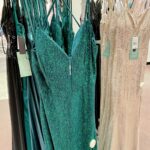
Satin slip dresses work for evening ceremonies because the fabric catches barn light differently than cotton or linen, and a wrap dress lets you adjust for temperature swings between afternoon sun and cool evening air.
I would avoid anything that needs dry cleaning if the ceremony is actually on a ranch.
Dust and grass stains are part of the setting, not exceptions to it. A metallic belt with some shape to it, not a thin chain, holds the waist where a long cardigan or blazer would hide it.
The hat is optional and often impractical; it blocks sight lines in photos and needs a place to sit during dinner.
Western Wedding Colors
Terracotta and cream carry most of the palette because they already exist in western settings: clay soil, weathered wood, dried grass.
Peach roses against that base add warmth without drifting into bright coral, which reads tropical instead of rustic. The green that works here is muted, sage or eucalyptus, not the sharp emerald of a formal garden wedding.
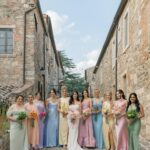
Floral patterned bridesmaid dresses in these tones solve the mismatch problem that happens when the wedding party wears solid colors against a busy barn backdrop.
The pattern lets them read as individuals without clashing with the wood and stone already in the room.
Burlap runners show up in a lot of reference images, but I would test one against the actual table surface first; on rough wood they look intentional, on polished wood they look like an afterthought.
Oatmeal draped fabric overhead keeps the light warm, where stark white turns the space clinical.
Planning a Western Wedding
An outdoor ceremony on working land means checking what the ground actually is in your month, not what it looks like in styled photos.
Grass that photographs green in May is dust by August, and heels sink into soft earth regardless of season. I would plan the aisle surface as carefully as the arch decoration.
Cowhide runners and wagon wheels appear in a lot of inspiration images, but they need scale to work.
A small cowhide in a large barn looks like a bath mat; one wagon wheel alone looks like salvage. These pieces need either repetition or size to read as design choices rather than props.
Lanterns for evening light are more reliable than strings of bare bulbs where power may be limited, and they move if the wind shifts.
The white fabric arch with a steer skull is a specific look that either matches the couple’s actual life or does not; borrowed iconography reads as borrowed.
I would ask whether the skull, the cowhide, or the boots in the photos are materials the couple lives with, or scenery they are renting for a day.
Frequently Asked Questions
What do I wear to a western themed wedding?
A floral midi in rust or sage reads as western without trying too hard, and the length matters more than the print.
A boot shaft needs about 2 inches of clearance; anything longer than a midi pools at the ankle and catches the heel.
Indoor ceremonies call for leaving the wide-brim at home, since the person behind you did not rent their seat to stare at felt.
What are western wedding colors?
Terracotta, cream, and sage green are the colors that repeat across western wedding photos because they are already present in boots and barn wood and dried grass, not because someone chose them.
Starting from those 3 keeps the palette honest and belonging to the space.