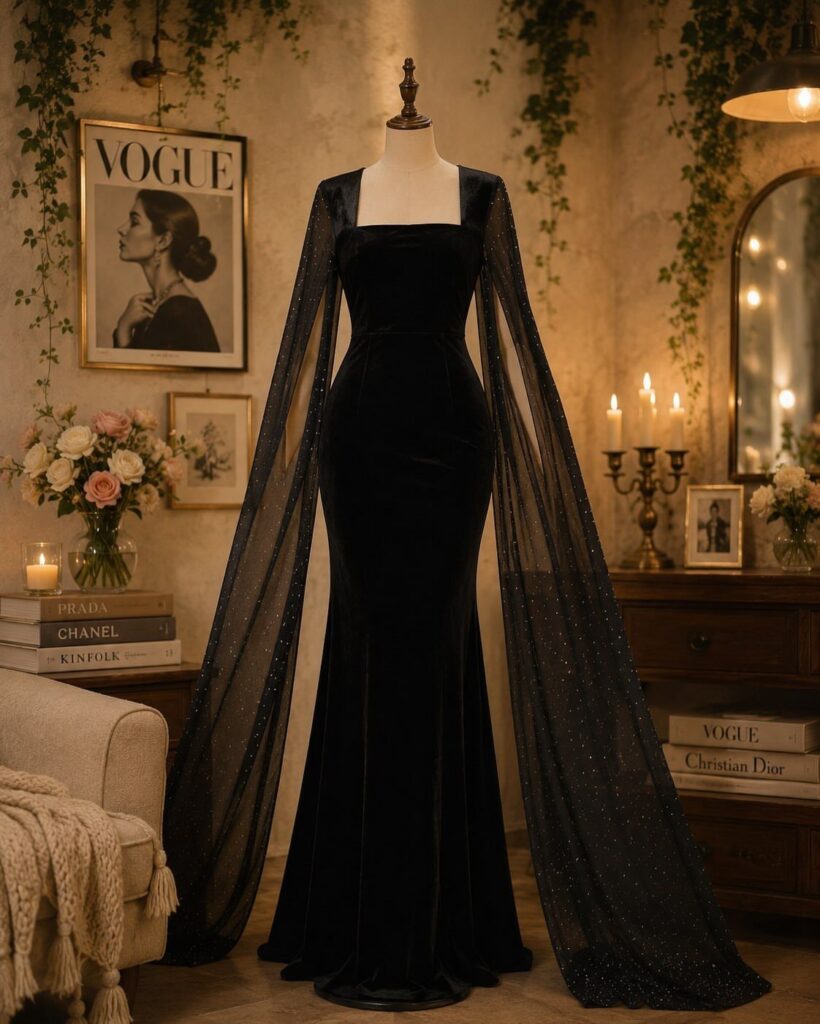
The 8 ideas below range from structured velvet to layered chiffon, and the right one depends on which part of you wants the coverage: waist, neckline, arms, or the whole silhouette.
A boat neckline in crisp satin widens the shoulder so the rest of the dress does not read bottom-heavy; that same geometry in a high neckline with sheer sleeves frames the face in a clean vertical line instead.
1. A-Line Silhouette
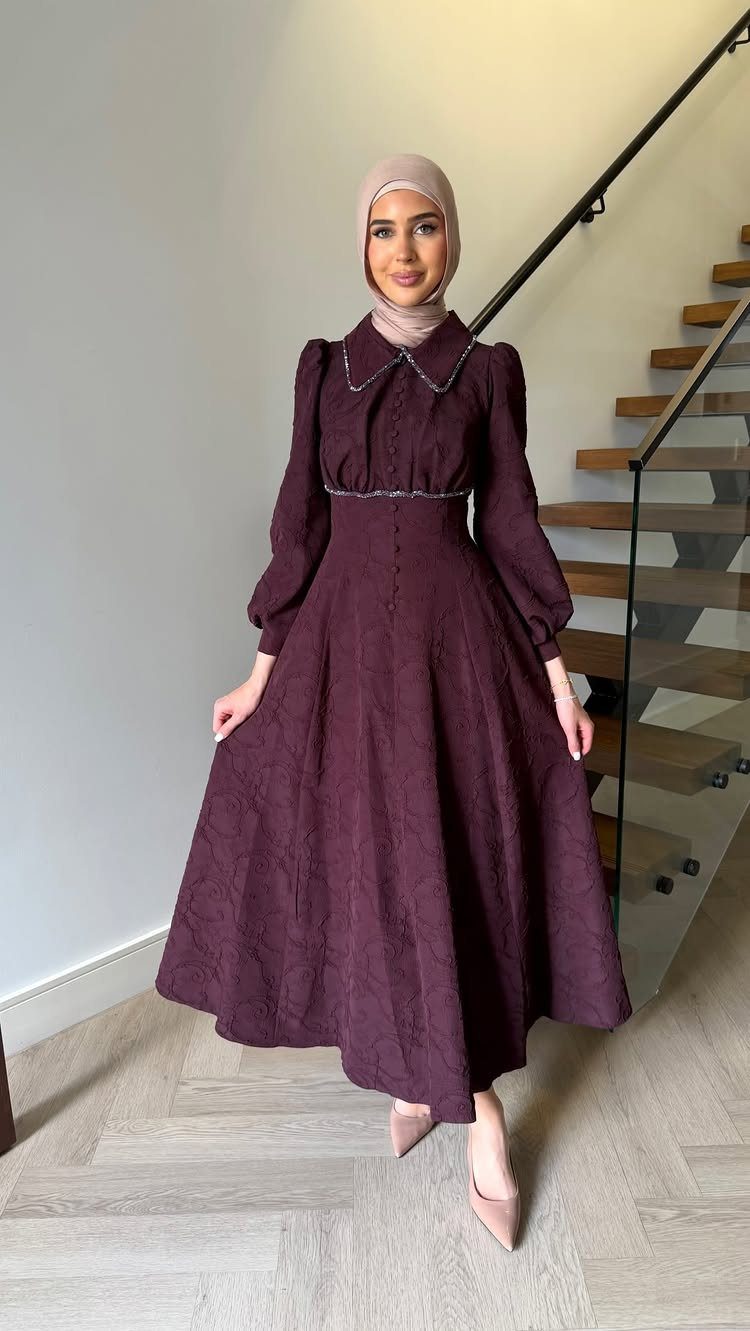
The fitted waist and flared skirt of an A-line dress create proportion through structure rather than skin exposure, which is why it reads as a deliberate fashion choice at formal events.
A cinched waist and a gradual flare do the work here: they shape the dress without asking you to expose anything you would rather keep covered.
For modest dressing, this silhouette solves the problem of shapelessness that full coverage can create. The defined waist keeps the look composed rather than like a default conservative option.
A fabric with some weight to it, like a textured crepe or jacquard, shows off this cut far better than anything too limp; the structure needs material that can hold it.
2. Empire Waist
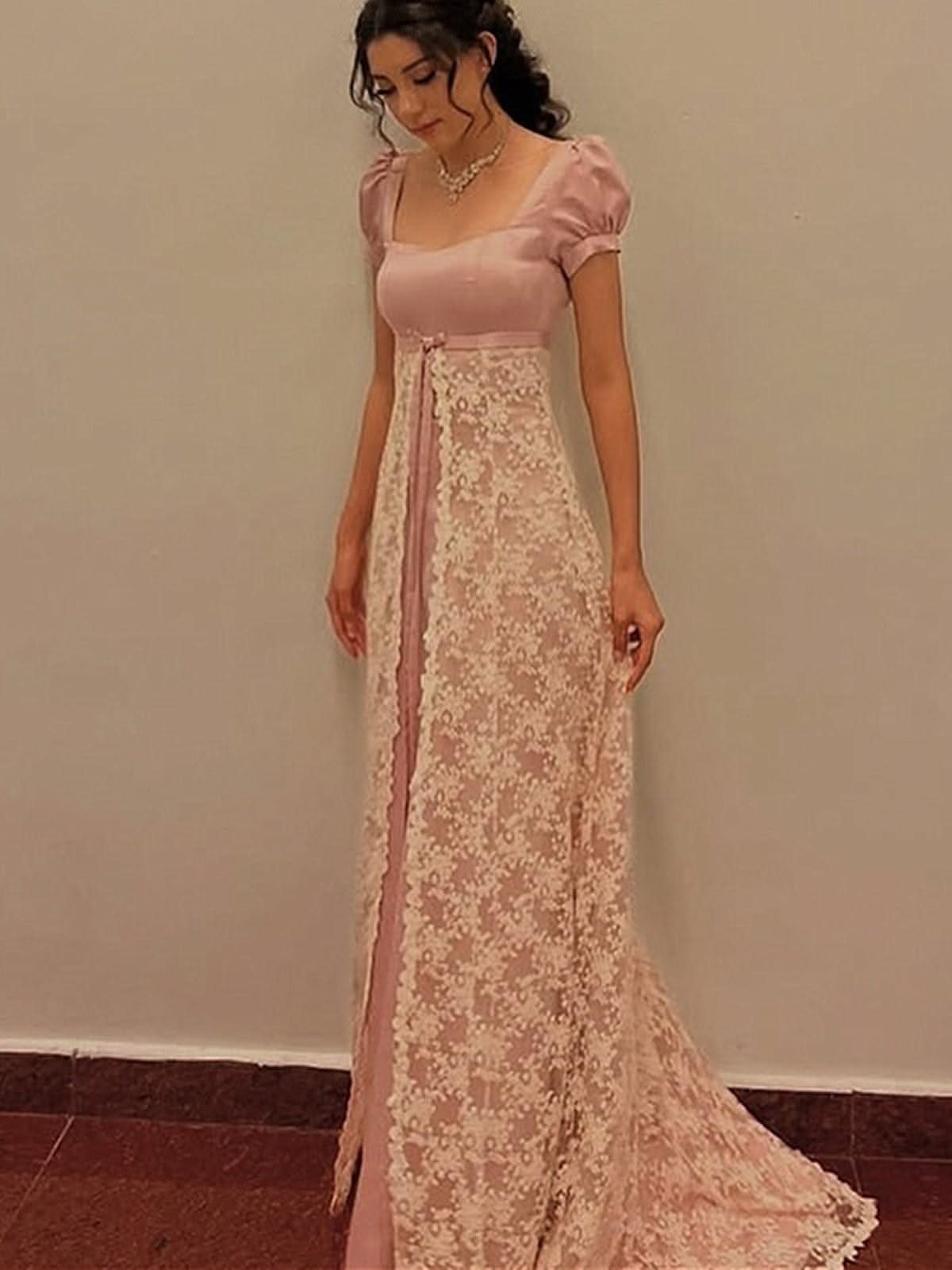
An empire seam sits just below the bust and falls straight to the floor, creating that elongated, Grecian-influenced line that photographs so well at formal events.
An empire seam sits high and lets the rest fall loose, which keeps a sleeved dress from turning into a shapeless tent.
The empire line defines a waistline even when the actual waist is covered, which prevents the shapelessness that full coverage can produce.
I find this especially useful for long dresses with puff sleeves, where the eye needs a point of reference.
That seam is doing more work than it looks like: it gives the eye somewhere to land, and everything below it moves freely without adding bulk at the middle.
3. Fit-and-Flare Silhouette
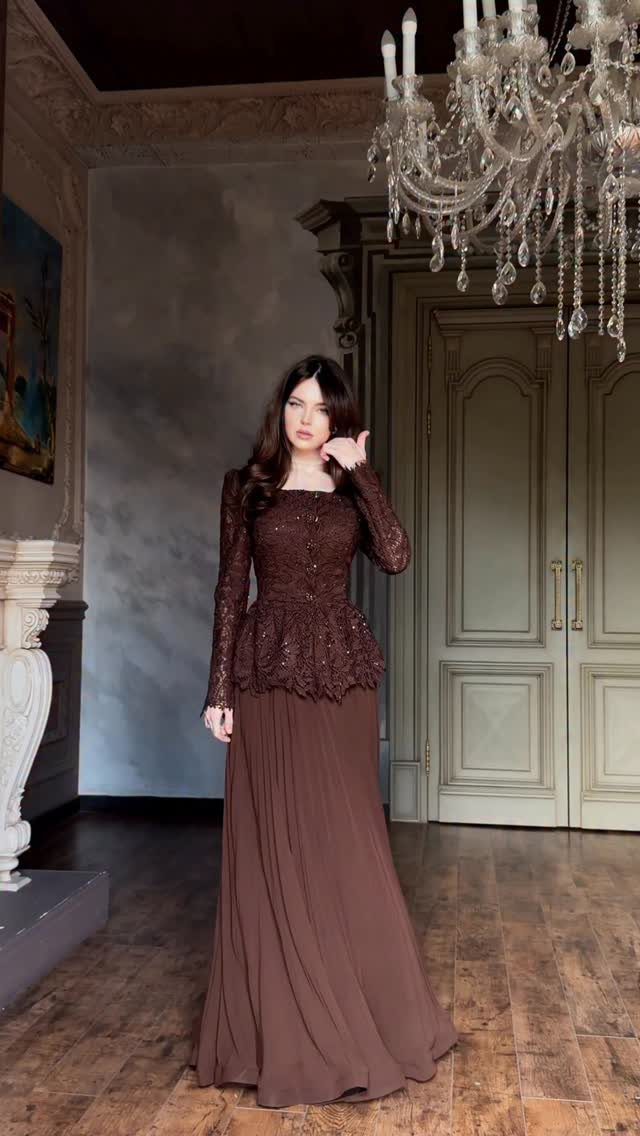
A structured bodice paired with a flared skirt updates modest formal wear from traditional coverage to something current.
The tailoring in the bodice signals intention, the movement in the skirt adds femininity, and the combination reads as a style choice rather than a conservative default.
Three-quarter or long sleeves complete the look without fighting the proportions.
I would look for a bodice with some texture or detail, since the contrast between structured and fluid is what makes this silhouette work. A plain bodice with a plain skirt can look unfinished.
4. High Neckline
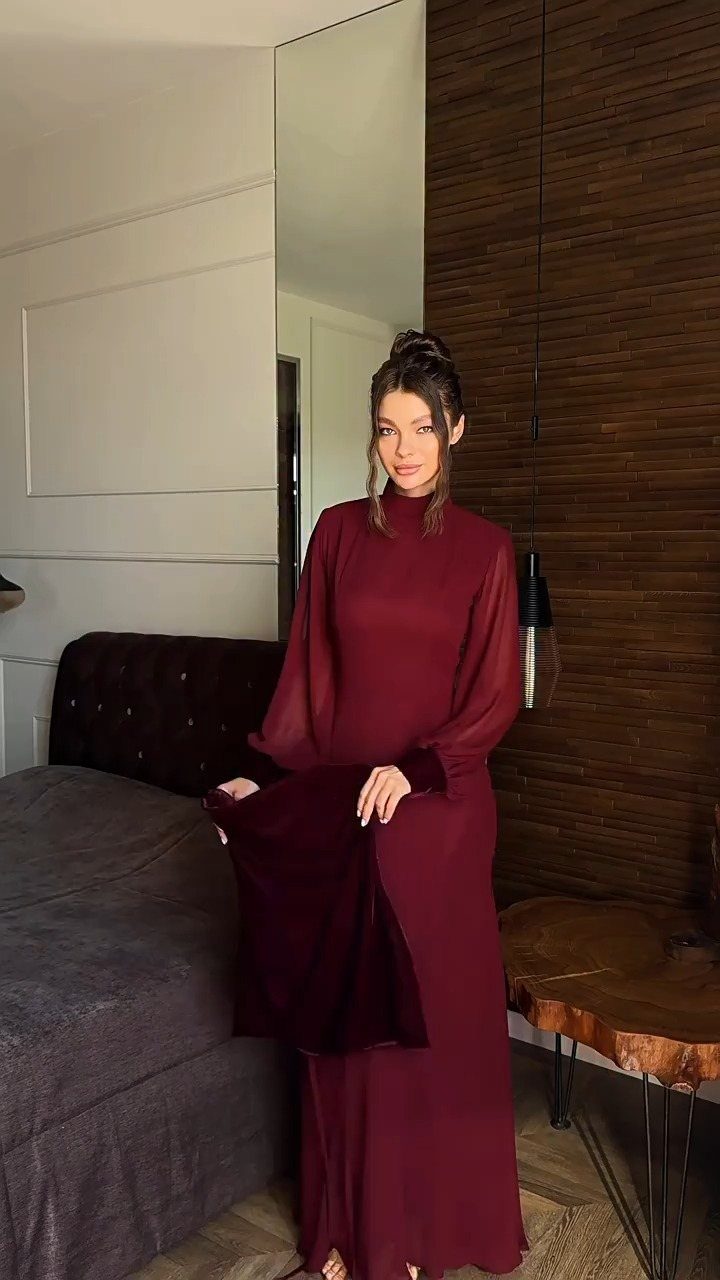
A neckline that rises to the throat frames the face in a clean line and solves the coverage problem so deliberately that it looks like a design choice, not a compromise.
The vertical line draws the eye upward, and with long sleeves, the effect is a column of fabric that feels formal without being severe.
Sheer sleeves on a high-neck dress keep the look from going too severe; that balance of covered and open is worth remembering when you shop.
For modest dressing at events where you will be photographed, this neckline performs better than lower alternatives because it gives the frame a clear top edge.
I would add simple earrings rather than a necklace, since the neckline itself is doing the visual work.
5. Boat Neckline
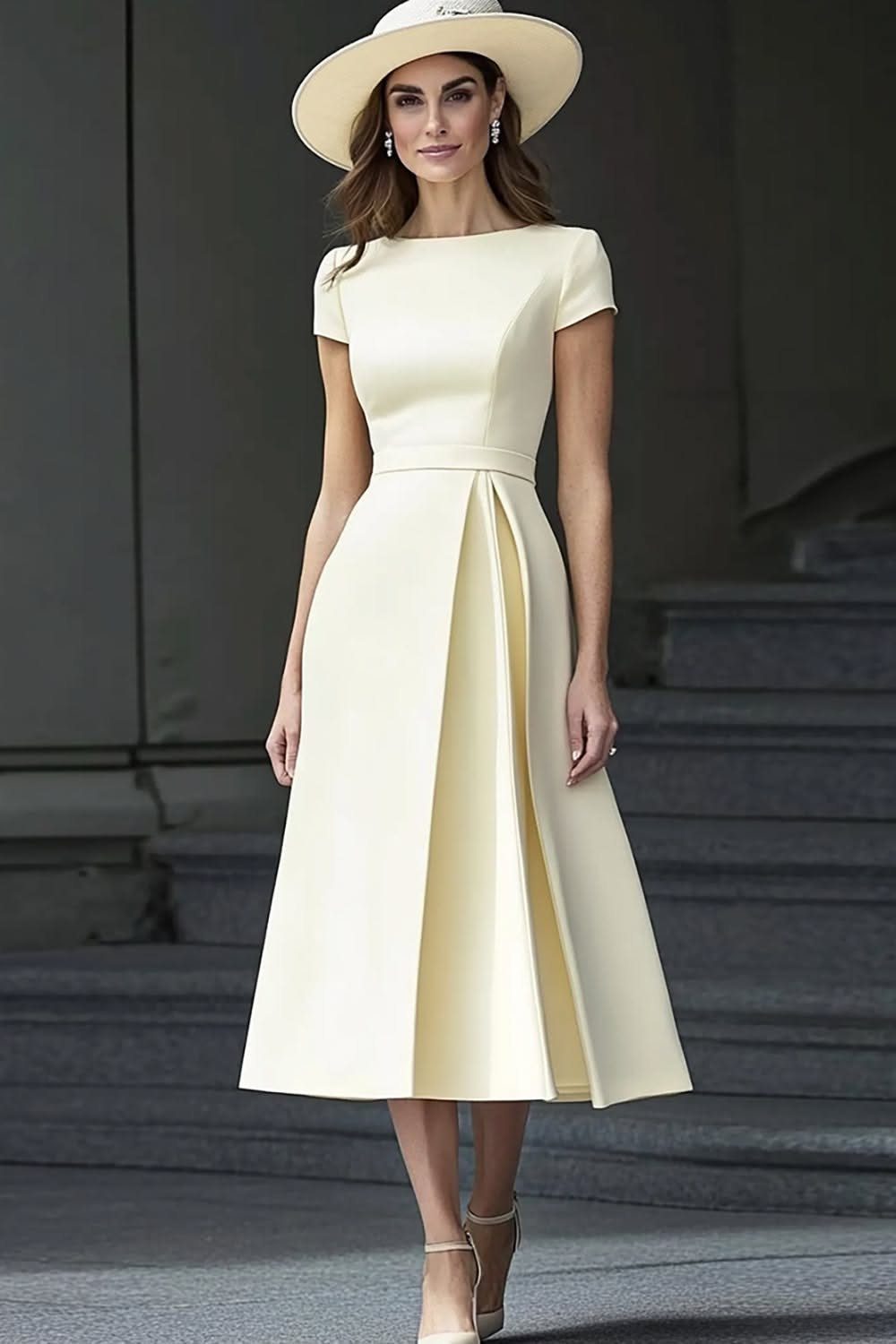
A boat neckline draws a straight line across the collarbone, which widens the visual shoulder and lets you stay fully covered below without looking bottom-heavy.
It is a composed, deliberate choice that works especially well on midi-length dresses where proportion matters more than at floor length.
Short sleeves with that neckline keep the feeling light; you are covered, but the shape does not read as withdrawn or apologetic.
For a more formal version, I would choose long sleeves in a satin or crepe, since the clean line of the boat neck shows best in fabrics with some structure.
Silver accessories work well with this neckline because they echo its crisp geometry.
6. Illusion Lace
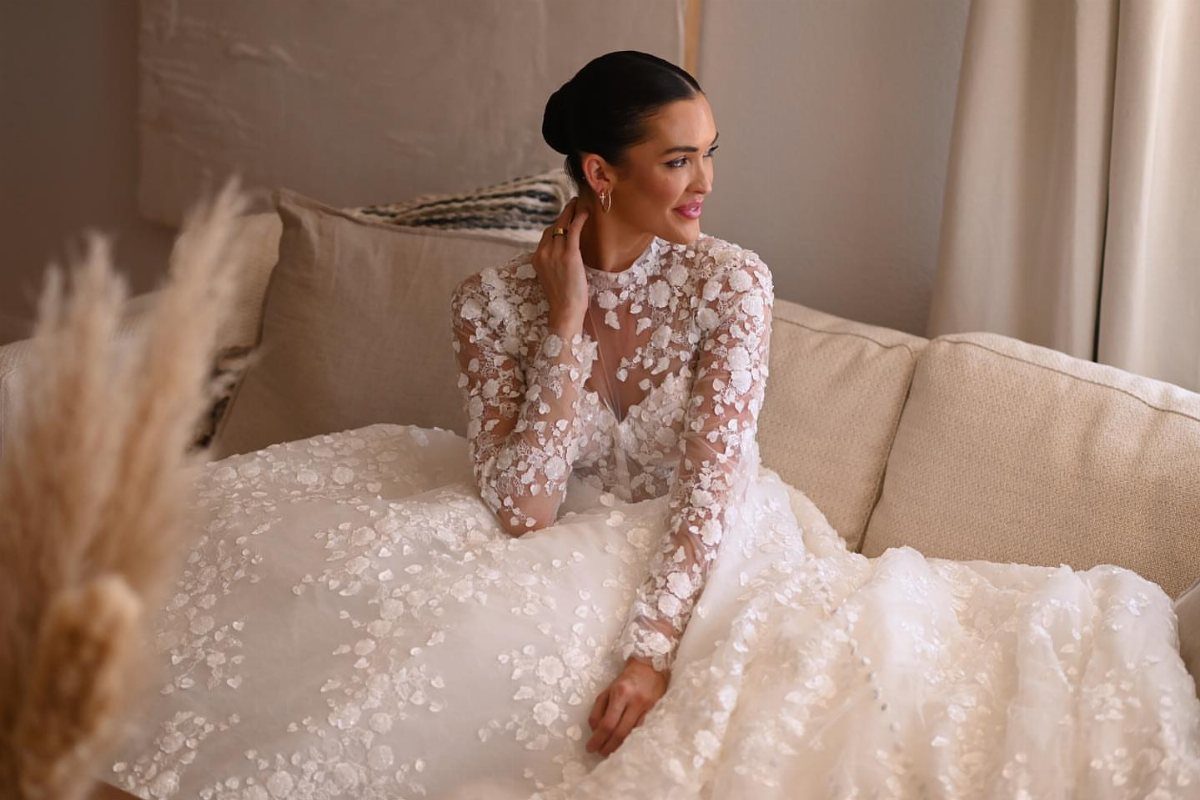
Lace that covers without hiding lets a designer build pattern over solid fabric, so the dress registers as ornate rather than merely careful. The eye registers detail and craftsmanship instead of just noticing what is covered up.
I find this technique most effective when the lace pattern is dense enough to read as decoration from a distance, since the point is the texture, not the reveal.
A matching satin jacket with pearl trim, like the champagne version I have seen, extends the idea for cooler venues without breaking the effect.
7. Velvet Fabric
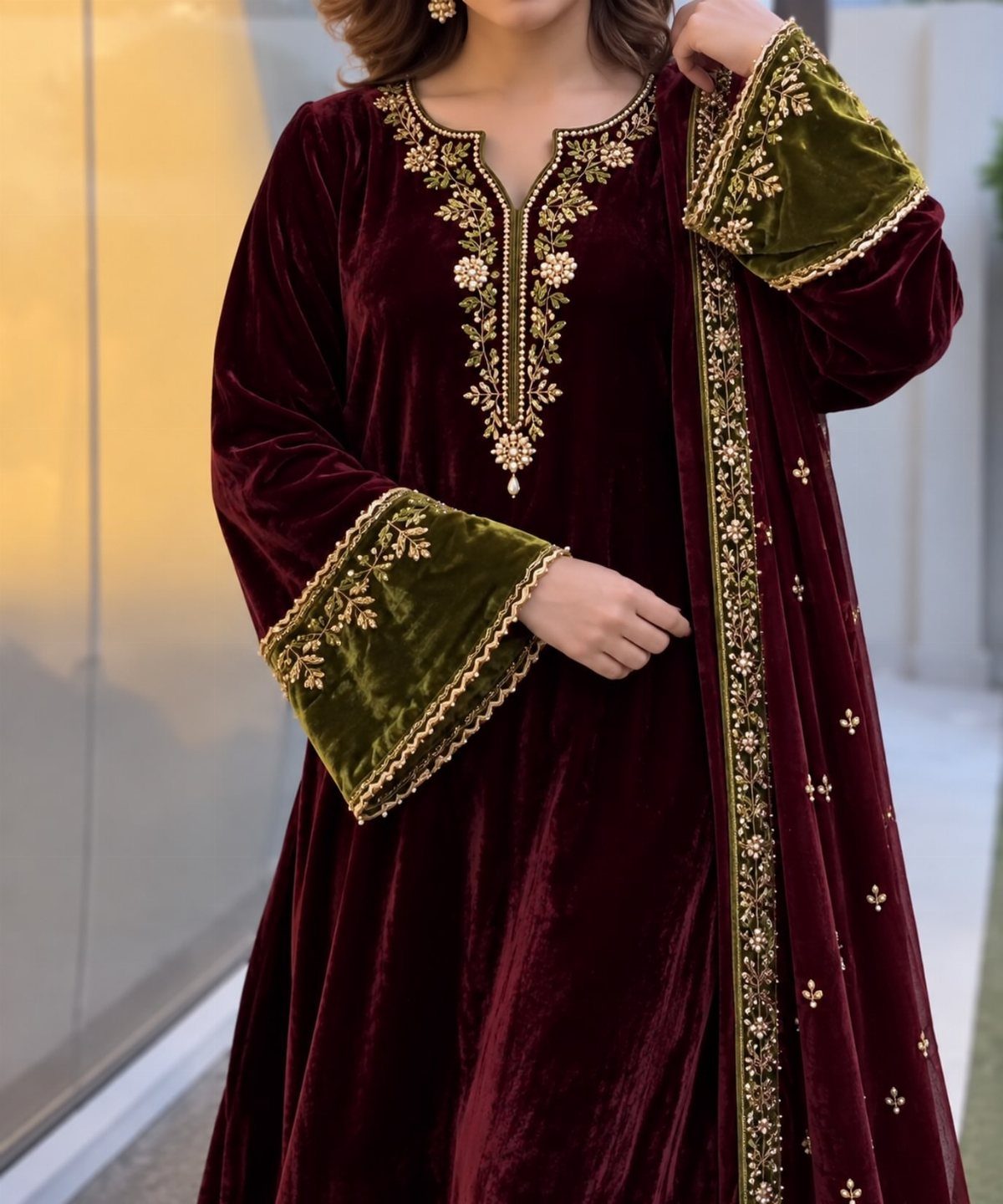
Velvet does the formal work that skin usually does at evening events. The surface absorbs light instead of reflecting it, so the dress reads as expensive and intentional even with a high neck and full sleeves.
For modest dressing in fall and winter, this is the fabric that saves you from looking bundled rather than dressed. Deep burgundy velvet carries gold embroidery and contrasting cuffs that earn the attention on their own, no bare skin required.
I would choose a version with some surface interest, embroidery or trim, because plain velvet can read as costume if the cut is simple.
The weight means long sleeves feel right, not apologetic.
8. Chiffon Layers
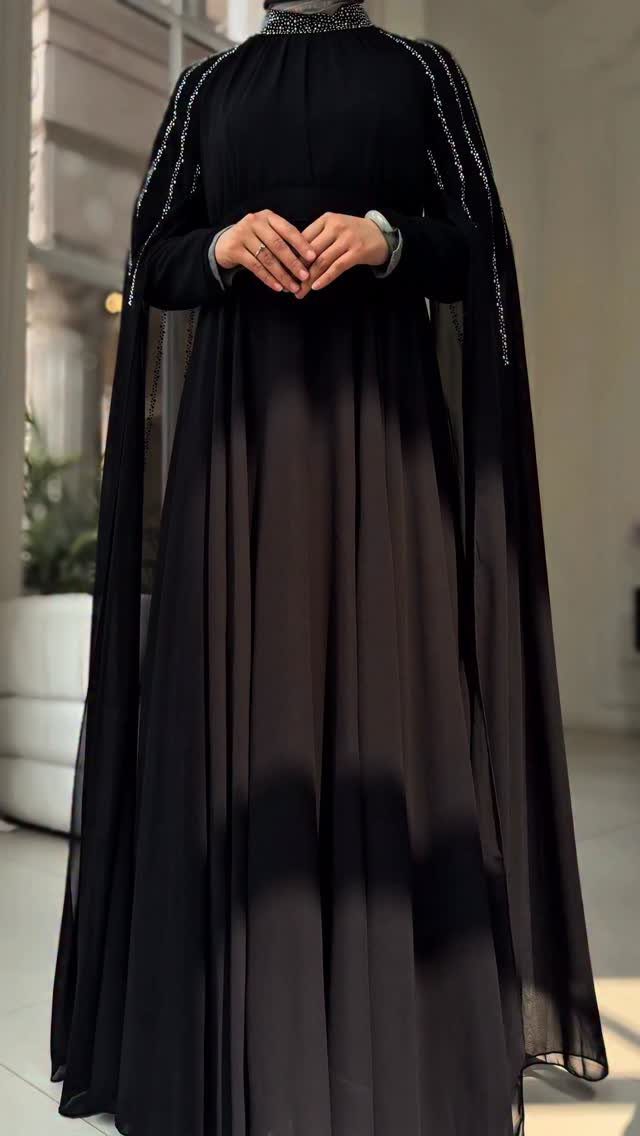
Chiffon creates modest coverage that breathes, which is why it dominates spring and summer formals. Multiple lightweight layers move independently, so the dress registers as volume and depth rather than opacity and heat.
For warm-weather events where you need full coverage, this is the practical solution. The layers catch light differently as you move, which gives the eye something to study beyond what is or isn’t showing.
Sheer cape sleeves or a chiffon overlay add coverage without the bulk, and a line of beading at the shoulder gives the eye somewhere to land.
I would look for a jewel tone or soft neutral in layered chiffon; the fabric’s natural lightness reads as deliberate summer formality rather than a concession to temperature.