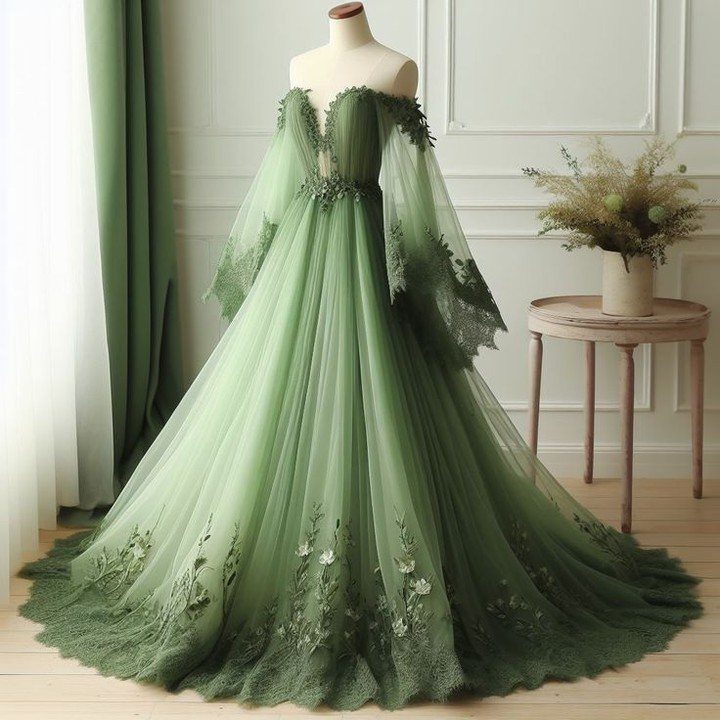
These 6 dresses range from pale mint to deep emerald, with olive and sage in between, plus two that add texture through embroidery or ruffled tiers rather than relying on color alone.
Olive and sage read neutral in barns and gardens, while emerald holds its own under chandeliers and gold accents.
The ruffled styles with layered skirts need individual lining per tier, a construction detail that separates the ones worth ordering from the shortcuts.
1. Olive Green Dresses
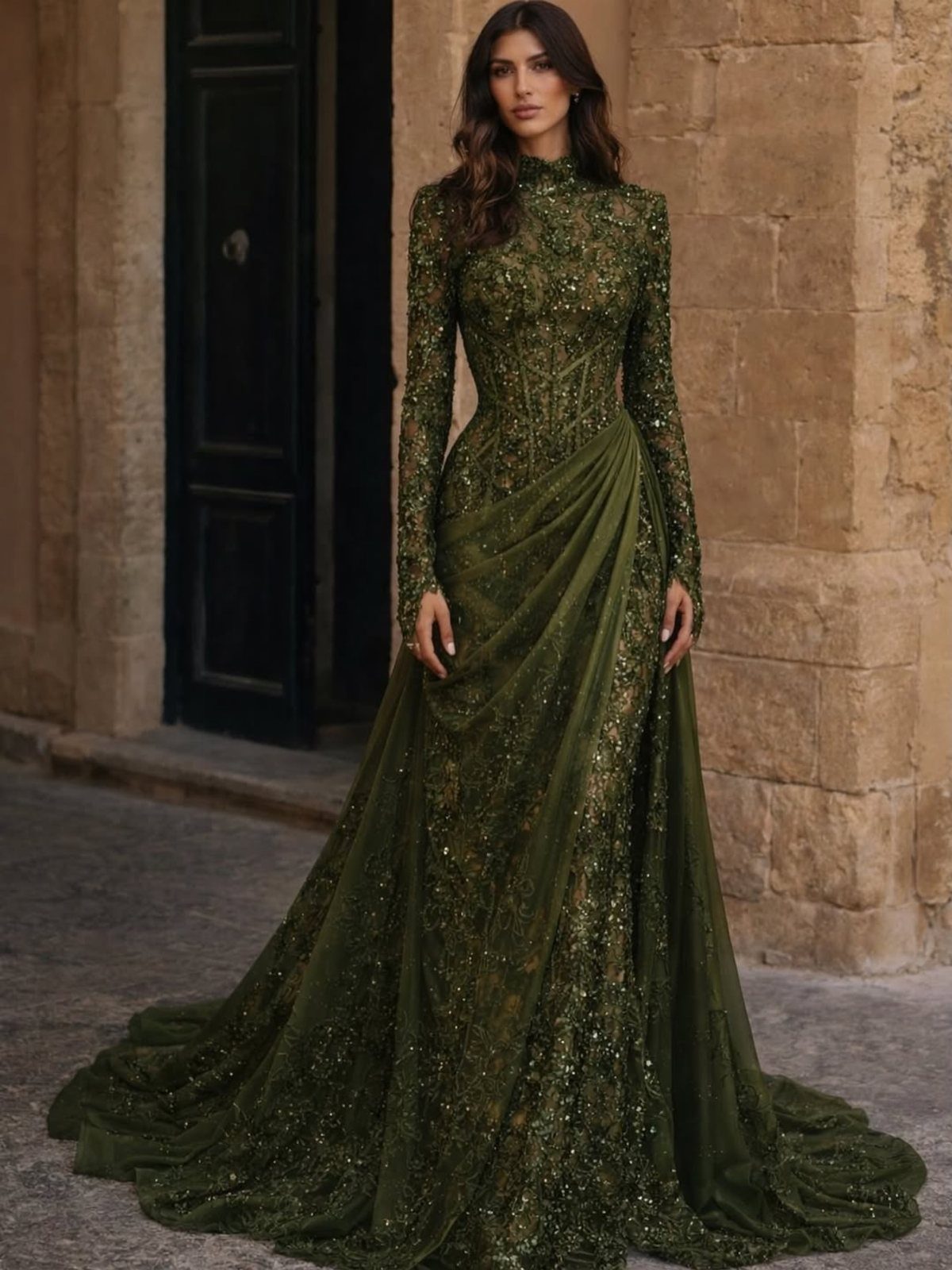
Olive green lands somewhere between brown and forest on the color wheel, which makes it read as neutral in most lighting. An olive gown works as well in a barn venue as it does in a stone courtyard.
Long sleeves and a high neckline keep the shape modest without looking dated, and satin under tulle gives the skirt weight that moves rather than clings.
If you are shopping this color, look for lining that is actually attached; unlined tulle over bare legs is a cheap shortcut that shows.
This shade flatters warm undertones especially well. Cooler complexions can still wear it, but I would add gold jewelry to keep the overall tone from going muddy.
2. Mint Green Dresses
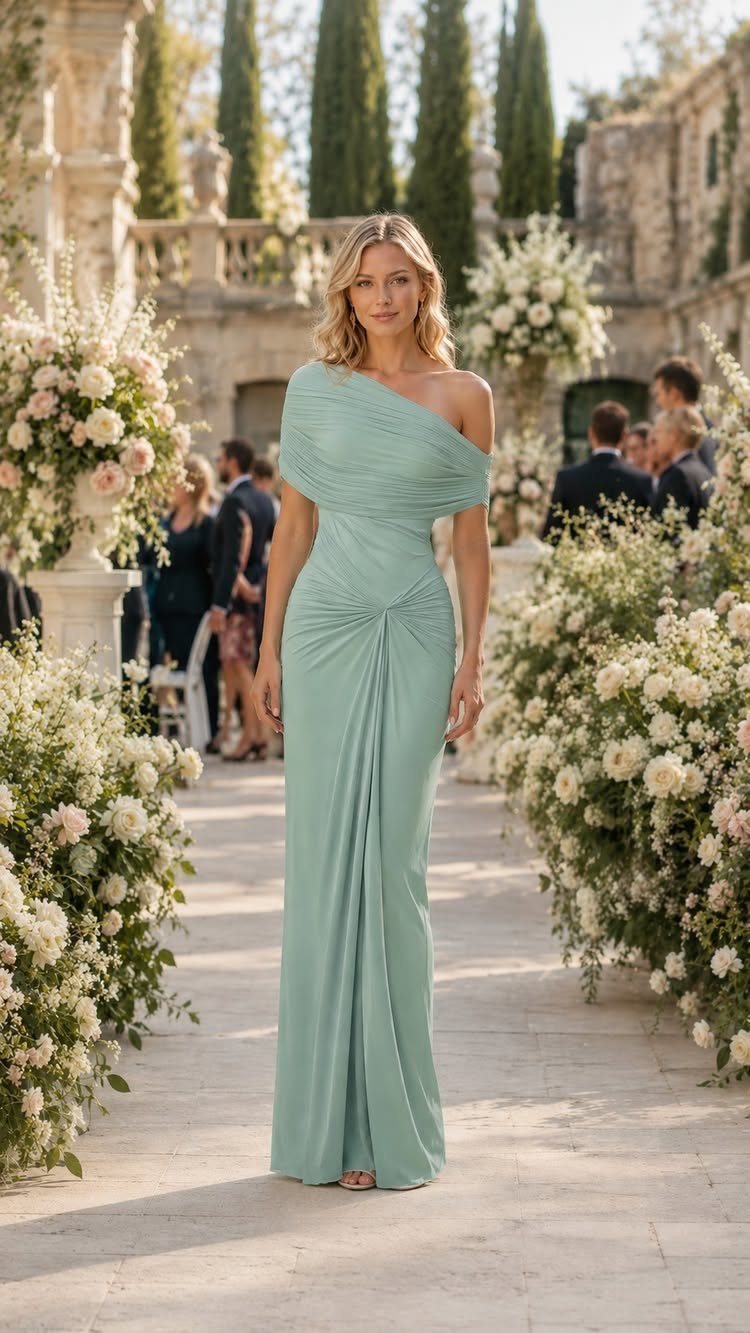
Mint reads as barely-there color, which is exactly what some brides want for a spring garden ceremony. One-shoulder draping adds structure without heaviness, and the asymmetry keeps the pale tone from looking like a bridesmaid default.
Tulle shows up often in mint gowns because the color needs texture to register as intentional rather than accidental.
Gold embroidery or a beaded waistband does the same work; both add enough contrast that the dress does not disappear in outdoor light.
If you are considering this shade, check it against your skin in daylight before ordering. Mint can turn sickly on some complexions, and dye lots vary enough that the return policy matters.
3. Emerald Green Dresses
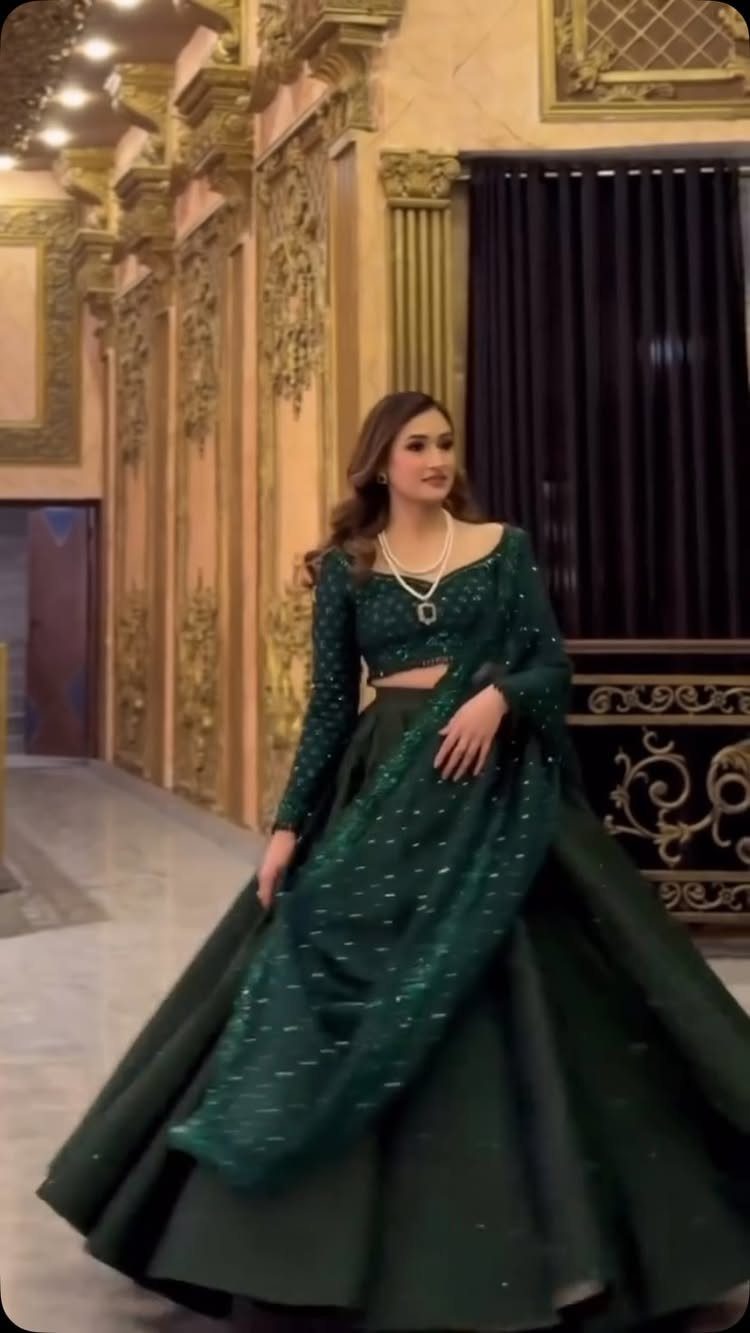
Emergreen green carries enough saturation to hold its own under ballroom chandeliers, which is why it shows up in lehengas and full-skirted gowns rather than slip dresses.
Embroidery and a matching dupatta distribute the color across 3 pieces, which keeps the overall effect rich rather than flat.
Satin and lace are the usual pairings; sequins work but need careful placement or the dress reads costume. A thin belt or defined waistband helps, since emerald without structure can look like a draped curtain.
This is the green to choose when your venue has heavy decor, gold accents, or formal seating. It competes rather than blends, which is the point.
4. Sage Green Dresses
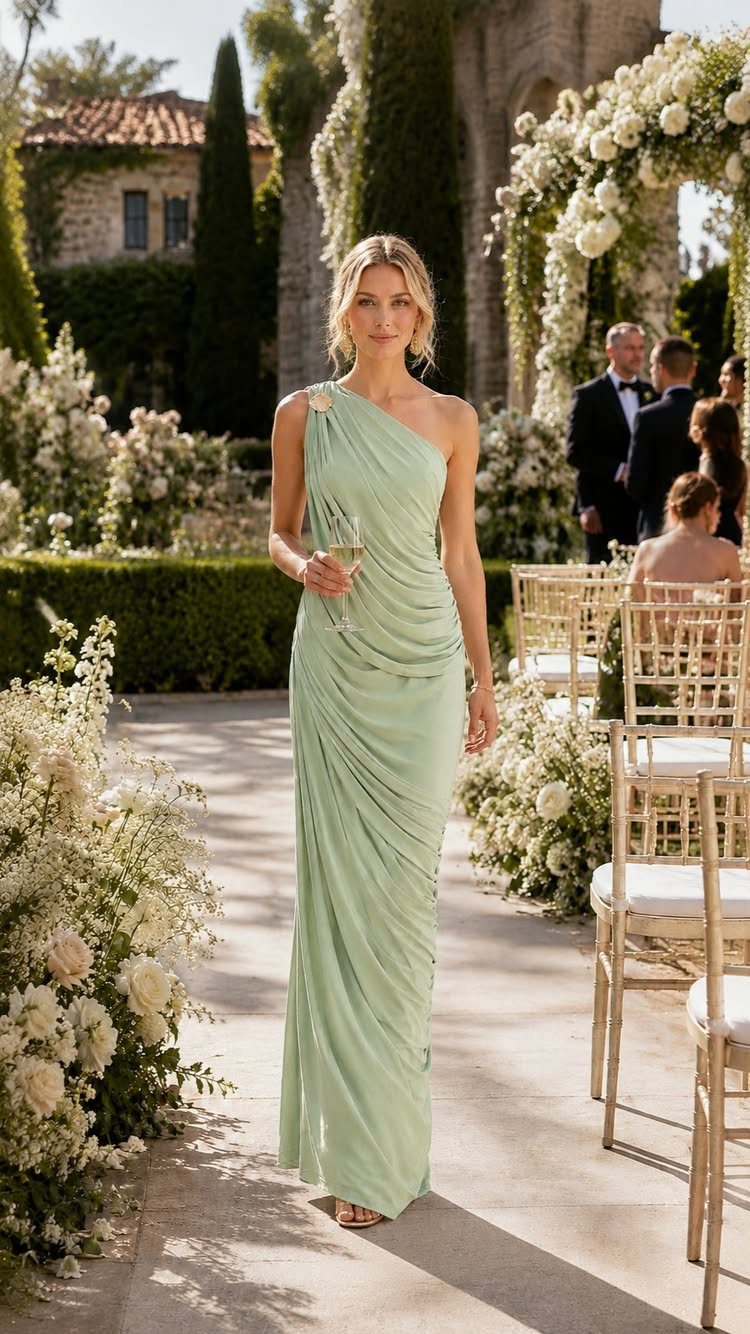
Sage sits lower on the saturation scale than olive, closer to gray than to true green, and that muting is what makes it photograph softly in outdoor settings.
One-shoulder draping in a fluid fabric catches garden breeze without needing crinoline underneath.
Floral lace appliqués and tulle overlays appear often in this shade because the color suggests growing things without literal botanical print.
Sheer sleeves or a sweetheart neckline framed by lace give the same garden reference with more coverage than a strapless cut.
This is the practical choice for an outdoor ceremony where you want color that coordinates with natural greens without matching them exactly. It also forgives grass stains better than white, which I count as a real consideration.
5. Green Dresses with Floral Embroidery
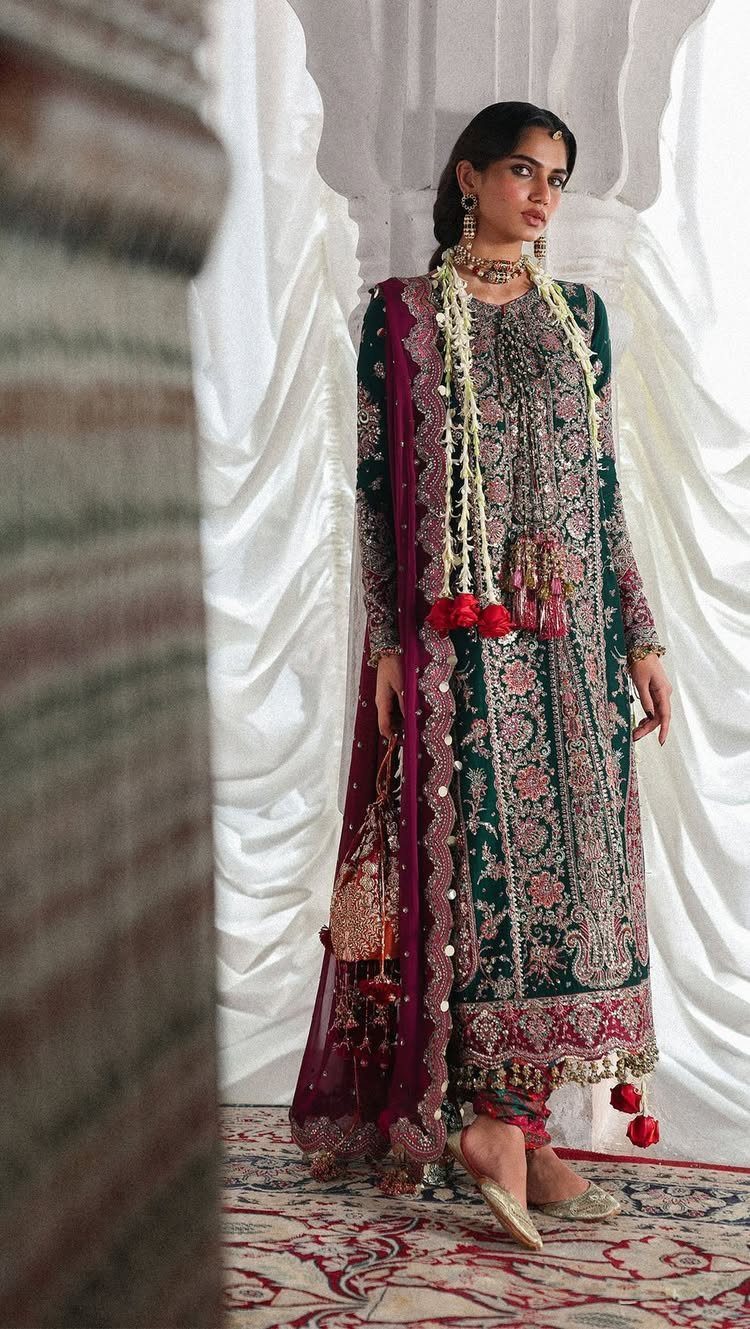
Floral embroidery on a green base gives you the botanical reference without the predictability of a white dress with green leaves. Gold thread on dark green is a traditional pairing that still reads as celebratory rather than costume.
The embroidery itself can sit on bodice, skirt, or both; what matters is density.
Sparse placement looks like an afterthought, and all-over coverage can overwhelm a small frame. I would look for embroidery that concentrates at the neckline and hem, with scattered detail in between, so the eye travels.
Mint with gold, sage with silver, emerald with copper: the metal changes the formality more than the thread color does.
6. Green Dresses with Layered Ruffled Skirts
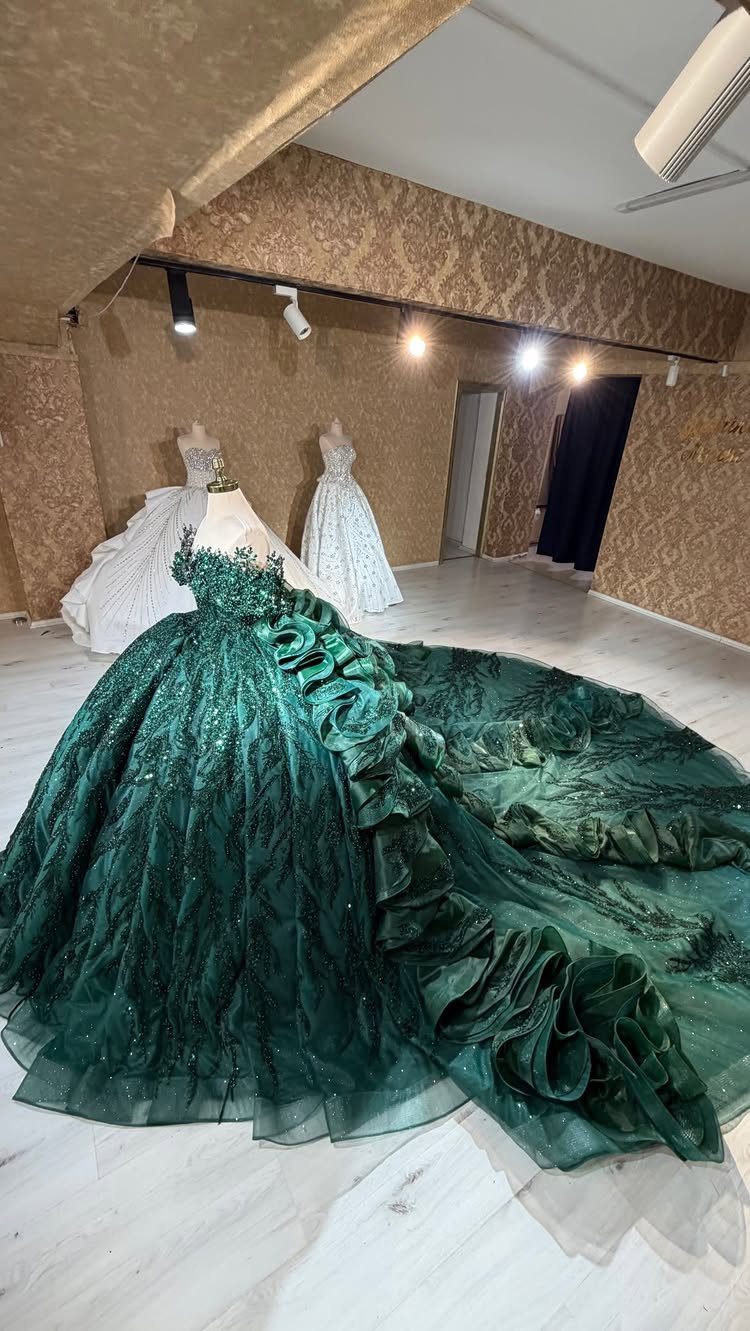
Layered ruffles add volume through horizontal lines rather than a single big skirt, which means the dress moves differently, more rippling than swaying.
Graduated layers stack from waist to floor, with beading concentrated at the bodice to anchor all that motion.
Tulle is the usual fabric for this construction because it is light enough to stack without weight, but each layer needs its own lining or the effect goes cheap.
A long train in the same layers extends the silhouette; without it, the skirt can look truncated.
This shape suits a bride who wants presence, though the beading on this one keeps it firmly in ballgown territory. The ruffles read playful, not childish, when the color is deep and the bodice fitted.