The 6 light green formal dress ideas below range from a chiffon maxi you can wear to a garden wedding to a sequined floor-length gown that holds its own at black-tie, and the thing that decides which is yours comes down to event formality and what your body runs warm in.
1. Light Green Chiffon Maxi Dresses
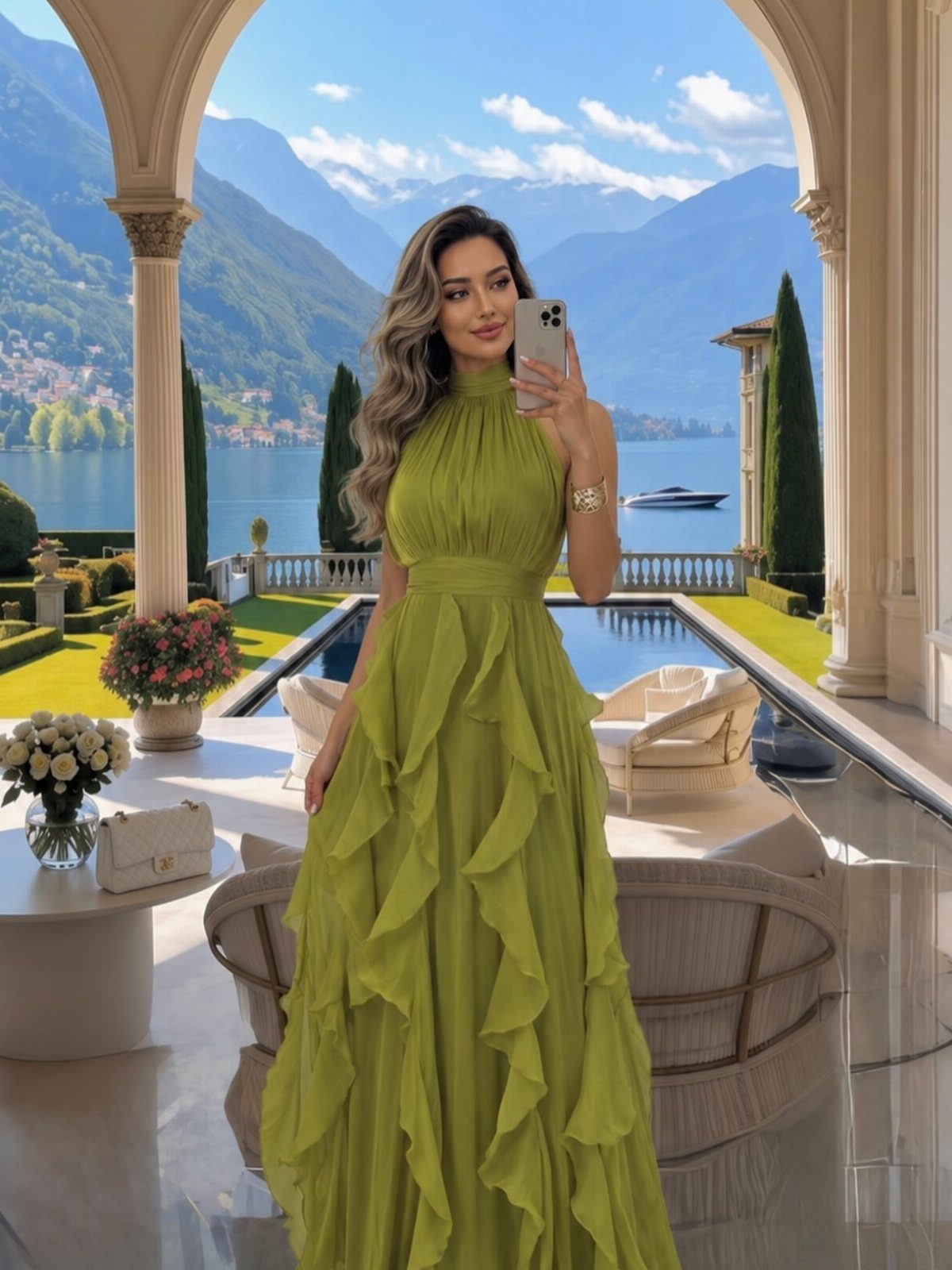
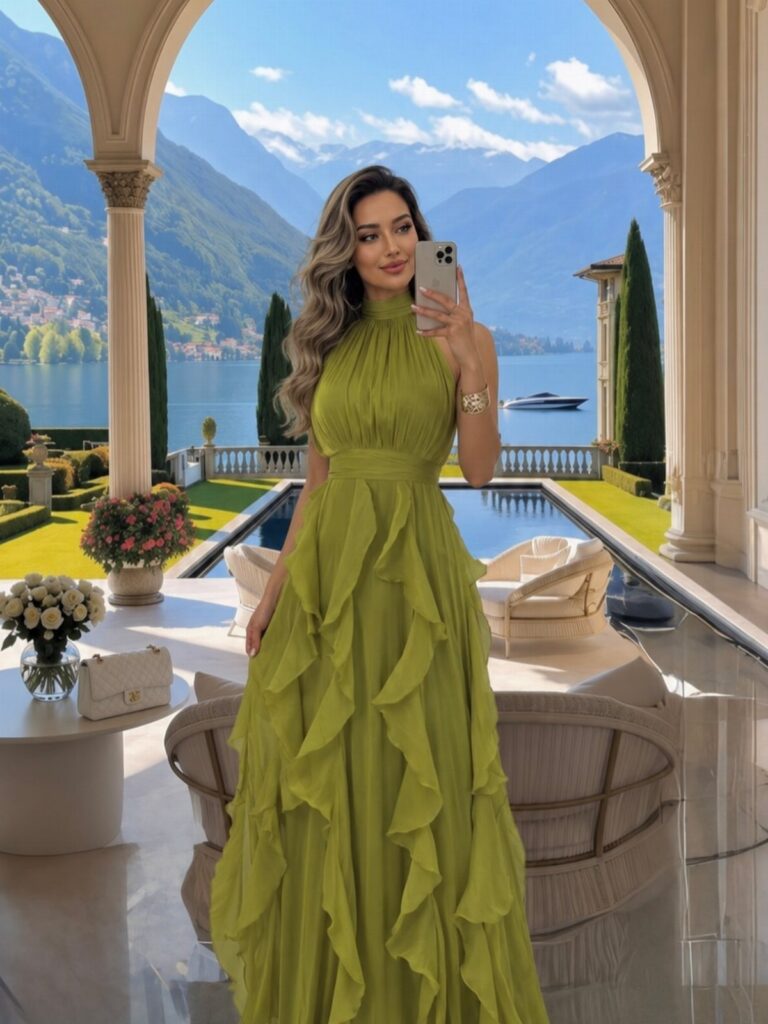
Chiffon carries light green like watercolor, each layer turning sheer into depth. A tiered skirt with two or three levels lets the color shift from mint to something richer at the hemline.
I would look for a matching neckpiece if the dress doesn’t include one; the chiffon scarf tie or choker finishes the neckline without adding weight.
For bodies that carry heat, this is the coolest full-length option I know. Chiffon needs a lined bodice or built-in cups, or you’ll be adjusting all evening.
Skip the floor-grazing cut if you’re under 5’4" without heels; the tiers pool fast.
2. Strapless Light Green Dresses
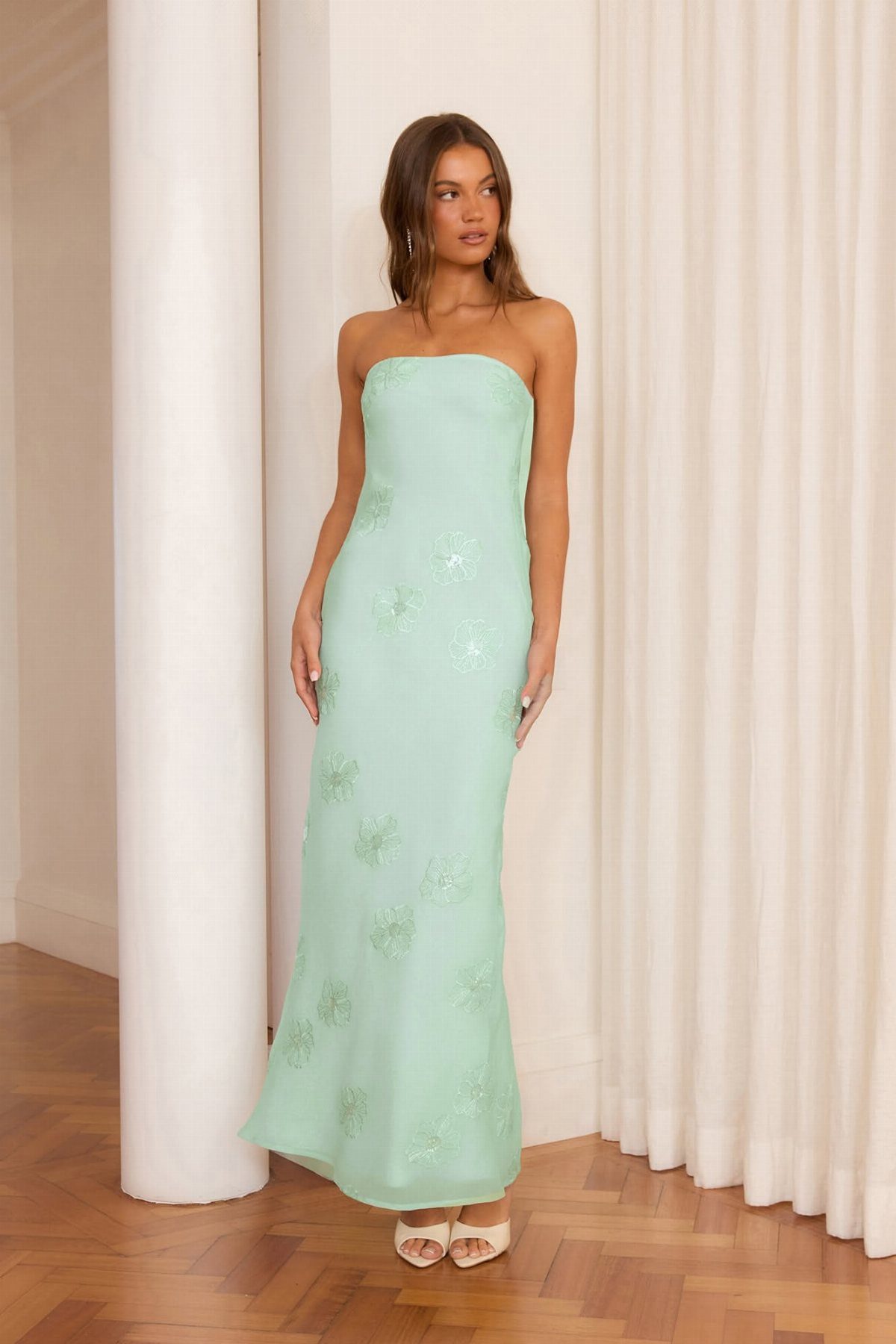
A strapless dress lives or dies by the bodice. Satin with draped ruching holds you through the waist; a lace-bodice chiffon version uses texture for the same grip.
I find strapless forgiving for broad shoulders, but the neckline cuts straight across and can shorten a short neck further. Check the inner structure before buying: silicone strips, boning, or a corset back?
One of those three should be visible or labeled. Open-toe heels stay the standard pairing; the leg line matters more when no strap breaks it.
For dancing, I would size down in the bodice or have a loop sewn in for your wrist.
3. Light Green Corset Bodice Dresses
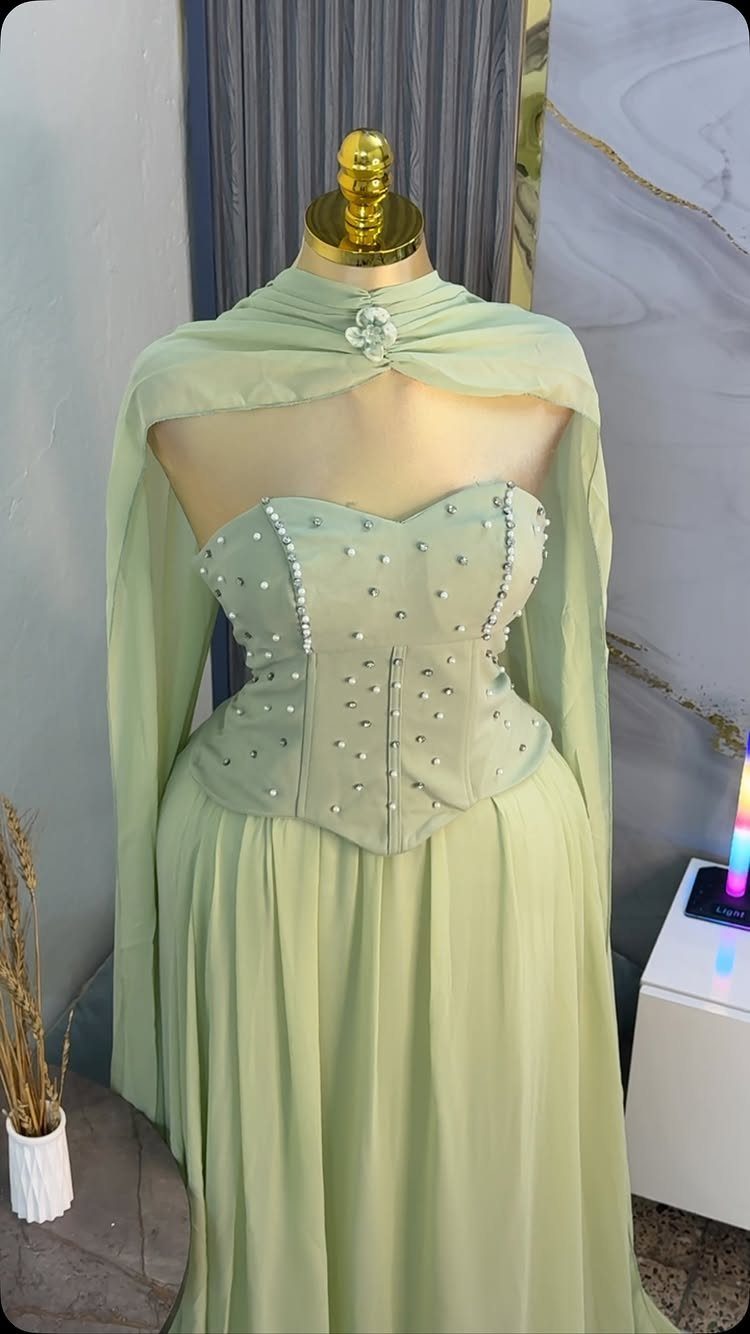
A pearl-embellished bodice does 2 jobs: shaping the waist and replacing jewelry. Corset boning, whether visible as lace or hidden under satin, lets a strapless dress fit without constant hiking.
The strapless version on the mannequin still pulls in at the waist; I’ve seen that cut need extra support for fuller busts where a square-neck with thick straps would have stayed put on its own.
Notes mention a built-in bra and adjustable corset back, which means you can pull in an inch or two without alteration costs.
Check whether "corset" means functional lacing or just the seam shape. Real lacing adjusts; faux lacing is decoration that may gap if the bodice runs large.
4. Light Green Satin Dresses
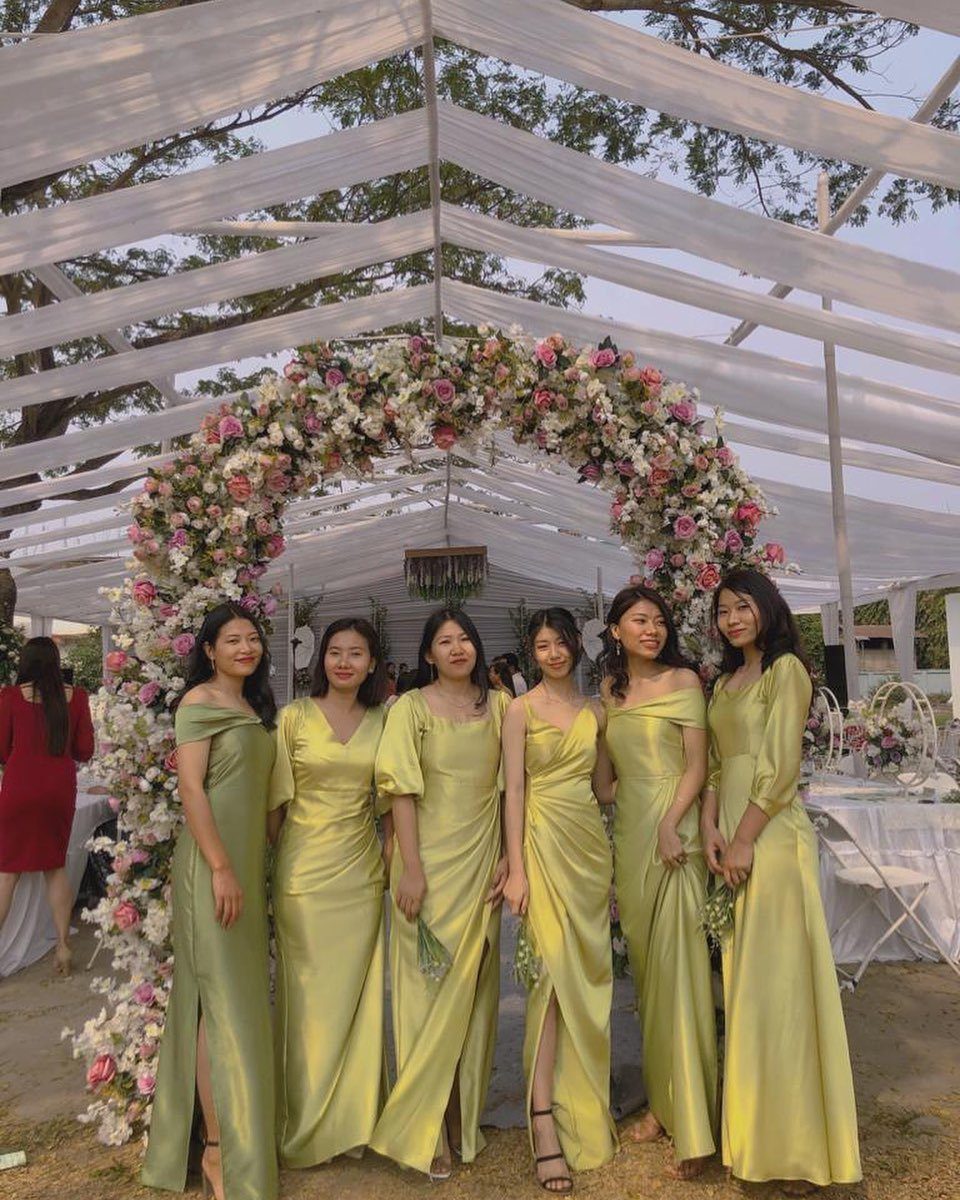
Satin catches light and throws it back green, not white: the color stays true across a room.
The cowl-neck version drapes from shoulder to waist in one soft fold, while the strapless ruched style keeps the fabric closer to the body.
I would choose satin for an evening wedding over afternoon; the sheen reads formal under artificial light but can look slick in sun.
Check the lining content. Polyester satin without lining sticks to itself and walks up with every step.
5. Light Green One-Shoulder Dresses
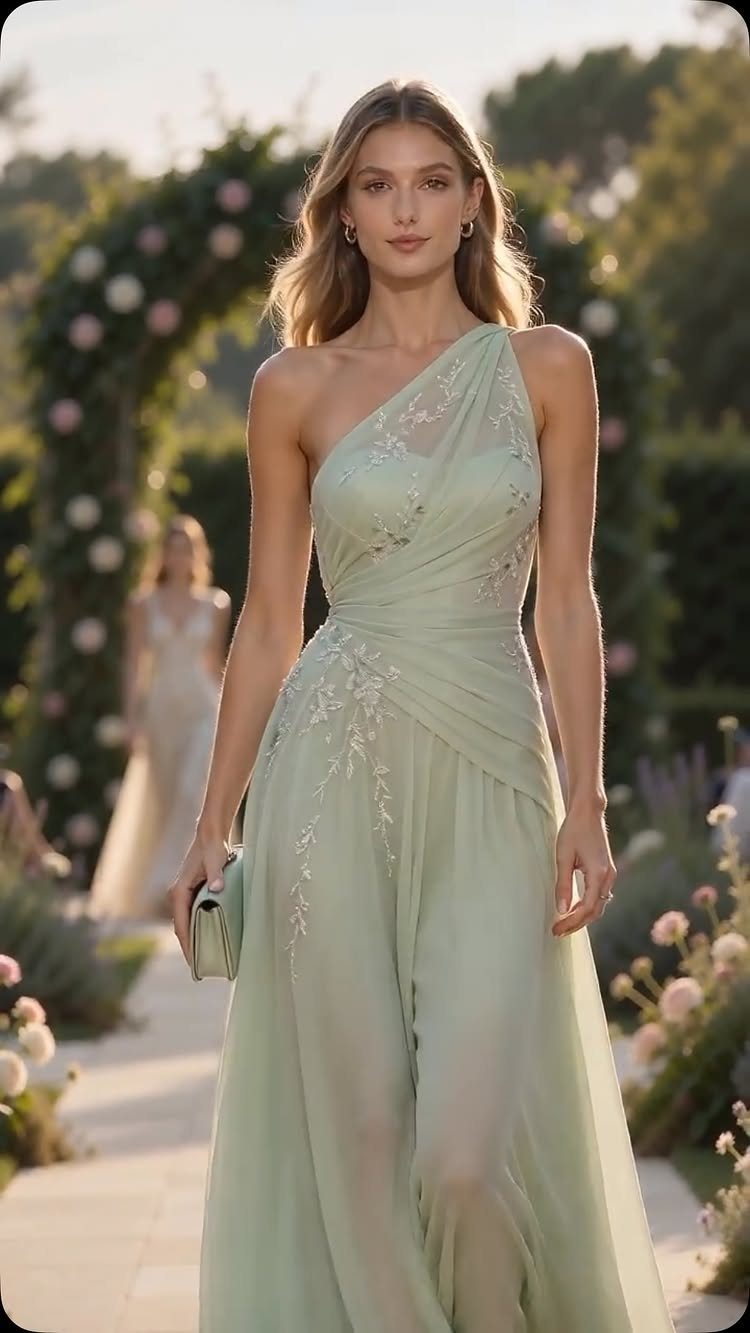
One shoulder frees the left or right collarbone and keeps the other side anchored: asymmetry that actually feels secure. The draped single strap in the olive version carries weight differently than a thin band; for a long evening, width wins.
The embroidery keeps this one interesting across the shoulder without extra fabric to carry; for a church ceremony I’d add a cropped jacket I could leave at the reception. Remove it and the dress stands alone for the reception.
Embroidery along the strap, like the garden-path version, draws the eye up. I would keep earrings minimal; the shoulder is already your necklace.
6. Light Green Floor-Length Gowns
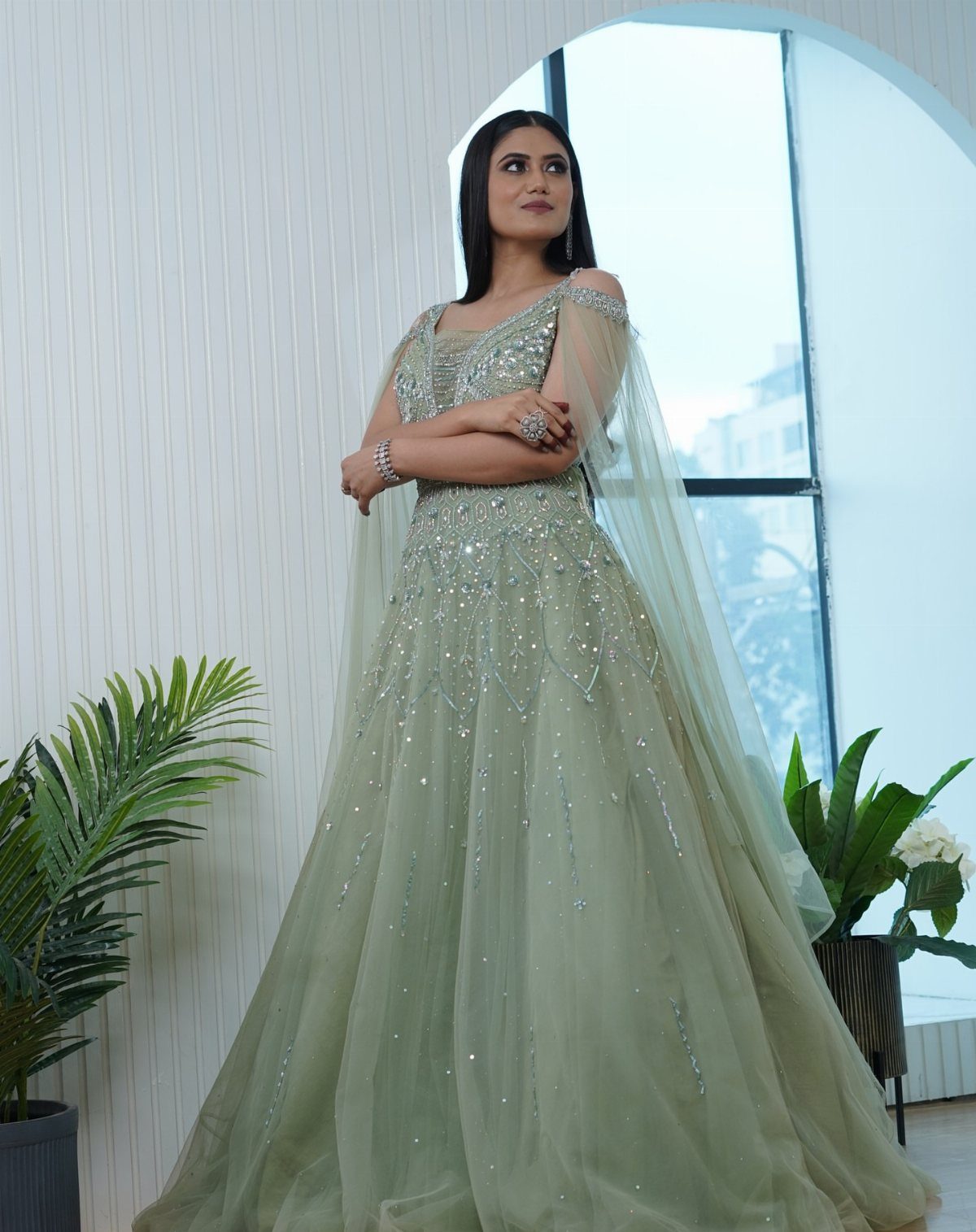
Floor-length is the definition, not the style: everything above the ankle is your decision. A sequined and caped gown reads black-tie; a spaghetti-strap cowl neck is simpler at the same hemline.
Check the sweep: does the skirt skim the shoe or require a hand to manage stairs?
The sequined version shows sheer cape sleeves, which suggests the fabric has some weight; chiffon and lightweight satin pool more and trip more. I would walk the dress on the actual flooring, not carpet, before the event.
For height under 5’5", a floor gown needs either a heel or a hem appointment. Budget for one.
Occasions for Light Green Dresses
Light green carries differently depending on the venue.
For spring and summer weddings, especially outdoors, the muted tone reads fresh without competing with the setting. Evening weddings and black-tie events call for deeper saturation or heavier fabric to hold the color under artificial light.
Gala seating matters more than season.
A ballroom with gold fixtures warms sage toward olive; silver or crystal-heavy rooms keep it cooler. For proms and homecoming, light green stands out in a sea of navy and burgundy without reading costume.
Romantic outdoor settings are where this color earns its keep.
Garden ceremonies, vineyard receptions, and terrace dinners all let the shade echo the surroundings rather than contrast them. Indoor church ceremonies work if the dress carries enough structure; the embroidery and caped styles from the list bridge that gap.
Fabric Choices
Light green satin is a stunning choice for a formal dress, but it needs a lining; without one, the color goes flat and the dress goes sheer under direct light.
Satin throws light back as a single bright plane.
Crepe splits the difference: matte enough for day, structured enough for night.
It holds pleats and ruching without the stiffness of taffeta. For winter events, velvet in light green risks reading costume; if the room runs cold, I’d layer with a wrap rather than switch fabric.
Dress Features
Functional structure beats decoration when you’re wearing the dress for hours. Boning in a bodice should run vertically from bust to waist; diagonal or partial boning looks right on the hanger and shifts wrong by hour three.
A corset back with real lacing actually adjusts as you move and eat; the faux kind just sits there and eventually gaps if the fabric gives at all.
Pleats need testing. Knife pleats stay sharp in synthetic satins; hand-pressed or stitched-down versions survive sitting better.
Ruffles and tiers add volume at the hip or hem; if you’re narrow through the shoulders, they balance the silhouette, but they widen the frame if you’re already hip-heavy.
Spaghetti straps look delicate but carry real weight when the bodice is boned.
Check whether they’re adjustable or sewn fixed. A single strap, as in one-shoulder styles, needs internal anchoring across the bodice or it migrates toward the weighted side.
Frequently Asked Questions
What are sage evening gowns?
Sage evening gowns sit in that narrow band between mint and olive, a green soft enough to read as neutral in some light but still unmistakably colored.
The color reads as intentional without competing with the event, and it shifts under different lighting: deeper outdoors, softer under chandeliers.
Spring weddings and summer galas call for something that adds color to group photos without drifting into bridesmaid territory, and sage manages that balance better than most pastels.
What shoes go with a light green formal dress?
Strapless gowns leave the leg line uninterrupted, which is why open-toe heels still dominate that pairing; anything closed or heavy at the ankle cuts the visual length.
A light green dress against stone or wood separates cleanly, so nude or metallic finishes keep the focus on the color rather than competing with it.
Can you wear light green to a wedding?
Yes, light green works for wedding guest outfits, especially sage tones that hold their own against both pastel florals and darker suits.
The shade photographs as a true color rather than washing out, and it stays visible in group shots from a distance.
What jewelry goes with a light green dress?
A pearl-embellished bodice replaces jewelry, so earrings stay minimal. One-shoulder styles with embroidery along the strap already draw the eye upward, so small earrings keep the focus there rather than competing for attention.
A plain neckline on a light green dress leaves room for a matching chiffon scarf tie or choker; chiffon in particular needs no competing bulk.
Is light green a good color for a formal dress?
It is a safe bet when you want color that photographs true and stays visible across a room. The wrong undertone photographs as gray, so test against your skin in natural light first.
What skin tones look good in sage green?
Sage reads warmer than mint, which turns cool on some complexions and can photograph gray.
The undertone matters more than the depth: olive and golden undertones usually take the warmth of sage well, while very cool pink undertones might find mint cleaner.
What is the difference between sage and mint green dresses?
Sage is muted and warm, sitting closer to olive; mint is brighter and cooler, with more blue in the mix. For indoor events under warm lighting, sage stays visible where pale pink or blue washes out.