Upscale casual runs from a silk blouse with wide-leg trousers to a polo and tailored pants, and the deciding factor is which pieces in your closet already carry that structure.
A blazer or coat does the visible work in most of these 10 ideas, while what touches your skin stays easy.
Heeled sandals, loafers, or a low block heel are what separate this from plain weekend wear, and I reach for them whenever the invitation says upscale casual.
1. Structured Handbags and Minimalist Jewelry
The right accessories do more than finish an outfit; they signal that you thought about it.
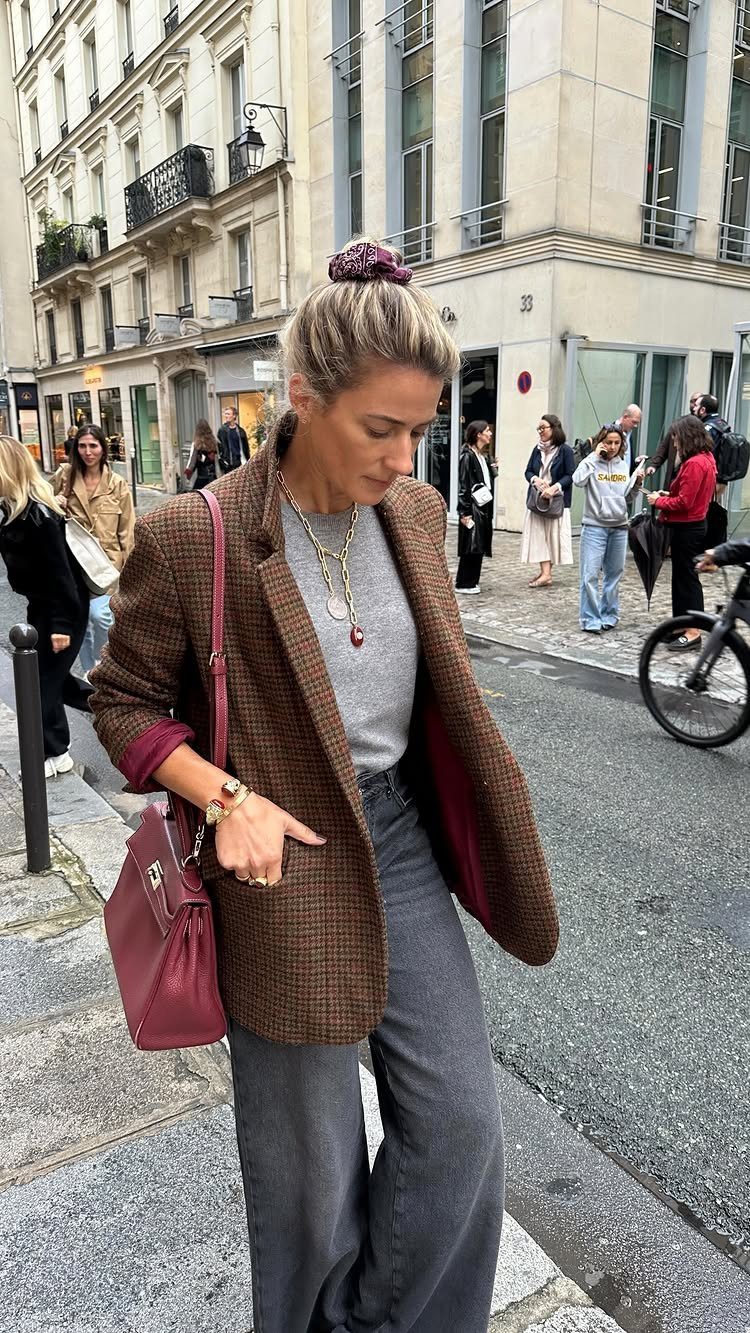
A structured handbag with clean lines and minimal hardware reads as intentional even when the rest of your look is simple. A maroon top-handle bag pulls together a blazer-and-denim combination that could otherwise feel thrown on.
For jewelry, I keep it to one focal point. Layered delicate necklaces work if they share a metal and sit at different lengths; anything beyond that starts to compete.
I prefer small hoops or a single slim bracelet, worn often enough that they feel like part of me rather than a decision I made that morning.
This is the easiest place to upgrade what you already own. A structured bag in leather or a good vegan alternative, kept in a solid color you wear constantly, will outlast 3 trend pieces.
2. Essential Blazer
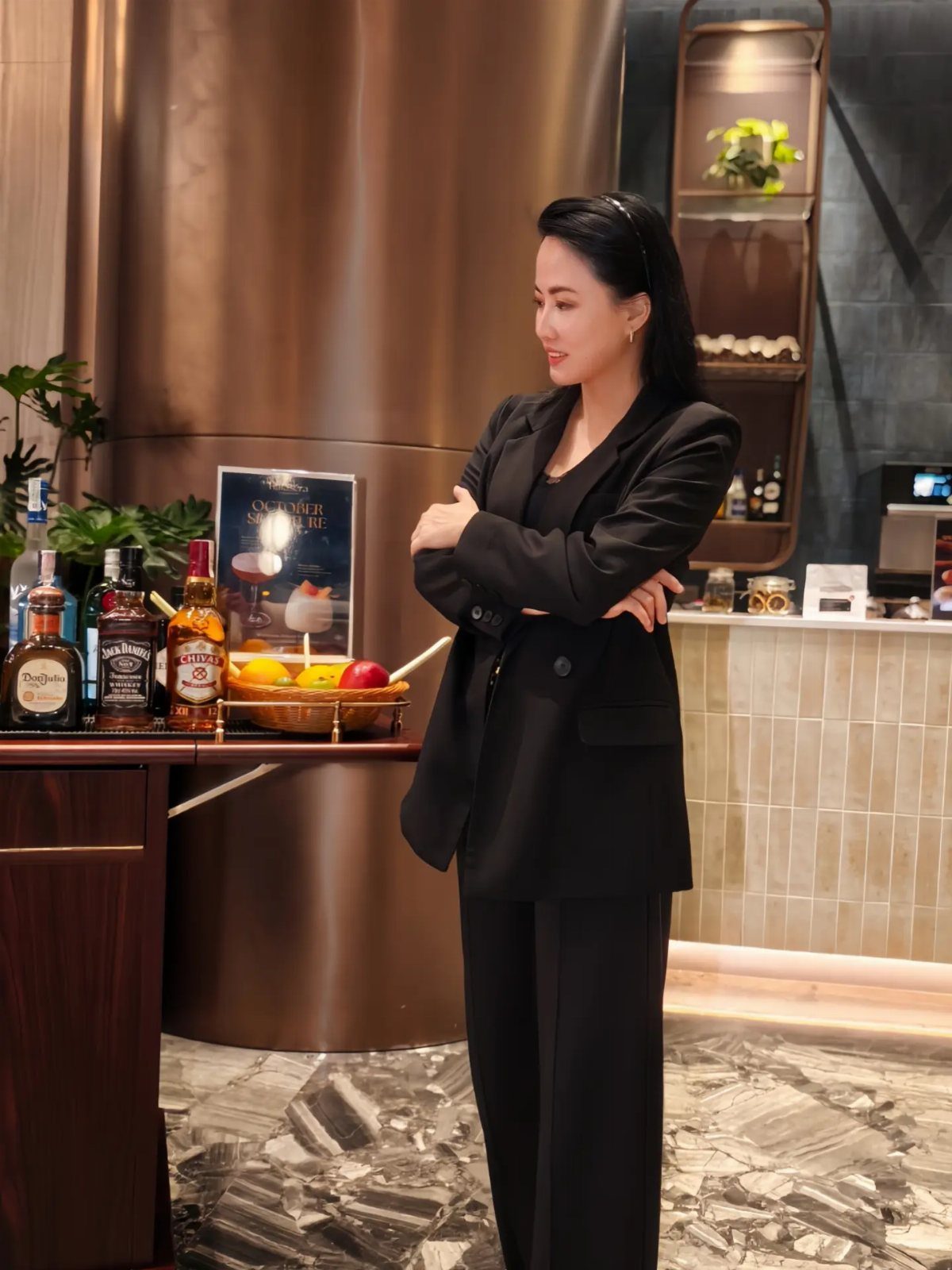
A blazer is the piece I reach for when I need to look like I planned an outfit fast. A black blazer with matching trousers stretches far: dressed up enough for drinks, relaxed enough that you are not performing formality.
Fit matters more than color.
Shoulder seams should sit at your actual shoulder, not slide past it; the body should button without straining or gaping. I have found that a single breasted style in a mid-weight fabric gets more use than anything trend-driven.
Black, navy, or beige will carry you through seasons, and each reads differently. Navy softens a look; black sharpens it; beige works best when the rest of your palette is equally quiet.
Everything else layers under it.
3. Neutral Shades
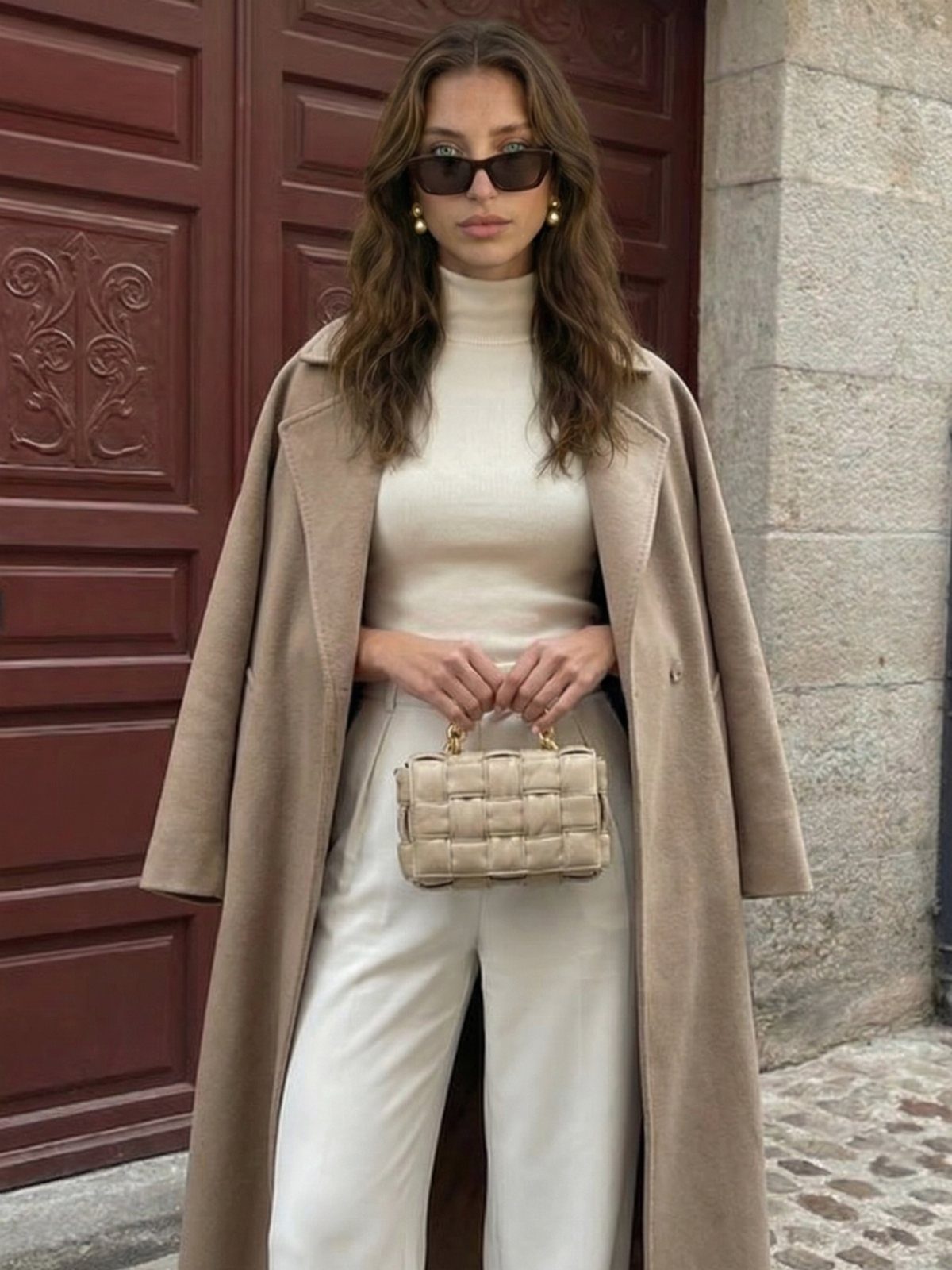
Color is not required to look dressed up. Silky white sets that read as loungewear prove the point, and cream, camel, and off-white tones read as deliberate rather than leftover.
I build most of my upscale casual outfits on this principle.
A column of one neutral, top to bottom, lengthens without effort. 2 neutrals together, like navy and camel or gray and ivory, give just enough contrast to feel composed.
Where I add a third element, I make it one thing only: a belt, a bag, a lip. More than that and the quiet logic falls apart.
Small prints work within this frame if you keep the scale tight and anchor them with solids.
Stripes, herringbone, or a micro check add texture without announcing themselves. Fabric weight and drape can do the same job, which is the other way to do it.
4. Heeled Sandals, Loafers
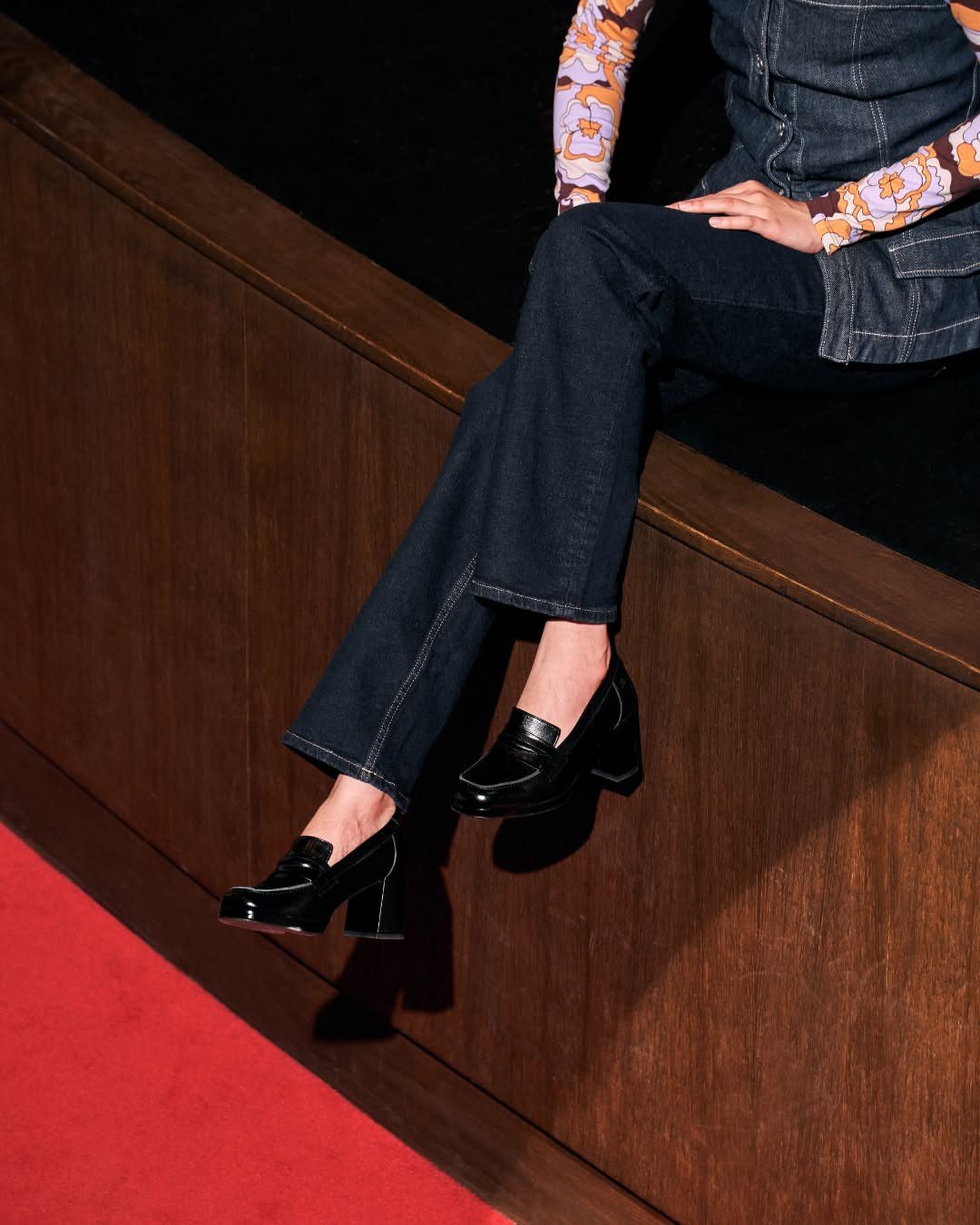
Footwear sets the register of an outfit faster than anything else. Black patent loafers with a chunky heel and dark denim pairing hit the middle of upscale casual exactly: not trying for elegance, not surrendering to pure comfort.
I keep 3 categories in rotation. Leather loafers or pointed flats handle daytime and travel; a block heel or heeled sandal adds height for evening without the precariousness of a stiletto.
A substantial heel walks easily and still looks polished enough to matter. For the rare moment when sneakers feel right, I stick to clean leather in solid white or black, nothing that suggests a workout.
Quality shows here more than anywhere. Scuffed soles and worn heels are harder to hide on shoes than on clothing, and people notice them first.
5. Short-Sleeve Polo and Trousers
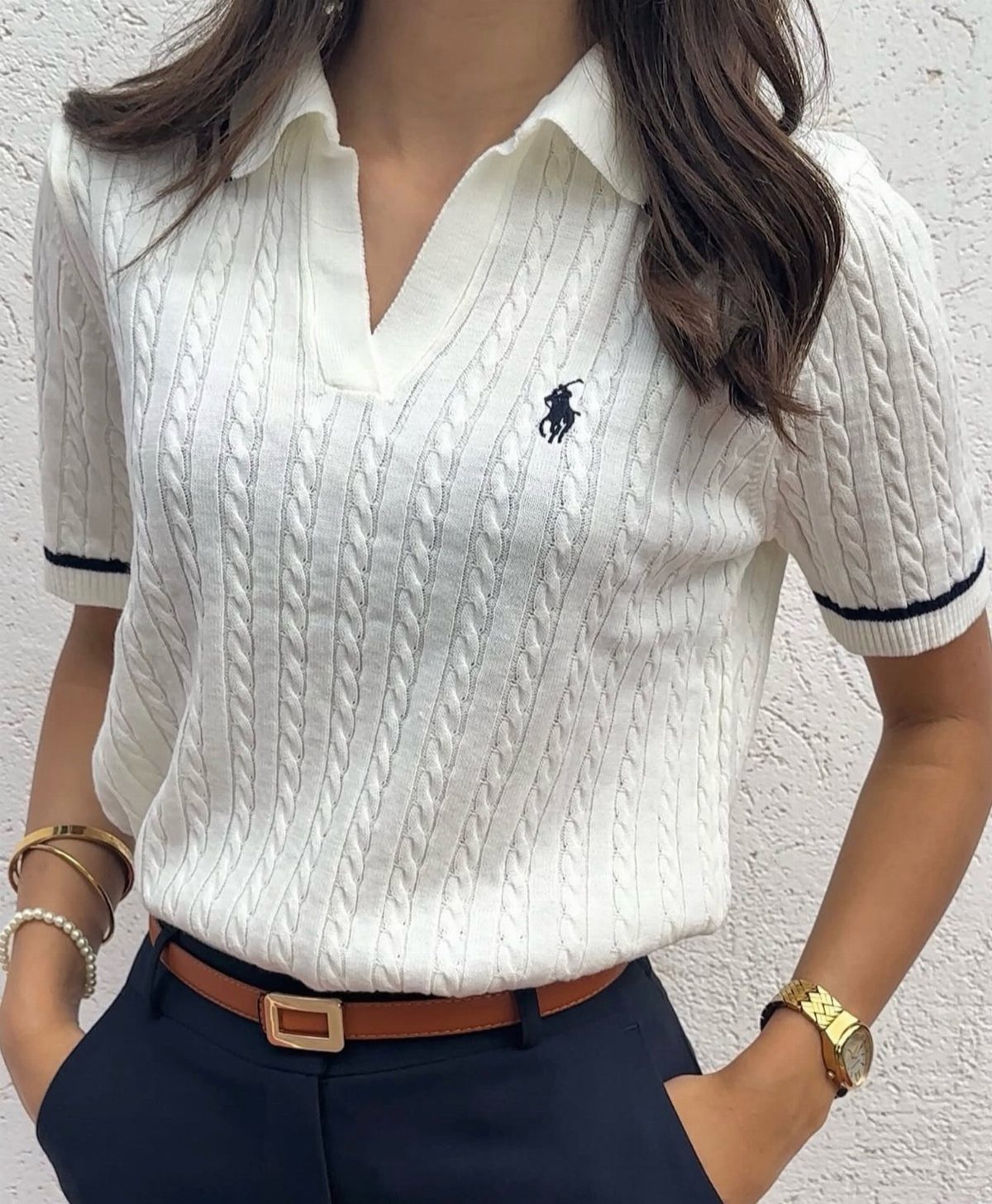
A polo shirt is not the first thing I think of for dressy occasions, but a white cable-knit version tucked into navy trousers with a slim brown belt makes the case.
The texture elevates it past a basic tee; the tuck and the trouser keep it from reading as weekend wear.
The balance is what matters.
If the top is relaxed, the bottom needs structure. These trousers are tailored, with a crease that holds, and the belt sits at the natural waist rather than slung low.
I would check the polo length before buying: it needs to stay tucked without bunching, which means hitting at mid-hip, not below.
Gold jewelry, small and warm-toned, works with this palette without competing. I would skip a necklace and wear a slim bracelet or watch instead, letting the collar and the knit pattern hold the eye.
6. Layered Sweater and Collared Shirt
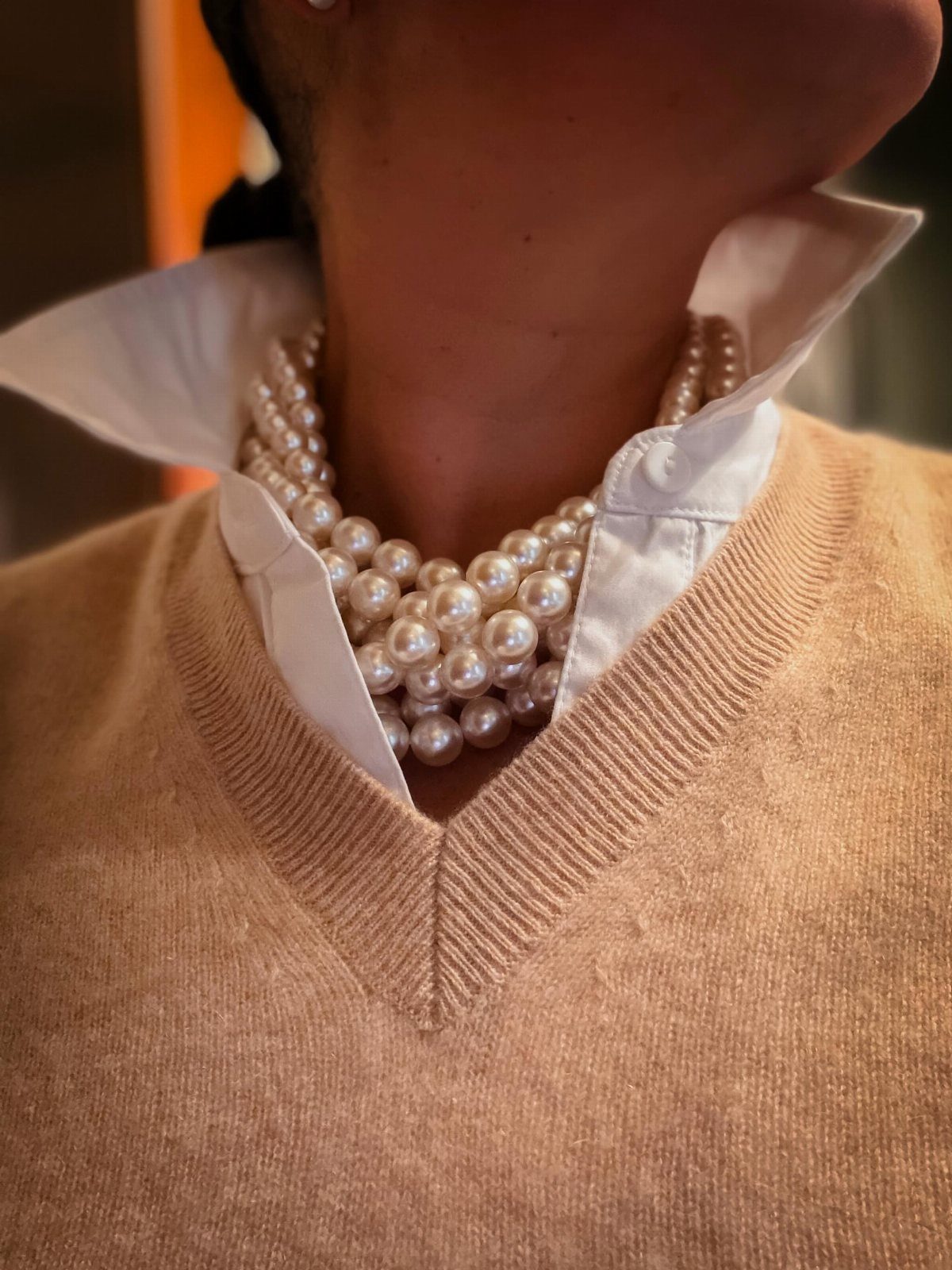
This combination looks like an understanding of clothes without looking like effort. The tan V-neck sweater over a crisp white collar, with pearl strands filling the gap, is a specific formula that reads as inherited taste rather than studied effort.
The shirt collar should stand up to the sweater, not collapse under it. Popping the collar slightly only works with structure, the kind that comes from good cotton and proper pressing.
The pearls are optional; without them, the look is quieter, more academic. With them, it leans toward the polished social version of the same idea.
I check the sweater weight against the shirt.
Too heavy and the collar disappears; too light and the layers read as accidental. The V-neck depth matters too: high enough to frame the collar, not so deep that the shirt becomes an undershirt.
7. Relaxed Two-Piece Suit
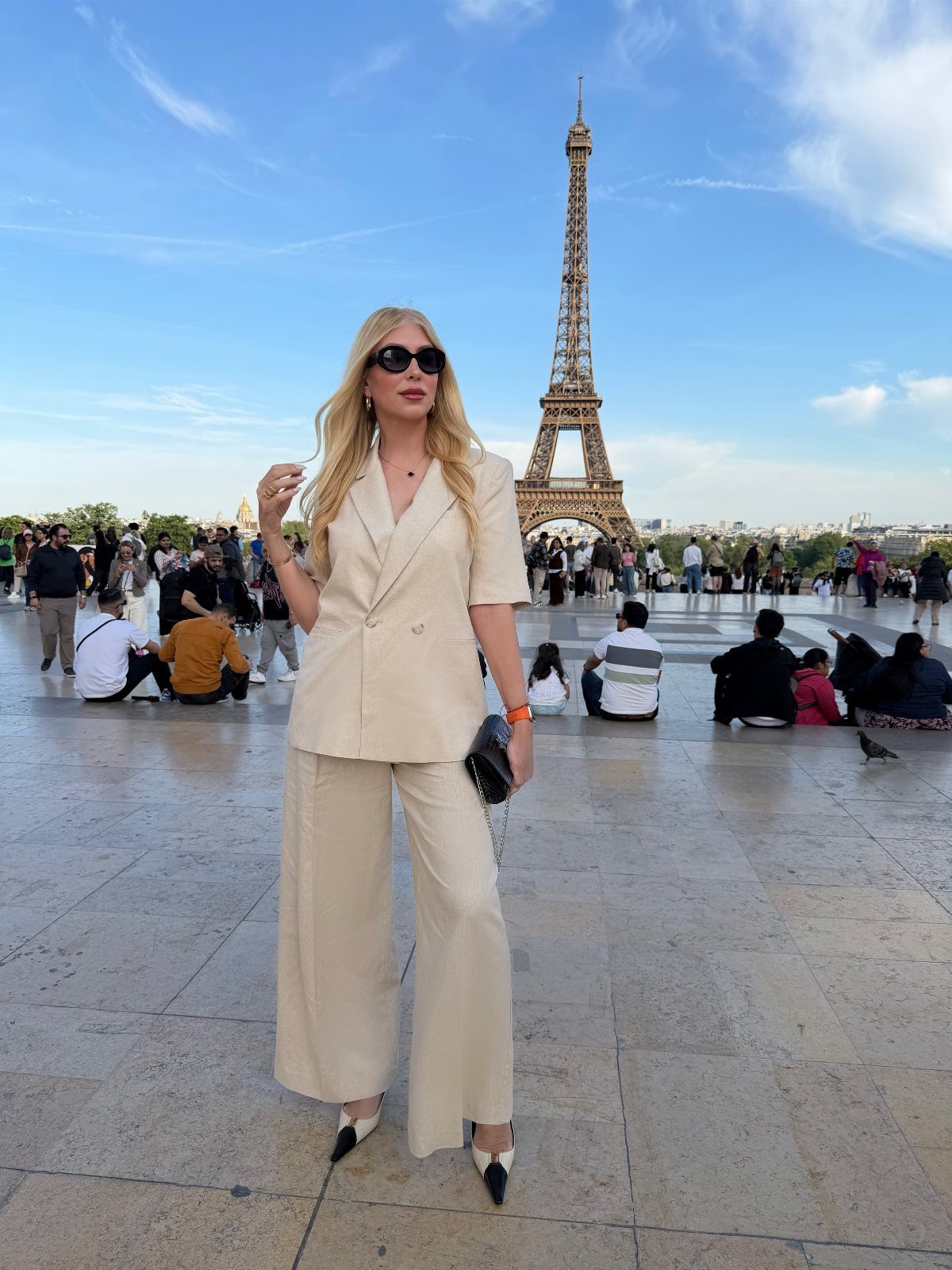
A matching suit in a weight you can wear through summer changes the equation.
Linen or a linen-style weave keeps the look breathable; the short sleeve on this blazer removes the usual office formality without losing the shape that makes a suit intentional.
Wide-leg trousers with this cut need the right length: grazing the top of the foot, not pooling, or the ease becomes sloppiness.
I would check the waistband height before tailoring; a mid-rise pairs better with the cropped blazer proportion than something low-slung.
Beige reads warmer against sun and stone than against gray city backgrounds. If your setting is urban year-round, sand or camel solves the same problem with more practicality.
8. Silk Blouse with Wide-Leg Trousers
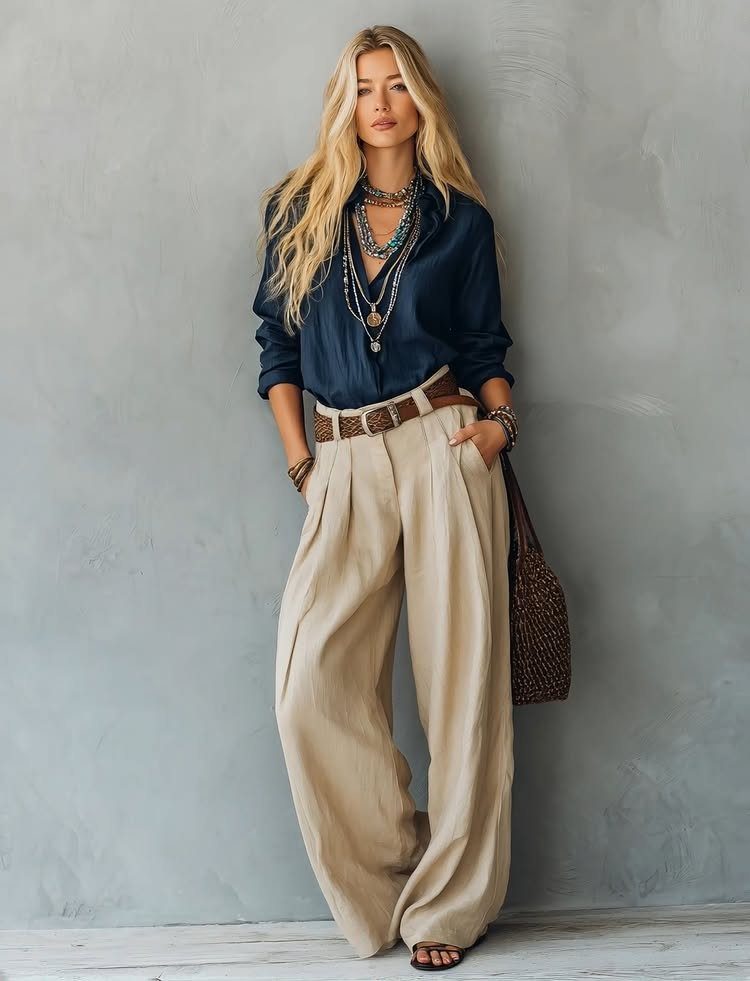
One dressy piece can settle an entire outfit, and here the wide-leg trouser does that work.
The navy silk blouse is quiet enough to let the trouser volume read as choice rather than compensation; the brown belt defines the waist where the fabric would otherwise swamp it.
I would check the tuck.
Silk this light needs a partial or strategic tuck, or a bandeau underneath to keep the blouse from riding up. The layered necklaces fill the open collar without competing; two is my limit, in mixed lengths but one metal.
A top-handle bag and aviators keep the look relaxed instead of boardroom stiff.
I would skip the sunglasses indoors, but the bag shape is the right finish: structured against the fluid trouser, small enough that it does not become a second focal point.
9. Tweed Jacket and Tailored Trousers
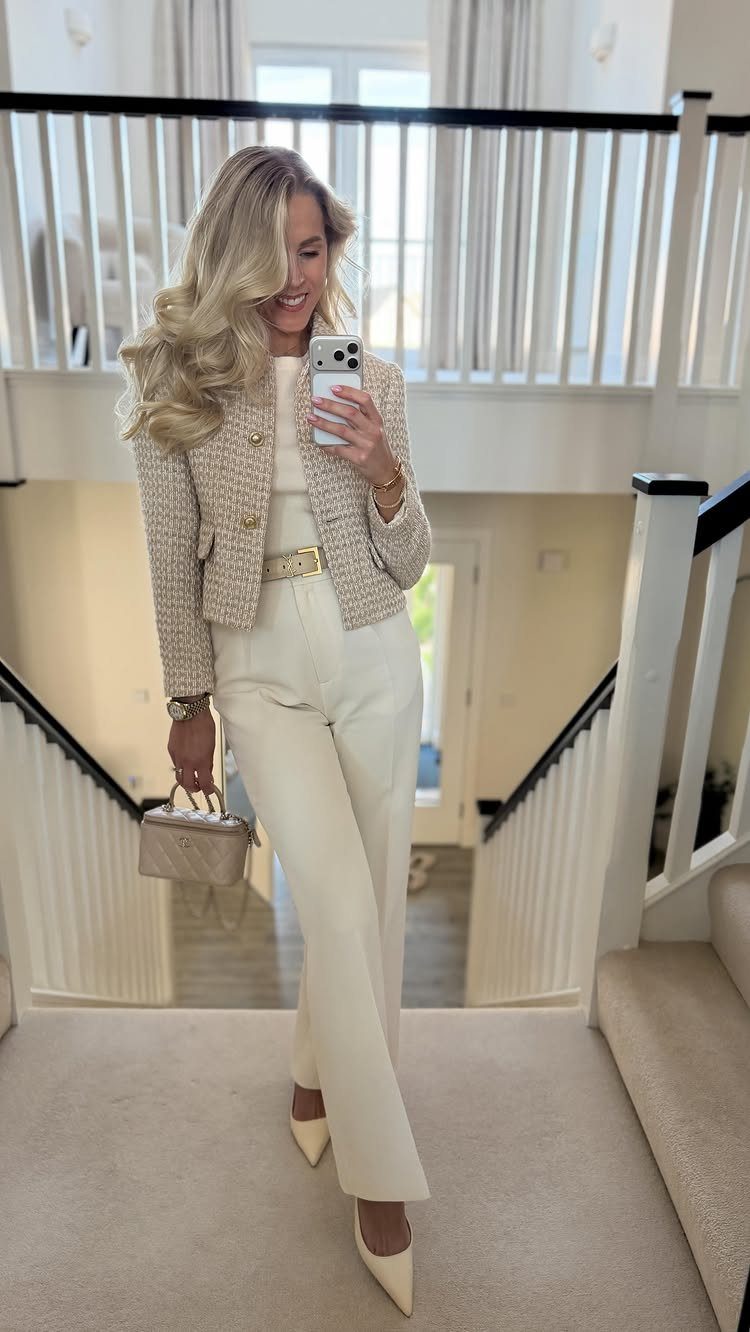
Tweed carries texture without pattern, which makes it useful when you want interest that does not read as loud.
A cream-on-cream version keeps the look unified; the white top underneath is barely visible but necessary, a neutral layer that lets the jacket close cleanly.
Pointed heels with this much cream could feel severe; soft fabric keeps them from reading too formal.
I would test the heel height against the day planned. A mid-height heel lifts the line without the commitment of a full dress shoe.
The belt matches the jacket rather than contrasting.
I prefer this: it lengthens rather than breaks the body. A mirror check from the side matters more than usual with a double-layered paleness, since neither color is doing any slimming work for you.
10. Turtleneck with Long Coat
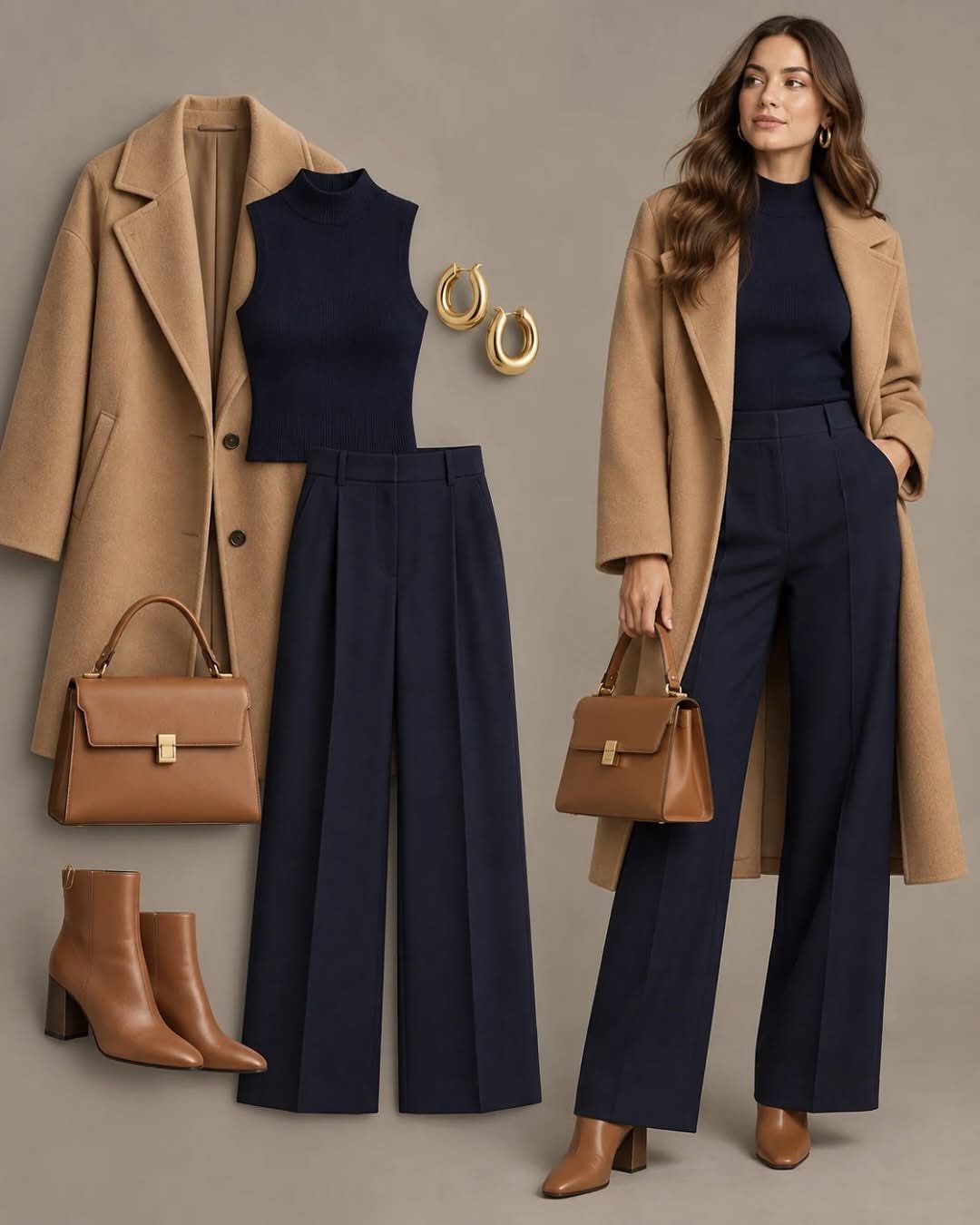
A coat that reaches the knee or below becomes the outfit.
The navy underneath is consistent head to toe, which lets the tan outer layer act as the single deliberate accent; ankle boots in a matching tan extend that accent downward without competing.
I would check the neck. A turtleneck under a coat with a standard lapel can bunch or gap; the cleaner solution is a fine-gauge knit that sits close, not a chunky fold that fights the coat line.
The flat lay shows gold hoops laid beside, not worn; I would wear them, small and warm against the navy, but nothing at the neck that duplicates the turtleneck’s own line.
The notes from elsewhere mention a trench as the thrown-on solution. This is the longer, more tailored version of that same idea: less utility, more intention, better for evenings when the coat does not come off.
Balancing Dress Codes
Upscale casual borrows from both sides without landing fully in either.
Think of it as business casual’s more polished relative, or as elegant pieces mixed with comfortable ones. Both descriptions point to the same daily problem—how to look intentional without looking like you tried.
I read this as a question of ratio. Too much polish and you are dressed for someone else’s office; too little and you are in weekend clothes at the wrong moment.
The list entries that work best keep one foot in each camp: a blazer with denim, silk with wide-leg trousers, a suit in a weight that reads as seasonal rather than corporate.
The setting matters more than the label.
What passes at a resort restaurant fails at a city lunch. Stone and sun forgive more ease than glass and gray do, so I check the room before leaving the house.
Importance of Fit
Fit is where off-the-rack becomes yours. When I try on any upscale casual piece, I run through 3 fit checks in this exact order: shoulders first, since they’re the hardest and most expensive area for a tailor to fix.
A tailor can take in a waist or shorten a hem for a small investment. Buying with alteration in mind changes what you consider: a slightly loose waist on an otherwise right piece becomes a yes instead of a no.
The list entries return to this point repeatedly. Relaxed only works when structure holds it; wide-leg trousers need grazing length, not pooling; a turtleneck must sit close to keep the coat line clean.
The same principle runs through each. Fit is the silent half of every outfit decision.
Choosing Fabrics
Fabric signals before cut does.
Silk and cupro carry drape beautifully, cashmere and merino add warmth without the bulk, tencel and linen blends give softness with enough structure to hold a shape, and structured cottons keep a shirt looking intentional rather than limp.
These are the categories I sort by when a label lists a material I do not recognize.
The list puts this into practice without naming it. The silk blouse needs a partial tuck because the weight is light; the tweed jacket carries texture without pattern because the weave does that work.
The relaxed suit in linen or linen-style weave only succeeds because the fabric breathes and keeps its shape.
What to avoid is as useful: thin jersey, worn-out fleece, anything overly distressed.
These read as leftover rather than chosen. I would add that fabric weight should match the season you are actually in; a summer linen in winter looks like a mistake, not a look.
Frequently Asked Questions
What do you wear to an upscale casual restaurant?
Tailored pieces mixed with relaxed ones hit the mark: a blazer over dark denim, or silk with trousers that have a proper crease.
One element carries polish while another keeps you comfortable through a long meal. The structure goes on top, the blazer or coat someone sees first, and what touches the skin stays easy.
What does upscale mean for dress code?
It means familiar pieces upgraded in material and cut: premium denim, a wool crepe blazer, silk instead of synthetic.
The silhouette sharpens without turning formal. Effortless polish means dressing for the occasion without performing for it.