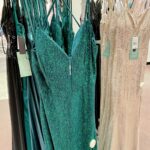
The 9 ideas below run from a sleek updo to a floor-length satin gown, and the one you need depends on whether your spring wedding lands at golden hour under a tent or after sunset in a chandeliered ballroom.
1. Floor-Length Gown
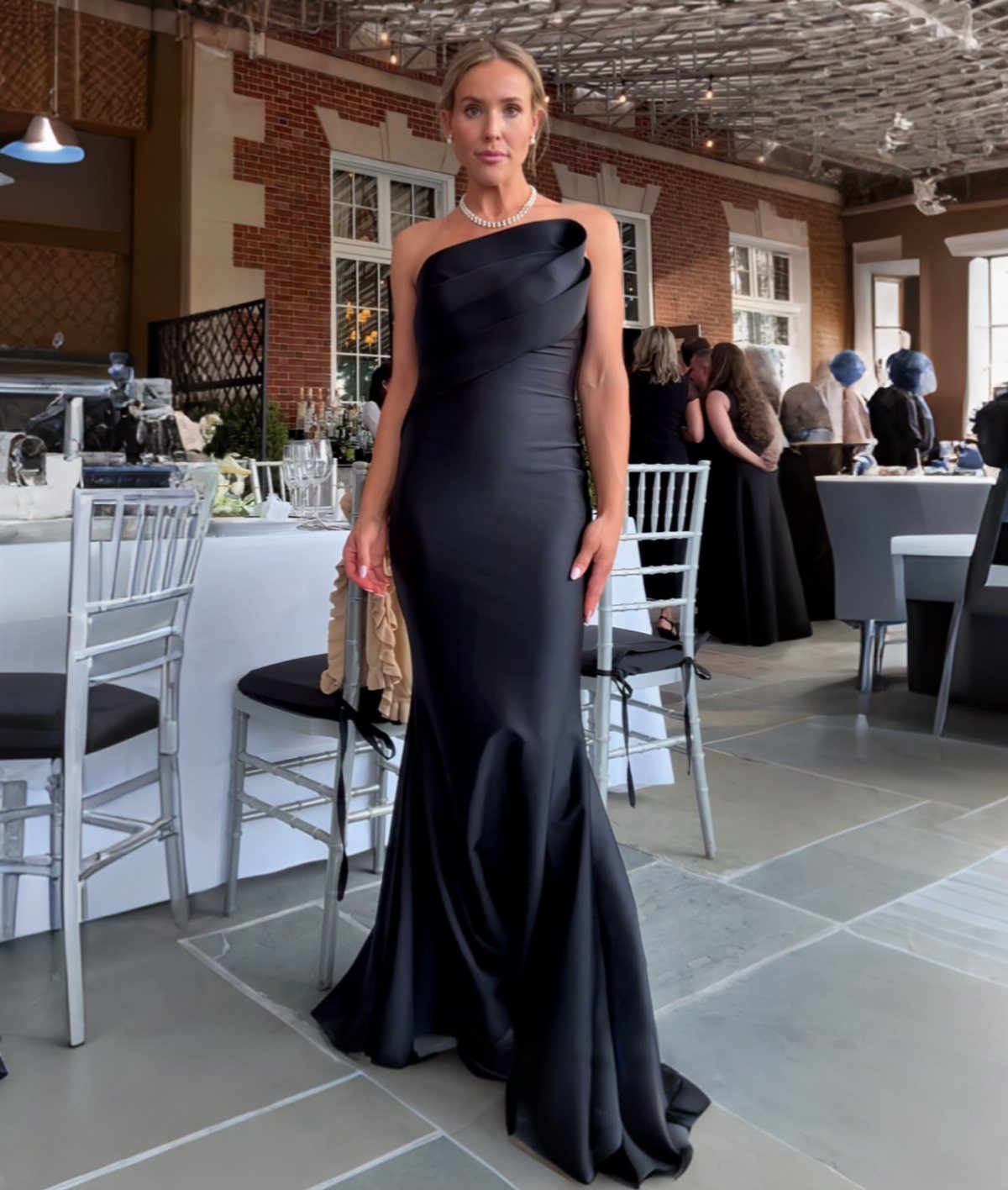
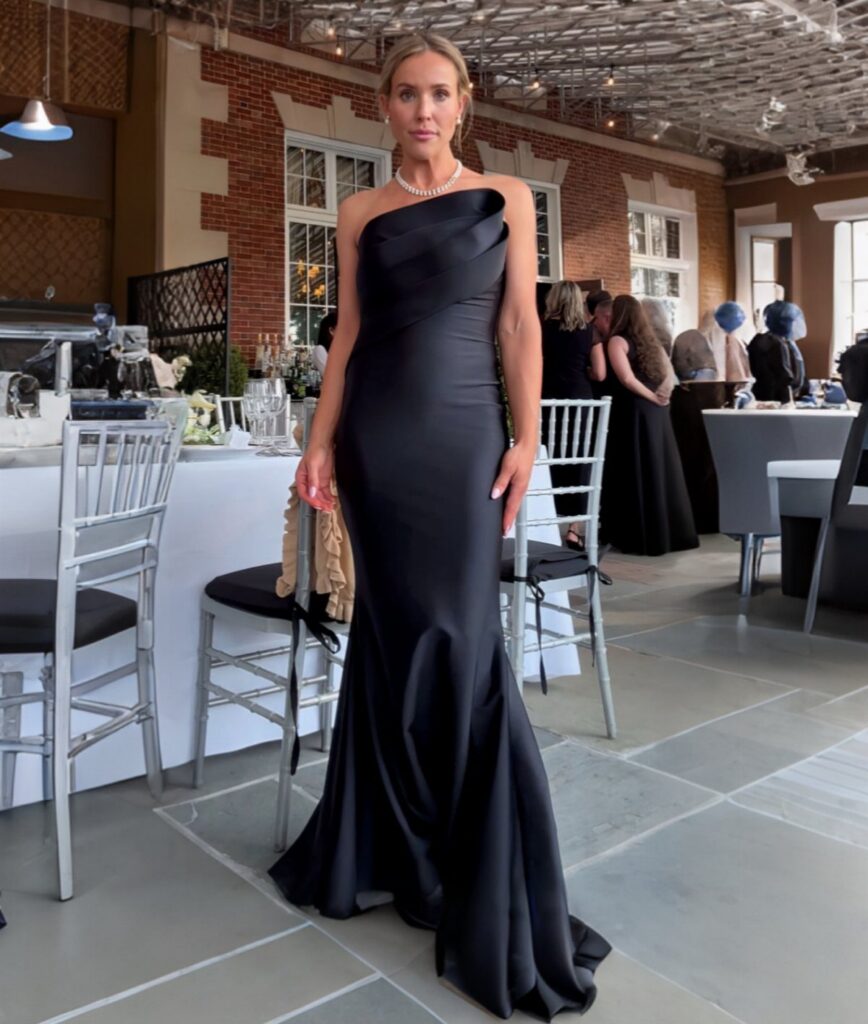
A black-tie wedding calls for a gown that pools at the floor, not one that stops at the knee.
I reach for crepe over chiffon when I need the skirt to hang straight without clinging, and I save satin for evenings where the light will catch it.
An architectural neckline keeps a black dress from reading as basic; if you are shopping, look for one strong detail, whether it is a collarbone-baring cut or a sleeve that drapes off the shoulder.
A mermaid cut widens at the knee, which suits a woman who wants shape without volume at the hips.
2. Chic Cocktail Dresses
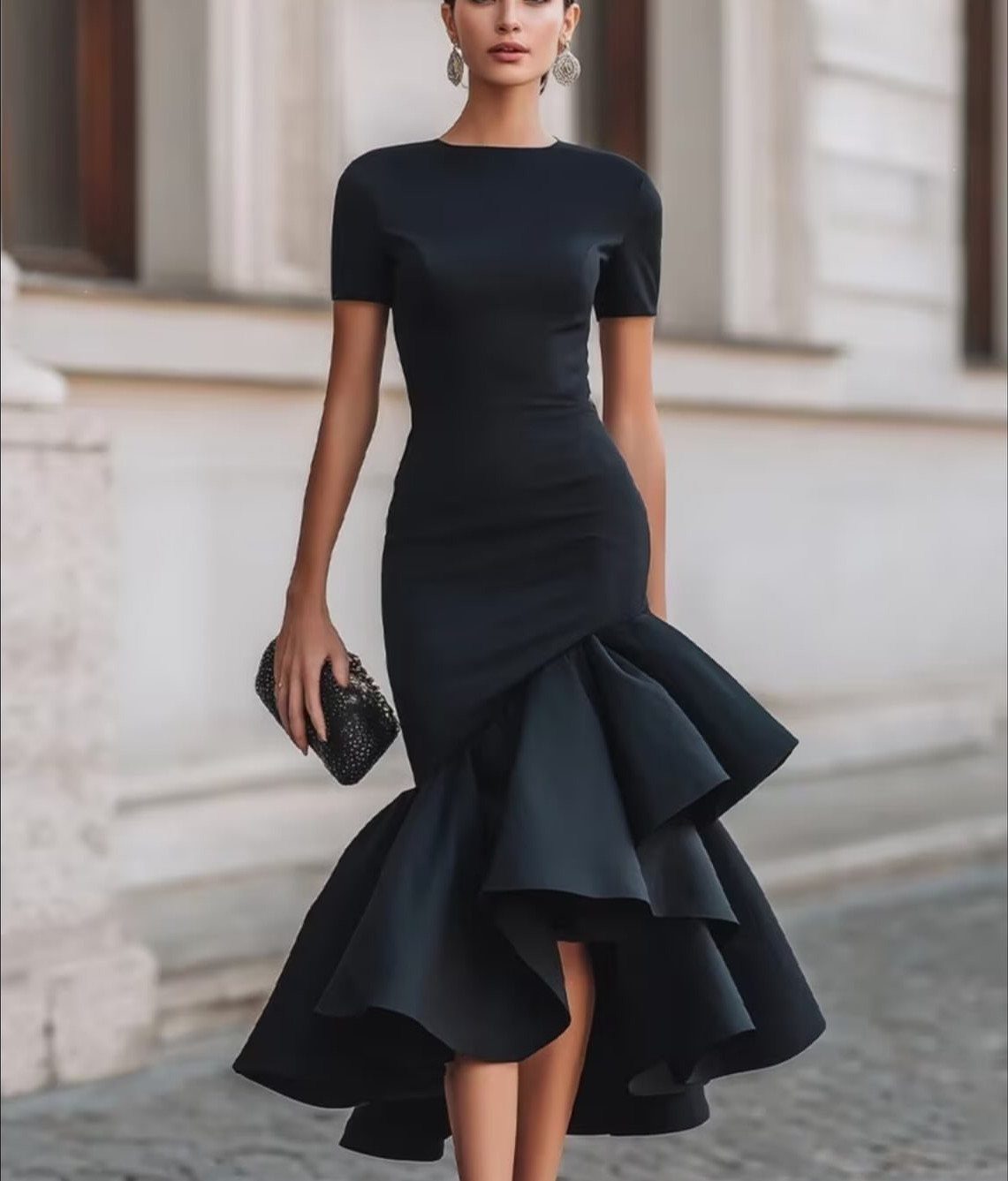
Some newer black-tie invitations read "creative black tie," and that is where a cocktail dress can work.
A ruffled skirt that hits mid-calf in front and drops lower behind gives you the coverage of a longer dress while you are seated at the table.
I would look for a fabric with body, like faille or heavy crepe, something that holds the shape of a ruffle instead of letting it collapse.
Structured shoulders or a defined waist help too; without them, a shorter dress can look like you simply showed up underdressed.
3. Strapless Neckline
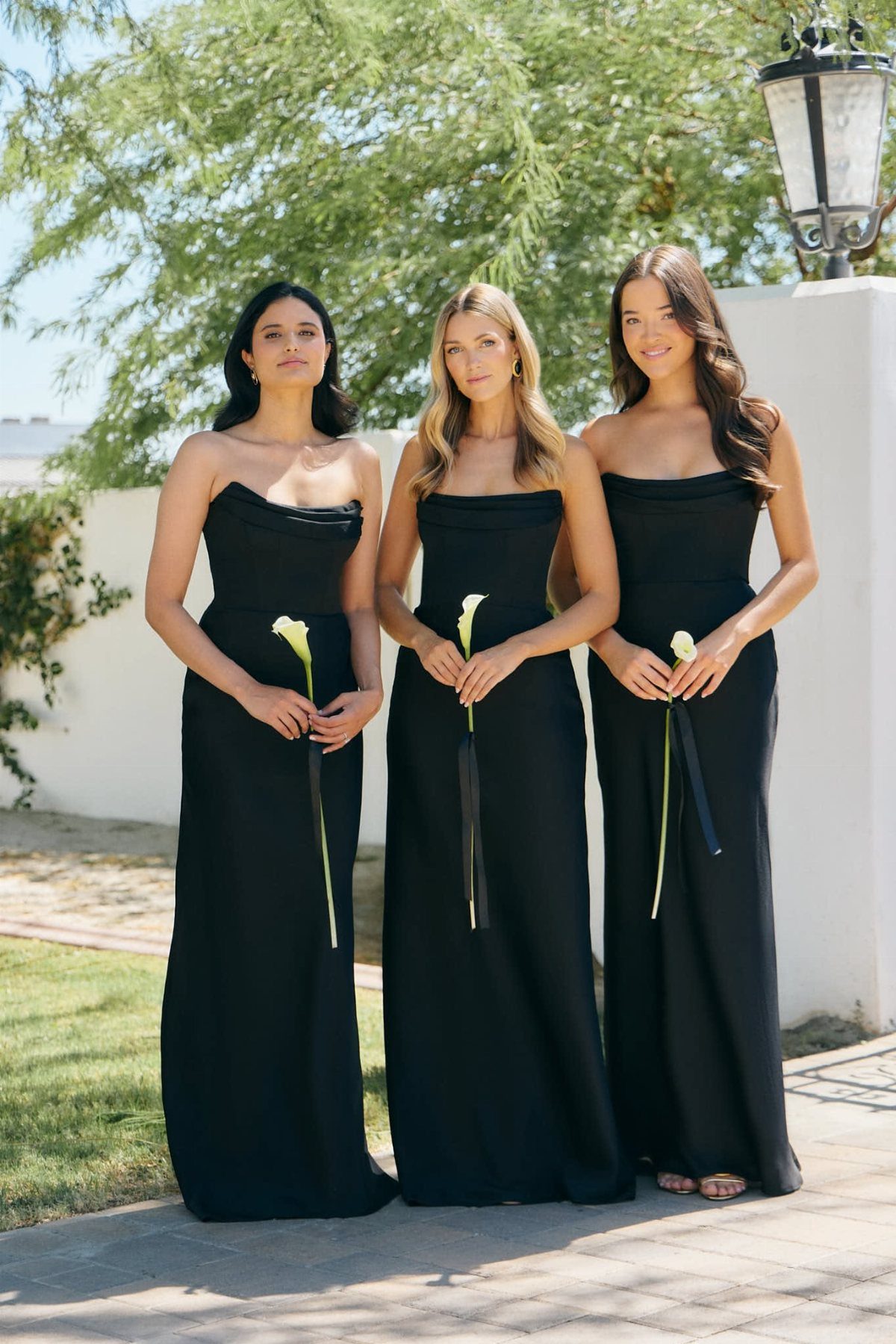
The right neckline holds a strapless gown in place so you are not tugging at it through the ceremony.
I like a straight across cut or one that curves slightly higher in the center, both of which keep the dress from sliding south.
Off-the-shoulder sleeves give the same open collarbone effect with a little more security; one-shoulder dresses do too, though you will want to check that the single strap is wide enough to carry the weight of a full-length skirt.
4. Satin Fabric
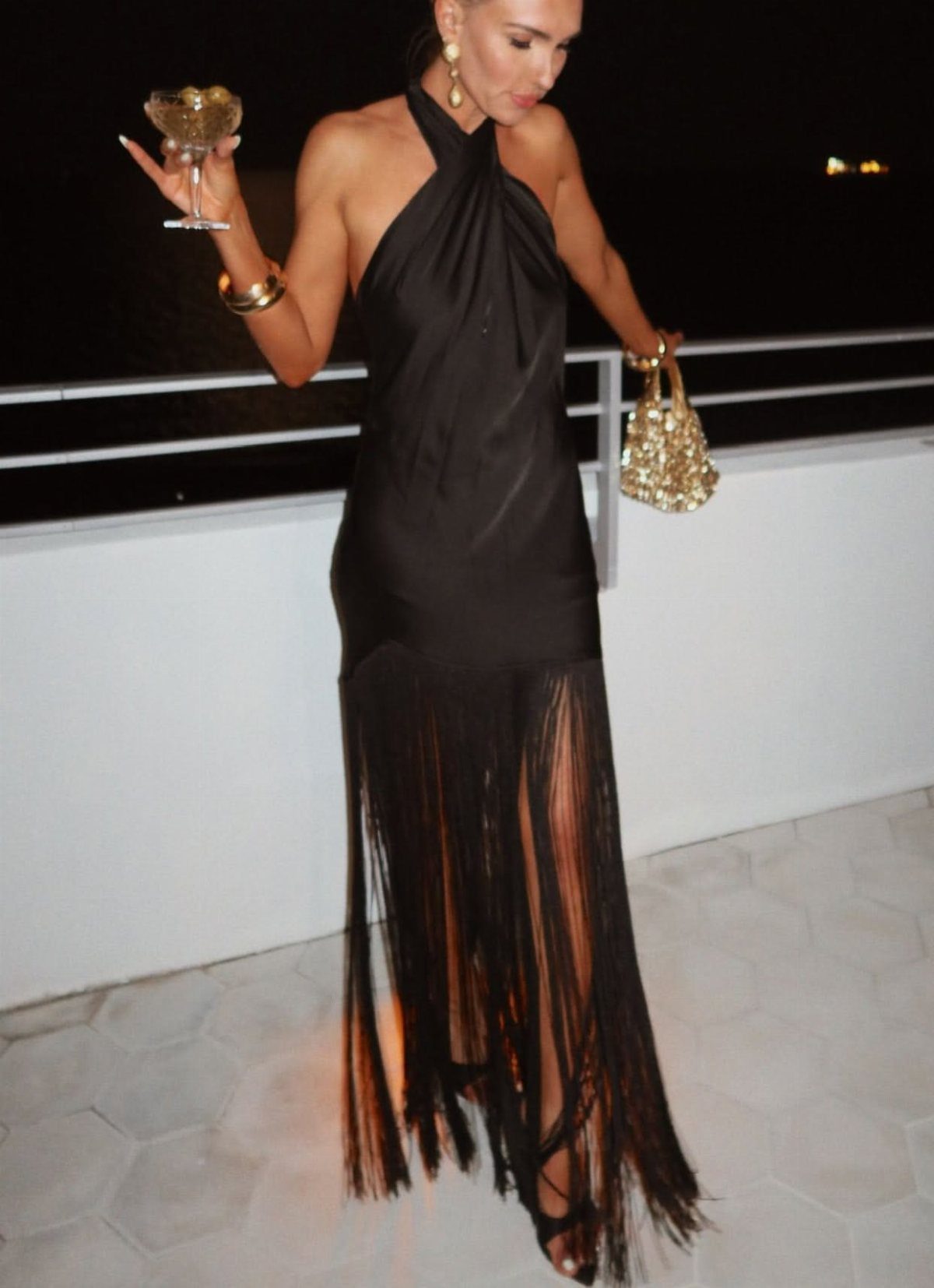
Satin catches light in a way matte fabrics cannot, which is why I reach for it when the wedding runs past sunset.
A halter cut leaves the back open, so satin has room to move and ripple; a high neck also means you skip the necklace and let the sheen do the work.
Silk charmeuse looks similar but slides more, which can be a problem if the cut is bias.
For a spring wedding, I would keep the satin in black, navy, or a deep green rather than a pastel, which can read too sweet under chandeliers.
5. Spring/Summer Color Palette
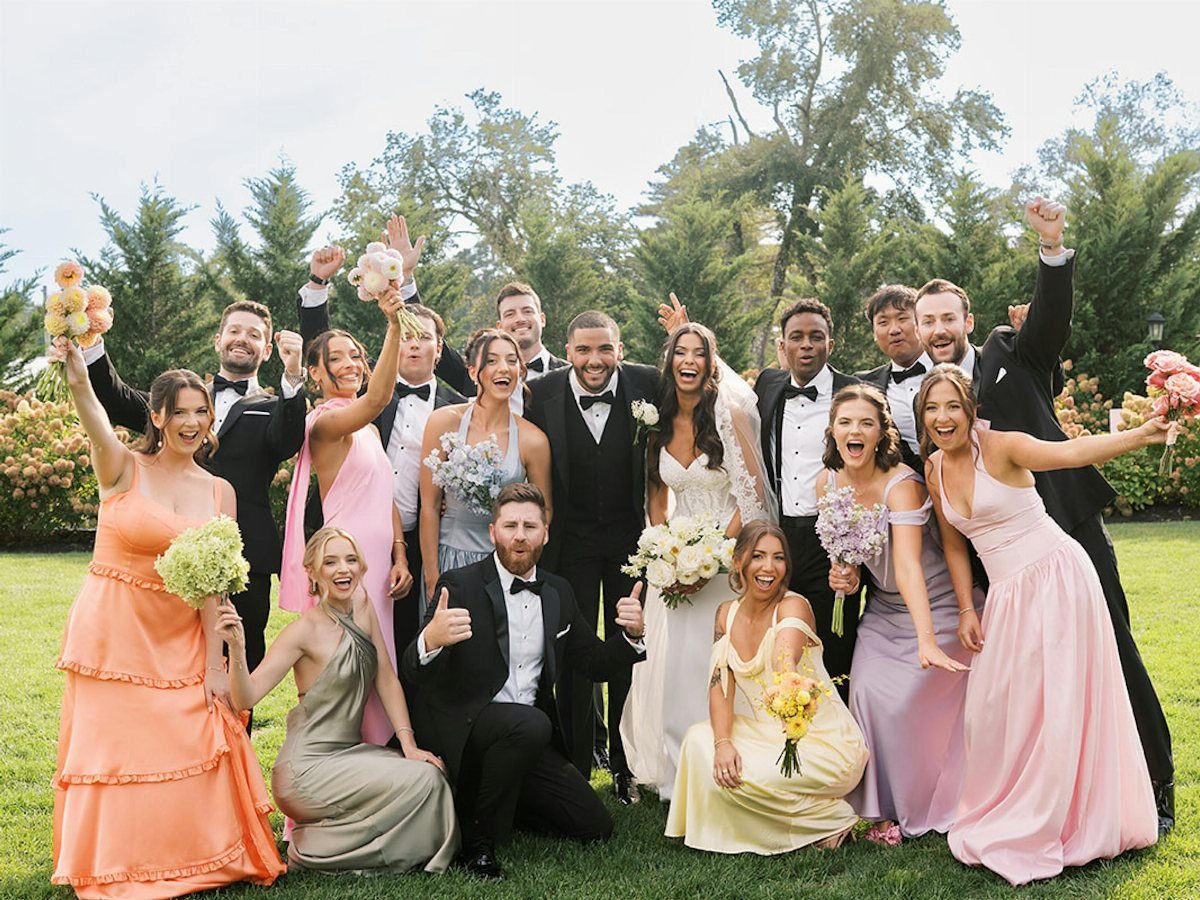
A black-tie dress code does not have to mean a black dress, especially when the wedding lands in May.
I have seen this palette work at a garden ceremony in Charleston: soft blues, barely-there pinks, and one deeper tone per wedding party to anchor the group.
Pastels read more formal in a floor-length cut than in a sundress shape, and florals can work if the print is large-scale and the background is dark.
Jewel tones, emerald or sapphire, feel more modern than the black of winter and hold up against green lawns and white tents.
6. Chandelier Earrings
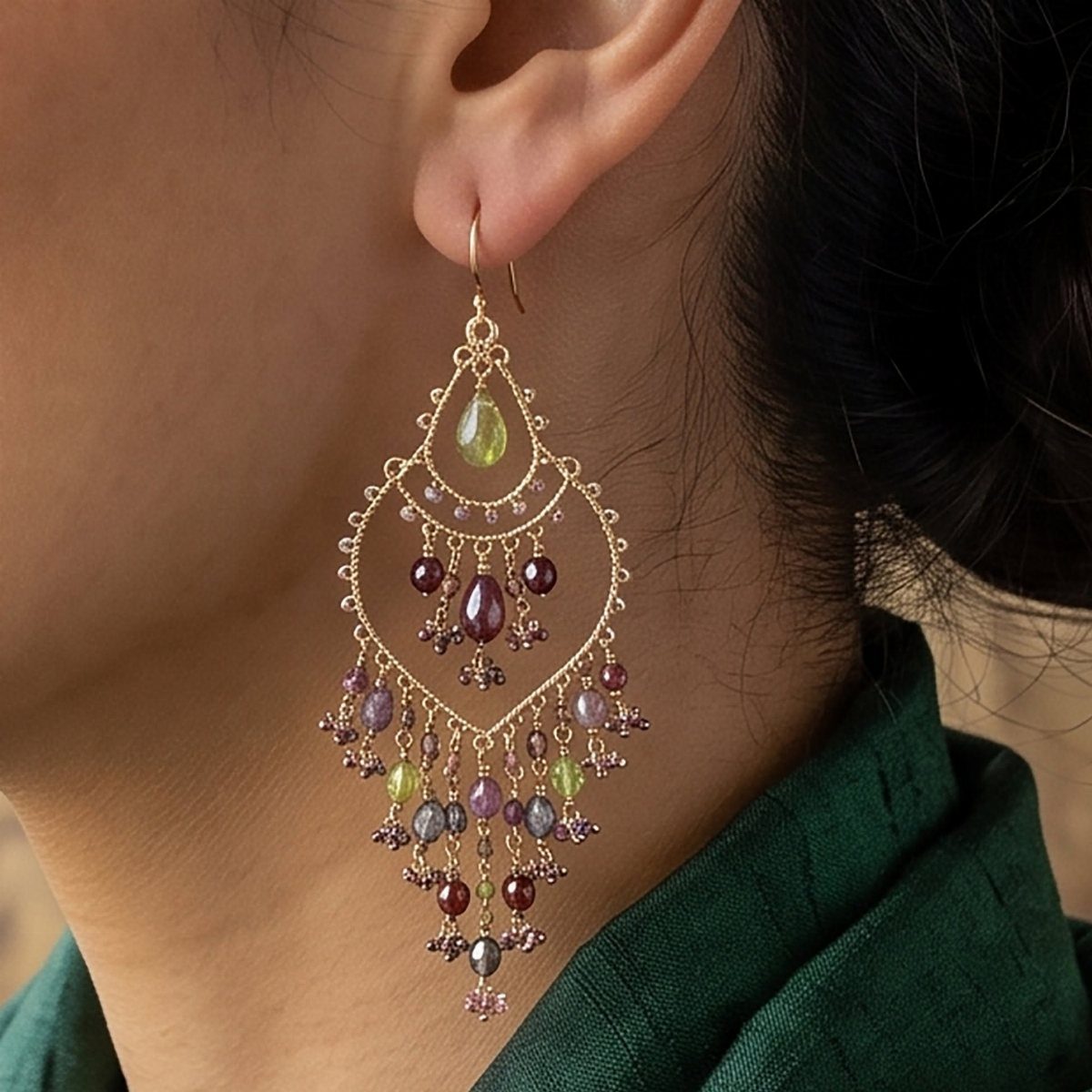
One good pair of chandelier earrings can finish a gown when the neckline does all the talking.
A pair that mixes gold with colored stones reads as jewelry rather than costume; I would match the metal to the hardware on my clutch and leave my wrist bare so the ears carry the weight.
A delicate diamond necklace is the quieter alternative if you have a high neckline or hair that will cover the drops.
Either way, I put earrings on before the dress goes over my head, when I can still reach both ears without fighting fabric.
7. Classic Clutch
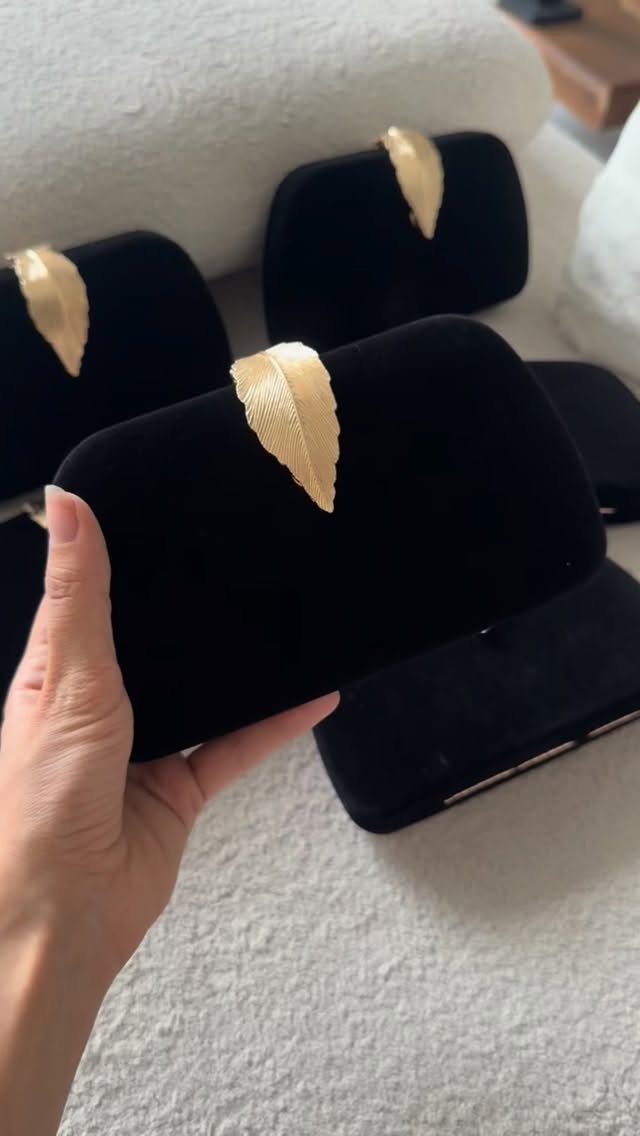
A black-tie clutch should disappear in your hand, not compete with the gown. Velvet or satin in a shape that snaps shut keeps your lipstick and phone from sliding into the aisle during the ceremony.
I would choose a gold or silver clasp over beading for spring, since the metal catches candlelight without catching on chiffon sleeves.
A chain inside is useful for the walk from cocktail hour to the table; leave it tucked during photos so the line of your dress stays clean.
8. Sleek Updos
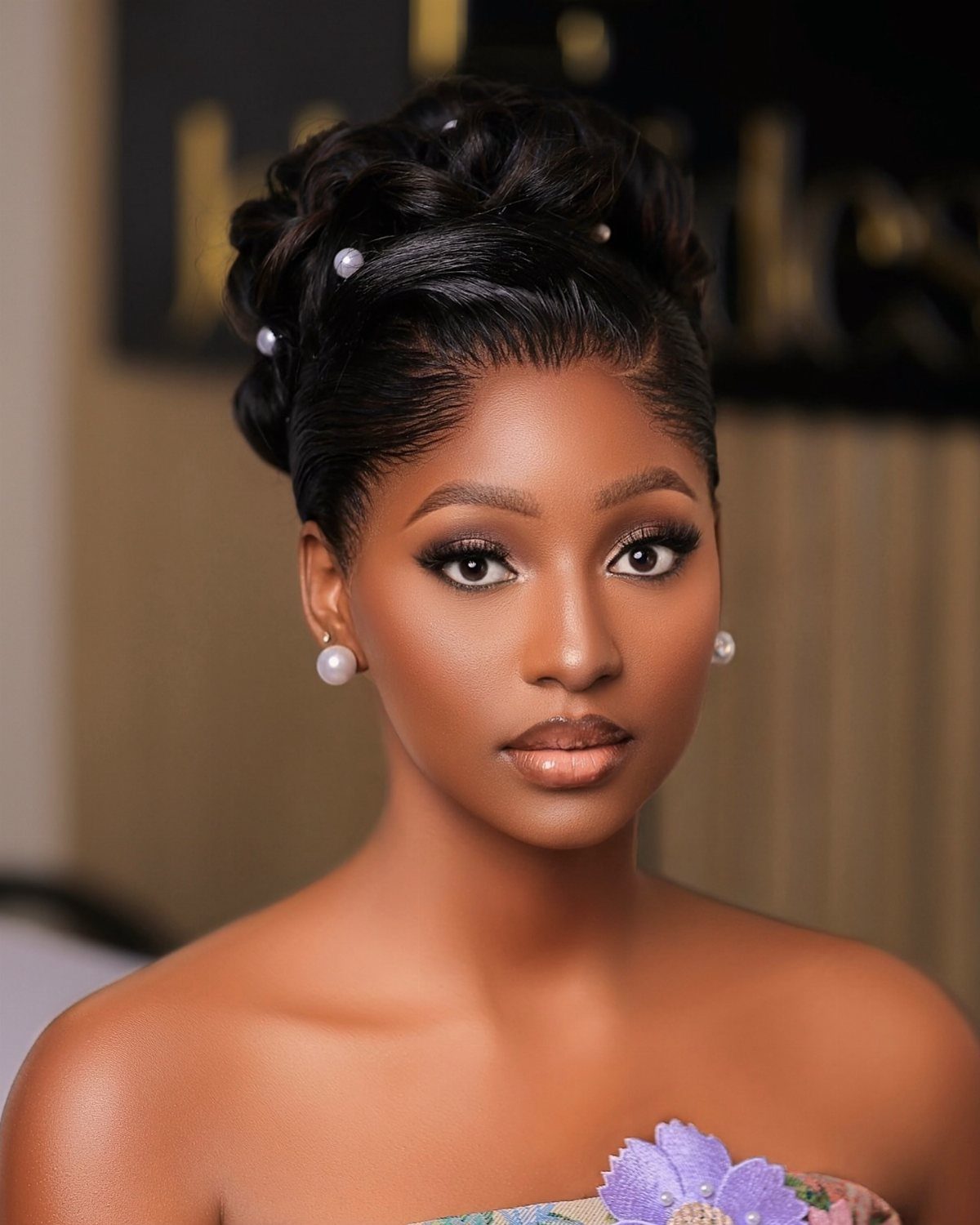
Hair pulled back tight against the scalp keeps the neck clear for a gown with an open back or a heavy earring.
A sleek updo pinned flat at the crown with volume kept on top, not the sides, keeps the silhouette vertical and reads more formal for a black-tie invitation.
A bold lip pairs well with this because the face is already framed; a smoky eye can compete with the architecture of the style.
I would do the makeup first, then pin the hair, since any fallout from shadow is easier to clean before the strands are set.
9. Vintage Hollywood Waves
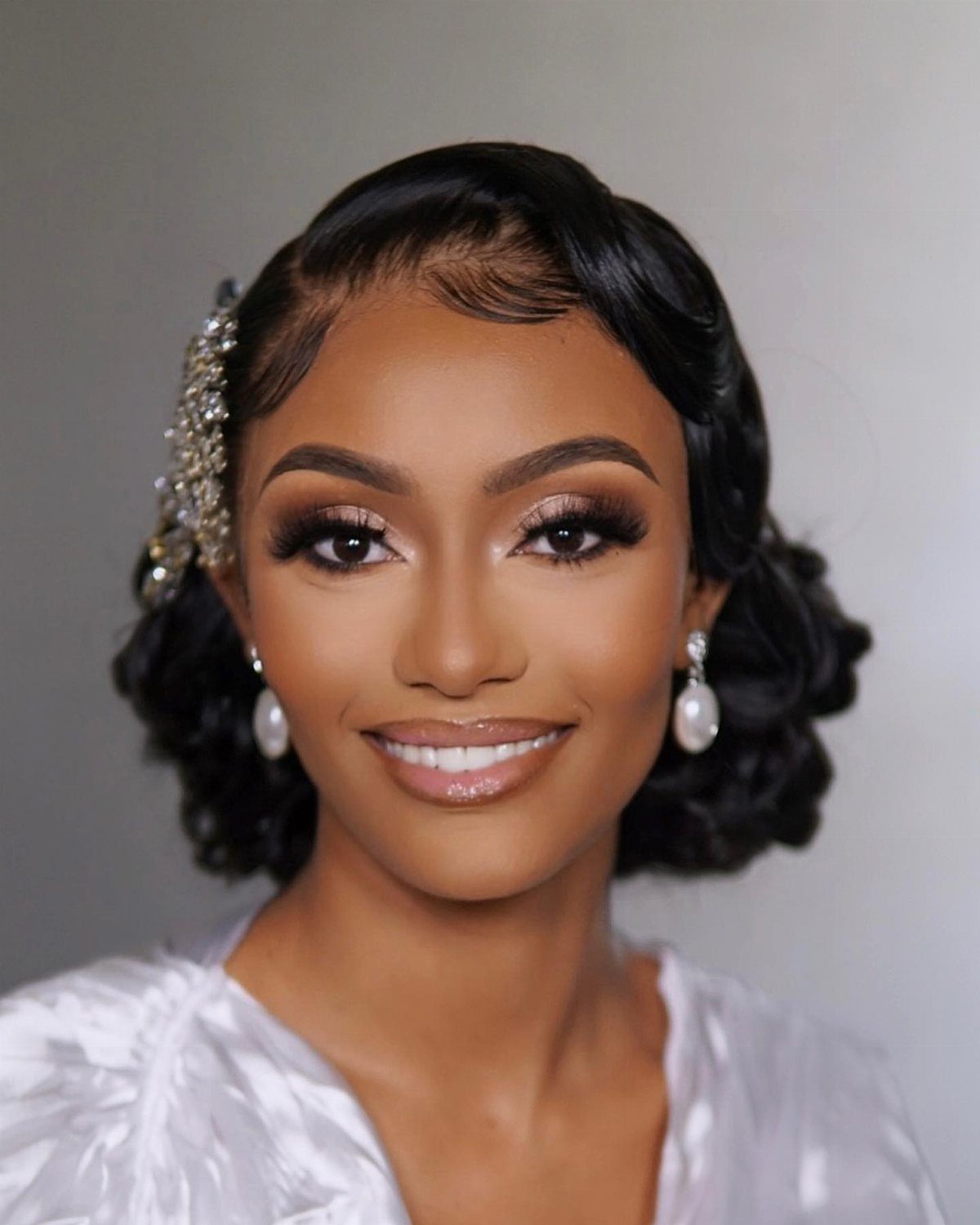
Finger waves set with heat rather than wet-styled hold through a long evening of humidity and dancing.
The deep side part and uniform S-curve across the forehead is the signature; a crystal comb or pearl pin at the temple anchors the shape and adds something for candlelight to catch.
This style needs length to work, at least to the jawline, and it sits best on hair that holds a curl without going fuzzy.
I would bring a photo to the stylist rather than describing it, since "vintage waves" can mean several things and the precise crest matters.
Frequently Asked Questions
What colors not to wear to a black tie wedding?
Velvet reads as winter weight; for spring black tie, it can look like you grabbed the wrong closet.
I would also skip anything that reads daytime or casual, like a pastel in a sundress shape or a print that looks like summer brunch wear.
The floor length and the fabric weight are what keep a color formal, so if the cut is wrong, even a jewel tone can miss the mark.
What are the rules for a black tie wedding?
White tie is rare; black tie is the most formal dress code most invitation cards will ever ask for.
A tuxedo is standard for men, and women should plan on floor length unless the cut and fabric of a shorter dress look unmistakably expensive.
Evening fabric and a clean line matter more than ornament; nothing that belongs in a conference room belongs at this wedding.
What are some good black tie guest dresses for a spring wedding?
A floor-length gown in a soft pastel works beautifully for May, since the longer cut keeps the color from reading junior.
Large florals on a dark ground read formal, and emerald or sapphire both pick up spring greenery and survive the switch from daylight to candles.
Can I wear a normal suit to a black tie wedding?
No.
A tuxedo is the expectation for men at a black-tie wedding, and a standard business suit reads underdressed. The gap between suit and tuxedo is visible in the fabric, the satin lapels, and the overall formality of the event.