The list below runs through the actual styles that show up in Catholic weddings: long sleeves, high necklines, lace overlays, and the veils and accessories that finish them, plus what different parishes typically expect for fabric coverage.
1. Long-sleeved Lace Gown
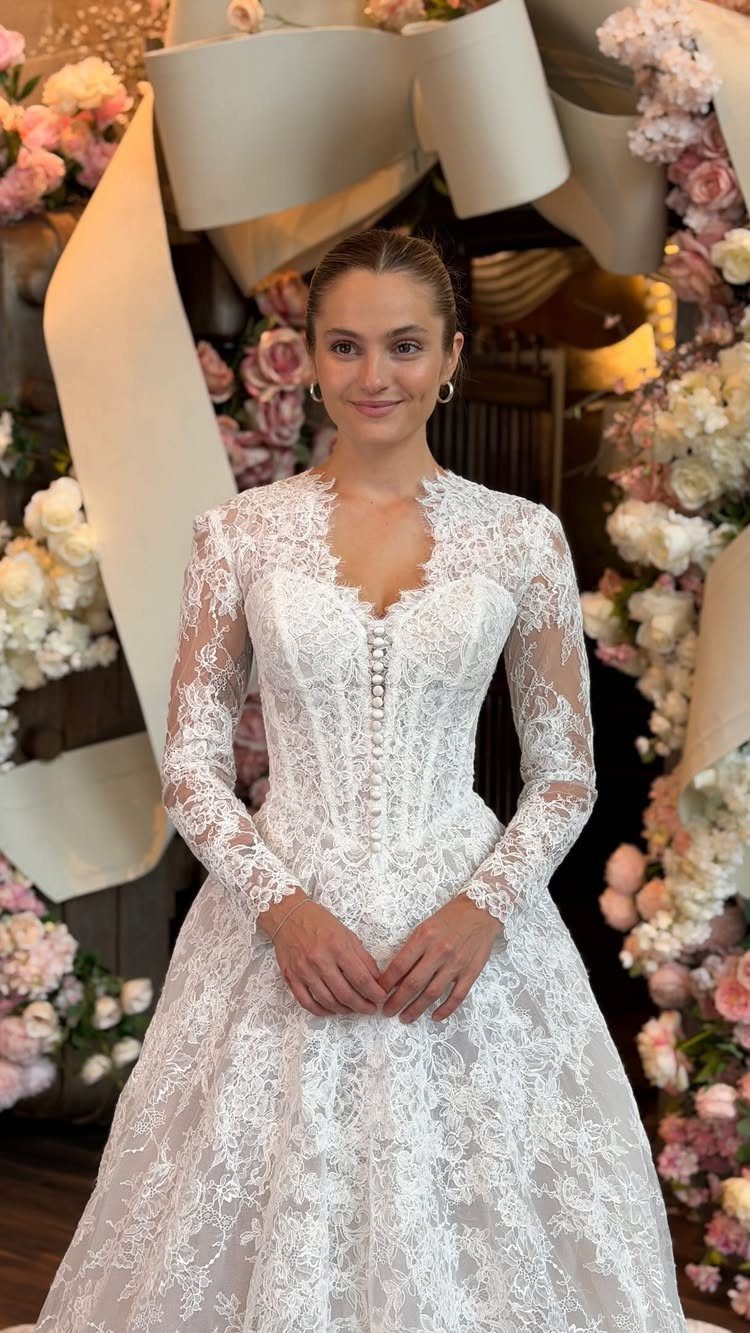
Long lace sleeves do the modest work so the rest can feel light. A sweetheart neckline keeps it from looking too covered up, and the buttons running down the front give you something to do with your hands in photos.
I like this version with a matching lace veil because the texture carries through; a plain tulle one can look like an afterthought.
The floral pattern shows up best in natural church light, which is something to check when you try it on. Ask to stand near a window.
If your ceremony runs long, test whether the lace at the elbows catches on anything when you genuflect.
2. A-line Wedding Dress
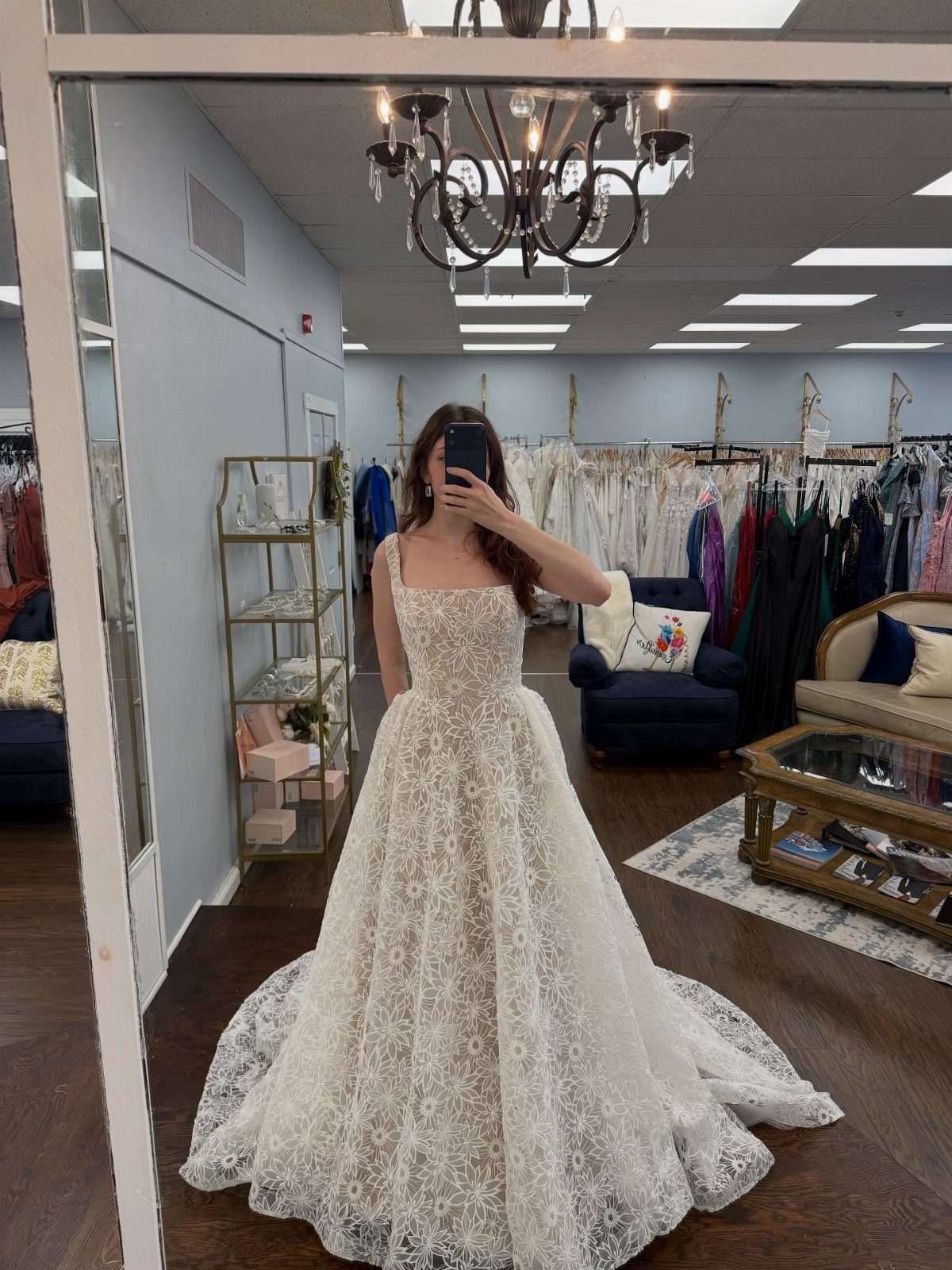
An A-line silhouette is the safest starting point for most body types, and it happens to photograph well from every pew angle.
The fitted bodice keeps you from looking swallowed, while the skirt does the modesty work without extra fabric layers.
Satin gives a more formal, candlelit effect; lace reads softer and slightly more casual. I’ve seen brides do satin for the ceremony and switch to a lace overlay for the reception, though that requires planning with your seamstress.
The train on this version is manageable enough that you won’t need a handler for the receiving line.
3. Cathedral Veil Paired with Long-sleeved Gowns
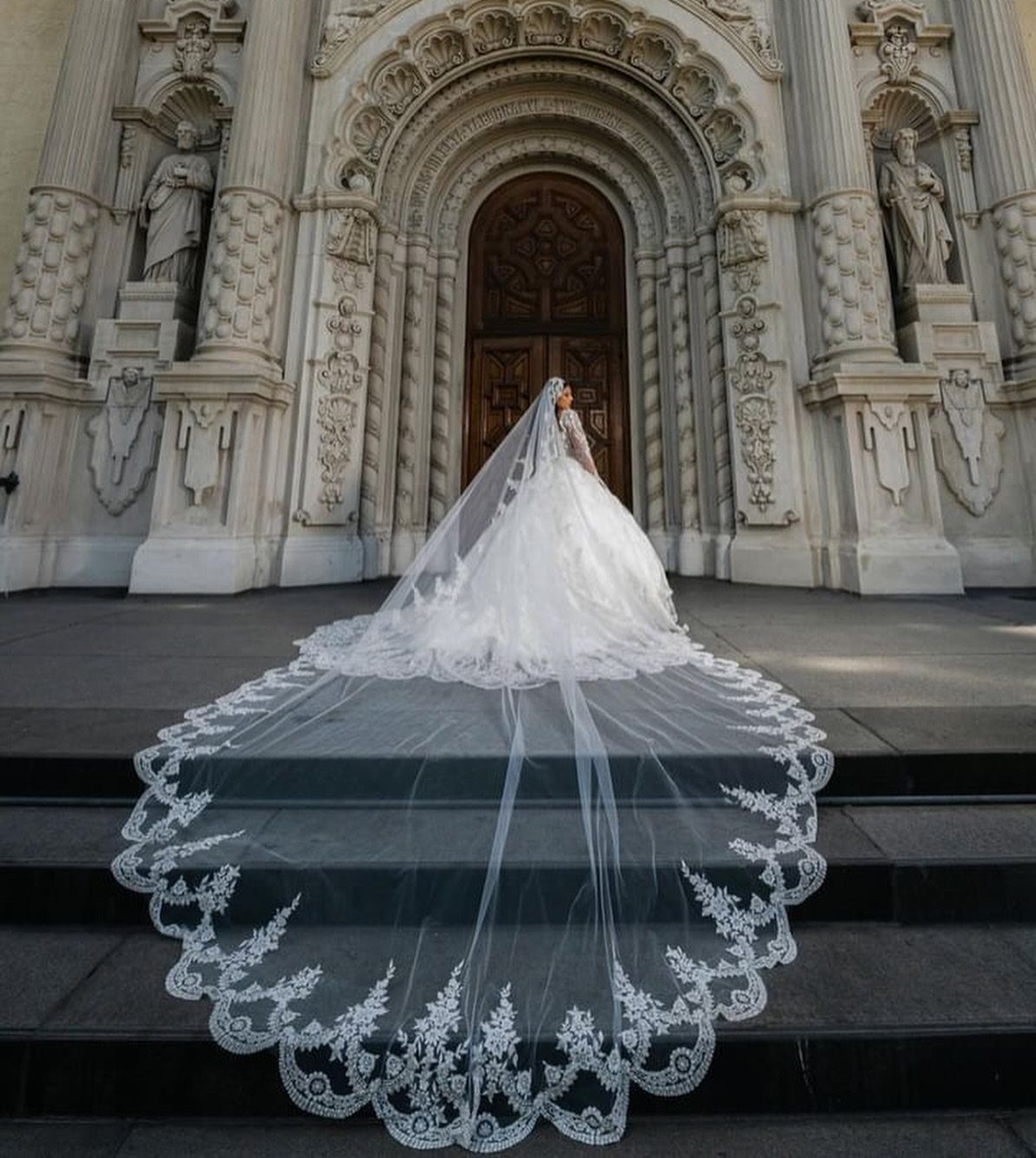
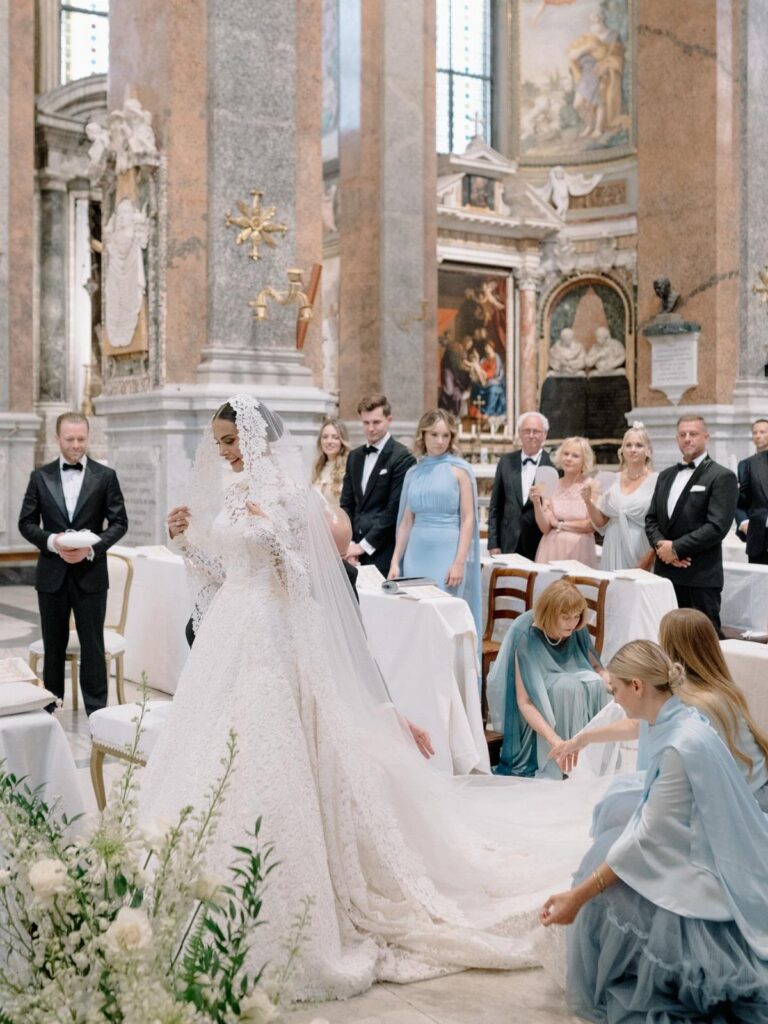
A cathedral veil is the one place where Catholic weddings get to pull rank on the minimalist trend. The length marks the distance from the procession to the altar as something happening, not just walking.
Wide scalloped lace at the edge frames the moment without needing embroidery throughout.
It pairs with long-sleeved gowns because both share the same formal register; a sleeveless dress underneath would look like a mistake of timing, as if you forgot to change after the reception.
The weight matters more than you’d think. Tulle this long can drag backward or tangle in heel grates; practice your pace on the actual aisle surface if you can.
4. Floral Lace Patterns on Skirts
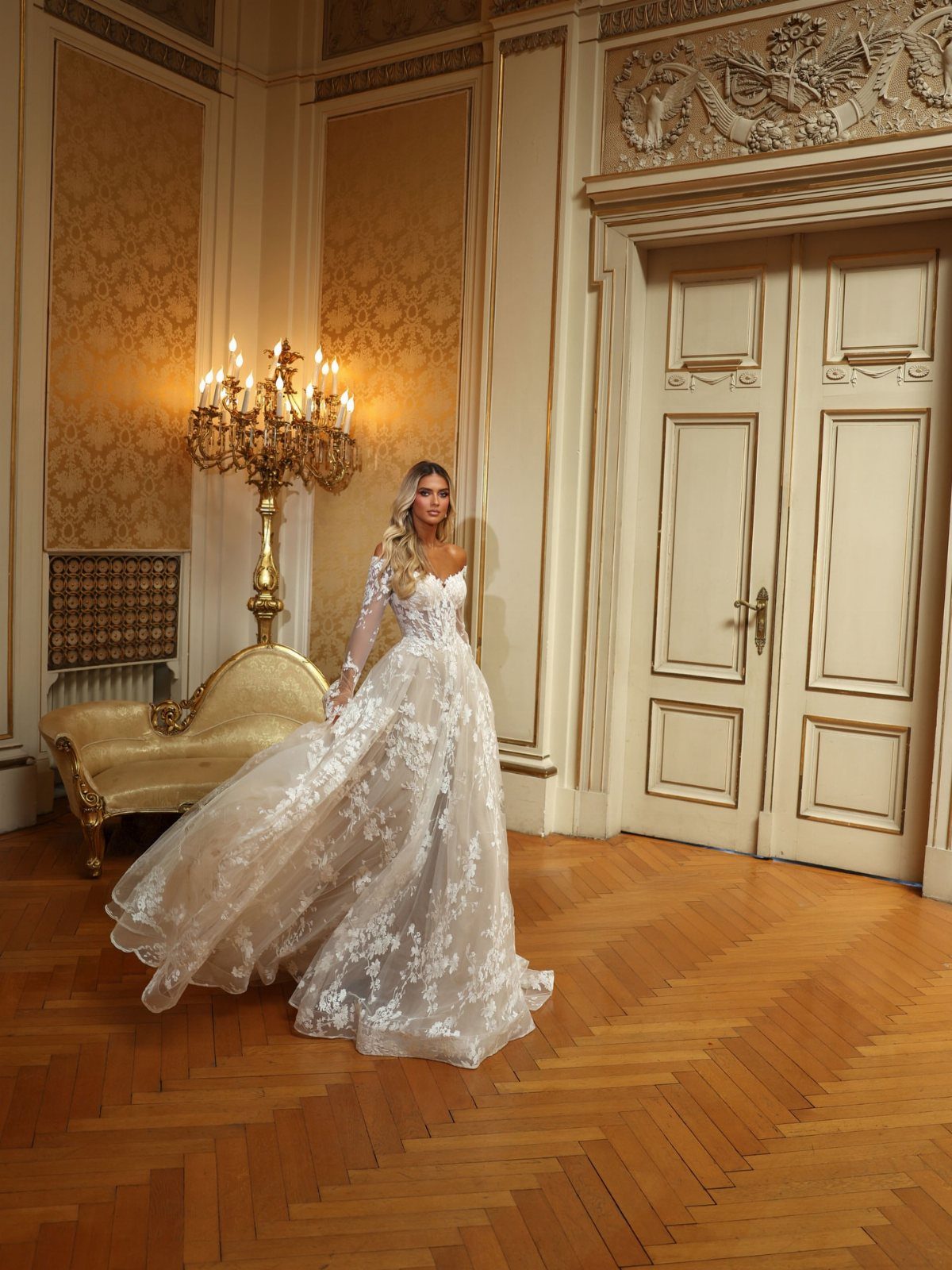
Floral lace reads more romantic than geometric patterns, which matters in a church where the architecture already supplies enough straight lines.
On a full skirt, the eye travels upward to the waist, which is useful if you want attention there rather than at the neckline.
I’ve seen this work best when the lace is concentrated below the hip and the bodice stays simpler; 2 competing patterns make the gown hard to photograph.
The V-neckline version is slightly less formal but easier to wear if you have a shorter torso.
Gold candelabra light warms ivory lace and turns bright white slightly harsh. Check your fabric choice against the church’s actual bulbs, not the boutique’s.
5. High Neckline Gown with Long Sleeves
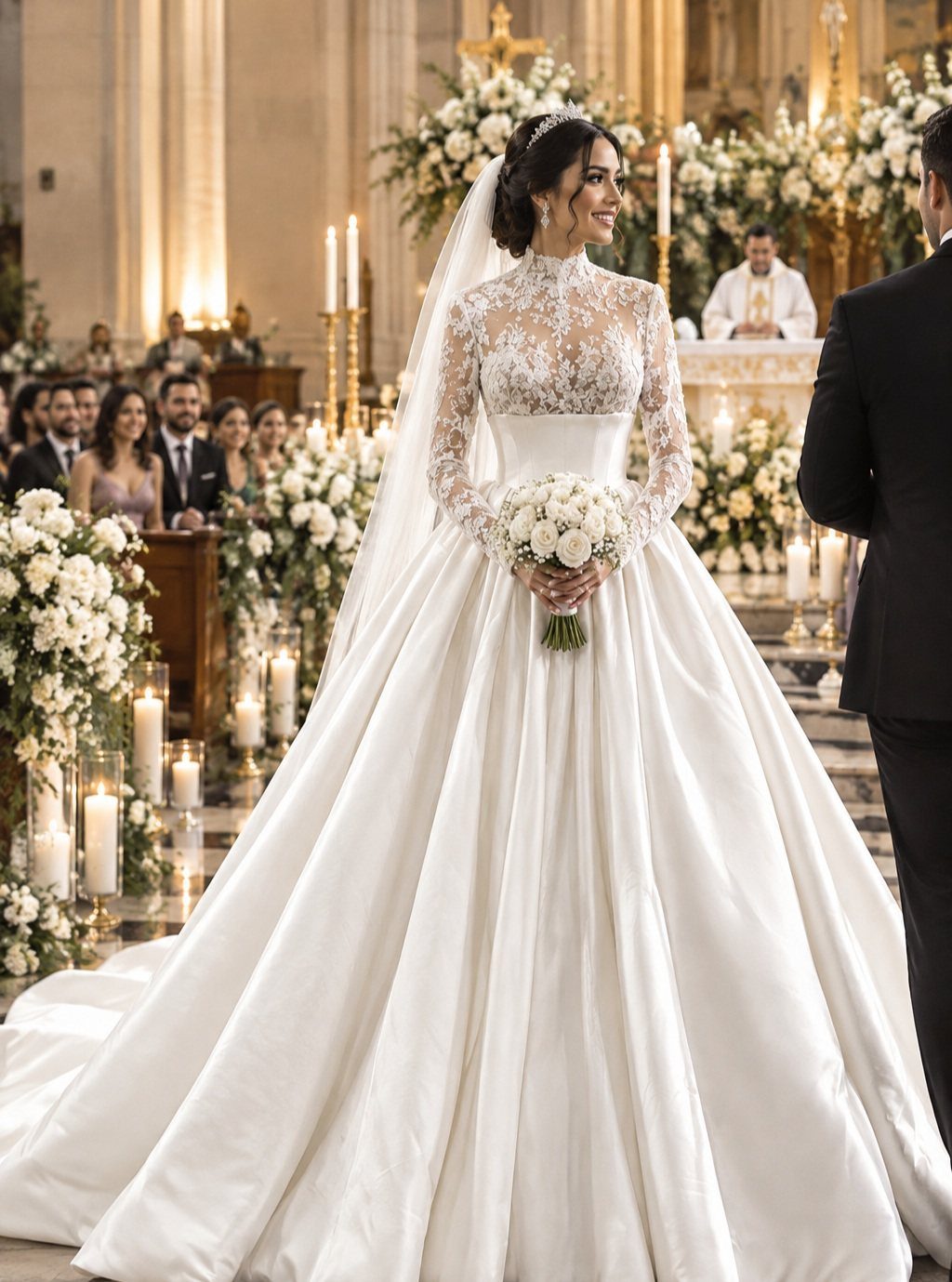
A high neckline solves the modesty question without layering pieces you’ll fuss with. The sheer lace keeps it from looking clerical; opacity there would read as costume.
Long sleeves in the same lace unify the line so your eye doesn’t stop at the shoulder. This particular version uses satin for the skirt, which gives the body formality while the bodice stays delicate.
The neckline height determines your necklace options.
Most brides skip one entirely and let the lace edge do the work. If your family expects heirloom pearls, check their drop length against where the lace ends; too short reads crowded, too long competes.
6. Vintage-inspired Lace Dress
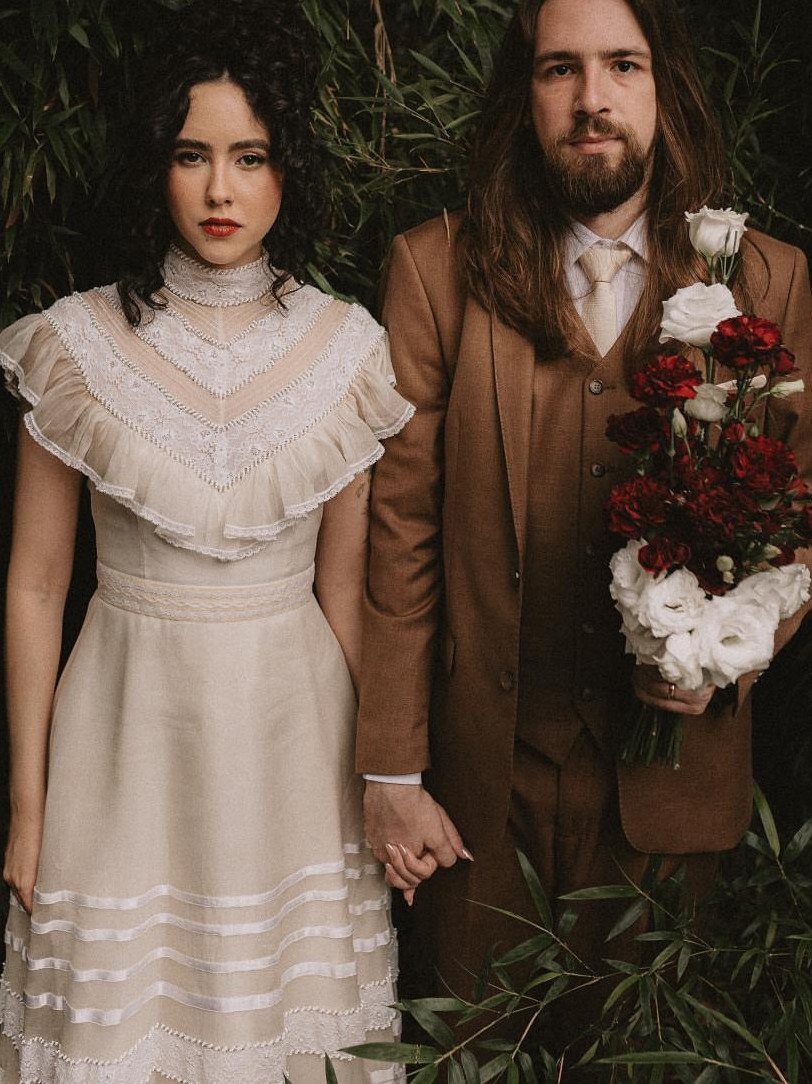
The vintage reference here is specific: 1970s bohemian rather than 1950s princess, which means bell sleeves and a softer waist than the structured looks elsewhere on this list.
Cream reads warmer than optic white and suits most complexions better, though some churches expect pure white for first marriages.
The long lace veil matching the gown fabric matters more with a vintage look than with modern minimalism; mixed textures from different eras read as thrifted rather than intentional.
Bell sleeves widen at the wrist, which is lovely for handing flowers or holding a program but requires extra care at the communion rail. Practice how the fabric falls when your arms are forward and low.
7. Satin Ballgown
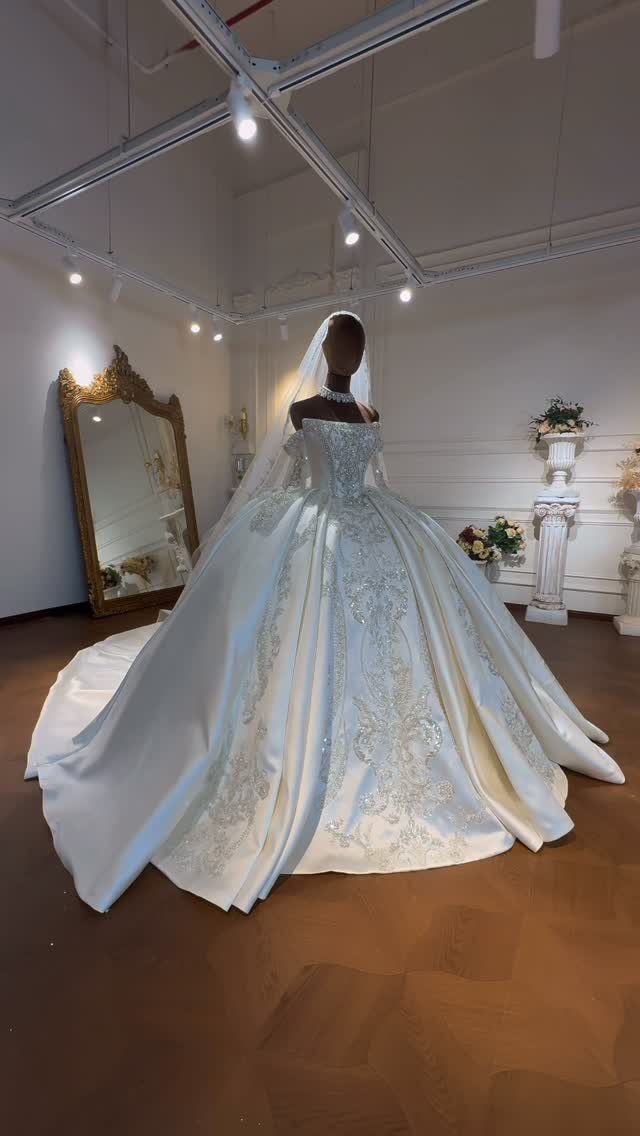
Satin ballgowns carry the weight of formality that a high church ceremony asks for. The silver embroidery catches candlelight without relying on sequins, which can read as theatrical in a nave.
A sheer lace bodice with long sleeves keeps the modesty requirement from turning into costume; the satin skirt does the statement work while the top stays delicate.
I’ve seen this paired with a simple tulle veil when the gown’s own detailing is already dense; a lace-edged one competes.
The volume needs space. Check your church’s aisle width against the skirt at full flare, and ask whether side pews will need to tuck in their feet during the procession.
8. Lace-trimmed Veil Paired with Lace Gowns
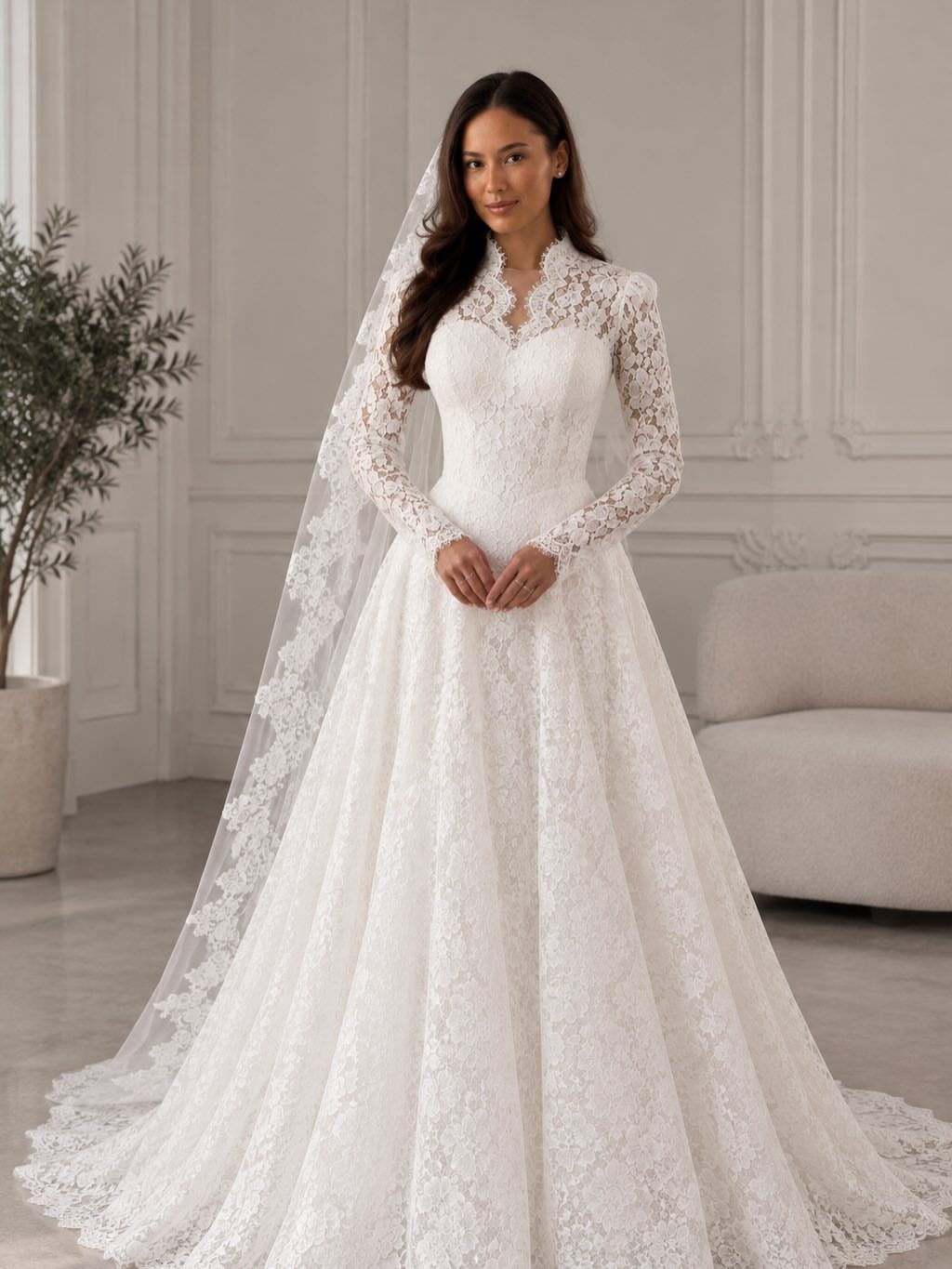
Matching the veil’s lace trim to the gown’s lace edge is the kind of detail that reads as intentional in photos and disappears when it is wrong.
The scalloped width should echo, not mimic: too close and it looks like a factory set, too different and the eye catches the clash.
This pairing works best when both pieces share a single lace motif rather than mixing patterns. An A-line gown with long sleeves and a high illusion neckline gives enough coverage that the veil’s transparency adds rather than subtracts.
Heavy trim can pull the veil forward; lighter edging stays put but may read as casual next to dense Alençon.
Corded lace holds its shape in still air but flattens against tulle in humidity; if your church runs warm, ask to see the veil after a full hymn or two of wearing.
9. Mermaid Silhouette Gown
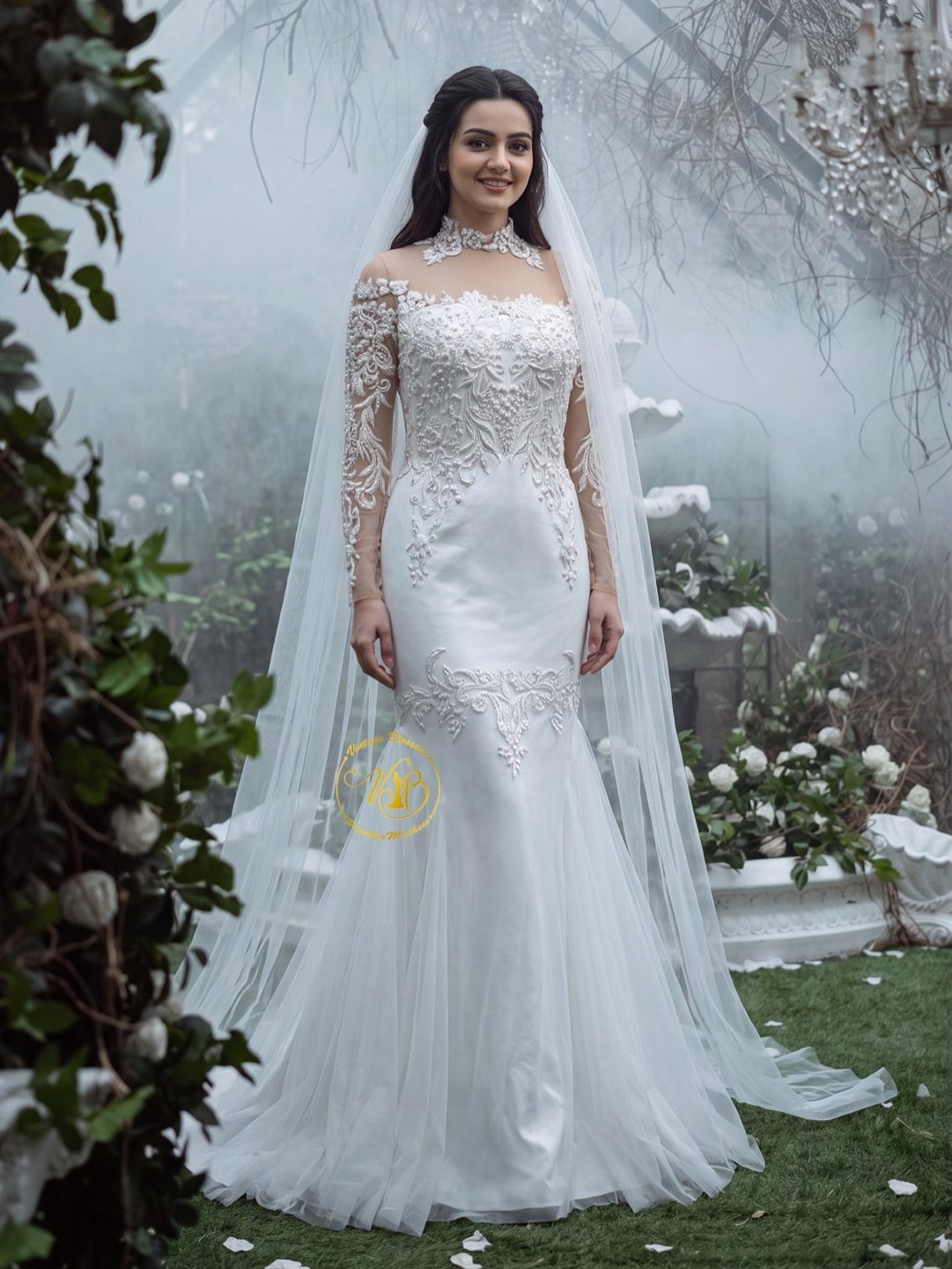
A mermaid gown fitted through the hip and flared below the knee is the most demanding silhouette for genuflecting and kneeling.
The stretch satin versions move better than structured ones, but both require you to plan your range of motion before you buy.
The high-neck, long-sleeve lace versions suit Catholic ceremony requirements without layering. A cowl neckline in satin reads slightly less formal but removes the neckline question entirely.
If your church includes a full kneeling period during the liturgy, test the flare point: too low and the skirt pools under you, too high and the fabric pulls at the thigh.
10. Simple Satin Gown
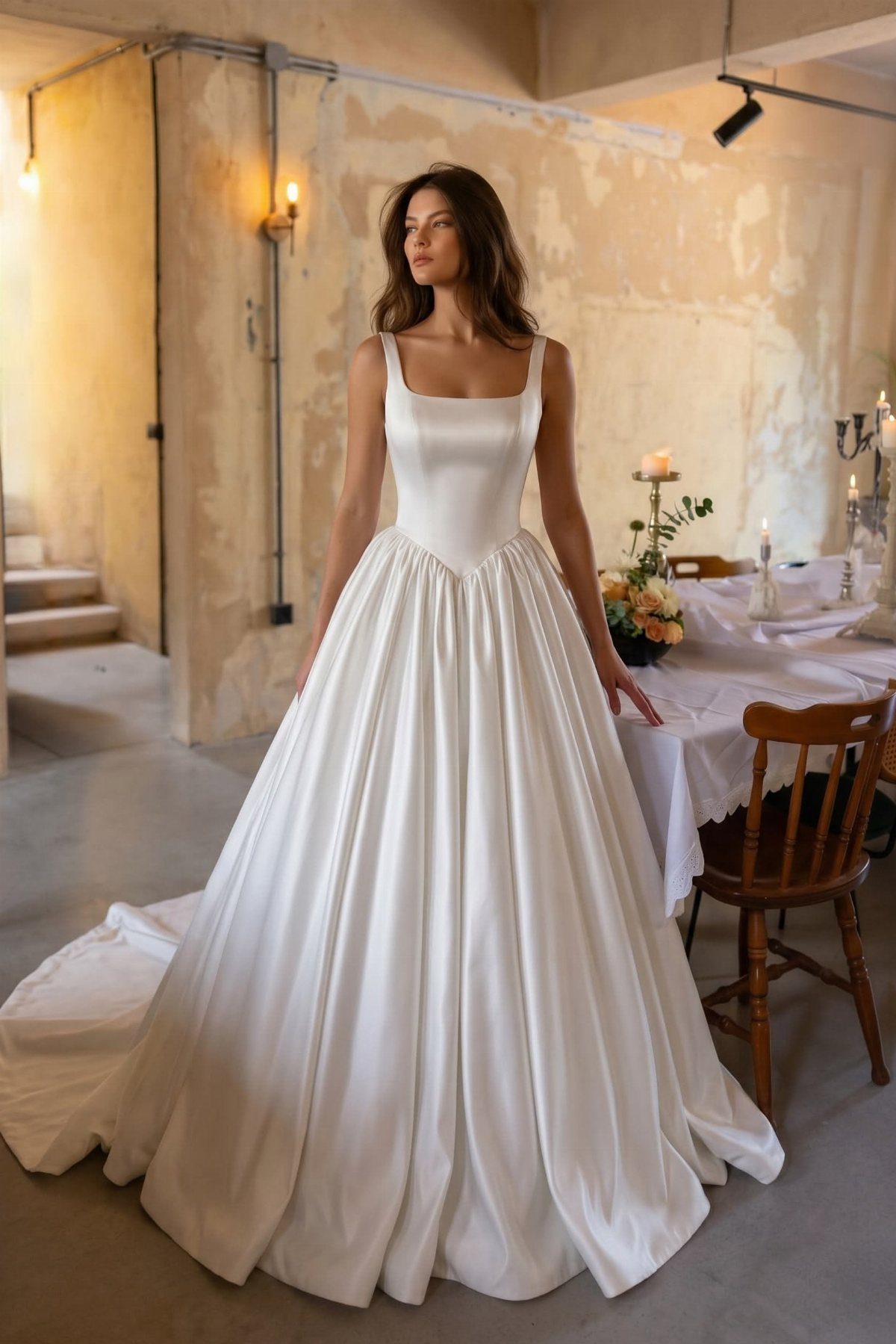
Thick straps and a basque waist give a simple satin gown enough structure that it does not read as underdressed for a church ceremony.
The clean line leaves room for how you choose to cover the shoulders: a capelet for the procession, lace sleeves if the gown comes with them, or a separate jacket for the reception.
Ivory warms most complexions; bright white can turn chalky under fluorescent church lights. The minimal surface shows every wrinkle, so the fabric weight matters more than with lace or embroidery.
A pearl necklace fills the neckline without competing; check the drop against where the basque point sits.
11. Off-the-shoulder Gown
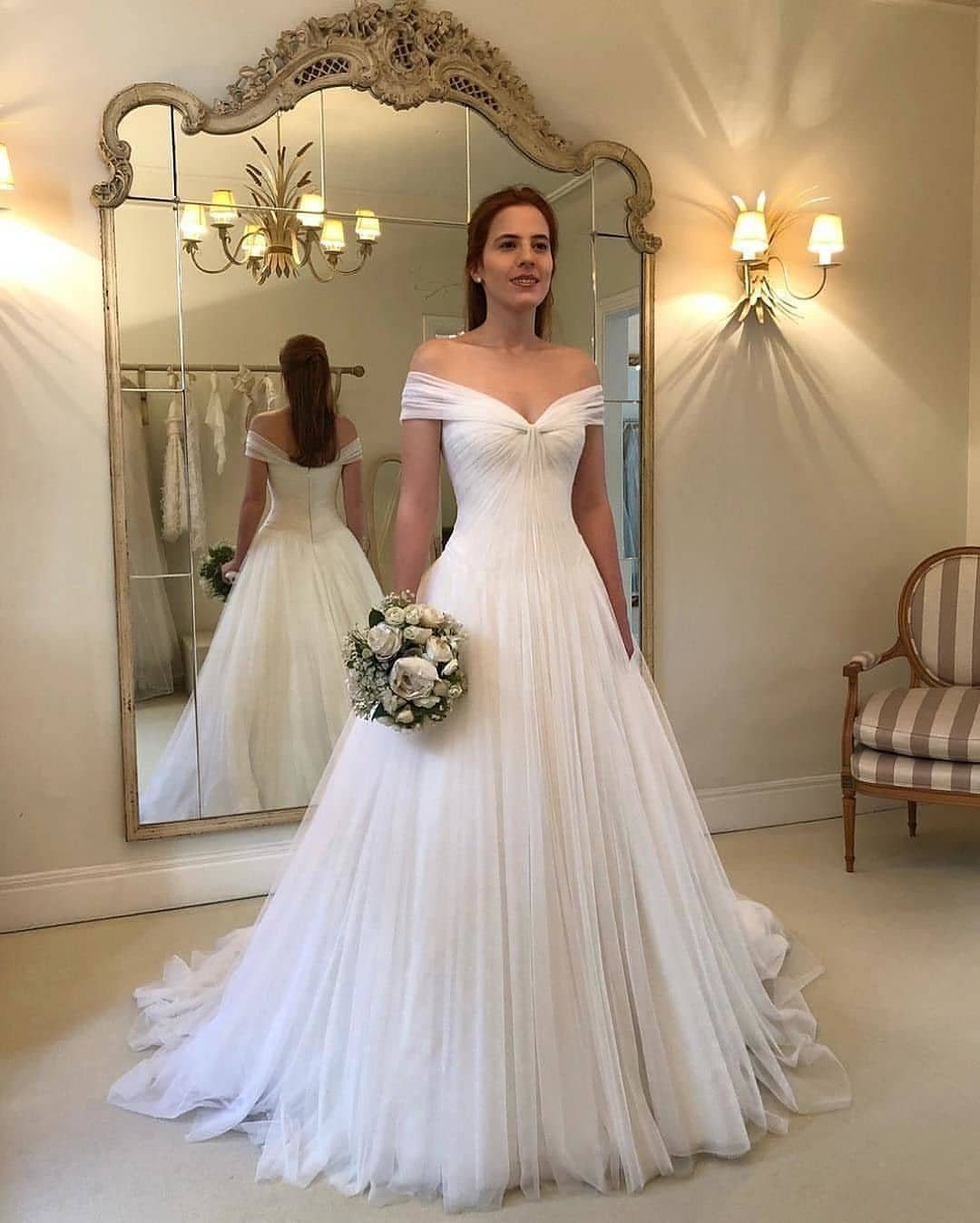
The off-the-shoulder line frames the collarbone and the pleated bodice keeps the silhouette structured, a combination that works when the neckline sits high enough to read as modest rather than casual.
Pleated satin at the bodice adds structure that keeps the neckline from sliding during the ceremony.
Check whether the neckline stays put when your arms are raised during the liturgy.
12. Gown Featuring Bishop Sleeves
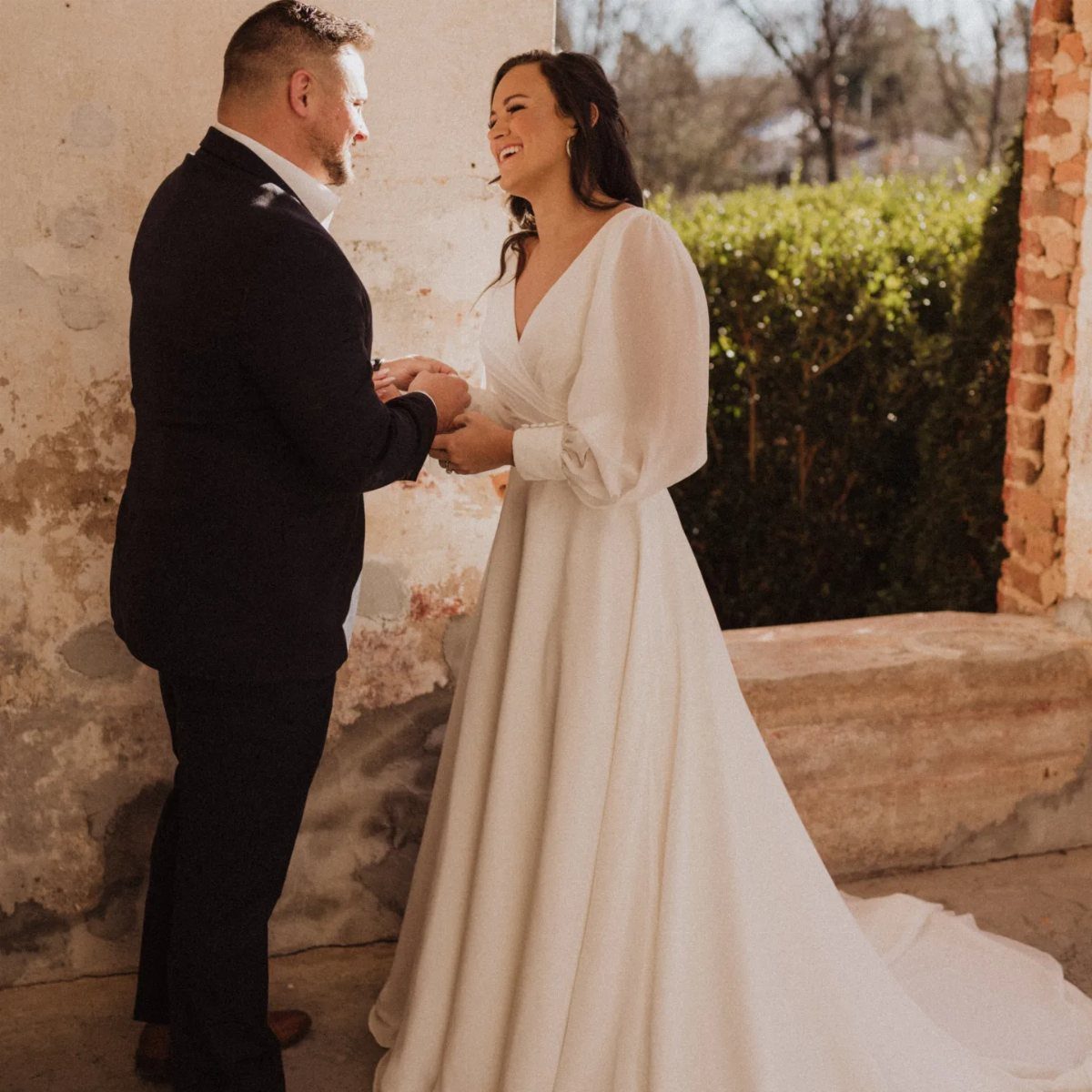
Bishop sleeves gather at the wrist after fullness through the arm, a volume that photographs well in processional shots but requires awareness at the altar.
The extra fabric at the forearm can catch on candles, missals, or the groom’s sleeve during the exchange of rings.
An A-line skirt balances the sleeve volume so the silhouette does not top-heavy.
The lace versions read softer than satin; both need the cuff fitted enough that the sleeve does not dip into the communion cup when your hands are forward.
Practice the gesture of receiving communion in your fitting. The sleeve should fall back, not forward, when your arm extends.
13. Capelet
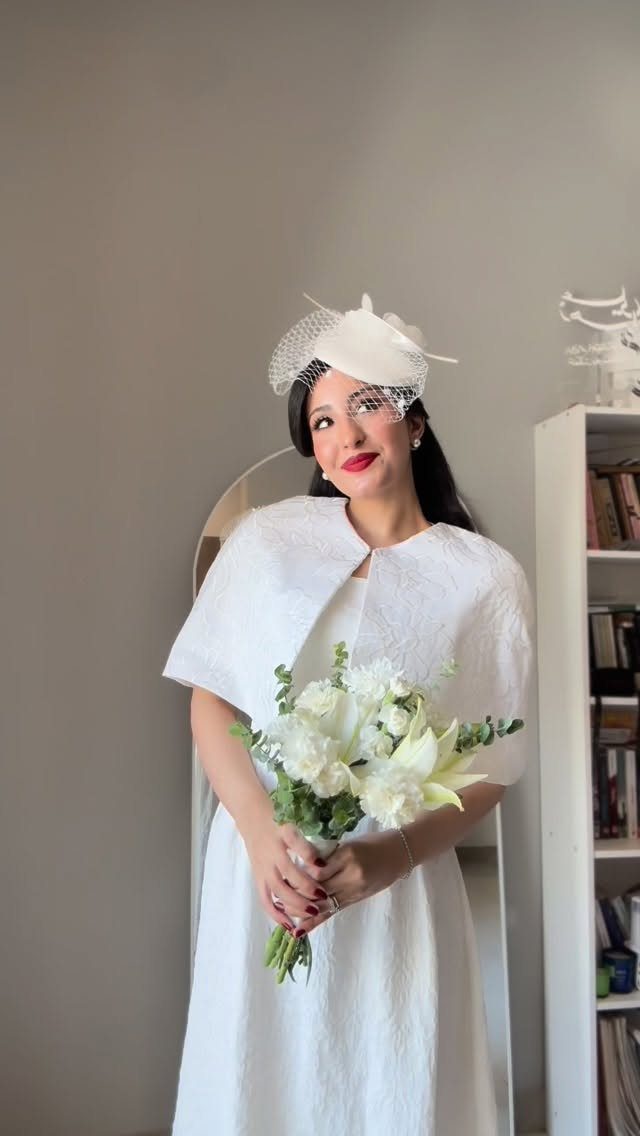
A capelet is the shortest path to modest shoulders without committing to sleeves you might want to lose at the reception.
Lace versions read more bridal than satin; the edge where the capelet ends becomes a design line, so check how it hits your bust and waist.
The matching lace on both capelet and veil matters for coherence. A birdcage veil sits at a different register entirely, more cocktail than cathedral, so choose your veil’s formality first and match the capelet to that.
Practice holding your bouquet with the capelet on; the neckline closure can shift when your arms come forward.
14. Gowns Featuring Detailed Embroidery
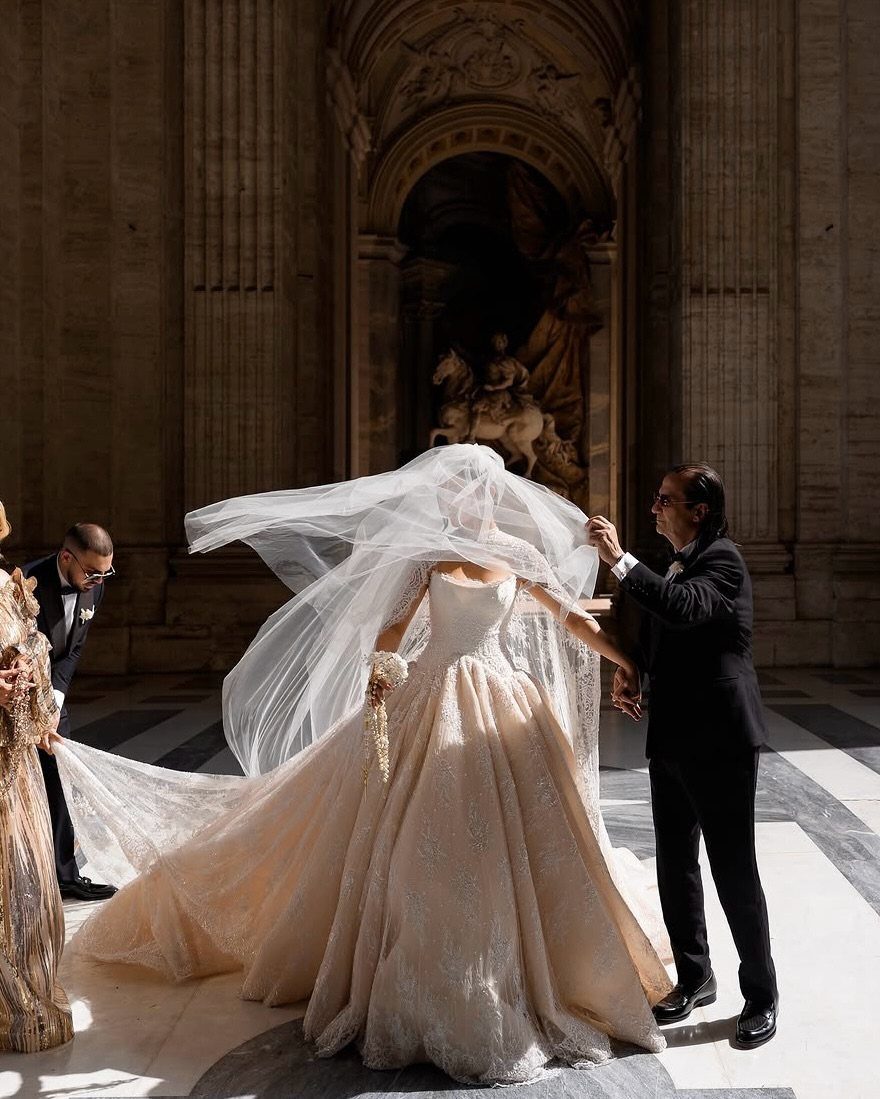
Dense embroidery carries the visual weight that a plain satin bodice leaves blank, which suits a church where the eye needs somewhere to rest.
The silver or gold thread choices read differently under yellow candlelight versus white LED; most churches still run warm, so gold is the safer default.
This much surface detail means the veil should simplify. Wide scalloped lace edges compete with a fully embroidered skirt; a sheer tulle veil without added trim keeps the hierarchy clear.
The weight of the skirt requires helpers for the train in a full liturgy. Assign who holds it before, not during, the procession.
15. Gown with Lace Overlays
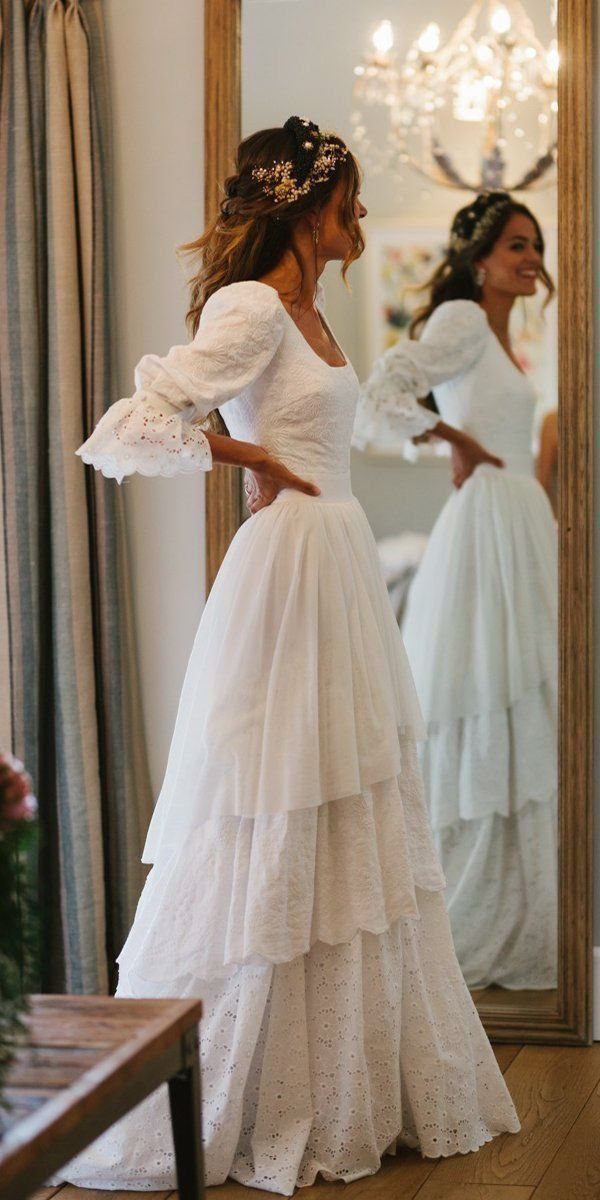
Lace overlays let you build texture without adding physical layers that raise the temperature.
On a tiered skirt, each tier’s edge can carry a different density of overlay, which gives movement when you walk but reads as one gradated idea from a distance.
Elbow-length sleeves with overlay read as coverage in a church where full sleeves would be expected; check your parish’s custom before relying on them alone.
An off-the-shoulder neckline with overlay still needs the shoulder line covered for most Catholic ceremonies, achievable with a matching bolero or capelet.
Lace overlays read best when the motif stays consistent; if the gown’s pattern is florals, a smaller version of that same flower keeps the look coherent rather than competing with a second design.
Catholic Wedding Dress Guidelines
Most Catholic parishes leave the specifics unstated until you ask, which is worth doing before you shop.
Long sleeves and high necklines are the norm, though "high" varies: some churches accept illusion lace at the throat, others expect fabric to the collarbone.
Cap sleeves that barely cover the shoulder have been rejected at some parishes, while elbow-length overlays passed without issue at those same churches once the priest had time to clarify expectations.
The safest approach is to bring a photo of your gown to your priest during the first meeting, not the last.
Ask about sleeves, neckline, and whether a capelet or bolero counts as coverage or as an afterthought. Some churches publish written guidelines; most do not, and the secretary’s memory is not binding.
Mon Cheri’s Modest Bridal MOD344 builds in coverage with bishop sleeves and a buttoned back, which saves the bride from having to negotiate add-ons with a strict parish.
Choosing a Wedding Dress
Personal style and parish rules are not opposing forces, though the fitting room can feel that way. A-line and ballgown shapes handle modesty through structure rather than extra panels, which is why they work across so many builds.
I think of it as finding the overlap: where what you want to wear meets what you will be asked to wear.
A satin ballgown with silver embroidery satisfies both if you wanted formality; a vintage-inspired bell sleeve gown works if you wanted something softer. The mistake is choosing purely from one column and hoping to retrofit the other.
The long-sleeved lace bodice gown with its sweetheart neckline is a useful case study.
The modesty is handled by sleeves and buttons, the personality by the neckline shape and the veil choice. That is the pattern: one element carries the requirement, another carries the preference.
Accessories for Catholic Brides
Veil formality should be decided before jewelry, not after.
Pearl earrings are the default for good reason. They catch light without competing, and they read as heirloom even when they are not.
The drop length matters against the neckline: too short and the lace edge looks crowded, too long and the two compete for the same visual space.
A rosary wrapped through the bouquet carries weight only when it is borrowed or gifted; bought for the photograph, it reads as costume.
The visual weight of beads and flowers together needs balance; a small white bouquet with green foliage handles this more quietly than a full cascade.
Traditional Elements in Wedding Attire
Lace and floral patterns carry meaning in a Catholic wedding that they do not in a secular one. The gown’s curves answer the architecture.
Ask to see your fabric sample at the actual hour, or near it.
The era you cite should be intentional, and the veil must match it.